Reviews

  • Ravenous (1999)

    Ravenous (1999)

    (On DVD, November 2000) This film has to work hard in order to overcome the natural yuck-factor inherent in its cannibalistic premise. But it does so adequately, and the result is a small surprise, a horror film with an unusually original premise, decent performances, a few good surprises and some effective moments. The DVD includes a few interesting deleted scenes, audio commentary and a few Easter Eggs.

  • The Light of Other Days, Arthur C. Clarke & Stephen Baxter

    Tor, 2000, 316 pages, C$35.95 hc, ISBN 0-312-87199-6

    I sense a trend. And, for once, it’s a good one.

    Over the years, Arthur C. Clarke has collaborated with quite a few authors. Gregory Benford wrote a “sequel” to Clarke’s The City and the Stars (a classic that shouldn’t be “improved” by any means!) and it stank deeply. Clarke and Gentry Lee collaborated on a novel, Cradle, that left most indifferent. Lee then wrote a “sequel” to Clarke’s Rendez-vous with Rama (a classic that could use some work, but not by hacks like Lee) and the result was a bloated trilogy that wasn’t very good either. Mike McQuay expanded a Clarke outline in the novel Richter 10 and the result, while better, wasn’t all that good.

    At that point in time, most SF critics individually came up with the “Clarke Collaboration Theorem”, which in simple term stated “all Clarke collaborations suck”.

    But then came along The Trigger, written in collaboration with Michael Kube-McDowell (ie; Clarke wrote a two-thousand word outline which was expanded to novel length by Kube-McDowell) and the result was surprisingly good if you weren’t a gun nut.

    SF critics put the Clarke Collaboration Theorem on hold.

    Now they’re ready to retire it for good as The Light of Other Days arrives in bookstores. While it doesn’t have a very different plot outline that the one already seen in The Trigger (indeed, the structure of both novels almost seem carbon-copied from one another) and is rather pathetic in terms of literary value, it’s a great read filled with ingenious ideas, a breathtaking conclusion and pure fun from cover to cover.

    In other words, it does not suck.

    The Light of Other Days‘s premise is not particularly original: Isaac Asimov’s classic story The Dead Past also posited the existence of a “remote viewer”, a machine that allowed you to see any scene from history from any point of view. (Indeed, Clarke and Baxter cite a few examples in the afterword without citing the Asimov text, which is rather unsettling given the popularity of the story and Clarke’s friendship with Asimov)

    But, as always, it’s all in the treatment. Whereas Asimov’s story ended on the predicted doom of humanity through the end of privacy, Clarke/Baxter use this as a stepping-stone to more interesting things. As the capacity to see anywhere in history through the “WormCam” spreads through the population, investigative exploration of history takes off, religions are destroyed (hey, it’s a Clarke novel), historical figures are demolished or enhanced. Of course, there’s the end of privacy, last dying gasps of governments, general paranoia, new and exotic forms of perversions but guess what? Humanity endures, and how well it endures forms the strong conclusion of the novel, which manages to bring in the Eschaton without looking too silly doing it. Impressive stuff, any way you look at it.

    As with The Trigger, the fun of this collaboration lies in the intellectual debate surrounding the WormCam. Ideas, concepts, extrapolations are described, sometime sketchily, but in such numbers that the ultimate effect on the reader is quite impressive. As in The Trigger, the novel loses strength whenever it tries to insert more classical plot conflicts in-between all the fascinating ideas. A gunshot-and-traitors conclusion is there to tie up some loose ends, but not to knock the socks off the readers; that’s the following chapter.

    The overall result, again like The Trigger, is a compulsively readable (can be finished in less than a day) novel of ideas that faithfully follows the SF ethos of unflinching extrapolation. Due to the large historical component of the book, this might even be a good crossover novel for people not overly familiar with Science-Fiction.

    And it destroys the Clarke Collaboration Theorem, which is a welcome piece of news indeed.

  • Pushing Tin (1999)

    Pushing Tin (1999)

    (On VHS, November 2000) John Cusack plays young cool professional types like no others (see Grosse Pointe Blank and City Hall), and here he plays yet another one of those, a hot-shot air traffic controller that has to defend his turf and his wife against a new hotter-shot competitor (a good turn by Billy Bob Thornton). The difference is that Cusack here is supposed to Lose It, which we never quite believe. Part of the problem is typecasting, but most of it is the script, which flits from one thing to another without really coming up with strong material. As with most docu-stories taking place in unusual and interesting environments, Pushing Tin is best when describing the unusual, and worst when inserting familiar plots in this unfamiliar setting. Here, the romantic elements take away from the pressure-cooker environment of air controllers and ultimately bring down the film to only average status. Cate Blanchett and Angelina Jolie are fun to watch as The Wives, even though Vicki Lewis is underused as one of the interchangeable other controllers.

  • Nurse Betty (2000)

    Nurse Betty (2000)

    (In theaters, November 2000) There’s a standard comedy plot shtick that drives me absolutely crazy: The one where a character is doing something completely stupid while thinking it’s perfectly legitimate, and when the deception will inevitably be discovered. The only thing you can do is count down the seconds before the character’s humiliation. Now imagine a film that spends more than forty-five minutes on that subject. Looking forward to it? If not, skip Nurse Betty, a misguided “comedy” in which a pair of hitmen kill in graphic detail and a waitress becomes so unhinged with reality that she chases a favorite soap star. Not many laughs here, nor overly impressive technical credits: The direction is flat and even if Renee Zellweger is as adorable as always, the other characters don’t manage to be very sympathetic. (Though the Latino girlfriend is pretty). Script-wise, coincidences abound and Morgan Freeman’s characters sounds as if he escaped from an unusually pretentious Tarantino movie without bringing the witty dialogue with him. Humiliation and discomfort seem to be the goal of the film, and if the result seems to confuse some critic in thinking it’s rather good, most average moviegoers will reach for the fast-forward (or even the stop/rewind) button.

  • In The Line Of Fire (1993)

    In The Line Of Fire (1993)

    (On DVD, November 2000) Not much to see here. The crazed-assassin-goes-after-the-president shtick has been done elsewhere multiple times before, and even if In The Line Of Fire is competently executed, it’s not anything new. Clint Eastwood is good in what’s probably going to end up being his last action-hero role. (The romance between his character and the one played by Renee Russo, however, should have been left on the cutting-room floor. Yawn.) John Malkovich plays the assassin as a soft-spoken super-genius, which is again either (depending on how many stories like this you’ve seen already) really good or really annoying. The bare-bones first-generation DVD release of the film basically allows you to to feel grateful that the film is playing at all, so don’t ask for extras.

  • The Hidden (1987)

    The Hidden (1987)

    (On VHS, November 2000) Say what you want about “great movies” and “cinematographic art”, but what you want, often, is simply a good old B-movie. The Hidden brings to mind The Terminator as another low-budget, technically-competent, no-fat science-fiction B-movie. It’s not art, but it’s damn good entertainment from the gripping opening sequence to the satisfying end. The plot’s been done elsewhere (a parasitic alien goes from body to body as cops try to chase it down) but this time is done with the proper amount of action and cleverness. The film also has some heart, which is more than you can say for the rest of the contenders to the B-movie crown. An underrated gem, well worth another viewing.

    (Second Viewing, In French, On Cable TV, February 2021) I hadn’t seen The Hidden in twenty years, but enough of it stuck that I knew I was going to have a good time. The terrific opening sequence sets the tone, what with the fast pacing, rock music, comfortable use of genre elements and a much-faster-than-expected slide from action thriller to horror/science fiction. The story, with its shape-shifting alien wreaking an unexplainable rampage through Los Angeles, is an excuse for a series of action scenes and an unusual buddy-cop relationship. Kyle MacLachlan is quite good as this otherworldly cop having trouble fitting in but sharing traits with the creature he’s pursuing. (Meanwhile, as a forever Babylon-5 fan, this will remain for me the movie where Claudia Christian plays a stripper.)   Future superstars Danny Trejo and Lin Shaye even have small roles. Director Jack Sholder keeps things hopping, although the film never does match its go-for-broke opening sequence and first-act revelations. The Hidden doesn’t qualify as a great movie — it’s a bit disconnected, loses steam along the way and doesn’t make as much sense as it thinks it should (while it makes a huge deal of a malevolent alien becoming a presidential candidate, it also portrays the alien as being fundamentally unable to control their impulses — who bets that it wouldn’t have been able to keep it together for the next eighteen hours, let alone the following eighteen months?)  But it’s a solid, energetic B-grade genre film that understands what it tries to be. It’s really worth a look if you have any interest in underappreciated 1980s genre pictures — the period feel is top-notch, and the use of genre elements holds up even today.

    (Third Viewing, Streaming, May 2025) Wow, this thing cooks. The Hidden is what most B-movies aspire to be — wall-to-wall entertainment, from a compelling first scene to an ingenious climax. It’s not original, but it’s very competently made thanks to director Jack Sholder — it’s lean filmmaking and it just rewards viewers all the way through. This is one of the best B-movies of the 1980s, and that decade had some significant competition.

  • Beyond Recall, Stephen Kyle

    Warner Vision, 2000, 438 pages, C$9.99 mmpb, ISBN 0-446-60809-2

    Thriller readers are most often presented with grotesquely non-negotiable alternatives. Evil terrorists versus pure peacekeepers. Democracy versus dictatorship. Blood-giving heroes versus puppy-kicking villains. Some will say that it’s typical of the American binary mindset: It’s much easier to make choices when you demonize the alternative, as it all too often happens during American elections.

    On the other hand, such easy choices usually mean more straightforward entertainment. What would QUAKE be if you could choose to negotiate with your opponents? What if the terrorists in the latest Hollywood blockbusters were working toward a laudable goal? (To be fair, THE ROCK did this… only to turn around at a critical moment and have some terrorists “go renegade” on their leader, thereby re-establishing comfortable polarity) What if, instead of simple entertainment, we had flawed heroes and virtuous villains, setting up true drama in the process? With Beyond Recall, “simple thriller” readers get the chance to find out if such departures from the norm offer something more than the usual black-versus-white mentality of genre entertainment.

    The premise is apparently simple: terrorists threaten to unleash a biologically-engineered plague on the United States if their demand are not meant. But the complications begin as soon as you look into it a bit further: The plague will target only women. The demands are to set up a multi-billion fund for the education of third-world women. The terrorists’ ultimate goal? To halt ecological damage through population control, one way of the other: Educate the women (a proven way to lower population growth and raise standards of living) or sharply reduce the reproductive capacity of the consuming nations.

    Already, we’re presented with a moral dilemma: Though the ends are good, the method isn’t. And as the United States do not negotiate with terrorists, there’s a significant potential for mutually assured incomprehension.

    Beyond Recall‘s basic premise is fascinating. Things don’t go as well as the various characters are introduced. To heighten drama, author Stephen Kyle basically interrelates everyone involved: The chief terrorist is the White House advisor on bio-terrorist matter but also the mother of a lobbyist who’s married to the FBI’s main man of the affair. Meanwhile, the chief terrorist is the ex-lover of the only doctor able to build an antidotes except that the doctor’s wife was one of the first victims of the virus’ test run… I’m not making any of this up.

    The melodramatic (and somewhat ridiculous) interrelation between characters easily destroys most of the novel’s power though soap-operatic plot dynamics and god-awful resolutions. By the epilogue of the novel, the good doctor is doing the wild thang(s) with the lobbyist, which practically smacks of incest or, at the very least, of Hollywood-style old-man/young-girl power fantasies. Creepy, and maybe more than the premise.

    When the novel fails at that level, it doesn’t take much to make it fail at other levels too. The pacing is deficient in the second half of the book. Kyle also blurs the distinction so much between good guys and bad guys (the President is painted as an angry idiot, the FBI agent as a bad guy for no real reason than he’s opposed to the chief terrorist which is set up as the protagonist, etc…) that readers might just give trying to find someone to cheer for. It’s all quite unbelievable, and that’s ultimately the impression left by the book.

    If you’re going to blur good and evil, it takes a lot of skill to keep the reader going without clear reasons to cheer or jeer, and I frankly don’t think that Kyle is experienced enough. No reason to condemn the author in perpetuity; it’s still his first novel, after all. (And, heck, he’s a fellow Ontarian writer, so he deserves a little home-grown respect) But he still fails to deliver on an intriguing premise for reasons not entirely related to the premise itself. Veteran thriller readers might find Beyond Recall an intriguing experiment because of its failing, but readers looking for some comfortable summer beach reading are advised to skip this one.

  • The Great Escape (1963)

    The Great Escape (1963)

    (On VHS, November 2000) Allied prisoners-of-war try to escape a high-security Nazi camp. Ingredient for a classic? Absolutely! A totally satisfying film experience? Not quite. If the first two-third of the film are a fascinating parade of clever ways to escape the camp, the film is dragged down by a depressing last third, in which the logical conclusion of the great escape (it ain’t a spoiler, it’s the title!) are played out. But don’t interpret that as an excuse not to rush out and grab the copy at your nearest video store: The Great Escape withstands the test of time quite well, with its top-notch technical credits, all-around great performances (Steve McQueen!) and nifty script.

    (Second Viewing, On Cable TV, July 2021) Clearly hailing from the war-is-an-adventure school of filmmaking, The Great Escape is never quite as good as when it details how a group of allied prisoners plot their escape from a Nazi camp. Much of the film’s first act is a pure procedural, as the locked-up allied flyers poke and prod at the camp’s weaknesses, find ingenious ways to plan their escape and react to unforeseen circumstances. The middle portion of the film is the escape itself, a tense but fascinating sequence in which a few of them make it outside the camp. It’s perhaps inevitable that the film loses some steam in the last third – if you accept the escape as the climax, the rest feels like an extended epilogue, and a somewhat grim one considering that many escapees are not brought back to camp. Still, The Great Escape does make for some fascinating viewing, especially when you start looking at the cast. It’s impressive how the film managed to find a place for a loner persona such as Steve McQueen’s, even in the middle of an ensemble cast. Otherwise, well, you get to pick from James Garner, Richard Attenborough, Charles Bronson, Donald Plesance or James Coburn, among others. It’s fascinating to read about the real events that inspired the film – while many details have been modified or stripped away (including the Canadian participation, grump grump), a good chunk of authenticity has been kept after Hollywood’s alterations. It all makes for a film that has aged quite well and will continue to find fans for a while longer.

  • Coyote Ugly (2000)

    Coyote Ugly (2000)

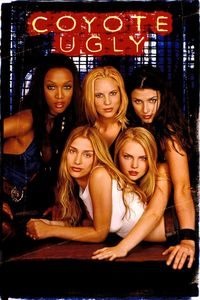
    (In theaters, November 2000) Ay-yay-yay, how ordinary can you be? I imagine the pitch for this film being roughly “Hey, I’ve got twenty minutes of wild Cocktail-for-chicks bar stuff! Any one of you can dust off one of your rejected romance plot to fluff it up?” Sure, Piper Perabo look cute and the rest of the waitresses at the “Coyote Ugly” (that wiiild bar) are pretty hot even when fully clothed, but the rest of the film is a complete bore, showing us a trite romance that we must have seen countless times already. Shamelessly manipulative, often ridiculously implausible, laughably “edgy” (being a struggling songwriter is never so glamorous as in a Jerry Bruckheimer-produced film) and all-and-all rather forgettable, Coyote Ugly delivers what no one expected from it; utter averageness.

  • Charlie’s Angels (2000)

    Charlie’s Angels (2000)

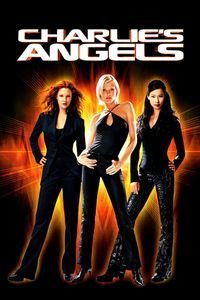
    (In theaters, November 2000) Halfway through the film, I leaned over to a friend and whispered “I can’t decide whether this is getting better or worse” and that will stand as a nutshell review. On one level, it’s one of the worst blockbusters of 2000: Hyperactive editing, sexist imagery, thin characters and one of the most incoherent script seen so far. On the other hand, it’s directed with such reckless audaciousness and played with such bouncy abandon that it’s hard not to be swept along with the fun. The film starts in high gear and never lets up. Film students will go bonkers trying to decode the cinematic techniques used by director “McG”, as he throws everything at the screen, often at the same time. Surprisingly or not, Charlie’s Angels pushes back the cinematic techniques at a pace comparable to the more “serious” filmmakers. What helps to swallow the disjointed script (obviously written on-the-fly, as demonstrated by out-of-nowhere sequences like the car chase) is an intermittent self-awareness that winks at the audience. Also notable is the great soundtrack, which often doubles as ironic commentary (the use of The Prodigy’s “Smack my bitch up” during a fight scene between the thin man and the three angels is either a product of complete cluelessness or subversive brilliance) Despite a reportedly difficult shooting, all of the four main players look like they’re having as much fun as we do: Lucy Liu and Cameron Diaz are adorable as always, Bill Murray is his usual dependable self and Drew Barrymore is surprisingly good. (A mention goes to Crispin Glover in a silent, but effective, role) Charlie’s Angels will probably remain as a film that gets no respect, but tons of fans.

    (Second viewing, On DVD, July 2001) I’ll admit that this isn’t a movie for everyone. Animated with a hyperkinetic energy that tramples down any attempt at conventional criticism, Charlie’s Angels nevertheless features a basic self-awareness that helps a lot in respecting the film for what it is, and the DVD version of the movie confirms many suspicions in this regard. Surprisingly, the film is almost as much fun on a second viewing, mostly because there’s never a dull moment. The editing is rapid but not chaotic, the directing is much better than initially apparent (watch for those lengthy single shots, a clear indicator that director “McG” is more than your usual music-video director) and the overall sense of fun simply doesn’t let go. Great action sequences, a fabulous soundtrack and oodles of sex-appeal are the icing on the cake. Dig down through the plentiful extra features on the DVD, and you’ll understand why the film works so well: The lively audio commentary makes it clear that everyone involved in the film knew they were doing a comic-book film, and they’re justifiably proud of what they achieved. No social relevance; just fun. Worth not only a look, but a second look.

  • Bring It On (2000)

    Bring It On (2000)

    (In theaters, November 2000) You can evaluate films on artistic merit, or you can just measure how much fun you had while watching it. Well, Bring It On is unquestionably one of 2000’s most enjoyable films, an irresistibly bubbly teen comedy executed with skill and above-average intelligence. A rather complete surprise, considering that you wouldn’t except a teen sport comedy about cheerleading to be anything but fluff. But while Bring It On doesn’t break out of the teen genre as, say, Election did, it remains as one of the best recent entries in the genre. The script very good, filled with good one-liners, properly acknowledging clichés and managing non-boring relationship scenes. The actors all look like they’re having fun, with Kirsten Dunst continuing her good career choices. (In fifty years, I suspect she’ll pop up that film once in a while just to bask in the glory of how good she looked and how well she performed.) Technically, the choreography of the cheerleading scenes is really impressive and the soundtrack is very good (Even somewhat clever, linking 2 Unlimited’s “Are you ready for this” to a trite, unoriginal routine. Ho-ho!) From its incredible first scene (a masterwork of structure, introducing the main characters in a wild-out dream sequence) to its bouncy sing-along credits, Bring It On is one of the year’s surprise delights, a teen film that’s enjoyable well beyond its simple voyeuristic appeal. Though that’s not to be neglected either.

    (Second viewing, On DVD, July 2001) Among the dreck that passes off as teen films, you occasionally get a smart film that either goes beyond the teen genre (Election) or simply works so well that everyone can get into it (Ferris Bueller’s Day Off). Bring It On is another example in that last category, a fun film without any pretensions, but made with considerable cleverness by people with perspective and respect for the audience. The film is a blast even on a second viewing, and the director’s audio commentary is worth another viewing by itself. (Choice quote, which probably explains the appeal of Bring It On to me: “I tried making a cheerleader film with a punk sensibility”.) You might even pick up a few of the subtle messages (No!) vehicled by the film. Impossible not to smile and cheer for a film when everyone involved looks like they’re having that much fun! Be sure to check out the “deleted scenes” section of the DVD, which features great scenes you’ll wish had remained in the finished product. I love the film more than ever, and easily confirm its standing on my 2000 Top-10 list.

  • Breaking The Waves (1996)

    Breaking The Waves (1996)

    (On VHS, November 2000) Not all films are for everyone, but frankly I’d start worrying about anyone with the inner will to sit through Breaking The Waves‘s seemingly interminable duration. If the annoying characters don’t make you run for the exits, the “naturalistic” dialogue and the awful shaky-cam direction will surely make you hurl. If I wanted to be generous, I’d say that the “realistic” style of the film is exceptionally good at representing the unpleasantness of the story, but that’s really faint praise compared to the rest of the film’s flaws. My attention eventually drifted off, only returning occasionally for nude scenes (nothing to see here) or a character’s death. (which was applauded, for it signaled the impending end of the film.) Only hard-core art-film buffs need apply, I guess.

  • Blood Simple. (1984)

    Blood Simple. (1984)

    (In theaters, November 2000) This thriller by the Coen brother takes a long, long, long time to get going, as we’re introduced to an array of increasingly unsympathetic characters who all seem to be doing their best to become even more unlikable. Eventually, though, the plot mechanics so laboriously introduced all come into play, and the film gets progressively more interesting. Already obvious from their first film is the Coens’ eye for good images, which remains interesting even when the rest isn’t.

    (On Cable TV, March 2022) I hadn’t seen Blood Simple in decades, so sitting down to re-watch it with a much better neo-noir frame of reference was certainly interesting.  I liked it quite a bit better this second time around, especially considering the film’s heavy meta-textual references.  The Coen Brothers’ first film is rife with homages to earlier movies, well-established tropes and a wicked sense of dark humor.  A simple tale of lust, violence and deceit set in small-town Texas, it’s far more complex in execution, with a strong visual detail and a plot in which no one knows anything, and the details are cleverly put together.  Acting-wise, the standout performance here is from M. Emmet Walsh, with an astonishingly young Frances McDormand making her big-screen debut.  The rough and gritty cinematography is low-budget but very precise in its effects, taking this neo-noir closer to slasher horror at times.  I don’t completely love Blood Simple, but I like it well enough – especially this second time around.

  • Bats (1999)

    Bats (1999)

    (On VHS, November 2000) Horror film, released on Halloween weekend 1999 and in the “classic” section of your video store barely a year later. Sounds bad? It is. Ridiculous script, unconvincing special effects, adequate acting (at least it’s good to see Lou Diamond Philips and Dina Meyer working again) and familiar plotting make this a rather innocuous film, not worth a bother but with the potential to amuse (perhaps not as intended) if there’s nothing else to do.

  • The Abyss (1989)

    The Abyss (1989)

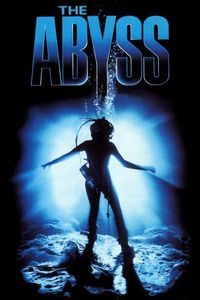
    (Second viewing, On DVD, November 2000) Unjustly forgotten by audiences and dismissed by critics upon its initial release, James Cameron’s underwater epic was partially redeemed in 1992 is it was re-released on video as a longer “special edition”. But this fantastic two-disc DVD edition really does justice not only to the exceptional film, but also to the stunning technical difficulties encountered during the film’s production. Tons of extras make this edition a must-buy for the film’s fans. (Don’t make the mistake of renting it, or you’ll despair at how little time you’ll have to watch it all.) Technical production values are insanely high, and they hold up amazingly well in this era of computer graphics (which it helped along, really). A great film by any standards. See it again.