Reviews

  • The Return, Buzz Aldrin & John Barnes

    Forge, 2000, 352 pages, C$32.00 hc, ISBN 0-312-87424-3

    Note from your reviewer: In these chronicles, I usually try to review every single new SF book I read. Alas, The Return is the type of satisfying thriller that doesn’t really warrant much extended critical thought. So, to get me out of my writing block loop, allow me to meta-review the five reviews currently up on Amazon.com.

    Amazon.com: Old-school moonwalker Buzz Aldrin teams up again with former Hugo and Nebula Awards nominee John Barnes (…)

    Barnes hasn’t, unfortunately, fulfilled much of the promise he had shown earlier with such books as the massive Mother of Storms, the excellent A MIllion Open Doors, the juvenile Orbital Resonance or even his two first undistinguished novels that seemed to prefigure a strong socio-SF writer. His last few books have been a depressing sequel, a men’s adventure trilogy, an anthology and two unconvincing novels (Finity and Candle, both severely evaluated by critics.)

    (…) the duo’s previous effort, 1996’s Encounter with Tiber (…)

    To be fair, The Return is a lot more fun that Encounter with Tiber. Shorter, snappier, more interesting.

    Part thriller, part infomercial for the Aldrin space manifesto,

    …which only matters if you known about Aldrin’s commercial interests.

    The New York Times Book Review, Gerald Jonas: The Return offers dovetailing accounts of a space emergency and rescue by three narrators … who sound like the same person.

    Ouch! True, though.

    f. from Massachusetts, USA: I enjoyed the beginning of this book. It started with a bang, and then just sort of fizzled out for me. The background, the launch and the “accident” I found interesting. It was the tedium of the aftermath that I found dull. The lawsuits, the guilt, the lawyers, that followed…yawn.

    Oooohhh, there we disagree. The first chapters is nearly perfunctory; it brings the characters to the interesting situation. And this interesting situation is how, realistically, a private business would have to deal with disaster in space. That means media, lawsuits and lawyers. For all its faults, The Return has an air of realism that’s very well done.

    (On the other hand, the book gets more an more far-fetched as it goes along and ventures from SF to techno-thriller.)

    D.W from Rochester, New York: The first chapter of this book is AWFUL: a press conference with a smug first-person narrator just cramming back story down our throats.

    Well… as I was saying…

    After that, though, it really does get moving nicely, and by the end you do share Aldrin’s enthusiasm for getting us back into space.

    Absolutely. There is no question that The Return is pro-space propaganda, and it does work quite well. There is a point in the novel where they essentially take away space’s practical benefit to modern society, and the desperation of everyone is real.

    (…) and perhaps the most beautiful book I’ve seen in a while, with a translucent dust-jacket overtop of a glossy hard cover.

    Eeek! No way! The dust jacket is translucent plastic, true, but the design is atrocious and, believe it or not, all the price, blurb, UPC information plus the author and title is only on the dust jacket. There is nothing on the glossy-bound book itself but an illustration! That, to me, is an unacceptable betrayal of the role of a dust jacket—to separate marketing from book, leaving title and author for “serious” library-builders. I can’t imagine the pain of shelving dust-jacket-free copies of this book. I really hope this doesn’t become a trend.

    E.L. from West Palm Beach, FL: THE RETURN covers techno thriller territory familiar for readers of ENCOUNTER WITH TIBER.

    Well, apart from the interstellar flights and the aliens…

    D.S from Los Angeles California: The story tends to wander between courtroom intrigue, nostalgic family drama and techno thriller. (…) It is a fast and easy read at times exciting with the technical side explained in simple terms. A pleasant way to spend some summer reading time.

    There really isn’t much more to say after that.

    So what have we learned from this meta-reviewing exercise?

    1. Amazon.com readers know what they’re talking about. Usually.
    2. You can totally distort someone’s opinion with careful editing.
    3. Modern SF reviewers can steal stuff like never before
    4. The Return: Worth a look, but nothing overly impressive.
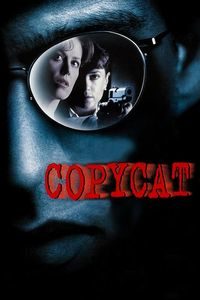
  • Copycat (1995)

    Copycat (1995)

    (On TV, October 2000) Oh yawn; another film starring a devious serial killer. We’re seen so much of those by now that the best a new one could hope to do is to maintain our attention for its duration, which -fortunately- is what Copycat manages to do, despite problems here and there. Though Sigourney Weaver gets top billing, the real star here is Holly Hunter, who somehow manages to look sexy and smart (unlike in, say, Crash) as the lead investigator of a series of murders. The film proceeds with a certain effectiveness and rarely a dull moment. There are disputable choices (such as to take out a major character halfway through) and silly computer stuff (self-erasing files! Super video-editing programs! Ultra-high-speed lines!), not to mention a rather predictable ending, but it’s not all that bad.

    (Second Viewing, On Cable TV, August 2022) Revisiting Copycat after watching many more 1990s thrillers in the thirty years since their release is cause for a re-evaluation. Oh, I still don’t think that it’s a particularly great movie: it wallows a bit too much in its own fascination for serial killers, and there’s an arbitrary aspect to its plotting that either feels chaotic or scattered. But taking the entire crime thriller subgenre of the 1990s in consideration (a subgenre that I rather miss now that it’s gone from the big screen), it does a few things quite right. I did like Holly Hunter’s performance as a flawed but dogged police officer. Sigourney Weaver reigns over the film as a capable FBI profiler driven to reclusion after a violent attack. Some sequences are unnerving, Harry Connick Jr. is out-of-persona creepy as a psychopath, while the plot plays elaborate games with the serial-killer corpus of facts. It also looks, after accusations of plagiarism regarding 2018’s The Woman in the Window, like a much better film than its own… copycats. I normally can’t stand serial killer films, but this one managed to keep my attention to the (bleak) end in its own minor-key way. It probably helps that we don’t get as many serial-killer movies now than before, and for good reason: according to statistics, it does seem as if there are far fewer serial killers now than in the 1990s. The possible explanations for this decline are fascinating (and I’m still putting two bucks on the lead-poisoning hypothesis), but that’s a piece of good new that is not often remarked upon.

  • Bless The Child (2000)

    Bless The Child (2000)

    (In theaters, October 2000) This starts out badly, as a teen addict dumps her newborn baby on the doorstep of her older sister (Kim Basinger, who plays, predictably enough, a child psychologist who can’t have children) and depart for parts unknown. Flash forward six years as the little girl is hunted down by a cult for some nefarious purpose. This unpromising start helps a lot to appreciate the rest of the film, which steadily gets better, and even -gasp!- tugs a few strings in its depiction of the relationship between Basinger’s character and her adopted child. Jimmy Smits had a good turn as a good cop, the Catholic church isn’t depicted as corrupt (though the convent may bring back memories of a Simpsons episode featuring a similar school run by French-Canadian nuns), police procedures are nicely handled, there are a few cool miracles here and there and the film moves with a certain energy that, frankly, simply works better than expected. It’s a B-movie, yes, but a rather entertaining one.

  • Book of Shadows: Blair Witch 2 (2000)

    Book of Shadows: Blair Witch 2 (2000)

    (In theaters, October 2000) This surprised me, and it should surprise you as well. It is obviously much, much slicker (and formulaic) than the controversial original film. It also can’t escape the obvious giggle-factor reflex of thinking about the sheerly lucrative intent of a sequel to a film that already stands as being one of the most profitable in history. The surprising thing is how well it stands up to the original’s originality. Blair Witch 2 assumes the the first one did exist as a film, and features “fans” of the first film, further blurring the reality/fiction line that the first one muddied so well. But this is only a pretext to an exploration of reality, denial and objective truth that works quite well if you’re paying attention. Book Of Shadows (okay, where’s the book?) doesn’t emerges without serious flaws (the caricatural sheriff is a terrible character, and there are several moments where you’ll laugh at the film, not because of it) but it does earn a certain hard-won respect. It’s not a classic, and even calling it good would be dicey, but it’s much better than what you might expect. Many, many people will prefer it to the gimmicky (shakycam) original. It’s fascinating because and despite its relation to the first film, by the sheer distance between the two and by the common bonds that unite them: Sequel, satire, apology, rip-off, homage; it’s all of that. Viewers with an encyclopedic knowledge of horror film and a love for the genre will have a lot of fun dissecting this one. If nothing else, the audaciousness of Book Of Shadows‘s writer/director Joe Berlinger is enough to make it interesting. Oh, and the Wiccan redhead gets naked too.

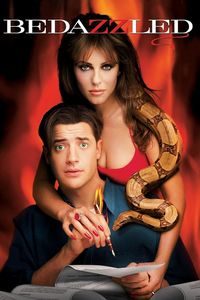
  • Bedazzled (2000)

    Bedazzled (2000)

    (In theaters, October 2000) Some type of movies are virtually critic proof as long as they’re made competently. Bedazzled is the type of high-concept film that never attains even a fraction of its impressive potential, but won’t disappoint most viewers anyway. The reasons are numerous: Good likable performances from leads Brendan Fraser and Elizabeth (wowsa) Hurley, simplistic but not entirely stupid script, numerous set-pieces and a feel-good finale that redeems almost everything. Granted, there are only a few chuckles and not that many laughs, but it doesn’t matter as long as it’s wrapped in an entertaining package. Add a star if you’re a Hurley fan, because she shows up in almost every possible outfit. Average, but fun.

  • A Fall of Moondust, Arthur C. Clarke

    Signet, 1961, 215 pages, C$1.50 mmpb, ISBN Unavailable

    The nice thing about having read a lot as a teenager is that I may keep fond memories of a particular book while forgetting all the details. In the case of A Fall of Moondust (the only Arthur C. Clarke novel in my high school’s library. No, it wasn’t a particularly good library.), I could only remember a fairly good book that ended in mid-story. So, almost ten years later, I couldn’t pass up the chance to pick a good Signet paperback edition of the novel.

    I half-expected to be disappointed. A decade -and probably a thousand SF books- older and more jaded, would it be possible for me to have as much fun as the first time around? Clarke is known for books that appeal enormously to teens, but would I be able to enjoy his particularly mechanistic approach to characterization another time?

    Well, either I haven’t matured all that much, or Clarke has truly written a really good book. I ended up compulsively reading A Fall of Moondust with, I think, even more enjoyment now than ten years ago.

    Written at a time where humans had barely entered the space age, and fully eight years before we went to the Moon, A Fall of Moondust posits the existence of a vast lunar “sea” of very fine dust with liquid-like properties. Humans being notoriously unable to avoid opportunities of the sort, one tourist business starts offering guided tours of the sea using a specialized dust-surfing craft. Obviously, something must go wrong, and that’s why the Selene crashes and sinks under the dust sea with a full load of passengers on board. Search-and-Rescue efforts are mounted, as every passenger has a secret or two to hide.

    Simple plot, but as always with Clarke, it’s the simplicity, the technical details, the oddball throwaway lines and the understated good humor of the book that make it all worthwhile. A Fall of Moondust isn’t fancy, but you don’t need to be complex in order to build a novel of humans against desperate odds. The crystal-clear writing style is a joy to read. No useless character traits murky up the narrative. As the average length of the SF novel has risen to a point where shorter novels are a tough sell (see my review of Robert Charles Wilson’s Bios), A Fall of Moondust is just the right length for a good read.

    Which brings us to my second surprise: After realizing that the book was as good as I remembered, I found out that there was even more goodness that I remembered! Turns out that my high school’s French paperback edition ended right after the ship is located, but before the rescue efforts got underway. French cheapness or incompetent editing? You decide.

    But the net effect was akin to a friend of mine’s fantasy that good books should self-expand to include even more goodness. Suddenly, there was even more fun and entertainment from Clarke! A thrilling rescue sequence! And a complete ending! Can you ask anything more of an updated teenhood memory?

    More maturely, it’s interesting to note how gracefully A Fall of Moondust has aged. The technical details are surprisingly good (once you assume the ocean-of-moondust bit) and the pacing is as snappy as ever. Clarke even throws in ultra-modern disparaging references to the nature of visual media news. Yes, the characters and the plotting are a bit plodding, but don’t interpret that as “substandard”; the relevant members of the Selene catastrophe are adequately presented and somewhat sympathetic despite their rough edges. Funny how hard-SF’s weaknesses can become advantages; you can read SF from the seventies and even if it’s twenty years closer, the no-less-caricatural “new wave” approach to characterization seems more ridiculous than Clarke’s no-nonsense approach.

    The result, at least, is clear: A Fall of Moondust is well-worth a re-visit for those who read it at least a decade ago, and pretty much a must-read for the others. Classic Hard-SF doesn’t really get any better than this.

  • The Trigger, Arthur C. Clarke & Michael Kube-McDowell

    Bantam Spectra, 1999, 447 pages, C$35.95 hc, ISBN 0-553-10458-6

    According to some SF commentators, your reviewer included, science-fiction is about the effects of change on human behavior. That change is usually linked to scientific and technological innovation is unavoidable, but not essential. This definition of SF isn’t perfect (nor accepted by all), but it allows to define an idea-space in which SF can distinguish itself from all other types of fiction.

    At the same time, it allows “pure-SF” fans to distance themselves from the unimaginative drivel that passes itself as SF in the media and in the general population’s worst stereotypes about the genre. In media terms, STAR WARS isn’t SF (it’s fantasy in futuristic trappings) and most of STAR TREK isn’t SF (it’s adventure/soap opera in space) while GATTACA is SF (studying biotechnology-induced changes in humanity) and DARK CITY is SF (musing on artificial manipulation of memory on a society). Science-Fiction should be conceptually solid, imaginative, preferably controversial.

    Needless to say, unimaginative adventures-with-laser-guns are far more common than “true SF”, nowadays as yesterday. But fans of the pure stuff can now run to their bookstores, because a new must-read is in town.

    The Trigger is a “What if?” novel of the first order: What if someone came up with a foolproof way to remotely detonate all nitrate-based explosives? Practically speaking, this would blow up -at a distance- most munitions and explosives in common usage. The perfect gun control tool.

    Had The Trigger been written in any other civilized country in the world, the results would have been interesting, but not much more. Of course, this being published in the United States (let’s not fool ourselves in thinking that English-born Sri Lanka resident Arthur C. Clarke has anything more to do with the book than collaborating to the outline), The Trigger has to face America’s centuries-old fascination with guns, conspiracies and government.

    The results are fascinating. The impacts of The Trigger are examined and explained in great detail, as the discovery is handed from the scientific to the political and military community. Everyone who comes in contact with The Trigger immediately wish it would disappear, but everyone has to face the fact that it’s here to stay, and accommodations must be made in order to ensure its rational use. Gun Lobbies inevitably get into the act, lawsuits fly, private corporations rush Triggers to the market and private citizen watch it all happen with increasing discomfort. Top-notch extrapolation all around, along with some preachiness. Certainly not subtle, but nevertheless compulsively readable.

    There are a few problems, though. The characters of the first half essentially disappear in the latter part of the book. Then the ending falls apart as one character is killed in a rather useless fashion, and another has to face enemies closer to caricature. A shame, because up to that point, The Trigger had labored hard to present “the opposing side” as basically decent people. After the intellectual complexity of the first 400 pages, it’s a let-down to see the climax being nothing but an action-adventure bit facing stock villains. A chilling afterword kind of makes up for it. (Though, given the conceptual breakthrough at mid-novel, one would expect this type of discovery -not to mention bigger, better innovations- to be made much earlier than twenty years later!)

    But it doesn’t really matter. With The Trigger, Kube-McDowell has achieved something quite remarkable: Break the “Clark Collaboration Rule” (which used to state that every novel written in collaboration with Clarke does suck.) and produce a novel that stands alone in its own right. The Trigger is, in general, everything that SF should be: It postulates a radical technological change, follows its controversial social implications and does so in an magnificently entertaining fashion. Don’t miss it.

  • The Wrong Guy (1997)

    The Wrong Guy (1997)

    (On VHS, September 2000) Little-seen low-budget Canadian film starring Newsradio‘s David Foley as a man who thinks himself falsely suspected of his boss’ murder. Clever premise for a take-off on Hitchcock’s thrillers (the credit sequence will hammer this home), but unfortunately, Foley’s character is written as too much of a doofus to be as sympathetic to the audience as Gary Cooper, James Stewart et al. It doesn’t help that the film deviates from its Hitchcockian mold and loses itself in sort of a travelogue across America. Jennifer Tilly disappoints with a short haircut. It’s not that the film is bad; there are a lot of laughs, David Foley is as good as usual and the film doesn’t feel like it’s low-budget. But it’s a disappointment that it can’t do more with what it starts out with.

  • Tin Cup (1996)

    Tin Cup (1996)

    (On TV, September 2000) Even those who can’t stand Kevin Costner should be able to enjoy his turn in this sports (golf) comedy. That Renee Russo is there, looking hotter than ever, should placate the last holdovers. Not a great film by any measure, nor much of a comedy, but it lets itself be watched easily, and the film boasts a few interesting set-pieces. (Most memorable are the two bets between protagonist and antagonist, as well as the protagonist’s fascination for one very specific club.) The ending is interesting, simultaneously damning and following the usual sport conventions by turning victory into defeat and definite defeat into victory. Too imperfect to be all-fun (there are two painful scenes) but worth a look, if not dollars.

  • Survivor (1999)

    Survivor (1999)

    (On TV, September 2000) Okay, so I’m cheating: I only watched the first ten and last five minutes of this TV movie. Why the heck do I feel able to comment on it, then? Because I can interpolate the rest of this strictly-routine Antarctic-base monster film from what I’ve seen. No surprises, no difficulty to follow despite having missed 90% of the film. Draw whatever conclusion you want from that simple observation… They might have simply called it The Thing: The Cheap Version and be done with it.

  • Forever Free, Joe Haldeman

    Ace, 1999, 277 pages, C$30.99 hc, ISBN 0-441-00697-3

    WARNING: Contains necessary spoilers in discussing the book’s failures.

    Fame can do strange things to both performer and audience. An artist whose reputation comes chiefly from hard work and constant professionalism can suddenly find himself able to turn out mediocre work with impunity, as the audience uses earlier works as an excuse to be lenient on newer material. Both sides lose out, because the the artist doesn’t perfect the work, and the audience gets results of inferior quality. In the book industry, best-selling authors can become “editor-proof”, when no one will take take them to task for overwritten books, weak prose or ordinary execution.

    For instance, Haldeman’s thematically-linked Forever Peace won raves and a Hugo despite being a novel that read more like a moderately-competent first-time author’s work than a novel by a veteran of the genre.

    Similarly, It’s easy to pinpoint Forever Free‘s problems, but it gets difficult to ponder why Joe Haldeman wrote the book that way. Especially when it’s the sequel to one of the most famous SF novels ever.

    You may remember The Forever War: Published in 1974 as a Vietnam veteran’s answer to Robert A. Heinlein’s militaristic Starship Troopers (itself a classic), it went on to sell thousands of copies, win both the Hugo and the Nebula awards as well as gain a central position in the genre’s collective memory. The Forever War described the military experience of William Mandella, a physicist-cum-soldier in a war waged during millennia, thanks to light-speed delays. At the end of the first volume, Mandella found himself home with his girlfriend, ready to settle down as Humanity allied itself mentally with the once-enemy alien race.

    As Forever Free begins, Mandella is restless: His two children are grown-up and he’s trying to find a way to prove that his type of human is better than Man, the collective entity now representing most of humanity. His best plan? Hijack a starship and make a one-way trip far in the future to see how it all turns out. Stuff happens and things don’t go as planned.

    More specifically; they limp home twenty-five years later to find out that everyone has disappeared. They investigate and get weird results.

    “How weird” is exactly the problem with Forever Free. While The Forever War (and the first half of Forever Free) is strictly enjoyable hard-SF of the most rigid order (the whole premise of both depends on the absence of Faster-than-light travel), the last pages of Forever Free lazily throw up a completely useless race of shapeshifters (“We’ve been around on Earth for hundred of thousands of your years,” they say offhandedly) and an apparition by God that would be more at home in a Monty Python sketch than in here. (“Oh, you were an experiment, and it’s now time to put away my stuff. Since you insist, I won’t delete you. Oh, I’ve changed to laws of physics while I was at it. Toodles. “) The central mystery of the book isn’t as much solved as it is basically declared irrelevant.

    Needless to say, the result is so outlandish that some readers are likely to give up in disgust a novel that that been perfectly good up to that point.

    Which naturally raises the question; why was it written this way? I offer a few explanations, none of them really satisfying:

    • “Ha! I’ll write you a sequel, you bastard readers! You keep pestering me for a sequel to a twenty-five year-old classic that stands on its own? I’ll give you a frickin’ sequel.” (Also suspected to be the Thomas Harris Hannibal syndrome)
    • “Oh, no! Five days to go on my deadline, or I lose my fat advance! Gotta wrap this up quick!”
    • “It’s like, man, I’ll put my stuff about Goddd and the universe and stuff. It’ll be sooo deeep and stuff. Man, pass the joint again.”
    • “The metaphorical encounters the literal in an effort to make the reader experience the same sense of alienation as the principal characters, which nicely fits into the post-modernist ethos of nihilism-”
    • “Oh gee, I screwed up this one.”

    Pick one… but don’t pick this book in bookstores, and wait for your library copy if you really insist to see what the fuss is about.

  • Sliding Doors (1998)

    Sliding Doors (1998)

    (On VHS, September 2000) Funny how this film can appear to be many things to many people: Romance, Drama, Philosophical Exploration, Fantasy, Science-Fiction or plain old Experiment. In any case, the film follows the adventures of a young woman (Gwyneth Paltrow, in a good turn) whose life is affected in a tiny way that has dramatic consequences. The narrative alternately follows two different paths from that nexus point. Alternate universes? Plain fantasy concept? Whatever the justification, the script is well-written, and if there aren’t as many inter-linking between the two universes as one might have hoped, the dialogue is sharp enough to keep us absorbed in the storylines. The banter between “good-guy” and “bad-hair heroine” is particularly interesting. The conclusion is a downer, though it’s hard to say how else the film might have ended in order to wrap everything up. The French video version of the film has English captioning, which allows to see how the translation loses a lot of the subtle humor of the original script. In any case, an interesting film, and one that should please many very different audiences.

  • Simon Sez (1999)

    Simon Sez (1999)

    (On VHS, September 2000) Dennis Rodman as the star of a new spy-movie franchise? Computer-expert monks? A gorgeous female assassin? A prissy Englishman villain? A Romeo-and-Juliet subplot? Wisecracks by an inept sidekick? Yellow motorcycles, big weapons and a gliding gadget-car? Yes, it’s bad, but not as bad as you might think for what basically amount to a vanity project for Rodman. The impressive cinematography helps a lot (can you go wrong by filming in Mediterranean France?) and if the script does no wonders, it seems to have at least a hint of self-derision to it. Granted, there are plenty of cringe-inducing moments, like two really bad CGI shots and the awful line “let’s work out”, but as a whole, it’s a surprisingly diverting film that should fit the bill for an otherwise-unoccupied Saturday evening… and long as you don’t expect anything.

  • Rounders (1998)

    Rounders (1998)

    (On VHS, September 2000) At first glance, this would appear to be a gambling film, but pay closer attention and you’ll find the structure of a typical sports film here, with the only difference being that the sport here is poker. (“If it’s such a game of luck, why is it that the same players end up finalist at the national tournament?” asks the film) The details of the game and the associated culture are fascinating, and the film does a great job at presenting the inherent drama of the sport. Great actors abound, from Matt Damon and Ed Norton to John Malkovich as a ridiculously accented Russian player. Maybe not as strong as it could have been, but more interesting than not.

  • Pi (1998)

    Pi (1998)

    (On VHS, September 2000) This goes straight in the “quirky indie film” category at first glance, what with is starkly supersaturated black-and-white cinematography, its abuse of repetitive sequences, self-supported cameras, flashy direction and pretentious narration. Nevertheless, there’s some depth to the film, and it takes chances. As a first-time feature, it show promise for its director Darren Aronofsky. Viewers with some scientific and technical literacy will quickly see through the film’s techno-babble. The ending is somewhat disappointing, but fits the overall film quite well. Worth a look if you’re in that type of experimental film, but definitely not a crowd-pleaser.