Year: 2010

  • The Ramen Girl (2008)

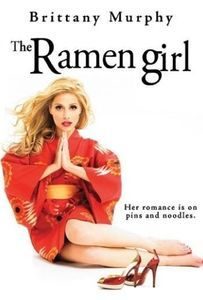
    The Ramen Girl (2008)

    (On DVD, October 2010) Stop me if the story sounds familiar: A well-intentioned but generally clueless westerner goes to a foreign land they are forced, through various circumstances, to learn an exotic trade despite language problems and inner struggle.  The Ramen Girl is a film on auto-pilot, a slight trifle that has enough script problems to explain why it went straight-to-DVD and why I had never even heard of it before a friend loaned it to me.  Exasperating, conventional, awkwardly-staged and almost empty of content, this comedy still remains surprisingly charming.  While Brittany Murphy’s untimely 2009 death now lends an unfortunately gravitas to the entire film, The Ramen Girl allows her to play her usual airhead stereotype with a bit of energy… which is pretty much what the script needed.  But the best thing about the film is the luscious way is presents food, and the ever-fascinating portrait of Tokyo.  These glimpses at another culture more than sustain the film through a ridiculous setup, another annoying carnival of linguistic frustrations and behaviour that would have any rational person calling the police.  What’s unfortunate, though, is that despite a few quasi-fantastic scenes, The Ramen Girl never completely embraces the magic realism tone in which the story would have been far more satisfying.  Still, my attention was gripped… and I made it halfway through the film before the abrupt realization that I had some instant noodles just waiting for me in my cupboard.  This is a film made to be accompanied by its culinary equivalent.  Don’t watch it without a bowl of steaming ramen on hand.

  • Creation (2009)

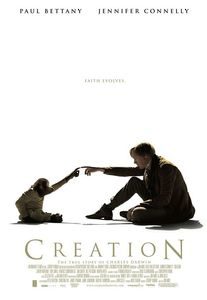
    Creation (2009)

    (On DVD, October 2010) I’m far too cynical to label any film as a “public service”, but the nature of Creation in today’s hyper-politicized controversy over evolution is such that I can’t help but admire the contribution that a well-made drama can bring to the public understanding of the man behind one of the most fundamental ideas of all times.  A heavily dramatized account of the years Charles Darwin spend perfecting the manuscript for On the Origins of Species, Creation delivers a portrait of the icon as an immensely fallible man, tormented by visions of a dead daughter and debilitating convictions of heresy.  It is, in many ways, a depiction of Darwin influenced by his critics, and yet a revealing look at a time where people thought very differently.  The film wasn’t widely screened in theaters for reasons that soon become obvious to casual viewers: This is a film not of outer action, but inner struggles and the clash of new concepts.  Like many works of primary interest to intellectual audiences, it presents ideas as inherently interesting and studies how people are affected by them.  (Don’t tell anyone, but that’s as good a definition of Science Fiction as any).  It’s not really helpful to add that the film is slow, contemplative and occasionally grating from a contemporary perspective.  At times, overly-dramatic Creation seems to play more as a pre-emptive answer to Darwin’s critics rather than a celebration of the scientist himself.  But there are a few standout sequences in the mix (an accelerated view of how species interact in nature is particularly good), while both Paul Bettany and Jennifer Connelly are effective in their roles.  It all amounts to a film that will be presented in classrooms for a long time, and serve as a reminder that cinema can occasionally rise to the occasion and deliver a compelling celebration of human thought.

  • The Killer Inside Me (2010)

    The Killer Inside Me (2010)

    (On DVD, October 2010) Medium-budget films featuring a cast of known actors but popping up unexpectedly on DVD shelves always present a challenge for viewers: Is it possible to guess why the film wasn’t given a wide theatrical release?  In the case of The Killer Inside Me, the truth gradually dawns that in-between the period setting, awkward staging, rough sex and unconvincing script, the film would have been savaged by reviewers looking for a middle-of-the-road thriller.  And yet, the cast remains impressive, with a few standouts being Jessica Alba as a prostitute who gets the worst of a bad deal, whereas Kate Hudson is strangely credible as a white-trash woman and Casey Affleck becomes as repulsive as he can be as a deputy sheriff gradually revealed as a full-blown psychopath.  The period setting is a hint that the film is adapted from a classic noir novel by Jim Thompson, but a bigger clue is found in the strikingly clumsy staging and character motivations as portrayed on-screen: Novels allow for inner monologues that don’t always translate harmoniously to the big screen, and The Killer Inside Me often feels forced in its graphic violence against women, unexplainable character motivations and repellent protagonist.  A novel getting in the head of a criminal is something that a film simply portraying that violence can’t aspire to.  Numerous decisions, such as the graphic brutality directed at women, the loathsome protagonist and the slow pacing, end up grating more than they convince.  As such, the adaptation can’t aspire to much more than a curiosity for noir fans, even though the period detail is convincing (except for the anachronistic trailer-tanker that shows up during a chase sequence) and the acting talent does the best with the script it’s given.  By the end of the film, there’s no doubt that its proper place is on DVD shelves, and then on to oblivion for most viewers.

  • Zero History, William Gibson

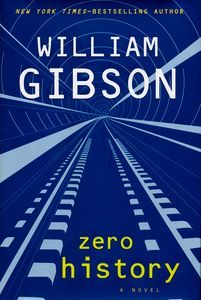
    Zero History, William Gibson

    Putnam, 2010, 404 pages, C$31.00 hc, ISBN 978-0-399-15682-3

    I can just imagine a conversation between myself and a time-traveling SF fan from the late eighties.

    Fan: Is William Gibson still writing?
    Me: He sure is.  In fact, he’s famous; people pay to go see interviews with him, and his latest novel Zero History just came out.
    Fan: Oh wow!  That sounds interesting!
    Me: Actually, it’s a novel set two years ago in which a recovering addict and an ex-rock star go investigate the makers of a mysterious brand of jeans.
    (Lengthy pause)
    Fan: You’ve got to be kidding me.
    Me: No, that’s actually the truth.
    Fan: Your future sucks; I’m off to play D&D with my buddies.
    (poof)
    Me: Aw, and I didn’t even have time to tell him about the iPad.

    The point being that Gibson, perhaps more clearly than any of his Hugo-winning mid-eighties contemporaries, isn’t writing the same kind of fiction than he did.  Why should he?  People grow old, change, become interested in different things and that’s perfectly fine.

    The problem may come when we insist on reading Gibson in the same way we did at first.  It’s not exactly a revelation to say that Gibson is still writing about the same things he did in Neuromancer, except that they are now all around us rather than in some unspecified future.  In many ways, his writing style hasn’t changed: It’s still heavy in visual descriptions, brand names, fashions and attitude.  Behold this sentence:

    After Clammy had decided to go back to the studio, her white plastic bottle of Cold-FX wedged precariously into a back pocket of his Hounds, departing the Golden Square Starbucks during an unexpected burst of weak but thoroughly welcome sunlight, Hollis had gone out to stand for a few moments amid the puddles in Golden Square, before walking (aimlessly, she’d pretended to herself) back up Upper James to Beak Street. [P.47, with reluctant thanks to the Russian hackers who put the entire text of Zero History on-line where it was indexed by Google, so that I could copy-and-paste the passage rather than re-type it in.]

    I went to a live Gibson interview at an Ottawa writer’s festival shortly after reading Zero History, and it’s clear that he hasn’t been interested in being perceived as a Science Fiction writer for a while.  Maybe it’s time to do both the author and the genre a favour and start distancing Gibson from SF: If he still sees the world through a prism shaped by SF, that makes him a genre-friendly mainstream author… but a mainstream author nonetheless.  Gibson would rather write the kind of fiction that Gibson finds interesting than being stuck in genre conventions.  If you squint, you can almost see Zero History as a thriller, but an unusually limp one: Like Pattern Recognition and Spook Country, this novel isn’t really interested in trifles such as narrative tension, plotting, suspense or action sequences.  It may have a laboriously set-up climax in which a hacked Festo floating penguin zaps a villain through a Taser activated by iPhone, but that duct-tape cyberpunk is all of the techno-excitement that Zero History has to offer.

    In fact, the “Bigend trilogy” he’s been working on since Pattern Recognition shows to what extent he is now recasting in fictional form what catches his attention as he surfs the web.  His novels have become inseparable from the Internet in that we’re practically asked to Google his references in describing the world of his novels.  That’s a particular form of reading pleasure, I suppose, but one that’s quite distinct from his eighties fiction.  Let’s appreciate it for what it is.

  • Buried (2010)

    Buried (2010)

    (In theaters, October 2010) Anyone who admires a bit of cinematographic audacity should flock to see Buried, a minor tour-de-force in thriller moviemaking.  It has one rule, and it’s daring: The entire film features one character, stuck in a coffin.  There are a few refinements, including a high-tech smartphone, but that’s essentially it.  Not cutaways to outside shots, no flashbacks, no fantasy sequences.  At most, there are a few bright lights and cuts to the phone to show some video.  As a device, it’s remarkably effective at leashing us alongside the character as he attempts to understand what’s happening to him, and contact the outside world to help him get out of there.  Claustrophobic to the extreme, Buried has the luxury to fully explore its options, milk its premise for all it’s worth and create a deep sense of unease for its audience.  As the quasi-sole actor in the film, Ryan Reynolds is up to the mesmerizing nature of the premise, and easily holds the audience’s interest throughout the experience.  The film is more interesting for longer than anyone would expect, in no small part due to Chris Sparling’s clever script and Rodrigo Cortés’s inventive direction.  Low-budget but high-impact, Buried may falter a bit during an obvious and disappointing climax, but otherwise escapes judgement to become a pure cinema experience.

  • The Accidental Billionaires, Ben Mezrich

    The Accidental Billionaires, Ben Mezrich

    Doubleday, 2009, 260 pages, C$29.95 hc, ISBN 978-0-385-52937-2

    I suppose that The Accidental Billionaires was inevitable: In his previous non-fiction work, Ben Mezrich has shown how much he loves to write about Boston-area young men who go on to make a lot of money, and so one could only count down the minutes until he turned to the Harvard-educated founders of Facebook.  As the book’s sub-title proudly announces, what’s not to like about “A tale of sex, money, genius and betrayal”?  That’s as good a shorthand as any to describe Mezrich’s chosen specialization.

    As usual, it’s best to approach Mezrich’s non-fiction novels without any expectations of journalistic rigor.  Even though The Accidental Billionaires may be better-documented than any of Mezrich’s non-fiction so far, it’s still largely told from the perspective of a single primary source, that is Eduardo Saverin, the Facebook co-founder who was shut out of the company as it grew to become today’s behemoth.  Mezrich acknowledges this connection up-front, as well as the fact that the better-known Mark Zuckerberg “declined to speak with me for this book despite numerous requests.” [P.2] The Accidental Billionaires may rely on court documents, newspapers articles and public records, but it remains Saverin’s story –the truth, if ever it comes out, will no doubt be considerably less colourful than what’s presented here.

    If this story sounds very familiar, you may have seen David Fincher’s The Social Network, a 2010 movie reviewer’s darling partly due to a snappy screenplay penned by Aaron Sorkin.  While the film is officially adapted from the book, a number of clues suggest that Sorkin used Mezrich’s sources and storyline, then went in his own direction –indeed, even a cursory read of the book after seeing the film will reveal a number of differences: The film is tighter, uses a convenient framing device, and is filled with symbolism that reality (or even the book’s version thereof) would be hard-pressed to provide.  For instance, the book suggests that Saverin’s then-girlfriend did set one of his gifts on fire… although not quite in the way the film presents it: Saverin wasn’t there speaking on the phone as his room nearly went up in flames.

    If nothing else, The Accidental Billionaires is quite a bit more up-front than Mezrich’s other books in acknowledging its loose connection with reality, beginning with an author’s note that admits up-front that a portion of what we’re about to read is fantasy.  But questions of veracity eventually take a back seat to pure entertainment.  Anyone who has read Mezrich’s other works of docu-fiction can assume that he spiced things up in rewriting the story.  He recasts the events in the form of a quasi-novelistic narrative, providing us with scene-setting, dialogue, inner monologue and poignant scene endings.  The only question becomes… is the story interesting to read about?

    It does works well in building a compelling narrative: The Accidental Billionaires is readable in a blink.  Saverin’s betrayal as his former friend Zuckerberg allows him to be replaced at the core of Facebook is well-portrayed even though more sceptical readers will want to consider the source and Mezrich’s tendency to favour drama rather than reality.

    There’s a debate to be had, I suppose, about what standards of dramatization we’re ready to accept, and whether readers are complicit in accepting fanciful tales if they find their presentation enjoyable.  One of the biggest lies told by fiction is that there are such things as narrative arcs, momentous decisions, good or evil motivations, sharp dialogue and consistent personalities.  The Accidental Billionaires is enhanced reality, not a faithful portrait of history.

    Doubts about Mezrich’s work are complicated by a fog of legally binding settlements and greedy motivations: at this time, even solid journalistic work may be unable to reveal the real story.  Considering that Facebook isn’t even ten years old and that all of the principals are still alive, this is both troubling and temporary: Troubling in that we can’t even get a straight answer at this time; temporary because sooner or later, tempers will cool down and we may then finally understand the complex web of motivations behind Facebook’s foundation.  In the meantime, there’s at least an entertaining book to attempt making sense of it.

  • The Social Network (2010)

    The Social Network (2010)

    (In theaters, October 2010) I will admit my scepticism regarding the idea of this film.  A drama about Mark Zuckerberg and Facebook’s early days?  Why would David Fincher waste his time doing that?  Granted, I find Facebook more interesting as a socio-technological phenomenon than as the hub of my online life, but still:  Isn’t it a bit early to start making films about such a trivial subject?  What I should have figured out is that five years ago is forever in Internet time, that Fincher knew what he was doing and that there was an interesting story at the heart of it all.  Very loosely based on Ben Mezrich’s docu-fictive The Accidental Billionaires, The Social Network does manage to tell a compelling drama in an entertaining way and even comment on a few contemporary issues along the way.  The heart of the piece is in the story of how intellectual arrogance and runaway success can ruin friendships, but the real delight of The Social Network is in the ever-compelling script penned by Aaron Sorkin, from a fast-paced first dialogue that sets the tone, to a structure that jumps back in forth in time (the latter chronology being nowhere in the book), to the clever weaving of themes between old-school social clubs and new-style social media.  As an acknowledged nerd, I was stuck at the picture’s fairly accurate portrait of how some very smart people behave, as well as the accuracy of some technical details early in the film.  Fincher’s direction may be less visually polished here than in his other film, but it’s effective and coherent: this is a solid drama, and it deserves a flat and grainy picture.  (The film’s most striking bit of visual polish, at a regatta, echoes the miniature-faking tilt-shift focus meme that briefly fascinated internet photographers a while back.)  The Social Network also benefits from a number of striking performances, from Jesse Eisenberg’s deliberately stunted portrait of Zuckerberg to Justin Timberlake’s magnetic Sean Parker to Armie Hammer’s Winklevii.  Part of the appeal is seeing high-powered people interacting (the script uses a “that’s the famous person” joke at least twice to good effect.) in ways that are at least plausibly based on reality.  It all amounts to a film that’s quite a bit better than the sum of its parts would suggest –true moviemaking alchemy that leaves viewers wondering how and why it all worked so well.

  • The Last Train from Hiroshima, Charles Pellegrino

    The Last Train from Hiroshima, Charles Pellegrino

    Henry Holt, 2010, 367 pages, C$33.00 hc, ISBN 978-0-8050-8796-3

    When I ordered The Last Train from Hiroshima from amazon.ca in February 2010, the media frenzy around the book had just started: Allegations about the book’s dubious veracity had started to flare up, with numerous experts identifying many mistakes in the narrative.  By the time the book arrived at my house, Pellegrino’s academic credentials had been debunked and the publisher had announced that it was pulling all copies of the book from shelves.  In some sense, my copy of the book had ridden its own Last Train from Amazon: Even today, Pellegrino’s latest remains unavailable from either amazon.com or amazon.ca, being sold by other vendors at premiums making my purchase look like a savvy investment.

    But I’m not the smart one in this story.  Frankly, I ordered the book not because of the controversy, but because I’ve been a Pellegrino fan ever since his 1998 Science Fiction novel Dust.  This had led me, through the years, to most of his bibliography, including a number of very enjoyable non-fiction books.  I won’t try to re-write my reviews: You can go explore my “Charles Pellegrino” tag to point and laugh at my credulity regarding Pellegrino’s so-called non-fiction.

    As I microwave a platter of crow for public delectation, I will at least acknowledge having had some doubts as to whether Pellegrino’s brand of emotionally-driven scientific non-fiction was entirely truthful.  There were so many uncanny anecdotes buried in the text, so many dramatic moments, so many convenient coincidences that I asked knowledgeable people at SF conventions whether Pellegrino was entirely legit, and wasn’t entirely reassured by the answers.

    When the Last Train from Hiroshima story exploded, a lot of people started scrutinizing Pellegrino’s grandiose claims.  Did he really provide inspiration to Michael Crichton’s dinosaur-cloning technique in Jurassic Park?  Is he really a renegade Ph.D. from New Zealand?  Tall tales are tall tales –but when they’re supposed to establish credibility for someone writing scientific non-fiction, they upset the presumption of expertise that readers tacitly bestow upon writers of works informing us about the world.  And once the first domino falls…

    I was frankly reluctant to read Last Train from Hiroshima for the same reasons I don’t usually read older scientific non-fiction: So many things have changed since then that I would be putting bad information in my head.  Would reading Last Train from Hiroshima skew what I thought I knew about the American nuclear bombardments of Japan?

    There’s no good way to read a book about nuclear holocaust when it comes with a constant mental warning saying “All of this may be made-up”.  True to his previous books, Pellegrino milks science and history to their most dramatic extent, putting as much feeling in the narrative as technical details.  Readers approaching the book without prior knowledge of the controversy may feel a twinge or two of pure empathy for those who died at Hiroshima and Nagasaki, to say nothing of the survivors fated to lives cut short by radioactive fallout.  For those who suspect that a good chunk of the book is made up, though, it’s a harder sell.

    Much of The Last Train from Hiroshima controversy surrounds the testimony of Joseph Fuoco, whose surprising claims about the delivery of the American bombs have been cast in doubt by just about every knowledgeable military expert.  Alas –and this really hurts—readers eventually notice that most of the American material in Pellegrino’s book is sole-sourced to Fuoco.  Cut that out and you may as well have half a book.  The scant sourcing of The Last Train from Hiroshima through a thin bibliography might as well douse the flames of doubt.  Add to the that the other questions regarding the content of the book (including Japanese testimony we might as well know nothing about), and the only thing to do is to wrap the book in heavy opaque “Memetic Hazard” tape and shelve it alongside other potentially harmful material as occult woo-woo.  It’s the only sane response.

    And if you think that the damage is limited to just Last Train from Hiroshima, you’re fooling yourself: the doubts extend retroactively to every other non-fiction book that Pellegrino has even touched.  The Jesus Family Tomb had already raked up its share of controversies along with the 9/11 section of Ghosts of Vesuvius, but the one that really rankles is Chariots for Apollo, which I had taken to be a pretty good history of the Apollo program; what’s the quotient of crap-to-fact in that one?

    And that’s the true price to pay for even a few mistakes in non-fiction books: It casts the entirety of Pellegrino’s work in question, no matter how meritorious it can otherwise be.  On the other hand, I’m still allowed to like Pellegrino’s Science Fiction.  Now there’s an irony here that I may savour for a while.

  • The Monster of Florence, Douglas Preston with Mario Spezi

    The Monster of Florence, Douglas Preston with Mario Spezi

    Grand Central, 2008, 322 pages, C$28.99 hc, ISBN 978-0-446-58119-6

    Douglas Preston is best known as an author of contemporary thrillers.  Either by himself (Tyrannosaur Canyon, Blasphemy) or collaborating with Lincoln Child (the Pendergast series), he has earned a sizable following as one of the most popular fiction writers.  In The Monster of Florence, however, he switches to non-fiction; first, with a historical description of the serial killer known as “The Monster of Florence” (“Between 1974 and 1985, seven couples –fourteen people in all—were murdered…” [P.5]) and then what happened to him when he got too close to the story (“I was accused of being an accessory to murder, planting false evidence, perjury and obstruction of justice, and threatened with arrest if I ever set foot on Italian soil again” [P.5]). It’s the story of a writer as character, and it’s as good as his novels.

    The Monster of Florence starts innocently enough in 2000, as Preston contemplates a major lifestyle change: having earned a comfortable living as an author, it’s now possible to him to envision living the life he has always imagined for himself.  Why not move to Italy’s bucolic countryside, not too far from Florence, and research a long-gestating murder mystery novel?

    But a chance encounter with a journalist and a mention of his current residence dredges up the sordid story of a serial killer preying on couples.  The first half of the book is a historical account of the crimes.  The second one is far more personal and tells of what happens when a visiting American inadvertently starts making local authorities look bad.  In-between, we get a good look at Florence, a city that has shaped Italy (Florentine upper-class dialect largely defined the Italian language after the unification of the country) and yet, even today, stands apart from the rest of the country due to its self-image as a cradle of fine culture.

    But first, the true-crime aspect: Essentially unknown to American audiences, the story of the Monster of Florence spans roughly sixteen years from 1968 to 1985.  During that time, eight couples were murdered in the hills around Florence where they had sought a bit of intimacy.  Three men have been arrested and convicted for those murders, but many still suspect that the real killer has not been caught; among them is Mario Spezi, a Florentine journalist who has covered much of the case for a local newspaper.  When Preston meets Spezi, he is quickly fascinated by the case, and the suggestion that justice has never been served upon the true killer.

    That’s when The Monster of Florence takes an unexpected turn: As Preston comes closer to the case and forms a team with Spezi, their investigative efforts start annoying the Florinese police forces, who eventually accuse Spezi and Preston with obstructing justice… and more.

    Worth keeping in mind throughout the narrative is Preston’s description of the Italian way of life, fregatura, littered with casual corruption: “doing something in a way that is not exactly legal, no exactly honest, but just this side of egregious.” [P.171]. When you’re a member of the community, fregatura works.  When you’re out, well… bad things happen.  Preston is grilled by the Florinese police forces, then told to get out of the country and stay out.  If you ever want to understand the experience of being intimidated by police authorities while visiting a foreign country, then this is the book for you.  What’s a bit of xenophobic colour compared to permanent exile?  Preston can leave (and does so), but Spezi is in a very different situation, and eventually Preston has to use every bit of influence he has in the media world to try to get his friend out of trouble.

    The first half of The Monster of Florence is ordinary: straight-ahead material, well-fleshed but dealing in criminal mysteries without a satisfactory answer.  It’s the second half of the book that raises it above the background din of similar true-crime stories.  We’re used to see thriller writers as bookish personalities in every way detached from what they write about… so it’s a bit of a shock to see a familiar author dragged into the madness of a criminal case, and the way authorities react to his efforts.  Numerous nods to other thriller figures (chief among them Thomas Harris, who was the first to write about the Monster of Florence in Hannibal) make this book of particular interest to genre readers despite its billing as non-fiction.  Ironically, it’s Preston’s personal story rather than Spezi’s descriptions of the murders that may put you off from visiting Florence.  But that’s what you can expect when a stranger-than-fiction story lands upon a novelist: a crackling good book.
  • The September Issue (2009)

    The September Issue (2009)

    (On DVD, September 2010) The September Issue does something very clever in its first minute: it confronts viewers who dismiss the world of fashion with sweeping statements that just betray their ignorance.  (“people are frightened about fashion. Because it scares them or make them feel insecure they just put it down”) Thus challenged, viewers can settle down to enjoy a behind-the-scene look at the making of “the bible of the fashion industry”: The deeply influential September issue of Vogue magazine, which has the power to set trends for an entire season.  This is one of those silent-narrator films (although the cameraman gets dragged into a photo-shoot late in the film, with hilarious results), leaving enough space for Vogue magazine’s staff.  The two dominating figures are quasi-legendary editor Anna Wintour and creative director Grace Coddington: both squabble over the magazine’s layout, Wintour seemingly dominating for much of the film but eventually accepting Coddington’s advice by the end.  (Given the contrast between the haughty Wintour and the earthier Coddington, this also stands as the viewers’ vindication.)  There aren’t any big revelations or apologies about taste-maker Wintour, but that’s almost OK given the need to keep such figures on a quasi-mythical level. (Those who come to The September Issue with her caricature in The Devil Wears Prada in mind won’t be surprised or disappointed.) Otherwise, it’s a peek at the prodigious style factory that is Vogue, where considerable time and effort goes into making stunning pictures that may be discarded on a whim.  Not enough time is spent on the actual graphic design of the magazine, but we get enough of models, photographers and editors trying to make sense of such a logistical undertaking.  The end result isn’t much of a critical exploration of Vogue or its industry, since The September Issue is unarguably sympathetic to the world of fashion: after seeing so many people working hard at putting out such a beautiful product, how could it be otherwise?

  • Get Him to the Greek (2010)

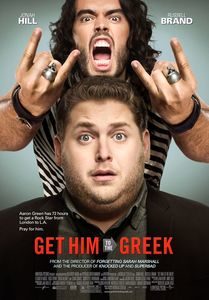
    Get Him to the Greek (2010)

    (On DVD, September 2010) This movie pushes a lot of my anti-humour buttons: I’m still sceptical about a good chunk of the latest British comics, and Russell Brand’s fame seems as unexplainable to me as that of Steve Coogan or Sacha Baron Cohen.  (To say nothing of Jonah Hill, who feels like a less-funny Seth Rogen… and I don’t think of Rogen as particularly funny.)  Raunchy comedies aren’t my favourite sub-genre either, and I’m getting too old to play the spot-the-pop-references game in which Get Him to the Greek often indulges.  Those biases exposed, I still had quite a good time watching the film, in part because of its go-for-broke willingness to throw just about everything at the screen and hope some of it will be amusing to viewers.  Much of the celebrity cameos were wasted on me, except for Paul Krugman’s deliciously unexpected appearance.  Who would have thought?  Brand’s grander-than-life portrait of a rock star living to the maximum is enough to make us pine for the decline of mass-marketed music, while Sean Combs turns in a equally-enjoyable performance as an overblown music executive.  The film’s R-rated language and themes creates an atmosphere in which nearly anything can happen (including some things that you hope wouldn’t) and that kind of dreamlike no-limits feeling is something that’s relatively rare in today’s PG-rated comic landscape. Get Him to the Greek is undisciplined and scattered, but there isn’t as much grossing-out as you may expect… and even some overdone sweetness by the end.  Too bad that the more responsible plot elements end up looking so dull and worn-out compared to the film’s excesses: a script polish may have been able to smooth out some of those edges.  What’s there, however, is at least funnier than most other comedies on the shelf.  It may even surprise those of you who don’t expect much.

  • Time Odyssey 2: Sunstorm, Arthur C. Clarke & Stephen Baxter

    Time Odyssey 2: Sunstorm, Arthur C. Clarke & Stephen Baxter

    Del Rey, 2006 reprint of 2005 original, 356 pages, C$10.99 mmpb, ISBN 0-345-45251-8

    Freakishly obsessive readers of these reviews have probably noticed a shift in my attitude toward Science Fiction over the past few years.  I read less of it (non-fiction seems more interesting to me these days), I don’t look at it so uncritically and I get less and less patient with its self-indulgences.  Anyone would be forgiven to conclude that I’m slowly moving away from the genre.

    But that’s not true: SF is still my favourite genre, and I’m going to use Arthur C. Clarke and Stephen Baxter’s Sunstorm as my proof.  Because the real test of a fan is whether they can still find something worthwhile in an otherwise average genre novel.  Sunstorm won’t go down as any kind of classic (in fact, barely five years after its publication, it has already faded away) and yet I was able to sink into it like a warm comforter.  It’s a book that I can read on auto-pilot, almost without any effort given how close the novel’s assumptions are to my own.  From the moment the dumb premise is explained and the real meat of the novel is exposed, it’s pure classic old-school SF, and it made me smile even though I can acknowledge that I have already forgotten/forgiven most of its dull or ridiculous parts.

    As the second entry in the as-of-yet-unfinished “Time’s Odyssey” series, Sunstorm is supposed to be a follow-up to Clarke/Baxter’s Time’s Eye (2004), but save for a very loose tying of both novels together by common antagonists and a viewpoint character, there’s little link between the two stories.  While Time’s Eye imagined a showdown between Alexander the Great and Genghis Khan on an Earth littered with slivers of its own past for no greater rationale than alien amusement (talk about a fanboy premise run amok), Sunstorm features the same plot-justifying aliens destabilizing the sun.  After an initial catastrophe early in the novel during while the sun pulses once with devastating results, scientists discover that within five years another building pulse of energy will essentially fry all of Earth.

    That’s when the fun begins.  Because while nearly every other non-genre writer would jump on an opportunity to write about a world coming to grip with its imminent destruction, both Clarke and Baxter hail from the old can-do school of SF as an hymn to human ingenuity.  Rather than roll over and wait for the ultimate sunburn, much of humanity unites behind a grandiose project to build a planet-sized shade that will deflect enough of the radiation.

    I have always been very susceptible to engineering-fiction, and so within pages of the project’s inception, Sunstorm was making me purr with details of how such a shield could be launched, built, assembled and steered.  Scientists come up with a series of solutions to bewildering technical problems, religious fundamentalists mount attacks on the project, hardy blue-collar workers assemble everything in orbit, governments mount last-ditch defenses to further alleviate the effect of the impending sun-storm and readers gets to enjoy a classic SF novel.  The prose is direct, the conflicts aren’t complex, the resourcefulness of the characters is considerable and the enemies are clearly identified (so are the fools, who deservedly burn after disregarding helpful scientific advice): Sunstorm can’t claim to sophistication, and that’s part of its charm.  As comfort reading for people having grown up on a certain type of Science Fiction, it’s hard to beat.

    As a follow-up to Time’s Eye, it’s too disconnected to be of much use: It solves no questions and just uses the alien threat as another plot driver.  But as a reminder of how much fun SF can be when it gets down to the essentials of why it exists as a genre, it’s a highly enjoyable read even though it’s not much of an elegant piece of fiction.  SF fans will love it, non-SF fans will dismiss it, and sometimes that’s exactly how genre novels should be.

  • Wall Street: Money Never Sleeps (2010)

    Wall Street: Money Never Sleeps (2010)

    (In theaters, September 2010) As someone who’s on record as writing that the original Wall Street was “the definitive film of the eighties”, it goes without saying that I had been dreading the idea of a sequel: why mess with quasi-perfection?  As seductive as the idea was to revisit those characters in the context of another financial meltdown, there’s no need to say that the idea of a sequel was entirely useless.  After seeing the film, I still feel the same way: While director Oliver Stone’s film (he didn’t write it, curiously enough) is a lucid treatment of the 2008 financial crisis and has some interesting things to say about the shared hallucination that are today’s financial markets, it merely plays on the existing Wall Street brand and quickly becomes bogged down in a superfluous romantic drama featuring perhaps the blandest young couple in contemporary cinema.  (Shia LaBeouf’s continued acclaim remains a mystery to me given his lack of on-screen personality, but he’s a charismatic powerhouse compared to Carey Mulligan.)  With serial numbers filed off, Wall Street 2 is a lucid high-stakes drama skillfully dramatizing a difficult subject… but as a sequel, it lacks some oomph and magic.  Still, occasionally, it shines a bit brighter than usual.  One fascinating facet of the film’s direction is the blatant use of infographics to illustrate what the characters are saying, reflecting the way our world has become far more abstract since 1987, to a point that we even think in information being presented as computer graphics.  While Gekko’s character has been considerably softened (a good creative choice, given the character’s age and his prison experience), Michael Douglas’ august performance still makes him one of the film’s chief attraction –to say nothing of a delightful cameo from another character in the Wall Street universe.  What may be missing from the film, however, is the kind of dripping popular outrage that keen observers of the recent meltdown have felt at the way corruption, sociopathy, greed and sheer criminal behaviour are endemic in the financial sector.  Wall Street 2 never gets angry the way the original did, and seems content to play with money as long as the right people get some.  But wouldn’t that, in itself, be the most damning indictment of our times as seen from 1987?

  • The Town aka Prince of Thieves, Chuck Hogan

    The Town aka Prince of Thieves, Chuck Hogan

    Scribner, 2010 movie tie-in re-edition of 2004 original, 364 pages, C$18.99 tp, ISBN 978-1-4391-9650-2

    Sometimes, I wonder if movie adaptations somehow ennoble their source material.  Having been made subject to multi-million dollars films and subsequent marketing campaigns, source novels may be given a patina of respectability that would have completely escaped them had they stayed un-adapted.  Even unconsciously, readers may be tempted to approach them in a better frame of mind.  The movie provides images and sound to the novel’s prose, and so readers may feel as if they’re reading with a subtle wind at their back: they can easily picture characters, read through scenes knowing the overall shape of the plot and enjoy the extra richness of detail that comes from having access to non-spoken exposition, inner monologue and evocative prose.  Reader who, like me, have a habit of holding off on books until they’ve seen the movie always benefit by getting more out of the novel after the movie rather than being disappointed by film after the novel.

    Those screen-to-page comparisons usually work best when the adaptation is reasonably faithful and when both film and book are worth a look.  Pairs like Chuck Hogan’s Prince of Thieves and Ben Affleck’s The Town, for instance.  Renamed on-screen, most likely to avoid any confusion with memories of Kevin Costner’s 1992 Robin Hood film, Hogan’s novel is decently adapted, with enough differences to make happy viewers out of happy readers and vice-versa.

    Set in 1996 Boston, Prince of Thieves studies a professional bank robber named Doug MacRay, a once-promising hockey player who has since recycled himself in the criminal underground as the planner of elaborate bank robberies and armoured-car assaults.  Hailing from the North-shore neighbourhood of Charlestown, Doug and friends are the kind of robbers who do a job every few months, supplementing their cover jobs with extra cash.  But as the novel begins, one member of the group decides during a heist to take hostage a young manager named Claire, a decision that puts extra pressure on the FBI’s robbery unit to track them down and leads Doug to check up on the freed Claire days after the robbery.  Romantic complications soon ensue.  Doug, as it turns out, really wants to escape the criminal lifestyle… but first he will have to come clean to Claire, and find a way to leave his friends behind.

    Criminal thrillers are a dime a dozen, but Prince of Thieves is better than most.  Its most obvious advantage would be the satisfyingly complex plot, which mixes friendships, romance, drama, thrills and procedural details about bank robberies.  Hogan can rely on a plot that allows him to touch upon a number of sub-themes, and the novel is compelling for the way the characters are stuck between mutually contradictory emotions as they try to manoeuver between their loyalties and their true desires.  It’s a rich, old-fashioned narrative, occasionally peppered with a few action scenes.  The criminals moving the novel forward are experts at what they do, and so are the FBI agents tracking them: the result is a detailed look at the state of bank robberies as of 1996, perhaps the last great era for grabbing physical money.

    Hogan can write as well as he plots, and there are a number of turns of phrase in Prince of Thieves that are good enough to appreciate on their own.  His writing isn’t pared-down, but it’s straightforward and evocative.  Needless to say, the novel has a strong lower-class Boston-based atmosphere that ties the characters and plotting together.  It’s the written equivalent to a well-edited film: it just flows forward, rewarding the audience along the way.

    Comparisons between both forms of Hogan’s story will note that the film is lighter on technical explanations, and for some mysterious reason avoids replicating the movie theatre robbery that is one of the book’s standout sequences.  Much of the structure of the book is otherwise kept intact, save for a greatly reduced subplot involving the FBI agent character.  Both versions of the story end up with a daring robbery at Fenway Park and a thrilling chase down nearby streets.  The one significant difference that audiences are likely to remember, however, is that the film has a vastly more optimistic ending –one that delivers full satisfaction on the story’s central emotional conflict.  Seeing the film will allow readers to select their own favourite ending, which is another unfair advantage for adapted works: It’s easy to blend both takes in memory and think about a hybrid version that incorporates the best dialogue, the most striking moments and the most satisfying ending.  When a good novel begets a good film, it’s like getting the best of both medium… and there’s no artificial ennobling involved.

  • Easy A (2010)

    Easy A (2010)

    (In theaters, September 2010) I have a big soft spot for clever bubbly teen comedies, and those aren’t as frequent as you may think.  Never mind how long it’s been since Clueless, Bring it On or Mean Girls: Easy A is now here to make us believe again in the power of a good script, decent direction and capable actors having fun in redeeming a high-school setting.  Paying explicit homage both to classic works of literature and to John Hugues’ work, Easy A’s starts out with a witty and literate script, but it’s the actors that really bring it to life: Emma Stone is immediately compelling as the picture’s lead character, a sassy/cynical/smart teenage girl who takes on lying about carnal trysts as a path to social success.  Around her, Patricia Clarkson and Stanley Tucci shine as an endearing mature couple who can’t stop trading sarcastic barbs: the rapid-fire delivery of their lines is one of the film’s sustained pleasures, and it show how confident Easy A can be in unloading its polysyllabic dialogue.  There’s a lot of really funny material in here that doesn’t call attention to itself, and that will reward viewers with enough attention to keep up.  Director Will Gluck showcases the script with zippy direction, but his technique wisely keeps the focus on the actors.  While the film has a bit of a third-act problem in trying to bring everything together (the real-life answer would be “nobody will care as soon as you graduate”), the rich writing more than makes up for whatever longer moments can be found on the way to its conclusion.  This is one teen film that everyone has a decent chance to enjoy.