Month: April 2020

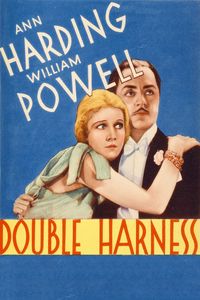
  • Double Harness (1933)

    Double Harness (1933)

    (On Cable TV, April 2020) Wait, wait, wait—you’re telling me that a Pre-Code William Powell film was considered lost for decades until it was brought back from obscurity by TCM? Strange but true—Loaned to RKO by Warners, Powell played in Double Harness and that film (along with five others) ended up excluded from RKO’s film library when its rights were sold back to the producer in 1946, who then did nothing with them. TCM managed to get those films back in circulation in 2007 and the result is yet another treat for Powell fans. The actor doesn’t step away from his persona too much in Double Harness—he plays a playboy manipulated into marriage, and then courted-for-real by his own wife. It’s a sophisticated romance well in-line with other Powell films, and having Ann Harding as his romantic sparring partner is a welcome change of pace. At 69 minutes, Double Harness is short but steadily amusing, and clearly Pre-Code in its faux-cynical consideration of the relationship between love and marriage. It would have been cruel to deprive the world of this Powell film—admittedly minor, but still a Powell film.

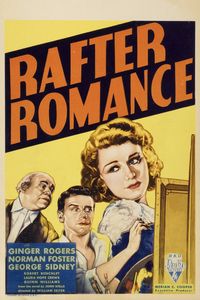
  • Rafter Romance (1933)

    Rafter Romance (1933)

    (On Cable TV, April 2020) Even by the multi-decade standards of Hollywood romantic comedies, Rafter Romance’s premise remains built on an impressive contrivance: Due to financial problems, two strangers (Ginger Rogers and Norman Foster) agree to share an attic apartment sight unseen, one by day and the other by night. Despite never meeting, the two end up in an antagonistic relationship by playing pranks on each other. But as these things happen, the two eventually meet and fall in love, while not knowing that they’re sharing space with each other. It’s all quite amusing, if not revolutionary—and at 72 minutes, quite short as well. Part of the film’s charm is that it dates from the Pre-Code era, what with a man and a woman sharing an apartment, some bare legs, good-luck swastika (yes, yes), suggestive language and other things that would not be out of place in a far more modern film. Rafter Romance was, for decades, a lost film—its rights having been ceded to their producer and not kept in the RKO library. It took TCM’s efforts to find, restore and show the film again. While it’s not a great film, it is definitely the kind of romantic comedy that’s well worth having again in the collective film library of the world.

  • Places in the Heart (1984)

    Places in the Heart (1984)

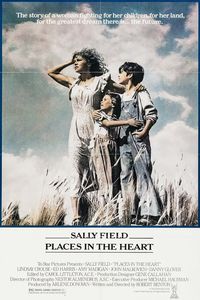
    (On Cable TV, April 2020) It’s not that Places in the Heart is a bad film; it’s just that I can probably dissuade you from seeing it simply by listing facts. 1930s rural Texas. Cinematography in shades of brown and yellow. A widow with two children. Classic Hollywood melodrama. A farm at jeopardy of being repossessed. Episodic structure. A blind boarder. A black handyman and the KKK. A final sequence that’s pure fantasy. Oscar-winning screenplay and best actress for Sally Fields. If that sounds like your kind of movie, then go ahead. If anyone else needs coaxing, know that despite the above elements, Places in the Heart comes together nicely. It’s old-time rural drama and very low-key, but it does go off running in several directions, some of them more interesting than others. The blind boarder is an intelligent man played by John Markovich. Ed Harris shows up. There’s a tornado special-effects sequence. It all amounts to something that’s more than the sum of its parts, good or bad. I liked it, slightly, and that’s more than I could have said running down the list of ingredients that make Places in the Heart.

  • Chain Reaction (1996)

    Chain Reaction (1996)

    (Second Viewing, On TV, April 2020) There is something almost overwhelmingly 1990s about watching Chain Reaction again, nearly 25 years later. We’ve got young avatars of Keanu Reeves, Morgan Freeman and Rachel Weisz (plus Fred Ward) running around, unaware that their careers would blossom for another quarter-century. We’ve got the usual conspiracy theory nonsense about alternate energy. We have overblown action sequences, the best and most ludicrous of those being Reeves outrunning a nuclear-grade explosion on a motorcycle. (Alas, it only happens fifteen minutes in, not leaving much for the rest.) Director Andrew Davis’ execution is strictly by the books of 1980s–1990s thrillers and has not unpleasantly aged in the interim. The mid-1990s do feel much nicer now from the vantage point of a global pandemic, although much of this comfort is undercut by the decision to set this film in wintry Chicago and Washington, DC—the visuals are considerably grayer and duller than if the film had been set in a sunnier environment. With a quarter-century’s hindsight, I believe that this is still the only major movie to ever feature the word “sonoluminescence.” Otherwise, this is a familiar thriller-type kind of plot—scientists on the run, evil conspiracy to shut down their project, helicopters and chases and big holes in the ground. The plot makes little sense, as it mixes scientific research with shadowy well-financed research projects, but hey—we’re not here for a treatise on the military-scientific complex as much as guns and explosions. I remember seeing Chain Reaction in the late 1990s and not being overly impressed, and a second viewing now doesn’t change my mind much… although I have to admit that its period details are now settling into a nice little patina.

  • Gentlemen Marry Brunettes (1955)

    Gentlemen Marry Brunettes (1955)

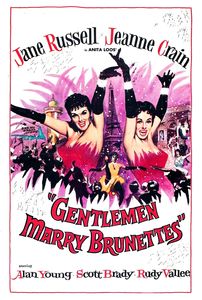
    (On Cable TV, April 2020) From the get-go, Gentlemen Marry Brunettes start with significant handicaps compared to its predecessor Gentlemen Prefer Blondes: Howard Hawks is not directing, Marilyn Monroe is not featured, and even the characters of the original film can’t return due to rights issues. At least Jane Russell is back, at least. What follows is a competent attempt at recreating the atmosphere and basic elements that ensured the success of the first film. It sort-of works, but we’re clearly more in a comfortable recreation than an attempt to build anything more ambitious. (Also: blackface.) The core conceit of having two girls gallivanting around Paris is there, as do musical numbers. Jane Russell does well here in a dual role as both the sister and niece of her own character in the first film, but it’s Jeanne Crain who impresses more in another dual role. The musical numbers are fun but rather forgettable, and the comedy is very light. Gentlemen Marry Brunettes is not terrible, but it’s clearly not up to the stratospheric level of the first film, and feels second-rate when measured against the kinds of musicals they were producing in the 1950s. And if you want to compare it to the first film, well — as a gentleman who usually prefers brunettes, in this case I vexingly have to give my vote to the blondes.

  • Grey Gardens (2009)

    Grey Gardens (2009)

    (On Cable TV, April 2020) Mere hours after I watched the 1973 documentary Grey Gardens on TCM, its more modern fictional adaptation played on HBO—an ideal occasion to do some comparative analysis. Both films are about two old women (mother and daughter, respectively aunt and cousin to Jaqueline Bouvier Kennedy Onasis) living together in a vast but decrepit house in the Hamptons. Rather than the unfiltered cinema-vérité of the original, this adaptation provides a scripted narrative for the actresses, hopping between the glory days of the pair and the aftermath of their downfall. While it may not be as striking a cinematic artifact as its predecessor, nor capture the story as nakedly, it’s a great deal more interesting to 2020 viewers than the original thanks to material attempting to explain what is happening. (This is true all the way to repeated CGI fly-bys showing the differences between the house in 1936 and 1973.) Having seen both movies practically back-to-back, I can testify that this reconstitution nails the visuals of the original film with an uncanny fidelity, especially when it recreates the shooting of the documentary. The hand of fiction is comforting here, allowing the insertion of additional material to heighten the dramatic impact and ensure that it all makes sense. Jessica Langue and Drew Barrymore star (with Jeanne Tripplehorn playing Jacqueline Kennedey) and even I have to admit that Barrymore has a great role here. Also of interest: the film’s insistence on providing a happy ending… of sorts.

  • Grey Gardens (1975)

    Grey Gardens (1975)

    (On Cable TV, March 2020) It’s not because Grey Gardens is a striking documentary than it’s a pleasant one. While its subject matter of older women with mental issues living together in a large unkempt house is not unique, the reason why the film attracted a fair bit of attention over the years is because those two women are relatives of Jacqueline Kennedy Onassis, somewhat discarded and left behind by the rest of their family. The women come from old money, are articulate, and yet not quite there—their living conditions are deplorable, the house is falling apart and their recluse nature is off-putting. The first half of the film is tediously cinema-verité, with minimal intervention from the director or the crew, simply showing the terrible living conditions of the pair. The crew does show up later in the documentary to interact with the women, which only highlights their social issues. I suspect that Grey Gardens hasn’t aged particularly well, in large part because of the higher prevalence of material today about reclusive hoarders (including a considerable amount of reality TV) but in larger part due to the fading mystique of the Kennedy-Bouvier family. For twenty-first century viewers, Grey Gardens is liable to lead to a singular impression—this is miserable, so when do we get out of here?

  • Floyd Norman: An Animated Life (2016)

    Floyd Norman: An Animated Life (2016)

    (On Cable TV, March 2020) Chances are that you don’t know Floyd Norman, but chances are also that you’ll think of him very fondly after watching the great documentary biopic Floyd Norman: An Animated Life. While Norman worked his entire life in the field of animation, he is not someone who’s easily identifiable—he was never credited as a director, bounced between studios (but is better known for the animation work he did at Disney) and was known as a strong personality within his field, even if it took time before he was given due credit as a veteran of the artform. While one of his claims to fame is having become the “first Disney African-American animator” in 1956, Norman talks about his Southern California upbringing as one relatively free of racial tensions. It’s when you put together these strands of personal history, and combine it with his grander-than-life personality, that Norman emerges as a fascinating subject for a biography. Generously illustrated through animated segments, it showcases a very funny, very witty guy at age 79. His troublemaker moments at Disney are covered in gleeful detail, along with more troubling matters of agism. The intersection of what he’s known for—the art of animation, the reality of life within Disney, advancing black rights—are what makes An Animated Life interesting. Directors Michael Fiore and Erik Sharkey don’t pull punches in discussing his divorce, remarriage (to someone as funny and interesting as he is) and anger issues. Talking heads asked to contribute to the documentary include some major animation figures such as Paul Dini and Dean DeBlois. Anyone eager to learn more about the nitty-gritty of animation work will be even more pleased with the result. The question “why a documentary about Floyd Norman?” gets obvious answers the longer the film goes on—and his obscurity at the top of the producer-director totem pole becomes an asset when the film avoids mythologizing the influence of those positions and focuses instead on the realities of the craft of animation. Terrific subject, great documentary—don’t miss An Animated Life if you have even the slightest interest in the past few decades of American animation.

  • The Citadel (1938)

    The Citadel (1938)

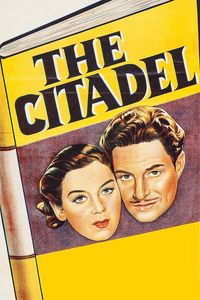
    (On Cable TV, March 2020) King Vidor was one of the major directors of the silent age but while his star dimmed significantly when the movies started talking, he still managed to create a few great sound movies. One of them is The Citadel, an adaptation of a then-red-hot novel railing against the medical establishment (plus ça change…). Here, a very likable Robert Donat takes on the role of a medical student who enters the workforce and finds out that the profession isn’t quite as idealistically satisfying as what he’d expected. Part drama, part coming-of-age, part medical thriller, part romance, part courtroom theatrics, The Citadel is a rather enjoyable blend of different subgenres in its story of a heroic doctor in a small mining town who diagnoses tuberculosis at a very inconvenient time for the mine. The plot clearly doesn’t stop there, but that’s the fun of it—Vidor’s surprising instincts leading him naturally to a novel-length story with twists, turns and significant changes for its protagonist. It’s hardly perfect (notably too long in its second half before reality comes back) but Rosalind Russel is there and Vidor demonstrates his touch for character-based drama. For classic cinephiles, The Citadel does fit right in with the other medical dramas of the 1930s.

  • The Games Maker (2014)

    The Games Maker (2014)

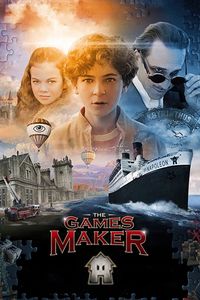
    (On TV, April 2020) In other hands, with a slightly different spin, with less wide-eyed honesty and with lesser actors, The Games Maker would have been insufferable. As it is, it’s merely mediocre, which is still an improvement. Set in a fantasy world where board games are a dominant form of entertainment, the film follows a boy who, after being suddenly orphaned, ends up in a boarding school where his game-making talents are recognized. Considering that the fantasy adventure that follows this premise has kingdom-remaking impacts, you may be forgiven for making a list of all previous fantasy works from which this film borrows, whether it’s the Harry Potter atmosphere, Lemony Snicket narration, board game mania, whimsical set design or chosen-one narrative in a board games-obsessed universe. Still, it’s not a bad or boring watch, even if the production values and choices made by writer-director-producer Juan Pablo Buscarini are sometimes suboptimal. There’s a sense that however freely inspired The Games Maker is, there’s a good-natured wide-eyed conviction at the way it goes about telling its story. Some set-pieces are kind of interesting, and the opening sequence already sets the very specific tone the film is going for. I liked it, even though I suspect that the natural viewing public for this film is closer to the pre-teen set.

  • Stuber (2019)

    Stuber (2019)

    (On Cable TV, April 2020) Formula breeds complacency and complacency breeds contempt and so it’s not too hard to see buddy-movie vehicle Stuber as anything but a generic product placement for its headliners. Dave Bautista plays a supercop who recruits an Uber driver (Kumail Nanjiani) for a night of explosive action—kind of a Collateral except supposed to be funny. Still, the elements here are pure 2010s R-rated comedy, with big pop songs and pop-culture references and excessive gore that instantly date this as a 2019 period piece. (Whether it will be dated well or dated badly is something for the future to determine.) At least the action star is credible and the funny star is funny: Bautista looks the part of an action-movie cop, while Nanjiani does the sarcastic foil quite well. Still, Stuber is a very manufactured experience—even if some of the supporting characters and details can be amusing, the film sticks so much to the template that even its self-awareness about it simply reinforces that it’s not taking chances nor making the obvious any fresher. It really doesn’t help that it endorses some vexing matters, from a rogue cop to manslaughter however justified. Sure, you can watch it and be entertained, but the moment you start scratching at the surface (which you may have the time to do a few times considering the uneven pacing), it proves as hollow as Hollywood producers congratulating themselves on their originality.

  • Hostiles (2017)

    Hostiles (2017)

    (In French, On TV, April 2020) On paper, Hostiles has some exceptional elements to play with—written and directed by Scott Cooper, starring Christian Bale, Rosamund Pike and Wes Studi, with a story that follows an army officer escorting a Cheyenne chief across dangerous territory in the 1890s. In intent, it’s determined to be a revisionist western, with an adequately nuanced look at the Native American characters. Bale, Pike and Studi are as good as ever, while Cooper gets some great landscapes to showcase along the journey. Plus, there are pre-stardom roles for Timothée Chalamet, Jesse Plemons and Jonathan Majors. But while the result is a respectable dramatic western, it’s not a great film, nor is it as great as it thinks it is—and this is hardly the first Cooper film to suffer from that kind of hubris. The elements are there, but something is missing from the result. Maybe fun, maybe humility.

  • The Addams Family (2019)

    The Addams Family (2019)

    (Video On-Demand, April 2020) While I had a hard time letting go of the 1990s Addams Family movies in trying to fairly assess this newest animated version, I please to report that The Addams Family is, all things considered, not too bad. Going back to the original comics for inspiration rather than trying to compete with the classic live-action version, this take gets a lot of mileage in juxtaposing the endearing macabre weirdness of the Family against the clichés of happy upbeat small-town Americana. Crafting a convincing pro-quirkiness message, The Addams Family is firmly in favour of our cynical heroes. Part of this has the film insisting a bit too much on the family members’ constant violent attempt to murder each other, at least until they’re under attack by outsiders. Animation-wise, it’s pretty good—nearly every shot has a sight gag or something interesting to look at: some of the best jokes come from opposing the notion of cute to the Addamses’s sense of style. In terms of character design, Morticia and Wednesday are fine (this is Wednesday’s film most of the time) and so are the not-quite-human characters, but Gomez is a noticeable step down after Raul Julia’s turn. Not everything works well—the copious use of pop music is more in-line with other animated family films than the Addams style, and there’s a case to be made that the film retreats to a very safe idea of the original dark source material. But that’s not much of a knock—This Addams Family will play very well in the family-friendly spooktober weeks leading to Halloween.

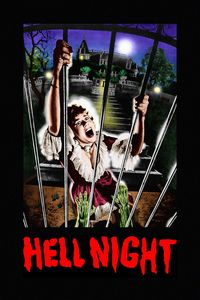
  • Hell Night (1981)

    Hell Night (1981)

    (In French, On Cable TV, April 2020) Look, I’m more eager than most to watch a horror film in which characters must spend the night in a haunted mansion, but I’ll sneak out the moment it becomes a slasher. Alas, Hell Night came out in 1981, when there was scarcely any place left in theatres for non-slasher horror… so here we have a slasher. Nothing fancy: A group of pledges, a vast decrepit house and a killer repeating a spree killing. It starts promisingly (and Linda Blair does look very cute costumed as a Red Riding Hood) and then sustains its interest for a while as pranks substitute for real killings. But then the real killings start. While acceptably competent for a film of its subgenre, Hell Night is still quite dull. Whatever it thinks are innovations are mere variations, and it takes a slasher fan to appreciate the rest. Still, I’ll allow that as far as slashers go (and early-1980s exploitation slashers in particular), Hell Night is better than most. Whether or not that’s enough depends on your tolerance for them.

    (Second Viewing, On Cable TV, November 2021) Regurgitated from the lowest depths of the slasher craze of the early 1980s, Hell Night is about as ordinary an example of the subgenre as you can get. The good news is that it could have been much worse – there’s no real bottom to the quality of the time’s slashers, although time has a tendency to filter out the worst. But neither is Hell Night clever, witty or even interesting. One of the few flickers of interest has the dull killer-killing-coeds plot being set in an expansive manor during a costume party, bringing some gothic elements to the result. There’s also horror icon Linda Blair looking as cute as any final girl can look as she runs from the crazed killer in an extended, almost exhausting finale. But that’s roughly it for the compliments, and they’re slim distinctions in a corrupt subgenre that is happy re-creating the same highlights in one movie after another. Hell Night doesn’t do much to distinguish itself throughout much of its running time: college-age characters, spooky setting, flashes of titillating sex scenes, false scares and gory deaths. The cast is slowly whittled down to one, and then it’s off to the credits. Director Tom DeSimone doesn’t do all that badly, balancing some atmosphere in between the violence. Still, Hell Night is the kind of film that only slasher fans will enjoy – it doesn’t do enough to distinguish itself from the clichés of the genre, and seems satisfied merely showing up.  (So why did I see it a second time, you ask?  Here’s the final condemnation: I forgot I had seen it before and wrote the review before realizing it was already in the database.)
     

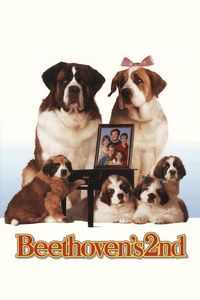
  • Beethoven’s 2nd (1993)

    Beethoven’s 2nd (1993)

    (In French, On TV, April 2020) What do you put in a sequel to a movie about a big dog? Puppies, obviously! And a date rape sequence! Wait, what? Yes, that’s right—Beethoven’s 2nd is just about as misguided as the first film in blending both the expected and the what-the-hell in the same movie. Most of the highlights persist—including Charles Grodin as the overwhelmed voice of reason, who becomes the butt of most big-dog jokes. It would be completely innocuous family entertainment if it was for a few nails-on-blackboard dissonant moments. Having a teenage boy threaten his girlfriend with date rape is strikingly inappropriate for a film aimed at primary school students, and while we’re at it, the portrayal of a divorced woman as a shrill harridan (Debi Mazar in what’s not one of her best roles, although maybe not the best wardrobe) is not exactly winning anyone over either. The puppies are cute, at least (“for now!” warns Grodin) and some hijinks are funny, but otherwise Beethoven’s 2nd is largely forgettable—well, other than the truly weird stuff thrown into it.