Month: June 2020

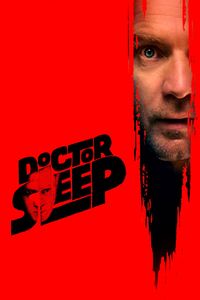
  • Doctor Sleep (2019)

    Doctor Sleep (2019)

    (On Cable TV, June 2020) The recent second-generation re-ignition of interest in Stephen King’s adaptations is a beautiful thing to watch: I like King and I think that history will have great things to say about him, but it’s good to see the consecration happen in real time. With Doctor Sleep, director Mike Flanagan is at his second King adaptation and he continues to prove his suitability for the material. After several well-received low-to-medium films, Flanagan is now working in the big-budget leagues, and this translates into an increased ability to play with strong unusual images (the snake-like overhead shot of a caravan sticks to mind). For Doctor Sleep to rely so much on its association with The Shining is not necessarily a good thing at first, as it puts the bar too high for the film to ever reach—and it’s a bit of a bait-and-switch in that the essential plot of the movie has little to do with The Shining. No, here we’re tracking down a bunch of evil soul-stealers as they go kidnapping and harvesting psychic energy from unusually gifted children across the United States. Against them we have Terrence (returning from The Shining decades later) and another gifted child. While Doctor Sleep is imperfect, it does have quite a few things going for it. Like many of King’s adaptations, it’s a horror film that goes well beyond the boring monster features that so often pass for horror—there’s a little bit more to it, and parts of the film bring to mind more recent TV shows that use horror as a blend in their magical realism mix—at times, especially at first, there’s a cross-country Americana vibe to the film that could have been interesting in its own right… but here it’s a prelude to a good-versus-evil battle featuring flawed characters and unusual powers. Ewan MacGregor has a good role here, helped along by a large supporting cast. In many ways, Doctor Sleep does feel like the culmination of something that has been brewing in earlier episodes. Some clever set pieces are a highlight, such as when the bad guy has tables turned on them by one of the protagonists acting like a horror movie monster. The return to the Overlook Hotel at the end doesn’t quite work—again, too strong a reference to a previous work without hope of attaining it, with a payoff that is slightly disappointing. Still, the result is worth a look, especially in how it steps away briefly from what could have been a far more conventional story. We can thank King for that, and Flanagan as well.

  • The Greatest Show on Earth (1952)

    The Greatest Show on Earth (1952)

    (Google Play Streaming, June 2020) Some Best Picture Oscar Winners are almost universally recognized as being weaker than the others, and The Greatest Show on Earth is often one of them. It’s not helped by the fact that it won the prize in the same year as High Noon (which was nominated) and Singin’ in the Rain (which wasn’t) were released. It rarely plays on TV, and I don’t recall any sustained critical attention about it except to bash it en passant in discussing Oscar-winners. I suppose that’s one of the reasons why it’s taken me so long to get to this film. It’s true that The Greatest Show on Earth is narratively weak—For a nearly two-and-a-half-hour film about the circus, there’s a three-ring-circus of subplots but only one of them is meant for the main stage. Revolving around a season in the life of the Barnum circus, the film often stops dead in its tracks to simply showcase the circus: the winter preparations, the train travels, the setup and takedown in each town and especially the numbers themselves. By most standards, this makes the film a bit uneven to watch, and dubious if you’re used to evaluating movies on strictly narrative merits. But (as much as it pains younger me, who believed it fervently) there’s a lot more to movies than plot, and The Greatest Show on Earth does exist in the same space as many early-talkie Hollywood movies that intended to bring the spectacles of other mediums (often Broadway) to the big screen. In historical context, The Greatest Show on Earth came at a time when movies were reacting to the arrival of TV with Technicolor and a wider aspect ratio and a conscious effort to show wonderful things to audiences. There’s something fascinating about depicting the intricate machinery of a circus and the sights and sounds of something grandiose. The film was produced with an exceptional amount of cooperation from the real Barnum Ringling circus, to the point of occasionally feeling like a big commercial. This takes on an even more precious quality now that the circus has, since 2017, stopped operating. Capturing the sights and sounds of the circus is important enough, and it will amply justify the film’s viewing for those people who may be interested in those things. The plot itself does serve in sticking things together, but most of its merit is in showcasing the circus rather than having stories. Still, it is fun to see Charlton Heston as a no-nonsense circus manager, James Stewart as a clown with a dark past, or Betty Hutton as a trapeze artist. The Greatest Show on Earth may not be a particularly strong Best Picture winner, but I’m still glad that I had an excuse to see it, as it may very well be the purest expression of Cecil B. DeMille’s thirst for spectacle.

  • Los olvidados [The Young and the Damned] (1950)

    Los olvidados [The Young and the Damned] (1950)

    (YouTube streaming, June 2020) Consecrated cinema classic The Young and the Damned does have a few things going in its favour. For one thing, there aren’t that many movies set in late-1940s Mexican slums. For another, there aren’t that many strictly neorealist films in writer-director Luis Buñuel’s filmography—while the film does sport one surreal sequence halfway between reality and dream, much of the film is as gritty and realist as possible, fully embracing the life and environment of its street-urchin protagonists on their way to becoming hoodlums. At 88 minutes to present a full-featured narrative (not always a given in Bunuel films!), The Young and the Damned doesn’t overstay its welcome. The film is resolutely not that optimistic about human nature and can occasionally become harrowing viewing. But, after generations of film critics have designated this as a classic, is it still worth a look? Probably. Maybe, if you can tough it out.

  • The 7th Voyage of Sinbad (1958)

    The 7th Voyage of Sinbad (1958)

    (On Cable TV, June 2020) Fantasy films weren’t as plentiful in the 1950s as they are today, so the all-out thrills of The 7th Voyage of Sinbad made a mark on an entire generation, and for good reason. As a fantasy spectacle, it’s still potent today. The special effects alone are worth a look, considering that they’re from master step-motion animator Ray Harryhausen and there are a lot of them. His creatures are still remarkably effective today, carrying both menace and personality. It’s a good fit for a film that’s still filled with charm and perhaps even more so today, given the dated nature of it all—arch dialogue, overdone musical dues and rough-hewn optical effects can either feel old-fashioned or old-school, depending on your perspective. The adventure with an eastern twist is not particularly complex in matters of narrative, but that helps it stay perfectly accessible today. Considering the amount of work that went into illustrating Sinbad’s fantastic voyages, it’s not a surprise if the film clocks shorter than expected at 90 minutes or so. It’s remarkably obvious why The 7th Voyage of Sinbad is still considered a milestone of fantasy filmmaking’s history.

  • Pickpocket (1959)

    Pickpocket (1959)

    (On Cable TV, June 2020) “Ugh, Bresson” is slowly becoming “Eh, Bresson,” and while that doesn’t sound like much, it’s actually quite a bit of progress: I can now start watching his films without feeling as if it’s going to be as terrible as That Donkey Movie. Not that writer-director Robert Bresson steps away all that far from his usual techniques in Pickpocket: it’s still sparsely scored, delivered in low-key, almost affect-less style, employing non-professional actors, and joyfully dispenses with notions of genre conventions. Despite revolving around an active criminal pursued by the police, Pickpocket is far more of a character study than a genre crime film—it zigs and zags and seldom settles for the simplest plot development. Adding philosophical musings to a crime story, it almost defies categorization. I actually… ahem… liked it, which is more than I can say about other Bresson films.

  • Pat Garrett & Billy the Kid (1973)

    Pat Garrett & Billy the Kid (1973)

    (On Cable TV, June 2020) Like most 1970s westerns, Pat Garrett & Billy the Kid is grimy, dirty, dispiriting and violent. In his rush to do a revisionist take on the genre, director Sam Peckinpah goes back to his old standbys of violence, nudity (not arousing), dusty sets and unhappy endings (even when it’s shown first). Yet another brick in the mythological wall erected by Hollywood at the memory of Billy the Kid, this film stars an aging lawman, Pat Garrett, hired to kill his friend Billy the Kid. Much of the film is a chase, although one tempered by a sense of fair play and friendship. There are some interesting names in the cast, mind you: James Coburn as Garrett is a good idea, Kris Kristofferson has an early role (without facial hair) as Billy the Kid, and Bob Dylan not only scores the film (writing the classic “Knockin’ on Heaven’s Door” for it) but has a small part at the edges of the narrative. Fans of Hollywood history may want to have a peep at the film’s very troubled production history, with a booze-fuelled Peckinpah constantly at odds with the studio up and including the studio chopping up the film for distribution. (Thanks to TCM, I saw the definitive “director’s cut” rather than the theatrical version.) You can find plenty of laudatory reviews for Pat Garrett & Billy the Kid, but this won’t be one of them. I can’t muster up much enthusiasm for what feels like an undistinguished revisionist western, adrift in a long, long list of similar films made during New Hollywood and later. I’m not saying it’s bad—I’m just saying that I didn’t care for it.

  • How to Tell You’re a Douchebag (2016)

    How to Tell You’re a Douchebag (2016)

    (On TV, June 2020) I wanted to like How to Tell You’re a Douchebag, but can’t quite bring myself up to it. It does have a few things I like—an attempt to examine romance in the mid-2010s, some biting lines of dialogue, very appealing actresses, and a slice-of-life atmosphere of Brooklyn that may mature into a time capsule of the era. Alas, writer-director Tahir Jetter doesn’t quite want the usual romantic comedy, nor anything like a conventional beginning, middle or plot. Nor does he have a decent budget big enough to do justice to his ambitions. Nor can he sand off the edges of his deplorable protagonist in time to make us care for him. Falling into many of the traps that have claimed low-budget films, How to Tell You’re a Douchebag ends up being a not-particularly-good nor funny “romantic comedy” in which a young man tries to learn about romance even as he’s writing a relationship blog. That protagonist is neither pleasant nor smart, but part of the film’s remaining charm is to document a very specific slice of modern urban living, with characters hooking up and then having romantic issues. Since this is a story of personal growth more than a romance, don’t expect a conventionally happy ending. Alas, you can add that to the list of charges against How to Tell You’re a Douchebag: how can you like a film so intent on self-sabotage?

  • The Man Who Came to Dinner (1942)

    The Man Who Came to Dinner (1942)

    (On Cable TV, June 2020) Imagine the most erudite, self-absorbed, pompous, know-it-all dinner guest imaginable. Now imagine him breaking a leg and having to stay for a few weeks. You don’t need much more than that to get the comedy play-turned-film The Man Who Came to Dinner going. Of course, it helps if you have good actors to play the parts: Monty Woolley as the titular pain-in-the-neck, Bette Davis as his assistant in an unusual comic/romantic lead, Jimmy Durante in a small but loud role, Ann Sheridan as a bombshell actress lured to break up a romance and Mary Wickes as a nurse who gets a full character arc and the film’s funniest speech as she storms out. Nominally a romantic comedy with numerous subplots but closer to a ludicrous screwball revelling in its absurdity, The Man Who Came to Dinner is a solid hit even decades later. The overlapping subplots mean that there’s quite a lot going on at once, helped along with some fast-paced dialogue. While technically a Christmastime film, it’s funny enough to be watched all year long.

  • The Private Files of J. Edgar Hoover (1977)

    The Private Files of J. Edgar Hoover (1977)

    (On Cable TV, June 2020) There are several good reasons to dislike J. Edgar Hoover, but you can’t deny that he is fascinating as a historical figure: he was, after all, the BOI/FBI’s director for 48 years—longer than most people’s entire careers! As such, he became a bigger-than-life figure, with character traits exaggerated in crossdressing (unproven!), homosexuality (unproven!) and secret files used to blackmail politicians (proven!) While we twenty-first century viewers now know more about Hoover’s documented life than before, we don’t have access to those who knew him best any more. Iconoclast writer-director-producer Larry Cohen had the inverse—not much official documentation, but plenty of contacts with those who knew him. The result of his investigation is the nervous exposé The Private Files of J. Edgar Hoover, which uses a delicious framing device (a mad rush to secure Hoover’s secret files after his death) as the starting signal for a quasi-documentary rush of chopped-up editing, fast pacing and a whirlwind tour of Hoover’s life (as known in the mid-1970s) that does not bother with niceties. Given that it’s from Cohen, it’s interesting throughout—and even more so when you measure Cohen’s own opinion of the man against other sources, such as the much more recent J. Edgar. For instance, The Private Files of J. Edgar Hoover almost brushes off the rumours of Hoover’s sexuality, but presents what feels like a more complete portrait of the man. Despite the rebellious rock-throwing, the film does serve to further cement Hoover’s mythological status by associating him with decades of American history—showing the turnaround of the FBI in the institution it became, and later suggesting that Hoover’s secret files would precipitate the Agnew resignation and pave the way for Watergate. (An assertion ahead of its time, knowing what we now know about Mark Felt.) In the end, The Private Files of J. Edgar Hoover is fanciful, choppy yet enjoyable—and the mid-1970s period atmosphere is quite nice.

  • Majorie Prime (2017)

    Majorie Prime (2017)

    (On Cable TV, June 2020) An example of how science fiction can take place in mere words rather than necessarily drowning in special effects, Majorie Prime is an adaptation of a theatrical play exploring memory and grief through the replacement of deceased persons by androids. It’s an intimate and quiet SF film with quite a cast—Geena Davis and Tim Robbins in heavy-duty dramatic roles, Jon Hamm in a role that’s both charming and profound, and perhaps most of all Lois Smith as the grieving woman who finds solace in an android version of her ex-husband. Most of the actors have quite a challenge in approaching their characters in two different ways. Director Michael Almereyda keeps Majorie Prime quite restrained in presentation (it’s essentially a living-room movie), but the narrative gets wilder and wilder as it digs into its themes, landing on a tone not dissimilar to a Black Mirror episode. There is some unachieved potential, perhaps due to a limited budget and a consequent refusal to get to the end of the premise. (One fundamental limitation: Actors who remain the same age.) Ever the contrarian, I found myself darkly amused by Majorie Prime’s less-than-comic resolution: the particulars of the SF device justifying the plot don’t always make a lot of sense, even if it leads to a conclusion of pitch-black humour in which our cast of characters has become something else, co-fabulating their ways into better and better memories.

  • The Mortal Storm (1940)

    The Mortal Storm (1940)

    (On Cable TV, June 2020) Hollywood doesn’t exactly have the most edifying track record of criticizing the Nazis before the war started—studios wanted to keep selling films to the German market, and despite what the official history will tell you, a high number of Americans (i.e.: Hollywood’s audience) were Nazi sympathizers, isolationists or apathetic to what was happening in Europe. The Mortal Storm, adapted from a 1937 novel by Phyllis Bottome, pushes the edges of the Production Code in virulently denouncing the Nazi regime by presenting a family of German resisters looking aghast as their country is transformed during the 1930s. It’s limited in what it can say (the word “Jew” is never said—the film uses “non-Aryan” as a substitute) thanks to the Production Code forbidding criticism of other governments, but the message is unmistakable. James Stewart shines as one of the most virtuous characters. The Mortal Storm’s very heavy-handed on-the-nose commentary certainly isn’t subtle, but it’s probably as overt as it could be at the time. Despite the film’s lulls and lengths, the film hasn’t really aged—by taking us inside a Germany shifting into authoritarianism, sometimes with Nazi characters that aren’t cartoonishly evil, it provides a useful guide to reflect on just what’s going on with the United States at the moment. Both a historical piece and unfortunately still current, The Mortal Storm isn’t just a WW2 propaganda piece.

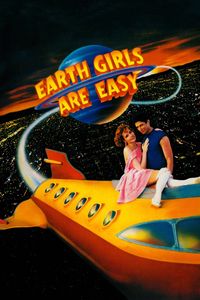
  • Earth Girls are Easy (1988)

    Earth Girls are Easy (1988)

    (On Cable TV, June 2020) Normally, calling a film ridiculous is a slam—but in the case of Earth Girls are Easy, it’s both a compliment and a recognition of what the film was trying to achieve. Director Julien Temple helms this silly comedy about three harmless aliens crash-landing in a valley girl’s backyard and getting close encounters with Earth culture. Considering that the valley girl is played by Geena Davis and the three aliens by Jeff Goldblum, Damon Wayans and a pre-stardom Jim Carrey, well, the thing gets silly pretty quickly—but not in a dumb way, more like a very clever way masquerading at being stupid. The fish-out-of-water comedy becomes a romantic comedy, with several great lines and a carnival of silly scenes. If I was in an analytical frame of mind, I would discuss how The Alien, in this film, is a seductive blank slate, innocent (without sin) and powerful at the same time. But I’m not really in such a mood right now—Earth Girls are Easy is just a lot of fun on a surface level… although I wouldn’t be surprised to revisit this one soon enough.

  • Drugstore Cowboy (1989)

    Drugstore Cowboy (1989)

    (On Cable TV, June 2020) It takes a special kind of skill to ride along with junkies, and that’s more or less what writer-director Gus van Sant wants viewers to do in Drugstore Cowboy, as the film follows the adventures of a young man whose addiction is fuelled by a well-practised racket of robbing drugstores and moving from one temporary location to another. Headed by a strong lead performance from Matt Dillon, the film does start on a promising note and keeps going for a while on a strange blend of drug poetry. (Accordingly, no less than William Burroughs briefly shows up as an elderly street philosopher.) There’s something interesting in the structure of the film, as it portrays an addict at his arguable finest, then keeps dragging him down and down through reversals of fortune, then a difficult decision to go straight and try to stick to the narrow path of sobriety. (The ending is ironically open-ended as to whether it will stick.) While it doesn’t quite reach the kind of street poetry that it may have aspired to, Drugstore Cowboy remains a decently entertaining watch—perhaps more interesting as a deep dive into the mindset of hardcore addicts than a sustained narrative.

  • My Girl 2 (1994)

    My Girl 2 (1994)

    (On Cable TV, June 2020) The success of My Girl made a sequel inevitable, but how exactly do you produce a sequel to a movie famous for an out-of-left-field slap of emotional manipulation? You can’t exactly kill a new best friend. So, the sequel digs deeper in its mythology and goes foreign (so to speak), in sending our young protagonist from the Midwest to sunny Los Angeles in a quest to find out more about her deceased mom. There’s a surprise marriage here, and a new baby, and some step-cousin romance and a few more things out of the “thirteen-year-old girl’s best summer ever” playbook. On its own, My Girl 2 works modestly well in the Hollywood teen-drama mould—but as a sequel, though, it plays more as an extended epilogue or another more boring chapter in the character’s lives. It’s not unpleasant, but it’s definitely the kind of film that can play in the background while you’re doing something else.

  • The Watermelon Woman (1996)

    The Watermelon Woman (1996)

    (On Cable TV, June 2020) One of the most amazing things about the world of movies is there is always more to discover, even for those who think they’ve seen it all. So it is that 1996’s The Watermelon Woman is a film by and about black lesbian filmmakers, and specifically about one who gets so fascinated by a supporting player in a 1930 film (merely billed as “the watermelon woman”) that she starts tracking down that person’s life and discovers a few surprises along the way. Executed mockumentary-style, The Watermelon Girl is surprisingly convincing in taking us down Hollywood’s history, especially when it comes to black homosexual performers. Much of the film still plays remarkably well despite the low budget and low-fi visual aesthetics. I didn’t think that I had much in common with the film’s subject matter or filmmaker, but as it turns out… I have looked up unusually attractive actresses from 1930s film, and the thrill of discovering more about the person is something I strongly identified with. Writer-director Cheryl Dunye has built The Watermelon Girl in a way that the detective aspect of the story is definitely a strong narrative hook. But there’s a lot more about the film than a chase through the archives: Its depiction of a lesbian protagonist, along with her interaction with her community, still plays quite well in 2020. I didn’t expect much from the film, but it played up to my Hollywood history fascination, and still has quite a bit to say. Plus, Camille Paglia makes a borderline self-parodic appearance, so what else could we ask for?