Month: June 2020

  • 20 Million Miles to Earth (1957)

    20 Million Miles to Earth (1957)

    (On Cable TV, June 2020) There’s a way of seeing 20 Million Miles to Earth as nothing more than a standard 1950s creature feature, with enough stop-motion animation and landmark-destroying creature rampage to be emblematic of the era. Indeed, the script isn’t worth praising—it’s a mishmash of lousy science in which a mission to Venus brings bag the egg of a creature that grows up to attack much of Rome. But the fun of the film lies elsewhere—specifically with the stop-animation from Ray Harryhausen (who co-wrote the story) to portray the monster. Never mind that it takes quite a bit of time to get to the good parts of the film when the monster shows up: when it shows up, the film sharply increases in interest. (The Coliseum-set climax is not bad at all.) Harryhausen’s typically great animation helps this film stand apart from the pack, and ensures that it’s still at least slightly enjoyable to watch today. More than simply representative of its era, 20 Million Miles to Earth can be great fun to watch in the right indulgent frame of mind.

  • Killer Movie (2008)

    Killer Movie (2008)

    (In French, On Cable TV, June 2020) Sophomoric slasher Killer Movie isn’t much to talk about, no matter how you slice it. The premise blends a reality-TV show with stacked corpses to no good effect, wringing even less out of the concept than countless other horror films with more or less the same idea. The low-budget production means of the film do no one any favour, with the hockey-related material being particularly fake from this Canadian perspective. Writer-director Jeff Fisher makes a few attempts at self-awareness, but they’re so broad that they fail to improve the film’s execution and impact. It all ends up being very dull if you’re not a fan of slasher horror. The most notable thing about Killer Movie is an early film role for Kaley Cuoco, but it’s not much and certainly not enough to save the film from the doldrums.

  • Across the Pacific (1942)

    Across the Pacific (1942)

    (On Cable TV, June 2020) What looks like one more WW2 propaganda film is given slightly more interest by featuring none other than Humphrey Bogart. Not stepping too far away from his persona in Across the Pacific, he plays a dishonourably discharged soldier who ends up on a ship going to Panama and gets involved fighting a dastardly plan by the Japanese. Far more of a thriller than an outright military film, much of it plays on-board the confines of a ship, with Bogart investigating a Japanese sympathizer on-board. There are clear echoes of The Maltese Falcon here, given that both movies share Bogart, the always-menacing Sidney Greenstreet, Mary Astor and director John Huston. A decent-enough adventure, Across the Pacific (which never even makes it to the Pacific), is nonetheless dragged down by uneven pacing and too-late narrative development. As a propaganda film, don’t expect much subtlety in its depiction of Japanese characters—in fact, expect to be very uncomfortable whenever they appear on-screen and the xenophobia gets roaring. Still, Bogart is Bogart and if you can stomach the stereotypes, the film is interesting enough.

  • Le retour du grand blond [The Return of the Tall Blond Man with One Black Shoe] (1974)

    Le retour du grand blond [The Return of the Tall Blond Man with One Black Shoe] (1974)

    (In French, On Cable TV, June 2020) Well, you can’t accuse the filmmakers behind Le retour du grand blond of not delivering what the audiences are asking for—the film insistently returns to what made the first film Le grand blond avec une chaussure noire funny and doesn’t bring many new ideas to the table. As a result, this sequel quickly runs out of energy: even the primary “twist” of the sequel, having the protagonist play the secret agent he’s not supposed to be, doesn’t feel like a particularly good idea. (There is more plot here than in the first film, but it’s not necessarily better.) Pierre Richard once again gives his best to the film, but the material he’s served doesn’t recapture what made the first film so enjoyable. Oh, there are funny moments here and there—and the film is certainly watchable—but Le retour du grand blond really feels like most sequels: one more hurrah, but without the spark.

  • Le grand blond avec une chaussure noire [The Tall Blond Man with One Black Shoe] (1972)

    Le grand blond avec une chaussure noire [The Tall Blond Man with One Black Shoe] (1972)

    (In French, On Cable TV, June 2020) While the French comedy Le grand blond avec une chaussure noire is a well-constructed film from the get-go, it’s impossible to watch today without feeling that all of it depends on Pierre Richard’s lead performance. He seems uniquely suited to the role of a gaffe-prone violinist who gets unknowingly dragged into the great deadly game of espionage. His befuddlement is hilarious, and he plays the material he’s given so convincingly that you’ll nearly forget the slickness of the script, the unobtrusive talent of writer-director Yves Robert, or the decent production means invested in the film. A further proof of Richard’s domination of the role is found in the American remake, The Man with One Red Shoe, which stars the capable Tom Hanks and features even better production means, but can’t quite reach the comedy of the original. It’s all quite silly, faster paced than many comedies of the era, and features Mireille Darc in a jaw-dropping dress. French comedy is often pretty good, but Le grand blond avec une chaussure noire is even better than most.

  • First Men in the Moon (1964)

    First Men in the Moon (1964)

    (On Cable TV, June 2020) Much like the 1960 version of The Time Machine, this 1964 adaptation of H.G. Wells’ 1901 novel First Men in the Moon has at least two layers of historical archaeology for twenty-first century viewers—the “modern” 1960s framing device, and the 1899 story of how three English people made it to the moon using the gravity-nullifying substance Cavorite. It all makes for a surprisingly enjoyable romp, well in the hybrid tradition of Hollywood movies and Wells’ original novel. Featuring a bit of steampunk before steampunk was even a thing, First Men in the Moon can also depend on the beautiful Martha Hyer as a member of the expedition, and some great step-motion animation from Ray Harryhausen. Where the novel falters after a good opening half is when the lunar exploration gets silly and less interesting as aliens pop up. The ending, amusingly enough, does have a cute reference to Wells’ The War of the Worlds. The comedy of the film can be misplaced or inconsistent—it dies down during the second half, which adds to that section’s problems. Still, this is not a bad film—not up to its potential, perhaps, but already better than one would expect.

  • Howard the Duck (1986)

    Howard the Duck (1986)

    (Second Viewing, On TV, June 2020) Moviegoers are a forgiving and indulgent lot, but some movies, like Howard the Duck, simply ask for too much. Starting from a juvenile and irritating script with few surprises, it simply adds to its troubles by asking us to believe in a duck protagonist badly executed through dwarf actors and a grotesque costume. Ugh. A modern CGI-heavy remake may do slightly better… but not that much better, given the film’s heavy-handed approach to its humour (every joke underlined twice), confused tone (raunchy humour in a kid’s movie) and blunt-force plotting. But here’s the question: despite all of this, does it have charm? Well, maybe. Lea Thompson looks terrific in mid-1986 fashion and Tim Robbins turns in a remarkably embarrassing performance. There are a few amusing moments and the film does have a “have you seen this?” quality that’s hard to dismiss. Still, while not atrocious, Howard the Duck remains deeply misguided—even being indulgent (which is not the same thing as being ironic), it’s still asking for a lot.

  • Tab Hunter Confidential (2015)

    Tab Hunter Confidential (2015)

    (On Cable TV, June 2020) Even if you don’t know about Tab Hunter, you can still approach his engaging biography Tab Hunter Confidential with the assurance that you will learn plenty about this 1950s heartthrob whose career waned in the 1970s to the point where he was doing dinner theatre. Fear not: he bounced back in later years thanks to the success of the John Waters film Polyester. But Hunter wasn’t like most other 1950s icons—gay at a time when such things were strictly unacceptable in Hollywood, this difference ends up becoming the structural backbone of the film, as evolving social acceptance ends up reshaping his life and career. Hunter himself makes for a very likable subject, and the arc of his career from the 1940s to the 1980s is an interesting illustration of how things can go wrong for many actors even after hitting the limelight. Well-presented with some ironic footage (“I’m Tab Hunter, and I have a secret”), it sprouts interviews with notables such as George Takei, John Waters and Clint Eastwood, and digitally enhanced archival photos. Executed with more grace and substance than many other celebrity biographies, Tab Hunter Confidential offers a new light on Classic Hollywood, and makes for entertaining viewing as well.

  • Earth vs. the Flying Saucers (1956)

    Earth vs. the Flying Saucers (1956)

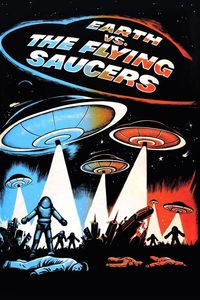
    (On Cable TV, June 2020) Despite its silly-sounding title, Earth vs. the Flying Saucers comes across as a techno-thriller of the 1950s. It does splendidly exemplify the flying saucer paranoia of the 1950s—and as a result still keeps some charm even if you think that UFOlogy is a bunch of hooey. The plot and characters aren’t developed or executed as effectively as they should, especially given a promising start. But plot and characters aren’t the right reason to see Earth vs. the Flying Saucers—that would be the crude, yet effective special effects from the legendary Ray Harryhausen, with its prototypical flying saucers surprisingly well integrated into the scenes. The ending is an all-out special effects spectacle taking aim at Washington, DC monuments, culminating with the iconic capitol scene. You can see echoes of this film in many, many successors—consider watching this as a double-bill with Mars Attacks! Quite enjoyable in its own way, Earth vs. the Flying Saucers is best approached as an earnest and endearing time capsule of fears and wonders.

  • Blackmail (1939)

    Blackmail (1939)

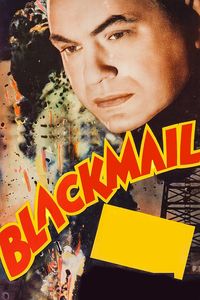
    (On Cable TV, June 2020) Edward G. Robinson takes a break from gangster roles in Blackmail, a story that has him play an expert firefighter with a dark past. That past gets exposed when an ex-con chances upon the protagonist, which eventually sends him back to a chain gang. Escape and revenge follow, in a film heavier on social themes than you’d expect. Robinson is as good as ever, although the film’s most memorable role goes to Gene Lockhart as a slimy blackmailer who takes over the protagonist’s empire after sending him back to prison. Blackmail is certainly watchable, and it is bookended by surprisingly engaging sequences revolving around oil fire blowouts. Robinson didn’t become one of the biggest stars of the 1930s for no reason, and even in a utilitarian role like the one here, you can see his ability to command audiences effortlessly.

  • Le sang d’un poète [The Blood of a Poet] (1930)

    Le sang d’un poète [The Blood of a Poet] (1930)

    (archive.org streaming, June 2020) One of my big conceptual breakthroughs of my mid-twenties was realizing that adjectives such as “post-modern” and “avant-garde” were not necessarily tied to the present and could, in fact, designate historical works. A film such as Jean Cocteau’s Le sang d’un poète, for instance, is ninety years old and yet still as avant-garde today as it was back then. Trying to describe the plot is an exercise in futility, as it’s a surrealist collage of dreamlike imagery somewhat reminiscent of Bunuel (surrealism being big at the time). It’s not uninteresting, but it is far slower-paced than it could have been. Then again, I’m definitely more modern than postmodern in my film appreciation – and have been for decades. Something is worth noting for twenty-first century viewers: Le sang d’un poète uses some very effective special effects, as primitive as they may be.

  • Star Wars: Episode IX— The Rise of Skywalker (2019)

    Star Wars: Episode IX— The Rise of Skywalker (2019)

    (On Blu-ray, June 2020) I was more critical than most about The Force Awakens and more lenient than many about The Last Jedi, yet nonetheless perilously close to indifference in watching The Rise of Skywalker—If Disney’s stewardship of the series has accomplished one thing so far, it’s to strip away the layer of myth and magic that once surrounded Star Wars movies. They are now mere instalments in a money-making franchise, and expectations about this third entry in the newest mainline series were never going to be met. Expecting the worst does work wonders, though—while this ninth instalment is far from being as good as it could have been and confirms this entire third trilogy as a disappointment, there are a few good moments here and there. At its best, this entry does go back to some of the adventure-filled fun of a small group of friends fighting against overwhelming odds—but it does have to copy entire swatches of previous movies in order to get there, and it’s always skewed by a needlessly darker side that has to do with the heroine, her counterpart and their gigantic good-versus-evil theme. It’s boring when the action cuts away to Rey doing her demigod things—it’s lot more fun to hang out with the mere mortals. While the constant borrowing of Star Wars’ greatest hits does get tiresome, there are a few striking visuals in The Rise of Skywalker—perhaps most notably taking a trip through a fallen Death Star. Still, there are wasted opportunities running through this third film not only for itself, but for barely managing to tie up the threads of the series. Clearly handicapped by a lack of central direction, this trilogy is messy in ways that it shouldn’t be under modern IP stewardship—aborted arcs, abusive retcons of major plot points from the previous film, lack of thematic unity and dumb plotting led by rule of cool at the expense of everything else. One example, and not the most important: I do like Naomi Ackie’s addition to the cast, but her character feels shoehorned here as a last-minute character meant as a foil for Flinn—but then over to Lando because the movie has no clue how to tie things up. The fanservice is blatant (and that’s just the stuff I caught—I suspect that there’s a lot more solely due to unnatural camera moves whenever a few extras show up) but it’s ultimately meaningless because the series will never be as beloved as it once was—if I had my say, I’d drop this third trilogy down the memory well as non-canon and try something not so slavishly aping the first trilogy. Visually, The Rise of Skywalker is admittedly wonderful and stands at the top of what’s possible with SFX—but the story is all over the place and the entire thing simply feels like a waste, even as it generally does better than its immediate predecessors. It took me six months to get to that film after its theatrical release, so indifferent I was to the series at this point… and it’s fair to say that I’m not really all that excited about anything else Star Wars has to offer in the near future.

  • Flash Gordon Conquers the Universe (1940)

    Flash Gordon Conquers the Universe (1940)

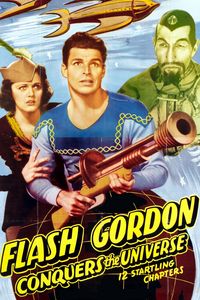
    (On Cable TV, June 2020) With now more than a hundred years of film history to riffle through, there are several individual films that, while not worth watching by themselves, can be a useful representative of entire subgenres. For instance, I won’t recommend that you watch Flash Gordon Conquers the Universe for its intrinsic qualities—taken by itself, it’s cheaply conceived, badly written and ineptly executed. The cliché storm is of galactic proportions, the plot drivers are generic and the production values are threadbare. On the other hand, it’s a splendid illustration of early 1940s sci-fi serials (and goodness knows there weren’t that many non-serial Science Fiction movies in that decade) and it’s certainly interesting viewing for anyone who has previously seen the 1980 camp classic. What’s more, you can see here part of the inspiration that led to Star Wars, all the way to the scrolling summaries of past episodes. As such, Flash Gordon Conquers the Universe isn’t thrilling entertainment, but it is (alongside any of the films in the series) sort of mandatory viewing for SF cinema historians. You don’t have to see that specific film, but any one of them should do. Keep in mind, though, that I haven’t seen the end of it: The recording cut short in the last two or three minutes, and that didn’t bother me all that much. Does he actually conquer the universe? I’m confident he does. [April 2025: I finally looked it up, unable to tolerate the suspense any longer. Spoiler alert: he totally does.]

  • Luis & the Aliens (2018)

    Luis & the Aliens (2018)

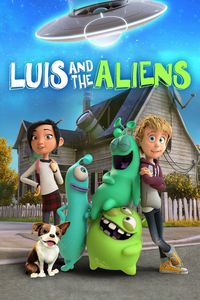
    (On Cable TV, June 2020) For movie reviewers with wide-ranging tastes, there’s always a tendency to praise the underdog, and the family animation movie genre is getting crowded with alternatives to Pixar, Dreamworks and Illumination. Luis & the Aliens is one of those lower-budgeted family comedies, clearly not up to the example set by the genre’s front-runners but still able to deliver a story in its own way. Alas, reviewers would be wasting their time trying to pretend that this is a hidden gem: only the less demanding kids will be particularly interested in the B-grade comedy with stock morals and underwhelming material about grotesque shape-shifting aliens trying to pass as human. The writing isn’t necessarily much better, with ordinary dialogue and an unbelievable caricature of a distracted father (no character sympathy there!) While the story does come together in the end, it does so with few surprises and few memorable moments. Luis & the Aliens is not terrible but it’s not particularly good either. Maybe see it once you’ve seen nearly everything else.

  • Grand Isle (2019)

    Grand Isle (2019)

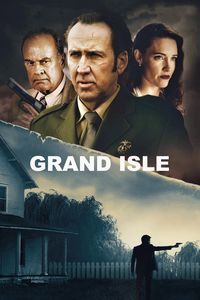
    (On Cable TV, June 2020) Nicolas Cage is certainly cranking out the films in his older back-tax-paying age, and while Grand Isle isn’t a particularly good Cage film, you can see why he was cast in it. A southern Gothic in which a young man is invited in a vast mansion by a man intent on hiring him to kill his wife, it’s a film with a kernel of potential. Despite the film’s low budget, it’s credibly set in the sweaty humid hurricane-prone atmosphere of Louisiana. The age-old setup has a warring couple making demands on the younger stranger brought among them—in the middle of a hurricane, in an old Victorian house, no less. The nervy sound design, with wind and thunder, is designed to keep up on our toes during it all. In the cast, Cage is Cage (although maybe not as intensely as we’d prefer), while KaDee Strickland shows some potential as a femme fatale and Kelsey Grammer is quite enjoyable as a southern lawyer in the framing story. Alas, those promising elements are eventually blown away, most notably during a scattered third act that keeps going long after the action should have been settled and in doing so breaks the time/space unity that thrillers should keep in mind. (It also introduces a different dramatic arc that is resolved very quickly afterward, and doesn’t do much except allow Cage to be shown with a different hairstyle.) Grand Isle’s production history suggests that the production ran out of money before shooting the last two days of filming, but I have a hard time imagining that even one more week would fix what’s flawed here. The only consolation is that if you didn’t like it, well, there are five other 2019 Nicolas Cage movies to help you feel better.