Month: June 2020

  • Wet Bum aka Surfacing (2014)

    Wet Bum aka Surfacing (2014)

    (On Cable TV, June 2020) I’m not sure what qualifies as a truly unfortunate movie title, but I’m thinking that if a major newspaper spends the first few paragraphs of an article titled “What is wrong with the Canadian film industry?” talking about marketing problems caused by titling a film Wet Bum, then we’ve got a serious contender. As the article states, the film is much better than its title would suggest: it’s the prototypically Canadian low-budget character study, sympathetic and likable and yet almost intent on self-sabotage. The narrative focuses on an awkward teenage girl with self-esteem issues, and facing bullying, and having a terrible job, and suffering overbearing parents, and having unfulfilled romantic ambitions, and so on. (If you’re wondering about the title, it’s because she takes swimming lessons.) Julia Sarah Stone is rather good as the 14-year-old protagonist, and writer-director Lindsay MacKay has an eye for detail that justifies this 90-minute excursion in incredibly unpleasant wintertime small-town Canada as seen from a teenager’s unhappy viewpoint. The coming-of-age dramatic strands at play in Wet Bum aren’t hard to figure out, but it’s all in the competent execution. Don’t let the title put you off—no wonder it was retitled Surfacing abroad!

  • Rhapsody in Blue (1945)

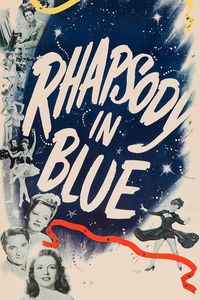
    Rhapsody in Blue (1945)

    (On Cable TV, June 2020) According to Rhapsody in Blue’s production history, the biggest problem the filmmakers faced was in wringing drama out of George Gershwin’s biography. While his death at 38 was tragic and he had multiple romantic liaisons, the rest of his life was somewhat uneventful—his rise to fame and acclaim being somewhat linear without major setbacks. Accordingly, this old-school but solid musical biography of Gershwin highlights the music (with some numbers notably played at length, something even remarked upon with stopwatch precision by the characters) and downplays the drama to the point of being a bit hazy about the man himself. All characters repeatedly agree, though—Gershwin was a genius, and women loved him. Much of this admiration can be explained by how the film is crammed with real-life Gershwin friends and admirers: Al Jolson (in blackface, inevitably and alas), the always-excellent Oscar Levant (wisecracking as himself, perhaps his favourite role ever) and Hazel Scott singing two rather good numbers in a Parisian nightclub—the first half of her performance in intelligible but probably phonetic French. Meanwhile, Robert Alda is not bad in the lead role. One notes the film as being one more contribution in the “Americans go to Paris for inspiration” subgenre, magnified by the later musical comedy An American in Paris paying homage to Gershwin—and also co-starring Levant. Inevitably, the conclusion becomes an Ode to a Fallen Great given Gershwin’s untimely death. Rhapsody in Blue does make for a nice introduction to Gershwin and his music, although as usual for Hollywood biopics the film does not survive even a quick Wikipedia check. Enjoy the music, don’t worry too much about the facts.

  • Lady Sings the Blues (1972)

    Lady Sings the Blues (1972)

    (On Cable TV, June 2020) One of the first musical biographies made by and for black audiences, Lady Sings the Blues still feels modern in how it treats its central character Billie Holliday—even as it does rely on the classical musical biography elements of tough childhoods, early discrimination and mid-career substance addiction. Diana Ross is impressive as Holliday, while surrounded by good actors such as Billy Dee Williams and an early non-comic (and non-moustached) performance from Richard Pryor. The music is quite good if you’re into early jazz (although there’s some anachronistic material there), and the atmosphere of early black music performances is evocative—even as Holliday goes out on tour with a white band. I gather that it’s not faithful at all to Holliday’s life, but this all blurs with distance and doesn’t stop the film from standing up on its own. Lady Sings the Blues hasn’t aged as much as similar film of the time because it’s anchored in solid (if familiar) material, and treats its characters with modern sensibilities. One wonders about how the then-popular blaxploitation genre paved the way for this specific biography.

    (Second Viewing, On Cable TV, May 2021) I have a feeling I’d like Lady Sings the Blues far more had I seen it in theatres in 1972 rather than fifty years later. It’s not that it’s a bad film – but what was new and interesting about it in 1972 – the grittiness, the denunciation of racism, the dramatic arc of a self-destructive singer, Diana Ross‘ performance from as Billie Holiday – all feels obvious, maybe even perfunctory today. Lady Sings the Blues follows a now-obvious dramatic arc for musical biopics. While there’s little bad to say about Ross, or the able supporting performance from Billy Dee Williams (in his pre Lando Calrissian days, another “less impressive now than in 1972” thing), the film itself feels intensely familiar today. I’ll note for the record that we’re not necessarily any better than audiences in 1972 – contemporary reviews also noted the clichés, so they feel even more striking after fifty more years of repetition. But it does make Lady Sings the Blues feel more generic than it should, and the ultimate proof of that would be that it took until I logged the film in my notes that I realized that I had already seen it less than a year ago. Now that’s embarrassing.

  • The Children’s Hour (1961)

    The Children’s Hour (1961)

    (On Cable TV, June 2020) It’s interesting to see a film resolutely take a stand against homophobia… while being unable to properly express what exactly it’s taking a stand against. But so is the curious juncture at which The Children’s Hour came about, as it describes how a girl with malevolent intentions starts a rumour about two teachers being a lesbian couple, leading to dismissal, social ostracism and everyone around them being affected as well. The lie may be debunked, but it’s too late—early 1960s America exacted its toll. That’s revolting by contemporary standards (although I bet it’s still happening in small communities), and The Children’s Hour clearly identifies its sympathies for the characters who should be able to live as they please. Still, the film is frustratingly elliptic in taking about “unnatural” relations, nor can it help itself by punishing a character in order to satisfy the requirements of the Hays Code. I watched the film because it featured Audrey Hepburn in one of her most dramatic roles and was not disappointed by her as a character in the middle of it all. But there’s quite a bit more to say about The Children’s Hour, as it touches upon issues too touchy to even mention—even if the execution falters, it did much under the constraints placed upon it in 1961.

  • It Should Happen to You (1954)

    It Should Happen to You (1954)

    (On Cable TV, June 2020) No matter whether you’re talking about 2020s influencers or 1950s aspiring actresses, the lure of instant fame is evergreen, and It Should Happen to You offers a time capsule of what that looked like in mid-twentieth century America. The hook lies in having an obscure young woman taking out a billboard in her name, hoping that the publicity will lead somewhere. Against all odds, it works—and she quickly finds herself in a romantic triangle between a well-off executive and a more modest filmmaker. The unusual premise quickly leads to a far more conventional romantic comedy, but there are enough known names in the production to keep things interesting. Under George Cukor’s direction, we have Judy Holliday as the young not-so-smart ingenue, being wooed by Peter Lawford and Jack Lemmon in his movie debut. While some of the film’s initial intentions get lost in the shuffle, the film ends on a funny and romantic note. The black-and-white cinematography highlights It Should Happen to You’s old-fashioned atmosphere (at times, it feels like a late-1930s film): Maybe Cukor, as competent as he was, couldn’t quite bring himself to shoot the material in colour and reflect the slightly dourer 1950s—ah, colour footage of those Manhattan locations would have been something to see! The actors are all charming in their own way: while I’ll confess never quite getting the fascination for Holliday’s persona, she does well here. While not a waste of time, It Should Happen to You certainly does feel as if it’s restraining itself—although, considering that it’s about advertising in the mid-1950s, we’re already getting quite a lot.

  • Death Wish V: The Face of Death (1994)

    Death Wish V: The Face of Death (1994)

    (On Cable TV, June 2020) Some people have addiction problems, but by this point in the Death Wish series, protagonist Paul Keslo’s serial killing problem has just become a grim parody of the first few movies—which, considering the blatantly cartoonish nature of the third film, is saying something. This time, Keslo’s close relatives are being brutalized and killed by rich people, which puts a different but not really any more acceptable spin on things. Charles Bronson (as Keslo) is grandpa killer by then, looking old and bored in his final theatrical starring role, as he once again murders for revenge in creative ways more reminiscent of slasher movies than earnest revenge. Although the film nods slightly in the direction of the character’s previous crime sprees, there isn’t much done with the psychology of someone who always sees killing as a solution to revenge. (Although that suggests a different parodic direction for the series—at 64, one year away from retirement, office avenger Paul Keslo kills co-workers who didn’t return his stapler, don’t wash their hands in the washroom and took away his lunch in the break room!) More amusing than dramatic, but far more boring than amusing, Death Wish V pushes the series’ five instalments even further past their due date.

  • Mary (2019)

    Mary (2019)

    (On Cable TV, June 2020) Over the decades, Gary Oldman has gone from playing Sid Vicious to Winston Churchill and has, along the way, become an elder statesman of movie acting—the kind of highly respected actor with a successful long-life career. Seeing him pop up to headline a cheap schlock horror film like Mary is a surprise, and he definitely lends far too much gravitas to what remains a down and dirty production. In many ways, Mary is the kind of horror film we’ve seen far too often, with a supernatural force far more interested in stylish kills than efficiently dealing out its revenge. As a result, don’t expect the film to make any sense once you get to the end—but what the film does have is a distinctive take on nautical horror, with plenty of nighttime rain as the boat is rocked back and forth and people aboard are possessed in various ways. It’s a bit tedious, although from time to time, Oldman does deliver a few speeches above the film’s level and the framing device is handled in a generally competent way.

  • DeepStar Six (1989)

    DeepStar Six (1989)

    (In French, On Cable TV, June 2020) There were at least three high-profile underwater action/SF films released in 1989, and while DeepStar Six is certainly not the worst of them, it has to settle for a distant second place after The Abyss, beating out Leviathan. Taking its cues from Alien, this film takes us to an underwater research station with eleven cannon fodder candidates, as they free a monstrous sea creature that seems to have a persona vendetta against all of them. Considering its medium budget, DeepStar Six does better than you’d expect in evoking an atmosphere of blue-collar workers stuck in a hostile environment: the sets are reasonably credible, and the film does feature plenty of underwater sequences. The monster is also decently handled by director-producer Sean S. Cunningham (of Friday the 13th fame) and some of the more horrific sequences are handled with a veteran director’s competence. It does sport an interesting cast if you’re into character actors and/or attractive actresses, with Nancy Everhard, Nia Peeples and the distinctive Miguel Ferrer as part of the ensemble cast. DeepStar Six would be far better remembered today if The Abyss hadn’t existed because the comparison only highlights just how limply DeepStar Six handles promising elements. This is, after all, a film with a prehistoric undersea monster, traitorous humans, hard-shell diving suits, underwater fights and nuclear weapons—it should be much, much better than it is. But it’s not—it’s merely watchable, perhaps even entertaining if you’re hankering for what it has to offer. But it will always be the also-ran.

  • Jailhouse Rock (1957)

    Jailhouse Rock (1957)

    (On Cable TV, June 2020) There’s really one reason to watch Jailhouse Rock, and it’s not the plot, in which a hoodlum goes straight after discovering the power of music. Who plays the lead role, though? Elvis Presley, and he’s the reason why the film is still worth a look. While fans will debate whether this is Elvis’ finest film, most will agree that the title number is The King’s finest moment on-screen: shot like a music video with an expressionistic set, it shows Presley at his absolute prime. The plot, in which a young man goes from convict to musical sensation to Hollywood star, is not bad but it’s not original. As a showcase for the young Presley, however, Jailhouse Rock is nothing short of fantastic and does give justice to The King in his early glory. What exceeds expectation is Presley’s willingness to play an unlikable character—one who starts the film by killing someone with his own bare hands, then spends the rest of the film ready to smash guitars and faces at the slightest opportunity. Making a bid for a bad-boy image, Elvis doesn’t quite know he’s a star yet—but the camera suspects something is up. It’s a disappointment that the film is shot in black-and-white, but then again it wasn’t working with a particularly high budget to begin with. Still, Jailhouse Rock does have another distinction: helping to birth a new kind of musical, away from Broadway inspirations and more closely aligned with then-burgeoning pop music.

    (Second Viewing, On Cable TV, June 2021) Clearly meant to be an Elvis Presley vehicle –his second top billing after Loving You, but the first built from the ground up for him–, Jailhouse Rock is interesting to modern viewers as one of the inflection points in between the classic Hollywood musical and the modern rock video. It’s obviously one of the first films to embrace the rock-and-roll offshoot of rhythm and blues, as it’s about a young convict learning guitar in prison, then going on to stardom as his songs go from relatively sedate numbers such as “Don’t Leave me Now” to catchier “Treat Me Nice” to the faster-paced “Jailhouse Rock” (still acknowledged as Presley’s most memorable screen number) before coming down romantically in time for the finale. Regrettably shot in black-and-white, it was meant as a fast and cheap production rather than an MGM flagship and the seams show – aside from the title number, almost self-contained in its choreography and visual presentation, the film is a by-the-numbers take on the sudden-stardom ur-story, with a dash of romance, business drama and personal growth thrown in. For Elvis, his characterization as a short-tempered, physically violent ex-con (wow, that scene where he walks in an office and starts slapping a records executive!) must have bolstered his bad-boy image – it’s not exactly a heroic role, but it works in context. It’s easy to watch Jailhouse Rock today and see its place as a transition between a certain idea of what a musical film should be, and what it would evolve into later on – with the exact recording of a pop hit taking over the interpretations that, until then, had dominated the genre. It’s alternately naïve (due to sticking to a familiar narrative template) and a bit off-putting due to the lead’s constant violence. But Jailhouse Rock remains well-worth seeing for the title number alone, and for the rest if you’re even a casual Elvis fan.

  • Undercurrent (1946)

    Undercurrent (1946)

    (On Cable TV, June 2020) Wait, wait! There’s a film in which Vincente Minelli directs both Katharine Hepburn and Robert Mitchum? Why did no one tell me? Well, it’s probably because they’ve seen it, considering how all three are playing outside their wheelhouse in Undercurrent. A domestic thriller the likes of which were popular at the end of WW2, it features a demure spinster who marries a mysterious rich man but ends up having a closer affinity with his brother. There’s a bit of gothic romance to the story as hints of mental instability creep in and the action moves to murder: it doesn’t escalate to noir, but there’s still a creepy drama underscoring the entire film. The threat may come from inside the house, but Undercurrent’s biggest twist is that Hepburn plays a meek character, Mitchum plays a sensitive guy (for barely three scenes), Robert Taylor plays the creepy villain, and Minnelli tries his hand at suspense, all of which is completely at odds with their strengths. One of Hepburn’s last role as a debutante (she was 39!), the film isn’t particularly good nor terrible: it’s interesting for the eyebrow-raising use of familiar names in unfamiliar roles, but if you’re looking for a good domestic thriller of the era, you might as well have another look at Gaslight.

    (Second Viewing, On Cable TV, July 2021) The only thing better than a film that brings familiar names together is a film that uses those familiar names against type. Of course, saying that about Undercurrent is misleading, as it takes place early in the career of two of its three marquee names. So here we have MGM musical director Vince Minelli going for a quasi-gothic thriller, steely Katharine Hepburn settling for a soft and weak character, and noir icon Robert Mitchum playing a refined and good-hearted character. (Plus, leading man Robert Taylor going for moustache-twirling psychopathy.)  It’s quite a ride if you’re coming to it with different expectations, and it’s probably that which distinguishes my second better-informed viewing for the first – in between the two, I developed my own appreciation for those three names, and Undercurrent clearly plays against them. Otherwise, well, there’s not much more to say: from a detached narrative perspective, the film does go hard for gothic mysteries, as the new wife of a mysterious man gets to gradually unveil the secrets surrounding his brother. The film is designed to be overly melodramatic, and feels long at something like 115 minutes. It’s not a bad watch but not a particularly fine example of a form perfected by Rebecca or Gaslight – but it’s worth a look if you’re too comfortable in what to expect from any of the marquee names.

  • Major League II (1994)

    Major League II (1994)

    (On TV, June 2020) The key to the Major League franchise is a love of baseball and of the series’ characters, so it’s not a surprise if sequel Major League II falls flat if you’re lukewarm on either of those. Using nearly every writing trick in the book to bring back the same characters and recreate the same situation as the first film (not matter how nonsensical it can be), the film barely bothers to hide its preposterous nature. At least Charlie Sheen and others are mildly amusing in their roles, with Margaret Whitton tearing up scenery as the returning villainous owner. Considering how eagerly it returns to the formula of the first film, Major League II does feel self-congratulatory at times—which grates once the film fails to live up to its own expectations: the jokes fall flat, the repetition is ridiculous (this may be one of the few sequels that feels worse if you’ve recently seen the original) and everything seems neutered and less adventurous thanks to the PG-13 rating. Is Major League II watchable? Well, sure, I guess. Is it rewatchable, though? That depends on whether you’ve seen the first film recently.

  • Skjelvet [The Quake] (2018)

    Skjelvet [The Quake] (2018)

    (In French, On TV, June 2020) It’s not that surprising to see the same producer-writer team behind Norwegian disaster film The Wave going on to produce an equally suspenseful disaster sequel. What is more surprising in The Quake is that it features the same main cast, back for a city-destroying earthquake after experiencing a deadly tsunami. What are the odds, right? Appropriately enough, the accumulation of trauma does form an integral aspect of the film… perhaps a bit too much, in fact. Still, the centrepiece here is the quake itself—a bit restrained compared to similar American films (I’m thinking of 2012, notably) but still effective thanks to a handful of long shots that sell the mayhem. While the earthquake only hits an hour and a quarter into the film, the last half-hour has a lot more action than the rest of the film, as the high-rise hotel in which the characters are stuck is gradually destroyed by the aftermath of the event. There are some solid suspense sequences here, notably in a penthouse restaurant that keeps tipping over when the floors below are destroyed. But you do have to be patient: it takes more than an hour of various portents for the action to begin, and the film is a bit cruel in killing off one returning character. It’s also noteworthy that The Quake doesn’t play the same refined playbook as other Hollywood disaster films: There are few action scenes before the main one, and the film does not set up an aftershock of some sort to present a renewed danger in time for the third act. It makes The Quake feel more focused, but also emptier than other similar films. Still, the Norwegian setting does add a lot of interest and you can enjoy the film as one of the few modern disaster films that’s not a hyperactive mess from beginning to end.

  • 12 to the Moon (1960)

    12 to the Moon (1960)

    (On Cable TV, June 2020) What begins as an earnest, halfway-plausible anticipation of men going to the moon transforms rather quickly into silliness, as the moon landing is followed by alien-driven adventures. If you’re in a generous mood, 12 to the Moon can be rather charming in its all-encompassing illiteracy, no matter whether we’re talking plotting, science or characterization. The black-and-white cinematography does make the film seem older than 1960—I would have pegged it as early-1950s, even though it makes pointed references to the then-beginning American effort to go to the Moon. The production values aren’t too awful for such a low-budget film, and the cinematography attempts to do much with what it has. What’s perhaps more interesting is 12 to the Moon’s admirable attempt to portray an international crew—including a black man and an Asian woman. Alas, we’re often close to tokenism, especially as stereotypes take more space than characterization. (Guess the nationality of the hero? The country of the villain is a surprise, though!) The plot is more unpredictable than you’d expect, more an undisciplined gonzo reflection of the film’s pure hokum than any honest desire to keep viewers on edge. Still, this wild narrative does have the advantage of making the film occasionally feel more interesting than most of its low-budget brethren—just enough for a small independent picture like 12 to the Moon to make it all the way to the twenty-first century and still earn mildly positive notes, even if for the wrong reasons.

  • Xia dao lian meng [The Adventurers] (2017)

    Xia dao lian meng [The Adventurers] (2017)

    (On TV, June 2020) I must have missed the memo on Chinese cinephile Francophilia, because The Adventurers is the third recent Chinese film mostly set in France featuring international jewel thieves in vast French estates that I’ve seen in as many months. Whereas Armour of God 3 had Jackie Chan, this one has Andy Lau, and Jean Reno to provide local colour. (Amazingly enough, almost all of Reno’s lines are in English, which makes sense from an international marketing standpoint but still feels weird to me.) Director Stephen Fung is at his best when handing the action and suspense sequences, his camera moving smoothly throughout his shots. But while The Adventurers delivers the essential successfully, it doesn’t add much to the tried-and-true caper formula. It’s watchable enough without being memorable. A few pacing issues arise in-between the big action scenes… and since the action set-pieces are front-loaded, it makes the end of the film feel disappointing without a clear climax. Add to that the familiarity of just about every sequence (although I did like the bit inspired by Mission: Impossible) and The Adventurers can’t claim to be more than a mildly entertaining film for the crowds. But at least it succeeds at that.

  • Quatermass and the Pit aka Five Million Years to Earth (1967)

    Quatermass and the Pit aka Five Million Years to Earth (1967)

    (On Cable TV, June 2020) One of the best Science Fiction films of the late 1960s, Quatermass and the Pit stakes out a very different kind of Science Fiction than many of its Hollywood contemporaries. Third Hammer film to feature the character of Professor Bernard Quatermass, it begins under 1960s London as an archaeological discovery ignites an investigation that, in turn, becomes science fictional and horrific. The distinctive late-1960s London flavour, presented in muted colour cinematography, adds quite a lot to the atmosphere. Compared to other monster movies, this one spends far more time on the quasi-procedural investigation to understand the creature than the expected sequences of death and destruction. It helps that the characters are smarter than the usual bears—or rather the usual SF protagonists of any era. The low budget and limited production means do damage the impact of the film, but the better-than-average quality of the script makes up for it. The impact it had on the later Lifeforce is undeniable, but Quatermass and the Pit is more than worth a look by itself.

    (Second Viewing, On Cable TV, February 2021) I thought a second look at Quatermass and the Pit would be dull, but it’s actually making me enjoy its blend of procedural detail and apocalyptic narrative even more. I still tremendously enjoy the hook, as a dig beneath London for an Underground extension reveals fossilized evidence of aliens invading the Earth and modifying the ape species to become human. There’s an intellectual cleverness to the way Quatermass and his team approach the problem and try to figure it all out with honest science. Then the film shifts in second gear as the historical curiosity becomes a present-day threat, with London eventually succumbing to a paranoid mind-control ray. While the budget of the film can’t quite accommodate the shift to apocalyptic spectacle, the film does try its damnedest to make us believe and does deliver a halfway-credible climax. Frankly, I’d like to see more movies along the same line, with a little bit more control over special effects and pacing. It’s quite a fun film, and a second viewing goes down more smoothly than I expected.