Month: January 2021

  • Baisers volés [Stolen Kisses] (1968)

    Baisers volés [Stolen Kisses] (1968)

    (On TV, January 2021) An accident of DVR scheduling led me to watch Baisers volés after its immediate sequel Domicile conjugal, and that didn’t work in the film’s favour. Rather than a sequel to Les 400 coups that had viewers wondering if the protagonist will get together with the cute red-haired girl, it ends up being a “here’s how they got together” prequel that prefigures more sadness to come knowing how Domicile conjugal ends. On the other hand—or perhaps the same hand—the successful blend of drama/comic elements from the following film isn’t quite as nicely executed here: Baisers volés feels longer, duller, more laborious than its successor and probably would have felt fresher if I had seen first. Still, it’s not an unpleasant film. The protagonist of the series (played by Jean-Pierre Léaud) is still a likable screw-up, here unable to hold on to a job longer than a few weeks following his dishonourable discharge from the army. Writer/director François Truffaut plays with form a bit—notably in expanding a small window into a full frame, or in having the character repeat names in front of a mirror for what seems to be an endless amount of time. If you see Baisers volés, make sure it’s in the series intended order.
  • The Dream Team (1989)

    The Dream Team (1989)

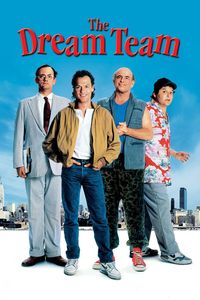
    (In French, On Cable TV, January 2021) Michael Keaton spent much of the 1980s starring in various comic vehicles of varying interest, and it’s interesting to note that one of the least engaging of them, The Dream Team, was released the same year that Batman raised him to a different class of actor. Little superheroism shows up here as the film sets up its dicey premise: what if a psychiatrist took four patients from the asylum to a baseball game in the heart of Manhattan? What if, to make it even more interesting, he was suddenly incapacitated and his charges were left to roam the city? Fortunately, The Dream Team is a comedy rather than anything else, and so the film sets out to show how our characters can act sane in an insane city and do some self-therapy along the way. Mix in a criminal subplot and you’ve got the bare essentials of an unthreatening Hollywood mental illness comedy in which all you need is love and unsupervised time. The biggest problem with The Dream Team is that while it has the bare foundation for a comic film, it doesn’t have much more. There are few laughs, few comic set-pieces, and quite a bit of excessive sentiment that often gives the impression of trivializing the issues it touches. Keaton is fun to watch—especially given that the film makes sure that his issues are not too severe—and the film does benefit from such comedy notables as Christopher Lloyd and Peter Boyle. But the potential of the film remains largely unrealized.

  • Domicile conjugal [Bed and Board] (1970)

    Domicile conjugal [Bed and Board] (1970)

    (On TV, January 2021) Ever since watching the one-two punch of La nuit Américaine and Hitchcock/Truffault, I’ve felt that François Truffault is my favourite of the French Nouvelle Vague writers/directors. His love of classic Hollywood, wry humour and fascination for the nuts-and-bolts of cinema are very approachable, and he’d be a good pick for any round of fantasy dinner-party guests. I suspect that it’s that kind of kinship that led to the auteur theory of filmmaking—if a director has similar motifs, obsessions and expressive qualities as you do, it permeates all aspects of their filmmaking and ensures that you’ll find something of interest in nearly all of them. (Strangely enough, my least favourite Truffaut film is Les 400 coups, one of his first and certainly the best known of them.)  That’s my long-winded way of saying that while Domicile conjugal deals in wholly unremarkable subject matter—the tough first months of cohabitation between a newly married couple—, it does so in a way that is frequently interesting. Great dialogues, striking scenes (including the bedroom shot shown on the poster), likable actors (Jean-Pierre Léaud, but especially the beautiful Claude Jade, even more attractive with glasses) and Truffaut’s subtle humour make the film far more interesting than a dry plot summary or description of its downbeat third act would suggest. There are plenty of odds and ends and small jokes along the way, along with a dispiriting affair portrayed rather more amusingly than one would think. Alas, I ended up seeing Domicile Conjugal before its immediate predecessor Baisers volés, so a few callbacks to the earlier film showing the two leads’ courtship were definitely lost on me. I normally tune out films dwelling largely on small-scale domestic issues, but Domicile conjugal hooked me to an unexpected degree, and I’m blaming it all on Truffaut.

  • Stronger (2017)

    Stronger (2017)

    (On Cable TV, January 2021) Despite good reviews, I passed on Stronger for years before finally deciding to see it. It’s the kind of film that you think you know simply from its premise: Here, the story of Jeff Bauman, a working-class Bostonian who lost his legs following the 2013 Boston Marathon bombing. It’s a tale that superficially classifies as one of those “overcoming great adversity” stories, mixed with the added resonance of a famous national-headline event. But it doesn’t take a long time to see how Stronger takes a more interesting approach than most similar films. Going a bit quickly on the terrible moments of the bombing (don’t worry—you’ll dwell on all the gory details later), it quickly establishes its lead character as an unreliable, somewhat immature young man thrust without warning in a terrible situation. But Stronger doesn’t sugarcoat any of it: stuck in the narrow confines of a lower-class apartment, our protagonist is ill-equipped to handle the media attention and the heroism conferred upon him. Bad incidents follow, along with a decidedly half-hearted approach to physical rehabilitation that would enable him to use prosthetics for walking again. Jake Gyllenhall stars as Bauman, bringing his usual charm to a role that often needs it. A similar performance comes for a de-glammed Tatiana Maslany as his on-and-off girlfriend, who takes on more than she can tolerate as well. The raw, gritty nature of the film can’t quite obscure a carefully orchestrated production that eventually gets back to the inspiring nature of such films—It’s as much a story of (literally) how to get back on one’s legs after tremendous setbacks, but also how to learn to accept the symbolism of heroism that others project onto you. Stronger is a clever film, clearly aware of genre clichés and working hard to go beyond them while still delivering the life-affirming message that viewers expect from such films. It’s manipulative, but not unpleasantly so.

  • Indian Road Trip (2019)

    Indian Road Trip (2019)

    (On TV, January 2021) One of the better arguments for greater inclusivity in filmmaking (not merely casting) is that different perspectives will tell stories from viewpoints other than those that have dominated cinema since its creation. Indian Road Trip, despite obvious shortcomings, is a clear example of the fun to be had when formerly marginalized filmmakers reuse familiar formulas to their own ends. The film takes a risk early on by introducing us to its two native protagonists by showing them swindling a caricatural couple of white folks out for reserve tourism. The dodgy morals of our lead characters having been established, the film follows it up by showing how disliked they are by the rest of the reserve. Their punishment? Driving an elder to her sister’s house, a short-distance trip that turns out to be far lengthier given intentional obstacles and some magical interference. Ajuawak Kapashesit and Paul C. Grenier star in writer/director Allan Hopkins’s comedy, their charisma quickly winning us over to their side as they try to complete their quest despite many deviations. While the acting talent in the film is uneven, there are a few laughs from Dale Hunter as a cranky elder, and Evan Adams as a character that keeps popping up at the oddest moments (something that even the characters eventually pick up). Indian Road Trip doesn’t take itself too seriously, and it has the freedom to be playful rather than harping on more serious themes usually associated with low-budget Canadian native films set on reserves. The comedy shines through, which is not always obvious on low-budget productions, and many more serious thematic concerns sneak in on the edges of the film’s main comic plot. The film’s low budget is the stuff of legend—much of the film was shot without sufficient post-production funding, and it took extraordinary financing arrangements for the film to be completed at all—and shows perhaps most clearly in the washed-out cinematography that flattens the impact of the spectacular shooting locations of Merrit, BC. (Which feels like a shame considering that the film makes good use of drone footage and good-to-great composition.)  It’s impossible to be too critical of such a winning effort, though: the script has its share of good moments in between mixing up a family quest, magical realism, a Tarantinoesque subplot about a criminal hunting for lost money, and the two lead’s good-natured banter. The film simply feels fun—and simply endearing despite its flaws. I’m annoyed that Indian Road Trip, like many examples of a substantial wave of enjoyable Canadian movies from First Nations filmmakers, will probably fly under the radar of most filmgoers. It’s a welcome exemplar of what’s possible when even modest budgets find their way into the hands of non-traditional filmmakers, and I hope to see more of Allan Hopkins’s work soon.

  • Terreur cannibale [Cannibal Terror] (1980)

    Terreur cannibale [Cannibal Terror] (1980)

    (In French, On Cable TV, January 2021) The early 1980s were a golden age for two detestable trends in horror movies: knife-wielding psycho slashers, and primitive-tribes cannibal movies. I despise both, but if forced to choose, I will usually prefer slashers: most of them are dull and unlikable, but cannibal movies could be repulsive to the point of unwatchability. Director Alain Deruelle’s Terreur cannibale distinguishes itself from most of the subgenre by first being a lone French effort in a mostly Italian sub-genre, but also by being a weird hybrid between a dull thriller and a disgusting cannibal horror film. The story does play on melodramatic elements by having two villains kidnap the young daughter of a rich man and head out into the jungle to hide her. But the horror elements quickly come back to the forefront with graphic cannibalism, rape and murder—don’t worry for the little girl (she escapes the film alive and untraumatized, which can’t be said about its audience), but the kidnapping rapist criminals are not fated to a happy ending once the rape victim aims the friendly neighbourhood cannibals at them. I am unfortunately jaded enough to say that Terreur cannibale feels like mere unpleasantness compared to the stomach-churning gore of Cannibal Holocaust. But that’s not a recommendation—it’s still an unpleasant film to watch, and a surprisingly forgettable one despite the hybridization of cannibal tropes with some thriller elements. Keep in mind that this assessment comes from an ultra-jaded viewer: anyone not used to the excesses of early-1980s cannibal movies will not find anything of value here.

  • My Entire High School Sinking into the Sea (2016)

    My Entire High School Sinking into the Sea (2016)

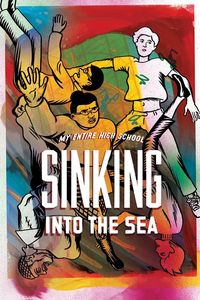
    (On Cable TV, January 2021) As much as it’s noble to want to separate content from presentation, it’s not always possible to do so, especially in cases like My Entire High School Sinking into the Sea, where the form is an in-your-face repudiation of slicker approaches. To be fair, many factors lead to the film’s intentionally naïve take on animation: it’s a low-budget, high-concept, full-zany film that starts with a high school perched atop a California cliff from which a substantial earthquake sends everyone in the ocean. (It’s not a spoiler—it’s in the title.)  The art style used here is intentionally crude, with basic 2D figures set atop colourful backgrounds in a bid to show the film in an expressionistic fashion rather than a realistic one. On the upside, it allows writer-director Dash Shaw to deliver a spectacular high school catastrophe film on meager means, and to start playing with non-realistic storytelling devices. On the other hand, well, it’s a hard film to sit through. I had some success treating the film as a radio play by watching something else and listening to the (admittedly not bad) dialogue, but I’m not sure I would have lasted long had I tried to watch the entire film with my full undivided attention. Like it or not, I still think that competent animation is important when delivering an animated film, and this one intentionally doesn’t aim for that. The story has hit-and-miss moments—some of the writing is good, some of it over-the-top, some of it disappointing. The ending is a bit bland after the colourful melodramatic action climax, but that’s part of the joke. Alas, when the entire film is a joke, it places My Entire High School Sinking into the Sea in an uncomfortable middle ground, neither funny enough nor realistic enough to be entirely satisfying. Decent voice acting can’t quite save a film that looks terrible and only becomes tolerable through a conscious effort of will at not watching something else. When there are so many other good movies with decent presentation, why exactly suffer through something that doesn’t want to look good and accessible?

  • Footlight Parade (1933)

    Footlight Parade (1933)

    (On Cable TV, January 2021) Hailing from the first half-decade of Hollywood movie musicals, Footlight Parade pales in comparison to later films in the same vein, but still packs a few moments of fun. Featuring none other than James Cagney as a producer of live shows trying to compete with those newfangled movie musicals, it’s an opportunity to see Cagney in a rare non-gangster film during that decade. (He started as a musical star but accidentally became better known for gangster roles.)  The story is a somewhat standard comic backstage musical, and in keeping with later films from codirector Busby Berkeley, keeps most of its musical highlights for the last act. The story has to do with a producer putting together three big numbers for a single night, and the steps taken to find stars and ultimately protect the secrecy of the numbers by locking up the entire crew for three days. While Footlight Parade is primarily directed by Lloyd Bacon, the imprint of Berkeley on the musical number is unmistakable, especially during the “By a Waterfall” number featuring three hundred dancers executing kaleidoscopic figures in a swimming pool. It’s impressive but reminiscent of other numbers—I had far more fun during the comedic (and hummable) “Honeymoon Hotel” number clearly showing the Pre-Code nature of the film. Other artefacts of the film’s production year include a surprising number of bare legs, some barely avoided profanity and passing acknowledgement of prostitution, especially in the “Shanghai Lily” number. Ruby Keeler looks wonderful in early scenes with glasses, while Dick Powell has an early role here as a romantic lead. Still, it’s Cagney borderline manic dialogue, especially in the first half, that holds most interest in terms of acting: much of the film’s later half simply rolls off the musical numbers after the buildup. Footlight Parade doesn’t look as impressive when compared to its contemporaries (even 42nd Street seems more satisfying) or later, savvier takes on movie musicals. But it still has its own kick, and that’s more than enough to warrant a watch by movie musical fans.

  • Morning Glory (1933)

    Morning Glory (1933)

    (On Cable TV, January 2021) I like Katharine Hepburn a lot and the debutante roles she often played in the 1930s do have an obvious attraction, but I had a hard time warming up to her performance as a struggling Broadway actor in 1933’s Morning Glory. That’s all the more surprising considering that it was the film that got her a first (of four) Oscars, and is often identified as the film that launched her to superstardom. There’s some metafictional interest in seeing her as a young actress playing a young actress—and doing so in a way that would be impossible to mistake for any other actress. On-screen, she displays a presence quite unlike anyone else—tall, thin, gorgeous and Hepburnesque from beginning to end. But the character she’s playing definitely takes a while to become likable—hopelessly naïve, chatterboxing her way through early scenes, not discernibly talented until late in the film (and even then, only through other people’s reactions). Anyone aware of Hepburn’s true self—or her later roles—can feel free to be bewildered by this girlish character. Adding to the discomfort, the mixture of Hepburn’s distinctive delivery and very mannered 1930s acting style can often ring false, even for those used to both: it’s no surprise if Hepburn was ripe for imitation by comedians of the time, or if she often sounds like the aspiring actress she plays in the latter, better 1935 Broadway comedy Stage Door. There’s an embarrassing drunken scene midway through that can be tough to watch, and the film seems to end too soon at barely 74 minutes. Still, Hepburn does remain the best reason to watch Morning Glory: the film probably would have sunk without a trace if it had starred anyone else. Extra bonus points are awarded to the film for featuring Hepburn with Adolphe Menjou—by the time they’d star together again in 1948’s State of the Union, his friendly testimony to the anti-Communist witch-hunts would drive a big wedge between then.

  • My Generation (2017)

    My Generation (2017)

    (On TV, January 2021) In a career now spanning seven decades, Michael Caine has not always starred in good movies, but he has established his screen persona as an exemplar of British cool, whether it’s the handsome cad of his early years or the refined gentleman of his retirement era. As such, he’s nearly the perfect person to host My Generation, a documentary look at the Swingin’ Sixties experienced in Britain, as a new generation took control of the cultural weathervane after the quiet postwar generation. Having Caine as a narrator enables director David Batty to intercut footage of current-day Caine with some of his 1960s films, clearly linking past and present in a way that would have been impossible with anyone else. A whirlwind mixture of historical footage, current-day interviews with notable celebrities of the time (although only Caine appears on-screen), practised anecdotes and truly terrific music, My Generation is far more impressionistic than analytical: Crucial points are dismissed in a sentence or two, while the film goes for audiovisual overload in mixing classic tunes (such as the titular The Who song) with fast-paced montages. That’s fine—if you accept that you’re riding along with Caine for a somewhat superficial overview of a specific time and place, why ask for more? A few moments stand out, either with Caine recounting how he stumbled upon an early live performance by The Beatles while shooting in Liverpool (amazing if true!), or footage showing Twiggy besting interviewer Woody Allen by turning the tables on his pretentious questioning. You can hear such notables as Paul McCartney and Joan Collins along the way, goofing off with Caine during interviews that were probably much longer. Caine’s delivery is impeccable, which helps a lot in going along for the ride. It’s not meant to be a complete story: My Generation ends on how drugs took out the winds of the overindulging generation, but stops short of detailing much of it, nor wondering if things could have been different. This is a film about the glory days, after all. I would normally bristle at yet another Baby Boomer navel-gazing, but My Generation shouldn’t suffer for the excesses of others nor the familiarity of the subject: it’s bouncy fun at its best, and the prospect of spending nearly ninety minutes alongside a chatty Michael Caine is hard to resist no matter what.

  • Carefree (1938)

    Carefree (1938)

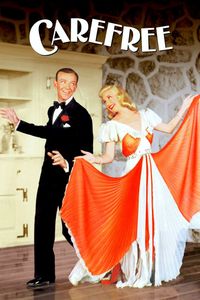
    (On Cable TV, January 2021) As the eighth of the ten Astaire/Rogers movies, Carefree is clearly not in the same class as its predecessors. More comic than musical, it features Astaire as a psychiatrist who falls for one of his hypnotized patients. Now, a near-constant in Astaire’s filmography is a dodgy concept of romantic consent: it’s not a reflection of his personal values (Astaire is one of the few Classic Hollywood stars with a mostly spotless romantic history) as much of the social mores of the time where males were supposed to be persistent. Still, even by those historical standards, Carefree is more problematic than most: not only is there the breach of professional ethics in having Astaire date a patient (an engaged one, no less!), but the hypnosis plotting device introduces all sorts of further issues—although it should be noted that many of the comic complications stem from Astaire’s character inducing feelings of hatred in his patient… with dangerous consequences for him! Merely four musical numbers pepper Carefree, many of them in dream sequences: a choice that ends up placing too much emphasis on the plotting of the film rather than its musical interludes. While the film is remembered for having the first big kiss between Astaire and Rogers, there otherwise isn’t much here to watch. Astaire is a good lead, but the plot doesn’t have him in a role that allows for much dancing, and that reflects on the rest of the film. Oh, Carefree is watchable enough, and it does have its comic moments: in particular, there’s a sustained sequence in which Rogers (under hypnosis) keeps trying to break a pane glass that’s quite funny. But it’s also a disappointment, especially for seasoned fans of the pair. It feels like a second-tier film (if not a third tier one) in their shared filmography by being merely serviceable when compared to their demonstrated potential. It’s still worth a look, but only after better examples.

  • Hoosiers (1986)

    Hoosiers (1986)

    (On TV, January 2021) For some reason, I expected more from Hoosiers than I got. It does have a reputation—Oscar Nominated, inducted into the National Film Registry, regularly mentioned as one of the best American Sports movies ever made, Hoosier is often hyped as more than a basketball film. But it is just a basketball film—set in 1950s rural Midwestern America, it’s about a disgraced pro basketball coach making his way to a small high school in order to take charge of their miserable team. (Apparently, he also teaches other things, but the film won’t show you that.)  You won’t be surprised to watch him win against all odds and eventually lead his unified team to a high-stakes championship. It’s based on a true story, and the film’s brown-hued cinematography makes it clear that it’s hitting all of the false-nostalgic clichés about small-town American high-school sports. Gene Hackman is the film’s anchor as the coach, but it’s Dennis Hopper who earns more attention (and award nominations) as a troubled supporting character. (Meanwhile, Barbara Hershey looks great as a romantic foil, but she disappears from the film once it gets back to the inspiring-underdog plot in earnest.)  I didn’t exactly dislike Hoosiers—it’s well made, engaging on a very basic narrative level, and benefits from following a boilerplate formula closely—but neither did I like it all that much. I’m nearly sure that being outside the film’s target audience (I’m not American, never played high school team sports and don’t go for sports in general even now) clearly accounts for much of this lack of enthusiasm. On the flip side, well, Hoosiers doesn’t transcend its limitations as an underdog sports film. It’s exactly what it claims to be, and anyone overhyping the film (even in their own heads, like I did) this may want to keep that in mind.

  • Beyond Re-Animator (2003)

    Beyond Re-Animator (2003)

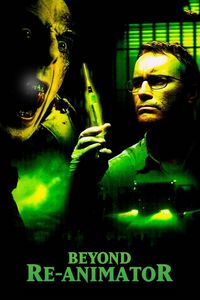
    (French, On Cable TV, January 2021) While I watch a lot of horror movies (I’d wager that in a given year, I see more horror movies than the total number of movies watched by casual cinephiles!), I’m not entirely eager to call myself a fan of the genre: Putting aside the formulaic and nihilistic nature of most horror films, much of the genre seems to attract a strange blend of fans—having attended a number of World Horror Conventions in my fannish heydays, I’m familiar with the gore-loving rough black comedic attitude of many aficionados, and I’m not nearly as attracted to that than by the thematic possibilities of the genre once it moves beyond just being about the monsters it portrays. But if you’re familiar with that tone, there are a bunch of horror movies out there that seek membership in a very specific semi-comic genre—not quite soul-suckingly bleak as other horror films, clearly more playful than straight-up monster slashers, and specifically talking to like-minded fans. This unforgivably meandering introduction is meant to place Beyond Re-Animator in its proper place—as a semi-comic, semi-gory, semi-ironic paean to the genre itself, riffing off the strengths of its previous instalments (mostly Reanimator—there’s not much here reminiscent of Bride of Re-Animator) in order to deliver more of the same. The plot has to do with a young doctor seeking the tutelage of Dr. Herbert West, now imprisoned after the events of the previous films. Thanks to new plotting devices, West is now able to reanimate dead bodies more efficiently, and the film plays out in a prison where death is frequent but not permanent. Beyond Re-Animator integrates lovingly crafted gory practical effects with a dollop of CGI to expand the cinematography of its predecessors, but otherwise doesn’t improve much on them. The humour is muted compared to the first instalment, and while the plot is slightly more interesting than Bride of Re-Animator, it doesn’t fly all that much higher. Still, the point here is for horror filmmakers like Brian Yuzna to deliver what horror filmgoers expect—Jeffrey Combs is easily the film’s main draw as the deranged Dr. West. Overall, though, it’s a somewhat average entry in its subgenre—a treat if you’re tracking down the Re-Animator films, but not something that will convert you to the subgenre if you happen to stumble on it without sympathy for what it’s trying to do. That’s fine—fannish audiences grow through stellar examples of the genre, but are sustained by average entries until the next big hit.

  • Shenandoah (1965)

    Shenandoah (1965)

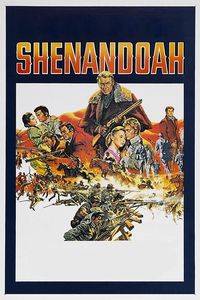
    (On TV, January 2021) It’s interesting that you could (erroneously) pinpoint Civil-War drama Shenandoah as being from the early seventies just by paying attention to its politics. Featuring James Stewart as a Virginian farmer with a less-than-enthusiastic opinion of the war coming to claim his sons, it’s a film with a far more muddled portrayal of Confederates and Union forces than previous eras. Perhaps the most amazing thing about the film is how it seems to operate with a very 1970s antiwar attitude despite being from the mid-1960s—There’s a clear war-is-hell attitude here that would extend to WW2 dramas five years later. The point here is the toll that the war takes on families—the multiple strands of the plot are all about personal loss for abstract political reasons, and the film is merciless in what it ends up taking from the lead character. I don’t think the film would have been nearly as interesting without Stewart in the lead, leaning on his mild persona, his drawled spoken mannerisms and his dogged facial expressions to earn so much sympathy from audiences. (It’s also Katharine Ross’s screen debut.) I’m not going to overhype Shenandoah: it’s often long, repetitive and perhaps too insistent on its themes, although that last may be forgiven considering how it struck in unfamiliar directions for mid-1960s movie audiences. But it’s also unusual in how it’s a Civil War film that avoids big battles (and burns down Union trains!), heartfelt in portraying the senseless toll of war on decent families and a good late-career showcase for Stewart. There have been many much duller Civil War dramas in Hollywood history.

  • 49th Parallel (1941)

    49th Parallel (1941)

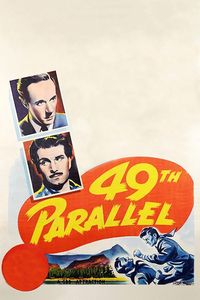
    (Criterion Streaming, January 2021) I usually scrutinize foreign films about Canada with a sharp eye, but 49th Parallel is a very satisfying mixture of semi-clichés, adventure, anti-Nazi propaganda and decent location shooting. Coming from the British film industry in the middle of WW2, it’s obviously conceived by filmmaking duo Powell/Pressburger as a kick in the pants for the then-neutral United States, and the best way to do this is by having Nazi saboteurs land in Canada and try to make their way to the States. As an adventure tale, it does have a nice forward rhythm, going from one episode to another as the Nazi infiltrators make their way across the country in a truly roundabout way and encounter various kinds of Canadians, with their numbers dwindling along the way. It starts off strongly with none other than a young Laurence Olivier playing a French-Canadian trapper (with decently accented French!) telling Nazis to shove off when they try to drive a wedge between French and Anglo-Canadians. Next up is a colony of Hutterite German immigrants, once again telling the Nazis to go away when they start playing on their common ancestry. After a detour through Winnipeg and the Rockies (where a British writer makes a strong stand for “soft” democracies), the action inexplicably gets back to Ontario in time for one last episode, where a less-than-perfect soldier (played by Raymond Massey, brother of future governor general Vincent Massey, who narrates the opening segment!) gets the finishing move near Niagara Falls. 49th Parallel would probably be fifteen minutes shorter without the speeches and propagandist material, but at a time of resurgent neo-Nazism, it’s still satisfying to see a portrayal of Canadians fighting back against the Third Reich. Aside from the ludicrous cross-country-and-back nature of the episodes, there’s plenty to like about the way Canada is showcased here. Some location shooting gorgeously feature its forests, prairies and mountains, while the characters have nicely done speeches making the country sound like amazing antagonists for the Nazis. Even the First Nations have some authentic representation, which is quite a lot more than we can say about many subsequent films. All told, 49th Parallel is quite a lot of fun to watch, and it’s an intriguing glimpse at the way Britain thought of Canada at the time.