Month: January 2021

  • Churchill and the Movie Mogul (2019)

    Churchill and the Movie Mogul (2019)

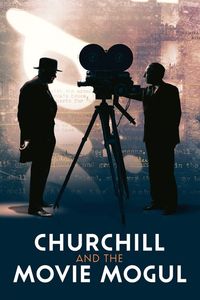
    (On Cable TV, January 2021) The relationship between Hollywood and the Anglosphere governments became unusually close during World War II—Washington and London were all too aware of the potential for mass propaganda tools during wartime, and an impressive number of films were produced in cooperation with the military—as far as I can determine, nearly every branch and sub-branches of the US Armed Forces got their own Hollywood movie between 1942 and 1945. But that’s only the most visible aspect of that wartime cinematic effort: the reality was often more involved than making movies showcasing armed forces. In Churchill and the Movie Mogul, director John Fleet gives an in-depth look at the overlooked relationship between Winston Churchill and British movie mogul Alexander Korda. Perhaps wanting to counter the impact of Nazi filmmakers such as Leni Riefenstahl, Churchill took a deep interest in the power of movies to influence the national mood. In return, Korda admired Churchill enough to hire him as a screenwriter and advisor in the mid-1930s, positioning him to make a significant contribution to the British war effort. Korda’s films are, as demonstrated here, filled with eloquent paeans to British strength of character… even in historical epics seemingly having nothing to do with WW2. (One notes that “historical” nation-building movies are surprisingly common no matter which country you’re talking about—I have a lengthy list just for the United States, Canada and for China as well.)  Churchill and the Movie Mogul is, obviously, a deep cut film: it’s about movies and their relationship to political rhetoric, and Korda is a figure of interest to a dwindling number of film enthusiasts. The documentary itself is fine, but it’s not the kind of topic that creates gripping moments. On the other hand, it does shine a light on a surprisingly involved relationship between two major figures in their own fields, and it cogently tracks the ramifications of that friendship and larger issues when governments become interested in movies, and vice versa. Even given the British focus, Churchill and the Movie Mogul is also a great contribution to understanding Hollywood during WW2.


  • The Little Colonel (1935)

    The Little Colonel (1935)

    (On Cable TV, January 2021) I usually watch and enjoy older movies on their own terms, but sometimes that doesn’t happen and I’m forced to power through them out of a sense of film history. The Little Colonel is, for many reasons, a difficult sit: Never mind the shaky technical qualities of a 1935 film, it’s an incredibly problematic film on issues of race. The portrayal of black characters is difficult to accept, and the sympathy that the film has for its ex-Confederate characters is troubling. On the other hand, well, The Little Colonel does feature two of the best-known black actors of the 1930s (Bill “Bojangles” Robinson and Hattie McDaniels), and its famous interracial staircase tap sequence between Robinson and a young Shirley Temple attracted a fair amount of controversy in the racist US southern states, so much so that it was removed from southern-states showings according to the practices of the time. The film is still known for being one of Temple’s best showcases, and it does feature Lionel Barrymore in a leading role. There is also the ending sequence in which the black-and-white film transitions to colour, a still-striking transformation that remains one of the earliest uses of colour in popular feature films. Still, I found The Little Colonel a slog to get through—the melodrama is overdone, the pacing is tepid, the characters are not always likable and nearly every scene reminds us of the racism of the time. But so it goes: not every title in anyone’s film history appreciation regimen has to be interesting or enjoyable. At least I can now strike it off my list of what to see.

  • The Pyramid (1976)

    The Pyramid (1976)

    (On Cable TV, January 2021) The crew at Turner Classic Movie’s TCM Underground (all hail Milli di Chirico) rarely do better than when they unearth some kind of deep oddity from the archives rather than play it safe by the usual cult classics. And—whew—they got something special with The Pyramid, an aimless low-budget curio from 1976 that plays like an acid flashback to the anxieties of another generation. The plot apparently has to do with a disillusioned Dallas journalist going on a quest to cover more positive stories, but in practice the film plays like an episodic collection of mid-1970s obsessions and fantasies, slathered in unimaginative but representative social commentary. Writer-director Gary Kent doesn’t aim at (let alone approach) any kind of cinematic greatness here: the audiovisual quality of the film is terrible, and the screenwriting approaches incompetence at its best. Plot threads come and go, “characters” take a back seat to hippie-in-the-street interviews, and the titular pyramid is some kind of new age construction that shows up late in the film without much of an explanation or payoff. From a shocking true-news opening, the film drifts even closer to new-age mumbo-jumbo about the post-1960s Age of Aquarius or somesuch. The meandering forward rhythm even weaves in a surprising reference to the JFK assassination, which is probably de rigueur for a regional film that seems to prefigure a good chunk of Richard Linklater’s filmography. It’s weird in a way that only undisciplined productions from the mid-1970s could be, and I would relish getting a chance to learn more about the film’s production. Until then, I can count myself lucky to have caught The Pyramid on a rare Canadian broadcast—it’s not good and I did not like it, but I feel as if I’ve learned something by watching it.

  • Going Overboard (1989)

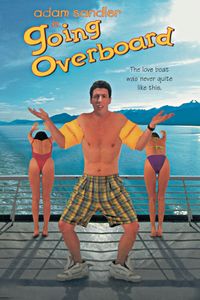
    Going Overboard (1989)

    (On TV, January 2021) Nearly every superstar has their early embarrassments, and Going Overboard would probably be even more of an obscure title today if it wasn’t for the fact that it’s Adam Sandler’s first starring role, prior to his tenure on Saturday Night Live. It has not aged well, but then again, it’s probably amazing to its filmmakers that we’re still talking about it thirty years later. Executed on a shoestring budget (something proudly highlighted in the film’s first moments), it’s a low-effort, low-energy, low-laughs comedy about a cruise ship crewmate aspiring to become the ship’s stand-up comedian. Terrorists and Miss World contestants become involved. Billy Bob Thornton also pops up, along with a late-career cameo from the legendary Milton Berle. The narrative is often punctuated by fourth wall breaks (probably the funniest material that the film has), and by gratuitous shots of pretty women—anyone talking about the obvious male gaze will be surprised to find out that the film was directed by a woman, Valerie Breiman. While Going Overboard is not terribly good, I wouldn’t go so far as to steer people away from it. For one thing, it shows how Sandler’s early screen persona is surprisingly similar to his later one; for another, the film does manage a few funny moments. It’s a bit of a capsule of 1980s issues (notably in designating Noriega as an antagonist, and in using as premise cruise ship terrorist attacks) and it does have a smattering of interesting actors slumming away. Heck, there are many worse movies than Going Overboard in Sandler’s own later filmography.

  • Send Me No Flowers (1964)

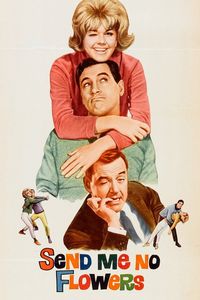
    Send Me No Flowers (1964)

    (On TV, January 2021) I did not know that Norman Jewison had directed a fluffy Doris Day/Rock Hudson romantic comedy (their last), but considering the breadth and diversity of his filmography, I’m not really surprised. Send Me No Flowers feels very much in-tune with other Day/Hudson films—it’s colourfully shot, amusingly plotted and lightly played. Hudson plays a hypochondriac that, thanks to only-in-movies contrivances, thinks he’s got a few weeks left to live and thus sets out to find a suitable replacement husband for his wife. Much of the fun of the film is seeing a husband act in highly unusual ways in trying to set up his wife with another man but never telling her what he’s up to, because of idiot plotting. Still, the film is amusing fluff, perhaps not as memorable as other Day/Hudson vehicles (my favourite still being Pillow Talk) but entertaining enough in its own right. Hudson has the right square jaw for the job, while Day is also up to her usual standards. The conclusion is perhaps a bit rushed, but Send Me No Flowers itself is an agreeable watch, and a definite curio in a filmography from a filmmaker far better known for more serious later fare.

  • My Favorite Brunette (1947)

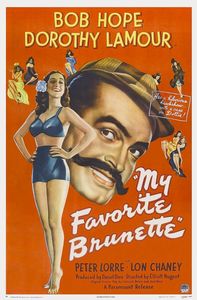
    My Favorite Brunette (1947)

    (On TV, January 2021) There are movies that sound far better on paper than on the screen, and My Favorite Brunette is certainly one of them. It’s a fairly rare example of a contemporary film noir parody—Bob Hope plays a baby photographer who’s mistaken for a private detective and thus dragged in a convoluted mystery plot with a number of actors (such as Peter Lorre and Lon Chaney, Jr.) spoofing their screen personas along the way. In theory, it wounds wonderful. In execution, it’s underwhelming: While Hope quips away shamelessly and the rest of the cast is certainly aware of the joke, the comedy of the film feels low-key and low-energy. The satire seems less ferocious than it could have been, and director Elliott Nugent’s work feels curiously unmemorable. This being said, I may revisit this one later on—I suspect that I may not have been in the ideal frame of mind for a fluffy comedy, and my reaction to My Favorite Brunette feels like one that could be unusually sensitive to mood.

  • La mariée était en noir [The Bride Wore Black] (1968)

    La mariée était en noir [The Bride Wore Black] (1968)

    (On Cable TV, January 2021) The very strong Hitchcock echoes reflected in François Truffaut’s La mariée était en noir are almost inevitable, knowing the strong friendship between the two directors that started when Truffaut spent days interviewing Hitchcock for a book on film criticism (as detailed in Hitchcock/Truffaut). It stood to reason that Truffaut, easily one of the most American-friendly of the Nouvelle Vague directors, would try his hand at an homage sooner or later. The result is… average. To be fair, there’s quite a bit of suspense and curiosity in the film’s first few moments, as a woman dressed in black and white goes around seducing and killing men. What is the reason for her murderous rampage? Is she going to kill every man she meets? Truffaut gradually reveals the truth midway through, but the film steadily loses steam as it goes on: while we understand why, the repetitious nature of her murders gets less interesting—while the film picks up some steam in time for the final kill, the film feels too long by a quarter-hour at 107 minutes. Truffaut was reportedly very disappointed in the results, as clashes with his cinematographer (working in colour for the first time) led to challenges in making the film. What does work well, on the other hand, is Bernard Herrmann’s musical score, clearly lending some explicit Hitchockian flavour to the result. La mariée était en noir works best in small segments — the premise is on very shaky grounds, but the execution has its moments and clearly prefigures the vengeful bride sub-subgenre. It’s essential viewing for anyone with an interest in Truffaut, Hitchcock and their friendship, as well as being of some relevance to those interested in French suspense cinema.

  • Almost Almost Famous (2018)

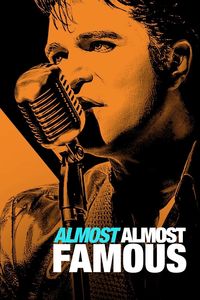
    Almost Almost Famous (2018)

    (On TV, January 2021) The universe of performing musicians is vast and while everyone loves hearing about the megastars, there are plenty of hard-working musicians working in less-than-glamorous conditions. It’s easy to dismiss tribute bands touring community-hall engagements, for instance, but Almost Almost Famous shows us the hard work behind the gimmicky music by following the band called Class of 59, which brings together a handful of early rock tribute musicians to imagine what a concert featuring Elvis, Buddy Holly, Big Bopper, Jerry Lee Lewis and Jackie Wilson would sound like. The glimpses we get at their audiences show a largely elderly crowd drinking in homage to the music of their youth, set against modest venues. The film is part touring documentary with their grumpy travelling manager, rockin’ excerpts of their shows, interviews with band members and associated stories. Lance Lipinsky (convincingly impersonating Jerry Lee Lewis) is quickly identified as perhaps the most gifted member of the band, but also the most difficult to deal with. We also get the amazing fairy-tale-like story of Bobby Brooks Wilson, a gifted signer of unknown parentage who’s offered a place as a Jackie Wilson impersonator and then, upon receiving attention from Wilson’s family, ends up discovering through DNA testing that he was Wilson’s unknown son. Almost Almost Famous is best appreciated for two things: First, terrific music—rockabilly is always fun to listen to, and Class of 59 clearly knows that; then as a respectful description of the hardship of touring for small bands trying to make an honest living out of playing music. As I write this, Class of 59 has suspended its shows due to the ongoing pandemic—I hope this is a temporary hiatus because they sound like a heck of a good show.

  • Mexican Spitfire’s Blessed Event (1943)

    Mexican Spitfire’s Blessed Event (1943)

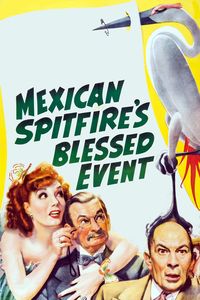
    (On Cable TV, January 2021) Fun is fun, but even funny sitcoms can overstay their welcome. Mexican Spitfire’s Blessed Event was the eighth and final instalment of the Mexican Spitfire series—and star Lupe Velez’s last Hollywood film considering her unfortunate death two years later. The plot is near identical to previous instalments: Velez’s character’s husband is about to close a deal with millionaire Lord Epping, leading to a comedy of errors and mistaken identities when “Uncle Matt” (also played by the very funny Leon Errol) disguises himself as Epping. Mexican Spitfire’s Blessed Event would be funnier if it wasn’t a near-exact replica of the previous films in the series, a level of repetitiousness approaching a bad TV show with a single hook. Taken on its own, it does have the qualities of the series: Velez is gorgeous and funny in a very stereotypical way, while Errol manages to get laughs even in very familiar circumstances. The husband character is disposable (three actors played the same role in eight movies!) and the conclusion is typically rushed. The “comic” device here goes all the way to the protagonist temporarily kidnapping a baby, which isn’t nearly as funny as the writers must have imagined. But Mexican Spitfire’s Blessed Event does have a few specific qualities of its own: its setting is equally divided between an expansive Canadian hunting lodge and a southwestern dude ranch; and after so much comic confusion about the titular “blessed event,” the series ends on the revelation we’ve been expecting—not a bad send-off for the series, despite it being easily twice as long as it needed to be. For the record, now that I’ve watched all eight films, the four better-than-the-others instalments of the series would be The Girl from Mexico, Mexican Spitfire, Mexican Spitfire at Sea and Mexican Spitfire Sees a Ghost—although I’m iffy on Mexican Spitfire at Sea because it’s the first one I saw and so arguably the freshest. Still, I’m half-tempted to get that eight-movie DVD collection: Velez and Errol are constant delights even when going through the same motions, and the series does have good moments buried in its episodes. I strongly suspect that the films are best consumed at half-year intervals rather than my one-a-week bingeing.

  • Bells are Ringing (1960)

    Bells are Ringing (1960)

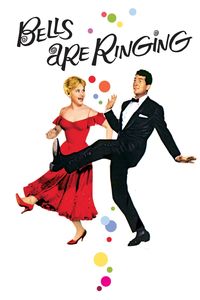
    (On Cable TV, January 2021) In cinema history, Bells are Ringing is noteworthy for being the final film of two well-known names. It was actress Judy Holliday’s final film before her death a few years later. Perhaps more significantly, it was Arthur Freed’s last musical film as the head of the famous MGM Freed Unit, which was responsible for putting together a twenty-year run of many of the most celebrated movie musicals of Hollywood’s Golden Age. This aura of finality seems appropriate, considering the tired nature of the results on-screen. Adapted from a Broadway play with the usual problems of stage adaptations relative to original musicals, Bells Are Ringing is far more laborious to watch than you’d expect. Despite a mildly amusing premise about a Manhattan answering service operator getting drawn into the lives of her clients, it’s a surprisingly mild and unremarkable musical. While Holliday is not bad and Dean Martin adds much to the film as its male lead, the comedy is perfunctory, the songs are not memorable and the entire thing leaves without having left much of a trace. Of course, musicals were fast declining by 1960 and films like Bells are Ringing certainly contributed to this decline—there’s little here to reflect the heights of the form in the previous decade: little wit, little invention, little cinematic quality—and this from otherwise dependable director Vincente Minelli. I’m certainly not saying that Bells are Ringing is a bad film—but it’s average in wholly forgettable ways, which represents an underwhelming end of the line for the producer responsible for such all-time classics as Easter Parade, Singin’ in the Rain and The Band Wagon.

  • Sweet Bird of Youth (1962)

    Sweet Bird of Youth (1962)

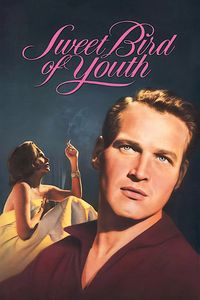
    (On Cable TV, January 2021) I really expected a film about a young man coming back to his small-town with a fading Hollywood star in tow to be more interesting than Sweet Bird of Youth. Despite the mixture of Hollywood bitterness and small-town politics, the film is a bit of a damp muddle. Paul Newman plays the kind of overly hard-headed semi-hoodlum that he did so well at the time, but somehow seems miscast. Geraldine Page does better as the drug-addled Hollywood star on the decline (although she still looks too young for the part), and so does Ed Begley as the powerful politician with mob boss habits. The theatrical origins of the film can be seen in the small scales and restrained locations—and knowing that the film was adapted from a Tennessee Williams play automatically leads one to look for the way in which it was softened from the original. (And this one is a doozy.)  Still, even with the happier ending, Sweet Bird of Youth isn’t much of a sit: it drags, it meanders, it gives us the yearning to escape back to Hollywood by the nearest available bus out of town. Newman fans may want to have a look, but even they may overdose on the obnoxious persona that he had at the time.

  • Beyond the Lights (2014)

    Beyond the Lights (2014)

    (On TV January 2021) Beyond the Lights isn’t unique in taking us backstage of a music superstar’s public image (heck, it’s not even the only such film I watched today with an unintentional double bill with The High Note), but it can depend on decent execution and a good ensemble cast to distinguish itself. In between Gugu Mbatha-Raw, Minnie Driver, Nate Parker and Danny Glover, there are plenty of interesting actors here. As a romantic comedy, Beyond the Lights starts with unpleasant sequences, as a prologue depicting parental abuse is followed by a suicide attempt by the film’s grown-up protagonist. Fortunately, a handsome policeman (Parker) is there to prevent the superstar signer (Mbatha-Raw) from falling to her death, and what follows is a romance mixed with attempts from the singer to extricate herself from an artificial persona facilitated by her domineering mother (Driver, in a surprisingly unlikable turn). Straightforward direction by Gina Prince-Bythewood doesn’t get in the way of her own script. I have long been interested in Mbatha-Raw, but this early film is a far better showcase for her talents than many of her later performances: the role is complex, spans various emotional states and even if it’s not clear whether she performed her vocals, it takes presence to credibly play a musical superstar. I have a few qualms about the male protagonist’s character, but those things have to be put in perspective considering that it’s female-centric romantic comedy. Still, I had a decent time—despite overused plot devices (is there a single movie singer who doesn’t dream of singing their own heartfelt material?), Beyond the Lights is an entertaining film that, by now, almost qualifies as an overlooked one.

  • Mac and Me (1988)

    Mac and Me (1988)

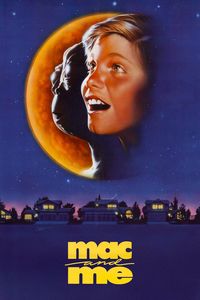
    (In French, On Cable TV, January 2021) Nowadays, Mac and Me has become infamous largely due to its lead actor Paul Rudd’s tendency to use it as a fake preview of his upcoming films whenever he goes on talk shows. That’s still better than anything it deserves. It doesn’t take thirty seconds watching Mac and Me to realize that it’s going to be a terrible film, as aliens in repulsive makeup are whisked away from an alien planet to Earth on a NASA probe. Having broken all sorts of laws of physics in its opening scene, the rest of the film isn’t any better: The bad makeup and special effects are a constant reminder that this wasn’t meant to be a good film in the first place, and the screenwriting remains merely serviceable at its very best. This conscious attempt to ape E.T.’s success goes through the usual boy-meets-alien formula, except with a hideous alien and an even more grotesque product placement deal with Coca Cola and MacDonald’s (which features in a birthday party dance sequence that I won’t even try to describe any further). The famously terrible sequence in which a disabled kid is dropped in a lake for laughs is probably worse than you’d expect, and so is Mac and Me in general. There are, to be fair, many movies of comparable quality in which kids meet monsters, aliens or other fantastical creatures—but most of them have understood that the creature must be somewhat likable or cute. This is not the case here, and that only underscores the shoddiness of the film. The production history of the film confirms many suspicions—that the marketing drove the film, and that director Stewart Raffill was essentially asked to put together a complete movie from nothing (not even a script) with very little advance notice. The result, unsurprisingly, is terrible, rooted in the worst instincts of cynical Hollywood pandering to the family-film market. There is little joy to be had watching Mac and Me—just pain and inordinate second-hand embarrassment.

  • The High Note (2020)

    The High Note (2020)

    (On Cable TV, January 2021) There isn’t anything particularly new to The High Note—we’ve seen many movies about assistants to superstars, about young musicians trying to succeed in Los Angeles, about demanding divas and about the machine behind successful artists. But it’s always about the execution, and The High Note does have what it takes to make an impression. It starts with the casting: Dakota Johnson can carry a mid-budget production by herself now (playing a young personal assistant with dreams of producing music), but she gets good support from notables such as Tracee Ellis Ross (as a diva), Kelvin Harrison Jr. (as an upstart musician), Bill Pullman (as her dad) and, perhaps most notably, Ice Cube as a cranky manager. Somewhat fluid directing from Nisha Ganatra pulls us into the glitzy Los Angeles music scene and its backstage antics. The somewhat conventional narrative gets a wild third-act revelation, but that’s all in good fun in keeping with the film’s amiable, no-antagonist nature. It can be watched in a relaxed state with its equal blend of wish fulfillment, low-stakes drama, emotional comfort and bright cinematography. In other words—there’s nothing exceptional in The High Note, but it’s sufficiently well executed to be interesting.

  • La cage aux folles II (1980)

    La cage aux folles II (1980)

    (On Cable TV, January 2021) Forty years later, the characters of La cage aux folles series present a curious conundrum for anyone trying to make sense of what it is to be progressive. On the one hand, it plays in heavy stereotypes of a bygone era, conflating cross-dressing with homosexuality, asking its lead actor Michel Serrault to fully play into the stereotype of the burlesque queen and getting away with jokes that wouldn’t fly in today’s trans-sensitive orthodoxy. On the other hand… the characters are never portrayed in anything but a sympathetic light, with quirks of characterization taking over stereotypes most of the time. Unlike its predecessor, La cage aux folles II doesn’t quite have the dense overplotting that led to its cult status and familiar American remake: it feels like an episode with a shoehorned thriller plot against which the comedy is set. It’s not entirely bad: going back to Italy is a nice nod to co-star Ugo Tognazzi, Serrault turns in a strong performance (the film is rarely as funny as when he goes all-out on those high-pitched squeals) and the film is relatively easy to watch, even if it’s not on the same level as the original. The intricate farce is watered down, even though it does have a few good sequences playing along role reversals (and often double reversals). In the end, what makes La cage aux folles II easier to take even four decades later is the sense that we’re laughing because the characters are funny and good-hearted, not because they’re indulging stereotypes.