Month: April 2021

  • Johnson Family Vacation (2004)

    Johnson Family Vacation (2004)

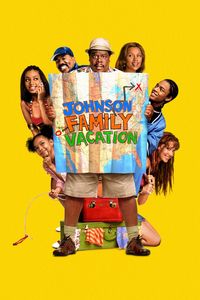
    (On TV, April 2021) It’s not as if Johnson Family Vacation is a particularly smart movie, but its charm is to deliver almost exactly what viewers can expect from its first few minutes. Heck, maybe even from a cast list and the plot premise, as Cedric the Entertainer plays a family dad heading a few states west to attend a family reunion, driving all the way there with his estranged wife (Vanessa Williams), three kids (the two eldest being played by Shad “Bow Wow” Moss and Solange Knowles) and an enormous vehicle with accessories he doesn’t particularly care for. If you’re thinking, “black-cast road trip family comedy, lowest-common denominator,” then I have nothing to add. An episodic comedy in which several segments end with the family running back to their car, Johnson Family Vacation doesn’t aim high, but does hit its targets. Most of the jokes are drawn along very predictable lines, but if director Christopher Erskin has one ounce of wittiness to his plan for the film, it’s in the way he plays with viewers: You know it’s coming and I know it’s coming and let’s see how long we can draw this out. The cast of a few supporting roles occasionally adds interest, whether it’s seeing Steve Harvey as a family antagonist, Shannon Elizabeth as a hitchhiker or Jason Momoa in a small role as a Native American hunk. The incredibly familiar premise will have you wondering if this is a remake of anything, but apparently not — although Cedric the Entertainer seems to be aping his performance on Chevy Chase in the Vacation series. There isn’t much to say about the perfunctory way the film is executed, completely aligned with the way broad comedies are filmed. It’s not much, but Johnson Family Vacation clearly knows what it’s contractually obliged to deliver, and only expends the minimum effort required to do that.
  • Sweet Home (2015)

    Sweet Home (2015)

    (In French, On Cable TV, April 2021) The more I watch lower-profile horror films (that is: those that never stood a chance of theatrical distribution in North America — straight-to-video, steaming exclusives, festival favourites and foreign productions), the more my expectations run low. Ironically, this can work to some films’ advantage — those that manage to rise above low expectations, usually through execution rather than concept. There isn’t anything startlingly new about Sweet Home, for instance. Most of it takes place in a near-abandoned building, as a young woman decides to use the place for a romantic tryst. Bad idea — there’s an effort underfoot to empty the building by all means necessary, and that includes anyone trying to have fun in the abandoned units. On paper, Sweet Home feels like many, many similar films, with a couple of protagonists trying to survive while trapped in a big empty building. But director Rafa Martínez has a pretty good understanding of how to play with familiar elements, and above-average cinematography does help make the film interesting to watch. Ingrid Garcia-Jonsson anchors the film as its resourceful damsel-in-distress, effectively selling both the initial vulnerability and the eventual ferocity of the role. An overly long climax is a bit of a blemish (by this time, everything feels familiar all over again), but much of Sweet Home works well in the kind of entertaining gorier-than-average thriller that fills up an evening without making too many demands on its viewers.

  • Events Transpiring Before, During, and After a High School Basketball Game (2020)

    Events Transpiring Before, During, and After a High School Basketball Game (2020)

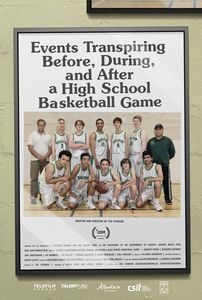
    (On Cable TV, April 2021) Ugh. Writer-director Ted Stenson goes for very specific aesthetics in Events Transpiring Before, During, and After a High School Basketball Game (as if the title wasn’t enough of a clue) and it’s really not one that I like. The plot is in the title, or rather the lack of plot is in the title: There’s a high school basketball game that brings a few people together, and the film studies in little subplots the slice-of-life moments of its characters’ lives. In other words: No big plot, lots of little subplots, lending to the result not only a fragmented impression, but an uneven one as well as not all of the stories are compelling. As a matter of fact, most of the stories are rather dull — from stereotypically dramatic drama students to a basketball player trying to plug in The Matrix in each conversation (the film is set in 1999) to a referee with marital problems to an assistant coach trying to get his team to adopt a complex system of play — this is definitely small-potato drama, and that’s what the film is going for. Don’t expect any big climax. The dialogue isn’t all that interesting, and its repetitiveness goes against the idea of using dialogue to reveal new things or advance the narration — by the fifteenth minute, we already know everything about the characters. Worst of all, however, is the film’s obstinate decision to handle every shot in static cinematography, often letting the camera running long after anything happens. This is both clunky and completely intentional — while it matches the low-budget aesthetics of the film, all of these things are a deliberate attempt to create something… that I don’t particularly care for, nor is particularly successful. It’s possible for flatly-directed films to succeed if they have something else—dialogue, wit, acting—but everything comes up lacking. Despite its significant flaws, it’s a bit too likable to be a failure (I’ve hated better movies because they were meaner), but Events Transpiring Before, During, and After a High School Basketball Game is too self-consciously quirky and misguided to achieve anything it could have aspired to.

  • Intent to Destroy (2017)

    Intent to Destroy (2017)

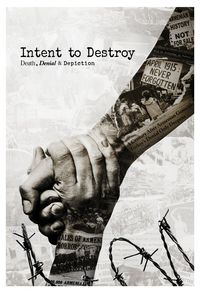
    (On Cable TV, April 2021) As I’ve written before, everything I know about the Armenian genocide comes from Turkish interests trying to deny it, from Serdar Argic in the mid-1990s Usenet to the hubbub surrounding Ararat and The Promise to the latest efforts of the Turkish government to criticize the possibility of recognition from the American government. Intent to Destroy, from veteran documentary filmmaker Joe Berlinger, chronicles the shooting of The Promise and uses this as a springboard to discuss the Armenian genocide, and the increasingly desperate attempts from the Turkish government to deny that it happened. As a documentary, it really ties everything together, from a succinct description of the events, their magnitude and their legacy, to the reasons why the Turkish government has been so invested in denying it. The link between the Armenian Genocide and the Holocaust is stronger than you may think, and the film spends a few valuable minutes explaining how the Armenian genocide actually led to the definition of the legal notion of genocide. (Much of the Turkish justifications boil down to a legalistic argument that “yes, many Armenians were killed, but it wasn’t technically genocide,” which is a hilariously stupid justification.)  Canadian director Atom Egoyan is interviewed, and proudly displays an entire book put together by the Turkish government to criticize Egoyan’s entire career in anticipation of Ararat’s release. One of the film’s most eloquent anecdotes comes late during the film, as a former American official describes the diplomatic fireworks when he recognized the Armenian genocide at an event, in contradiction to the American foreign policy meant to appease Turkey. That last segment means to conclude the film with the militant stance that the American government needs to recognize the Armenian genocide, and what do you know — on the day I write this review, shortly after seeing Intent to Destroy, here is Joe Biden formally recognizing the Armenian Genocide, marking a significant evolution of US policy. It took until 2004 for Canada to recognize the Armenian Genocide, but at least we did—and as Canada has its own genocidal history to consider, I’d like to reassure Turkish readers that ignoring your own history is not a demonstration of moral superiority—as often said, recognition is the first step toward justice.

  • Stake Land (2010)

    Stake Land (2010)

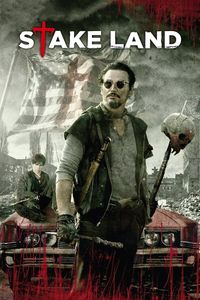
    (In French, On Cable TV, April 2021) I’m constantly amazed at the prevalence of the “let’s escape to Canada!” trope in American dystopian science fiction and horror — whenever the Americans imagine their country going to hell, the idea of Canada holding it together seems to be of great comfort and/or storytelling convenience as a goal. (As a Canadian, I’m not so sure about our chances if our southside meth lab implodes, but I’d rather be here than there.)  So it is that, once again, Stake Land establishes Canada as the goal, while our protagonists race north to avoid hordes of vampire zombies. The rest of the picture will feel intensely familiar to seasoned post-apocalyptic road movie watchers, although Stake Land is a bit more hopeful than many by not leaving a trail of destruction everywhere it leaves — and an ending that could be qualified as hopeful. (Another element of the “let’s escape to Canada!” trope: The refuge doesn’t usually turn out to be illusory.)  It’s slightly better than the norm, slightly more optimistic, slightly more tightly-directed… but in the end, Stake Land is very much a known quantity and another entry in a familiar genre. Fun for fans, not necessarily any more interesting for those that aren’t.

  • The Theatre Bizarre (2011)

    The Theatre Bizarre (2011)

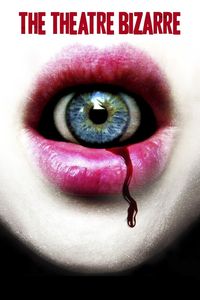
    (In French, On Cable TV, April 2021) As far as horror anthologies go, The Theater Bizarre is a bit more striking than most. For one thing, it doesn’t hold back on the gore, sex and disturbing material; for another, it’s also curiously versatile in the ways it approaches horror. There’s a framing device (starring Udo Kier) having to do with a woman discovering the titular bizarre theatre and being told macabre tales until terrible things happen to her. The first story, “The Mother of Toads,” is probably the blandest of the bunch, what with an entirely predictable bit of Lovecraftian folk horror. Things don’t necessarily get better with “I Love You,” a tragic anti-romance with another completely predictable ending — although the segment does get blackly hilarious as a standard I’m-leaving-you speech gets progressively crueller, to the point where it leaves no awfulness unturned in its quest for the ultimate put-down. “Wet Dreams” abruptly cranks the gore and the body horror within another tale of adultery — and a supporting role from horror legend Tom Savini, who also directs the segment. “The Accident” is the oddest and best segment of the bunch, largely gore-free but haunting in illustrating a conversation about death between a mother and her young daughter. “Vision Stain,” from well-known Canadian cinematographer Karim Hussain (you can spot downtown Montréal streets in the exterior shots), looks great but more immediately renews with the horror by way of needles in eyeballs to make up for a nonsensical story. Finally, “Sweets” does end in predictable gore, but takes an interesting path to get there, going for food-based grossness for once — it’s remarkably disturbing. Clearly meant for fans of all-out horror leaving nothing to the imagination, The Theatre Bizarre remains a better-than-average horror anthology, especially considering the ways some of the segments take a slightly askew approach to the genre.

  • LD 50 Lethal Dose (2003)

    LD 50 Lethal Dose (2003)

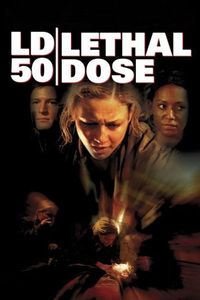
    (In French, On Cable TV, April 2021) An overwhelming number of low-budget horror movies can’t even justify their own existence — relying on stock plotlines, flat direction and even worse acting, they feel identical to dozens of other films: manufactured products made to order for low standards. When they are noteworthy, it’s usually for the wrong reasons — such as casting. So it is that if you’re looking for narrative satisfaction from LD 50 Lethal Dose, you’re going to be disappointed: taking its cues from what low-budget films do worst, it’s set inside a disaffected industrial factory, where our plucky protagonists encounter a variety of monsters until some of them make it outside alive. There’s some of the usual nonsense about military programs to create (all together now:) super-soldiers. Simon De Selva’s direction isn’t any more inspired, relying on visual familiarity to do exactly what many other movies have done since. Where LD 50 Lethal Dose does better is in casting, what with a pre-stardom Tom Hardy and a post-stardom Melanie “Scary Spice” Brown being part of the ensemble cast. Considering that I always enjoy watching Brown, I shouldn’t complain too much — but twenty years later, casting is the only reason why anyone would want to watch a film undistinguishable from countless others.

  • Panic in Year Zero! (1962)

    Panic in Year Zero! (1962)

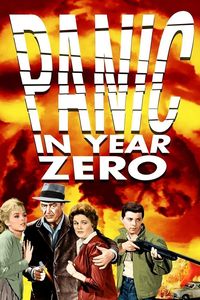
    (On TV, April 2021) If you want to understand in which kind of context the October Crisis happened in 1962, you may want to have a look at Panic in Year Zero!, a surprisingly effective Cold War nightmare in which an ordinary Los Angeles family out for a camping trip reacts to a nuclear attack on the United States, including the vaporization of Los Angeles. Better-prepared than most with a fully-loaded camping car, they still have to face many challenges before making it to relative safety. You may by misled by credits listing American International Pictures and Frankie Avalon — after all, their biggest hits of the 1960s were the frothy colour “Beach Party” comedies. But that came later—Panic in Year Zero! is a sober, dystopian take on something that seemed almost inevitable by the early 1962—massive nuclear exchanges between the United States and the Soviet Union. Millions of deaths and a complete breakdown of social order were the starting point of such survival films, and this one is no exception. Crisply directed by Ray Milland, who also stars as the patriarch making tough choices for his family, the film is a lower-budgeted but surprisingly credible exploration of the now-familiar scenario of a family having to survive a societal breakdown. Avalon plays the son of the family with a mixture of innocence and growing maturity, making a good contrast with his later fun screen persona. It’s largely an episodic film, with various incidents meant to show how mean and/or helpful various people can be in crisis. I suspect that the sheer number of post-apocalyptic films since 1962 has probably dulled the impact of Panic in Year Zero!, but it did get there early, and its mild-mannered take on a wide-scale crisis is an interesting period take that endures as a reflection of how it was seen at the time. The film makes for compulsively interesting viewing — a real surprise if ever you see it pop up.

  • A Little Romance (1979)

    A Little Romance (1979)

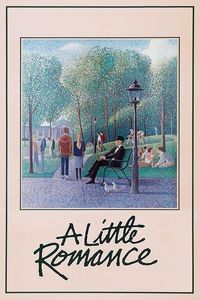
    (On Cable TV, April 2021) There is so much unadulterated syrupy-sweet sentiment in A Little Romance that while watching the film I had the time to develop obesity, cavities and diabetes. Consciously twee, it’s a romance featuring an American 13-year-old (Diane Lane, in her film debut) and a French 13-year-old (Thelonious Bernard), under the watchful eye of an older man (late-career Laurence Olivier). The backdrop is Paris, and then Venice, but if the leads are teenagers, the audience for the film is clearly meant to be adult, as the themes have more to do with the purity of an ideal teenage romance than anything else. Director George Roy Hill keeps things so light and unlikely that the film is best seen as a fantasy of sorts. A Little Romance probably works well with its intended audience in their most receptive mood, but if you happen to fall outside that segment… well, the sugar is overwhelming.

  • His Name Was Jason: 30 Years of Friday the 13th (2009)

    His Name Was Jason: 30 Years of Friday the 13th (2009)

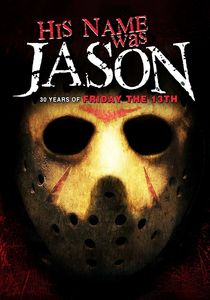
    (In French, On Cable TV, April 2021) Considering that I’m very much not a fan of the Friday the 13th series (considering my loathing for slashers in general, it’s no surprise if my favourite entry, Jason Goes to Hell: The Final Friday, is the one that die-hard fans hate), it’s a wonder why I’d willingly submit myself to a feature-length documentary about it. But what can I say? Completionism ruins everything, and considering that I’ve seen the entire series, I might as well have the documentary as the cherry on top. At its best, His Name Was Jason: 30 Years of Friday the 13th is a coherent exploration of the twists and turns of a series over three decades, quickly explaining how every entry came to be, telling us anecdotes about the production of each film, and letting the actresses tell us about their experiences shooting the film. In this regard, His Name Was Jason does the job: we get a short look at each film in the series, at the filmmakers and the actresses (with a scream supercut). But this documentary comes with two caveats — one specific and one far more important. The specific one is that my least favourite moments of horror movies are “the kills,” the elaborate special-effects sequences in which characters are slaughtered every few minutes and seem to be the chief attraction for many fans that I barely restrain myself from calling psychopathic. As a result, the fairly lengthy segment in which the series’ “best kills” are lovingly detailed and gushed over had me reaching for a copy of The Rise and Fall of American Civilization. But, hey, everyone likes different things for different reasons. SFX artist Tom Savini certainly looks as if he’s having fun here. The far more important caveat in taking in His Name Was Jason is that it’s chiefly a promotional item made to highlight the arrival of the 2009 reboot of the series — not a great film, despite the over-the-top praise that participants in the film are delighted to plug in. As such, don’t expect any critical analysis or much acknowledgement of how the franchise erred along the way — this is for fans, and His Name Was Jason: 30 Years of Friday the 13th reflects what it thinks the fans want from such a puff piece. You can conclude many, many things from that intention, but I’ve already said too much.

  • Vampire Hunter D: Bloodlust (2000)

    Vampire Hunter D: Bloodlust (2000)

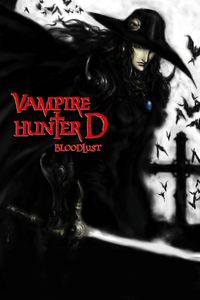
    (In French, On Cable TV, April 2021) I know just enough about animated Japanese films that I shouldn’t be surprised to find out that a film with terrific art would have not-so-terrific animation and a borderline incomprehensible plot. But Vampire Hunter D: Bloodlust is not that much of an oddity compared to other animated films of a similar vintage: Take any frame of the film and you’ll be impressed by the visual quality of the result. String them along into a sequence and you’ll recognize the shortcuts taken to keep the production costs down: highly constrained animation, interminable travelling mattes, lengthy segments where nothing moves, and other such common measures with pre-digital animation with a limited budget. Add longer sequences and the plot clearly can’t support the images: We end up with this jumble of plot elements that barely fit together and aren’t structured for any kind of storytelling intensity. It’s also when the demands of a limited animation budget crash into the requirements of a well-paced film: with interminable exposition and people talking over static shots, the film struggles to advance in more than short bursts of action. I still think that the art is often magnificent, and some of the ideas are interesting. The way writer-director Yoshiaki Kawajiri puts everything together, unfortunately, undermines even the best assets of the film. Anyone tempted to bemoan the 3D era of animation may be gently reminded of Vampire Hunter D: Bloodlust and what happens when you don’t have the means to do justice to your creative intentions.

  • Island of Lost Souls (1932)

    Island of Lost Souls (1932)

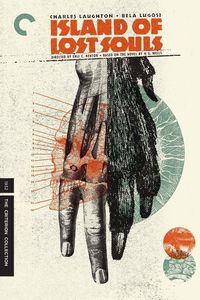
    (On Cable TV, April 2021) By now, I don’t really need another reminder about the vitality of Pre-Code movies, but Island of Lost Souls is an eloquent example of how movies of that era can feel modern — you wouldn’t see anything like this until the 1960s. The source material practically begs for grown-up treatment: H. G. Wells’ The Island of Dr. Moreau may be 125 years old at this point, but it’s still a potent exploration of disturbing ideas and visuals, with enough material questioning the idea of a creator and social conditioning to still feel dangerous to authorities both religious and secular. Such material demands artistic freedom, and filmmakers in 1932 certainly tried to get away with a lot — Island of Lost Souls is shot like a horror film, with horrible revelations and the still-surprisingly downbeat finale that the material required. The great Charles Laughton plays Dr. Moreau with his typically compelling style, making him a far more interesting figure than the bland antagonist played by Richard Arlen. But if you’re looking for one reason to see the film, just one — it’s got to be Kathleen Burke as “Lota, the Panther Woman” — clearly coded to be a wild, animalistic figure, she looks amazingly modern with long curly dark hair and a demeanour that’s nowhere near how “proper” actresses were directed at the time — she’s like a piece of 1980 cinema thrown half a century back in time and it’s no wonder if she still has a following nowadays. Skeptics beware: Island of Lost Souls is still surprisingly good—It’s not such a heresy to say that there still hasn’t been a better screen adaptation of Wells’ source material, especially considering the debacle that was the 1996 Marlon Brando film.

  • The Search: Manufacturing Belief (2019)

    The Search: Manufacturing Belief (2019)

    (On TV, April 2021) Pulling together a documentary is harder than you think, especially when it comes to tackling a big sprawling subject and then making sure that the focus remains on the topic. So it is that while The Search: Manufacturing Belief is interesting in its questioning of religion, belief, awe and control, it often feels so scattered as to defy a cohesive argument. Much of the film is structured around a dramatic recreation of a Catholic youth retreat weekend that writer-director Patrick Payne experienced in his teenage years — the Cursillo movement (aka “The Search”) that uses techniques eerily similar to mind control in order to produce a feeling of awe and attachment to a doctrine. (If you start going “uh-oh” at some of the things that happen, well done — the process is well known among cults, military forces and pyramidal schemes.)  Alongside the dramatic recreation of the weekend retreat are interviews tackling the topic of religion and awe, and trying to pick apart the differences between two often-associated emotions. Perhaps the best thing about The Search is how it tries to bridge an understanding between believers and non-believers — everyone interviewed (whether they’re associated with religion or not) brings a rationalist approach to the conversation, and the documentary deals with ideas in a robust manner. Of course, this ends up meaning going here and there, sometimes with atheist crusaders (one of whom seems a bit too quick severing any link between chunks of carbon and an overall sense of morality) and sometimes poking at new ideas without exploring them. It’s both really interesting and frustrating given the scope of the topic. But perhaps that’s inevitable in considering such an intensely personal topic: despite having been raised Catholic (and mentions of “The Search” had me thinking, “hey, didn’t some of my friends attend one of those…?”), I don’t have much to do with organized religion these says but get me started on libraries, tourism and/or the best science-fiction conventions I have attended and I can guarantee you that the language I’m going to use is going to sound a lot like the one used by believers at the end of their retreat. We all have our truth, and we all have the capacity to be awed when we approach what is central to us. The Search strikes an appropriately sophisticated tone in approaching the topic, but it’s almost by design that it wouldn’t get to its core for everyone… it keeps a sense of mystery!

  • Things I Do for Money (2019)

    Things I Do for Money (2019)

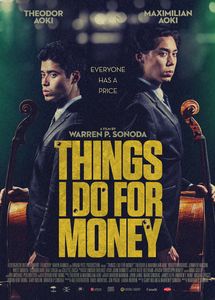
    (On Cable TV, April 2021) A strange combination of Canadian Content requirements and pandemic-induced blockbuster drought means that as 2021 unfolds, premium Canadian movie channels are essentially grabbing any interesting Canadian movie produced in the past five years, then putting them centre stage as their big premieres of the week. As a result, we’re exposed to significantly lower-budgeted films on a weekly basis. Some of them are unremarkable to the point of being hardly worth discussing, and then there’s the odd surprise. Things I do for Money is rough, scattered, and quirky… but when it clicks, it’s almost unique in its aesthetics. Proudly and loudly set in Hamilton (ON), it’s a film that revolves around two young cello-playing brothers of Japanese ethnicity as they deal with organized crime gangs. As far as crime genre elements go, there’s a bag of money, an expensive painting, complicated family dynamics, and rival gangs of different ethnicities — all things we’ve seen before. But it’s in the things never (or rarely) seen before that the film distinguishes itself — by making cellos an integral part of its soundtrack, for instance, the film gets two or three suspense sequences with a great foreboding soundtrack (at least one of them played in diegetic sound). The relationship between our two protagonists (played by real-life brothers Theodor and Maximilian Aoki, and eventually with their real-life father) is not commonly seen, the grandmotherly foul-mouthed Jamaican antagonist played by Colette Zacca is wonderful (oh, that bingo scene!), the use of drone cinematography is interesting for what feels like a micro-budget film and the promotional material highlights that this is the first Japanese-Canadian film, with ethnically and musically appropriate leads. The flip side of having so many fun things in the same film is that the entire production doesn’t cohere as much as it should. By the time writer-director Warren P. Sonoda makes his film become family drama, crime thriller, dark comedy, teenage romance, social commentary and then a thievery caper, it’s normal to feel as if all of those components should have co-existed more harmoniously together. The caper, in particular, seems a bit too much. Still, Things I Do for Money can be surprising in its details and exhilarating when the music starts: it’s not perfect, but I’d rather see something rough like this than an inert by-the-numbers production that you can’t remember as soon as the credits roll.

  • Ladies in Retirement (1941)

    Ladies in Retirement (1941)

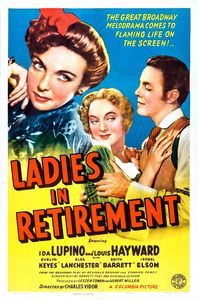
    (On Cable TV, April 2021) It took me some time to warm up to Ida Lupino — she’s wasn’t always a flashy actress and she didn’t go for a strong unified screen persona. (She’s arguably more interesting now as one of the rare female directors of the 1950s than as an actress, but that severely underplays her best and most captivating performances.) But as with many non-superstar actors, sooner or later there’s a film that makes people click with her, after which it any film featuring her gets an “Oh, It’s Ida Lupino!”  So it is that Ladies in Retirement is a good honest thriller that would be interesting in its own right as a natural blend of Victorian setting and noir aesthetics only one step removed from Gothic. But it does have an added dimension with Lupino as a 22-year-old playing a fortysomething protagonist who goes murderously crazy. She also plays against her then-husband Louis Hayward — he as a schemer, she as a housekeeper with a big secret. The almost-comic opening soon turns grim, and while the film (adapted from the stage) is much better in its atmosphere and development than its underwhelming conclusion, there’s a gender-bent domestic thriller here that stands adjacent to material in the vein of the not-much-later Gaslight.