Month: December 2021

  • Greyhound (2020)

    Greyhound (2020)

    (Youtube Streaming, December 2021) A classic WW2 thriller gets a digital facelift in Tom Hanks’ Greyhound, a tense action-filled war movie following a supply convoy as it makes its way across the Atlantic in 1942. Hanks not only stars as the captain of a destroyer trying to keep the Nazi U-boat threat at bay, but also wrote the film — further adding to his legacy of paying homage to the military personnel of the era. Adapted from the C.S. Forester novel The Good Shepherd, the film greatly benefits from modern digital filmmaking in portraying the dangerous game between Allied destroyers (including a Canadian ship) and Nazi submarines — Digital special effects allow the camera to show fluid battle sequences that would have been impossible to visualize otherwise, and keep the audience engrossed in the ongoing suspense. Cleverly structured around the period in which the convoy cannot depend on assistance from the continents, Greyhound is a ticking clock of attacks, defence and counter-attacks. Hanks plays the captain with a familiar stoic reserve, so it’s arguably the action sequences that get most of the attention. Director Aaron Schneider keeps the focus on the thrills rather than the characters — a decision that matches well with the film’s zippy 91-minute running time. There’s a nice claustrophobia to the grey-and-blue cinematography, and Greyhound remains satisfying despite a few shortcomings.
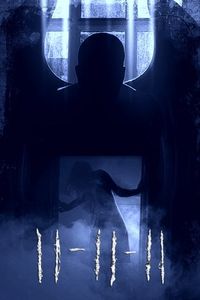

  • 11-11-11 (2011)

    11-11-11 (2011)

    (In French, On Cable TV, December 2021) Now that 2000 and 2012 are behind us, filmmakers are going to need to work overtime to find which chronologically spooky year should act as pretext for a big horror/catastrophe film. We’re still too far away from the Epochalypse of 2038, so filmmakers have to come up with something more creative. Or not, as is the case with 11-11-11, a typically underwhelming number-obsessed film that doesn’t do much with a once-a-century opportunity. Blending apocalyptic visions with demons and cultists, the film barely does the strict minimum required of a horror film, and doesn’t go much beyond that. It’s very much like being stuck with a painfully unimaginative crackpot for 90 minutes as he keeps repeating, “Eleven Eleven Eleven… It’s spooky!” over and over again. Writer-director Darren Lynn Bousman did much better movies before 11-11-11 but arguably not since then — in any case, this film is the blandest of bland horror movies, so perfunctory that it barely registers as horrific. It’s easy to imagine a similar film being produced for 00-00-00 or 22-02-02 or any other date in the calendar: there’s nothing special here in concept or execution, and nothing particularly good either.

  • Christmas Déjà Vu (2021)

    Christmas Déjà Vu (2021)

    (On TV, December 2021) Yes, there is indeed something very familiar about Christmas Déjà Vu, as it focuses on a young woman’s dreams of fame and fortune as a signer, and enables the what-if through the intervention of an angel. Waking up a celebrity, our protagonist realizes (as these things usually go) that there’s some upside to a modest life and working hard to reach your goals. As Christmas movies go, Christmas Déjà Vu goes for sentimental epiphany rather than laughs or romance. Anchored by a remarkably polyvalent performance from Amber Riley (utterly de-glammed in the film’s opening moment, but able to step into the glitzy life of a celebrity later on), the film doesn’t go for any new narrative ground but does well with the limited means it’s working with. The subplots are familiar (of course her new husband is unfaithful) and so are the big realizations of the climax, but writer-director Christel Gibson knows what she’s going for, can benefit from good actors (including Loretta Devine as the protagonist’s mother) and makes the most of a low budget. It’s certainly not It’s a Wonderful Life, but Christmas Déjà Vu is an acceptable background feature as you decorate the house for the holidays.

  • Die Austernprinzessin [The Oyster Princess] (1919)

    Die Austernprinzessin [The Oyster Princess] (1919)

    (On Cable TV, December 2021) Perhaps the biggest surprise of The Oyster Princess isn’t necessarily how amusing it is — coming from Ernest Lubitsch, the contrary would have been noteworthy—but how much it goes for an absurd comic style that feels far more modern than the silent era. It calls itself “a grotesque comedy” and that’s as good a depiction as any — it really goes overboard in depicting the excesses of its upper-upper-class characters (a parody of both the European nobility and the American nouveaux riches), for instance, in having dozens of servants doing menial things. The film also features “a foxtrot epidemic” and people peeking at a newlywed couple through a keyhole, if that tells you a little bit more about what to expect. The mood is frantic, confused, not at all restrained or dignified, unlike many films of that period. It’s worth seeing for being the first film acknowledged to show that undefinable “Lubitsch Touch,” but it’s also worth seeing by itself for itself — The Oyster Princess is more than sporadically funny by today’s standards, but hilarious when measured against many other movies of the time.

  • Muriel’s Wedding (1994)

    Muriel’s Wedding (1994)

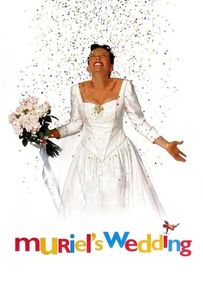
    (On Cable TV, December 2021) The spirit of humiliation comedy is strong in Muriel’s Wedding, a film in which an outcast girl in a small Australian town (Toni Colette in an early big-screen role, unexplainable presented as a “plain girl”) gradually learns to affranchise herself, albeit not before letting her fantasies drive her to weird and unsustainable complications. She eventually earns her happy ending but there’s a lot of discomfort, cringing and bad ideas along the way. Also making her big-screen debut here is Rachel Griffiths as Muriel’s far cooler friend that manages to get her out of the small town and to the city where she’s better suited. While it sports an ABBA soundtrack, Muriel’s Wedding is far too often a melancholic affair about an outcast without specific skills or strengths. A lot of sympathy-for-the-underdog is required to make it through the film’s most excruciating moments, but it ends on a strong note. One notes that Muriel’s Wedding, historically speaking, happened during the indie boom of the early 1990s — a welcoming environment for such oddball heartfelt movies consciously running against the Hollywood ideal. It worked then, and it still works now.

  • Dance, Fools, Dance (1931)

    Dance, Fools, Dance (1931)

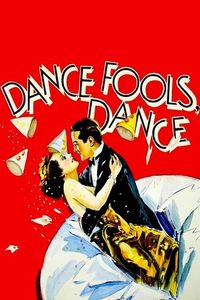
    (On Cable TV, December 2021) I wouldn’t recommend Dance, Fools, Dance to 1930s cinema newcomers — there are far better choices out there, and this film doesn’t measure up in terms of narrative, style or impact. But for those who are familiar with the period, the film offers a remarkable amount of comfort. It starts with the casting — a young and attractive Joan Crawford playing opposite a young and not-quite-superstar Clark Gable as a gangster. (Before the end of 1931, Crawford and Gable would have an affair and be well on their way to becoming superstars.)  Beyond those two familiar names, the film is built on many conventions of the time — organized crime, the newspaper business, and heirs forced to work because of the Depression — that clearly make this a piece of 1930s cinema. Dance, Fools, Dance doesn’t do much with its Pre-Code freedom compared to racier films of the time, but the reflection of the era still feels relatively raw in its acknowledgement of one-night stands and recognition that Depression was taking place (a topic conspicuously avoided by escapist Hollywood). Crawford is quite good here, and the film flows easily — but it’s best seen by people able to put it in context.

  • One Night in Miami… (2020)

    One Night in Miami… (2020)

    (Amazon Streaming, December 2021) Fan-fiction goes respectable in actress-turned-director Regina King’s One Night in Miami, a film built on the idea of what could have happened when real-life friends Malcom X, Cassius Clay, Jim Brown and Sam Cooke — all legends in their own fields — spent an evening together. The bare bones of the story are factual: they did spend an evening together in a Miami hotel room, and they were all at their own crossroads at the time. (Two of them would be dead by the following year.)  The rest is fictionalization, albeit good and believable drama as the four men, recognizing their growing personal power and influence, discuss what black men could do with what they had at their disposal. Reflecting real-life, the most compelling member of the cast has to be Eli Goree as Cassius Clay, with Kingsley Ben-Adir as Malcolm X not far behind. All four main actors (with the cast being rounded off by Aldis Hodge as Jim Brown and Leslie Odom Jr. as Sam Cooke) do well in a dramatically challenging film, with the tight space/time unity allowing for debates reflecting the tensions of the Civil Rights movement. As a directing debut for King, it’s a success — the film walks a fine line between fact, drama and discussing big ideas. While nighttime hotel setting ensures that the film’s palette remains monotonous, that same theatrical feeling creates a fertile dramatic environment for the characters to exchange their views on big topics. One Night in Miami should be particularly fascinating for anyone interested in those figures or the era in which it’s set, but there’s a lot to admire in the rest of what the film has to offer as well.

  • Escape from Pretoria (2020)

    Escape from Pretoria (2020)

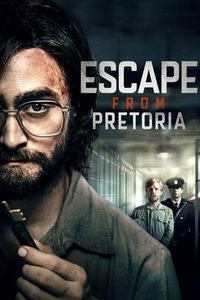
    (Netflix Streaming, December 2021) There’s a fun prison breakout film in Escape from Pretoria, but the real interest of the film is in the abstract questions it raises— when do we decide that a prison sentence is so unjust that we cheer for evasion? A prison defines inmates as criminals, but that definition does not always align with what other people would consider a crime. Set in the depths of South Africa’s apartheid regime, the story adapted from true events follows two white activists as they are sentenced to years of prison for their role in distributing anti-apartheid propaganda. Twenty-first century viewers are squarely on their side as they start preparing a very long plan to escape prison and make their way out of the country. To say that they succeed is not much of a spoiler, considering the historical record. Still, Escape from Pretoria becomes an interesting blend of procedural details describing the most minute elements of their complex escape, as well as a consideration of the difference between what the government says is criminal (hence unjust incarceration, hence righteous escape) and what observers with different values would consider to be criminal. Daniel Radcliffe does well as one of the escapees, working alongside Daniel Webber. It’s all handled with a tight attention to detail that pays off when the escape sequence begins. After so much time spent in the tight dark corners of the Pretoria Prison, the wide-open vistas of the conclusion feel like an escape for the viewers as well.

  • Phii khon pen [The Victim] (2006)

    Phii khon pen [The Victim] (2006)

    (In French, On Cable TV, December 2021) At this point, I’m more eagerly looking forward to mediocre foreign horror films than mediocre domestic ones — at least the foreign film will have a more unusual setting than the American one. But that doesn’t mean I won’t complain about them if they are, indeed, mediocre. Thai horror film The Victim, from writer-director Monthon Arayangkoon, does play with a few intriguing elements—most notably in entangling its protagonist, a young actress, with the ghost of a murder victim. You can imagine several ways such a premise could go. Unfortunately, the film doesn’t do much with what it has, even when it aims toward a mid-film twist that’s supposed to recontextualize everything. Instead, it merely confuses the narrative until it gets to move forward again, and doesn’t lead to much more in terms of narrative impact. (When a film explicitly blurs the line between reality and fiction, viewers won’t be that surprised then reality and fiction are blended even further.)  The juxtaposition between macabre crime “reporting” and a vengeful ghost story could have worked, but it would have required more work and originality in handling the result. The Victim, instead, seems to lose itself for a long time before delivering an underwhelming climax. Too bad — a mediocre film remains mediocre, even when it takes place in an unusual environment for North American viewers.

  • The Ice Follies of 1939 (1939)

    The Ice Follies of 1939 (1939)

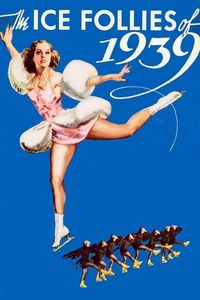
    (On Cable TV, December 2021) Let’s admit that it is fun to watch James Stewart as an ice skater putting together an epic skating show in The Ice Follies of 1939. It’s even more fun when he’s alongside Joan Crawford playing a mediocre skater who finds great success as an actress even as he’s still putting together his groundbreaking “musical on ice.”  Don’t worry — they’ll make it work eventually, but much of the film is spent with the two obsessing about the other one’s success (or lack thereof) and how it makes them feel. There’s a decent bit of business about showbusiness when our female lead stumbles into stardom thanks to her good looks and great attitude. The conflict between matrimony and success is given a fairer shake in this film than many others, largely because it’s a conflict between two successful people, not necessarily a star and someone offering support. Both lead actors are better than the undercooked material, which feels sandwiched between the requirements of a musical and the demands of making something interesting about ice skating. (The solution, as could be expected, was to blend movies and ice skating.)  It ends with a colour musical… on ice. But that’s Hollywood for you: stars pressed in ill-fitting roles, no matter their suitability for the setting… or the believability of the setting itself. The Ice Follies of 1939 is, at least, worth a look for the climactic dance number on ice, and some of the scenes between Steward and Crawford. Otherwise, well, there’s a reason why it’s more seen as a curio these days.

  • You Will Meet a Tall Dark Stranger (2010)

    You Will Meet a Tall Dark Stranger (2010)

    (In French, On TV, December 2021) Coming from the end of his London period, You Will Meet a Tall Dark Stranger has writer-director Woody Allen at his most inconclusive. As an ensemble film following many, many characters as they all go through personal trials in contemporary London, the film does have its strength. The best of those is clearly the cast. At the time, Allen could still attract top talent, and that’s how the film features no less an eclectic group than Anthony Hopkins, Antonio Banderas, Freida Pinto, Lucy Punch or Naomi Watts. The story arguably gets rolling when (in early flashbacks) a long-time couple divorces. She turns to fortune-telling to make sense of her life, while he turns to younger women for hire. (He eventually gets married to one such escort, with predictable results.)  Their daughter is having a hard time with her novelist husband, who earns “most despicable character” status after he starts an affair with a neighbour and steals a book manuscript from a friend in a coma. There are plenty of small subplots, but the common theme running through all of them is that the film ends just as things were getting interesting for all the characters — the new husband is unsure of his paternity; the thieving writer is dumped and aware that his novelist friend came out of his coma; the daughter is unable to start her own gallery… and so on. It’s very much a tale of stories interrupted, and while this is clearly the intention, it doesn’t make the film any better. (Allen would then leave London to go on a rejuvenating European tour for his next few films.)  Not every Allen film is a solid hit, but You Will Meet a Tall Dark Stranger seems more disappointing than most: all build-up, no conclusion.

  • Rosita (1923)

    Rosita (1923)

    (On Cable TV, December 2021) Despite my utmost admiration for Ernest Lubitsch’s sound movies, his early silent career is hit-and-miss. No real surprise there — dialogue is often the best part of a classic Lubitsch movie, and he was developing his style at the same time as the movie industry was figuring out the basics of film grammar. I’d put Rosita (his first Hollywood film, I believe) as an average silent entry in his filmography — not as good as his sound films, but not as underwhelming as some other Lubitsch silents. None other than Mary Pickford (in her first adult role) stars as a protest singer who, in criticizing the king, ends up making herself attractive to the king himself. Many romantic complications ensue as the heroine navigates between the attentions of the King and her own true love. Rosita is watchable and it ends well — but it’s no great Lubitsch comedy. Still, you have to admire the way the film was rescued from oblivion — for decades, it was considered lost until a safety print was discovered during the 1960s and that single copy was the sole version that existed for many more decades. It’s only in 2017 that a restored version was premiered, giving us access to a good crucial link in both Pickford and Lubitsch’s career. Rosita may not be that good of a film, but it doesn’t deserve obscurity.

  • Candyman: Day of the Dead aka Candyman 3 (1999)

    Candyman: Day of the Dead aka Candyman 3 (1999)

    (In French, On Cable TV, December 2021) Some series find their footing by the third episode, but most of them merely end up rehashing their own premise, and that’s where Candyman 3 ends up. Moving to Los Angeles (what?) and taking on the art world (double what?), the film otherwise seems content to simply repeat elements from the first film, except without much conviction or wit. It’s apparently taking place in twenty-years-distant 2020, but there’s nothing science-fictional about the low-budget execution. I did like Tony Todd’s presence and Donna D’Errico doesn’t do too badly (even though I preferred Alexia Robinson), but the film itself is dull — the only potentially interesting element about its conclusion being how definitively (and without winking) it seems to shut down the possibility of any follow-up. That’s not much, especially considering how the first film in the series was a semi-amazing blend of social commentary, historical material and rather original boogeyman. But Candyman 3 is simply repeating some of the highlights without committing to it beyond a superficial level. No wonder the series died for a generation after that.

  • Episode 50 (2011)

    Episode 50 (2011)

    (In French, On Cable TV, December 2021) Few things are more disappointing than wasted potential, but it’s in the nature of low-budget filmmaking to have ambitions that are never fulfilled. There’s a lot of promise in the set-up of Episode 50 — two rival teams of reality-TV shows (one skeptical, the other more religious) coming together for a case that goes beyond what they usually undertake. It’s not necessarily anything new, but it starts out as being more than the usual found-footage stuff. Unfortunately, the usual found-footage stuff is what the film degenerates into: The initially promising clashes of sensibilities between the crews end up coming down to various people possessed by demons, and others screaming their heads off. (You don’t win any prizes for guessing that the skeptics are quickly and thoroughly convinced of the supernatural.)  Nearly everything intriguing about Episode 50’s first few minutes is eventually dismantled and replaced by a generic low-budget found-footage approach (with a few dull staged interviews) that causes more headaches than suspense. By the end, we’re almost openly cheering for the demons, as their killing the rest of the characters hastens the end of the film. I’m sure someone will eventually make something good with the best elements of Episode 50… but writers-directors Joe and Tess Smalley didn’t succeed at it.

  • Julieta (2016)

    Julieta (2016)

    (In French, On TV, December 2021) There’s something quietly amusing in seeing that writer-director Pedro Almodovar’s inspiration for Julieta came from Canadian literary institution (and Nobel-Award winner) Alice Munroe — a bane of Canadian high-school students struggling with English Literature assignments. Munroe’s sensibilities somehow ended up being a rather good fit for Almodovar’s colourful, melodramatic style, preoccupied by mother/daughter relationships and messy lives. While the film is adapted from three different short stories, the end result is more cohesive than you’d expect, as it comes together in the life narrative of an older woman recalling her tumultuous history. Much of the story takes place in Madrid, with plenty of local colour. Emma Suarez and Adriana Ugarte both stars as the titular Julieta (at different ages) and do rather well in a complex role. Despite the melodrama, the film stays grounded — for better or for worse, as it doesn’t score the highs of other Almodovar movies, remaining more restrained than usual. Julieta is not bad, but I’m not sure that it will be considered as anything better than middle-of-the-road material for him — watchable without being unforgettable. [July 2024: Alice Munroe’s entire legacy went up in flames in scarcely more than a week when she was revealed to have been ineffectual in protecting her daughter against her second husband’s sexual abuse. Her work is now being reassessed in light of that revelation, and clearly this review was written prior to that reckoning.]