Author: Christian Sauvé

  • The Gingerdead Man (2005)

    (In French, On Cable TV, January 2022) Over the past few years, my reviews have chronicled my growing “appreciation” (it’s not the right word) for the work of Charles Band—a filmmaker specializing in low-budget, low-horror, high-comedy movies made for the sub-theatrical market. The Gingerdead Man does reflect many recurring elements of his filmography—short duration, unserious approach, substandard production means, and inanimate objects possessed by evil. But it’s crucially missing those elements that take the best of his film into something approaching viewing pleasure: sex-appeal, comedy or inspired lunacy. Gary Busey does feature in the opening scene and then as the voice of the possessed gingerbread man, but that’s really not enough to compensate for perfunctory production values and comedy that lead to more shrugs than chuckles. Band is often a director who succeeds in spite of himself, and The Gingerdead Man may be closer to the norm than an exception. Band’s Full Moon production company clearly thought well enough of the concept to produce three more follow-ups (including Gingerdead Man vs. Evil Bong, a crossover with another Full Moon property), but we’re certainly not forced to have the same opinion.

  • Shella Record— A Reggae Mystery (2019)

    (On TV, January 2022) As someone who has spent far too much time on the Internet tracking down anything I could find on relatively minor artists from decades past, there’s something both fascinating and relatable in writer-director Chris Flanagan’s multi-year journey as described in his documentary Shella Record—A Reggae Mystery. The quest begins in a used record store, where Flanagan discovers a terrific 1970s reggae track from “Shella Record”—an otherwise unknown artist with no other known tracks, which is mind-boggling considering her exceptional vocal performance. Flanagan’s initial investigation takes him around Toronto, but trying to get more information from the record producers meets a dead-end. A lucky break from a radio show airing then sends him to Jamaica, where he makes a pilgrimage to some sacred places of reggae and digs through the wreckage of a fire-ravaged studio to find the song’s original recording. Along the way, he confirms that this Shella Records is really Sheila Rickards, a jazz singer whose post-Jamaica whereabouts are unknown. After this initial breakthrough, the search slows down: trips to New York City and Los Angeles bring some colour to the search, but produce few results. Finally, it takes a private investigator with an interest in the paranormal to provide the very satisfying third act that the film deserves. Footage captured throughout the multi-year quest is enlivened by material from Flanagan’s miniature work and (less satisfyingly) by dramatic re-creations of historical events. Still, the documentary is steadily engrossing, and the final stretch brings authentic closure to the mysteries raised by the film’s first hour. Flanagan makes for a likable protagonist, but it’s the twists and turns of the tale that make it memorable. Best of all, the documentary illustrates an even happier ending, with the now-fully credited song being republished on vinyl, digitally mastered and played around the world to a new audience. Give it a listen, and see if it makes you want to watch the film.

  • Teenage Mutant Ninja Turtles III (1993)

    (On Cable TV, January 2022) For this third (and final) instalment of the original Teenage Mutant Ninja Turtles series, the crew heads to (of all places) feudal Japan thanks to some supernatural shenanigans that are barely surprising in the so-called logic of the series. It’s inane, but compared to the insanity of the previous instalments, it’s almost unremarkable. The overall plot isn’t anything special, but Teenage Mutant Ninja Turtles III’s best moments are in seeing the irreverent turtles longing for pizza and making pop-culture reference à la Clint Eastwood in this historical context. It’s not much, but I’m not sure writer-director Stuart Gillard aimed any higher—clearly aimed at kids with a fascination for martial arts, pizza and ninjas, Teenage Mutant Ninja Turtles III fails to make the most of its admittedly decent production values. I’d say too bad, but really—were we expecting anything different at this point?

  • Ron’s Gone Wrong (2021)

    (Disney Streaming, January 2022) Techno-skepticism makes it to family animated movies in Ron’s Gone Wrong, a middle-school comedy that doubles as a metaphor for how technology increasingly pervades our kid’s experiences. Here, a fictional company called Bubble develops an all-purpose robot (“B-bot”) meant to help kids make friends, but our story focuses on the only boy at his school without a B-bot. Out of desperation, his parents finally find him one—a damaged unit that should have been scrapped and barely works out of the box. Much of the main plot has our protagonist dealing with a not-so-defective robot and navigating the tricky web of social interactions at school, but there’s an arguably more interesting subplot showing how well-intentioned technology can be misused by people with less noble motives. Fortunately, Ron’s Gone Wrong works well in the execution: while the film shies away from telling people to destroy their phones and delete their social media accounts, it does make a reasonable case for technology as a help for fulfilling human desires rather than becoming a goal by itself. The animation is quite good (especially from newcomer Locksmith Animation, even if it has the Aardman pedigree), and the script is a well-engineered machine. The culmination of much of the craziness is a wild playground sequence that makes not sense from an IT security viewpoint, but does get a few laughs. As a family film, Ron’s Gone Wrong is more interesting than many, considering that adults will keep making the techno-parallels that may be missed by some of the younger audiences.

  • A Matter of Time (1976)

    (On Cable TV, January 2022) The weirdness about A Matter of Time starts early: What is Vincent Minelli, once a darling director of MGM’s golden age, doing shooting a film for low-rent studio American Pictures International? Why are the sumptuous Roman exteriors act as background to such stilted dialogue? For that matter—why does Ingrid Bergman look so dreary in a bad wig, while Liza Minelli looks so good in a good one? For that matter, why are Bergman and Minelli slumming in a film shot in TV aspect ratio? Why does the film feel like a crash between A Star is Born and a Broadway musical? Well, maybe the year can be a clue—well past the Golden Age of musicals, late in Bergman’s career, early enough in Minelli-fille’s career to be part of a project for Minelli-père. (It ended up being his last movie after a six-year silence, capping an illustrious thirty-six-year-long career.)  The result is not unwatchable—Minelli is unusually cute with a long wig and there are a few nice moments here and there. But Minelli-fille aside, A Matter of Time often feels like a tired attempt at recapturing various glories—those MGM musicals, for one, but also the short glorious Hollywood-on-the-Tiber energy of the early 1960s. For a film that mixes fantasy and reality, it’s a clunker—the framing device brings down the film, and even from the opening narration (“This is a true story […] adapted from a novel”), it’s reaching for gravitas that it can’t quite create by itself. Whether you can claim that the film is the result of Minelli-père’s veteran direction is unclear: According to rumours, an initial three-hour-long film was cut to barely 97 minutes, which probably accounts for much of the resulting choppiness. A Matter of Time remains an essential part of movie history if you’re interested in the Minellis, but it may remind you that in Hollywood, career endings are seldom glorious.

  • I’ve Been Waiting for You (1998)

    (In French, On Cable TV, January 2022) You would think that a horror film about a teenager being possessed by a witch would be sexier, funnier or better than this, but I’ve Been Waiting for You certainly isn’t worth any wait: This made-for-TV film (there goes the sexiness) is inspired by a glum YA novel (there goes the fun) and in execution seems copy-pasted from other YA slashers of the era (there goes the quality). Executed on a modest budget by Christopher Leitch, the film struggles to attain narrative velocity. Indifferent acting doesn’t help, nor does perfunctory production values or straightforward directing. It’s amazing that a premise as rich in possibilities (both high and low) at multi-generational witchery and revenge could lead to an unremarkable slasher. Clearly aimed at an undemanding teen market at a time when they were even less demanding than usual thanks to the Scream-inspired mini-boom, I’ve Been Waiting for You leaves no lasting impression.

  • A Walk in the Spring Rain (1970)

    (On Cable TV, January 2022) The lead casting in A Walk in the Spring Rain is promising: Ingrid Bergman (in a rare late-career American film) and Anthony Quinn in a complex mature romance between the neglected wife of an academic on a sabbatical in Tennessee, and a rural local quite unlike her husband. There’s further drama, but you’d have a hard time getting excited for it, as the film unspools leisurely with no real stakes and even less passion for its own material. Quinn plays his rough persona and Bergman is rarely less than quite good—but the film itself can’t measure up to its location shooting, its premise or the power of its actors. It’s almost obscure today, which is understandable enough: there have been far better movies about similar topics, and this one is often a chore to get through.

  • Swing Shift (1984)

    (On Cable TV, January 2022) Sometimes mentioned as the movie during which Kurt Russell and Goldie Hawn fell in love, Swing Shift is frustratingly inconsistent to watch. It tries to do a little bit of everything, but in doing so seems to be ignoring what makes it special. I was most intrigued by the WW2 home-front aspect of the film, as women sign up to work in airplane factories while their husbands are off to fight the war—there’s some predictable sexism, but also a bit of comedy, empowerment, self-actualization and further drama as their work becomes redundant at the end of the conflict and they’re let go from “the best job they’re ever had.”  That aspect of the film, while not completely new, is intriguing and could have supported an entire film. Nice production values, contemporary attitudes and some colourful supporting characters do help in creating a WW2 film more credible than those made during WW2 itself. Alas, there’s also a far more conventional love triangle that ends up swallowing the rest of the picture in its conventional maw—whenever the film threatens to get too interesting, Hawn and Russell (with some support from Ed Harris) go back under the spotlight for material that feels perfunctory compared to the rest of the film. Swing Shift’s production history tells us that the original script is not what ended up on screen—the picture was wrestled away from director Jonathan Demme late in production, with half an hour of new material shot to emphasize the love triangle. The result is a disappointment in more ways than one—it doesn’t end with a climax as much as a return to disappointing normalcy for the lead character, and little payoff for her colleagues on the assembly line. The feminist sensibilities of the film seem smothered in a decided unthreatening romantic triangle with an underwhelming finish. Much of what happened between the first version and the released one is described in detail in a rather wonderful Sight and Sound article, but you don’t need to understand how the original cut was less conventional to be frustrated by what’s on screen. But, hey—there’s Hawn and Russell are the beginning of their still-ongoing relationship, so at least there’s that.

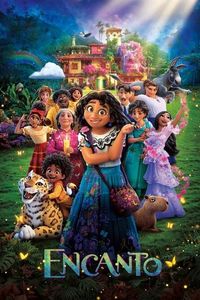
  • Encanto (2021)

    Encanto (2021)

    (Disney Streaming, December 2021) I really shouldn’t care all that much about what happens to a film from a gigantic multi-billion entertainment behemoth, but as of this writing, the cultural impact of the sixtieth mainline film by Disney Animation Studio is slight — Encanto, like many other films of the 2020s-so-far, has suffered from the COVID pandemic scrambling the usual marketing and release institutions of Hollywood. While new Disney movies are usually a Big Deal, this one briefly popped up in theatres (at a time of contagion-wary audiences) before finding a home on the Disney+ streaming service. As a result, it’s not clear whether it has had any cultural impact yet — quantifiable popular interest is down compared to other Disney films, and there’s a sense that it may be too closely associated with Raya and Coco to develop a distinct identity. It’s early, though — and I suspect that in time, the true winners of these strange plague times will become clearer. [December 2022: I worried needlessly: Encanto, a year later, has found its public and then some!]  It may or may not help that Encanto is, in the end, roughly of similar quality than other Disney films — the Mouse knows how to make movies, and this one is just as satisfying as most of their New Renaissance era. Not necessarily a classic, but a solid well-crafted hit with just enough to set it apart once you watch it. Heading to Columbia for inspiration, Encanto is about a family with magical powers… and the lone offspring that does not. Exceptionally cute in look and behaviour, Mirabel (ironically the name of an infamous Montréal-area airport) struggles to understand why she’s not gifted as the rest of her family, but ends up being the ideal one to investigate why their powers are slowly weakening. Clearly taking after the South American tradition of magical realism, but pushing it into, well, magical fantasy, Encanto also benefits from the musical talent of Lin-Manuel Miranda as he contributes eight songs to the film and several of its highlights. The fantastic opening “The Family Madrigal” is clearly in Miranda’s style in cadence and delivery, while the theme of “What Else Can I Do?” brings to mind Frozen’s power ballad “Let it Go.”  “We Don’t Talk About Bruno” has the film delivering some well-paced editing, rounding up the best songs of the film. As for characters, it’s tough to ignore the magical Casita taking care of the domestic needs. While I found the ending perhaps a bit too subtle in fixing the character’s thematic issues (the film clearly wasn’t going to go for “what happens after the magic fades away?”, but it could have been clearer in exposing the pre-renewal hidden conflicts.), it ages well upon reflection. I expect that Encanto will, similarly, do well in future and repeat viewings — the Disney formula is a formula, but it’s a good one that succeeds and builds trust that the next films from the studio will also be worth a look. As the sixtieth full-length Disney Animation Studio films, Encanto joins a large and illustrious group but doesn’t look out of place.
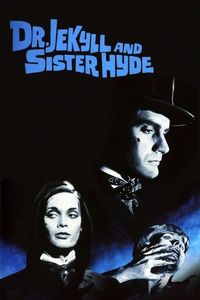
  • Dr Jekyll & Sister Hyde (1971)

    Dr Jekyll & Sister Hyde (1971)

    (In French, On Cable TV, December 2021) I’ve seen so many Doctor Jekyll and Mr. Hyde films by now that it takes a lot to register something distinct — Most of the remakes are alternate takes on specific aspects of the story, whether transforming the story into psychological thriller (with no physical transformation) or viewing the story from another perspective. But Dr Jekyll & Sister Hyde goes for something that still feels, fifty years later, stranger and more perverse — making the murderous alter ego to the meek Doctor Jekyll as a seductive woman passing herself off as his sister. There’s a clear exploitation angle to the result — notably through some not-so-gratuitous nudity — but the subtext made overt by this change is often far more interesting than conventional takes on the same material: the female being deadlier than the male, the frisson of instant transsexuality and all that. Now, is it feminist? I have no idea, and I’m the wrong person to ask — but there’s something just a little bit needling in having Stephenson’s story reuse the femme fatale trope. Bond Girl Martine Beswick is remarkably good here, and her resemblance to Jekyll-playing Ralph Bates is used to good effect. While the first half-hour is ordinary (albeit enlivened by the story’s explicit integration of the Jack the Ripper myth, as well as the infamous Burke and Hare), the film kicks in high gear once Hyde makes her appearance. I’m not sure Dr Jekyll & Sister Hyde ends on that high a note, but there’s a lot of gender-bending, expectation-subverting fun along the way for those who are familiar with the Jekyll/Hyde story.

  • From the Mixed-Up Files of Mrs. Basil E. Frankweiler aka The Hideaways (1973)

    From the Mixed-Up Files of Mrs. Basil E. Frankweiler aka The Hideaways (1973)

    (On Cable TV, December 2021) The first hour of The Hideaways is borderline exasperating, as the film takes up the twee story of a boy and a girl escaping from their small town to hide in the Metropolitan Museum of Art. It’s the kind of precocious claptrap that, for some reason, rubs me the wrong way — and since some of the worst examples of the subgenre date from the 1970s, the film seemed built to annoy from the get-go. Things pick up slightly once the two kid protagonists discover a statue in the stockrooms of the museum that may be worth a small fortune. The two kids become obsessed with proving the value of the statue, which eventually brings them to the house of an elderly woman, and viewers to the far more interesting third act of the film. The Hideaways significantly improves the moment Ingrid Bergman walks into the picture, bringing not only her usual charm, beauty and class, but the film’s most interesting character in the form of an older woman with a secret. Her character eventually lays down the film’s most interesting philosophical point about knowing a secret and eventually revealing it. That comes too late in The Hideaways to save it from an overall bad impression, but it does rescue it from complete worthlessness.

  • Bacheha-Ye aseman [Children of Heaven] (1997)

    Bacheha-Ye aseman [Children of Heaven] (1997)

    (YouTube Streaming, December 2021) Ugh. By now, films like Children of Heaven form their own subgenre: World-wide tales of childhood misery with incredibly low stakes highlighting exactly how much misery is involved. From Bicycle Thieves to Capharnäum, they’re a feature of nearly every oh-so-serious list of top movies of World Cinema, and that’s when or why I had to see the film in order to check that mark. It doesn’t mean I had to like it, though. While I can see all of the elements used by writer-director Majid Majidi to make the film’s young protagonists likable, and while I can’t help but appreciate the film’s success in taking us to a poor neighbourhood in late-1990s Iran (as a pair of shoes becomes what the protagonists are fighting for), this is not the kind of film I sit through happily. Its inclusion on the IMDB Top-250 is the sole reason why I saw it — that checkmark having been checked, I’m not going to spend more time thinking about it.

  • Santa Claus (1959)

    Santa Claus (1959)

    (On Cable TV, December 2021) There are a lot of Santa Claus movies, but the 1959 version is… special. I understood that fanfic is a natural human impulse when I saw my daughter play with her dolls and invent stories without a care for intellectual property or storytelling coherence, and this film feels a lot like that — Why not have Santa and Merlin fight against The Devil for the goodness of the Earth’s children? Trust me — it gets weirder, such as an incredibly stereotypical succession of kids celebrating Christmas from around the world. Falling into the “you’ve got to see it to believe it,” this Santa Claus is not a good movie — produced in Mexico with a terrible budget by writer-director René Cardona, ugly visuals and very strange ideas about pacing, directing or screenwriting, it’s a curio made even more remarkable by its age — While smashing together characters from various sources for fun is not unusual these days (The French-Canadian horror channel FrissonTV even had a 2021 Christmas special where the antagonist is no less than Jesus himself,) it feels considerably weirder coming from the 1950s. It’s infamous for being featured on Mystery Science Theater 3000, but you don’t need wisecracking robots to see the film’s considerable shortcomings. I’m not sure I’m recommending it… but Santa Claus is something all right.

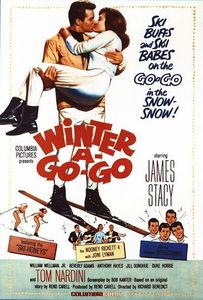
  • Winter A-Go-Go (1965)

    Winter A-Go-Go (1965)

    (On Cable TV, December 2021) Cinematic history is littered with low-end movies aping better movies—or at least more commercially successful ones. None of those movies are essential… but they can be worth a curious look in the right mood. Winter A-Go-Go is one of those mid-1960s films aping the success of the “Beach Party” teenage comedies — twentysomething actors playing younger characters, plenty of girls, some singing and dancing, and not much in terms of plot. The original Beach Party films are not very good, and this copy is even worse: Heading over to Lake Tahoe for some unconvincing snow scenery, much of the action focuses on a mountain lodge being refurbished into a teenage hangout. Except that the characters are dull, the stereotypes are rampant, the comedy doesn’t work and the musical acts are hardly worth remembering. Director Richard Benedict’s work can work as a mildly entertaining anthropological experience to what filmmakers thought was important to mid-1960s teenagers as well as an ordinary time capsule of what was cool back then. The straightforward “men lust after women, women know what’s up” dynamics can feel refreshingly uncomplicated but that’s true to the point of mindlessness — you can watch the film in vain waiting for something more. While unmemorable, the musical numbers can be evocative of a bygone era, so at least there’s that. Still — you’d be better served watching those Beach Party movies you haven’t yet seen yet — Winter a-Go-Go is practically obscure these days for a reason.

  • Eskiya [The Bandit] (1996)

    Eskiya [The Bandit] (1996)

    (YouTube Streaming, December 2021) Patriotic vote manipulation being very much a thing, I was skeptical of The Bandit’s ranking on the IMDB Top-250 — it wouldn’t be the first film to earn a spot on the list through a concerted effort. But while I don’t think it’s worth a place in the Top-250, I can see why the film was acclaimed in Turkey back in 1996, and why it still works nowadays. There’s an admirable use of genre elements in service of a weighty story here, as a man is freed from prison after a 35-year stay, and immediately sets out to avenge himself. As a simply countryside bandit heading to Istanbul to track down the man who ratted on him, he’s out of his element… and yet old enough to act as a mentor to a younger man. Things get complicated once he becomes aware of organized crime in the capital, and realizes that his lifelong enemy has become one of Turkey’s richest men. There’s a quasi-Scorsese-esque intent to writer-director Yavuz Turgul’s film, as it mixes a crime story with a distinctive protagonist, a very serious dramatic intent, some interesting camera work (including a nightclub one-shot sequence that screams for acknowledgement) and a conclusion that reaches for some cosmic tragedy. The Bandit’s pacing is deathly slow in its first half-hour, but things progressively pick up throughout the entire film until the fireworks of the conclusion. I’m not at all convinced that it’s one of the best 250 movies ever made, but it’s a good one, and my favourite Turkish film so far.