Author: Christian Sauvé

  • Holiday Heartbreak (2020)

    Holiday Heartbreak (2020)

    (On TV, December 2021) One of the reasons why I keep watching BET original movies is that I never quite know what weird plotting curveballs they’re going to serve within well-worn formulas. In intent, they almost always go for pleasing the audience, but in the details, there’s an almost-refreshing lack of polish and discipline in the way the narratives are put together that echoes the sometimes slap-dash direction and set design under low-budget conditions. So it is that Holiday Heartbreak is, at its core, a solid man-learns-better story set against a holiday backdrop: a womanizer is cursed by a heartbroken witch to see his daughter fall for the kind of wrong kind of man. There are a few twists, though. Some of them are even good — as in: the curse manifests itself so long after that the man has had time to mature and become a better-enough person to recognize its true horror. Some of them, however, are weirder and more difficult to accept. For instance, the story doesn’t have a clear protagonist in mind, as it shifts for long stretches between father and daughter, the other character disappearing from the film during those moments. That’s clunky screenwriting in the first order, and that lack of control over the result is reflected in other plotting issues and contrivances such as a near-stranger falling asleep on a couch because he’s needed in the next morning’s scene. Holiday Heartbreak is also so insecure in its audience’s ability to follow along that it will repeat the same footage of the curse three times in fifteen minutes just to make sure EVERYONE gets the point. Oh, and the character is reformed enough to have had a longstanding new wife, but not so much as to have remained a playboy legend for the younger guys. What? For viewers used to polished scripts, there’s an earnest clumsiness to Holiday Heartbreak that almost becomes endearing. The film does fare better in other areas: While it’s clearly low-budget, it makes the most out of what it has. The actors are also not bad: Michael Colyar turns in a decent comic performance as the cursed father, while Maryam Basir looks terrific — although if sex-appeal is your thing, no one else in the film comes close to veteran A. J. Johnson as she comes dressed to flaunt it. Still, not even an attractive cast can quite pull together the divergent strands of a script that flies off in various directions, not only in narrative twists but also in tone and humour. Another rewrite or two would have helped a lot in maximizing the potential of the premise and delivering a far more satisfying film. But I get it, though — BET original films being executed on a shoestring budget, there’s probably no time for such niceties. So, I’ll fall back on the quirkiness of the result as entertainment in itself… even though I’d rather enjoy a film unironically rather than be interested by the ways in which it goes wrong.
  • Laxmii (2020)

    Laxmii (2020)

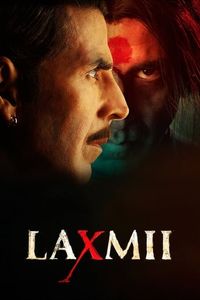
    (Google Streaming, December 2021) I’ll admit it: I was really curious to see what an Indian comedy would do with a premise based on a transwoman ghost protagonist. As much as I like Indian cinema, there’s often a streak on conservatism going though its films that would not necessarily mesh well with the subject matter. I suspected trouble, but I couldn’t imagine the reality. Oh boy, did I not expect what I saw. Be reassured, readers and viewers, that Laxmii is not transphobic. In fact, in many ways, it’s far more progressive than many “innocuous” Hollywood comedies featuring transsexual characters. But that assessment best applies to very specific, very carefully selected segments of the film. Yes, there’s a fifteen-minute tragic flashback to how a transwoman fighting for acceptance gets brutally murdered by those coveting the real estate she owns. Yes, there’s a terrific dance number (“BamBholle,” an utter banger that you should watch right now) in which the transwoman character triumphantly bangs a drum for Shiva to ask for revenge on the man who masterminded her murder — “The one who works for the devil will die prematurely” is a sample lyric). But this comes after a terrible fifteen minutes of comedy in which the only joke is that the lead character, possessed by a transwoman ghost, acts in an effeminate fashion. Which comes after a laborious set-up with three successive prologues (one of which is a snappy but plot-irrelevant musical number) that do a terrible job at introducing the plot for the film. Akshay Kumar admittedly has moments of Jim-Carrey-esque vigour in the lead comic role, and Sharad Kelkar turns in a terrific performance as the wronged transwoman. Also, I do understand that, at 141 minutes, this masala-like film does try to have a little bit of everything for everyone. But while you can like the bits and pieces of the film (such as the Burj Khalifa musical interlude, fun but entirely irrelevant), Laxmii feels like it’s being pulled apart in various directions. Pieces of the film contradict each other, undermine each other, and weaken each other. The blend of silly comedy with light horror does not gel, and the film doesn’t feel as if it’s got a coherent identity. Something great could have come from the film’s premise, but instead it’s battered and trivialized by an incoherent execution that doesn’t know how to focus. Laxmii got terrible reviews in India and it’s easy to understand why — being so inconsistent ends up sabotaging even its best intentions.

  • Dara iz Jasenovca [Dara of Jasenovac] (2020)

    Dara iz Jasenovca [Dara of Jasenovac] (2020)

    (Google Streaming, December 2021) If I was in a flippant mood (which Dara of Jasenovac most definitely isn’t), I’d joke that the evils of WW2 are still being perpetrated through endless tales of misery and suffering unleashed on modern movie audiences, with repeated trips to concentration camps, further demonstrations of the evils of Axis powers and further proof that humans can be terrible. But while joking around on such matters is rude and inappropriate, it’s based on some truth: if you voluntarily subject yourself to Dara of Jasenovac, you should be aware of what’s in store for you. There is some historic merit in having a film focused on the only concentration camp not run by Nazis (the Croatian camp of Jasenovac) — the story here has to do with a girl being sent to that camp trying to survive and escape with her younger brother. But the way that Dara of Jasenovac chooses to take this premise and execute it has more similarities with exploitative score-setting than a sensitive wartime drama. The way the film showcases its atrocities is not only uncomfortable in itself, but in how director Predrag Antonijević seems to find joy in staging them. Some moments are so awful that even the visiting Nazis are disgusted by them, and the film takes delight in making a young woman one of the cruellest antagonists. If you start digging into why this film would make these choices, it gets worse. It’s a trite statement at this point to say that it’s impossible to look at the Balkans and escape unscathed by its long-running ethnic strife. This is often reflected in the art coming out of that region as well. You can’t have lived through the 1990s without having heard of Serbian war crimes and atrocities, and it’s not a coincidence if a Serbian film looked to history in order to highlight war atrocities committed by neighbouring Croatia against Serbians. None of this makes Dara of Jasenovac any easier to take, although it’s almost a relief that the film has something like a happy ending to offer. But it’s a reminder that war movies are seldom neutral. Sure, seeing Nazis punched in the face feels good because very few people still associate with Nazis these days… but such antagonists are rarer when you’re not talking about Nazis. Often, there’s still a clear trace running from then to now, and it’s a political act to remind people of that.

  • Sadak 2 (2020)

    Sadak 2 (2020)

    (Google Streaming, December 2021) As I’ve often mentioned, I frequently use a quantitative approach (i.e.: lists of films ranked by popularity) to decide what films I’m seeing, and one of the advantages of such a practice is that I will often see a film completely cold to its context. Then it’s amusing to read more about the film (especially those issued from outside the Anglopshere) and understand why it’s so popular. Sometimes, it’s because a film was a box-office hit outside North America. Sometimes, it’s for other reasons. I’ll admit that I had a hard time understanding why Sadak 2 got such a high ranking on my popularity list for 2020 — it felt like a melodramatic but standard revenge thriller, perhaps bolstered by the pedigree of its 1990s predecessor (which I haven’t seen) but still a bit ridiculous, not particularly well-executed and unnecessarily complicated around the edges. Writer-director-producer Mahesh Bhatt doesn’t do particularly well here. The truth became clearer when I started reading about the film and took a look at the detailed ratings for the film. To put it bluntly, Sadak 2 was massively review-bombed in one of those tiresome social media firestorms. Out of 93K votes on IMDB, it received 89K 1-out-of-10 votes, which is a ludicrous indicator that most voters hadn’t even seen the film. No, it’s not a terrific movie, but it’s a professionally made one with a comprehensible plot and at least one decent performance. It’s nowhere near as terrible as the bottom of the barrel. I think I partially understand the reason behind the review-bombing, but it seems so convoluted that I’m not even going to try explaining it to you. There’s some irony in how, in trying to shut down a movie, its opponents ended up making it mandatory viewing for someone who otherwise wouldn’t have even heard of it, but I’m used to the Streisand effect by now — there’s between four and eight movies in my had-to-see Top-100 movies of 2020 list that are there because of straight-up vote manipulation. I was more bored than angry at Sadak 2: as a modern Indian road movie taking aim at modern cult leaders, it has intermittent moments of interest, and Sanjay Dutt does manage a good world-weary performance when compared against his younger, more superficial co-stars. But there’s plenty about the result that could have been made better, more credible, and more suspenseful. Even by the different standards of Indian cinema, Sadak 2 is a disappointment — certainly not worth a one-star movie bombing campaign, but not a good film either.

  • Dil Bechara (2020)

    Dil Bechara (2020)

    (Google Streaming, December 2021) My first reaction to Dil Bechara was not subtle nor positive: “Oh, no, not another teens-with cancer romantic tragedy. Oh no, not a remake of The Fault in Our Stars.” But once I got used to the idea of the film, my second reaction was more nuanced: I don’t want to sit through The Fault in Our Stars again, and I would not want to get through a sequel. But I will sit through an Indian remake of the film, if only for the change of scenery. And you know what? There is indeed something interesting in how the same story is adapted to another culture, taking intriguing freedoms with the base material. The core remains the same, as our cancer-stricken heroine meets friends in a support group and falls in love with a creative young man. Romance, creative endeavour, a trip to Paris to meet a reclusive artist and some mourning populate the rest of this teen drama. It’s noteworthy that the reclusive novelist of the original The Faults in our Stars has been replaced by a mysterious musician, Paris instead of Amsterdam, and that moviemaking ends up being integral to the conclusion. Relocating the story to middle-class India makes for an intriguing change of pace, and the film benefits from heartfelt performances from its lead couple Sanjana Sanghi and Sushant Singh Rajput. Western viewers may miss a crucial piece explaining the film’s popularity in that this proved to be Rajput’s final film, the actor having committed suicide before the film’s release. (His death led to a complex and impossible-to-summarize social media firestorm that ended up affecting much of Indian cinema in 2020.)  As far as doomed-teenage-romance films go, Dil Bechara is an honest solid example of the form, enlivened by its Indian setting for western moviegoers. I didn’t love it, but I found it more interesting to watch than I expected, and that was probably the best possible outcome for such a film.

  • Paris brûle-t-il? [Is Paris Burning?] (1966)

    Paris brûle-t-il? [Is Paris Burning?] (1966)

    (On TV, December 2021) I thought I had seen most of the big WW2 epic movies, but as it turned out, there was at least one more waiting for me—Paris brûle-t-il?, an epic French-American co-production re-creating the last moments of Paris’ Nazi occupation. Adapted from an eponymous book by Larry Collins and Dominique Lapierre, the script is from the legendary duo of Gore Vidal and Francis Ford Coppola. The ensemble cast is nothing short of amazing, what with such notables as Orson Welles, Kirk Douglas, Robert Stack, and Anthony Perkins on the American side, with Jean-Paul Belmondo, Alain Delon, Leslie Caron, Simone Signoret and Yves Montand on the French side (plus Gert Fröbe on the German side, among so many others). Few of them have more than a few scenes given the scattered chronicle structure fitting weeks of complex diplomatic and military manoeuvers in less than three hours. Shot in black-and-white (reportedly to accommodate green-fake Nazi flags draped over mid-1960s Paris, but also to integrate period footage), the film is rarely more striking than when it re-creates combat in eternally recognizable Paris neighbourhoods without the crutch of CGI. There’s a reason why the 1960s were the heyday for expansive re-creation of WW2: the conflict wasn’t as fresh, but the people were still there to make sure it was credible. Unexpectedly engrossing, Paris brûle-t-il? is an admirable dramatization of an episode of WW2 that could have gone differently, but ended up showcasing some enduring images of victory over the Nazis. It’s just about essential viewing for WW2 cinephiles, and the amazing cast certainly helps keep you interested in even the slightest new character.

  • The Christmas Chronicles: Part Two (2020)

    The Christmas Chronicles: Part Two (2020)

    (Netflix Streaming, December 2021) Having Kurt Russell as Santa Claus was so nice, they had to do it twice. Of course, Netflix wanting its own slate of holiday favourites clearly helps — The Christmas Chronicles was apparently a success, and the idea of bringing in Goldie Hawn in a bigger role as Mrs. Claus (after a short glimpse at the end of the first film) must have been compelling. No matter the reason, The Christmas Chronicles: Part Two is up and streaming, giving you another opportunity to see Russell-as-Claus hamming it up by playing the saxophone. The story has to do with an attempted takeover of the Claus empire by a renegade elf and eventually involves time travel, but the point is having a big budget, big star, big director (Chris Columbus), and a big-special-effect offering as prestige counterpoint to the multiple low-budget Christmas offerings from the Netflix roster. The initial novelty of the first film is gone, but this follow-up is sufficiently independent to work without immediate knowledge of the first. It’s not that impressive, but it works relatively well and offers a few things to see that simply would not be possible in a lower-budgeted film. As of this writing, there seem to be no plans for a third film in the series, which is not necessarily a tragedy nor a promise set in stone.

  • The Holly and the Ivy (1952)

    The Holly and the Ivy (1952)

    (On Cable TV, December 2021) As much as I’m not a big fan of glum, drama-heavy Christmas films, The Holly and the Ivy is hitting me at a time when I’m overdosing on insubstantial Christmas comedies that barely have any connection to the holiday or rely so heavily on platitudes and iconography that nothing of substance remains. Squarely confronting family issues, religion, generational divides and recent trauma, this British film bets on acting subtlety and dramatic intensity for a story that could take place at any other time of the year but gets an added touch of polish for taking a slightly different approach to the “family reunites for Christmas” tropes. (Coming from austere post-WW2 Britain, the film also predates, or, rather, sidesteps the super-commercialization of the holiday.)  Ralph Richardson is clearly the anchor of the film as a pastor who learns to better communicate with the rest of his family and makes them benefit from his advice in doing so. The Holly and the Ivy is not always fun or light or fast-paced — it’s a dramatic work that demands just a bit more from its audience. It will work if you’re in the right mood, but may not be the most casual viewing choice for December.

  • Problem Child 2 (1991)

    Problem Child 2 (1991)

    (In French, On Cable TV, December 2021) The early 1990s were the heyday of the evil-kid comedies (in between the Home Alones, Dennis the Menace and Problem Childs, plus The Good Son) and those haven’t all aged very gracefully. Problem Child 2, in particular, was a quick cash-grab follow-up to a substandard film, executed as fast as possible before the lead star (Michael Oliver) aged out of his screen persona. It didn’t help that the screenwriters consciously set out to make the film as distasteful as possible in teaming up their hellion with another one — there’s even an extended sequence featuring vomit flying off from a carnival ride, causing a chain reaction of spewed bodily fluids. When such a thing becomes one of the showpiece sequences of the film, there isn’t any point in appreciating the more subtle jokes about having Gilbert Gottfried unexplainably reprise his character from the first film in another state and another line of work, nor seeing Amy Yasbeck play another role as the father character’s true new love rather than the shrew of the divorcing wife she played in the first film. There’s some amusing interplay in seeing the problem child of the series meet his distaff match and bonding with someone as devilish as him, but let’s not make this a reason to consider Problem Child 2 as anything but a low-class, low-budget, low-imagination attempt by the studio to go for easy money despite predictably terrible reviews. I’ll acknowledge that the screenwriters had some provocative notions going into the sequel — if you thought the first film was inappropriate for its age bracket, prepare for more of the same in the sequel. But that doesn’t make Problem Child 2 any easier to appreciate as anything but a (disappointing) perversion of a kid’s comedy.

  • After We Collided (2020)

    After We Collided (2020)

    (Netflix Streaming, December 2021) I had two problems with After We Collided, and the fact that I stumbled upon a sequel before seeing the original is, by far, the least important of them. No, the biggest issue would be that I never, ever, even after more than an hour, cared for any of the main characters whose continuing romance this is. I had no reason to care, no reason to feel anything about them pushing or pulling away from each other. I had no stakes in them ever seeing each other again — in fact, I was kind of hoping for a break-up to happen so that the credits could roll. Halfway between teenage and twentysomething romance, After We Collided goes the super-soft-core R-rated route of implying sexual activity without showing anything beyond side or back nudity: a very strange choice that highlights the film’s blend of immaturity—giving the impression of teenagers playing dress-up. Not that I cared all that much — I wanted the film to be done, and any romantic complication had me gritting my teeth in drawing out the end. Bland dialogue, unconvincing acting and some bargain-basement direction from Roger Kumble (who has done so much better in the past) don’t help, but the basics remain the same no matter where you look: if you don’t feel anything about the characters, it’s a waste of time to even try to build a romance around them. Amazingly enough, After We Collided isn’t the end of the road for the series: there’s already a sequel, and up to three more films in the series are planned. Rather than getting annoyed at this, let’s just wish happy returns to the investors. May they never suffer through what they’ve paid for.

  • Denis the Menace (1993)

    Denis the Menace (1993)

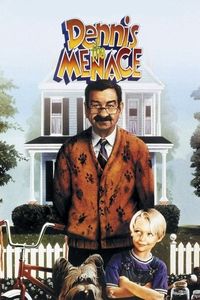
    (In French, On Cable TV, December 2021) If my calculations are correct, I’m not too far from the age midpoint between Dennis the Menace’s cranky old curmudgeon played by Walter Matthau and the titular young pest played by Mason Gamble. Even so, my sympathies are clearly on the elderly character’s side, as the young boy engages in a systematic campaign of harassment, humiliation and endangerment toward the older man. But this is clearly not a film made for elderly or even middle-aged viewers — this is a petulant child’s fantasy about sticking it to the old people and their unfun ways. It is, in other words, utterly dreadful to watch — Child Protective Services should be called at some point in the narrative to protect society against the child and take him far away. Overmedication of hyperactive boys is a terrible thing in real life, but I’m willing to make an exception in this fictional case. There’s little both-sides sympathy here when Matthau is playing a caricature, only outdone by a criminal character that seems custom-made to send every suburban mom in barely repressed panic about the homeless. Dennis the Menace is frankly a chore to sit through the moment you discover girls, caffeine and rock-and-roll — even if I don’t believe in movies being role models, it’s a borderline reprehensible take on childhood that shows its psychopathic side far too often. There was a slate of those in the 1990s (Home Alone and Problem Child also come to mind), but those did have something going for them beyond the hellion angle.

  • The Matrix Resurrections (2021)

    The Matrix Resurrections (2021)

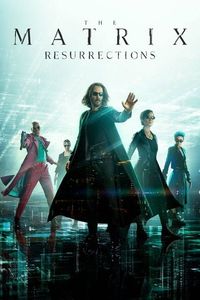
    (Youtube Streaming, December 2021) Is it really a surprise if a Wachowski film ends up being a mixed bag of highs and lows? After all, that’s been the norm for them even since The Matrix — they never quite managed to recapture the blend of elements that made that film such a success, and it’s not The Matrix Resurrections that will break the streak. Let me be clear: The first Matrix film is (now) a classic, and (still) one of my favourites: As such, I could help but be attracted to and apprehensive about the idea of a belated sequel. To its credit, this fourth instalment does grapple with that apprehension: it features a lot of meta-referential material, especially in a first act that seems delighted in rerunning through the first film’s key scenes while joking about how it refers to it. Alas, it doesn’t start the film on the right foot: that first act can be tedious at times, as the references pile up and so many clips from the first films are shown that it creates the impression that this newest take lacks confidence in itself: “See how cool those first movies were? Yeah, we’re in that tradition!”  Except that it is not, at least crucially in the execution. While many will appreciate how Lana Wachowski, Keanu Reeves and Carrie-Anne Moss are back, the absence of Bill Pope (cinematography), John Gaeta (Special Effects), Don Davis (score) and Zack Staenberg (editing) is far more noteworthy: The atmosphere of The Matrix series is absent, and what replaces it seems perfunctory most of the time. The action sequences are underwhelming (although they get better toward the end) and there’s nowhere near the degree of visual innovation in the Wachowskis’ previous work. As for the story, things improve after a fan-fiction-worthy first act: That’s when The Matrix Resurrections finally finds its own plot, makes intriguing additions to the canon (well, not all of them — I’m still wondering why Lambert Wilson showed up if it was to be a green-screen special) and engages in a surprisingly romantic arc. It’s the Matrix, but doesn’t much feel like it: in-between the humdrum directing and a script that features very little memorable material, it feels like a disappointment. Of course, the question can be: what was I expecting? One can’t step in the same river twice and all that, but even then, the result seems both ambitious and timid at once. I expect that it will take a while for people to decide whether this is a good film (let alone a fitting follow-up)… and I’ll probably have another look real soon to take it all in again.

    (Second Viewing, YouTube Streaming, December 2021) Whew—I hadn’t revisited a film critically at less than a week’s notice since, well, the last Matrix movie. But a second look at The Matrix Resurrections doesn’t really change my mind — There are some really interesting things in the concepts featured in here that are ill-served by their execution. A fair amount of meta-commentary on the nature of a next-generation sequel is amusing, but there’s a point when the self-reference becomes a dismissive poke at the fans who are the reason why the film was produced. (Similarly, self-awareness can be catnip for detached critics and a really great excuse for anyone arguing in bad faith to say, “If you don’t like it, you’re not smart enough.”)  Similarly, I liked the bold flashforward sixty years after the previous instalments and how some things have evolved, while others have not panned out to the previous generation’s hopes. But that aspect is shoehorned and relegated to supporting material, as the film is first consumed by its self-referentiality and then by a far less cerebral love story that feels stretched to twice the length it really needed. The idea of undermining the idea that Neo is the One to make him part of a pair is intriguing, but it’s completely botched in the execution, with a point made about him being supported by a flying Trinity… only to cut to a scene where the flying thing is a done deal. I certainly haven’t changed my mind about the lacklustre and plodding action sequences that are pale shadows of even the worst moments of the original trilogy. I thought that a lower budget may have been a factor, but then I learned that the film still costs a generous $160M to produce — clearly cost was not the limiting factor here, especially with cheaper CGI now available. Even after a second go-around, I’m still thoroughly mixed on the result, probably tipping toward “disappointed” — The Matrix Resurrections is not terrible, but it certainly causes irritation in many of the unforced choices it makes. Was that the result worth waiting twenty years for? Expectations do count for much.

  • Kol [The Call] (2020)

    Kol [The Call] (2020)

    (Netflix Streaming, December 2021) There’s a very amusing misdirection in the opening moments of Kol, right after it establishes its premise of two young girls communicating across twenty years through a magical phone. One is in 1999; the other in 2019 — So the one in 2019 knows things but the one in 1999 can do things. For half an hour, save for the menace of a wicked stepmother, we think it’s going to be a kind of heartwarming drama à la Frequency, with the two girls taking care of each other’s problems. But then, well, Kol takes a sudden jump into the horror genre, cutting short its main dramatic thread and going into surprising territory. It plays hard on the horror, and even the beginning of the end credits is not a respite. As mean and nasty as South Korean cinema can be (which is a lot), this thriller from writer-director Chung-Hyun Lee is not always smooth on characterization but it certainly makes good use of its premise (despite scientific plausibility being, at best, an afterthought) and carries viewers screaming all the way to its terrifying climax. A modest but effective surprise, Kol is good enough to make me curious about The Caller, the 2011 Puerto Rican film on which it’s based.

  • Aleksandr Nevskiy (1938)

    Aleksandr Nevskiy (1938)

    (On TV, December 2021) There are films that are more interesting for their context than their story, and Sergei Eisenstein’s Aleksandr Nevskiy often feels like one of them. A proudly propagandistic film from the pre-WW2 Soviet Union, it’s really not subtle at all about taking aim at the clergy and the Germans as enemies of the Soviet people, and making its protagonist (the titular prince Nevskiy) a paragon of virtue. The first scene has characters blandly stating that the Mongols are not the problem — the Germans are. Later sequences have members of the Teutonic Order clergy sporting a modified swastika on their hats. Much of the film leads (with the era’s limited means) toward the famous Battle on the Ice, in which enemy combatants fall through the frozen crust over Lake Peipus, handing the victory over to the land’s natural owners. (As usual, be wary of learning history from movies — there’s plenty of evidence to suggest that the falling-though-the-ice thing was a pure invention from Eisenstein, since then enshrined in legend.)  Technically rough and thoroughly aimed at Soviet audiences, Aleksandr Nevskiy can be a chore to power through — at least until the climactic clash between armies. But the film’s Wikipedia page makes for fascinating reading, as it ties the film over to the changing whims of the Soviet leadership (which briefly established an alliance with Nazi Germany after the film’s release, resulting in a period where the film was pulled from circulation.), details the ways it influenced later depictions of large-scale battles, and ends up being Eisenstein’s best-known film of the sound era. Aleksandr Nevskiy may not always be a lot of fun, but it’s certainly a part of movie history.

  • All the Bright Places (2020)

    All the Bright Places (2020)

    (Netflix Streaming, December 2021) As far as teen romances go, All the Bright Places is lighter on comedy and heavier on tragedy. Going for the star-crossed lovers angle in Midwestern small town, it quickly introduces a moody high-schooler still mourning the death of her sister, but also a strangely ebullient young man who deliberately sets out to befriend her. Neither of them are quite normal, and that’s what makes their relationship work—at least for a chunk of the film. Among other strange sights offered director Brett Haley, we’re treated to a visit to the highest point in Indiana, an incredibly ordinary spot in a forest that is actually the real (charmingly underwhelming) deal. That, and a quaintly micro-sized rollercoaster, are probably the high notes of a film that otherwise plays to the “tragic doomed teenage love” tropes. How you react to the film will depend on how strongly to react to that formula — it’s a fair and not unkind bet that the closer you are to these characters, the better you will react to the result. Elle Fanning is not bad in the female lead role, but it’s Justice Smith who’s got a flashier and more interesting character — a bright young man with glib charm but deep dark depths. He not only takes her out of her funk, but makes the film far more interesting for viewers as well. Otherwise, All the Bright Places feels like another unit on the YA tragic romance assembly line — a chance for young actors to show their stuff, a chance for today’s teenagers to form a canon of formative movies, but not particularly interesting to anyone else.