Author: Christian Sauvé

  • The Kissing Booth 2 (2020)

    The Kissing Booth 2 (2020)

    (Netflix Streaming, December 2021) It’s bad form to structure a review as a multipoint comparison with another better film, but The Kissing Booth 2 certainly courts it. After all, it is a teen romantic comedy sequel original to Netflix (second in a trilogy), specific characteristics also shared by To All the Boys: P.S. I Still Love You. I approached both films warily — romantic comedies should not have sequels, because follow-ups usually end up undermining the point of the previous films. If filmed romances have an advantage over real ones, it’s that they can choose to stop on a high point. But whereas To all the Boys: P.S. I Still Love You managed to gradually convince me of its reason for existing, The Kissing Booth 2 never made its case. It’s true that the first films of both series were also very different: The Kissing Booth (the first) left a bad taste in many ways, and I wasn’t exactly asking for more about those dull, frequently unlikable characters. Things are really no better this time around, as our lead couple separates for a bicoastal relationship and our heroine finds herself tempted by an alluring new student. Hypocritically enough, she then proceeds to have fits of jealousy when her boyfriend’s new best friend ends up being a girl. But wait, there’s more! Like her smothering her best friend’s new romance by not leaving him alone for an instant. Or figuring out to which school she should apply to. Or winning a videogame dance contest with that alluring new guy. It’s all schematic, and the formula-based approach is not helped in the slightest by not caring about the characters at all. The lead protagonist is annoying, barely conscious of the issues she causes through her own behaviour, and the film pulls no punches by casting her romantic rival as someone significantly more attractive. The Kissing Booth 2 does try to fix some of the first film’s issues (notably, in not being quite so heteronormative) but even those attempts don’t improve much when the foundation is so bland. By the time every single relationship in the film explodes at Thanksgiving dinner, we’re left shrugging and singularly uninvolved in the protagonist’s messes. The film ends, as is de rigueur, with two quick set-ups for a third volume that I don’t really want to see, but probably will out of completion’s sake.

  • Needle in a Timestack (2021)

    Needle in a Timestack (2021)

    (On Cable TV, December 2021) As far as low-budget SF films go, there’s a lot of intriguing material in Needle in a Timestack. Taking place in a future where time travel is expensive but commonplace, the film explores the consequences of an existence where the present may be altered abruptly, leaving characters wondering if things have always been that way. For instance, our protagonist’s happy marriage is complicated by the idea that the ex-husband of his wife is rich enough and jealous enough to go back in time to try to get her back. In the film’s rather romantic outlook, characters can sense when things are wrong (such as having a cat rather than a dog) and find themselves longing to fix things. There’s a lot of cold melancholy in writer-director John Ridley’s film (as adapted from SF legend Robert Silverberg’s short story of the same name), and an effective use of SF devices rather than special effects in creating its world. I wasn’t completely convinced by the film’s logic, but so it goes for films more driven by dramatic logic than science fact. (Furthermore, logic and time travel don’t go well together when causality itself is a suggestion.)  The cast can be surprising at times, with Leslie Odom Jr. in the lead role, Orlando Bloom as the antagonist and Freida Pinto as one of the two women in their lives. The low budget is used as well as it could, I suppose, although the film could have used a slightly wider scope in order to create its worldbuilding. Still, Needle in a Timestack finds its place among other recent low-budget SF films executed tastefully, with some intriguing dramatic situations made possible by extraordinary devices.

  • Cluny Brown (1946)

    Cluny Brown (1946)

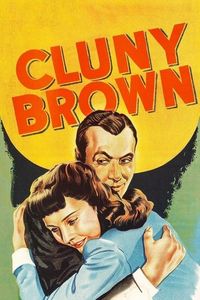
    (On Cable TV, December 2021) The obvious reason to see Cluny Brown is that it’s master director Ernst Lubitsch’s last film before his untimely death — the last go-around for “The Lubitsch Touch,” this time taking aim at British social conventions. But the unexpected delight of the film is Jennifer Jones’ performance as the titular Cluny — a bright, scattered young woman who clearly has no intention of learning her place, let alone keeping it. Compared to other Lubitsch pictures, it’s true that Cluny Brown feels like a second-tier result — not bad, still amusing, but clearly not in the same category as his better-known films. Still, it amuses: its look at stuffy British class conventions is clearly meant to upset upper-class British viewers by showing them as so out of touch on vital issues. (British reviewers reportedly weren’t kind to the film.)  The romantic shenanigans between Cluny and a foreign intellectual (revered by the British characters, but seen as a mere man by the protagonist) end up making up most of what passes for plot here, although —typically—much of the fun of the picture is in the small details, exchanges and observations rather than the overarching plot. Lubitsch was gone far too soon, but at least we got Cluny Brown before he went.

  • The Truffle Hunters (2020)

    The Truffle Hunters (2020)

    (On Cable TV, December 2021) I’m sure there’s a fascinating documentary to be made about the ancient art of truffle hunting. But The Truffle Hunters isn’t it — or rather, the style in which writers-directors Michael Dweck and Gregory Kershaw go about it seems custom-made to annoy viewers expecting a traditional pace. Taking cues from their elderly subjects (men in their seventies and eighties, truffle hunters for decades), the film is a deliberately interminable slog — call it “slow cinema” if you must, but there’s no mistaking the lengthy shots, long periods of silence, endless nature cinematography and unhurried pacing of a film whose content does not justify its 84-minute running time. I’m sure that a negative review focused on the slowness of the film would please the filmmakers — the point here is the unhurriedness of the old men (and their dogs), as they seem to exist out of time in the Italian countryside. The Truffle Hunters is not uninteresting, but it takes so much time to make its point that by the time it’s made, we’re already looking forward to something else.

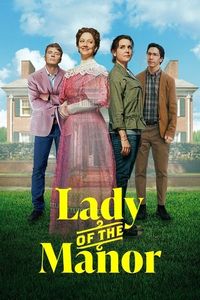
  • Lady of the Manor (2021)

    Lady of the Manor (2021)

    (On Cable TV, December 2021) For a low-budget comedy, Lady of the Manor certainly boasts an intriguing cast of actors with a known pedigree — Melanie Lynskey as a stoned unladylike underachiever who stumbles upon a tour guide position at a historical house; Judy Greer as the ghost of the lady she’s supposed to talk about; Justin Long as a likable history professor; Ryan Phillippe as the unlikable cad-of-an-owner who’s more interested in sexual harassment than historical significance; and even Luis Guzman as a harried bartender. Oh, and Patrick Duffy as a patriarch. It’s an interesting blend that can handle the film’s good-natured comedy that emerges when modern irresponsibility meets timeless grace. Much of the credit for the cast probably goes to Long and his brother Christian, since they co-wrote and directed the film. Lady of the Manor is not that impressive of a film considering its budget and limited ambitions, but it manages to get a few laughs, create some striking characters and wrap it all up in a satisfactory finish. The actors do much to elevate middling material into something more interesting than anticipated — in other words, some good work by the Long Brothers to do justice to their material. It won’t become a timeless classic, but it’s more than worth a look as a slow evening’s entertainment.

  • Prisoners of the Ghostland (2021)

    Prisoners of the Ghostland (2021)

    (On Cable TV, December 2021) There’s wild and there’s Nicolas Cage wild, but few filmmakers can actually deliver a film that matches Nicolas Cage wild. For better or for worse, that’s not the case for Japanese auteur Sion Sono, who concocts in Prisoners of the Ghostland a cyberpunk western fever dream that manages to be crazier than Cage himself. The worldbuilding is a nonsensical blend of nuclear catastrophe, Japanese iconography, American Wild West conventions and shiny expensive cars. It’s not meant to make sense — it’s meant to look cool and distinctive, and it certainly achieves that objective. The flip side of that is that if you’re looking for narrative substance to go along with Nicolas Cage screaming at Wild West Yazukas, you’re likely to be disappointed. This is a film that becomes increasingly ludicrous while explaining the constrained facets of its pocket universe where everyone knows everyone from ten years ago, and where Western tropes easily outweigh any attempts to make sense. It’s wild, but it’s also curiously forgettable as well: while Cage is in fine form, and Sofia Boutella improves the film like she usually does, the intensity of the images fades to nothing once the credits roll. It feels a bit long and repetitive once the sheen of its first wacky moments has passed. There’s probably an object lesson here — I suspect that we’re going to talk about Cage’s performance in Mandy long after Prisoners of the Ghostland memories fade away, and it’s a demonstration of how wildness should come accompanied by some substance in order to mean anything.

  • The Dorm That Dripped Blood aka Death Dorm (1982)

    The Dorm That Dripped Blood aka Death Dorm (1982)

    (In French, On Cable TV, December 2021) With a title like The Dorm That Dripped Blood and a production date of 1982, right in the slasher boom of the early 1980s, any horror fan (or jaded cinephile) knows exactly what to expect from the film. And they would be right: It’s certainly a horror film in which young people get killed one after another in various gruesome and supposedly imaginative ways. Where writers-directors Stephen Carpenter and Jeffrey Obrow are slightly more disturbing than usual is in the bloodier-than-usual killings and the decidedly downbeat ending that doesn’t even allow for a final girl. Such “innovations,” however, only serve to make the result even more unpalatable than the usual slasher — The Dorm That Dripped Blood quickly goes from slasher to British video nasty, unremarkable for most of its duration then unpalatable for the finish. If you already don’t like slashers, this one will feel even worse than usual.

  • Twas the Chaos before Christmas (2019)

    Twas the Chaos before Christmas (2019)

    (On TV, December 2021) Competent enough to avid mockery but not enough to be memorable, Twas the Chaos before Christmas drapes the double-booked holiday destination trope with Christmas decorations. Mismatched families from upper-class New York City and middle-class North Carolina realize that they’re booked at the same Washington, DC rental house and so learn to live together and learn from each other. You can probably figure where the rest of the story goes — the uptight rich mom learns how to let loose and decorate festively, while the younger daughter and son from both families match well together. The initial conflict between the two families dissipates in a cloud of holiday spirit and the film becomes less and less dramatic until it’s time to wrap it up. Unlike other Christmas films (of which I’m seeing far too many these days), this one doesn’t bet everything on romance and does go for actual comedy. It’s a bit too muted for my preferences, but it works relatively well. Veteran actress turned director Terri J. Vaughn is already accumulating an impressive filmography in a few short years: her films aren’t terrific, but they’re usually better than average, and she clearly knows how to work a limited budget into something that looks reasonably good. Twas the Chaos before Christmas may not be the kind of film that sticks in mind, but it’s good December filler and doesn’t inspire sarcastic put-downs like many others of its ilk.

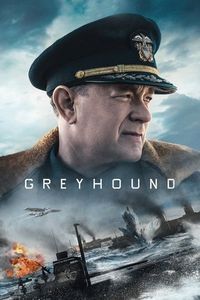
  • Greyhound (2020)

    Greyhound (2020)

    (Youtube Streaming, December 2021) A classic WW2 thriller gets a digital facelift in Tom Hanks’ Greyhound, a tense action-filled war movie following a supply convoy as it makes its way across the Atlantic in 1942. Hanks not only stars as the captain of a destroyer trying to keep the Nazi U-boat threat at bay, but also wrote the film — further adding to his legacy of paying homage to the military personnel of the era. Adapted from the C.S. Forester novel The Good Shepherd, the film greatly benefits from modern digital filmmaking in portraying the dangerous game between Allied destroyers (including a Canadian ship) and Nazi submarines — Digital special effects allow the camera to show fluid battle sequences that would have been impossible to visualize otherwise, and keep the audience engrossed in the ongoing suspense. Cleverly structured around the period in which the convoy cannot depend on assistance from the continents, Greyhound is a ticking clock of attacks, defence and counter-attacks. Hanks plays the captain with a familiar stoic reserve, so it’s arguably the action sequences that get most of the attention. Director Aaron Schneider keeps the focus on the thrills rather than the characters — a decision that matches well with the film’s zippy 91-minute running time. There’s a nice claustrophobia to the grey-and-blue cinematography, and Greyhound remains satisfying despite a few shortcomings.

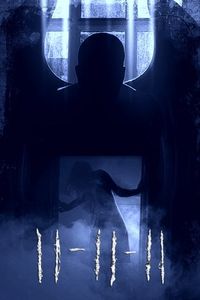
  • 11-11-11 (2011)

    11-11-11 (2011)

    (In French, On Cable TV, December 2021) Now that 2000 and 2012 are behind us, filmmakers are going to need to work overtime to find which chronologically spooky year should act as pretext for a big horror/catastrophe film. We’re still too far away from the Epochalypse of 2038, so filmmakers have to come up with something more creative. Or not, as is the case with 11-11-11, a typically underwhelming number-obsessed film that doesn’t do much with a once-a-century opportunity. Blending apocalyptic visions with demons and cultists, the film barely does the strict minimum required of a horror film, and doesn’t go much beyond that. It’s very much like being stuck with a painfully unimaginative crackpot for 90 minutes as he keeps repeating, “Eleven Eleven Eleven… It’s spooky!” over and over again. Writer-director Darren Lynn Bousman did much better movies before 11-11-11 but arguably not since then — in any case, this film is the blandest of bland horror movies, so perfunctory that it barely registers as horrific. It’s easy to imagine a similar film being produced for 00-00-00 or 22-02-02 or any other date in the calendar: there’s nothing special here in concept or execution, and nothing particularly good either.

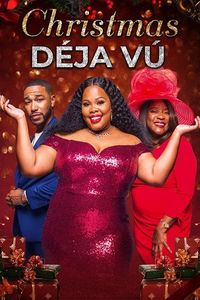
  • Christmas Déjà Vu (2021)

    Christmas Déjà Vu (2021)

    (On TV, December 2021) Yes, there is indeed something very familiar about Christmas Déjà Vu, as it focuses on a young woman’s dreams of fame and fortune as a signer, and enables the what-if through the intervention of an angel. Waking up a celebrity, our protagonist realizes (as these things usually go) that there’s some upside to a modest life and working hard to reach your goals. As Christmas movies go, Christmas Déjà Vu goes for sentimental epiphany rather than laughs or romance. Anchored by a remarkably polyvalent performance from Amber Riley (utterly de-glammed in the film’s opening moment, but able to step into the glitzy life of a celebrity later on), the film doesn’t go for any new narrative ground but does well with the limited means it’s working with. The subplots are familiar (of course her new husband is unfaithful) and so are the big realizations of the climax, but writer-director Christel Gibson knows what she’s going for, can benefit from good actors (including Loretta Devine as the protagonist’s mother) and makes the most of a low budget. It’s certainly not It’s a Wonderful Life, but Christmas Déjà Vu is an acceptable background feature as you decorate the house for the holidays.

  • Die Austernprinzessin [The Oyster Princess] (1919)

    Die Austernprinzessin [The Oyster Princess] (1919)

    (On Cable TV, December 2021) Perhaps the biggest surprise of The Oyster Princess isn’t necessarily how amusing it is — coming from Ernest Lubitsch, the contrary would have been noteworthy—but how much it goes for an absurd comic style that feels far more modern than the silent era. It calls itself “a grotesque comedy” and that’s as good a depiction as any — it really goes overboard in depicting the excesses of its upper-upper-class characters (a parody of both the European nobility and the American nouveaux riches), for instance, in having dozens of servants doing menial things. The film also features “a foxtrot epidemic” and people peeking at a newlywed couple through a keyhole, if that tells you a little bit more about what to expect. The mood is frantic, confused, not at all restrained or dignified, unlike many films of that period. It’s worth seeing for being the first film acknowledged to show that undefinable “Lubitsch Touch,” but it’s also worth seeing by itself for itself — The Oyster Princess is more than sporadically funny by today’s standards, but hilarious when measured against many other movies of the time.

  • Muriel’s Wedding (1994)

    Muriel’s Wedding (1994)

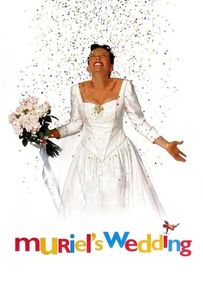
    (On Cable TV, December 2021) The spirit of humiliation comedy is strong in Muriel’s Wedding, a film in which an outcast girl in a small Australian town (Toni Colette in an early big-screen role, unexplainable presented as a “plain girl”) gradually learns to affranchise herself, albeit not before letting her fantasies drive her to weird and unsustainable complications. She eventually earns her happy ending but there’s a lot of discomfort, cringing and bad ideas along the way. Also making her big-screen debut here is Rachel Griffiths as Muriel’s far cooler friend that manages to get her out of the small town and to the city where she’s better suited. While it sports an ABBA soundtrack, Muriel’s Wedding is far too often a melancholic affair about an outcast without specific skills or strengths. A lot of sympathy-for-the-underdog is required to make it through the film’s most excruciating moments, but it ends on a strong note. One notes that Muriel’s Wedding, historically speaking, happened during the indie boom of the early 1990s — a welcoming environment for such oddball heartfelt movies consciously running against the Hollywood ideal. It worked then, and it still works now.

  • Dance, Fools, Dance (1931)

    Dance, Fools, Dance (1931)

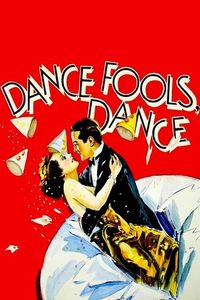
    (On Cable TV, December 2021) I wouldn’t recommend Dance, Fools, Dance to 1930s cinema newcomers — there are far better choices out there, and this film doesn’t measure up in terms of narrative, style or impact. But for those who are familiar with the period, the film offers a remarkable amount of comfort. It starts with the casting — a young and attractive Joan Crawford playing opposite a young and not-quite-superstar Clark Gable as a gangster. (Before the end of 1931, Crawford and Gable would have an affair and be well on their way to becoming superstars.)  Beyond those two familiar names, the film is built on many conventions of the time — organized crime, the newspaper business, and heirs forced to work because of the Depression — that clearly make this a piece of 1930s cinema. Dance, Fools, Dance doesn’t do much with its Pre-Code freedom compared to racier films of the time, but the reflection of the era still feels relatively raw in its acknowledgement of one-night stands and recognition that Depression was taking place (a topic conspicuously avoided by escapist Hollywood). Crawford is quite good here, and the film flows easily — but it’s best seen by people able to put it in context.

  • One Night in Miami… (2020)

    One Night in Miami… (2020)

    (Amazon Streaming, December 2021) Fan-fiction goes respectable in actress-turned-director Regina King’s One Night in Miami, a film built on the idea of what could have happened when real-life friends Malcom X, Cassius Clay, Jim Brown and Sam Cooke — all legends in their own fields — spent an evening together. The bare bones of the story are factual: they did spend an evening together in a Miami hotel room, and they were all at their own crossroads at the time. (Two of them would be dead by the following year.)  The rest is fictionalization, albeit good and believable drama as the four men, recognizing their growing personal power and influence, discuss what black men could do with what they had at their disposal. Reflecting real-life, the most compelling member of the cast has to be Eli Goree as Cassius Clay, with Kingsley Ben-Adir as Malcolm X not far behind. All four main actors (with the cast being rounded off by Aldis Hodge as Jim Brown and Leslie Odom Jr. as Sam Cooke) do well in a dramatically challenging film, with the tight space/time unity allowing for debates reflecting the tensions of the Civil Rights movement. As a directing debut for King, it’s a success — the film walks a fine line between fact, drama and discussing big ideas. While nighttime hotel setting ensures that the film’s palette remains monotonous, that same theatrical feeling creates a fertile dramatic environment for the characters to exchange their views on big topics. One Night in Miami should be particularly fascinating for anyone interested in those figures or the era in which it’s set, but there’s a lot to admire in the rest of what the film has to offer as well.