Author: Christian Sauvé

  • Escape from Pretoria (2020)

    Escape from Pretoria (2020)

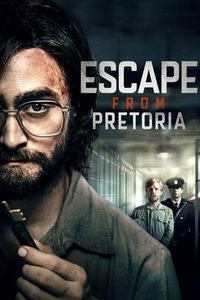
    (Netflix Streaming, December 2021) There’s a fun prison breakout film in Escape from Pretoria, but the real interest of the film is in the abstract questions it raises— when do we decide that a prison sentence is so unjust that we cheer for evasion? A prison defines inmates as criminals, but that definition does not always align with what other people would consider a crime. Set in the depths of South Africa’s apartheid regime, the story adapted from true events follows two white activists as they are sentenced to years of prison for their role in distributing anti-apartheid propaganda. Twenty-first century viewers are squarely on their side as they start preparing a very long plan to escape prison and make their way out of the country. To say that they succeed is not much of a spoiler, considering the historical record. Still, Escape from Pretoria becomes an interesting blend of procedural details describing the most minute elements of their complex escape, as well as a consideration of the difference between what the government says is criminal (hence unjust incarceration, hence righteous escape) and what observers with different values would consider to be criminal. Daniel Radcliffe does well as one of the escapees, working alongside Daniel Webber. It’s all handled with a tight attention to detail that pays off when the escape sequence begins. After so much time spent in the tight dark corners of the Pretoria Prison, the wide-open vistas of the conclusion feel like an escape for the viewers as well.

  • Phii khon pen [The Victim] (2006)

    Phii khon pen [The Victim] (2006)

    (In French, On Cable TV, December 2021) At this point, I’m more eagerly looking forward to mediocre foreign horror films than mediocre domestic ones — at least the foreign film will have a more unusual setting than the American one. But that doesn’t mean I won’t complain about them if they are, indeed, mediocre. Thai horror film The Victim, from writer-director Monthon Arayangkoon, does play with a few intriguing elements—most notably in entangling its protagonist, a young actress, with the ghost of a murder victim. You can imagine several ways such a premise could go. Unfortunately, the film doesn’t do much with what it has, even when it aims toward a mid-film twist that’s supposed to recontextualize everything. Instead, it merely confuses the narrative until it gets to move forward again, and doesn’t lead to much more in terms of narrative impact. (When a film explicitly blurs the line between reality and fiction, viewers won’t be that surprised then reality and fiction are blended even further.)  The juxtaposition between macabre crime “reporting” and a vengeful ghost story could have worked, but it would have required more work and originality in handling the result. The Victim, instead, seems to lose itself for a long time before delivering an underwhelming climax. Too bad — a mediocre film remains mediocre, even when it takes place in an unusual environment for North American viewers.

  • The Ice Follies of 1939 (1939)

    The Ice Follies of 1939 (1939)

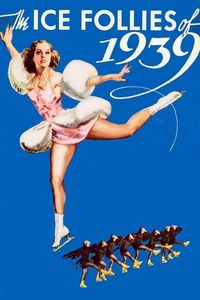
    (On Cable TV, December 2021) Let’s admit that it is fun to watch James Stewart as an ice skater putting together an epic skating show in The Ice Follies of 1939. It’s even more fun when he’s alongside Joan Crawford playing a mediocre skater who finds great success as an actress even as he’s still putting together his groundbreaking “musical on ice.”  Don’t worry — they’ll make it work eventually, but much of the film is spent with the two obsessing about the other one’s success (or lack thereof) and how it makes them feel. There’s a decent bit of business about showbusiness when our female lead stumbles into stardom thanks to her good looks and great attitude. The conflict between matrimony and success is given a fairer shake in this film than many others, largely because it’s a conflict between two successful people, not necessarily a star and someone offering support. Both lead actors are better than the undercooked material, which feels sandwiched between the requirements of a musical and the demands of making something interesting about ice skating. (The solution, as could be expected, was to blend movies and ice skating.)  It ends with a colour musical… on ice. But that’s Hollywood for you: stars pressed in ill-fitting roles, no matter their suitability for the setting… or the believability of the setting itself. The Ice Follies of 1939 is, at least, worth a look for the climactic dance number on ice, and some of the scenes between Steward and Crawford. Otherwise, well, there’s a reason why it’s more seen as a curio these days.

  • You Will Meet a Tall Dark Stranger (2010)

    You Will Meet a Tall Dark Stranger (2010)

    (In French, On TV, December 2021) Coming from the end of his London period, You Will Meet a Tall Dark Stranger has writer-director Woody Allen at his most inconclusive. As an ensemble film following many, many characters as they all go through personal trials in contemporary London, the film does have its strength. The best of those is clearly the cast. At the time, Allen could still attract top talent, and that’s how the film features no less an eclectic group than Anthony Hopkins, Antonio Banderas, Freida Pinto, Lucy Punch or Naomi Watts. The story arguably gets rolling when (in early flashbacks) a long-time couple divorces. She turns to fortune-telling to make sense of her life, while he turns to younger women for hire. (He eventually gets married to one such escort, with predictable results.)  Their daughter is having a hard time with her novelist husband, who earns “most despicable character” status after he starts an affair with a neighbour and steals a book manuscript from a friend in a coma. There are plenty of small subplots, but the common theme running through all of them is that the film ends just as things were getting interesting for all the characters — the new husband is unsure of his paternity; the thieving writer is dumped and aware that his novelist friend came out of his coma; the daughter is unable to start her own gallery… and so on. It’s very much a tale of stories interrupted, and while this is clearly the intention, it doesn’t make the film any better. (Allen would then leave London to go on a rejuvenating European tour for his next few films.)  Not every Allen film is a solid hit, but You Will Meet a Tall Dark Stranger seems more disappointing than most: all build-up, no conclusion.

  • Rosita (1923)

    Rosita (1923)

    (On Cable TV, December 2021) Despite my utmost admiration for Ernest Lubitsch’s sound movies, his early silent career is hit-and-miss. No real surprise there — dialogue is often the best part of a classic Lubitsch movie, and he was developing his style at the same time as the movie industry was figuring out the basics of film grammar. I’d put Rosita (his first Hollywood film, I believe) as an average silent entry in his filmography — not as good as his sound films, but not as underwhelming as some other Lubitsch silents. None other than Mary Pickford (in her first adult role) stars as a protest singer who, in criticizing the king, ends up making herself attractive to the king himself. Many romantic complications ensue as the heroine navigates between the attentions of the King and her own true love. Rosita is watchable and it ends well — but it’s no great Lubitsch comedy. Still, you have to admire the way the film was rescued from oblivion — for decades, it was considered lost until a safety print was discovered during the 1960s and that single copy was the sole version that existed for many more decades. It’s only in 2017 that a restored version was premiered, giving us access to a good crucial link in both Pickford and Lubitsch’s career. Rosita may not be that good of a film, but it doesn’t deserve obscurity.

  • Candyman: Day of the Dead aka Candyman 3 (1999)

    Candyman: Day of the Dead aka Candyman 3 (1999)

    (In French, On Cable TV, December 2021) Some series find their footing by the third episode, but most of them merely end up rehashing their own premise, and that’s where Candyman 3 ends up. Moving to Los Angeles (what?) and taking on the art world (double what?), the film otherwise seems content to simply repeat elements from the first film, except without much conviction or wit. It’s apparently taking place in twenty-years-distant 2020, but there’s nothing science-fictional about the low-budget execution. I did like Tony Todd’s presence and Donna D’Errico doesn’t do too badly (even though I preferred Alexia Robinson), but the film itself is dull — the only potentially interesting element about its conclusion being how definitively (and without winking) it seems to shut down the possibility of any follow-up. That’s not much, especially considering how the first film in the series was a semi-amazing blend of social commentary, historical material and rather original boogeyman. But Candyman 3 is simply repeating some of the highlights without committing to it beyond a superficial level. No wonder the series died for a generation after that.

  • Episode 50 (2011)

    Episode 50 (2011)

    (In French, On Cable TV, December 2021) Few things are more disappointing than wasted potential, but it’s in the nature of low-budget filmmaking to have ambitions that are never fulfilled. There’s a lot of promise in the set-up of Episode 50 — two rival teams of reality-TV shows (one skeptical, the other more religious) coming together for a case that goes beyond what they usually undertake. It’s not necessarily anything new, but it starts out as being more than the usual found-footage stuff. Unfortunately, the usual found-footage stuff is what the film degenerates into: The initially promising clashes of sensibilities between the crews end up coming down to various people possessed by demons, and others screaming their heads off. (You don’t win any prizes for guessing that the skeptics are quickly and thoroughly convinced of the supernatural.)  Nearly everything intriguing about Episode 50’s first few minutes is eventually dismantled and replaced by a generic low-budget found-footage approach (with a few dull staged interviews) that causes more headaches than suspense. By the end, we’re almost openly cheering for the demons, as their killing the rest of the characters hastens the end of the film. I’m sure someone will eventually make something good with the best elements of Episode 50… but writers-directors Joe and Tess Smalley didn’t succeed at it.

  • Julieta (2016)

    Julieta (2016)

    (In French, On TV, December 2021) There’s something quietly amusing in seeing that writer-director Pedro Almodovar’s inspiration for Julieta came from Canadian literary institution (and Nobel-Award winner) Alice Munroe — a bane of Canadian high-school students struggling with English Literature assignments. Munroe’s sensibilities somehow ended up being a rather good fit for Almodovar’s colourful, melodramatic style, preoccupied by mother/daughter relationships and messy lives. While the film is adapted from three different short stories, the end result is more cohesive than you’d expect, as it comes together in the life narrative of an older woman recalling her tumultuous history. Much of the story takes place in Madrid, with plenty of local colour. Emma Suarez and Adriana Ugarte both stars as the titular Julieta (at different ages) and do rather well in a complex role. Despite the melodrama, the film stays grounded — for better or for worse, as it doesn’t score the highs of other Almodovar movies, remaining more restrained than usual. Julieta is not bad, but I’m not sure that it will be considered as anything better than middle-of-the-road material for him — watchable without being unforgettable. [July 2024: Alice Munroe’s entire legacy went up in flames in scarcely more than a week when she was revealed to have been ineffectual in protecting her daughter against her second husband’s sexual abuse. Her work is now being reassessed in light of that revelation, and clearly this review was written prior to that reckoning.]

  • The Student Prince in Old Heidelberg (1927)

    The Student Prince in Old Heidelberg (1927)

    (On Cable TV, December 2021) As much as I try to like silent films, sometimes it just doesn’t work. I was maybe expecting too much out of The Student Prince in Old Heidelberg: as a film by Ernest Lubitsch, I was looking forward to something much funnier than this melancholic tale of old-world royalty being denied true love. It’s not badly made by the standards of the time, but it takes a dedicated silent film fan to sit through the film’s rather long 105 minutes. Norma Shearer stars alongside Ramon Novarro, but don’t hope for many romantic pyrotechnics along the way, especially considering how the film is fated to end. Those looking for the Lubitsch touch may want to temper their expectations — The Student Prince in Old Heidelberg is professional but lacking his usual verve.

  • Happiest Season (2020)

    Happiest Season (2020)

    (Amazon Streaming, December 2021) There’s a good chance that Clea DuVall will leave a stronger legacy as a writer-director than an actress — at least if her work keeps improving the way it went in-between The Intervention and Happiest Season. Her latest spin on the dysfunctional family Christmas comedy features sad-faced Kristen Stewart as a young woman heading to attend the holiday celebrations with her girlfriend’s very traditional family a few states away… but with her girlfriend having neglected to tell her parents about her relationship, or even coming out of the closet in the first place. Not that it’s the only secret just waiting to explode as tensions run higher and higher on the way to Christmas. Thus is the stage set for a mild comedy of manners, lies, misunderstandings, humiliation and a cathartic finale. Best seen as a small-scale film featuring dramatic showpieces, it plays with Christmas tropes while still, ultimately, bowing to familiar values. The acting talent here is not bad — Stewart is clearly in her very specific niche, alongside such notables as Aubrey Plaza (in a somewhat looser role than usual), Alison Brie, the ever-captivating Mary Steenburgen as a matriarch, and Victor Garber is a charming take on the befuddled father trying to make sense of his family suddenly expressing themselves. Still, it’s Dan Levey who steals the show as a stereotypically catty best friend showing up for the pyrotechnics. Despite a few mystifying contrived plot turns, Happiest Season delivers on its promise of decent Christmas film — it’s several steps above the usual Hallmark comfort material even if, in the end, it’s not that different.

  • Space Jam: A New Legacy (2021)

    Space Jam: A New Legacy (2021)

    (On Cable TV, December 2021) Let’s not pretend that the first 1996 Space Jam was an artistic masterpiece or a heartfelt achievement — it was meant to sell toys, glorify Michael Jordan and keep the Looney Tunes relevant. As such, Space Jam: A New Legacy is very much in-line with expectations. Somehow, though, it feels worse. The film does not exist in a context where it’s one of many original works pushed by Warner Brothers — it’s meant as a tentpole among many other tentpoles, squeezing all potential out of commercially viable concepts. When LeBron James is absorbed by the film’s “Warner 3000 Serververse” to meet with the Looney Tunes and interact with the rest of the Warner-owned intellectual properties, the film feels like a dystopian celebration of cultural prostitution, with noble emotions packaged in sellable units for some uncaring financial overlord. I’m being more cynical than usual here, and I’m not sure why: After all, if there’s any movie studio that I like more than others, it’s Warner Brothers all the way to the gangster films of the 1930s. I’m also unusually fond of blending universes for comic purposes, and any metafictional component usually grabs my interest. But as the film greedily pillages from dozens of Warner franchises, I’m not amused as much as made acutely conscious of the hard walls between the Warner, Disney, Sony or Paramount properties — it’s all a hustle meant to subjugate storytelling to corporate initiatives, and A New Legacy is particularly naked in its intent. I’m not saying that it can’t be funny or surprising or entertaining (I’m not sure who I was least expecting to show up here: Ingrid Bergman, or A Clockwork Orange’s droogs) but it’s more wearying than anything else for anyone with any degree of media literacy. (It’s increasingly infuriating to see The Iron Giant being heralded as one of Warner’s masterpieces when it was essentially dumped and ignored by the studio upon initial release.) LeBron James himself is fine in his own role — but trying to make the film all about father-son bonding seems hilariously misguided when there aren’t more than five minutes of footage unmodified by special effects in the entire film. At least the Looney Tunes are decently funny, and their integration with other Warner properties is closer to the spirit of the cartoons than the cash-grab of the film. Otherwise, A New Legacy is definitely not interested in being just a film: it’s interested in selling you Warners, LeBron, Looney Tunes, basketball, video-games and chunks of the Warners back-catalogue — essentially, whatever is worth discretionary money to the target audience. I wouldn’t be so annoyed by the result if Warners was still in the business of making strong standalone films. But A New Legacy exists during a period in Warner’s leadership that’s all about retreads and catalogue exploitation to an extent that feels like storytelling bankruptcy. I sat through it without pain, but I felt distinctly more cynical by the end of it. Which is saying a lot considering where I started from.

  • Man of the World (1931)

    Man of the World (1931)

    (On Cable TV, December 2021) As a fan of William Powell’s screen persona as perfected in the Thin Man series, I’m almost always interested in the earlier entries in his filmography. Powell started work in the silent era, but usually played villains and cads: it took a while for his specific talents for sophisticated comedy to be recognized. Man of the World is perhaps a better fit for comparison than most films of the early sound era, given how it paired him for the first time with future wife and frequent on-screen partner Carole Lombard. Here, he plays an American expatriate in Paris, a former newspaperman specializing in saucy revelations, blackmail and a little bit of conning. His meticulously planned racket falls apart once our heroine makes her entrance — she’s a woman worth giving up crime for. For Powell, the role is halfway-there in terms of screen persona: he plays a semi-likable rogue with some witty sophistication, but his character is not likable enough to warrant the happiest romantic ending (although he doesn’t end off all that badly). As for Man of the World, it does have a few moments and bon mots, but you’d hardly call it essential, other than for marking the first on-screen Lombard/Powell pairing.

  • Let it Snow (2013)

    Let it Snow (2013)

    (On Cable TV, December 2021) As far as Hallmark Christmas romantic comedies go, Let it Snow isn’t all that good, but at least it tries to get away from the usual formula. Not all of the formula, though, as the idea of a cynical young woman leaving her comfortable surroundings to go to a rural area remains intact — but this time around she’s a hospitality executive travelling from Arizona to Maine in order to write a report on how to maximize the profits from her company’s new acquisition. Of course, what she encounters on-site is an unsustainable boutique experience filled with a handful of regulars charmed by the small homely feels of Christmas at the lodge. (You have to feel sorry for the older woman handling the buffet cooking by herself, as she logically shouldn’t have time to ever leave the kitchen for days.) Oh, and there’s a sexy young man right there to make her rediscover the magic of Christmas. The building blocks used by writer-director Harvey Frost are as obvious as his destination, and the film’s production values are as ambitious as its plot, which is to say: not very much. Let it Snow is all pleasant enough, but there’s nothing else to do here for more reluctant viewers than riff on the pile of absurdities, bad staging, dull acting and insipid writing in the result. It’s very much the kind of film that is watched six weeks out of every year, and then becomes unpalatable as soon as the gifts are unwrapped.

  • Mignonnes [Cuties] (2020)

    Mignonnes [Cuties] (2020)

    (Netflix Streaming, December 2021) Understand this:  Entire industries now prey on your outrage. The angrier you get, the more attention you pay, the dumber you become, the more money you give. That outrage is often tangentially related to the real world, or even manufactured entirely. So it is that in late 2020, alongside the American presidential campaign, a lucrative amount of controversy stemmed from the trailers and posters released by Netflix in order to promote Mignonnes: opponents saw the way the promotional material featured pre-teen girls in sexually provocative poses and jumped to the conclusion that the film was promoting pedophilia. But that, as anyone having actually seen the film could tell you, is a hideous misrepresentation of what the film is about. (Again, remember: people will lie in order to get you outraged.)  Coming from the socially-conscious low-budget segment of the French film industry, Mignonnes ends up being a squirm-inducing, dramatically sensitive portrayal of a young immigrant girl’s attempt to forge herself an identity in-between her ultra-traditional family and an environment that objectifies teenagers. As a parent, Mignonnes often feels like a horror film given how it portrays young girls emulating actions that would be considered inappropriate at any age, pushed along by dance videos and social media. The climax of the film has our protagonist going to the end of her attempt to play older… and being greeted by horrified stares from everyone else. In other words: marketing aside, the film does more to confront and uphold reasonable social values than most other pre-teen movies out there. But the outrage took over, portraying a delicate, wryly witty film into something that it isn’t. (The deceitful outrage was technically bipartisan, but let’s be honest: most of it came out of the insane right-wing echo chamber.)  Too bad for Mignonnes, which, while not an easy film to watch, is far more nuanced and responsible than the hot takes would have you believe. It does play with fire for shock value, but there’s no doubt that it’s on the side of the fire-fighters. It’s also brilliantly funny in its transgression: There’s a joke about condoms midway through the film that goes from gag-inducing to being surprisingly hilarious, and that should give you an idea of how writer-director Maïmouna Doucouré handles her material. Mignonnes is not boring and it’s not comfortable, and it’s especially not what many people would like you to be angry about.

  • Five Feet Apart (2019)

    Five Feet Apart (2019)

    (In French, On TV, December 2021) Terminally ill teenagers are a surefire draw for younger audiences when it comes to ill-fated tragic romances, and so Five Feet Apart takes us in the daily lives of cystic fibrosis patients, a genetic disorder that forces a strict regiment of medication and habits. The title comes from a guideline for patients not to get closer than six feet from each other, given the dangers of fatal cross-infection. (How familiar, post-2020.)  Our meticulous heroine falls for a bad boy with slack habits, and in an attempt to create intimacy, decides to reclaim a foot from the disease, and remain five feet from her boyfriend. It all leads to predictable tragedy by the third act, with no happy ending in store for our bacteria-crossed lovers. Sick teenager romances being what they are, the result is a mixture of surface effectiveness powered by deliberate manipulation. Haley Lu Richardson does well in a somewhat familiar lead role, but the entire film feels like many others, except with a different terrible disease as a plot device. A few things do work, however: Setting the story in a hospital gives an interesting claustrophobia to the atmosphere, and the details of how patients manage their disease help stave off some of the inherent romanticism of the tale. Still, the best Five Feet Apart can manage is a mixed response, its best assets weighed down by elements that may be inherent in the very story it’s trying to tell.