Author: Christian Sauvé

  • Monsters vs. Aliens (2009)

    Monsters vs. Aliens (2009)

    (In theaters, March 2009) Although still not quite as consistently polished as the Pixar films, this latest Dreamworks effort is a definite step in the right direction. Starting as an homage to horror B-movies (Attack of the 50-ft Woman. Creature from the Black Lagoon. The Fly. The Blob; and Mothra), Monsters vs. Aliens quickly becomes a generally satisfying action film for kids, mixed with a few jokes for the grownups and a sly message of female empowerment. The uneven script mixes unsubtle moments with a number of sharper jokes, but it sometimes push farther in one direction than you’d expect: the portrait of the renamed heroine locked away as a strategic resource is unsettling, alas dropped at the first opportunity. The rest of the film is a carnival of strong action sequences and one-liners. It’s pretty spectacular in 3-D, but doesn’t rely on it as blatantly as many similar films. It’s a short film, and it seems to go by even faster. While a more solid script would have been a blessing, there isn’t much here that’s blatantly wrong. Best of all, it should have enough content to please both the kids and the adults.

  • Knowing (2009)

    Knowing (2009)

    (In theaters, March 2009) What a strange, strange film this is: A mixture of impressive scenes loosely connected by a tissue of stiff characterization, convenient coincidences, and lame textbook screen-writing. It starts as a middle-of-the-road supernatural thriller, but watch out –because the last twenty minutes are pure hard-core apocalyptic Science Fiction. (Fans will know what to expect when I mention Childhood’s End and The Forge of God.) In-between, there are two stunning and vicious disaster sequences, a couple of mildly enjoyable sequences and suburban fun with power tools and fast pickup trucks. Director Alex Proyas has a number of surprises in his bag, but it’s a shame that the whole of the film can’t cohere: Nicolas Cage doesn’t help with a bland performance, and the carnival of convenient plotting does nothing to lend the film any credibility. This being said, the high points are high indeed: the subway crash is a piece of high action cinema, but the plane crash alone is an anthology piece, pieced together to form a nightmarish single shot that lasts much, much longer than anyone would expect. See it for the high points, don’t have high expectations and you may be pleasantly surprised.

  • La Jetée (1962)

    La Jetée (1962)

    (Downloaded, March 2009) Best known as “the film that inspired Twelve Monkeys”, this film is often lauded as a small masterpiece of experimental sixties filmmaking, or hyped as better than the Hollywood rip-off. But those for whom “experimental” is synonymous with “uh-oh” may not be overly impressed: The central conceit of telling a story through narration over still black-and-white pictures is the kind of thing that works better in practice than in theory, and the film is about twice too long even at just 26 minutes. Fans of the Terry Gilliam film will notice that this has a rather more optimistic fillip into the future, but otherwise the story is broadly similar, with a narrative closure that can be seen coming from the very beginning. In SF terms, there isn’t much here to satisfy, with a basic time-travel plot that is barely justified or rationalized. The rest feels very French-Sixties-experimental, which may or may not be a selling point.

  • Fear and Loathing in Las Vegas, Hunter S. Thompson

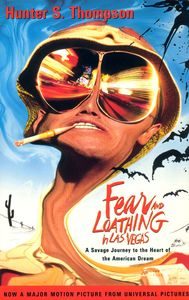
    Fear and Loathing in Las Vegas, Hunter S. Thompson

    Vintage, 1971 (1998 reprint), 204 pages, C$14.95 tpb, ISBN 0-679-78589-2

    I wasn’t planning on re-reading this book. My “Year of the Thompson” didn’t include another pit-stop in Las Vegas given that I had read this book in 1999 and I don’t usually re-read books unless I have good reasons. But the amount of Thompson biographical information I’ve been consuming lately naturally led back to another look at he book, a look that became even more urgent once I searched my archives and realized I had never formally reviewed the book at length. So here goes:

    This is a book that comes with a lot of baggage. It’s Thompson’s best-known work, and arguably the single item that made him popular with casual readers. On a surface level, it’s fiction about two wild and crazy guys doing drugs (and I mean a lot of drugs) and behaving badly in Las Vegas at the beginning of the seventies. But the more you know about Thompson or about the sixties, the more the book becomes something else, starting out by acting crazy, but eventually finding that it all leads to a hollow place, an artificial recreation of a failed ideal, or an excuse to be unpleasant to others.

    It does start out in an amusing fashion. I defy any fan of the book to resist the impulse to read the first few lines out loud, or linger a bit longer on the description of what’s in the protagonist’s suitcases. In the first two pages of the book, you can already find the unique mixture of craziness and world-weary knowledge (“There is nothing in the world more helpless and irresponsible and depraved than a man in the depths of an ether binge.” [P.2]) that fuels most of the novel.

    But the influence of drugs and a thorough knowledge of depravity aren’t quite enough to characterize Thompson’s narration, which wouldn’t be complete without the certitude that the good times have ended, that civilization is in decline and that the nuclear-powered apocalypse may begin at any moment. This, I often feel, is what separates the good Thompson imitators from the superficial ones. Fear and Loathing in Las Vegas may describe irresponsibility, as its characters ignore their professional obligations, steal hotel soap in bulk and trash the rooms they’re given. But they’re doing so out of the conviction that none of it matters, that they will be dead by the time their credit ratings will be revised.

    This sense of impending doom constantly floats above the novel, but it becomes more and more apparent as it goes on. War in Vietnam, Nixon, the atonal passage on the high water mark of the sixties… it all leads to feckless recklessness, until the terrible scene where a waitress is pushed too far and (unlike a previously-scared maid) cannot be brought back into the protagonist’s shared madness which, by this point, is starting to wear thin and veer in either paranoia or depression.

    Particularly empathic readers will catch this nuance that eludes those who read the novel as a drug-addled jaunt through Vegas: As our characters get away with acting rudely, it’s not hard to feel poorly for those they leave behind in their wake. The characters may come to realize the consequences of their actions late in the book (“I’d abused every rule Vegas lived by –burning the locals, abusing the tourists, terrifying the help.”) [P.173], but by that time a number of readers will have rejected the idea that they are in any way admirable. (The movie adaptation is broadly faithful to this interpretation.)

    Those who know Thompson will get more out of the book than those who discover Thompson through it. There are references to Hell’s Angels and San Francisco and to Colorado, but also a sense that it’s through fiction that Thompson could spread his wings at the widest, writing more casually about his true themes. The Rum Diary and other short fiction aside, it’s a shame that Thompson was never able to revisit the same place. But maybe it couldn’t be revisited.

    For those who haven’t read Thompson before, well, it’s a trip of a different sort. It’s a very short novel (barely over 50,000 words), but it’s dense in events and hard-hitting narration. Take your time, savor one chapter every day, don’t see this as a guide to emulate, and everything will be fine. Which is more than we can say for Thompson or his alter-ego.

  • Duplicity (2009)

    Duplicity (2009)

    (In theaters, March 2009) High-intensity romantic films for adults aren’t that common, so it’s a bit of a treat to see writer/director Tony Gilroy turn from drama (Michael Clayton) to comedy with a smart romance set in the world of corporate espionage. He’s an ex-MI6 agent-runner; she’s an ex-CIA infiltrator; but together, they commit crime! The only problem is, can they stand each other long enough to get away from the prize? Do they really love each other, and how can they be sure of it? Clive Owen and Julia Roberts are wonderful in the lead roles, and if the result can occasionally turn in circles, it’s a clever film that does a nice job at asking the audience to keep up. The look at corporate espionage alone is a unique mixture of high stakes and ridiculous rivalry: the complexities of frozen pizzas have seldom been so amusing. The ending is bound to surprise and maybe even disappoint a few, but it’s one of those conclusions that make more and more sense the longer you think about it: the last shot ends up being a perfect conclusion to one of the film’s lingering questions.

  • Dr. Horrible’s Sing-Along Blog (2008)

    Dr. Horrible’s Sing-Along Blog (2008)

    (On DVD, March 2009) This low-budget, high-cheese short (45-minutes) film has quite a few things going for it: a new concept for straight-to-audience Internet fiction, a trio of capable leads, some clever writing and a delightfully oddball sense of humor. Superhero romantic musical comedy? Well, it’s no Repo but it’s not uninteresting. With Joss Whedon at the pen, it’s both geeky and funny, although the late turn into drama smacks more of gratuitous shock than a satisfying conclusion. The DVD has a number of extras over the Internet version, although it’s not as clear as it could have been in explaining the whole direct-Internet-distribution for people coming at the piece cold. On the other hand, it does feature a massively overproduced audio commentary in the form of a musical, plus another more regular commentary. A few more extras (including ten fan-made videos of uneven quality) round off the disc.

  • Outlaw Journalist: The Life and Times of Hunter S. Thompson, William McKeen

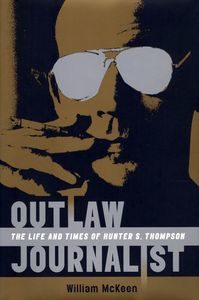
    Outlaw Journalist: The Life and Times of Hunter S. Thompson, William McKeen

    Norton, 2008, 428 pages, C$31.00 hc, ISBN 978-0-393-06192-5

    During my ongoing binge of Hunter S. Thompson material, I have come across a number of biographies, memoirs and related books about him. Not all of them are created equal, but I think I have found the definitive biography of the legendary writer: William McKeen’s Outlaw Journalist.

    Following Thompson’s suicide in 2005 and the time it usually takes to propose, write and publish a good non-fiction book, it’s no accident if 2007-2008 were the biggest years on record regarding Thompson memorabilia, even eclipsing the 1993 Carroll/Perry/Whitmer trilogy of biographies. The more recent crop has lot of qualities: Jann Wenner and Corey Seymour’s oral biography Gonzo was a compulsively readable grab-bag of Thompson stories and recollections, for instance. Unfortunately, it lacked direction and context by focusing on anecdotes and small slices of the writer’s life… and that’s where Outlaw Journalist steps into the gap, offering a complete look at Thompson’s life and works.

    The first obvious difference is that McKeen approaches the subject from a professional perspective. McKeen, who teaches at the University of Florida, does his subject a favour by seeing him as a newsman: by measuring Thompson against the standards of his profession, McKeen is not only able to identify much of the sensationalism surrounding the legend, but also contextualize it against a coherent portrait of the man. No other Thompson biography, for instance, describe his Gonzo breakthrough article, “The Kentucky Derby is Decadent and Depraved” in a chapter called “Epiphany”, linking it to Thompson’s well-documented desire to get away with whatever he wanted to do. (At the same time, McKeen makes his disdain for “Gonzo fans” clear, pointing out that Thompson was often the favourite writer of people who didn’t read.)

    Thompson’s quasi-mythical substance abuse is studied in the same carefully-documented detail, McKeen going as far as suggesting that cocaine abuse had a role to play in Thompson’s silence following the publication of Fear and Loathing on the Campaign Trail ’72. But there was a lot more to Thompson than drugs, and if Outlaw Journalist does something particularly well, it’s to give an even idea of the man behind the trappings of the legend. McKeen spends a lot of time, for instance, describing the less-exciting moments of his subject’s life: the fallow periods between projects, for instance, or the years of hand-to-mouth living between the greatest hits of his career. Thompson, we’re constantly told, was famous and yet not rich, living large on the generosity of his friends and the expense accounts of his employers.

    McKeen is also meticulous in providing context for his subject’s life. Thompson’s stints for various publications are accompanied with a description of the place that the publications held at the time within American journalism. Sources, impeccably detailed either in-text or through over forty pages of assorted notes, range from Thompson texts, original interviews, past Thompson biographies or third-party sources. (A fifteen-page index completes the book) As of 2008, Outlaw Journalist is complete not only regarding the details of its subject’s life, but also about the stack of other works about him (It even mentions Warren Ellis’ Transmetropolitan, something that eluded most of the press outside sf/comics fandom) McKeen, being neither a member of Thompson’s close circle of friends nor a past employer, is considerably more even-handed than many other biographers: He describes the tensions between Thompson and Rolling Stone magazine with a fairness that lacks from Gonzo, and doesn’t place undue importance on his own meetings with Thompson the way Paul Perry does in Fear and Loathing, for instance.

    Best of all, Outlaw Journalist is a pure joy to read. Even the moments in-between Hunter’s high points are made interesting thanks to an engaging prose style and an eye for telling details. McKeen is always guiding his readers toward conclusions about his subject without highlight them. Unlike most other portraits of Hunter S. Thompson, this one feels fair, just detached enough, yet sympathetic and (make no mistake) highly entertaining at the same time.

    In short, it’s the best biography of Hunter S. Thompson on the market so far, and it’s likely to remain so unless someone else spends a considerable amount of energy trying to go over the same territory. Given the myth-making that constantly surrounded Thompson, his scattered bibliography or the way the image of Thompson arguably became greater than the journalism himself, that’s a significant achievement.

  • Vitals, Greg Bear

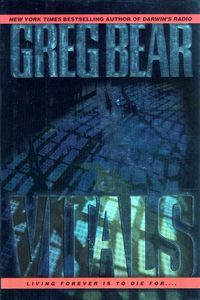
    Vitals, Greg Bear

    Del Rey, 2002, 356 pages, C$37.95 hc, ISBN 0-345-43528-1

    Warning: This isn’t a review as much as it’s an explanation of why I pretty much ended up giving up on the novel mid-way through, then skimmed my way to the conclusion. While the platonic ideal of a review should only be written after a careful second re-read and with knowledge of the author’s entire oeuvres (along with a thorough knowledge of the author’s socio-cultural context), I happen to think that there’s a certain place for descriptions of failures along the way, if only as a billet d’humeur to recalibrate everyone’s expectations.

    So it is that I should state up-front that Bear is the very definition of an uneven writer. While he has written some astonishingly great novels (Moving Mars, The Forge of God, Eon, Blood Music), many of his other books have been dullness given hard covers. His bibliography ping-pongs between good and bad so inconsistently that it may not be an accident if this if it took until 2009 for me to try anything he’s written in the 21st century.

    In context, Vitals fits in Bear’s years-long flirtation with the technothriller. From the contemporary SF action of 1999’s Nebula-winning Darwin’s Radio to 2005’s Quantico, Bear spent most of a decade writing near-future stories with a thriller template. Vitals plays a familiar tune for genre readers, as it shows a Science Fiction-minded author tackling issues in current settings, usually with an eye toward a mainstream audiences and sales. See: Kress, Nancy; Williams, Walter Jon; Sawyer, Robert J.; etc.

    The first few pages of Vitals are pretty good: As a scientist descends to the ocean floor in company of an increasingly perturbed submarine pilot, we’re introduced to the scientist’s work in life-extension. A few things are unfocused, but it’s just the beginning of the novel. By the time the pilot turns nuts in a confined space thousands of meters below the sea level, it’s hard not to become involved.

    By the time our narrator has returned to the surface, seen other instances of people behaving badly, being almost accused of murder, and finding out that his twin brother is dead, two things are becoming clear about Vitals: It’s a story with intriguing ideas, and it’s being badly told. While well-paced thrillers ratchet up the tension with nearly-audible clicks, Vitals muddles forward and sideways and even back when, midway through, we switch narrators and go back a few months previously. There’s a mushy, indistinct quality to Vitals that’s hard to reconcile with the demands of a tautly-told thriller. The fact that the protagonists often have their head messed with isn’t much of an excuse; instead, it’s confusion and vagueness all the way through. The lack of clear characters doesn’t help, and neither do the various attempts to one-up the action with paranoid killer schemes. (This is another one of those novels where an exotic way of killing someone ends up used in every possible fashion, rather than more direct and effective methods that could end the narrative right there. Ah, give a toy to an SF writer…)

    By the time we piece together a Soviet conspiracy that hides a microbial conspiracy, it’s far too late to care even about such a globe-spinning premise: Vitals has faded away, and the only reason to rush to the conclusion is to see whether it will conclude or just drop away. (Well, that and to spot the Stalin cameo.) But this novel does not conclude: it runs out of ideas, looks around dazedly, gives up and terminates. What kills Vitals isn’t the nature of the far-out ideas, but their lousy execution. Another writer would have been able to do something fantastic with them, but not Bear: Vitals is too long, too sloppy and too uninterested in what it’s saying —although I may be projecting that last flaw onto the novel.

    It also justifies my continued coolness toward anything that Bear has written since 1995. (His new City at the End of Time? Not before I see it on sale, baby!) I don’t seem to be alone: Go look at the awful 2.5-stars average Amazon reviews for what seems like a consensus opinion on Vitals. This may have been a personal rant, but my disappointment hardly seems unique whenever this novel is concerned.

  • Death Match, Lincoln Child

    Death Match, Lincoln Child

    Anchor, 2004 (2006 reprint), 388 pages, C$9.99 mmpb, ISBN 0-307-27556-6

    Here’s a pop quiz to test your genre savvy: You’re locked in a room with a string of murder victims on the floor. Around you are a cowboy, a vampire, an Artificial Intelligence, a ninja, a pirate, the President of the United States and a butler. You find out you’re in a technothriller. Who killed the victims?

    That’s right: The Artificial Intelligence. Well done.

    It’s never Lupus, but it’s always the Artificial Intelligence in technothrillers. It’s an impulse as basic as the class anxieties that led to an improbable number of homicidal butlers in British cozy murder mysteries: Technothriller writers are in the business of chilling their readers, and they calculate that since we already loathe our laptops and smart phones, we should be terrified of even smarter machines. The point at which computers become smarter than ourselves may already be here: looking at how many iPhones are already more intelligent than their teenage owners, it’s hard not to believe in the upcoming Singularity —not through machine intelligence, but thanks to increasing human stupidity.

    And it’s human stupidity that finally brings us to Lincoln Child’s Death Match, three paragraphs in our review. Like Child’s two other solo novels so far, it deals with high technology run amok. It also shares with Utopia and Deep Storm, a fantastic first half that ultimately gets ground to generic platitudes by the end of the novel. Taken together, they make a convincing argument that Lincoln Child is the logical heir to Michael Crichton. This, however, may not be compliment.

    But before getting there, let’s lay down the basics of the story: Our protagonist is one Christopher Lash, a “forensic psychologist” whose career at the FBI was cut down by an initially unspecified trauma. Lash is called upon by Eden Inc, a secretive matchmaking service: Apparently, one of their happily married couples has committed double suicide, and they want to know why. Eden, mind you, isn’t your usual matchmaking service: it asks for $25,000 up-front, requires a full day of wide-spectrum psychological and medical testing, and is vastly more accurate than any other matchmaking services. Eden doesn’t take failure lightly, and the suicide of one of their most successful success stories is more than a professional offense: it may be a problem with their entire approach.

    So Lash is called on the case, peeling back the layers of Eden’s operations in an attempt to understand what went wrong. His attempt to undergo the usual Eden candidate screening process goes wrong, but it’s not the only part of his life that is suddenly troublesome: All around him, annoyances and threats pile up, from suddenly-unpaid bills to mysterious calls to toll booth passes suddenly not working.

    And for all of the novel’s faults, the first half works well. Faced with an intriguing mystery (a foolproof matchmaking process; a suicide between a seemingly perfect couple), readers are asked to follow along the mystery. Some of the best moments in Death Match are strictly procedural, as something is explained to us via the protagonist, and we get to look at a complicated process. Mystery and secrets can do much to lead a reader along, and I’ve got not problem with that part of the novel.

    No, the troubles start when the AI is introduced. At that point (and maybe even before), experienced readers will look at the book’s remaining 200 pages and wonder how long Child is going to take to tell us that, as in all technothrillers, it’s the AI whodunit. The rest of the book is considerably less graceful than the first half, all the way down to the evil machines “spitting sparks and belching ever darker gouts of smoke” [P.367] Ah yes, sparks and smoke; sure signals of evil computer engineering mastery.

    As for the rest, well, it’s pretty much routine for Child: clean prose, slightly tepid pacing when not uncovering secrets, conventional end. Tons of issues are left unexplored, but the mechanics of high-tech matchmaking are relatively interesting and that’s pretty much the only thing saving the book from complete formula-photocopying. It’ll do if you’re stuck on a beach, in a plane or on a bus. Beyond those desperate situations, though, there are better choices.

  • Pushing Ice, Alastair Reynolds

    Pushing Ice, Alastair Reynolds

    Gollancz, 2005, 457 pages, £14.99 hc, ISBN 0-575-07438-8

    My traditional objections to Alastair Reynolds’ fiction have been twofold: First, too many of his novels take place in a single future history that gets increasingly less interesting. Second; far too many of his books are overwritten to the point of tediousness. The rest of his work is pretty good, but endless Inhibitors stories still make up more than half of his bibliography. Fortunately, his most recent books have taken steps against the issue, either tackling new futures, or coming in under 350 pages. Pushing Ice is halfway OK: It’s still far too long, but at least it offers something new. Not coincidentally, it’s almost the best thing that Reynolds has written so far.

    It starts twice in ten pages: first, in a distant future where humanity has conquered hundreds of solars systems. Then, again, in 2057 as a plucky crew of comet-mining operatives is hired to go and check out Janus as it runs away from Jupiter. But accidents keep happening, and before we know it the crew of the Rockhopper crash-lands on Janus as it accelerates away from the Solar System. From near-future hard-SF, Pushing Ice turns into a high-tech Robinsonade, then other even stranger configurations as relativistic effects take hold. The structure of the novel is such that the prologue ends up not merely being a framing device, but a plot arrow whose impact is felt two-thirds of the way through.

    For experienced SF readers, one of the best things about Pushing Ice is the way it pushes through the future, taking us from a relatively conventional hard-SF setting of blue-collar space work to the exotic weirdness of a far future shared with a variety of alien species. The structure of the story is such that there are quite a few chills in recognizing future technology delivered, almost as an afterthought, within the hands of human characters still recognizably like us.

    That set of characters is uneven, but they have their moments of infighting. Decisions made by characters in position of power have consequences that go beyond immediate repercussions: Over and over again, the Rockhopper crew reacts, takes sides and argues about their fate, trying to survive despite what they receive as leadership failures. The novel eventually switches focus entirely as one character is taken out of service and replaced by another. Bit players come and go, sometimes in fairly gruesome fashion: Reynolds has never been known as a particularly light writer, and if Pushing Ice isn’t as relentlessly gloomy as his other work, it’s still heavy-going at times, pulling plot dynamics out of interpersonal clashes and the cyclical nature of entire civilizations. Betrayals happen so often that it’s a wonder anyone trust each other by the end of the story. (…and they don’t entirely do.)

    Where Pushing Ice could have been better is in tightening up the screws: There’s a tremendous amount of nothing-happening within these near-500 pages, and the well-worn nature of Reynold’s ideas (big, but hardly innovative) are such that the novel could have been written in more or less the same way at any point during the past thirty years: But Pushing Ice as published in the 1980s would have been considerably shorter, and the pace would have accelerated through the story, not dawdled along unevenly like it does so often here.

    But Pushing Ice does manage to make me more receptive to Reynolds’ most recent and upcoming novels. (Much as his short-story collection Zima Blue proved that he was at his best when writing shorter fiction not set in the Inhibitors universe.) I’m not going to give up on the Reynolds two-strike rule, but as soon as something either short or standalone comes up, I’ll let you know.

  • Scarecrow, Matthew Reilly

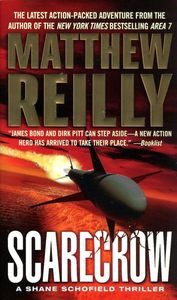
    Scarecrow, Matthew Reilly

    St. Martin’s, 2003 (2005 reprint), 464 pages, C$9.99 mmpb, ISBN 0-312-93766-0

    Let me tell you why I love reading Matthew Reilly’s novels.

    Since an image is worth a thousand words, picture this: Ottawa in mid-February. A meter of snow everywhere, ice on the ground, snowflakes in the air, fierce wind whipping the countryside. Then focus on an infrequent bus, stained with salt, windows fogged with its passengers’ exhalations, plowing through the storm thanks to an aggravated driver whose schedule has already been smashed by the weather, out-of-synch traffic lights, bad pavement and passengers who don’t know how to behave. Now enter the bus and try to find a place in the middle of a crowded space, alongside surly teenagers, glum federal public servants, depressed shift workers and overburdened students. The noise is a monotonous mixture of wind, pavement cracks, coughs, sniffles and regular stop calls. One person, squeezed in-between two grossly overweight passengers, is smiling. Of course, he’s reading a Matthew Reilly thriller.

    What you’re not seeing is that at that point in the novel, barely fifty pages in, top operative Shane “Scarecrow” Schofield has just escaped a crumbling high-rise by grappling onto a Harrier-like jet. The building hides a top-secret Soviet ICBM launch complex, Schofield has a $18.2 million dollar bounty on his preferably-severed head, bounty hunters have decimated the rest of his Marines and there’s a Typhoon-class nuclear submarine hidden nearby.

    This, my friends, is high-class escapism.

    Some commuters read romance, some read fantasy, some read science-fiction, some read murder mysteries —and some read them all. But give me a slick over-the-top technothriller, and I won’t even care if it takes twice as long to go to work or get back home: As long as I’m reading, I will barely be on the bus.

    This being Reilly’s fifth novel, it’s got a track record to follow. Fortunately, Reilly amps up the action to ever more frenetic levels, not forgetting to throw in a few spectacular scenes (such as an aircraft carrier blowing up), fast cars, high-tech weapons (such as Metalstorm rifles), fake deaths and nick-of-time escapes. Not to mention a bare-knuckles fist-fight between two series regulars. By this time in his series, he can count of his reader’s familiarity with his tricks to build punchlines or gut-punch readers who expect something else. A recurring character dies here, but on the opposite end of the spectrum, there’s a really funny moment during which a character tries to emulate Schofield’s recurring mag-hook trick, only to find out that it doesn’t work… and then scream that this sort of thing never happens to the Scarecrow.

    But one thing’s new this time around, and it’s thematic framework that underlies the action. While Reilly gets a lot of juice from his bounty-hunting antagonists (one of which is certain to make a return appearance in upcoming novels), he ends up providing his novel with an apocalyptic “third world against first world” justification that hints at greater degrees of political sophistication. But don’t make too much of it in Scarecrow, though, because most of it is jettisoned as soon as the last act rolls in.

    But once the smoke has cleared, it all adds up to an unusually satisfying thriller experience. Reilly has mastered thriller writing not only in delivering the good to his readership, but doing in a way that practically absolves him of any criticism: Of course, his premises, means, justifications, characters, and plotting don’t sustain comparison with the real world; what’s your point? The real thrill here is in seeing a skilled craftsman plays magnificently with the tools of his trade. It’s beautiful, impressive, and completely absorbing. If ever you see me reading a Matthew Reilly novel on the bus, please don’t disturb.

  • The Wrestler (2008)

    The Wrestler (2008)

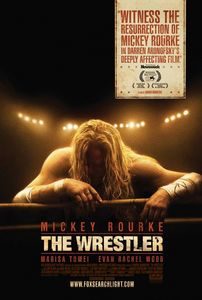
    (In theaters, February 2009) I’m never too fond of the tragic dramatic arc, especially when it’s applied to characters who are somewhat sympathetic. And that may be the greatest achievement of Mickey Rourke in portraying the titular washed-up wrestler: Give us the impression that despite everything else, he’s still a winner. But don’t expect glam or triumph here, as we go from New Jersey strip clubs to New Jersey gyms and New Jersey small auditoriums. The Wrestler is trying to piece his life back together, but as all great tragic heroes, he’s got a few flaws that make it impossible for him to do so. The film ends in mid-flight, but the ultimate conclusion is clear. Harsh and gritty, at times too much so, The Wrestler isn’t a particularly good time at the movies, but it knows what it’s attempting to do, and it revolves around a fabulous performance. Compared to most of the Oscar-worthy class of 2008, it’s already not too bad.

  • Valkyrie (2008)

    Valkyrie (2008)

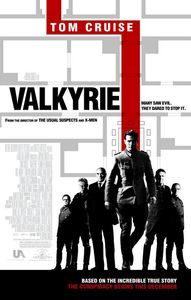
    (In theaters, February 2009) It’s Nazis-versus-Nazis in this film adapted from one of World War 2’s most intriguing footnotes: the culmination of various plans by Germans to assassinate Hitler and seize control of the government. Of course, the fact that the plot remains a footnote is the biggest problem facing the film: We know that it won’t succeed, and we can guess the fate that awaits the co-conspirators. But working within those limits, Valkyrie accomplishes a modest success: It creates enough suspense even through a tremendous amount of exposition, and seems to remain generally true to the historical facts even when they don’t suit the purposes of a conventional thriller. Tom Cruise himself is competent in the lead role, although the often-unrecognizable group of high-caliber actors that surround him often given more remarkable performances. It all adds up to an entertaining, respectable film, made with old-school polish. (There’s also a few strong links to be made between this film and other recent German depictions of WW2 from inside the Nazi regime, like Downfall and Black Book) Hollywood has a hard enough time with facts that any half-decent attempt to stick to them should be applauded.

  • Taken (2008)

    Taken (2008)

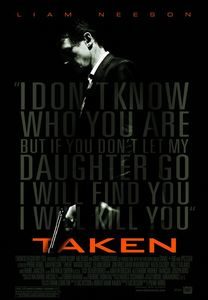
    (In theaters, February 2009) In the small universe of exploitation thrillers, there are few surer recipes than the old kidnapping plot. This one complicates the formula a bit by putting an A-list dramatic actor such as Liam Neeson in the protagonist’s role and making him an ex-CIA operative with serious skills. The rest is pure crunchy B-movie fun, with little deviation from the expected conclusion. It may not be deep, but it’s competent to such a point that it’s hard to believe that the same screenwriters responsible for this script also wrote the flaccid Transporter 3. Still, co-writer Luc Besson’s heavy touch may be lighter here, but it’s hardly unrecognizable: the French police forces are just as reliably corrupt as in his usual films, and he can’t resist goosing the premise with an over-the-top white-slaving excuse. The direction is unequal (the hand-to-hand combat is good, for instance, but the car chases are incoherent), but the whole film generally holds up better than most B-grade thrillers seen lately. Neeson gives the film some unexpected gravitas that goes much to make it look respectable. Hardly memorable, but generally irreproachable.

  • The Enemy, Lee Child

    The Enemy, Lee Child

    Dell, 2004 (2007 reprint), 464 pages, C$10.99 mmpb, ISBN 978-0-440-24101-0

    Every Jack Reacher thriller is slightly different, and The Enemy‘s claim to distinction is obvious from the second page: It’s 1990 again, and Reacher is a Military Policeman on duty as the world changes decades. Elsewhere in the world, Germany is tearing down the Berlin Wall, and American forces are chasing Noriega in Panama. But those concerns quickly become secondary to Reacher as he’s put on his first case of the year: The murder of a general in a motel where rooms are rented by the hour.

    This looks bad, but it quickly gets worse after Reacher starts digging: The General’s wife is violently killed hours after the death of her husband, and more victims drop dead as the novel advances. Reacher, clearly, has a lot of work to do, which is all very curious since he’s just been transferred to his post. But that’s only the tip of the iceberg, as he discovers that he’s hardly the only MP to have been moved around in the past few days…

    As a gimmick, the old prequel is fast becoming a favorite of writers of all stripes. It gives a chance to reset the clock, see the character in classic top shape, and provide cute nods for series fans as they get cameos from series regulars. The Enemy is no exception, but as you may expect from a Lee Child novel, it also has the decency to provide a solid story along the way.

    For Reacher fans, The Enemy‘s most compelling aspect is to see Reacher in his element, firmly entrenched within the army, and at a level where his investigative skills can be brought to bear on interesting issues. Life within the US military is completely different from civilian life, and Reacher knows all there is to know about it. He’s in a position of minor power, with an assistant and a lot of leeway on how to do his job. But Reacher is always at his best against obstacles, and the massive reorganization of Military Policemen around the world also means that he’s got a new boss, and that his superior doesn’t seem all that competent. In fact, he pretty much orders Reacher to shut the investigation down, something that does little to stop Reacher. By mid-book, Reacher is essentially acting rogue, trying to pierce together the pieces of the puzzle before running out of time.

    But the very-early 1990s are also a tough period for him: His mother isn’t doing so well, and it’s an excuse for Reacher to go visit her in France, along with his brother Joe. Before the end of the novel, Reacher will learn a few troubling things about his own lineage.

    As with all Reacher adventures, The Enemy is a gleefully enjoyable mixture of procedural details and structural misdirection. It’s also one of the purest mysteries that Reacher has had to investigate so far: Despite the thrilling tank battle that marks the conclusion of the story, this novel is a straight-up investigation. The ramifications and reasons for the crimes Reacher is investigating go high up the hierarchy of the Army, but the investigation is a mixture of police work, tenacity and pure luck.

    It goes without saying that it’s also delivered with some of the cleanest, most compelling prose in the entire thriller genre. Child is a best-selling professional, and The Enemy is a pure delight for fans and neophytes both. While newcomers to the Reacher series will be able to get by, those who have read the rest of the Reacher books will recognize a few familiar names, and there’s a good chance that The Enemy has seeded a few more familiar faces that we’ll see in the next few Reacher adventures.

    As always, it’s tough waiting along for the next one; once readers have clued into the fact that Child is among the best, it’s hard not to read them all as quickly as possible.