Author: Christian Sauvé

  • Hide-Out (1934)

    Hide-Out (1934)

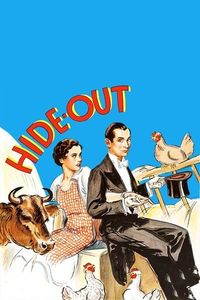
    (On Cable TV, December 2021) As much as I’d like to say something interesting or enlightening about Hide-Out, it’s the kind of film that’s good enough to escape snarky comments about its shortcomings but not good enough to get ringing praise. The plot isn’t that complex, as a wounded womanizing mobster ends up on a farm and spends his recovery time falling for the farmer’s daughter. There’s clearly a lot of comedy to be mined in how our urbane protagonist has to adapt to the farm — and some obvious romantic material with the daughter as well. It works more often than not — director W. S. Van Dyke clearly knows what he’s doing even with a middle-of-the-road script, and the acting benefits from the professionalism of Robert Montgomery and Maureen O’Sullivan — as well as an early role for Mickey Rooney. Hide-Out is entertaining even if not particularly memorable — and it ends on a sweet high note, ensuring a nice finish for the audience.

  • Hallelujah (1929)

    Hallelujah (1929)

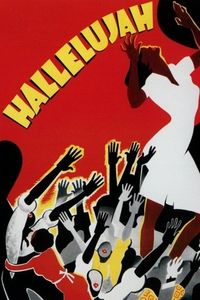
    (On Cable TV, December 2021) The history of black representation in Hollywood is long and embarrassing — and it usually gets more problematic the farther back you go. It’s understandable to approach Hallelujah with some wariness: After all, the 1920s were not always a hotbed of film progressivism, and the idea of a white director tackling an all-Black musical could have been terrible. Fortunately, that director ends up being King Vidor, one of the best and most humanistic directors of the time and someone who had some experience with the film’s topic. As a result, while Hallelujah is clearly stereotyped in the ways a privileged white director could portray an “other,” it’s also an uncommonly sympathetic portrayal of deep-south rural black communities, and a remarkable document chronicling approximations of black culture at the time. (It’s sobering to think that, even two years earlier, it would have been filmed as a silent film and been much poorer for it.) It’s moralistic in the ways most movies were at the time, but there’s an empathy built into the execution that makes the result interesting despite its flaws. I did like Nina Mae McKinney quite a bit in the thankless of the seductive fallen woman. Perhaps the most negative thing to be said about Hallelujah is that it probably influenced decades of less-than-inspiring depictions of black characters in Hollywood… but that should not be held against a film that’s still more impressive for what it does than for what it doesn’t.

  • The Babysitter: Killer Queen (2020)

    The Babysitter: Killer Queen (2020)

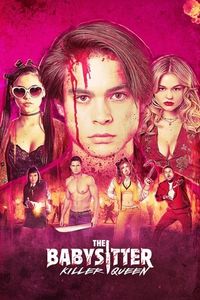
    (Netflix Streaming, December 2021) Well, I suppose that’s where we are in Netflix’s evolution as a content creator: greenlighting sequels to anything of theirs that even looks like a success, no matter how justified those sequels can be. The Babysitter was, to its credit, a fun film: a comedy featuring a teenager, his babysitter and an evil satanic plot to sacrifice him. While overly violent and profane, it did harken back to some 1980s-style horror films, with McG’s dynamic writing and directing being a good fit for the material. This sequel picks up two years later, with our protagonist still dealing with the aftermath of the events. While older, he still can’t get anyone to buy into his version of events and remains a social outcast. The film begins as things get wild once again: a weekend outing lands him in another satanic plot, and there’s only the creepy new girl to help him out… or will she? Clearly taking after its predecessor (all the way to a memorable title card as the film abruptly flips into horror), Killer Queen doubles on the profanity and gore even when it shouldn’t, but is on firmer ground in extending the story. It’s not always harmonious: bringing back much of the previous film’s cast feels somewhat useless (especially when they die almost immediately) and the first half doesn’t fully justify the sequel. Things thankfully get more convoluted and interesting in the back-half, with a returning character coming back in a slightly different role and reinforcing the bridge between both movies. Pacing is an issue, with the film taking too long to get to its destination. But while Killer Queen is not great and arguably not even good, McG’s execution can camouflage some of the issues in his screenplay and it’s entertaining enough if you’ve seen the first film.

  • To all the Boys: P.S. I Still Love You (2020)

    To all the Boys: P.S. I Still Love You (2020)

    (Netflix Streaming, December 2021) Romantic comedies should not have sequels. They cheapen the climax of the previous film, break the illusion of a happily ever after and often simply drag on meaningless romantic tension longer than it should. Now that Netflix is getting into the YA romance genre, it’s also greenlighting adaptation of trilogies and what’s the point of that? Still, there are always exceptions and while To all the Boys: P.S. I Still Love You may have the year’s most unwieldy title, it’s also an interesting argument in favour of romance sequels. As you may recall from the previous film, our story picks up soon after our very likable high-school heroine’s first romantic kiss. But given the age and inexperience of the protagonist, there’s a lot of ground to cover — indecision, jealousy, new romantic prospects and more! For older viewers, there’s something half exasperating, half endearing about the way our protagonist overcomplicates relationship questions that older people have learned to deal with: for high-schoolers, everything is new and fresh and extreme and terrifying and that’s perhaps the part of the film that works best as a sequel. Free of the origin story of the characters, To all the Boys: P.S. I Still Love You is free to poke at the complications that come after the romantic climax. Some of the material is overdone, obviously: the heroine’s lack of maturity can be irritating and the contrivances put in her way often veer into the melodramatic. Still, much of the film’s ability to overcome those issues stems from some decent writing and a sympathetic protagonist played by Lana Condor. The flip-side of that is that if you’re not already invested in the characters, it’s going to be a much longer sit. Still, it works in spite of my prejudices against romantic sequels. (But not all Netflix YA romantic sequels-in-a-trilogy are made alike — if you want something worse, there’s always The Kissing Booth 2.)

  • A Madea Christmas (2013)

    A Madea Christmas (2013)

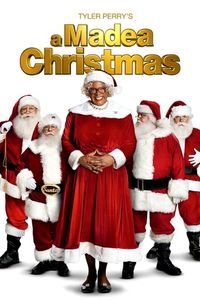
    (On Cable TV, December 2021) Tyler Perry goes Christmasy with A Madea Christmas, heading to a small town that is having problems putting up a Christmas show, and to a newlywed interracial couple receiving their parents for the holidays. While the guests include two jovial white redneck parents (one of them played by Larry the Cable Guy) and one black mother, Perry makes an interesting choice in having the mother being the one with racist issues preventing her from appreciating her daughter’s happiness. There’s a Big Lie to unravel along the way (the white husband initially being presented to her as “the help”) and some perfunctory anti-corporate rhetoric to unravel in town, but the rest of A Madea Christmas is rather straightforward. Occasionally highlights include the comic upmanship between Perry-as-Madea and Larry the Cable Guy: You wouldn’t think that two comic personas would mesh well—but they do, and I have a feeling (bolstered by the end credits outtakes) that Perry was unusually generous in letting the other actor ad-lib some of the best replies. (There’s also an unusually witty scripted line in “When she had them dreams, was they in color or black-and-white?”)  Perry’s approach here is very familiar, with Madea used rather well in a supporting role that allows her to play the troubleshooter. The family drama is usually more interesting than the fights with other neighbours or the small-town attempts to put on a Christmas show. Tika Sumpter looks terrific as one half of the interracial couple, but other than Larry the Cable Guy, this is not a film that plays in elaborate casting. A Madea Christmas is far too often too blunt to be any good, but it gets to its Christmas-spirit through an unusual path, and at this point I’m such a Madea fan that “more of the same” sounds like a good deal to me, especially in the indulgent lead-up to Christmas.

  • Dead of Night (1945)

    Dead of Night (1945)

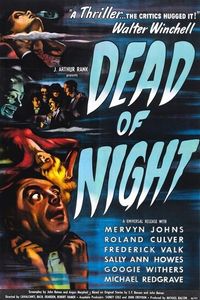
    (On TV, December 2021) If Dead of Night feels just a little bit too obvious and familiar today, it’s because it has proven to be so influential — as an anthology of five eerie stories, it clearly inspired many, many imitators — to the point where its best ideas (such as a ventriloquist controlled by his murderous doll) now seem to be clichés. But horror circa-1945 was far more sedate than today’s genre films, and so Dead of Night’s impact on its intended audiences (especially as a relatively rare example of 1940s British horror) cannot be properly appreciated by twenty-first century viewers. The result may feel a bit bland today — the five segments can be mildly interesting, with a decent framing device to tie it up together. (Amazingly enough, the framing device is said to have partially inspired astrophysicist and SF writer Fred Hoyle in his theory of a steady-state universe.)  While most segments are straightforward eerie narratives (more spooky than scary, in keeping with the standards of the time), the fourth segment does for a more comedic approach. While best appreciated as a historical piece, Dead of Night still carries some entertainment value: the premises may now have crossed into cliché, but their execution is not bad and the period atmosphere can be intriguing in itself.

  • Ludo (2020)

    Ludo (2020)

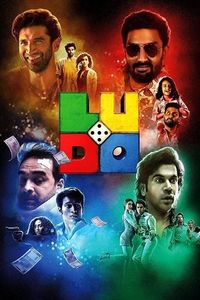
    (Netflix Streaming, December 2021) I still have a lot of Indian films to watch before making sweeping statements about the nation’s cinema(s), but I have more often than not been disappointed in what I’ve seen. The Indian films I’ve seen, especially those that consciously avoid the masala tradition, are often stuck in a paternalistic context — overly deferential to authorities, needlessly apologetic for innocuous material, and heavily conservative even when highlighting their progressivism. Indian films don’t speak to audiences at their own level, and they would be significantly better if they did. Well, here’s Ludo to bolster my assertion: As an ensemble black comedy dealing with criminals, complex criss-crossing fates and just a little bit of magical realism, it’s one of the most enjoyable Indian films I’ve seen lately, and it’s executed in a style that addresses modern moviegoers with all of the sophistication, wit and energy that they can expect. The framing device has two supernatural beings philosophizing about life, death, fate, and morality as encapsulated by the game of Ludo, while they witness the increasingly wild events to consume the story’s four main characters. Taking inspiration from the game board, each of them is colour-coded for our convenience — something that goes from their clothes to the dominant colours of the scenes in which they’re featured. Writer-director Anurag Basu has a lot to do in blending a complex story in 150 minutes — Ludo is a touch too long, but not unjustifiably so. The four strands of his story take place in a semi-comic criminal underworld, but some of them are funnier (or more tragic) than other strands, giving a result that is differentiated without being incoherent. It’s vivid, colourful and energetic, with some flashbacks to fracture the story even more. As someone with a thing for cute bespectacled curly brunettes, it was hard to pick between Sanya Malhotra and Pearle Maaney — but all of the actors have something to do here, no matter whether they deal with Internet pornography, reuniting with their estranged daughter, suitcases of money, or rising above being supporting characters. Comparisons with the British school of dark crime comedies à la Guy Richie are lofty but not entirely unfounded. The plotting gets a bit too contrived in the last third, and some judicious editing (especially at the script level) could have helped the film feel more cohesive. Still, I had a great time watching Ludo — far more than better-known Indian films of recent vintage, and I hope that it announces more enjoyable examples of Indian cinema than what I’ve seen recently.
  • ’Til Death Do Us Part (2017)

    ’Til Death Do Us Part (2017)

    (On Cable TV, December 2021) You never know what hornet’s nest you’re going to uncover when you do research on a film to inform a review. I was going to open this capsule with “the only thing funnier than a BET-original comedy is a BET-original thriller” and riff from there, but a look at writer-director Chris B. Stokes’ filmography and assorted news items revealed that he’s the one behind some of the most disappointing films of the channel, and that his non-Wikipedia search results are a wild ride of a very lengthy filmography, a previous music career and more tabloid-worthy articles than I care to care about—none of them mentioned in what reads like a scrubbed-clean Wikipedia page. It’s so interesting that I’m having a struggle getting back to the movie ’Til Death Do Us Part, and some of that is due to a lack of interest in the film itself. Why does Stokes, with a filmography of over thirty productions spanning multiple genres, remain so inept at putting a film together? I understand production limits (simply getting movies done on time and on budget will get you far in the industry), but considering that BET keeps hiring him as a writer-director-producer, I’m flummoxed at why the results aren’t better. I’m not saying they’re terrible: there’s usually a spark of lurid interest in most of his films, but that seldom translates into an effective execution. Much of that is true for ’Til Death Do Us Part: As the film begins with the wedding of a picture-perfect couple, it doesn’t take a lot of time for the husband to turn abusive for some reason. What follows is a blend of thrills and romance, as the wife fakes her death, moves away, meets a much better man but then has to contend with a third act in which the husband tracks her down and does the usual attempted-murderous thing. It ends very much like you’d expect. Some of it plays well, although much of the plotting remains arbitrary and clunky. Other elements simply seem melodramatic and contrived, such as having a new mother (and an infant!) battling an intruder in a surprisingly large house. But I won’t begrudge the wildness of the ride, as it’s often the biggest reason to watch, even as everything else is just dumb or trite. Having an excuse to look at Stoke’s filmography, I’m left more bemused than anything else: churning out an average of two movies per year (now with miniseries!), he doesn’t seem able to go beyond a fairly basic level of filmmaking. He does have good actors backing him up in this case (Annie Ilonzeh is not bad, and Taye Diggs brings his usual charm to the supporting role of the better man) but his cinematography is pedestrian and his scripts show clear signs of being slapped together from obvious plot points. The results are perhaps best appreciated at some distance. I’m not saying that ’Til Death Do Us Part is worth a look, but I’m not saying that it’s to avoid either.

  • The Cheyenne Social Club (1970)

    The Cheyenne Social Club (1970)

    (On Cable TV, December 2021) I have no doubt that the filmmakers behind The Cheyenne Social Club did exactly what they intended in casting James Stewart as a cowboy who inherits a brothel. Even at a time when New Hollywood was breaking all of the rules, Stewart’s aw-shucks appeal meant that this wasn’t a film that was out to offend sensibilities. At best, it uses the suggestion of naughtiness as a lure, but doesn’t do anything that could be misconstrued as offensive. (The closest it gets to actual naughtiness is in its repeated suggestions that the house of ill repute is actually a boon for the town… and clearly not of ill repute.)  Stewart plays a laconic cowboy thrust in a situation he doesn’t want — it’s a rather familiar role, and the demands of the comedy don’t stretch his range too much either. Where the film does get more interesting is in pairing him with his good friend Henry Fonda in front of the camera, with none other than Gene Kelly as a director. The plot is thin to the point of aimlessness, an impression that is not helped by a rather disappointing conclusion that fails to show growth for the protagonist. Except that maybe that’s the point — such a fundamentally conservative film (despite Kelly’s often-bawdy instincts) could not end in any other way, and that’s probably the biggest joke in the entire story. Still, even with its flaws and lack of audacity, The Cheyenne Social Club remains a smooth film to watch — more light-hearted than many of Stewart’s previous westerns, and with some cleavage on display. I don’t think it fully uses the elements at its disposal, but that’s the case for most movies anyway. The paying public probably wouldn’t have stood for anything too daring.

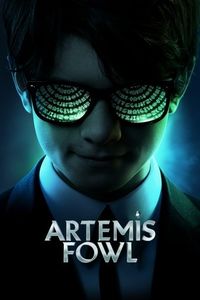
  • Artemis Fowl (2020)

    Artemis Fowl (2020)

    (Disney Streaming, December 2021) There’s a point, not terribly far into Artemis Fowl, when I found myself openly wondering how a film with such over-the-top elements ended up being so incredibly and thoroughly boring. Prisoner of its own delusions, it’s a film so innately convinced that it’s awesome that it forgets to put in all of the work required to actually make it awesome. It really doesn’t help that the title character is introduced as an insufferable know-it-all with a penchant for provocation, and that little of what follows helps in making the character any more likable. (I suppose there’s a public for an aspirational Young Adult novel featuring a mastermind criminal, but what works on the page doesn’t always work on-screen.)  Drunk on Irish mythology and its own cleverness, the script fails to make an underground elven civilization any more interesting than countless other meaningless CGI extravaganzas. It’s rather amazing that such top talent as Kenneth Branagh (as director), Judi Dench (in a major role) or Colin Farrel (actually rather good in another small supporting role) are involved, because the entire thing is hollow from top to bottom — from a ludicrous screenplay to by-the-number execution, the film simply fails to achieve anything with what it has at its disposal. (Actually, Dench does have the film’s best line, although her delivery of “Top o’ the morning” is more a situational gag than anything worth a chuckle by itself.)  There’s a clearly a franchise-building intent here, but the execution is so inept that few will regret what looks like dead-on-arrival prospects for further instalments. Even by the standards of one-and-done aborted YA series, Artemis Fowl is particularly dreadful.

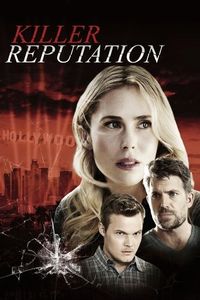
  • Killer Reputation (2019)

    Killer Reputation (2019)

    (In French, On TV, December 2021) If you thought Lifetime-broadcast romantic comedies were ludicrous, you clearly haven’t seen their thrillers yet. I was drawn to Killer Reputation for its Hollywood setting and subject matter: the premise has something to do with a PR professional defending an actor from accusations of murder despite tabloid TV scrutiny and another killer on the loose. That’s not a bad premise, actually, but doing it justice would mean much better dialogue, directing and acting than we get here. It would also mean focusing on suspense thriller elements rather than having danger and murder being mere pretext for a romantic triangle between the protagonist and two dangerous men. Oh that’s rightKiller Reputation may present itself as a thriller, but in Lifetime channel tradition it’s solidly a romance. Accordingly, the plotting is incredibly weak, and the threats ludicrous — by the time a character somehow finds herself in a carbon monoxide trap, we’re there wondering how that happens more than being concerned for her safety. (She gets rescued before the next commercial break anyway.)  Despite the lead character’s protests of being a professional, everything about her actions screams romantic contrivances (the biggest being hosting a fugitive in her own house). The ending is trite to the point of being irritating, with very little surprise as to what happens. No one associated with the film gets a badge of honour: Director Ben Meyerson gets the thing done, hopefully on budget, while lead actress Anna Hutchison can apparently hit her marks and not much more. The Los Angeles-setting isn’t particularly inspiring, and there’s no real look behind the scenes of the Hollywood ecosystem. Considering the pedigree of Killer Reputation, I shouldn’t be disappointed… and yet the result simply doesn’t satisfy.

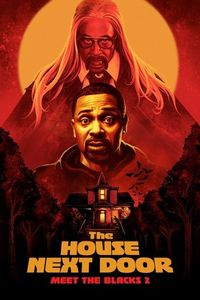
  • The House Next Door aka Meet the Blacks 2 (2021)

    The House Next Door aka Meet the Blacks 2 (2021)

    (On Cable TV, December 2021) I’m fond of silly comedies spoofing other genres, so there’s something in the vampire spoof of The House Next Door that provides at least a solid hook. I haven’t seen the first Meet the Blacks yet, but it’s not as if the basics are difficult to understand: When an average family sees a new strange neighbour move into the house next door, they can’t help but notice clues that something supernatural is afoot. Their suspicions are later proven right when the neighbour ends up being a vampire with a fixation on the protagonist’s wife. It’s a big blend of familiar tropes used as an excuse for Mike Epps (as the family-man protagonist) and Katt Williams (as the vampire antagonist) to goof around. Some of the material works, but let’s not pretend that this is good or particularly funny: the dialogue doesn’t fly high, and the jokes are seldom anything but obvious. The House Next Door has a straight-up male gaze, which would be far more enjoyable if the female characters had something interesting to do. But no — the focus here is on the guys and it’s not as if they’re worth the entire spotlight. Sure, it’s fun to see Danny Trejo and Snoop Dog appear for brief roles, but even their cameos can’t sustain the rest of the film when it sputters through familiar arcs and overextended jokes falling flat. The House Next Door, despite some indulgence and the combined attractiveness of Shamea Morton, Bresha Webb and Jena Frumes, remains a disappointing outing, not even successful at aping a Wayans-Brothers kind of comedy (which itself apes other better material). It wasn’t a complete waste of time, but I can’t see myself recommending most of it.

  • The Wild One (1953)

    The Wild One (1953)

    (On Cable TV, December 2021) Some of the fun in watching older “social issues” movies is how quaint they can feel. The barely repressed panic of The Wild One, for instance, consists in imagining the terrible things that could happen if some of those strange and scary motorcycle enthusiasts would take over a town for the weekend, rampaging through God-fearing innocent folks. (Admittedly all inspired by a rather sensationalistic account of the Hollister Riot.) Nowadays, of course, some cities voluntarily create events for bikers — and the spectre of social disorder has been transferred to other groups. Still, the world of The Wild One is built to accommodate Marlon Brandon as a swaggering biker — but a good one that fights against the truly evil bikers (their leader played by a magnificent Lee Marvin) and romances the village’s purest girl along the way. It’s schematic, but much of the interest of the film is in the methods it uses (safely limited by the demands of the Production Code) to create social terror among its viewers, and then somehow manage to make a likable character out of Brando’s performance. The Wild One reflects an interesting juncture in post-WW2 American history, as biker gangs emerged as organized groups — but take the “inspired by a real story” tack with some indulgence.

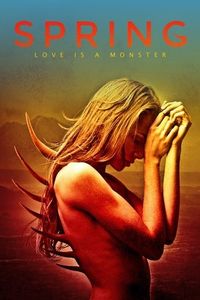
  • Spring (2014)

    Spring (2014)

    (On Cable TV, December 2021) There’s an intriguing mixture of genres at play in Spring, as a young man’s romantic holiday becomes something much stranger along the way. It begins in depressingly gritty dramatic territory, as our protagonist buries his long-suffering mother and finds himself eager to get out of town. Once on the shores of the Mediterranean, the film shifts in romantic mode as he meets a very strange young woman who seems to harbour a deep secret. That discovery lands us in horror territory, but what sets Spring apart from countless other femmes fatales of horror vintage is that it doesn’t stop there — it keeps going further in its premise, bringing the film close to a science-fictional examination of an extraordinary but still plausible premise. But Spring is not done yet — the climactic suspense of the film is to see whether it’s going to land in horror or romance, and while the answer is unsatisfying, it’s not quite so simple as what other genre films would have chosen. You can certainly argue that the script is slightly better than the low-budget execution, and that there are maybe one or two less-essential subplots to slow things down. Still, writers-directors-producers Justin Benson and Aaron Moorhead do rather well with a limited budget, and pack a few shocks along the way. Lou Taylor Pucci is fine in the lead role, but it’s Nadia Hilker who has the more difficult role as a flirty/mysterious/preoccupied young woman who’s really something else. Some nice Italian scenery completes the package for a surprisingly engaging film. Spring is probably not the film you expect, and that’s quite a relief in a landscape of intensely formulaic horror films that would all have gone in a very predictable direction.

  • Rebound (2005)

    Rebound (2005)

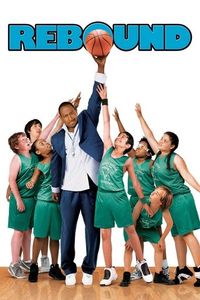
    (On TV, December 2021) I know that filmmaking is a complex, backbreaking, thankless business involving hundreds of professionals doing their best. And yet, the first thing that comes to mind in watching comedy Rebound is how lazy it feels. Lazy in conception, as a famous college basketball coach is fired for ungentlemanly conduct and finds accepting a high school basketball coach position out of desperation. Lazy in how it recycles dozens of underdog sports clichés in building its inept basketball team. Lazy in the jokes it attempts, lazy in the character relationship it builds, and lazy in the formulaic way it goes about its plotting. Lazy in its unimaginative direction from Steve Carr, lazy in its unremarkable execution. Also lazy in the broad choices made by Martin Lawrence in playing the protagonist—although there’s little surprise here. Oh, Patrick Warburton and Megan Mullally show up in short but competent supporting role (while a very young Alia Shawkat makes for a fun teen sportscaster) but that’s stretching to find things to say about a very unremarkable sports comedy aimed at kids. Rebound is not terrible, but it just sits there, merely making the minimum required for entertainment.