Author: Christian Sauvé

  • Mahanagar [The Big City] (1963)

    Mahanagar [The Big City] (1963)

    (On Cable TV, December 2021) As someone who bounces off writer-director Satyajit Ray’s films with unbecoming ease, I thought I had it all figured out when I deliberately selected The Big City to lull myself to sleep during a bout of insomnia: After complaining that his films were snooze-inducing, why not use that to my own benefit? Surprisingly, it did not work:  I really got into the film, as it follows the adventures of a middle-class wife who gets a job and upsets the power balance of her family. A terrific performance from Madhabi Mukherjee (playing off a frequently-irritating turn from Anil Chatterjee) anchors the entire film, but Ray’s script is interesting on a moment-to-moment basis even as we can see the big plotting threads evolve throughout. The portrait of early-1960s Calcutta is fascinating, in-between the clashing cultures left in the wake of the British occupation, and the lively everyday mixture of languages. My attempts to go to sleep went nowhere — I just wanted to see where things were going next. The ending is slightly too open-ended for my taste, but The Big City itself is a surprisingly accessible piece of neorealism whose effectiveness went past my usual objections.

  • Christmas Movie Magic (2021)

    Christmas Movie Magic (2021)

    (On Cable TV, December 2021) By now, I’ve seen enough Hallmark-style Christmas movies that I have resigned myself to evaluate them on their own merits, and to expect the usual formula repeated ad nauseam. These are not meant to be ambitious movies — they follow a formula because the audience demands it, and they go for a no-frill execution because that’s the cost-efficient budget they’re working with. So, imagine my surprise when I realized that Christmas Movie Magic was going for slightly more than the usual “City girl goes back to small town for Christmas, falls in love, the end”: Oh, that’s still the plot, but it doesn’t quite cover the added complications of the details. Here, the story has to do with the journalist protagonist writing about a small town where a classic Christmas film (think something like “It’s a Wonderful Life” with musical numbers) was filmed. This means that Christmas Movie Magic at least has to go through the motions of presenting a credible Holiday classic, figure out the details of its production and voluntarily blur the lines between the present-day action and the re-creation of the classic film. This culminates in a final scene of very unusual ambition for these kinds of film: a musical number blurring both timelines with good production values. Of course, director Robert Vaughn doesn’t have what it takes (budget, actors, time, skills) to do more than being ambitious: it doesn’t quite reach the level where we forget that this is a low-budget Christmas romantic comedy, nor does it embarrass itself with fine writing along the way. But I have to respect the attempt: coupled with the focus on classic cinema (always a way to get into my good graces), Christmas Movie Magic makes a much better and stronger impression than most of the formulaic stuff that plays on cable TV during December. Despite some flat acting and graceless dialogue, I may even give it another go next year. Or at least let it play while I do something else.

  • The Great Lie (1941)

    The Great Lie (1941)

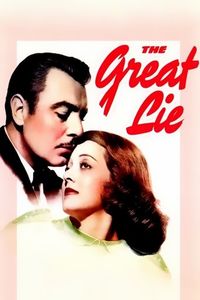
    (On Cable TV, December 2021) The melodrama flies thick and fast in The Great Lie, as the film begins with a romantic triangle that is almost immediately complicated by the abrupt death of one of the principals, his impregnation of a second, and the third’s attempts to purchase the resulting child to raise on her own. Oh yes, this is soap-opera material in classic Hollywood fashion, with pesky marriages and reappearances always ruining everything. Fortunately, good execution compensates for weak source material: With Bette Davis and Mary Astor taking up most of the scenes, they at least give it all they’ve got in the acting department. (They also reportedly rewrote much of the dialogue to suit themselves, which is enough to make anyone wonder just how bad the original script was.)  Astor won an Oscar for her troubles, and Davis escapes unscathed from the ludicrous narrative. By no means an essential film unless you’re running down Oscar-winning performances, The Great Lie can be entertaining as an example of the sort of melodramatic silliness that Classic Hollywood often attempted, but it’s a relief to see it being rescued by its lead actresses.

  • Shang-Chi and the Legend of the Ten Rings (2021)

    Shang-Chi and the Legend of the Ten Rings (2021)

    (Disney Streaming, December 2021) We’re at an interesting juncture in the Marvel Cinematic Universe, having concluded the first decade of the series with a climactic event. The focus right now seems to be on building a next generation of characters, burnishing the series’ progressive credentials and trying a few new things in the wake of a conclusion of sorts. As such, maybe a bit of sputtering is inevitable: Black Widow was a reheated plate of déjà vu, while Shang-Chi and the Legend of the Ten Rings is only notable if you’ve never seen anything in the Chinese fantastic martial arts tradition. (Which, admittedly, is probably the case for most western audiences.)  As someone who has watched a lot of eastern fantasy martial arts movies starting back in the early 2000s, I felt more antsy than anything else during much of Shang-Chi’s second half. The first one is clearly better: as an underachieving young man discovers his otherworldly pedigree, the film begins grounded in the here-and-now, with Awkwafina providing a sarcastic audience stand-in as things get weirder and weirder. Simu Liu is fine as the lead, although time will tell if he’s able to parlay this specific success into something more lasting. The top moment of the film has to be a fight aboard a 60-foot articulated bus — having ridden on near-identical buses for a long time, that sequence exceeded my wildest fantasies borne out of transit boredom. But as Shang-Chi’s action moves away from San Francisco to the Chinese supernatural underworld and then another realm entirely, everything felt increasingly familiar, and even Michelle Yeoh can’t make the entire thing stick together — as it went on, Awkwafina’s character felt duller and duller, absent her amazement on behalf of the audience. The final battle felt like a chore more than anything else. Links with the MCU so far are thin — other than Benedict Wong showing up briefly, a few references to the Snap and the usual credit teasers, Shang-Chi is a standalone film meant to launch a new character. In some ways, this lack of satisfaction is inevitable: the series is once again in build-up mode, but the expectations are much higher this time around. Next up is Eternals, although from the vantage point of being a patient viewer, I can already see the very bad reviews for the theatrical release…

  • The Entertainer (1960)

    The Entertainer (1960)

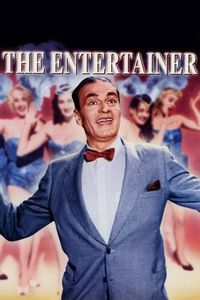
    (On Cable TV, December 2021) For all of the self-serving myth-making that actors sustain about the profession of acting, there’s something more interesting to say about The Entertainer’s merciless look at a failed performer, one steadily heading toward irrelevance as the world moves on. The film takes place on a seaside British town, the kind of summer destination with performing halls fit for tourists. It’s a near-perfect playground for our protagonist (honestly played by Laurence Olivier), even if it’s in his own mind: As he performs to smaller and smaller crowds, his egocentrism prevents him from seeing how his life is falling apart — his repeated affairs harming his second marriage, his brother off to war, his father getting older, the music-hall tradition going away, and his commercial appeal being practically gone. Filmed in stark black-and-white by director Tony Richardson with an equally unsentimental script, The Entertainer is the cautionary tale warning anyone against an acting career. It’s really not a fun time at the movies, but the seedy atmosphere of desperation permeates the character and gives the film a still-unique feeling.

  • His House (2020)

    His House (2020)

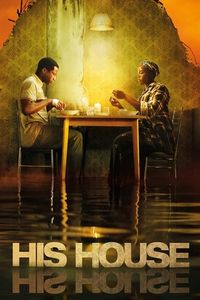
    (Netflix Streaming, December 2021) As far as premises go, blending a haunted-house story with an immigrant drama of culture shock is not bad at all: in the tradition of the best horror movies being less about monsters and more about a theme literally represented, His House presents an unusual take on an overly familiar topic, and manages to say something halfway interesting along the way. Our protagonists are an immigrant couple having made it to Great Britain despite terrible hardships, including the death of their daughter. Hardly greeted with open arms, they find themselves in a terrible apartment with some blunt directives: Don’t make trouble. Obey the law. Fit in. Or else: deportation. But that considerable burden becomes even more difficult to bear when a supernatural apparition starts haunting their new apartment: a presence out for revenge and the recognition of past wrongs. There’s an interpretation of His House that sustains a psychological drama angle — it’s all in the protagonist’s head, and the holes he knocks in the walls of the apartment reflect his errant state of mind. But while such an explanation may make academic dullards gleeful, it’s also the most boring. Far better to perceive the monster as a monster in addition to the incarnation of a metaphor. The rest of writer-director Remi Weekes’s film isn’t always so interesting, though: While there’s a caustic argument going on between husband and wife about whether they want to stay in the United Kingdom (this isn’t a heartwarming story of immigration), much of the film is a slow burn all the way to the final confrontation. Still, His House has more to say than the average horror film, and an angle of its material that feels unusual enough to be interesting.

  • The Wrong Missy (2020)

    The Wrong Missy (2020)

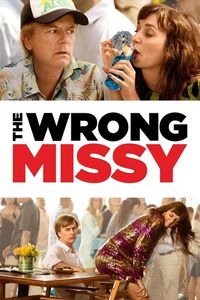
    (Netflix Streaming, December 2021) In making a romantic comedy film centred around an obnoxious character, there’s a tricky balance between irritation and, for lack of a better word, redemption: how far can you push the actions of a character before making them completely unlikable for the rest of the film? Part of it has to do with skillful screenwriting and the other has to do with competent casting. A good actor can make the best even out of standard material written by mediocre craftsmen. So given that The Wrong Missy has to do with a middle-aged businessman (David Spade, looking his age) on a Hawaiian holiday getting swept up with a hyperactive woman with poor understanding of consent and boundaries, well, you have to get a strong actress in that part. Fortunately, the film had the good luck of stumbling on Lauren Lapkus — someone with a proven track record of making the best out of poor material (in Watson and Holmes, namely). In her hands, the “wrong” Missy keeps a thin edge of likability even through the worst possible actions of the film’s first two acts, even when bluntly handled by director Tyler Spindel and the rest of the Happy Madison production crew. This is really not a sophisticated film: the humour is crude, scatological and borderline repulsive. (Those consent issues? Yeah — a gender-flipped take on the same story would be incendiary.)  But Lapkus owns The Wrong Missy’s best moments and makes the worst tolerable until the third act gets down to more conventional likability. That’s not much of a recommendation, but it’s more than the film would have deserved with a lesser lead actress.

  • I vitelloni (1953)

    I vitelloni (1953)

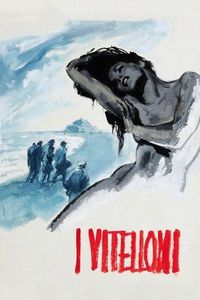
    (On Cable TV, December 2021) I’m a big fan of early-phase Fellini— too mimetic, too dull, too realistic for my tastes. I vitelloni, being the adventures of four young men yearning to get out of their small Italian town, is clearly in the neorealist vein, but you can already see some of the flamboyance that would characterize and distinguish later-phase Fellini. As a slice-of-life kind of film (until the protagonist gets a revelation and acts on it), there are fun parts and not-so-fun ones. My appreciation for I vitelloni is limited, but that goes for pretty much all of Italian neorealism.

  • Lust in the Dust (1984)

    Lust in the Dust (1984)

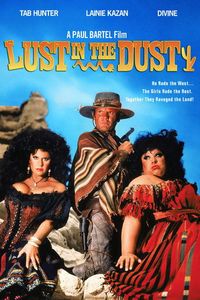
    (On Cable TV, December 2021) As far as western comedies go, Lust in the Dust hits a very specific and rather sweet spot of camp flamboyance, ribald naughtiness and over-the-top absurdity. Divine stars as a rotund dancehall girl lost in the desert, where she encounters a taciturn cowboy (Tab Hunter, no less) and goes treasure hunting with the help of strategically tattooed maps. As comedies go, this one combines a dumb premise with weird characters, unusual situations and good one-liners even if the rhythm is uneven throughout. Still, Divine does well as the unravishable heroine (and the cross-dressing aspect hasn’t aged as badly as you’d think), while Lainie Kazan and Gina Gallego provide much of the nudity and raunch that make the film even funnier. By the time the film works itself off to a mutual stand-off above a treasure, well, we’re satisfied. Director Paul Bartel’s filmography is all over the place when it comes to comedy (Everything from Cannonball to Eating Raoul) and Lust in the Dust doesn’t clarify anything about his approach. While the result can’t be called a great comedy, it’s watchable and funny enough to be worth a look.

  • The Tender Trap (1955)

    The Tender Trap (1955)

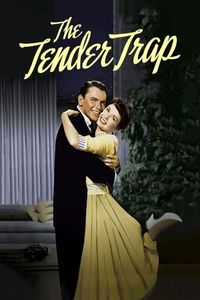
    (On Cable TV, December 2021) Even from sixty-five years later, it’s easy to see the hook of The Tender Trap. No, not the catchy title song that became a Frank Sinatra signature tune, but the concept of a proto-sex-comedy opposing legendary womanizer Sinatra with pure-as-snow Debbie Reynolds in a battle of the sexes on the way to matrimony. Sinatra plays the bachelor of many men’s dreams, with a high-paying job allowing him to afford swanky clothes and a killer Manhattan bachelor’s pad. Such is his appeal that when a friend decides to leave his married Midwestern life behind, he immediately heads over there to crash as he figures out what to do, and takes advantage of a few female friends feeling neglected by the protagonist. Said protagonist is only too happy juggling numerous conquests, except when one of them, an ultra-organized monogamous gal (Reynolds), seems worth giving up everything. It’s all pleasant enough in a Mad-Men-inspiration vein — even for a film explicitly dealing with an unrepentant bachelor and a wayward husband, the tone is so resolutely restrained that it seems almost likable. There’s an interesting line to draw from The Tender Trap to the more freewheeling sex comedies of the 1960s — in fact, many viewers may have trouble believing it’s not a 1960s film. Sinatra is just as compelling as usual, and there’s a rather good scene in which Reynolds, then Sinatra, then Reynolds again take on the title song, each time making it richer and more interesting in its delivery. David Wayne (looking a lot like Daniel Craig!) is also a highlight as the married man taking a holiday — although the film certainly does not dwell on what he’s up to when he takes one of his friend’s regulars on late-night dates. It’s all quite amusing (as long as you can buy into the fantasy of a Manhattan playboy, that is), bolstered by Sinatra and Reynolds at their most charming and some clean crisp 1950s colour cinematography. The Tender Trap certainly paved the way for more daring films to follow, and fits comfortably in the string of New York City-set sex comedies of the following decade and a half.

  • Adam Had Four Sons (1941)

    Adam Had Four Sons (1941)

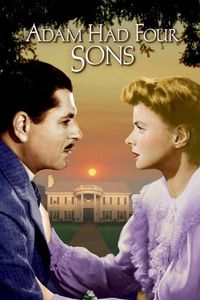
    (On Cable TV, December 2021) No one will ever mistake Adam Had Four Sons for anything but the straight-up domestic romantic thriller it aimed for — with a lovely governess (Ingrid Bergman, looking gorgeous) filling in for a dead mother and sniffing out a gold-digging harridan putting her claws into an easily flummoxed son. The story stretches over a few years, although much of the second and third act settles down in a shorter period after an extended opening featuring a great-looking Fay Wray as the soon-to-be-deceased mother. Then Susan Hayward takes centre stage as the adulterous, deceiving, booze-swilling, money-grubbing outsider who comes to steal the family fortune and seduce whoever she can to fulfill her role. (Meanwhile, our heroine is utterly chaste — but she does, as expected, ends up with the family patriarch once everything has been cleared up. The three lead actresses are unusually attractive here, but even that doesn’t do much to make up for the rather obvious script. This being said, there’s still some fun to be had even when knowing where it’s going: Hayward is deliciously evil here, and anticipating the melodramatic (melodomestic?) plot beats is almost as much fun as being surprised. Adam Had Four Sons is all rather pleasant in the end, with the bonus of seeing Bergman in an early Hollywood role—playing a Frenchwoman!

  • Eye of the Cat (1969)

    Eye of the Cat (1969)

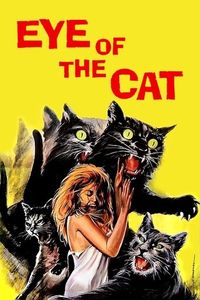
    (In French, On Cable TV, December 2021) As a very happy cat owner, I’m always dumbfounded when otherwise-likable people profess not liking cats — how can you not? But as it turns out, cats are probably the scariest of common pets and movies like Eye of the Cat certainly play on it, with the result outdoing a number of horror films of the era. The decently-budgeted production takes place in San Francisco, and at least one scene takes full advantage of the location, with director David Lowell Rich pitting a wheelchair-bound character against the steep hills of the city. Otherwise, the script plays with familiar elements — rich eccentric cat lady planning to give her inheritance to her cats; money-hungry relatives hungry for the inheritance; and groups of cats intent on killing bad humans. It’s ridiculous to see the usual tricks being used to make the cats look evil, and the script doesn’t rise much above some obvious material. It may be worth a look by cat-haters and cat-lovers alike, but just one: it’s more interesting as a diverting curio than a conventionally good film. Considering that Eye of the Cat wasn’t the first nor the last cat horror film, there’s probably a filmography to put together for feline friends and fiends.

  • Calamity Jane (1953)

    Calamity Jane (1953)

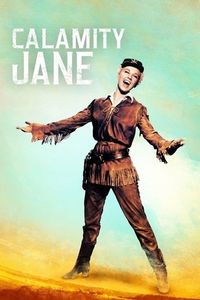
    (On Cable TV, December 2021) A common criticism of classic Hollywood westerns and musicals alike is that the most average of them all blur together in one indistinct mass. That’s certainly an issue in the first act of Calamity Jane — even in its specific niche as a western musical focused on a female sharpshooter, it feels almost too much like Annie, Get Your Gun (whose commercial success directly led to this film) to be wholly distinct — something reinforced by the tomboy presentation of both brassy heroines and male romantic interests coming from the same factory. It does get slightly better as the film goes on, as it focuses on an actress visiting a small western town and getting into shenanigans with Jane. Clearly comic and certainly not historically accurate, Calamity Jane eventually acquires its own distinction — especially, as other commentators have pointed out, when the film’s two female lead characters start cohabitating and we find ourselves in proto-queer cinema territory. More conventionally, Doris Day is fine (but no more) as the lead, while Howard Keel is surprisingly bland as the male lead and Allyn Ann McLerie gets one of her most noteworthy roles as a maid passing herself off as an actress — she does look terrific onstage. Some comic set-pieces work well, even if the film feels too long (especially in the first act, before all characters are introduced). By the end, Calamity Jane has done enough to distinguish itself and even pass itself off as a middle-tier musical. I doubt, however, that I’ll revisit this one any time soon, except if I forget that I’ve seen it in the first place.

  • Rebecca (2020)

    Rebecca (2020)

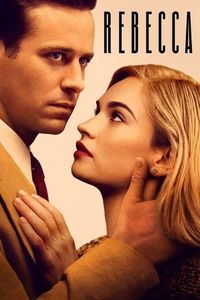
    (Netflix Streaming, December 2021) As someone with a surprising fondness for the original Daphne Du Maurier novel Rebecca and some admiration for the 1940 Alfred Hitchcock film, I was curiously ambivalent about the idea of a remake. Maybe there should be a statute in the Academy Awards that Best Pictures should not be remade. Maybe, on the other hand, a modern look at the classic gothic romance would be interesting in itself. This 2020 version of Rebecca, as it turns out, is somewhere in the middle. Director Ben Wheatley established himself as a director of oddball projects, so he wasn’t necessarily a bad choice here… but the result seems beneath what one could expect from him. I have some appreciation for how the film adapts and changes its tone and visual language as the story advances — surprisingly light, sunny and colourful in the first act as our heroine meets a rich man and falls in love with him during a whirlwind vacation romance. Then, as the story moves to the unsettling Manderley domain, everything gradually darkens and becomes grimmer, all the way to the late film’s murder and incarceration subplot. By the third act, we’re deep in gothic suspense, queer cinema subtext, our heroine doing her best to free the man she loves and the final, celebrated finale. Rebecca works and doesn’t betray the original novel, but the result is likely to be forgotten remarkably quickly — it’s decent but hardly exceptional.

  • Ningen no jôken [The Human Condition I: No Greater Love] (1959)

    Ningen no jôken [The Human Condition I: No Greater Love] (1959)

    (On Cable TV, October 2021) There’s a lot to like in The Human Condition I: No Greater Love — at least in theory. The story of a Japanese pacifist being recruited as an instrument of warfare during the early days of WW2, it’s a story that works best in detailing the efforts he makes to improve the conditions of the prisoners, even going against his superiors in order to do so. The fragile peace he brokers involves prostitutes, prisoners, work quotas and the support of his loving wife. As I said — interesting stuff… if it wasn’t for the backbreaking, patience-sapping three hours and a half running time, half of it redundant or useless. But director Masaki Kobayashi is not interested in snappy storytelling: he’s halfway into art-film territory here, with a focus on the leisurely examination of the themes of the novels from which the story is taken. As the title suggests, this is the first part of a nine-hour trilogy — and things are not set to improve for our protagonist. I’m sure I’ll see the other films… but I’m not in a hurry to do so.