Author: Christian Sauvé

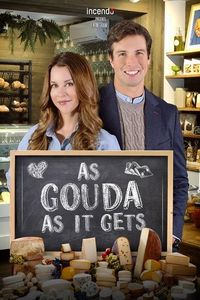
  • As Gouda as it Gets (2020)

    As Gouda as it Gets (2020)

    (On Cable TV, November 2021) How can you resist a film with a title like As Gouda as it Gets? Sure, it’s a Hallmark-type small-town romantic comedy, firmly set in the food subgenre. No, it doesn’t have anything to do with the similar you’re Bacon Me Crazy. Frankly, the title sets the bar a bit too high — the film isn’t as witty, funny or memorable as how it presents itself. But it does remain a pleasant little diversion. In a slight variation from the routine plot, our story has to do with a small-town Vermont artisan cheesemaker named Brie who encounters a famous food commentator (and ex-chef) who has come from some big city to the rural town where everything takes place. There’s a cheese festival underway, and among the other esteemed guests is the president of a vast cheese-making conglomerate who’s there to act (briefly) as a false romantic rival and (constantly) as a business competitor. There are no surprises in the plot, but the look at the cheese-making can be intriguing — and food is one area where many food-themed romantic comedies often falter. The rural Vermont atmosphere feels nice, but the movie itself was shot in and around Montréal, accounting for the familiarity. (This is the first film I’ve seen that includes a few thanks to the small town of Hudson, QC — a stop on the way between Montréal and Ottawa.)  Kim Shaw is fine as the lead character, with some assistance from Clayton James as the romantic interest. The rest of the film is on autopilot — although the almost-absurd refusal to have any kind of unpleasantness gets funny after a while: who knew evil CEOs could be so reasonable? And what about a year’s entire cheese production ruined but not being much more than an excuse for our lovers to cook together? It’s that kind of movie — amiable, predictable, hunger-inducing (yes, I have purchased some smoked Gouda between watching the film and writing this review) and utterly comforting. That’s not necessarily a bad thing, especially as a counterbalance to the kinds of sadistic horror films that make up too much of my viewing these days.
  • Modern Persuasion (2020)

    Modern Persuasion (2020)

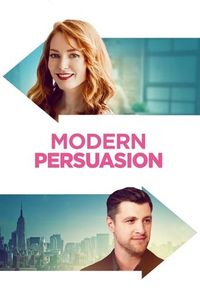
    (On Cable TV, November 2021) Expectations matter a lot in how reviewers approach movies. You can take a look at Modern Persuasion and come away with two different conclusions simply based on what you know about it beforehand. If you come at it having read the Jane Austen repertoire, you already know that it’s a (as the title says) modern retelling of Austen’s last novel Persuasion… and you’re not likely to be impressed. Even a casual trawl of reviews available on the web will show a recurring theme of literate reviewers being disappointed in the adaptation. But not everyone has read the novel, and this is one of the cases where ignorance is an advantage. (Wait, did I really write this?)  Viewers coming to Modern Persuasion expecting just an average romantic comedy — or better yet, coming off a string of bottom-grade Hallmark movies—are likely to get a different impression with striking characters and blisteringly fast-paced dialogue. Our heroine is that favourite of modern romances: the funny, capable, beautiful heroine who, somehow, doesn’t have time for a boyfriend and so remains completely available when an old flame (well, the one old flame) walks back in her life, flush with dot-com cash. We all know where this is going, but Modern Persuasion does have the good sense to push the supporting cast to hilarious extremes and to layer rapid-fire dialogue to keep our attention. Alicia Witt does well in the lead role, but the supporting cast is filled with scene-stealers, most notably Liza Lapira as an outspoken pregnant lesbian, Mark Moses as an older executive trying to stay hip, and Bebe Neuwirth perfectly in her element as a sharp-tongued aunt. The dialogue is what powers most of Modern Persuasion — running at a mile a minute, piling up elaborate similes with punchlines in a way that may be exhausting but always worth a listen. The result is not without its weaker moments — there’s an attempt at creating suspense over an engagement that doesn’t work, for instance, and you can certainly argue that the cast is slightly too large to be consistently interesting. But as far as contemporary comedies featuring urban professionals, I can think of several worse choices than Modern Persuasion. Just don’t expect it to be the second coming of Jane Austen.

  • When Sparks Fly (2014)

    When Sparks Fly (2014)

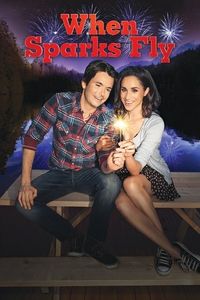
    (On Cable TV, November 2021) Let’s face it: viewers seldom, if ever, choose to watch those formula Hallmark romantic comedies because of the casting. Acting talent is usually redundant in those films — replaceable, undistinguishable, and seldom remarkable. But I had two cast-related reasons to give a chance to When Sparks Fly:  Having a look at one of Meaghan Markle’s last feature-length roles before she got swept up in the British Royals madness, and dropping in on Lochlyn Munroe, a Canadian actor whose early turns as a supporting character in Hollywood comedies never quite panned out to a major career. (Not that he’s likely complaining: unlike many of his contemporaries, Munroe is still steadily working, even now.)  The plot itself is unremarkable except in its details, as (all together now:) a young career professional goes back to her hometown, meets her old flame and helps the town with something. In this case, there’s some interest in the fireworks subplot (her parents have a fireworks company, the town can’t afford the fireworks they already paid for, and nobody dares mention the breach-of-contract lawsuits waiting in the wings) or in the specific details of how the film will handle the jilted fiancé when he’s not such a bad guy. (There’s never any surprise in this film, so if your money is on the two lead couples swapping partners, well, you don’t get any points.)  So, what’s left besides some unobtrusive directing, splendid British Columbia landscapes (decked in Fourth-of-July paraphernalia), comforting screenwriting and grade-school-level dialogue? Well, Markle does have the advantage of being significantly more attractive than the usual Hallmark heroine. (There’s a science to it — Hallmark viewers won’t accept anyone hotter than “cute” in those movies.)  Meanwhile, Munroe is affable enough in the undemanding role of a good-guy-fiancée-who’s-just-not-The-One. Knowing that wraps up my interest in When Sparks Fly, which is perhaps slightly better than your average Hallmark romantic comedy, but not by much. It only takes one of those films to understand whether you’re going to like them all or not.

  • The Girl Who Had Everything (1953)

    The Girl Who Had Everything (1953)

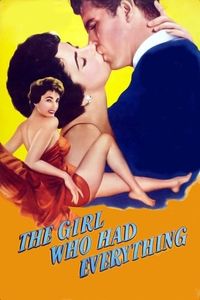
    (On Cable TV, November 2021) One of the advantages of knowing more and more about Classic Hollywood is that from time to time, you discover a lesser-known film that draws you in just by virtue of casting. William Powell and Elizabeth Taylor belong to different generations of film history, but The Girl Who Had Everything has the distinction of pairing them off as father and daughter, in one of Powell’s last roles and one of Taylor’s ascending ones. (She was 21 at the time of the film’s release, and transitioning from ingenue to sex-symbol roles.)  The plot, borrowed from a play, has Powell as a lawyer, a doting widowed father very much concerned about his daughter when she starts going out with a career criminal — a client of his, to complicate things. Taylor is in her element as an ingenue pushing back against a famous actor in a fatherly role (such as in Father of the Bride and Father’s Little Dividend, with Spencer Tracy), but Powell is not quite at ease in a role decidedly less comic than his usual persona. Still, he’s as compelling as always, and he helps the film go over a few rough patches on its way to a very predictable father-knows-best ending. With those two stars, The Girl Who Had Everything is not a bad film nor a bad time… but there’s a reason why the film seldom springs to mind as an essential.

  • Airport ’77 (1977)

    Airport ’77 (1977)

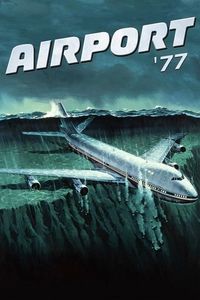
    (In French, On TV, November 2021) By 1977, both the Airport series and the disaster-movie subgenre had evolved to make the existence of a ludicrous film like Airport ’77 inevitable. While the first Airport was an ensemble melodrama enlivened with some techno-thriller elements, the success of its imitators focused on the thrills and by the time the follow-ups came around, the drama was clearly an accessory to the spectacle, although it allowed some Classic Hollywood superstars one last go at box-office gold. So it is that one of the two most engaging elements of Airport ’77 is James Stewart, with a relatively small role as the owner of an airline—so proud of his newest plane that he loads it up with invaluable treasures right before it’s set to travel from New York to the Caribbean, with none other than Jack Lemmon playing the plane’s pilot. But this wouldn’t be a disaster without a disaster, and so thieves drug the passengers, steal the valuables and make a dumb mistake that sends the plane crashing into the ocean and settling down a few metres down the surface. The other asset of the film kicks in at that point — a relatively credible description of how such a disaster would be tackled by the US Navy (with some assistance from series mascot George Kennedy), slipping large balloons underneath the wings of the plan to raise it up to the surface so that passengers can be rescued. (Let’s all agree to ignore the extremely high likelihood of the plane breaking up upon hitting the ocean in the first place.)  Stewart, Lemmon and the US Navy don’t quite add up to a completely enjoyable film, but they do help rescue it from disaster. I don’t necessarily count the unlikeliness of the plotting against Airport ’77 — it’s a disaster film, after all. But there’s still too much dead weight, too many bog-standard subplots, and too little of a climax to cap things off. It fits with the other films of the series… even if the steady drop-off in quality becomes more and more obvious.

  • The Great Train Robbery (1903)

    The Great Train Robbery (1903)

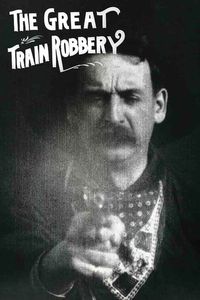
    (On Cable TV, November 2021) There’s not much to say about The Great Train Robbery that hasn’t been said by everyone else in the past 110 years or so — it’s one of the earliest narrative American films, even if Wikipedia reports that its influence over Hollywood and the Western was relatively negligible. Technically, writer-director Edwin S. Porter’s film is rough beyond belief — although special effects are used in surprising ways more akin to their modern use as moviemaking shortcuts (that is — replacing a window frame with pre-shot content, simplifying the shot) than spectacles by themselves. And still, much of the narrative film (which ends very abruptly) is made forgettable by its last final shot, of a criminal pointing a gun at the viewer and shooting. At twelve minutes and such a low video quality that it doesn’t matter in which resolution it’s seen, The Great Train Robbery is short and available widely enough to be a painless essential viewing for anyone even remotely interested in cinema history.

  • Madea’s Witness Protection (2012)

    Madea’s Witness Protection (2012)

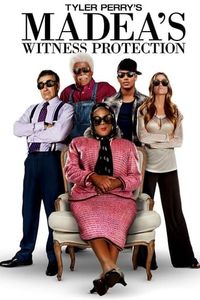
    (On Cable TV, November 2021) Perhaps slightly more overly comedic than other Tyler Perry films, Madea’s Witness Protection combines a stock comic premise with Perry’s outspoken character to produce something that doesn’t fly high, but scores a few chuckles along the way. Some of the credit goes to the casting, with Eugene Levy anchoring the plot as an incompetent CFO left holding the bag after some corporate embezzlement. Through criss-crossing plot coincidences that would be unacceptable anywhere but in a Perry comedy, he and his dysfunctional family soon find themselves relocated in Madea’s house, with the elderly woman free to set them straight. The third act eventually has the protagonists striking back against the (unseen) fraudsters, leading to an upbeat ending. This is all clearly playing into Tyler’s wheelhouse, as he plays three roles and gets to be both the serious anchor as much as the comic powerhouse, with Madea using some folksy wisdom to whip an upper-class white family into shape. I won’t get into the plotting coincidence that litter the entire script (all the way to hidden links being revealed between the characters), nor the fairly easy humour that peppers the script, especially during the fish-out-of-water third act designed to let Madea rampage through New York City. I started looking at Perry’s filmography out of curiosity but now, something like eight films in, I’m actually becoming something of a fan despite the sloppiness of the scripts and bare-bones directing — it’s a comfortable universe, Madea is a good character (albeit rarely as fully exploited as she could be) and Perry does deliver something of a very specific take. Madea’s Witness Protection does have the advantage of not taking very daring dramatic swings, making the comic result easier to accept.

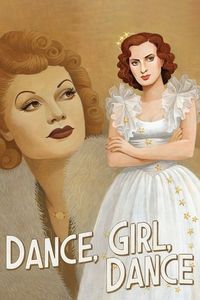
  • Dance, Girl, Dance (1940)

    Dance, Girl, Dance (1940)

    (On Cable TV, November 2021) One of Lucille Ball’s better early starring roles, Dance, Girl, Dance has her as a burlesque dancer, competing with a higher-class ballerina (Maureen O’Hara, playing up her distinguished persona) for the affections of a rich heir. In many ways, it’s a very conventional film of its time: Broadway stories were exceptionally commonplace in 1930s Hollywood, and it takes a while for the result to distinguish itself. But it eventually does in its third act — through a (now tame, but then-daring) burlesque striptease from Ball, through a memorable onstage fight between its two female leads, through a script that clearly places the focus on its female characters, and perhaps most visibly through director Dorothy Arzner’s unimpressed depiction of the men attending strip shows. That’s not too bad for a 1940 film — and as a piece of Ball’s filmography, it’s clearly an essential.

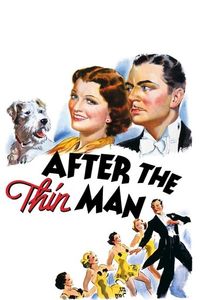
  • After the Thin Man (1936)

    After the Thin Man (1936)

    (On DVD, November 2021) Nick and Norah Charles are back for more married-couple high society sleuthing in After the Thin Man, this time going to their hometown of San Francisco for witty repartee and dead bodies. Their triumphant return home is marked by a welcome party they haven’t asked for and, in fact, flee whenever they have the chance. Murder soon follows. As was the case in the first film, the chemistry between William Powell and Myrna Loy (as the very charming married couple trading quips and tracking down killers) is far more interesting than the nuts and bolts of the investigation. Whenever the plot gets going, viewers will wonder when the comedy will get back on track. Still, there are a few noteworthy things about the non-funny scenes: James Stewart is the biggest of them, as his turn as a young romantic premier becomes something quite atypical in his filmography—enough so to make some of his fans very uneasy. Still, it’s Powell and Loy who are the stars here, and the final sequence, in which the usual suspects are brought together, works more on Powell’s pure charm than his deductive talents. Twenty-first century viewers may be particularly interested in the character played by William Law, a rare Asian actor in a cast of Caucasians — and while his role is clearly racist, it eventually ends up portrayed in a somewhat interesting light. As a follow-up to the first The Thin Man, it clearly hits upon the same notes (albeit tempered by the then-recent introduction of the Hays Code) and provides most of the same thrills — namely the comic romance rather than the crime mystery.

  • The Fuller Brush Girl (1950)

    The Fuller Brush Girl (1950)

    (On Cable TV, November 2021) By 1950, Lucille Ball was on the cusp of superstardom considering that her epochal TV show I Love Lucy was only a year away from broadcast. In a way, The Fuller Brush Girl is the last film of an era for her — by that time, she was widely recognized as a leading comedienne and her mastery of physical comedy was much stronger than her earlier films. The Fuller Brush Girl (a sequel to the Red Skelton vehicle The Fuller Brush Man) lets Ball free to unleash her comic talents as a ditzy woman pressed in evermore ludicrous situations in the midst of a murder investigation. Reuniting several key creative talents from the previous (and similarly funny) Miss Grant Takes Richmond, the film seems tailored to Ball’s strengths. It’s not quite as funny as it could have been, but it’s still a vastly entertaining showcase for Ball, in the midst of a rather ordinary comedy.

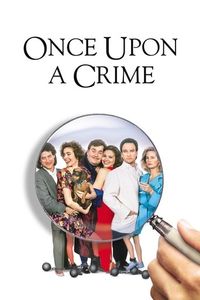
  • Once Upon a Crime… (1992)

    Once Upon a Crime… (1992)

    (In French, On Cable TV, November 2021) On paper, there are a lot of things to like about Once Upon a Crime: Noted comedian Eugene Levy directing a complex ensemble comedy with a cast featuring John Candy, James Belushi, Cybill Shepherd and Sean Young gallivanting around Monte Carlo in the search of justice, money and a dog. Unfortunately, the plodding result can’t match the promise of its premise. The Monaco scenery barely makes an impression, but the script itself is even more of a nonentity: while you can recognize that the film is trying to be funny, its various attempts fall flat. It doesn’t help that some of the actors aren’t playing on the same register: Candy, in particular, is doing his broad Candy stuff while the rest of the film is going for a more screwball tone. Most of the actors don’t do much with the rather limited material they’re given, and the result does not amuse nor impress. More of a misfire than an outright miss, Once Upon a Crime is not particularly impressive.

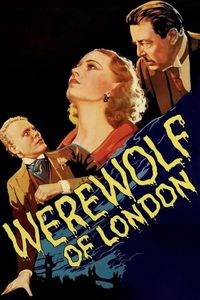
  • Werewolf of London (1935)

    Werewolf of London (1935)

    (On Blu-Ray, November 2021) Considering the large number of werewolf movies in Hollywood history, titles such as Werewolf of London (which predates Lon Chaney Jr.’s classic The Wolfman by six years) are often better appreciated for their specific quirks than their overall stories — there are only so many ways a werewolf origin story can go, after all. In this specific case, the distinction is one of geography and similarity — after a Tibetan-set prologue, much of the action movies to London, lending the film an atmosphere that is perhaps less similar to other rural-set werewolf films and owes more to Dr. Jekyll and Mr. Hyde as an obvious touch point. (This is even more pronounced here considering the impact that the Fredrick March version of Dr. Jekyll and Mr. Hyde, released two years earlier, could have had on director Stuart Walker.)  As for the effectiveness of the film, well, it depends on whether you’re in the mood for a werewolf origin story set in early-twentieth-century London — with the caveat that you may want to consider whether you’ve had your fill of Jekyll/Hyde stories as well. By today’s standards, Werewolf of London’s plot will feel basic — placing even more emphasis on atmosphere as the reason to see the film.

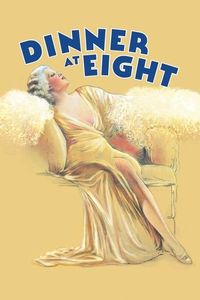
  • Dinner at Eight (1933)

    Dinner at Eight (1933)

    (On DVD, November 2021) Some movies make for fascinating viewing because they’re dated, and so much of Dinner at Eight’s charm comes from some witty writing showing early-1930s Manhattan socialites trying to put together a fancy dinner party. This is an excuse to go and explore the lives of the invited guests, as the ever-changing line-up of the dinner party features archetypes and preoccupations of the time. Unlike many films of the 1930s, Dinner at Eight does not ignore the Great Depression, nor (as a Pre-Code film) does it shy away from upsetting sensibilities with subplots of adultery, suicide, desperation and terminal illness. Although clearly put together as drama, the script has some exceptional dialogue that makes it feel vastly funnier than it ought to be. (It’s a logical link between the comedies-of-manner from the Edwardian Era and the Screwball Hollywood comedies.)  Conceived as a star-studded epic drama in the footsteps of the previous year’s Grand Hotel, the film can boast of an impressive cast if you’re up to your early-sound film superstars: Marie Dressler, John and Lionel Barrymore, as well as Jean Harlow are the standout names, but the more you know about the era, the more the cast will seem impressive. While technically rough in the way most early-sound-era films were, the dialogue and acting are still exceptional (with a few allowances made for how standards have evolved) and manage to impress. But it’s still Dinner at Eight’s look at circa-1933 New York that works best, with a thick web of contemporary allusions, characters of their times, and assumptions that almost feel alien today.

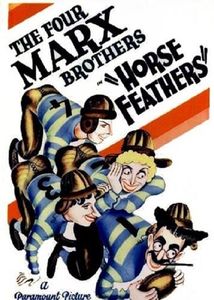
  • Horse Feathers (1932)

    Horse Feathers (1932)

    (On DVD, November 2021) Alas, it is with a mournful tone that I announce having reached the end of the Marx Brothers filmography. Oh, I still have a few odds and ends to follow-up, and a few more standalone Groucho roles to see, but Horse Feathers marks the last of the Paramount Fives. It may also be the least of those Fives — taking place in the still very familiar environment of college football, it features Groucho as a college president, Zeppo as his football-playing son, Chico as a semi-underworld figure and Harpo doing whatever Harpo wants to do. The plot purports to have something to do with hiring pro football players to help a college team win, but no one ever watches Marx Brothers films for their plot: it’s all about the gags and jokes and simply seeing the Brothers do their own thing, whether it’s a string of non sequiturs, harp playing or pure vaudeville gags. It’s all quite funny, although not quite as funny as their other films of the period: there isn’t much in terms of sustained comic sequences or memorable sight gags: even the dialogue is amusing without being striking. There are a few musical numbers (most of them thankfully more comic than heartfelt, unlike their later MGM efforts) and some intriguing period detail — the presence of a “college widow” as a significant supporting character led me to a trip in the dusty hallways of outdated tropes. Still, Horse Feathers is not a dull movie: there’s nearly always something going on, and the Brothers’ way of hitting several comic registers in quick succession remains one of their more remarkable traits. If Horse Feathers is a goodbye film, then it’s not a disappointing one. It’s not their best… but not their worst either.

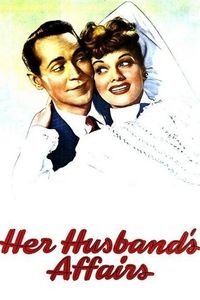
  • Her Husband’s Affairs (1947)

    Her Husband’s Affairs (1947)

    (On Cable TV, November 2021) Before becoming The Lucy of I Love Lucy, Lucille Ball spent more than a decade working in movies, honing her comic timing in a series of vehicles that made good use of her skills. It’s interesting to see her progressively transforming throughout the 1940s, from a funny but still-generic debutante to the blend of tics, hairstyles and stares that would make up the more fully formed Lucille Ball of the 1950s and beyond. Her Husband’s Affair comes from the latter half of that process, at a time when Hollywood was beginning to understand what an asset Ball was, and was shaping scripts to her strengths. Here, she plays the level-headed foil to Franchot Tone’s eccentric husband, eventually rescuing him from a murder accusation but not before suffering through a long series of comic set-pieces loosely focused on wild and crazy inventions with unforeseen impacts. As far as even light comedies go, there’s a surprising lack of impact to Her Husband’s Affairs. Despite the proto-Lucy Ricardo flair to some of her material, Ball isn’t quite as interesting as she should be — there’s a sense that her character is being held back from the lunacy she could portray. Meanwhile, the same can be said about everything else in the film: despite its potential, Her Husband’s Affairs merely exists contently, getting a few smiles where there should be chuckles and laughs. It’s amiable enough and not a complete waste of time, but there are several much better films from the same time and genre. See it for Ball, maybe, but there’s not much else.