Author: Christian Sauvé

  • Dragonfly (2002)

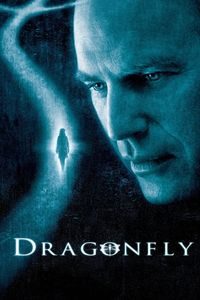
    Dragonfly (2002)

    (On DVD, August 2003) Fans of angels tearjerkers are sure to go gaga over this latest Tom Shadyak schmaltz-fest (it’s like Patch Adams, except with less laughs and more dead people). Others, like me, are unlikely to be impressed. While the hackneyed story would have had a certain interest at, maybe, “Twilight Zone” lengths, it more than overstays its welcome at 106 minutes. The outline of the story is obvious from the get-go, and so is the conclusion. Worse; the third act is stretched over an interminable 30 minutes despite an almost total lack of content. I suppose that this is scarcely of importance to people interested in this kind of feel-good life-after-death formula film. Kevin Costner isn’t too bad as the protagonist, and that assessment stands for most of the other actors.

  • Divine Secrets Of The Ya-Ya Sisterhood (2002)

    Divine Secrets Of The Ya-Ya Sisterhood (2002)

    (On DVD, August 2003) There seems to be an insatiable appetite for twisted multi-generational family redemption stories and this film is only another one of those. Characters hate each other, bicker, are forced in strange circumstances and discover things about their past. The conclusion is usually preordained. What saves this film from triviality is the impressive acting talent featured for the occasion (with a nod toward the uncommon number of, er, “mature” actors assembled here) as well as the occasional sharp dialogue sprinkled here and there. It’s a sympathetic film if not a very substantial one, and your overall liking will probably notch a point or two above or below depending on your personal tolerance for this kind of stories, set in a southern United States setting and starring Sandra Bullock. Oh, and repeated cries of “Ya-ya!” –which, truth be told, can be more addictive than the film itself.

  • Life’s Lottery, Kim Newman

    Simon & Schuster UK, 1999, 488 pages, C$42.00 hc, ISBN 0-684-84016-2

    You’re at a book sale. You see a new book by Kim Newman. You’re intrigued, because Newman has produced exceptional work before (the Anno Dracula trilogy, etc.) and you’re curious to see what else he’s written since then. Reading the book jacket copy, you’re even more intrigued, because the book seems to be a “choose your own adventure” type of novel. How quaint! Good chunks of your early teenhood were spent “playing” with such books. Before you moved on to other things. You wonder what a gifted writer would be able to do with that format. The book, a British first edition hardcover, is cheap; you buy it.

    Months later, you fish the book out of your “to read” pile and dive in. From the onset, this is clearly not a juvenile piece of fiction. The first chapter is laced with allusions to free will, choice and constant death. You’re Keith Marion, a middle-class English boy. This book is your life. Your lives, rather. By the end of the second chapter, you’re already faced with a choice. A seemingly innocuous question which will determine your path through life. Answer one way, go to Chapter 2, and you may live to know romantic entanglements, success beyond measure and bizarre life replays. Answer another, go to chapter 3, and your life will be dedicated to revenge.

    You answer and read about the consequences. But more choices are available to you. By now, you have remembered your teenhood “interactive novels” routine and started mapping your choices using pen and paper. Soon, you’re paging through the book forward and back, going from chapter to chapter to choose how the story will end. After a few chapters, you meet a painful death. You go back up a node in the tree of fate and try again. And so on. You die often, but just as often you’re left to contemplate unpleasant “and so on” lives of fixed patterns.

    This may have started by reminding you of your teenage years, but Life’s Lottery is different. Unlike the simple mostly-linear branchings of those early novels, Life Lottery pulls no stops in presenting radically different lives for Keith Marion. Pretty soon, your first sheet of paper is full and you must use another one to chart the choices available to you. Your life (or is it Keith’s life?) can be a mystery, or a thriller, or a romantic drama, or science-fiction. Characters you think you know in one way can reappear in other lives in various roles, from friend to villain, wife to murderess.

    You realize that Keith’s life may be open to choices, but your perception of the book is shaped by your own reading. You may read all possible permutations, but it’s still going to be affected by your first run-through. Some elements are explained here, but not there. Mary will always be a dangerous murderess first, because you first saw her as a danger, whereas another initial path may have made her seem more pleasant.

    Without meaning to, you’re caught up in the book. You read it in two days, playing with the stories as much as Newman is playing with you. There are incredible tricks in the novel, from “replays” to parallel fates to false choices to delicious hints of deep-seated horror underlying the concept. You develop an understanding of the story that resembles a fractal, or a hologram; meta-personalities emerge.

    The novel also starts working on you. Forces you to consider your life and the choice you’ve made. You think this is one of the best things you’ve read in a while. Certainly one of the most original books in your collection. You finish the book, but the book isn’t finished with you.

    You go on-line and seek other reactions. You’re not alone. You learn that the book was never republished in America. You learn that the narrator of the novel is featured in another novel by Newman. You find that other readers were similarly affected by the book.

    Something still nags at you. You pull together your complete map of the book and start striking numbers off a list of numbers from 1 to 300. Something is left; a hidden path inside Keith’s lives, an Easter egg. You read the sequence and discover a wonderful framing sequence that (somewhat) ties it together. You consider whether this harms or strengthens the novel, and come to love it without reservations. You wonder if you should include the chapters number sequence of this hidden scenario in your review.

    You finally decide against it. Some choices should be left to others.

  • Kiln People, David Brin

    Tor, 2002, 569 pages, C$10.99 mmpb, ISBN 0-765-34261-8

    The golem has a long and distinguished history in fantastic literature, from the Bible onward, up to the Capek’s first “robots”, men of metallic clay designed to do the work of humans. David Brin’s Kiln People is a playful update on this concept, wrapped in a futuristic thriller and smoothed over with clear prose.

    In the future, there will be dittos, states Brin as a starting premise. Clay replicas of people, temporarily imprinted with their memories and personalities for up to 24 hours until the chemical dissolution of the ditto. Re-assimilation of ditto memories is possible, but remains optional. Why spend a day cleaning up the house when you can simply replicate a ditto for this express purpose, then re-integrate their memories just to make sure you remember where you’ve filed everything? Why risk policemen’s lives when you can just use dittos instead? Why subject your permanent body to sexual, chemical or physical abuse when you can send it to party all night long and then re-integrate their memories at dawn?

    Mega “What If?”! The possibilities are limitless, and that’s part of what makes the first half of Kiln People so compelling: This is a big Science-Fiction novel with a brand-new premise (does it sound like Laura J. Mixon’s Proxies, though?) and the guts to take a hard look at the possibilities of the thing. For those who still cling to the comfortable notion that SF should be a literature of ideas, well, look not further than this book to make you fall in love with the genre all over again. Brin easily integrates plenty of neat derived possibilities and runs with them through the course of the novel.

    There is a plot to tie everything together, and (perhaps unfortunately), it ends up being a complex, heavy-duty story of familial obsessions, criminal conspiracies, doomsday devices and fancy detection. The hero of the piece is one Albert Morris, private investigator extraordinaire with an uncanny ability to make very faithful dittos. (Most people have trouble creating completely-faithful versions of themselves, and occasionally create runaway dittos that don’t identify with their creators.) In the course of his work, RealAl often generates clay duplicates of himself, sending them in dangerous or boring situations, always trying to nab crooks and corporate criminals. But on one particular day where he decides to generate four dittos to make care of ongoing business, well, let’s just say that a lot of very bad things happen at once to all of him…

    Fans of the author won’t be dissatisfied by this effort, Brin’s first stand-alone adult novel since 1993’s Glory Season. His trademark blend of deep extrapolation, cheerful optimism and good humour is on full display here, in a novel that is more than worthy of attention. Those who have read Brin’s non-fiction work The Transparent Society can expect some further discussion of privacy and accountability. Stylistically, the challenges in representing five different first-person variants of the same characters are significant. And yet it’s one of Brin’s greatest successes that the viewpoint-hopping is handled almost seamlessly. (Readers with a low tolerance for puns or cliffhanger chapters may not be overly pleased, though.)

    As the novel advances, its challenges become even greater and Brin stumbles a bit. The carefully-constructed rules of dittotech are, as expected, bent and then broken by new technology. (Alas, a suggestion that dittos have their own subculture hidden from the real humans is sort of left unexplored) The progressive slide of the novel from light-hearted mystery to deeper metaphysical territory isn’t completely unexpected, but it’s a thematic departure from the initial feel of the story. It nevertheless evolves into an interesting dissection of identity and even of humanity.

    Add to that the lighthearted tone, and you’ve got an old-school pure-SF novel that works on several levels at once, and provides a great reading experience on top of everything else. I don’t ask for much more than that in my SF diet, and that’s why I’m pleased to see that Kiln People made it on the 2003 Hugo ballot for best novel of the year. It certainly has my vote.

  • The Lessons of Terror, Caleb Carr

    Random House, 2002, 272 pages, C$29.95 hc, ISBN 0-375-50843-0

    The events of September 11, 2001 had such a deep impact, in part, because they were a relatively new phenomenon. Isolated from the rest of the world by two oceans, America had seldom known the reality of terrorism. After a brief period in the seventies when airliner hijackings were the rage, terrorists seemed on their way to become an amusing shorthand for action movie villains. But surely not an actual threat, right?

    That notion collapsed along with the World Trade Center. Suddenly, Americans started to ponder important questions: Why did this happen? How do you ensure that this doesn’t happen again? In The Lessons of Terror, Caleb Carr defines terrorism, takes a look at the history of the concept and suggests a way out of terror.

    You’ve heard his name before: Among other things, Carr wrote two well-received historical thrillers (The Alienist and a follow-up, The Angel of Darkness) and one science-fiction novel (Killing Time)… which wasn’t so well-received. But Carr’s first advocation was military history and so The Lessons of Terror is a bit of a professional book for him, an historical exploration of past events in order to better understand the mechanics of terrorism.

    Far from being limited to the stereotypical bomb-packing religious fundamentalists, terrorism -according to Carr— is nothing less than the use of violence against civilian populations in order to exert pressure on a political entity. As he demonstrates, terrorism defined as such has a long history, one that has an intricate relationship with more traditional military history. The Roman empire, for instance, waged war against enemy garrisons, but then often extended the benefits of Roman citizenship to the conquered populations. When it lost sight of this good treatment of civilians, well, Carthage burned and the empire later fell, victimized by internal rebellions and stuck in a cycle of attacks and counter-attacks.

    The Lessons of Terror is largely a treatise on the history of war and its impact on civilians. It stems from terror, but touches upon subjects like the justification for war, the innocence of civilian populations, military discipline and guerrilla warfare. Carr’s (oft-repeated) main theory is that terror never succeeds: Through more than two thousand years of military history, everyone who has resorted to terror tactics has inevitably been defeated, sooner or later. It’s an encouraging statement when applied to enemies (given that the only rational solution to terrorism is to make it obvious that it’s a self-defeating tactic) but also a troubling one considering any response to terrorism; in fighting against it, the worst method is to adopt its tactics -something well worth remembering these days.

    The Lessons of Terror is billed as a military history book, but I suspect that it’s closer to a mass-market vulgarization than to a serious treatise: while the depth of Carr’s knowledge of history is impressive to laymen, the argumentation, at times, seems to rely a lot on definitive adjectives rather than a complete train of thought. For us dumb readers, it’s easy to be swayed by repetitions of “terror never works”, but not as obvious to find the crucial missing information that may argue against his thesis. One suspects that, in some ways, this is “the feel-good military history book of the year!”

    At the same time, there is no doubt that this is a book that aims for controversy. While I was rather distressed by Carr’s constant put-down of all things French at first, I felt much better when it became obvious that he’s an equal-opportunity agent provocateur: His casual inclusion of key American figures (Sherman, Jackson, Kissinger, Nixon, etc.) in his gallery of terrorists is a nice little tweak to just about everyone out there, and his sceptical view of American foreign policy is bound to get a rise from most quarters. Not to mention his badly-integrated screed against the American intelligence community.

    While I’d be ill-informed to say whether The Lessons of Terror are truly those derived by Carr, there’s no doubt that this is an entertaining, detailed and argumentative treatise well worth reading. A short book packed with a steady stream of provocative ideas, it’s as infuriating as it is fascinating. At a time where too many knee-jerk reaction to terror are being treated as sane threat responses, it’s heartening to find that someone, at least, is willing to take a longer view of the situation. When current events serve us an unexpected curve-ball, it’s reassuring to think that, on some level, it’s merely another repetition of history. There is nothing new; just unfamiliar combinations.

  • Uptown Girls (2003)

    Uptown Girls (2003)

    (In theaters, July 2003) If you like your movies with plenty of formula sugar, this is the film for you. Brittany Murphy doesn’t stretch any acting muscle by playing a slutty rich airhead with a heart of gold, and if Dakota Fanning isn’t too bad as a precocious eight-year-old, she can’t save the rest of this film from a quick slide in mediocrity. Uptown Girls isn’t bad as much as it exemplifies everything wrong with Hollywood movies that wallow in an “uplifting” false depiction of reality. The script thinks of itself as being clever, so naturally every single line comes back later to mean something important, further heightening the banal unreality of the script. Everything reaches a diabetic climax in the last few minutes, as we’re efficiently shoved in a feel-good ending that doesn’t mean much (and which can be guessed minutes in advance.) There are no sympathetic characters in this movie, only caricatures saying predetermined lines. You have already seen this movie dozens of times before. It is wholly unremarkable.

  • Lara Croft Tomb Raider: The Cradle of Life (2003)

    Lara Croft Tomb Raider: The Cradle of Life (2003)

    (In theaters, July 2003) You would think that a film dealing with Pandora’s box, starring Angelina Jolie and taking place on three continents would be more memorable than this. But no: despite the inherent interest of archaeological quests and Jolie’s chest, the film quickly dissolves away as soon as the credits roll. Director Jan de Bont turns in his least remarkable film yet (and that’s saying something considering the disaster we still remember as The Haunting), but he’s working from a lifeless script that itself doesn’t contain any moments of brilliance. Okay, so the film features a practice fight in a library; I shouldn’t ask for much more. But the dull villain (Ciarán Hinds, who deserved much better after a good turn in The Sum Of All Fears) is nearly as ineffective as the putative love interest in raising our involvement in the story. Lara Croft isn’t much of a warm and sympathetic character, and this aloofness also characterizes the rest of the film. One could say plenty of bad things about the first film, but at least it had a visual style and the go-for-broke willingness to use outlandish material like the Illuminati. This entry is more realistic, but it never takes off as an adventure despite visuals that should be spectacular. A third film is unlikely. Too bad; it’s a lousy end for a series that could have been far better.

  • Terminator 3: Rise of the Machines (2003)

    Terminator 3: Rise of the Machines (2003)

    (In theaters, July 2003) As a big fan of Terminator 2, this sequel seemed like one of the most superfluous projects of all times. If James Cameron wasn’t on board, why even bother? It’s not as if T2 needed a sequel. If you really wanted one, well, there’s plenty of fan-fiction on the Internet and indeed that’s what Terminator 3 truly feels like: Without Cameron’s vision, we’re stuck with recycled imagery, pedestrian dialogues and mere continuations of previously-established elements rather than genuinely new things. It all culminates in (ooh, aah) a female Terminator, the “genius idea” of Terminator fan-writers for more than a decade. As the film unfolds, it never completely loses its taint of fan-fiction. This is obviously not The Vision, but An Adaptation that loosely connects with the original duology. Oh, as straight entertainment, Terminator 3 succeeds far more than it fails. There’s a pretty good car chase involving remote-controlled emergency vehicles and a massive construction crane. Plus, there are a few good shootouts. The special effects are the best in the series (despite their annoying tendency to be overly blurry during fast-moving shots), culminating in some truly astonishing make-up/CGI work late in the film. Heck, even the conclusion features a cool little twist, an audacious “so there!” to the audience. But however entertaining it may become, it’s still fan fiction. Good fan fiction, maybe, but still fan fiction nonetheless.

  • Perdido Street Station, China Miéville

    Del Rey, 2000, 710 pages, C$27.00 tpb, ISBN 0-345-44302-0

    I don’t read a lot of fantasy, in part due to a feeling that it doesn’t have much to offer: locked-in traditional high fantasy is almost as rigidly defined as today’s contemporary world, and that’s a straight trip to boredom. Granted, this is less a reflection on epic fantasy than it is a reproach to the writers unwilling to re-invent a genre fatally tainted by Tolkien.

    But wait! China Miéville is a writer willing to shake it up and Perdido Street Station is the novel I’ve been waiting for. A smart blend of science-fiction and fantasy in an environment quite unlike anything ever written before, this is the kind of book that leaves a deep impression on neophytes and jaded cynics alike.

    Some novels are about characters and some are about stories, but this one is about a city: New Crobuzon. Set in an imaginary universe where kinds of magic work nearly as well as Victorian-era technology, New Crobuzon is a vast playground, a place where rivers converge, races commingle and all railways end at the gigantic Perdido Street Station.

    One character will introduce us to the city: Isaac Dan der Grimnebulin, an eccentric human with an insectoid girlfriend and an interest in a magical science called Crisis Theory. His reputation has already travelled some way and so one day he is accosted by a stranger, a mangled bird-man who has crossed half a world in order to be able to fly again. Helped along by a generous quantity of gold, Isaac soon finds himself tasked with re-creating the gift of flight. In a universe equally shaped by science and technology, this would seem to be an easy task. The only problem would be to pick only one method. But Isaac is more meticulous, and before long he’s collecting all types of creature in order to study how they fly, and how he may be able to re-create the effect.

    If Perdido Street Station has one flaw, it’s that the early part of the novel is riddled with coincidences. Isaac’s call for creatures just happens to net him a caterpillar than just happens to feed on something that her girlfriend’s manager just happens to have when he visits, and naturally his girlfriend just happens to receive a commission from someone who may know a lot more about this situation, but then Isaac just happens to be contacted by something that just happens to know of a betrayal… and so on.

    But whereas in other novels the heavy hand of authorial influence would be too obvious for comfort, it doesn’t seem to matter all that much in Perdido Street Station. This, after all, is a novel of discovery, a novel of a place rather than of plot. Not that the plot doesn’t start moving after a lengthy set-up: Pretty soon, thanks to some unfortunate events, New Crobuzon is plunged in nightmarish terror and its denizens race feverishly to find a solution. Their appeals to the lowest powers are rejected (!) and so they must appeal to an even stranger force… even as Isaac discovers an occult conspiracy he did not suspect.

    The delights of this novel are many, but few are as satisfying as the gradual discovery of the city and its inhabitants. Cactus-people, automatons, terrible dream-suckers, a dimension-shifting entity called the Weaver, insect humanoids and scores of other creatures all figure in Perdido Street Station, splendidly shown by Miéville as he delights in showing off the wonder of his world. There is a lot of material in those 710 pages.

    In some ways, this is like a dream setting for a role-playing game. In others, it’s a pleasure to see Miéville introduce all of these elements, then use them all in the road leading to the spectacular climax of the piece. There are striking images throughout the novel, whether it’s the description of the city, scenes where our characters travel through dimensions or when they witness, helplessly, creatures feeding on a victim’s mind.

    This, by almost any measure, is a major novel. Written with skill and reasonable clarity, it cuts right to the heart of fantasy to show us an original world. Characters are well-drawn, wonders are unleashed at regular intervals. There is deep horror, unconventional twists of fate, satisfying developments and heart-breaking conclusions. Modern and classical at once, Perdido Street Station combines the technological love of SF with the possibilities of fantasy and the unnerving tension of horror to deliver an experience unlike any other. Make a place in your reading stack for this book; it’s more than worth it.

  • Spy Kids 3: Game Over (2003)

    Spy Kids 3: Game Over (2003)

    (In theaters, July 2003) As a confirmed aficionado of Robert Rodriguez’s entire oeuvre, you won’t catch me saying anything overly negative about this last instalment of the Spy Kids trilogy. But it’s certainly not a betrayal if I simply state that this is the lesser film of the series and that its interest mostly lies in its 3D gimmick. As someone who wasn’t around in theatres in the early eighties for the previous revival of red-blue 3D glasses, there’s a definite curio factor in seeing such a film. Thanks to modern advances in computer animation technology, Rodriguez can essentially do an ultra-cheap CGI-packed 3D film for the pure fun of it. While the story in interesting enough in its typical Rodriguez hyperactivity, the cool CGI and unbeatable sense of fun are no match for the energy and heart-felt nature of the first two films. Oh, it’s good enough, no doubt about it: Ricardo Montalban and Daryl Sabara turn in good performances, we get to see Salma Hayek in 3D (with pigtails! woo!), Sylvester Stallone doesn’t embarrass himself, there is a great opening sequence with Juni as a private investigator and just about every Spy Kids character of note is back for the finale. The fun is infectious; the movie works rather well, but please, Hollywood, don’t use this as an excuse to make other 3D movies. One each twenty years is more than enough. As a 3D technology, red-blue glasses have to be the cheapest and the muckiest. Unless you’re willing to use polarised glasses, don’t bother.

    (Second viewing, On DVD, April 2004) Definitely the lesser of the Spy Kids trilogy, but certainly not an uninteresting film. Hailed more for its single-handed revival of 3D in theatres than its actual plot, Spy Kids 3D is still a great action film in its own right. Sure, the plot (and even the cinematography) is meaningless without the 3D. Or is it? One of the many qualities of the DVD edition is to present a colourful 2D version of the film, and it still holds up as a piece of entertainment without the silly glasses. Aficionados of writer/director/auteur Robert Rodriguez already know that his DVDs contain plenty of supplementary content and this one is no exception, with a consistently interesting audio commentary, plenty of documentaries and yet another amusing “ten-minute film school”. Fun, fun, fun.

  • Swiri [Shiri] (1999)

    Swiri [Shiri] (1999)

    (On DVD, July 2003) Perhaps the best thing about this film is how it doesn’t feel radically different from other Hong Kong or American action films. For a relatively low-budget film from the nascent South Korean film industry, it’s an impressive achievement. Story-wise, Shiri holds together despite quite a few lengths, insufficient character development, a certain blah-factor and a deeply improbable revelation mid-way through. But let’s not be too harsh: said revelation does make perfect sense if one considers the overall thematic intentions of the film, a thriller about a country cleaved in two, torn between its good and evil sides. (I also suspect that the film was originally hyped with the revelation featured in the trailers.) There are a few passable action sequences that have nothing to envy from Hollywood, and if I’ve seen better elsewhere, I don’t think I’ve seen quite this particular story before. The Seoul setting is an interesting change of pace after too many films in New York, Los Angeles or Hong Kong, and that alone may be reason enough to see the film. Asian-action fans may get more out of it, though. The DVD contains an illuminating making-of documentary that may help western audiences understand how important Shiri was to the South Korean film industry.

  • In Enemy Hands (Honor Harrington 7), David Weber

    Baen, 1997, 544 pages, C$7.99 mmpb, ISBN 0-671-57770-0

    We readers are a sadistic bunch. Oh, we seem mild-mannered enough, sitting there with a book in our hands, the occasional smirk on our lips. But in our heads, ah, it’s a completely different attitude. We like characters, but we want a reason to like them. We want to see how they react when rocks are thrown at them. We’re not interested in some happy-but-dull guy without a care in the world; we want to see explosive action, heart-wrenching drama, death-defying adventure and against-all-odds comebacks. Make no mistake; everyone loves a happy ending, but such endings are meaningless without some prior suffering.

    David Weber certainly belongs to the rock-throwing school of characterization. His flagship heroine, Honor Harrington, is a character defined by crises. In novel after novel, she’s thrown in impossible situations, but always emerges triumphant as both an officer and a lady.

    Still, apart from the occasional curve ball in volume 4 and 5, Honor has always done pretty well in military engagements. Hadn’t lost a fight despite some tense moments. This changes in this seventh volume of the Harrington saga: In Enemy Hands. For the Harrington fan, three noteworthy things happen in this novel.

    First, the Admiral of White Haven is gets a sudden crush on Honor. Much eeewing ensues as readers realize that he’s a ninety-years old admiral of the fleet married to a crippled ex-actress and she’s a forty-year old captain with only one previous lover to her credit. Further eeewing ensues as we realize that Weber almost never does anything for kicks or occasional passing mentions, which means it’ll probably be a more-or-less permanent fixture of the series until the death of one of them. Egawd. Now that’s a promising thought for the next novels. (Almost as promising is the mention of the treecats engaging in colonial expansion, ensuring that we’ll see much more of them in books to come.)

    Second: the ongoing Manticore/Haven war is not going well for the Manticoran empire. Despite their superior educational system, superior technology, superior moral fortitude and, well, overall superiority to those evil Havenite socialists (whose name are more French than ever, despite their Soviet-style regime), the Manticorans are not making any significant progress in the war, which threatens to turn into a contest of attrition. And that’s a type of the battle the Manticorans can’t win. Everyone is getting a little bit desperate, and that, in no small part, is why Honor is brought back in full service.

    Finally, —and this is the biggie that relegates even the White Haven romance to the background—, something new and delightful happens to Honor at mid-book this time around: She loses. She surrenders. She’s taken prisoner. She’s stuffed in a vessel by a power-mad Havenite, tortured (along with her treecat), abused, judged guilty of whatever crime is required to kill her and sent to her execution. Woo!

    That’s when the readers’ sadism come in: After books of successful space battles in which Honor wins by the tiniest margins, it’s somewhat of a welcome change to see her fail at something, for once. By this time in the series, she’s such a super-woman character that a little reader backlash is almost inevitable. For the first time since her Grayson exile, the novel doesn’t follow the usual template.

    Unfortunately, the price to pay for this new development is to spend far more time with the Havenite antagonists and as usual any time spent away from Honor is usually time wasted. (There is, however, a neat subplot involving Officer Harkness.) In Enemy Hands is never terribly dull (Weber’s writing style is brisk enough to keep us interested, no matter what), but it’s hard to avoid the thought that in terms of density of action, Weber’s last few Harrington books are suffering from a great deal of over-writing.

    Oh well: It’s not as if we can stop now. As far as this volume’s conclusion is concerned, what you think will happen, happens. By the end of the book (the clearest cliffhanger the series ever had), the situation is still critical (Baen has to sell the next novel, after all) but Honor has once again given one big black eye to Haven. On to the next story!

  • Pirates of the Caribbean: The Curse Of The Black Pearl (2003)

    Pirates of the Caribbean: The Curse Of The Black Pearl (2003)

    (In theaters, July 2003) Anyone looking for a good swashbuckling adventure shouldn’t look any further: This is this summer’s The Mask Of Zorro. Deftly combining romance, adventure, comedy, horror and action, Pirates Of The Caribbean has something for everyone and comes closest to “the total movie experience for everyone” so dearly desired by entire families. As a combination of all these things, it inevitably runs too long (especially in its third quarter, just as things should start to accelerate) and doesn’t exactly shines with economy at 141 minutes. But what’s on screen is well-worth our attention, starting with Johnny Depp’s delightfully oddball interpretation of Jack Sparrow. It’s a textbook example of how a good actor can take an ordinary role and transform it into something mesmerizing. Even though it’s a supporting role, it ends up being the focus of the movie, even despite Orlando Bloom’s serviceable portrait of a romantic protagonist, Geoffrey Rush’s compelling villain and Keira Knightley’s luminous performance as the lovely blonde lass. The novelty effect of seeing a big-screen pirate adventure after so many years may account for part of Pirates Of The Caribbean‘s appeal, but there’s more to it than that: It’s a really good film, with a rather good script, top-notch technical credits and a solid core of actors. Is it summer-2003’s definitive movie? I wouldn’t be displeased if it was.

    (Second viewing, On DVD, July 2006) I revisited this summer spectacular right on time before the release of the sequel, and I’m glad I did: The original film is accessible to just about everyone, but it’s also a solid piece of blockbuster screen-writing. Turn on the screen-writers’ audio commentary track and you’ll find that the film is a lot tighter than you may expect, and that the layers of details eventually add up to a better experience. The film itself, of course, remains a treat and a half even with a few year’s worth of hindsight and familiarity. Johnny Depp makes the film work through his odd take on Captain Jake Sparrow, a role that could have been played straight without a shred of distinction… or interest. Coming out of nowhere in 2003, Pirates Of The Caribbean remains one of the better summer blockbusters of the past few years… and it’s just about ready to be eclipsed by its sequel.

  • The League Of Extraordinary Gentlemen (2003)

    The League Of Extraordinary Gentlemen (2003)

    (In theaters, July 2003) Argh. One can say a lot of nasty things about bad movies, but this is something else; a fantastic premise gone horribly dull, a botched adaptation and a waste of talents. A well-written The League Of Extraordinary Gentlemen would have been a movie for the ages, a landmark in a tired field of adventure blockbusters. The original graphic novel is a wonder of literacy; alas, the film was executed by lesser artists. Only the title, character names and basic concepts of the original work has survived: A team of literary superheroes is assembled to battle threats to the Victorian empire. Some initial changes work well (Dorian Gray), some don’t (Tom Sawyer) and some are simply useless (Mina Harker, vampire!) But what sounds like a promising start turns sour as soon as the team is assembled and they’re off on their first assignment in Venice. This ill-conceived sequence stretches suspension of disbelief and snaps it. (Where to begin? The submarine fitting in the canals, the car chase, the reaction of the crowd, the dumb “firebreak” idea or the snipers standing by just in case?) From then on, all the fancy steampunk designs, cool Sean Connery moments or action sequences can’t save this film from a disappointed verdict. It’s not bad enough to be ridiculous (the set design alone is worth our attention), but it’s not good enough to do justice to the premise. If you’re going to set up all of these interesting elements only to ignore their potential, why bother?

    (Second viewing, On DVD, August 2004) A year later, this film is still as frustrating as it was on opening weekend: So much potential wasted! The DVD at least has the decency to offer a making-of that’s more interesting than the usual promo stuff found on other blockbusters. The audio commentaries aren’t bad either, though it’s kind of interesting to hear the producer of the film spend a significant amount of his time answering fan-boy criticism by repeating that it’s “just a fantasy”. Uh-huh.

  • Johnny English (2003)

    Johnny English (2003)

    (In theaters, July 2003) It’s too bad that Rowan Atkinson has become famous for his character of “Mr. Bean” rather than for “Edmund Blackadder”. This film is sort of a rehash of Bean’s bumbling physical antics along with a feeble attempt at replicating the Bond films. Neither portion works; Atkinson’s pratfalls quickly become tiresome, and he does scarcely little to make us cheer for him. (Only when he does slip on the Blackadder poise and becomes a devastatingly efficient agent -in his dreams or delusions- does he truly come alive and charming.) Confronted with the accumulating evidence of his incompetence, the heroine’s infatuation with English becomes less than a cypher and more of a screenwriter’s conceit. (On the other hand, Natalie Imbruglia does a good job at looking cute and saying her lines properly.) It’s not as if the film is worthless: the car chase stands out as an inspired bit of comedy, Atkinson has his moments, it’s fun to contemplate the very British horror of being ruled by a Frenchman and the film’s all-too-brief depiction of “Canadians” is hilarious. But as a Bond parody, it never gets running. As a comedy, it’s definitely low on laughs. And as an amusing character piece, it never earns our sympathy.