Author: Christian Sauvé

  • Taxi 3 (2003)

    Taxi 3 (2003)

    (In theaters, June 2003) If you’ve seen the first two Taxi films, this third entry is almost an obvious choice. Don’t bother if you’re not a fan of the series, though; while there are a few good action sequences, the only thing bigger than the self-indulgence of the production is the indulgence they ask of the audience. Dumb comedy, underwhelming villains and lukewarm action scenes; I’m just about ready to say that writer Luc Besson has run out of ideas. Oh, the actors are cool enough (the opening credit sequence hilariously parodies the Bond series, complete with writhing Santa Clauses) but on most other levels, the film relies on stock situations (pregnancies; oh, ah) and overly dramatic scenes that seem out of place in this context. Some gags (the “torture” and drug jokes) are just lame, and this sentiment escapes from the vignettes to contaminate the entire film. Do we need a Taxi 4? I’m not sure we do.

  • Smilla’s Sense Of Snow (1997)

    Smilla’s Sense Of Snow (1997)

    (On DVD, June 2003) Surprisingly faithful adaptation of Peter Hoeg’s best-selling thriller, though not without flaws: Julia Osmond is too cute to play Smilla, but the overall plotting is rather similar. Fortunately, the film improves the often languid pacing of the book, through often highlighting important clues in doing so. (Sometimes even using musical cues!) The film is as cold as the setting, but it usually works well given the context. The story may start as a thriller, but elements eventually amplify to make the film evolve towards a more strictly science-fictional climax. (The nature of the resolution works better in the book, but the film can’t take the luxury to smooth the transition. Furthermore, the altered ending of the film is rather more conventionally satisfying than the book’s abrupt end.) Fans of the novel will be pleased, and so will everyone exasperated by the extra verbiage of the original. The Greenland scenery is often spectacular and acting credits are high, with many familiar faces rounding the cast. The DVD whets our appetites with an intriguing featurette on the challenges of filming in Greenland, but stops shy of giving us anything more on the making of the film.

  • Honor Among Enemies (Honor Harrington 6), David Weber

    Baen, 1996, 538 pages, C$8.99 mmpb, ISBN 0-671-87783-6

    While recurring series are a boon for authors and publishers trying to make a honest buck by luring readers back for “one more adventure”, they also present particular challenges. How you you keep your protagonist fresh and interesting? How do you develop him or her in a realistic fashion even as they encounter murder, mayhem and mystery in every new volume? How do you explain or exploit their progress through the years?

    At the speed by which Honor Harrington progressed through the ranks in the first three volumes of the series, readers could justifiably wonder if she’d end up Queen of the Known Universe by the end of the tenth book. While this may still be in the cards, the fourth volume’s conclusion made it amply clear that her career had been derailed for, oh, at least the following two novels. While she made good in an allied navy in Flag in Exile, she’s back in Her Majesty’s service for the in Honor Among Enemies. She’s wearing the proper Royal Manticoran Navy uniform once more, but don’t think that she’s back on the admiralty career track; summoned by her enemies for an impossible mission far away from the front-lines of the Havenite war, Harrington is being set up for an scenario where the odds are stacked against her.

    But both Harrington and Weber’s readers are alike in that this is the kind of situation they like best. Once more thrown in the middle of lethal space battles (there’s even a hilarious moment where her new crew bemoan the body count that seems to follow her wherever she goes), Honor once again upholds the honour of the Queen, triumphs against impossible odds, trashes Havenite forces and acts like an officer and a gentlewoman should.

    After the more complex political plots and subplots of Field of Dishonor and Flag in Exile, Honor Among Enemies is a return of sort to more straight-up military SF. Asked to destroy a ring of pirates decimating commercial traffic, Honor is ideally placed to use her tactics against a variety of enemy forces, most often than not at a numeric disadvantage. It works well, and it sure seems as if Weber is improving the pacing of his battle sequences with every successive book.

    By isolating Harrington and putting her in a smaller cadre, Weber is also setting up a return to the more intimate settings that characterized the first book of the series, before Harrington started commanding small fleets. Honor can once more get the privilege of captaining a ship, with all the assorted challenges associated with the role over and above the inevitable space fights. In fact, Honor Among Enemies marks a first in the series by featuring an interesting subplot (Aubrey Weatherman’s adventures) that does not feature Harrington. (Heck, there’s even a treecat romance thrown in) That too works well, as it’s sort of a teaser -we guess- for what will follow as she starts playing a more active role in the Havenite war.

    In short, this is yet another satisfying entry in the Honor Harrington series. Provided you’re still a fan by this point (and why shouldn’t you be if you’re reading the sixth volume?), there’s plenty of things to like in this book. The standard plot template is faithfully followed, but Honor Among Enemies delivers what it’s supposed to; a pretty decent reading experience for the fans. Now, could we get cracking on the Havenite war in time for the seventh volume?

    (I should finally note, as an interesting factoid, that even though I own the paperback version of this book, I ended reading it as an ebook provided on the War of Honor CD-ROM. In this particular case, it was initially a question of convenience (I had my PDA with me at the opportune moment) and then of physical preference (my paperback had a horrible “crinkly” binding, with practically no inner margins) Hmm… Could I be catching the ebook bug?)

  • The Philadelphia Experiment (1984)

    The Philadelphia Experiment (1984)

    (On DVD, June 2003) Eek. Some movies age decidedly less well than others, and the deficiencies of The Philadelphia Experiment go well beyond the outdated special effects: While this time-travelling tale isn’t particularly affected by its early-eighties setting (the era’s flavour actually seems even more amusing and appropriate today), the cinematic techniques suffer from the low-budget approach of the film: The camera seldom moves, and it’s no accident if the only sequence in which the cinematography suddenly comes alive (a car chase through an orange grove, featuring a few gorgeous helicopter shots) is one of the film’s best. The muddy cinematography isn’t particularly helped by the DVD presentation and the special effects are best regarded as an endearing reminder of what was possible back then. (Said DVD edition is sadly bereft of supplements.) It may come at no surprise, given the film’s origins, that the acting isn’t particularly impressive and that the dialogue is often atrocious. Oh well: I suppose that the central premise is ingenious (if you’ve never read another time-travel tale), but the film’s highlights are few and far in-between. One of the film’s last shot features no-name characters embedded in the steel flanks of a battleship; it’s regrettable that the rest of the film can’t live up to this striking image.

  • Monster’s Ball (2001)

    Monster’s Ball (2001)

    (On DVD, June 2003) Slow-moving, often unpleasant family drama that seems far too contrived for its own good. Set in the southern United States and seemingly dedicated to re-establish all prejudices about the old confederate states, Monster’s Ball stars a bunch of unpleasant characters whose sole purpose seems to be highly obnoxious before being removed from the film. We Sauvé siblings were not impressed: the ferocity of our wisecracks approached that of far worse movies. It’s not as if the film doesn’t attain a certain level of affection (the ending is touching, and the last characters left standing do deserve the best they can manage) but it takes a long long while to get there. The danger is in considering Monster’s Ball as somehow emblematic of any social issue like racism, poverty or the death penalty; the level of manipulation required to plot the story makes it patently ridiculous as an instrument of social commentary. Fans of Halle Berry will be both pleased at the intense nudity and embarrassed at a few showy scenes. (She looks good naked, but she’s not convincing when hysterical or drunk, which seems to be her character’s two dominant modes. Otherwise, her character seems solely conceived as a personality-free victim) Was the Oscar deserved? Hey, don’t get me started on that! The DVD contains a few behind-the-scenes sequences that could be best characterized as a humour reel. There was also a director’s commentary, but we could muster enough interest to go through the movie again.

  • American Rhapsody, Joe Eszterhas

    Knopf, 2000, 432 pages, C$38.95 hc, ISBN 0-375-41144-5

    Let’s see: The screenwriter of BASIC INSTINCT and SHOWGIRLS writes a book-length op-ed about the Clinton/Lewinski affair. If there’s an award for literary irony, American Rhapsody is a automatic winner. Who else would be best equipped to deal with the national trauma of presidential adultery than the man who wrote Sharon Stone’s flash to fame? The man who wrote the trashiest big-budget sexploitation films? Who but, indeed, a Hollywood screenwriter to write about an event that makes even SHOWGIRLS look like high art? If Larry Beinhart can playfully suggest (in American Hero, later filmed as WAG THE DOG) that the first Gulf War was a conspiracy designed for Washington by Hollywood, why not the whole Monicagate?

    American Rhapsody stands at the intersection of entertainment and politics, in an American Republic where the two are less and less distinguishable. It stands in an America divided (torn or polarized might be better words) between “left” and “right” in a culture war where vocal minorities of extremists on both sides have the unfortunate tendency to silence the ambivalent majority. American Rhapsody is a series of musings on the aftermath of the sixties, the legacy of Richard Nixon (here brilliantly referred to as “Night Creature”), the status of Bill Clinton as the first rock’n’roll president (or the first baby-boomer president, or the first black president, or the first female president; take your pick) and the inner nature of the dominant political players in 1996-2000. It also stands as a biography of sort for Eszterhas, who tells plenty of salacious anecdotes in a history spanning nearly two decades as one of Hollywood’s army of bitter screenwriters.

    By far the most satisfying aspect of American Rhapsody is its willingness to name names, cite facts and use colourful language. This book holds back preciously little, whether in form or in content. Eszterhas obviously paid attention during the whole Lewinski affair, absorbing details long after most of us had overdosed on the entire business. Even though the book makes no attempt at straightforward reporting (no bibliography, no footnotes, no sources, no index), it’s nevertheless stocked with factual detail. One chapter lists five excruciating pages of American scandals since WW2. Another gives the inside story on Clinton’s Vietnam-era behaviour. Yet a third describes Sharon Stone in far more detail than you’ll ever need. It’s a whirlwind trip through American obsessions and it’s very convincing.

    But beyond the sleazy facts and the even spicier rumours, it’s Eszterhas’ verve which makes the book worth reading. He is variously amazed, amused and betrayed by Bill Clinton, who embodied most of the liberal virtues, yet was made a national mockery by his actions. Eszterhas knows how to write: the pages of American Rhapsody are filled with nasty little turns of phrases, cool linkages, laugh-out-loud moments and passages of dripping anger. While the second half of the book isn’t as interesting as the first (digressions about characters like James Carville can be fascinating, but they remain digressions nonetheless), this is a unique book. I don’t recall reading something so politically charged, so nakedly expressed, so compulsively readable in a long while.

    And this, naturally leads to other issues. Published in 2000, American Rhapsody already belongs to another era, one that seems quaintly appealing in retrospect. The Culture War described by Eszterhas has only grown more vicious, and the neo-conservatives’ reign over the White House has exposed national flaws that Eszterhas could only whisper about. His portrait of Bush Junior (“stupid… and mean”) takes on a frightening quality circa 2003. Heck, after American Rhapsody, it’s not such a stretch to think that if Osama bin Laden and George W. Bush only had affairs with interns once in a while, they wouldn’t go around killing innocent people by proxy so often.

    American Rhapsody ought to anger plenty of conservatives, and rightfully so: this is, after all, a piece of ultra-liberal agitprop par excellence. But it’s not all cheers and roses for the Clintons and their ilk either, and this free-flowing, sometimes stream-of-consciousness anger is, almost above everything else, honest. In an age where Washington campaigns are meticulously calculated and Hollywood films are shaped to please commercial requirements, this makes American Rhapsody an even more subversive book. Heck, the fact that it comes from Joe Eszterhas even makes it beautiful as far as I’m concerned. Gonzo Eszterhas as the new Hunter S. Thompson? Another level of irony? If pornographer Larry Flynt can shape the destiny of a nation by stopping an impeachment procedure, why not?

  • Legally Blonde 2: Red, White & Blonde (2003)

    Legally Blonde 2: Red, White & Blonde (2003)

    (In theaters, June 2003) Given my tepid reaction to the original Legally Blonde, I wasn’t particularly enthusiastic about the prospect of a sequel, especially one that has the supreme hypocrisy to say something about animal testing on cosmetics. Being branded, herded and searched for recording devices at the advance screening did nothing to make me any more favourable to the film. Alas, the movie itself is its own worst enemy: It would have been worth it to be branded, herded and searched not to this this lame attempt at a political comedy. Seldom have I loathed a character as much as Elle Woods, the obnoxious brain-dead pinkish scourge of the Eastern Seaboard. Legally Blonde 2 sidesteps any political debate between right and left to end up squarely between dumb and stupid. Everything fails in this lifeless so-called comedy: The jokes seldom earn more than a pained smile (with an exception for the perfect delivery of “your dogs are gay”), and one comes out of the film with a renewed appreciation for soft-money campaign contributions. Elle Woods goes to Washington vowing to triumph on the strength of her naive convictions and to avoid the pitfalls of blackmail, networking and insider information… and end up doing exactly that. It would be depressingly hypocritical if we actually had a sense that anyone cared. But aside from the thirty seconds of dumbed-down political content, Legally Blonde 2 is made for those people who coo at dog outfits… you know who you are. Thank you very much for inflicting this piece of trash on us.

  • Hulk (2003)

    Hulk (2003)

    (In theaters, June 2003) It seems unusual to praise a movie for its editing, but Hulk‘s most memorable feature is the way some scenes are cut, with fancy wipes, angles-as-boxes, overlapping moving pictures and other fancy stuff like that. It’s the closest thing yet to re-interpreting the comic book grammar on-screen. It sure makes some dull scenes interesting, which is fortunate given the number of boring moments in Hulk, a comic book adaptation by way of Oedipal tragedy. Director Ang Lee ends up directing a very Ang Lee movie indeed: Male rage symbolism is mixed with deep family trauma to end up with something that’s not far from the dismissive “The Ice Storm starring Shrek” rumour heard just before the film’s release. There are a few nice moments in the second hour (it’s pretty cool to see F-22s and Comanche helicopters properly presented on-screen) but the film is still marred by a structure that takes to much time to deliver, and a superfluous ending that feels more like an afterthought than a climax. Too bad that the film chose to resolve a family drama through an overuse of special effects… Otherwise, well, Jennifer Connelly is too thin, Eric Bana will be a star soon enough, Nick Nolte is his usual gruff self and some of the special effects are iffy. Have I forgotten something? Probably the same thing that the filmmakers forgot: Even though this is a comic superhero movie, it’s just not a lot of fun. Maybe we’ll have to wait for the sequel for that, now that the pesky family/origin story is out of the way.

  • Hollywood Homicide (2003)

    Hollywood Homicide (2003)

    (In theaters, June 2003) If you wanted a mixed bag of this and that, here’s the film for you. Let us run it down: The good stuff include more animated performances than usual by Harrison Ford and Josh Hartnett (admittedly, that’s not saying much!), a fascinating premise mixing police work with side interests, a whirlwind tour of Hollywood’s entertainment businesses, plenty of sun and fun, some inspired comic sequences and a cool chase that uses just about every terrestrial transportation device. The bad points, alas, include an inconsistent tone, an overly complicated plot, unbelievable situations, many scenes that just don’t work and an overall feeling of production laziness. It all adds up to a curiously detached viewing experience, as if every time we wanted to like the movie, it did something stupid to avoid too much attachment. The gratuitous demise of the villain leaves a sour impression that remains.

  • Fright Night (1985)

    Fright Night (1985)

    (On DVD, June 2003) Surprisingly engaging teen horror film with a deep affection for classic B-grade horror that makes its comedic take even more effective. Sure, there’s been other vampire comedies before. Yes, there are other “hero discovers that neighbours are evil” films out there. (The Burbs, The Burbs!) But Fright Night is directed with flair and paced with skill. It holds up quite well fifteen years later through savvy use of sympathetic characters (with a particular nod to Roddy MacDowall’s “Peter Vincent” -Hello Mr. Lorre and Mr. Price) and amusing sight gags. In this current post-Scream slasher revival, it’s easy to forget that once upon a time, supernatural creatures of the night were the rightful owners of trash horror. Fortunately, Fright Night is a fitting tribute to the time, not out of place with films such as Matinee and the afore-mentioned Scream. Worth a look!

  • Smilla’s Sense of Snow, Peter Hoag (Translated by Tiina Nunnally)

    Bantam Seal, 1992 (1994 reprint), 499 pages, C$8.99 mmpb, ISBN 0-7704-2618-2

    As an avid reader who happens to watch a lot of movies, some things never fail to amaze me. Whenever I need some measure of the true intellectual worth of the average American, I simply start making comparisons between the two medium. Frank Herbert’s Dune, for instance. Worldwide Science-fiction bestseller, all eras confounded. One of SF’s best novels, with enough depth and complexity to make any reader scream in admiration. The movie presented shiny images, reduced characters to ciphers and compressed seven hundred pages in less than three hours. A lot of people hated it, including fans of the novel. It tanked at the box-office. And yet, a random sampling of people on the street will quickly reveal that far more have seen the movie, even as unsuccessful at it was, than have read the best-selling book.

    Consider Smilla’s Sense of Snow, too: it was originally written by a Danish writer, translated in dozens of language, loved by critics and became an international bestseller. A middling movie came out, didn’t do too well at the box-office and yet still managed to be seen by more people than the novel. Funny universe, isn’t it? Not that I should be any shining beacon of virtue; I managed to avoid the novel for years until I happened to grab a cheap paperback copy at a charity sale.

    It is undoubtedly an original book, if only for the setting: Taking place in Denmark, this thriller describes (through a first-person narration) a woman’s investigation of the death of an acquaintance, a small boy she had previously befriended. Her investigation takes us through early-nineties Copenhagen, which in itself alone is a welcome change of scenery for most jaded American thriller readers. But as far as pure escapism is concerned, just wait: Denmark, among other things, owns Greenland, and all the clues that Smilla uncovers seem to point to Greenland as the solution of the mystery… Polar temperatures, here we come!

    As the sensuously sibilant title suggests, this is a novel built around a character. Smilla Jasperson is an almost-perfect outsider. Born of an union between a Danish doctor and a Greenlander huntress, Smilla finds herself ill at ease wherever she goes. A woman of exceptional talents (her “sense of snow” makes her an incomparable scientist and an invaluable member for any Arctic expedition), she is nevertheless a recluse. Shunning human contact for the reassurance of science, numbers and study, Smilla is unapproachable, unsympathetic and unwilling to pursue human contact. The small boy was the only one to manage that trick, out of shared loneliness. Now he’s dead and Smilla wants to know why.

    Her investigation has all the hallmarks of a carefully contrived thriller. Chases, uncooperative witnesses, corporate machinations, pressure from police officials, family issues and even a romantic entanglement are blended in the narrative. Meanwhile, Smilla accumulates clues suggesting that this may not exactly be a completely straightforward thriller: something very unusual may be hidden up north… The climax switches genres and presents an explanation that may be jarring to readers who haven’t paid attention to the ream of scientific explanation and rationalization peppered throughout the book. Smilla is, after all, a scientist and her skills will seem natural given the resolution of the book.

    It’s a shame that, for such a thriller, the prose seems so glacial. It’s not as if it’s badly-written: Even in this transparent translation, the thick prose is stuffed with scientific metaphors, and the glimpse in Smilla’s head is simply fascinating. But this literary/thriller hybrid takes far too long in moving from one high point to another. Then there’s the last few pages, which elucidate the mystery but snatch away any reasonably pleasant conclusion. “There will be no resolution” is not something you want to read after nearly 500 pages, and yet it’s the book’s last line.

    If you want to savour the flavour of the Danish setting, cheer at the reclusive nature of an unspeakably cuter Smilla, experience the best thrills of the story and nod your head at a satisfying conclusion, you would be better off renting the cinematographic adaptation. In two hours, it tells the story, showcases Julia Osmond, presents spectacular polar landscapes and wraps up everything decently. It may not be as complete as the book, but it’s certainly easier to digest. But then again, you would become one of those people on the street with a better knowledge of the movie than the book. Why not get both?

  • Finding Nemo (2003)

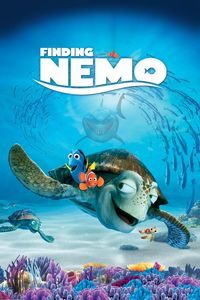
    Finding Nemo (2003)

    (In theaters, June 2003) Pixar seldom misses its target, and they succeed once again with Finding Nemo, an irreproachable animated feature aimed at kids but appropriate for adults. Once again, everything is top-notch: The animation is spectacular, the script is pure gold, the characters are sharply defined (Who doesn’t love surfer-turtle Crush? “We were like ‘Woah!’ and you were like ‘Woah!’ and I was like ‘Woah.’”) and the direction takes advantage of the possibilities of CGI while remaining firmly grounded in real-world conventions. You already know you’re going to see it and you already know you’re going to like it; why should I even spend more time discussing it? The only serious complaint I’ve got is that in their quest to please Disney, Pixar has released their most Disney-like (and their weakest) effort to date. Even the bad old clichés hold true, with the mother of the protagonist dying a horrible death in the prologue (c’mon; this was tired even in Bambi‘s time!) Oh well; it’s still better than most of the other films you’ll see this year.

  • Charlie’s Angels: Full Throttle (2003)

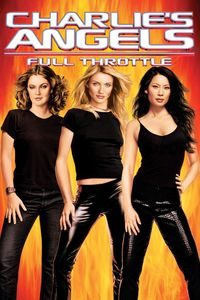
    Charlie’s Angels: Full Throttle (2003)

    (In theaters, June 2003) I loved the original film for its sense of go-for-broke energy and its casual disregard for mere conventions such as, oh, physics. The sequel is bigger, louder and even more furious than the original (the opening dam sequence is a perfect Big Dumb Action Sequence; I was left wishing for more, more, more!) but somewhere along the way, the delirious pace starts working against itself. More money and more attention has made director McG a needy and insecure director. The fantastic long shots, the mean focus, the clear palette of the original are gone and replaced with mayhem, chaos and confusion. It doesn’t work quite as well; the composition of the shots lacks confidence and clarity; we’re left with grittier pictures, sequences with few outstanding shots and a sense that someone is just trying too hard to win our approval. Not that I’m a demanding viewer; in this case, the adorable goofiness of Cameron Diaz (plus my unquenchable thirst for more Lucy Liu) is enough to make me giddy with excitement. Some of the stunts are, indeed pretty cool and Charlie’s Angels 2 is a beautiful monument to nonsensical blockbuster-making. But the structure is off (Demi Moore’s true alignment it revealed much too late), the subplots are irrelevant (did we need all of those back-stories?) and even capable players like John Cleese, Crispin Glover and Bernie Mac aren’t particularly well-used. Heck, I shouldn’t complain: There are some very cool moments (Lucy Liu doing the ferret; the use of Edwin Collins’ “A Girl Like You”; Crispin Glover’s backstory; the CSI sequence) but it’s not as purely entertaining as the first one. Darn!

  • Bottle Rocket (1996)

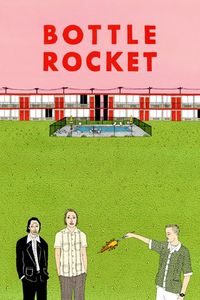
    Bottle Rocket (1996)

    (On DVD, June 2003) Low-key film about a pair of very small-time criminals trying to decide whether they should break into the crime business or stay outside of it. Brothers Owen and Paul Wilson star in this first Wes Anderson film (Owen co-wrote the screenplay) and if you’ve seen his latter Rushmore and The Royal Tenenbaums, you can already expect the sort of awkward comedy and sympathetic losers favoured by Anderson. It’s not a spectacular film nor even a particularly interesting one, but it eventually works its way up to something adequate. There’s a notable lull midway through as Inez is brought in the picture. Both Wilson brothers turn in good performances, though fans of both actors will find it weird that their usual hair styles are here inverted. Anderson and Wilson completists will find plenty to like in Bottle Rocket, though it remains to be seen if others will have the patience to sit through what can be a series of lengthy moments. The bare-bones DVD edition is decidedly lacking in special features; a commentary would have been worthwhile.

  • Big Trouble In Little China (1986)

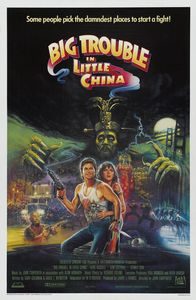
    Big Trouble In Little China (1986)

    (On DVD, June 2003) Despite the rather good cult reputation of this film, I was surprised at how… ordinary it ended up being. Even though Kurt Russell shines as all-American Jack Burton (his charming ineptness is one of the film’s highlight), the film isn’t as endearing nor as memorable as I was led to believed, or half-remembered from TV memories. It’s certainly not a dull film, mind you: The pacing is steady and the action rarely stops. (Plus, there’s a neat hero/sidekick reverse dynamic at play here.) But the dialogues fall flat (always an important factor when dealing with a protagonist with such an attitude) and the effect simply isn’t as electrifying as similar fare such as, say, Evil Dead 2. Part of this tepid reaction, I suspect, is that kung-fu fighting has been done elsewhere since then, with a greater degree of sophistication: The tongue-in-cheek parody of classic Chinese martial arts film may have been loads of fun in 1986, but years after America’s newfound fascination for Jet Li, Jackie Chan and Crouching Tiger, Hidden Dragon, there isn’t anything startlingly new left in the movie. Structurally, the film covers the same ground again and again in a succession of underground lairs that end up featuring the same few villains. I do realize that this film wasn’t aiming for high art, but the truth is that it doesn’t completely succeed as a fun camp classic. Fun, sure, but also a disappointment. On the other hand, the film is well-worth seeing again if only for the audio commentary starring Russell and director John Carpenter; maybe half of it directly relates to the film, but all of it is fascinating. A few unmemorable supplemental features round the special edition DVD set.