Reviews

  • Voyage à travers le cinéma français [My Journey Through French Cinema] (2016)

    Voyage à travers le cinéma français [My Journey Through French Cinema] (2016)

    (On Cable TV, July 2020) As a French Canadian, I know more than the average North American cinephile about French cinema, but I could watch French movies for another decade and not know even a fraction of what Bertrand Tavernier does about the topic. Voyage à travers le cinéma français is his opportunity to tell us about his life at the movies (from post-WW2 childhood to, as a young man, getting beaten up by policemen during a freedom of speech demonstration in front of a movie theatre), his impressions as a viewer, cinephile and critic (founding his own cineclub with friends, later launching their own critical periodical), and also as a practitioner (working for Godard and Melville, among others). Curiously, the story ends before Tavernier’s own respectable career as a director—much of Voyage à travers le cinéma français focuses on French cinema between the 1930s and 1960s. But this isn’t meant to be a history of the field as much as a trip through Tavernier’s recollections and impressions, strongly supported by critical commentary and illustrated by an exceptional number of movie clips from the movies he’s discussing. It does feel like a film study lecture, but an extremely entertaining one, with plenty of personal stories, well-chosen excerpts and quite a bit of enthusiasm for his subject. I don’t usually recommend two-and-a-half-hour-long movies, but this one almost feels too short. It’s easy to feel as if the result would have been better as a series of episodes (which is often how the film feels, as it focuses on specific directors and actors, or moments in Tavernier’s life), and indeed it did lead to an 8-episode TV series two years later. Tavernier himself is a fantastic lecturer and Voyage à travers le cinéma français is a highly personal look at decades of its history, and an often-fascinating collection of memories from a lifelong cinephile.

  • Prophecy (1979)

    Prophecy (1979)

    (In French, On Cable TV, July 2020) Don’t confuse this 1979 Prophecy with 1984’s somewhat better The Prophecy. In this one, a government health inspector travels to Maine (played by British Columbia) to investigate tensions between loggers and Native Americans, and ends up encountering a monster created by pollution. But what begins as an eco-horror film with some potential ends up going straight to familiar horror clichés. For a few minutes, director John Frankenheimer does seem as if he’s hit upon something interesting: an environmental message, tensions with the indigenous population, city protagonists uncomfortable in the wild forest… there’s even some tremendously unsettling stuff mid-way through, as with unborn infants being mutated by pollution. But then the film crashes down with the arrival of an overly familiar big bad mutated bear antagonist, and a routine finale that never actually mentions important plot points (such as the heroine’s pregnancy) ever again. There’s a swing and a miss in Prophecy—a concept that could have delivered a lot more, but ends up with a whimper of clichés.

  • The Quatermass Xperiment (1955)

    The Quatermass Xperiment (1955)

    (On Cable TV, July 2020) The Quatermass brand is, unusually enough for a series of the 1950s, about cerebral science fiction as applied to familiar premises, and The Quatermass Xperiment, the first film of the series (adapted from a TV show broadcast two years earlier), certainly leaves a good first impression. Sure, England is invaded by an alien life-form, but the focus here is on slightly-gruff scientist Bernard Quatermass in understanding, then fighting the extraterrestrial threat. American Brian Donlevy plays the lead in this very British film in interesting ways, all brash and unrepentant and arrogant (and yet somehow likable). The horror undertones of the story grow louder and louder as the story advances. While this film adaptation is reportedly more action-packed than the TV show, it’s also significantly less action-filled than comparable alien-menace movies from the United States. It’s quite watchable, though, and its influence is undeniable: 1986’s Lifeforce seems to take a lot from this film, for instance.

  • Green Mansions (1959)

    Green Mansions (1959)

    (On Cable TV, July 2020) I usually worship Audrey Hepburn and the films she stars in, but I’m willing to make an exception for Green Mansions. While Hepburn does look very cute with longer straight hair, the film itself hasn’t aged well at all. How could it? Adapted from a 1904 adventure romance novel, it features Anthony Perkins as a rugged adventurer (!) who escapes into the jungle and ends up meeting, and romancing, a native princess played by Hepburn—before some more action-filled adventures. This is already bad enough, but let’s just say that the result is a dull jungle romance. Perhaps the best thing about Green Mansions is its cinematography, which introduced Panavision widescreen lenses and features the Venezuelan jungle in lush green detail. Said to be based on true events, the film is sadly not terribly interesting—and whenever it is, it’s usually to make twenty-first century viewers stand up and say, “oh, come on.” Hey, even goddesses can make mistakes.

  • Puppet Master (1989)

    Puppet Master (1989)

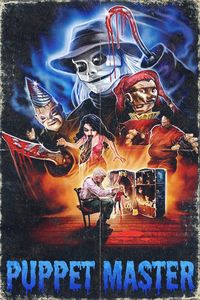
    (In French, On Cable TV, July 2020) By the later standards of Charles Band’s Full Moon Pictures, Puppet Master (no, not the alien-invasion film, the killer-dolls one) is almost lavishly high-quality. While no great art, it does feature puppets, stop-motion special effects, some strong visual imagery and competent actors all smothered in the vaguely disreputable 35 mm sheen of horror movies intended for theatrical distribution. (It was ultimately released straight to video for additional profit.) The killer-dolls premise does have some kick to it (unlike later Band films) even if the execution is somewhat less interesting. What’s less explainable is not that the premise would (barely) sustain a film, but that it led to twelve sequels and spinoffs, in addition to reinforcing Band’s fascination for similar thematic material for his slate of horror films. But what can I say—in the wild context of 1980s horror films, Puppet Master almost makes perfect sense.

  • I Was a Male War Bride (1949)

    I Was a Male War Bride (1949)

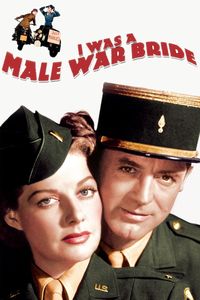
    (On TV, July 2020) How can anyone resist Howard Hawks reteaming with Cary Grant, with Ann Sheridan as a co-star? While I Was a Male War Bride can be accused of stretching a mildly amusing real-life anecdote over nearly two hours, even its uneven nature doesn’t quite take away from the pleasure of seeing Hawks handle comedy, of having Cary Grant goof off in a solid role, or Sheridan as the foil to Grant’s good-natured willingness to make fun of himself. Much of the film’s first half seems disconnected to the title, as a French officer (Grant) and an American lieutenant (Sheridan) fall in love through a copious amount of romantic belligerence in postwar Europe. The title comes into focus midway through, as the film shifts gears, marries its protagonists and then becomes mired in the bureaucratic nightmare of having our square-jawed hero fall into the provisions made for repatriating spouses (usually women) of American soldiers. Kafka turns comic, as Grant repeatedly tries to navigate regulations made for a woman, going all the way to a gender-bending moment of crossdressing. Grant is a good sport throughout, playing with the assumed gender norms on which rest the fundamentals of this comedy. As usual for Hawks’s movies, his female characters are sharply drawn to be the equal of his male characters (even more obviously so in this case) and his dialogue is as fast as the actors can deliver it. While I Was a War Male Bride does not feature very highly on Hawks or Grant’s filmography, it’s a solid comedy and well worth a look for fans of the director or stars.

  • Uninvited (1987)

    Uninvited (1987)

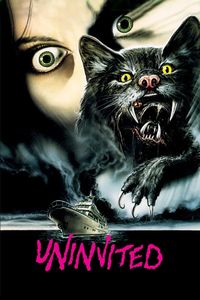
    (In French, On Cable TV, July 2020) A strong contender in the so-bad-it’s-strangely-compelling category, Uninvited is significantly worse than your usual horror film, but in ways that have you looking forward to the next inanity. The stupidity starts early on with the idea of an adorable orange tabby cat somehow transforming back and forth in a horrifying puppet creature that murders people. Writer-director-producer Greydon Clark means to evoke a sense of claustrophobia by setting almost all of the film aboard a yacht with fewer than ten characters, but the limited competence of everyone associated with the film soon sabotages anything beyond mild comedy. The special effects are almost uniformly terrible, only to be outdone by, well, everything else from costumes to acting to staging to dialogues (even in dubbed French). Uninvited’s only marginal success is overall directing and pacing because as terrible as the elements of the film can be, it does move briskly from one set-piece to another, and it becomes a game to spot the next Truly Dumb Thing on the menu. Even the snarky Wikipedia plot summary can’t help itself, as it mentions how the characters somehow use a sextant to perform blood analysis, or how the different cat at the end of the film undermines the sense of cyclical doom that it means to invoke. George Kennedy somehow ends up stuck in the middle of this—although he checks out midway through, having completed his job of attaching a recognizable name to the marquee. The other actors are much worse than him, which is saying something. The result is a truly bad film, but one that does have a certain constant interest to it—I’m probably going to remember Uninvited much longer than most of the other movies I’ve seen this week.

  • L’année dernière à Marienbad (1961)

    L’année dernière à Marienbad (1961)

    (YouTube Streaming, July 2020) It’s certainly a relief to read several plot summaries for l’année denière à Marienbad and find out that no one else understood the movie either. Best described as a series of musings between two men and a woman set against the gorgeous backdrop of a French estate, this film only makes dreamlike sense—it’s detached from chronology, meaning, plot or conclusion. This lack of focus usually drives me up the wall, but I rather like the film’s atmosphere, all decked out in upper-class trappings, going through an expensive mansion while wearing evening wear. (It does help that director Alain Resnais spearheads a sumptuously rich visual patina to it all.) I accidentally left my TV’s motion smoothing active while watching the film (I usually disable it entirely) and this actually added to the film’s surreal, foggy quality. The accented French of the actors also contributes further layers of unreality to the result. I certainly wouldn’t recommend L’année dernière à Marienbad to cinema neophytes, but I’ve experienced far worse.

  • Julius Caesar (1953)

    Julius Caesar (1953)

    (On Cable TV, July 2020) In a fair fight, what would win: My innate inability to process Shakespearian English, or James Mason’s mellifluous voice? In this take on Julius Ceasar, Mason plays the backstabbing Brutus, alongside such notables as Marlon Brando (as Mark Anthony), Greer Garson and Deborah Kerr. Decently written and directed by Joseph L. Mankiewicz, the film attempts to be a blend between the sword-and-sandal epic movies of the 1950s and a more classical restaging of the theatrical material. Ultimately, it’s the black-and-white cinematography that traps the film closer to a theatrical space while a widescreen Technicolor approach would have freed the material. I found this Julius Caesar a bit dull, but considering that this is my default stance for nearly all straight Shakespearian adaptations, that’s not too bad of a review. Let’s admit that the film was made for the Shakespearian crowd and move on to the next review. I was only here for James Mason anyway.

  • A Guide for the Married Man (1967)

    A Guide for the Married Man (1967)

    (On TV, July 2020) One of the most fundamental questions in filmmaking, for filmmakers and critics alike, is “why this film?” Why would someone of Gene Kelly’s stature, for instance, decide to direct A Guide for the Married Man? I strongly suspect that the answer boiled down to money, specifically how Gene Kelly’s musical comedies were a thing of the past and mid-1960s audiences paid to see sex comedies. The premise of the film is blatantly immoral (the titular “guide” is to instruct men in adultery) but don’t worry—as with most 1960s sex comedies, it doesn’t lead anywhere particularly shocking. But “not shocking” doesn’t quite mean “innocuous”—the male gaze of A Guide for the Married Man is overwhelming enough to think that in-between the lecherous camera’s habit of focusing on naked backs and long legs, it couldn’t be remade today. Executed as a series of vignettes featuring an ensemble cast alongside leads Walter Matthau and Robert Morse, the film is uneven almost by design, even if there are a few comic gems here and there. Matthau is quite good as the protagonist, while Morse looks a bit like a naughty Mark Hamill. Meanwhile, director Kelly has a sure eye for comic material and his bright and colourful portrait of the ongoing sexual revolution is nice and naughty enough to fit with the other 1960s sex comedies. The ending is all wholesome, which is what was needed for the playful tone of A Guide for the Married Man. Still, I can’t help but think—why accept this project at all?

  • I’m Dangerous Tonight (1990)

    I’m Dangerous Tonight (1990)

    (On Cable TV, July 2020) Inconsistent director Tobe Hooper gradually sank into mediocrity as the 1980s advanced and he was never quite able to recapture the spark of his early films. Even moderately successful movies like I’m Dangerous Tonight would become increasingly rare as he kept working to diminishing returns. Adapted from a short story, the film takes place on an American campus where a murderous cloak (taken from a sacrificial altar) can take over the body of anyone wearing it. Made for TV, the film clearly doesn’t have a large budget but still manages to have a few strong moments, including a better-than-average car chase. Lead actress Mädchen Amick doe a fine job going from mousy to murderous under the influence of the evil artifact. While I’m Dangerous Tonight does match a certain level of directorial competence (especially for a 1990 TV movie), there isn’t much to the script to make it more than a mildly entertaining horror film in a familiar vein. It does get better as it goes on, as it partly becomes about the fight against evil (culminating in the famous Nietzsche quote) in addition to the evil itself. I saw I’m Dangerous Tonight largely because I was checking off my Hooper filmography, but the film itself is solid enough if your expectations are reasonable.

    (Second Viewing, In French, On Cable TV, March 2021) As a made-for-Cable movie, it’s not that surprising if I’m Dangerous Tonight isn’t as unleashed as it could have been. It does start with a good premise and acceptable characters, as an ancient relic shaped in the form of a red cloak causes anyone wearing it to behave murderously. After the requisite initial incidents to mean that the dress means business, things kick in high gear when our sweet nerdy heroine (the cute Mädchen Amick) gets ahold of the fabric, sews it into a dress and the dress gets ahold of her. It escalates all the way to the wood chipper, although the gore remains blissfully restrained due to its made-for-TV status. Anthony Perkins shows up for a few scenes as a surprisingly non-evil character, while the atmosphere of an American campus does much to keep the film grounded in a familiar movie reality. The script is not that good and the execution feels restrained, but director Tobe Hooper still knew how to keep things hopping, and so I’m Dangerous Tonight remains watchable without being all that memorable.

  • Will Success Spoil Rock Hunter? (1957)

    Will Success Spoil Rock Hunter? (1957)

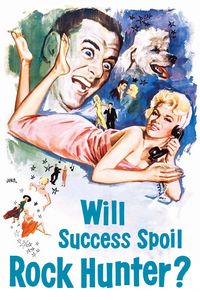
    (On TV, July 2020) We often think of 1950s America as this unthinking haven of conformity, and that is nonsense—people back there were as smart as today, as skeptical as today, and as intent on satirizing the excesses of the day. From the get-go, with a scene in which Tony Randall addresses the audience and introduces the film (after a commercial break), Will Success Spoil Rock Hunter? is meant to be a satire of everything bothering the screenwriters about the then-modern era, and most specifically the burgeoning advertising industry. Midway through the film, it even stops its story for another interjection directly from Randall to the audience, this time lampooning the way audiences were increasingly turning to TV rather than the movies. It also, significantly, takes aim at materialism and corporate success at a time when such values were more likely to be championed, in Hollywood or elsewhere. As a social satire, Will Success Spoil Rock Hunter? is often hilarious—although some of the references can need a handbook of the era to be understandable—I mean, it’s amusing to have a character read Peyton Place in the bathroom, or see Groucho Marx in a long-awaited cameo. Randall is quite good as the lead, although the film is perhaps equally notable for being Jayne Mansfield’s definitive film, and showcasing why she was such a bombshell (even though her appeal may not be as obvious if you’re not into vapidly-portrayed blondes à la Monroe). Seeing an older Joan Blondell in a supporting role is one of those jokes you may need a handbook for. Still, the film remains quite funny—lines like “I’ll be a writer’s subplot!” have a lovely metatextual quality decades before spoof comedies. They help the film feel substantially more modern than it is—even Frank Tashlin’s direction gets into it with imaginary sequences that weren’t the norm at the time. Will Success Spoil Rock Hunter? does suffer a bit from a lack of a clear climax, and a rather flat ending, although some of it does play into the film’s comedy. It’s an utterly fascinating film for those who would like another look at the 1950s—I put it up there with A Face in the Crowd and Sweet Smell of Success (both also from 1957, as is Silk Stockings and its “Stereophonic Sound” rant-number) as an informal cynical trilogy showing that some people in the 1950s knew exactly what the decade was about.

  • Being Canadian (2015)

    Being Canadian (2015)

    (On Cable TV, July 2020) As someone who actually wrote a 4000-word essay titled “Being Canadian” elsewhere on this site, it would stand to reason that sooner or later I would make my way to a movie of the same name. In Being Canadian, comedian Robert Cohen sets out to explore the national psyche by driving across Canada from East to West, and splicing in interviews with various Canadians (some of them more famous than others—the list of interview subjects reads like a who’s who of Canadian celebrities, with a focus on those living in Los Angeles) and anyone else willing to talk to him about Canada. The focus here is relentlessly comedic —a wintertime trip to Ottawa is blatantly spliced in the summertime narrative, some French is mistranslated to create some language tension, punchlines pepper the running time, and every interview subject jockeys for jokes (Naturally enough, considering the writer-director’s network of comedy contacts). Still, there’s quite a bit of content here supported by the entertaining nature of Being Canadian—the immense grab-bag of insecurities, quirks and contradictions that make up the Canadian identity is well represented, perhaps in more uncomfortable detail than expected. It ends up with an inspiring sequence set (where else?) at a Canada Day parade. It’s a fun film, although clearly designed by Canadians for Canadians. If there’s any criticism I’d make, it would be that the film has a very Anglo-Canadian perspective—some of the more uncomfortable questions raised here (such as the desperate need to distinguish oneself from Americans) are substantially different when seen from a French Canadian (or bilingual) perspective—Cohen dispenses with the French question in something like ten minutes, but its absence lingers over the rest of the film. Still, if there’s any lesson to be taken from Being Canadian, it’s that Canada is made of different perspectives brought together for an undefinable whole that nonetheless unites us. That’s as good as any conclusion can be about Canada, and five years after production, the film plays nearly as freshly as it did in 2015.

  • Casa privata per le SS [Private House of the SS aka SS Girls] (1977)

    Casa privata per le SS [Private House of the SS aka SS Girls] (1977)

    (In French, On Cable TV, July 2020) While you ponder the mysteries of the universe, I’ll be sitting here wondering all sorts of questions about Private House of the SS. Like: What is this film doing playing on a French-Canadian Cable TV channel dedicated to horror films when it’s not particularly violent? Sure, it’s pure nazisploitation stuff—after all, it’s a Bruno Mattei joint filled with Nazis training naked women to be spies by seducing important men. That’s it for plot—other than a sadistic ending, much of the film is one softcore pornography sequence after another, except so badly and bluntly executed that it’s impossible to get aroused by any of it. I’m thankful that the usual gore and violence of the usual nazisploitation films aren’t here, but it’s not as if what remains is any better. While marginally less vile than films like Isla, She-Wolf of the SS, this Private House of the SS is pointless with a bare-bones “plot” that resolves on a whim. Add a few questions to the enigma of this film: Why does it exist? Who was it made for? Is anyone even watching Private House of the SS these days? And more importantly, why should they?

  • Raw Deal (1986)

    Raw Deal (1986)

    (On Cable TV, July 2020) If my records are accurate, Raw Deal is the last of Arnold Schwarzenegger’s 1980s movies that I hadn’t yet seen, and for a good reason: it’s easily one of the least distinctive films he’s made, with very little of what distinguished other films of Schwarzenegger’s heyday… and virtually nothing here that takes advantage of his persona. At times, the script reads like the kind of bland cop thriller that would be given to Steven Seagal or Chuck Norris. Here, Schwarzenegger plays a disgraced cop (for good reason: beating a child killer) who’s asked to infiltrate the Chicago mafia and avenge the murder of several FBI agents. It’s already a dull premise, and very little in the execution elevates the material to something worth Schwarzenegger’s presence. The actor himself isn’t bad—he plays to his strengths and director John Irvin is under orders to accommodate that—but the rest of the film is nothing worth cheering about: The dialogue is flat, the action sequences uninteresting, and the plot is right out of Genericland. The ending shows how sadistic 1980s movies could be, without anyone batting an eye at massive police brutality or even the dubious ethics of leaving one’s wife thinking you’ve been dead for weeks. No, Raw Deal isn’t worth seeing unless you’ve watched every single other one of Schwarzenegger’s 1980s films. And even then… you can wait.