Reviews

  • Raid dingue (2016)

    Raid dingue (2016)

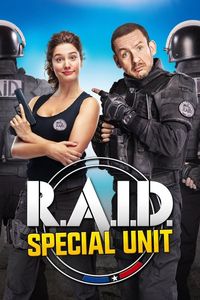
    (In French, On TV, July 2020) The big-budget segment of French cinema is equally capable of matching Hollywood when it comes to crowd-pleasing crime comedies, and that’s the spirit in which Raid dingue begs to be seen. It’s not meant to be anything but an action comedy, with a heavy emphasis on the comedy. Written and directed by well-known French filmmaker Danny Boon, this is a film about a well-meaning but clumsy woman trying for France’s elite RAID squad (the equivalent of the FBI’s SWAT). There is a criminal gang to provide a true antagonist, a rather annoying sexist subplot to provide romantic tension, and a few montages to show the protagonist going from zero to hero. Alice Pol has a great blend of comic timing and candid attractiveness as the heroine, while Boon gets a plum role for himself as the love interest. The structure of the film will be intensely familiar to anyone who’s seen a handful of Hollywood comedies, but it’s the journey that counts. Here, the results are uneven: While Raid dingue would have been strong enough on its own with a well-meaning heroine, insisting on sexism distracts from the heroine’s own merits. Her clumsiness also seems overdone to the point of being hardly forgivable when it leads to injuries and national peril. Some of this lack of script polish can be blamed on slightly different cultural expectations, but it does damage the film on the way to its conclusion. Still, Raid dingue is an easy watch and a good showcase for Pol. There’s nothing wrong with a bit of mainstream filmmaking in French.

  • Tacones lejanos [High Heels] (1991)

    Tacones lejanos [High Heels] (1991)

    (In French, On TV, July 2020) I wouldn’t exactly call myself fascinated by writer-director Pedro Amodovar’s movies—but I seldom miss an occasion to watch them when it’s convenient, and I can usually look forward to something interesting in each of them. It’s not always happy with the results—Amodovar’s films are often self-indulgent (for good or worse), slow-paced, and his weirdest films often pile up so many wacky implausible hijinks atop each other that they become performance art rather than narrative. Still, there’s something intensely personal about most of his movies, and his way of writing female characters is distinctive. High Heels does manage to strike a sometimes-uncomfortable balance between character drama and wacky hijinks: it’s a murder mystery that pays far less attention to the murder than to the way that the characters react to the aftermath. It’s about a complex mother/daughter relationship that often appears to have no basis in reality but somehow works in-context. It’s a film with three male characters all played by the same actor, which raises a tremendous number of questions about the true importance of male characters in it. It’s crazy, unbelievable, and weirdly compelling because of it. High Heels may not be acknowledged as being in Amodovar’s top tier, but it certainly has its rewards.

  • Spite Marriage (1929)

    Spite Marriage (1929)

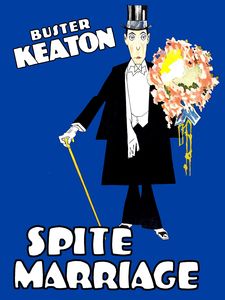
    (On Cable TV, July 2020) It’s interesting to see Buster Keaton’s Spite Marriage on the heels of its Red-Skelton remake I Doot It. The similarities between the two are friendlier than most—Buster Keaton participated in the remake, and there’s a feeling that he was able to fix some of the structural issues found in Spite Marriage. This first film does feel different — by virtue of having been made in the waning days of the silent era, it minimizes the title cards and lets Keaton’s physical comedy tell the story. (Although, unusually enough, the soundtrack heard today is the one produced for the film, and often has sound effects synchronized for the action… including what’s best described as one of the earliest laugh tracks.) As often happens in Keaton films, the result often feels like two or three comic ideas smashed together: here we have a fan getting a chance to sneak in as an actor in a Broadway play to be close to his favourite actress and botching it completely; a newlywed couple doing their best to avoid consummation, leading to a surprisingly wholesome bedroom routine involving a passed-out partner; and extended hijinks set aboard a yacht. Only the first two acts (roughly the first half of the film) are reused in the remake, with some creative reordering to make for a stronger three-act structure. The original has Keaton at his usual silent self—perhaps not as hilarious as in other movies, but funny enough to warrant attention even for those who don’t really like silent movies. (The relatively short running time, at a bit under 80 minutes, also helps.) Dorothy Sebastian looks better than many other silent-era actresses, and seems game to be Keaton’s foil. Spite Marriage may not be the best introduction to Keaton’s gift for physical comedy, but it’s well worth a look by fans going down his filmography or anyone who (like me) just happened to have seen I Dood It.

  • You Were Never Lovelier (1942)

    You Were Never Lovelier (1942)

    (On Cable TV, July 2020) As far as Fred Astaire movies go, You Were Never Lovelier is roughly in the unremarkable middle. The humdrum plot sees Astaire as an American expatriate in Rio de Janeiro being pressured into courting a businessman’s daughter. It’s not bad, but its origin in an earlier Spanish-language film does seem to limit its nature: rather than something custom-made for Astaire’s strengths, we have something that approximates other better Astaire films without quite giving him something particularly distinctive to do. Many (most?) of the dance sequences appear to be in the same ballroom, for instance—it’s a nice set indeed, but it does contribute to the film’s featurelessness. Fortunately, one distinction is the gorgeous Rita Hayworth, holding her own as Astaire’s dance partner and looking substantially sexier than many of his other co-stars. Astaire dances like the movie legend he is, with the requisite solo number and the courtship duet. The Latin American location adds a little bit to the result. The love story, built on false pretences, is also very familiar (especially to modern audiences having overdosed on “seducing for profit, surprised by honest love” tropes)—although—and I realize how crazy it sounds—there may be a bit too much plot to support it. Still, You Were Never Lovelier is fun viewing: its unremarkable nature is only true if you’re used to Astaire’s dancing, which remains astonishing on its own terms.

  • I Dood It (1943)

    I Dood It (1943)

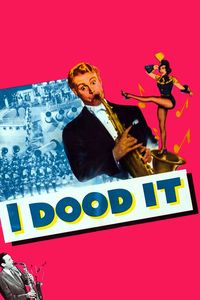
    (On Cable TV, July 2020) One box-office formula is as old as time: funny man plus attractive woman. In I Dood It, it’s then-popular comedian Red Skelton playing a humble pants presser, paired with the supremely gifted Eleanor Powell as a Broadway star. Through various shenanigans and misunderstandings, the two end up married, leading to further confusion and set-pieces. An entertaining blend of comedy, dancing and singing, I Dood It is not exactly a film with a strong plot: What is in place is just enough to get us from one sequence to another, and while the dancing and singing are fine, the comedy bits tend to be stretched just a bit too long—if you’re dubious about Skelton’s brand of comedy, some passages based on his verbal humour are borderline unbearable. Meanwhile, the physical comedy bits (including a sequence featuring a passed-out Powell manhandled by Skelton) are a bit better—Skelton had some help from gagman Buster Keaton in conceiving the physical comedy, as the film is a partial remake of Spite Marriage. Powell does quite well in her role, with two impressive original dance numbers (a Western-themed one at the beginning of the film, then a Polynesian one near the two-third mark) with a final reprise from Born to Dance that’s telegraphed by having the protagonist describe his ideal dance sequence in suspiciously familiar terms for Powell fans. While some moments drag on too long, I can’t fault I Dood It for those—one of the highlights of the film has the story stop cold in order to have the great Hazel Scott deliver a dazzling piano number, immediately followed by Lena Horne headlining a rather amusing “Fall of Jericho” number. Who can complain about that? Wartime topical content includes a saboteur subplot that provides just enough drama to prop up the last act, and a rather amusing precision that a French poodle is a “Free French Poodle” (as opposed to a “Vichy French Poodle.”) It’s not particularly well directed by Vincente Minelli (although there is a flourish during the piano and dance sequence), who would go on to better things. While I Dood It starts slowly and doesn’t amount to much more than a collection of scenes, it’s worth it for the Powell, Scott and Horne trio.

  • The Last Hurrah (1958)

    The Last Hurrah (1958)

    (On Cable TV, July 2020) Hollywood has long been fascinated by the American political system, and even older films still have something relevant to say about it. In The Last Hurrah, John Ford directs a rumpled Spencer Tracy as he plays an older veteran mayor facing his last election (his “last hurrah,” although the title clearly anticipates a more definitive conclusion) and letting his perceptive nephew tag along for the ride. Perhaps the biggest strength of the film is Tracy’s weary and captivating performance as the engine of a vast political machine — although this is not necessarily portrayed all that negatively as he fights against the blueblood elites and still has the interest of the people at heart. He’s a canny operator, capable of unorthodox power plays such as threatening to install a clearly incompetent person in an important position just to see his family squirm with the anticipated disgrace. The election night itself is portrayed with some skill, as victory ends up yielding to the sum of the various incidents in the film. The Last Hurrah veers into more sentimental territory toward the third act, although it doesn’t quite yield to sappiness at the end. It’s often surprisingly nuanced, even-handed in considering the trade-offs inherent not just in elections, but in governing as well.

  • Life with Father (1947)

    Life with Father (1947)

    (On Cable TV, July 2020) When the point of an old film’s popularity is that it’s old-fashioned, I suppose it’s natural to react with very mixed feelings to the result. Life with Father is a film of the past in many ways—a 1947 adaptation of a long-running 1939 Broadway play looking nostalgically upon life in 1880s Manhattan, it’s triple-piled-up nostalgia even before we begin digging into it. As the patriarchal title suggests, it’s an examination of a family with a strong-willed father at the helm, a role that would have been unbearable without the considerable charm of William Powell, completely in his element here. He’s hard-headed, unwilling to listen and impervious to the damage he causes, but the saving grace of the film is how it shows the rest of the family subtly manipulating him into serving their own objectives, taking advantage of his own bluster in order to get what they want. Still, much of Life with Father is subservient to the 1880s and 1940s, all the way to a baptism subplot that seems inconsequential today, but somewhat harms the free-thinking nature of the protagonist. (Significantly enough, film historians tell us that the film’s final line, “I’m going to get baptized,” is a bowdlerization of the Broadway play’s punchline, “I’m going to get baptized, damn it.”) If you’re willing to let slide those things slide, the film does have its charms. In addition to Powell’s performance, we have smaller roles for silent film veteran ZaSu Pitts, a charming turn by a very young Elizabeth Taylor, great matrimonial dialogue between Powell and Irene Dunne, and a few comic set-pieces that still work well. There are times where a film’s appreciation hinges on how much you can surrender to an earlier era’s idea of feel-good movies, and Life with Father is definitely one of those.

  • The Song of Names (2019)

    The Song of Names (2019)

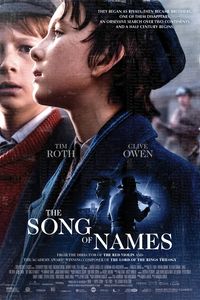
    (On Cable TV, July 2020) There are times when The Song of Names threatens to sink into familiar dramatic movie clichés—it plays around with a multi-decade timespan, with long-lasting grudges, with a personal quixotic quest. Like The Good Liar, it even twists itself into a dual-period 1940s/1980s piece that showcases The Holocaust, and you don’t get any more blatantly manipulative than that. By the weepy end, which seems to overstay its welcome by twenty minutes in order to deliver the statement that the story structurally couldn’t avoid postponing, it’s obviously reaching for the usual levers of the sub-sub-genre: personal atonement, remembering the dead, providing closure. Still, especially compared to other films of its ilk, The Song of Names does have its strengths. A good lead performance by Tim Roth, repressing his own feeling until they shockingly come out punching in a car, is a solid anchor. Clive Owen shows up late in a role almost opposite to anything else he’s played (or being typecast in) before. There is a strong mystery that provides a solid narrative drive to much of the film’s first two acts, even if its conclusion seems to run a bit too long in order to pull everything together. The use of music is a central element, as with director François Girard’s previous Le violon rouge. Technical credentials are excellent, explaining the film’s various Canadian Screen Awards. In the end, The Song of Names is good but (to repeat) there’s a big gap between good and great, and it remains on the side of good. I expect that it will play for years on Canadian cable TV channels.

  • Motherless Brooklyn (2019)

    Motherless Brooklyn (2019)

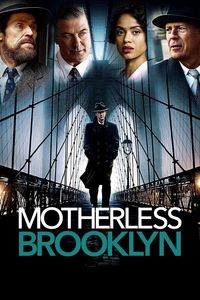
    (On Cable TV, July 2020) There’s something to be said for meaty plot-driven movies, and Motherless Brooklyn is the kind of endangered American studio film at the brink of extinction: smart, dense, definitely political (in the progressively engaged sense rather than the cheap-shot sense) a bit too long for its own good and yet remarkably rewarding if you’re willing to put in the time and attention. Written and directed by Edward Norton, it also features him in the lead role, as a private detective gifted with prodigious memory and analytical abilities but afflicted by Tourette’s syndrome. It’s a plum role for Norton, as the usual 1950s tropes are all slightly altered by his portrayal of a savant with social issues. Norton’s writing is crisp and his direction is transparent—but his acting calls attention to itself as we get inside an unusual mind. A rather good cast complements Motherless Brooklyn: Gugu Mbatha-Raw plays an activist with a secret unbeknownst to her; Alec Baldwin is ferocious as an influential city official, Willem Dafoe cleverly plays on his ragged image and Bruce Willis stuns in a rare good later-day performance in a short but pivotal role—for once, he’s not slumming on minimal effort, which I’m crediting to Norton as a director. The film is nominally based on a Jonatham Lethem novel I haven’t yet read, but even a cursory look at plot summaries shows clear differences between book and film: the film goes for neo-noir aesthetics by setting itself in 1950s New York (as opposed to the then-contemporary setting of the 1999 novel), and many subplots differ, all the way to the nature of the ending. Still, Motherless Brooklyn does have a comfortable heft to it: slightly too long for its own good, but still not a bad experience. I wouldn’t take away the scenes that talk about the importance of city planning, or the meditation on power, both municipal and personal (and how the same power can lead anyone to do public good and private bad.). Motherless Brooklyn is not a complete success, but I’ll take a few more of those movies rather than what the studios are churning out in an attempt to chase the summer tentpoles.

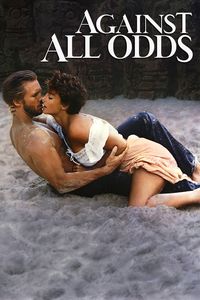
  • Against All Odds (1984)

    Against All Odds (1984)

    (In French, On TV, July 2020) As much as the idea of remaking classic noir film Out of the Past is promising, most will agree that Against All Odds ends up being a curiously inert romantic thriller. Clearly part of the 1980s trend of remaking noir movies, it’s perhaps too successful in loosely updating the material that it ends up feeling more like a generic 1980s thriller rather than carrying anything of its illustrious predecessor. Jeff Bridges is not bad (and bearded) in the lead role, while a young James Woods is quite creepy as the antagonist. Meanwhile, Rachel Ward does better than expected as a femme fatale with shorter curly hair, but she too does mark the film as mid-1980s vintage. The story advances forth through a trip to Mexico and back, sombre sport fixing schemes, assorted criminals and vengeful lovers, but remains middle-of-the road throughout. Workmanlike direction from Taylor Hackford doesn’t help. At a minimum, Against All Odds does hold attention and delivers a story of love, crime and death, but it’s nowhere near its Out of the Past inspiration, and doesn’t feel special in any way.

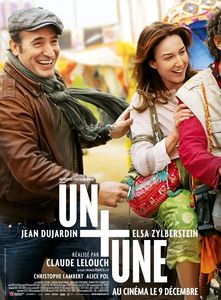
  • Un + une (2015)

    Un + une (2015)

    (On TV, July 2020) Some movies leave you with a thumbs up, others with a thumbs down, but Un + une goes for the question mark. It feels stuck in a position where it could become good, or ridiculous, or unintentionally funny, or boring. It’s from veteran French director Claude Lelouch, stars Jean Dujardin (perhaps France’s biggest star of the twenty-first century so far) as a French composer, the beautiful Elsa Zylberstein as a love interest, and even features Christophe Lambert in a veteran actor’s role as a French ambassador. Much of the film is set in India, as our protagonist travels there to score a movie and has an affair with the French ambassador’s wife. The setting is colourfully portrayed, and the first few minutes are an intriguing blend of fiction within fiction. Other things don’t work as well. There’s a significant plot point that has to do with the main characters meeting Mata Amritanandamayi, an important religious figure in India—it feels heartfelt and admirative, but it comes across as a bit extraneous to the movie. (It was notably filmed semi-secretly, the figure participating but not knowing those she embraced were movie actors.) The third act gets, for lack of a better word, increasingly French as infidelity is met with attempted infidelity, then implied conception leading to a years-later epilogue that stops just when things were getting interesting. Am I supposed to laugh at the piled-up incredulity that the film creates, or moved by some kind of love story? Or be cowed into admiration at the presence of a major spiritual figure? Or simply annoyed that this doesn’t seem to lead anywhere?

  • La noire de… [Black Girl] (1966)

    La noire de… [Black Girl] (1966)

    (On Cable TV, July 2020) Movies don’t have to be long to pack a wallop, and La noire de… has one heck of a final gut-punch even after just 55 minutes. The story of a young woman who leaves her Senegalese village to go work (under false pretence) for a family in France, it’s an eloquent demonstration of racism and alienation with a very powerful ending even today. Writer-director Ousmane Sembène is absolutely merciless in its depiction of French colonialism, through the device of domestic racism. He can also depend on a raw performance from Mbissine Thérèse Diop in the lead role. La noire de… is said to be the first sub-Saharan film, and it’s quite a statement. You will be thankful that it doesn’t even last an hour: it would be hard to take more.

  • The Lonely Guy (1984)

    The Lonely Guy (1984)

    (On Cable TV, July 2020) The mid-1980s were about as good as things ever got in terms of pure film comedy from Steve Martin, and The Lonely Guy is a fairly representative example (I didn’t say the best) of the kind of comedy he was turning going for—familiar yet off-kilter, self-satisfied, ingratiating but quite funny if you’re on the right wavelength. This time, Martin turns to romantic comedy as the clothesline for the silliness in store—focusing on the plight of a newly single guy trying to find love in Manhattan. The difference between 1980s Martin and later-day Martin is that the earlier comedian wasn’t afraid to be more adventurous in his type of humour. Not everything works, obviously, but with director Arthur Hiller, there’s an effort to try a few things, be absurd, play with expectations and even revisit old gags. I found it all quite amusing. I remembered the restaurant “dining alone” scene from childhood, but not the rest of The Lonely Guy.

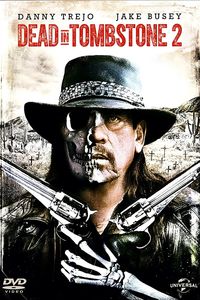
  • Dead Again in Tombstone (2017)

    Dead Again in Tombstone (2017)

    (In French, On TV, July 2020) If you’ve seen Dead in Tombstone, you will be wholly unsurprised by Dead Again in Tombstone. Once again, Danny Trejo stars as a not-quite-dead outlaw asked to protect the earth from evil forces in a supernatural western. Another person back for a second ride is noted direct-to-video auteur Roel Reiné, who’s able to maximize the budget he’s given into something looking far better-looking than its class. Essentially, we have pretty much the first film — except without the effect of surprise. It’s still a weird western with supernatural elements and a slightly overstuffed plot. Trejo is still up to his usual good standards, even if he can’t handle the action chops required by the role. There are still some visual flourishes, as Reiné plays with the iconography of westerns. But in delivering more of the same, Dead Again in Tombstone can’t escape a growing dullness of effect.

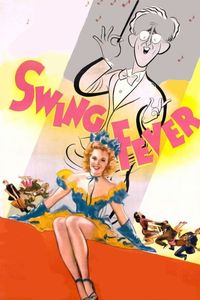
  • Swing Fever (1943)

    Swing Fever (1943)

    (On Cable TV, July 2020) The history of film is rife with unlikely movie stars, and you can watch Swing Fever for one particularly striking example. In many ways, it’s a rather silly musical comedy film in which a country man with supernatural “evil eye” powers comes to the city to sell a music piece, but gets embroiled into a story mixing swing music and boxing promoters. That’s not a bad excuse to see a few swing numbers and some middle-of-the-road comedy. As a wartime film, it’s big on supporting the troops and not challenging anything and featuring simple musical numbers. The rather wonderful Lena Horne plays herself in a disconnected number that is shot like a bluesy music video. But the big surprise here for uninitiated viewers such as myself is the lead actor, playing a character so nebbish that he would be featured as a minor comic character in other movies. But in Swing Fever, he takes centre stage complete with heroics, superpowers and getting the blonde girl at the end. Well, that actor turns out to be Kay Kyser, a rather popular band leader who was under contract for MGM at the time. The star power explains some of the leading role indulgences—in playing his band leader persona, however, much of the effect is lost on twenty-first century viewers. Still, it’s entertaining enough—the mixture of swing music and manly boxing (with some assorted criminal shenanigans) ensured that it was the closest thing to an all-quadrant crowd-pleaser for audiences at the time. Blandly-titled Swing Fever isn’t a great or overly memorable film (although the Horne number is worth a mention), but it’s entertaining enough, and an interesting representative of your wholly average early-1940s movie musical.