Reviews

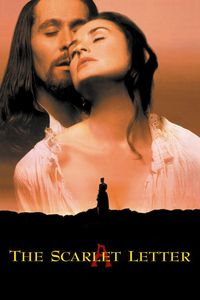
  • The Scarlet Letter (1995)

    The Scarlet Letter (1995)

    (In French, On Cable TV, July 2020) I will not suggest that a film’s reception is only a cultural thing… but when we’re talking about the 1995 version of The Scarlet Letter, I may digress slightly. Some background first: The Scarlet Letter is an 1850 novel by Nathaniel Hawthorne about an affair between a woman and the leader of the local puritans, which leads to a pregnancy, public shaming, and a life of repentance for her. It’s all quite glum and has become a literary classic widely taught to generations of American kids. The 1995 movie, brought to the screen by English director Roland Joffé, was almost instantly hailed as one of the worst movies of all time. Its sins include wide liberties taken with the original text, near-constant Hollwyoodisms (notably the addition of sex and violence, as well as having half the film take place before the beginning of the novel itself.), inconsistent accents and line readings, actors uneasy in their characters (most notably Demi Moore as the protagonist) and notable lulls in the pacing of a 135-minute film. The critical pile-up in 1995 was nothing short of spectacular, carrying the film all the way to the Razzies (which doesn’t mean much, mind you) and keeping it as a cinephile’s punchline for decades. In watching this version of The Scarlet Letter, I had two advantages: Near-complete ignorance of the original, and a version of the film dubbed in French. Of those two, the dubbing is far more important: As I’ve mentioned a few times, actors who struggle with line reading (Madonna and Keanu Reeves come to mind) often become much better when dubbed by professional French voice actors – now add Moore to that lot. Then there’s the lower expectation placed on French dubs, which are not expected to sound natural at all. Add to that the lack of expectations in watching a film without caring about its fidelity to the original novel and, well, The Scarlet Letter isn’t that bad. It’s long and ludicrous, but not appreciably more so than many other Hollywood serious prestige dramas—Joffé and Moore both clearly wanted those Oscar nominations (a not-insignificant factor in the 1995 critical backlash, I’d claim) and they do fall flat on their faces, but the film itself kind of works even in presenting rote material. Some of the period recreation is pretty good, and the cast is interesting even when it’s not always used well. In other words, The Scarlett Letter may not be that good, but it’s not outright terrible either—and its ridiculousness isn’t always a bad thing. This is not 1995 any more – we don’t have to hate the movie to look cool.
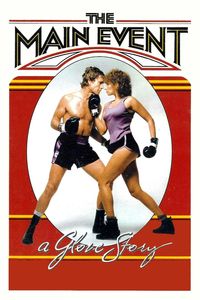
  • The Main Event (1979)

    The Main Event (1979)

    (In French, On TV, July 2020) French-Canadian Cable TV channel Cinepop is having itself a Barbra Streisand marathon these days, and I’m there for it considering that, inexplicably enough, Streisand has become one of my latest pin-up girls. Other than a Streisand marathon, I’m not sure how else The Main Event would show up on TV these days day—as a bog-standard romantic comedy featuring a woman in sudden dire financial straits getting attached to a boxer (Ryan O’Neal, pleasant enough), it’s definitely a minor oeuvre in her filmography, and a rather forgettable film by itself. It doesn’t mean that it’s not worth a look, though—Streisand occasionally looks great in tightly curled red hair and is hilariously referred to as “the nose” for her character’s occupation as an aroma expert. (The nose is even a motif that makes a return by the film’s conclusion.) It’s a comedy that knows where it’s going and doesn’t make any attempt to disguise that fact, making it feel curiously timeless even today. Streisand doesn’t sing here. Otherwise, The Main Event isn’t bad… but there’s a reason why it almost never gets brought up these days.

  • Les amours imaginaires [Heartbeats] (2010)

    Les amours imaginaires [Heartbeats] (2010)

    (On Cable TV, July 2020) Fans of writer-director Xavier Dolan may have some interest in tackling his sophomore work Les amours imaginaires, if only for how much it perpetuates and prefigures many of his motifs: doomed romances, gay characters, insistent use of pop music, montages, Anne Dorval, and so on. This story of a romantic triangle just waiting to collapse does generate wit and interest almost despite itself—the cuts to people talking about their own love lives, reflecting upon the action of the main plot, add some interest as well (especially with Anne-Élisabeth Bossé looking simply too cute for words with large horned glasses). Les amours imaginaires doesn’t make a whole lot of sense in non-movie terms—it’s hard to imagine that this is how people would behave, or that the pretence of a love triangle would linger long. But this is Dolan’s show, and the film does a good job in showcasing both him and Montréal’s young urban hip culture. (In keeping with other Dolan movies, bad things happen when characters leave their home ground.) The film itself is not bad, but considering how Dolan’s work is very consistent (almost repetitive) from one film to another, Les amours imaginaires is perhaps best appreciated as an episode of the Xavier Dolan show than its own specific film.

  • California Typewriter (2016)

    California Typewriter (2016)

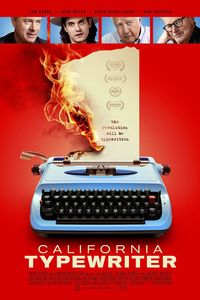
    (On Cable TV, July 2020) Why should you watch a documentary mythologizing typewriters? Well, how about if I tell you that it features Tom Hanks at his meanest? It’s true! The noted typewriter enthusiast has cutting words for anyone who dares think that an email is a replacement for a typewritten note: “I hate getting email Thank Yous from folks. ‘Hey, we had a great time last night.’ Or, ‘Hey, I really appreciated it.’ So, really, you appreciated it so much that you took seven seconds to send me an email. Now if they take 70 seconds to type me out something on a piece of paper and send it to me, well, I’ll keep that forever. Otherwise, I’ll just delete that email!” Hanks is at ease in Doug Nichol’s California Typewriter, as the film becomes an overwhelming 103-minute-long paean to the lost romanticism of typing on paper. It’s sometimes overdone—some interviewees describe their limitations with computers with details that I can’t even make sense of. Later, the film makes parallels with Spiritism by extolling how their creative process is mysteriously changed by a machine and once again I’m left wondering that they’re thinking. (Or why the typewriter-machine is better than the computer-machine.) Oh yes, this is a feature-length portrait of a few eccentrics, selling typewriter, repurposing their pieces for art, digging into their history and getting together at conventions. All stories are meant to be uplifting—the artist getting known for his art, the repair shop picking up customers and the historian getting his hands on a coveted machine in a museum. The film does start on a strong note, with the death of a typewriter as thrown from a moving car. Now, let’s make something clear: I’m curiously sympathetic to the idea of typewriters—I learned how to type on one, I own an Underwood as objet d’art, I’m even arguably trying to recreate much of the feel of a typewriter by using a very loud mechanical keyboard even as I type this review. But there’s a limit to that affection and California Typewriter frequently went beyond it. Yet don’t let me discourage you from having a look: Sam Shepard and John Mayer show up in talking-head interviews, and there’s a great segment on a typewriter orchestra. One could even argue that of all the topics in the world ripe for a documentary, typewriters are not a bad premise at all. Just prepare yourself for exactly what California Typewriter is meant to do: make you think that typewriters are the most important thing in the world.

  • Harriet (2019)

    Harriet (2019)

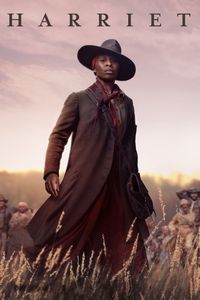
    (On Cable TV, July 2020) Considering the newly resurgent place of black cinema in Hollywood, this biographical drama about escaped-slave-turned-freedom-fighter Harriet Tubman was inevitable. In the hands of writer-director Kasi Lemmons (whom I’ll always remember fondly as one of the headliners from Fear of a Black Hat), Tubman becomes a Hollywoodian avenging angel in Harriet, quick with a gun and about two rewrites away from steampunk superhero status. Which is not necessarily a bad thing, considering how there’s usually nothing fun about watching a film detailing how Tubman joined the Underground Railroad and started freeing other slaves. This isn’t quite a dry history lesson, though: While reverent and historically credible, it also features high moments of drama, gunplay and confrontations. Cynthia Erivo is quite good as Tubman, growing into a formidable, almost mystical force by the end of the film. Terrific soundtrack made of old-school hymn (and, incongruously, a Nina Simone song) helps round out a high-quality production that tells an essential story in adequate fashion. Could it have been better, more historically accurate, more action-driven? Yes to all of that, but maybe not in the same movie. As it stands, Harriet navigates a tricky path between being faithful to Tubman’s character, pleasing modern audiences, and fitting everything within two hours.

  • Piercing (2018)

    Piercing (2018)

    (On Cable TV, July 2020) Maybe Piercing is about a man with an urge for serial killing. Maybe it’s a dream. Maybe he leaves for a “business trip” and checks himself into a hotel to hire a prostitute he intends to kill. Maybe it’s not important that a hotel would be a terrible place (logistically speaking) for that kind of thing. Maybe Ryū Murakami’s novel, from which this is adapted, makes more sense. Maybe he tries to kill her, except it goes wrong and now he’s got to go to the hospital with her. Maybe writer-director Nicolas Pesce knows what he’s doing. Maybe the prostitute comes back to him with a plan of her own. Maybe the obvious use of miniatures and unreal sets feeds into the film’s strong visual style. Maybe both leads have a long conversation in which it’s not clear whether sex or death or food is on the menu. Maybe Mia Wasikowska does better than Christopher Abbott in a role within a minimal cast. Maybe the strong sense of exploitation filmmaking begins before the opening credits with pseudo-VHS effects and a 1970s-inspired credit sequence. Maybe he eventually decides to kill her. Maybe the giallo soundtrack points to this being a dark thriller dipping in horror from time to time. Maybe the characters are so spectacularly abnormal that it’s useless to hope for anything approaching traditional characterization. Maybe Piercing is a style exercise where the narrative can be fun to follow through its initial twists and turns but eventually flops upon itself by not leading anywhere and not being all that interesting. Maybe.

  • Vivarium (2019)

    Vivarium (2019)

    (On Cable TV, July 2020) It’s not that Vivarium is entirely without promise—as the film starts, it quickly creates the off-kilter dreamlike aesthetics it’s going for, and gets its narrative going by trapping a young couple in a house where they’re asked to raise a child delivered to their door, along with all the necessities of life. But what could have been an interesting short feature soon turns into a repetitive, irritating blob. The eerie suburban satire turns into pointless SF tragedy with the kind of cyclical ending that puts off audiences and makes them ask why the film even existed in the first place. Creepy from the start and then even progressively creepier as it advances, Vivarium is not a film aiming for a happy ending (or even much of an ending), practically begging viewers to dislike the result. Jesse Eisenberg isn’t bad as the male lead, but Imogen Poots gets the much better role here as the film’s true protagonist. Despite a budget that occasionally shows its seams, there’s some visual style here, even with cheap but consistent special effects. While Vivarium wants to be surprising, viewers with the fortitude to make it to the end will only see a circular narrative that feels both trite and stretched-out: no character development, no happiness, no enlightenment, just Sisyphus-like futility with a different cast.

  • Nati con la camicia [Go for It] (1983)

    Nati con la camicia [Go for It] (1983)

    (In French, On Cable TV, July 2020) Since Bud Spencer and Terence Hill comedies were a staple of French-Canadian TV when I was a kid, I must have seen Go for It as a boy—and not knowing that this would be one of the last screen appearances for the duo. It is, at least, one of the bigger-budgeted of their films: enough for the Italian production crew to shoot it in Sunny Miami (although there are mountains at some point… in Florida), and for the plot (in which two not-so-respectable men are mistaken for secret agents) to string along a series of large-scale physical gags. Conceptually, some of the stuff is funny—but it’s not quite executed well enough to be even remotely plausible. (A trailer-tractor sequence, in particular, is even more inept than the rest.) As a spy film parody of sorts, Go for It takes a while to get going and it doesn’t end on much of a high note. Fortunately, Spencer and Hill have charm and a good comic rapport… but it’s not enough to overcome an air of facility and over-familiarity with the proceedings. Go for it ends up being a thoroughly mixed bag: funny in spots, implausible most of the time, and a bit cheap for the rest of it.

  • Palm Springs Weekend (1963)

    Palm Springs Weekend (1963)

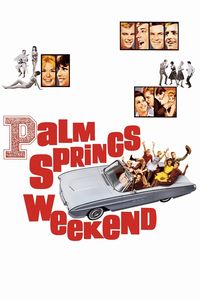
    (On Cable TV, July 2020) The similarities between the 1960 teen comedy Where the Boys Are and Palm Springs Weekend are definitely not accidental—the studio saw the success of the earlier film and wanted something like that, except set on the west coast rather than in Florida. Reportedly coming up with the title before the script itself, it quickly put the film in production and focused its narrative on youngsters making their way from L.A. to Palm Spring for Easter break and the town steering itself for trouble. This was not such an unusual thing at the time—with the early Boomer generation coming into age and gradually redefining what it meant to be a college-attending young person, there was a spate of teensploitation films poking at the meaning of being young in a booming America, and hopefully driving that audience into theatres. The hijinks of the college students descending upon Palm Springs for “fun” (alcohol and hookups, really) are all rather innocent and cute, although director Norman Taurog is clearly aware of his film’s subtext and takes a rather weird shift toward darker elements near the end (with a rape attempt, a car chase, a serious car accident and police business) before getting back to the silly comedy in time for the end credits. (That darker turn does echo the earlier Where the Boys Are as well.) Some of the period detail is very interesting, though, and you can almost feel the early-1960s pop-optimism radiate through the screen.

  • Hiroshima mon amour (1959)

    Hiroshima mon amour (1959)

    (Criterion Streaming, July 2020) I am not and will never be a big fan of Hiroshima mon amour, but I have to respect a film that blends interracial romance with meditations on the nuclear bomb. Director Alain Resnais being a sober filmmaker, this is a quiet, long-running romantic drama. While the obsession with nuclear holocaust may be a reminder of the multi-decade social trauma that cold war generations endured, it’s also used in mature, subtle ways to illustrate the ongoing love story. The romantic material is universal even if highly specific to late-1950s Japan, as a French actress and a Japanese architect go through the city (with the unescapable spectre of nuclear devastation) and have a few tiffs. Appealing leads (Emmanuelle Riva and Eiji Okada) do keep our attention during a film that’s deliberately long and moody. Interesting at times, interminable at others, Hiroshima mon amour nonetheless leaves a unique impression.

  • Maurice Richard [The Rocket] (2005)

    Maurice Richard [The Rocket] (2005)

    (On Cable TV, July 2020) 1940s hockey player Maurice Richard is a French-Canadian legend, especially for Montréal Canadiens fans. Prestige biographical drama Maurice Richard mostly does justice to his memory, presenting a credible overview of his career, and the tension that existed between him and the mostly English-language NHL at the time. Charles Binamé’s sober direction lends gravitas to the result—perhaps too much at times: this sometimes feels like a heritage minute stretched over nearly two hours. (Albeit with uncharacteristic inflammatory language agitprop.) Visually, it looks almost exactly like what we imagine the 1940s to look—drab, featureless and without colour except brown. Fortunately, Roy Dupuis is not bad as Richard. Still, while Maurice Richard is respectable, it’s also slightly duller than a movie about a sports hero should be.

  • 20,000 Leagues Under the Sea (1954)

    20,000 Leagues Under the Sea (1954)

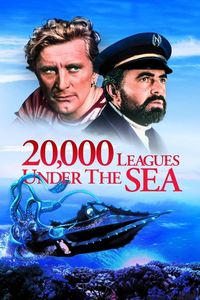
    (Google Play Streaming, July 2020) We can complain at length about Hollywood blockbusters, but when they’re well made, they endure. So it is that you can still watch Disney’s adaptation of Jules Verne’s 20,000 Leagues Under the Sea today and still have fun, even as the film is in the middle of its sixth decade. There’s a lot going on here—great underwater footage, good adventure sequences, and a lavish visual design that clearly anticipates steampunk or inspired it. There’s also the cast—a dashing Kirk Douglas in the lead role, mellifluously voiced (and bearded) James Mason as Captain Nemo, and a stocky close-cropped Peter Lorre as comic relief. Of all the film’s special-effects showcases, the squid sequence remains a highlight and quite convincing still. It all comes together in a good package where its dated nature is now part of the appeal.

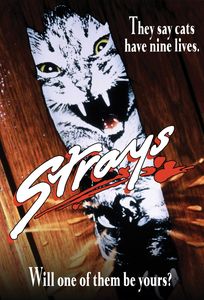
  • Strays aka Killer Cats (1991)

    Strays aka Killer Cats (1991)

    (In French, On Cable TV, July 2020) While Strays is very much an undistinguished made-for-TV horror-lite movie featuring a pack of killer cats, it occasionally lurches into so-bad-it’s-fun territory. The trouble begins when a prototypical family moves into an isolated house previously owned by a cat lady and the grieving cats start plotting a progressive campaign of terror against the clearly substandard new humans. It’s rather fun once the filmmakers turn desperate in showing menacing cats and throwing them on the actors as they shriek more loudly than the felines. Alas, this is no camp classic—Babylon 5’s Claudia Christian shows up in a substantial role, but disappears from the film too soon. Furthermore, the film suffers from severe padding issues, with much of the first hour just marking time for the last act, and raising a number of subplots that are not just stupid, but also useless. On the other hand, if you watch Strays’ first five minutes and skip ahead to its last half-hour, you just may get some entertainment out of it.

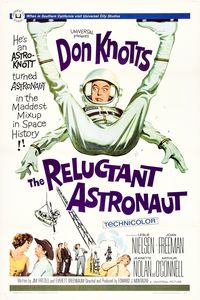
  • The Reluctant Astronaut (1967)

    The Reluctant Astronaut (1967)

    (On TV, July 2020) It’s not that I don’t get Don Knotts—the wild-eyed goofy shtick is timeless—but seen from the twenty-first century, it’s not all that clear why he ended up with that many starring roles in 1960s comedies. Films like mostly-forgotten curio The Reluctant Astronaut, which takes some inspiration from space-age race-to-the-moon mania to feature decidedly the un-heroic Knotts as a janitor promoted to space pioneer. It’s actually not a bad premise to match a high-profile comic actor with a topical situation (somehow, we were spared a 2010s Adam-Sandler-in-SpaceX remake). And, to be fair, Knotts understands the assignment perfectly: he plays the fool very well, and the film fits completely around his performance. If you want some comic theory, The Reluctant Astronaut is very much a film-long exploration of the clash between the sacred and the profane. Speaking of which—not-quite white-haired Leslie Nielsen plays the straight man in this silly comedy, portending his later-career turn as a comic icon. Space enthusiasts may be amused at the integration of real-life footage shot at Cape Kennedy. The story is familiar, but the historical value is rather interesting—for a dose of space-age pop optimism (the film feels closer to Kennedy-era 1960s than hippie-1960s), for how Hollywood comedies don’t change all that much throughout the decades, and perhaps even for understanding Knott’s appeal as a star.

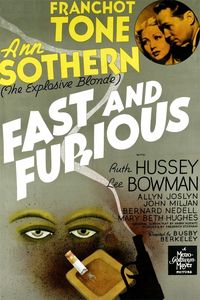
  • Fast and Furious (1939)

    Fast and Furious (1939)

    (On Cable TV, July 2020) I was slightly mistaken in recording this Fast and Furious—I thought I was recording the 1954 Corman film—but it turns out to be a nice little surprise: a husband-and-wife amateur sleuth story very much in the vein of The Thin Man. It turns out to be the last in an MGM trilogy explicitly modelled on the more successful Powell/Loy series, except half-heartedly executed with different lead actors every time. In this instalment, Franchot Tone and Ann Sothern play the bickering couple to good effect, even though you’ll still miss William Powell in the lead. Fast and Furious is notable for having been directed by Busby Berkeley, but it does not have any of the musical numbers for which he’s best known. The resulting murder mystery is a bunch of hooey (even the characters pretty much run the gamut of suspects to exhaustion), the relationship between the characters is merely fine… and yet, it’s fun and short at merely 73 minutes. There are some good comedy moments involving summer in the city, lions in a hotel, an ex-asylum attendant, and a querulous user of in-room services. Plus, the setting being a fantasy upper-class version of the 1930s doesn’t hurt. While the 1930s had several much better films in the same amateur-sleuth genre, Fast and Furious is very satisfying even as a second-tier example of the form.