Reviews

  • Day of the Woman aka I Spit on Your Grave (1978)

    Day of the Woman aka I Spit on Your Grave (1978)

    (In French, On Cable TV, October 2019) Sigh. I suppose that this is the basic exploitation movie trope in six words: Men rape woman, woman kills men. It doesn’t get any more sophisticated than this, and I Spit on Your Grave is indeed as basic as it gets with low-budget production values and a straightforward napkin-sized plot that only makes it to feature length because the violent scenes are extended beyond any reasonable length. The rape sequence alone lasts about thirty minutes, and the subsequent murders are equally interminable. If you can make a reasonable argument that conceptually, the film has excessive vengeance ideals but at least places its sympathies with the female victim, the sheer amount of relish through which the initial aggression and disproportional retribution are carried out brand I Spit on Your Grave as an exploitation picture and nothing else. It’s excruciatingly unpleasant to sit through even in the vengeance half of the film—As the plot stops for detailed depiction of sadistic killing, I found myself nit-picking the idiocy of the heroine’s excessively risky revenge plans and hoping that the film would perhaps play with the idea that she’s becoming a gleeful mass murderer. (But no.)  To be fair, lead actress Camille Keaton delivers a strong performance, and the film does have a raw unnerving naturalistic feel like many of the period’s trashiest horror movies. It does help explain why I Spit on Your Grave remains relatively well known today (even spawning a 2010 remake) while many bigger-budget studio movies of the era have been almost completely forgotten. But that doesn’t redeem much, not make the experience any more pleasant. Worth a look only for horror completists.
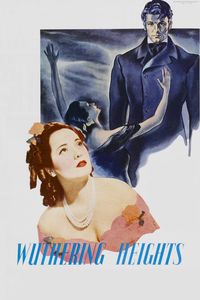
  • Wuthering Heights (1939)

    Wuthering Heights (1939)

    (On Cable TV, October 2019) 1930s Hollywood adaptation of literary classics are a specific category, but Wuthering Heights is in a category of its own even as a novel. Dismantling the archetype of the vengeful romantic hero, it presents protagonist Heathcliff as an obsessive monster destroying everyone’s lives in order to get what he wants. The glossy Hollywood adaptation, by necessity, does muddle the portrait: it lops off the more disturbing second half of the book, softens a few edges and provides a tragic romantic happy ending of sorts to the lead couple. (This being the second time in a few weeks that a classic Hollywood adaptation of a literary landmark features the heroine dying in the hero’s arms, I’m suddenly curious about the device.)  Being what it is, Wuthering Heights doesn’t completely delve into the most unsavoury aspects of the protagonist’s issues, although even a cursory viewing establishes that neither of the protagonists are particularly admirable in any way. For movie fans, there’s a certain pleasure here in seeing a young and dashing Laurence Olivier playing a cad opposite the beautiful Merle Oberon, or an even younger David Niven in an early role as another suitor. To contemporary viewers, the heightened melodramatic tone of the film can have a certain deliciousness, even if ironic. The film certainly won’t be much of a primer for a novel that keeps going for an entire generation after the events depicted in the film. Still, Wuthering Heights remains a landmark of sorts, and the period atmosphere is worth a brief time-travel trip.

  • Breakin’ 2: Electric Boogaloo (1984)

    Breakin’ 2: Electric Boogaloo (1984)

    (On Cable TV, October 2019) In the pantheon of movies more famous for their title than their content, Breakin’ 2: Electric Boogaloo has achieved a special notoriety. The subtitle can and has been applied to everything else as a signifier of “stupid movie sequel title,” and it feels vaguely sacrilegious to actually check out the actual movie. The result is … mixed. Released eight months after the original film, it’s clearly undercooked: the dialogue is serviceable, the storyline is the same “put on a show to save the community centre” nonsense we’ve seen since the 1930s and the characterization is paper-thin. Still, they did a lot in those eight months: There are a few spectacular numbers thrown in the mix here, bringing along a shift toward more classical musical comedy numbers in which everybody in the neighbourhood starts dancing to the same song. Such homages to classic musicals seem near to Electric Boogaloo’s heart—there’s notably a dance sequence using a rotating gimbal set that harkens back to Fred Astaire dancing on the ceiling. It’s cute, and frankly the story (as hackneyed as is it) does feel stronger and more substantial even in its clichés than the first film: There’s even quite a bit of class commentary. Ice-T is back to the forefront, while two-movie actress Sabrina Garcia has a cute little comedy role entirely in Spanish and lead Lucinda Dickey once again fails to impress. As a much-derided title, Electric Boogaloo is perhaps a bit better than you’d expect, but you do have to be in the mood for a bit of a cultural time travel back to 1984 to appreciate it.

  • Breakin’ (1984)

    Breakin’ (1984)

    (On Cable TV, October 2019) In between BMX Bandits, Beat Street and the Breakin’ duo, there was a spate of youth-culture movies in 1983-84 … and they are more interesting today as pop-culture archeological documents than movies in their own right. Breakin’ is what it says on the label: a movie entirely dedicated to breakdancing, albeit with contemporary music and Ice-T showing up on the soundtrack (although not always clearly on the screen). The story itself is the stuff boredom is made of, but it’s not as important as the dance sequences it features. The hair, the clothes, the slang may be hopelessly dated (and that’s part of Breakin’ charm) but the physicality of the performances remains intact. If nothing else, the film clearly illustrates how the 1980s completed a shift in the musical comedy form, going from the MGM ideal of non-diegetic dance numbers popping out of nowhere to a form in which pop songs replaced special songs and integrated more smoothly in the flow. The acting is forgettable (there isn’t anything special about Lucinda Dickey), the story is dull, but the rest of worth a slightly fascinated look, only to see what teenagers found cool back then. (Me? I was slightly too young and speaking the wrong language to have any first-hand memory of that subculture.)  Breakin’ wouldn’t feel out of place next to some other youth dance movies of the past three decades, from the Step Up series to anything featuring a dance-battle sequence. Still, that’s part of the charm—the visuals change, but everything else stays the same.

  • Dreamscape (1984)

    Dreamscape (1984)

    (Second Viewing, On Cable TV, October 2019) I remember bits and pieces of having first seen Dreamscape as a teenager, but I clearly remembered only the best part of it—the oneiric third act, and the wham-shot of the climax. As it turns out, there is more than that to the entire film: a thriller in which (decades before Inception), scientists use parapsychological mumbo-jumbo to justify someone entering another person’s dreams and manipulating them to good or ill effect. A young Randy Quaid makes for a likable hero, a psychic reluctantly recruited into a secret program while Kate Capshaw is the heroine. Christopher Plummer (evil) and Max von Sydow (good) provide supporting performances as the ones pulling the strings. The result is far more inventive than many other movies of the period, and remains surprisingly entertaining. There are weaker moments, of course: a dream seduction scene has become uncomfortable today at an age where consent must be fully informed, and Dreamscape becomes ordinarily dull in its third quarter as it focuses on conspiracy shenanigans rather than the premise of entering dreams. Special effects are employed effectively even if limited by mid-1980s technology. I’d ask for a remake, except that we already had one with the superlative Inception. It remains quite a fun film, though, especially if you approach it as just another B-grade 1980s SF movie.

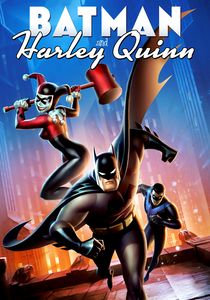
  • Batman and Harley Quinn (2017)

    Batman and Harley Quinn (2017)

    (On TV, October 2019) I’m not much of a comic-book fan, but there is something about Batman’s cast of supporting characters that I find interesting and Harley Quinn is surely one of the best newish (1992) introductions to the menagerie. (I’m not a big fan of the Margot Robbie version of Harley Quinn, but that’s another discussion for another time.)  This animated movie Batman and Harley Quinn takes from the New Batman Adventures TV series in recycling the art style and personalities of the characters. Quinn being Quinn and Batman being Batman provides much of the fodder for the film’s admittedly lighter tone: Noticeably lighter and funnier than the previous Batman animated movies (a clear step up from the repellent The Killing Joke), Batman and Harley Quinn nails the tone of the character and how she sees the world. It’s surprisingly racier than what you’d expect from the series (including some naughtiness between Quinn and Nightwing), but it somehow works. The film is at its best in small character moments: the overall plot is a bit too sombre, and the film ends about two minutes too early for a satisfying denouement. But having Quinn expel gas in the Batmobile has its own particular charm. Batman and Harley Quinn is not a great movie in that it won’t do much for those not already at ease in the Batman universe. But it’s fun enough for those who are, and noticeably better as a lighthearted adventure than the ultra-grimness of some other animated Batman movies.

  • Poltergeist II: The Other Side (1986)

    Poltergeist II: The Other Side (1986)

    (In French, On TV, October 2019) The line between good-crazy and bad-crazy is difficult to explain, but it can be convincingly illustrated by a back-to-back viewing of the original Poltergeist and its sequel. While it’s unfair to compare a Spielberg—“produced” horror thriller to a far more pedestrian follow-up, the drop-off in quality isn’t all Spielberg related. Take the script, for instance, which puts Native-American mysticism, cult leaders, psychic powers and the remaining elements of the first film into a big blender of subplots that don’t make any sense. Not only does Poltergeist II quickly reach for the unsatisfying “weird stuff happens for no reason” school of horror filmmaking, it does so with a singular lack of fun. Our characters bicker because they’re homeless and can’t get insurance to pay up, fight against an old cult suddenly revealed to be behind the shenanigans of the first movie, and cross over to a nebulous “other side” that doesn’t do much. It overcomplicates what had been an admirably simple premise, and forgets the humour of the first instalment. There are at least, copious special effects: They’re limited by mid-1980s technology, but at least they’re there. But they’re not enough to compensate for the film’s numerous problems and overall lack of appeal. I’m told that Poltergeist III is even worse, but I’m not that much in a hurry to find out.

  • Spies Like Us (1985)

    Spies Like Us (1985)

    (On Cable TV, October 2019) As I go through the 1980s back catalogue, it feels as if every new Chevy Chase movie I see highlights how badly his abrasive comic persona has aged. Or maybe been overexposed: his arrogant man-child persona has been repeated ad nauseam by other performers such as Will Ferrell and Vince Vaughn, and I found it all more annoying than funny in Spies Like Us. Whoever thought he was even remotely likable as a womanizer has now been proven wrong and unfortunately, we’re still stuck with the result. The film takes the low road to international comedy, by featuring two bumbling Americans being pressed into the spying business as decoys for other more competent operatives. Of course, the rules of comedy mean that they’ll end up being Big Heroes by the time the nuclear missile flies. (This shouldn’t be a spoiler.)  It’s easy to see why director John Landis would be interested in a script with large-scale comic set-pieces, international vistas, Dan Aykroyd and Chevy Chase and half-a dozen cameos from comedy directors that you have to be a cinephile to catch. Spies Like Us is not bad, but it does drag much longer than necessary and it relies far too much on Chase’s unpleasant comedy persona—Aykroyd is far more sympathetic. I do wish we’d see more ambitious big-budget comedies these days (rather than the improv-type stuff), but I don’t miss Chase at all.

  • Saw 3D aka Saw VII (2010)

    Saw 3D aka Saw VII (2010)

    (On Cable TV, October 2019) There are times, seven movies deep into a horror series, where you can justifiably think, “They should stop now.”  Not because it’s gotten bad yet (well, arguably), but because it’s clearly heading in that direction and it should cut its losses before it gets there. So it is that Saw 3D does have its share of interesting moments (the opening sequence visibly shot in downtown Toronto, the idea of a victims support group, the final revelation answering a few questions by bringing back a character) but was clearly running out of steam in its seventh instalment. Considering the wildly intricate chronology of the first six films, it’s not a real surprise if the temporal shenanigans of the series are mostly gone, the cast of characters thinned out, the moral pretensions almost completely wiped away (especially with one character running around like a mass murderer) and the focus on the traps—not my favourite aspect of the series—is getting tiresome. Then there’s the 3D: trendily hopping on a craze now gone back under control, Saw 3D sends flying body parts in the viewers’ faces, which just looks weird and contrived in 2D. (There’s also some colour grading issues with the 3D-to-2D conversion, but who cares, really.)  I don’t exactly hate the results, but it does feel like a lesser movie for the series, and a justifiable reason for its subsequent break. Indeed, in retrospect, the 2017 Jigsaw felt a bit reinvigorated, amply justifying the seven-year pause in what had been until then a yearly series.

  • Saw VI (2009)

    Saw VI (2009)

    (On Cable TV, October 2019) I have enough basic problems with the Saw series that I’m not going to pretend that I love it … but I’ve been vocal enough in my appreciation of its movies that I can’t pretend not to like it even a little bit. What’s appealing about the Saw series isn’t as much its gory torture sequence or botched morality, but the blend of twisted chronology, well-executed industrial trash aesthetics, and the crazy use of editing and soundtrack whenever the movie shift in high gear and doesn’t want you to pay attention to the details. I’d somehow skipped Saw VI when it came out (although I still remember joking that the title of the film, when pronounced in French as “Saw Six,” sounds like “saucisse”—meaning sausage) and it was time to six the oversight.  Don’t worry if you’re coming in late: this sixth entry quickly recaps much for the series as it brings together a reunion of nearly all of the surviving characters—and a few dead ones as well. I’m singularly uninterested in discussing the various traps/kills of the film, especially when there’s more fascinating material in how the film turns political as it draws explicit inspiration from the US health insurance system, and even takes a few moments to explain its insanity. (Reminder: The film, like most of the series, was filmed in Toronto.)  In doing so, and flash-backing so often that there’s nearly enough material for a drama-based prequel movie, it moves even closer to making Jigsaw a folk hero taking on the system. The chronology of the film isn’t as twisted as the previous ones, but it’s not simplistic either: In addition to the numerous flashbacks, there’s also a parallel plotline about the Jigsaw successor being investigated (leading to a rare non-trap death sequence) and getting a comeuppance slight enough to allow for a sequel. For a sixth instalment, that’s not too bad—the social content alone is enough to make the film relatively watchable even if you haven’t been paying attention to the series so far … and if you can stomach the gore. Still, no amount of plotting games and social content can disguise the fact that Saw VI is still meant to be a gory horror movie in the first place.

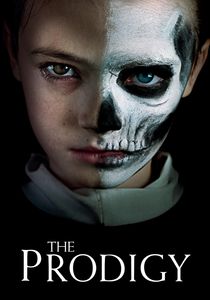
  • The Prodigy (2019)

    The Prodigy (2019)

    (On Cable TV, October 2019) I’m not a big fan of the bad-seed horror genre, and becoming a parent has done nothing to improve my opinion of the subgenre. The Prodigy brings very few new ideas to the table, although relying so much on ideas of reincarnation and the possibility, however fleeting, that there may be a cure for the bad child does give the story something extra to play with. Unfortunately, where The Prodigy fails is in giving us a reason to care. Focused almost entirely on the monster it has created, it seems uninterested in having anyone else to care about. The mom protagonist is barely sketched; the father is taken out of the film as quickly as he can, and even the psychologist (Colm Feore, wasted in a middling role) is better used as a puppet to bat around. Much of the execution is strictly routine, with faded colours, intrusive musical cues, and showy direction that, alas, only plays into solidly established genre techniques. By the time the bleak ending comes around, it’s more disappointing than anything else—not only is the film not giving us any chance to care, it ultimately doesn’t even give us a reason to care since the dice is loaded for a depressing ending. In making itself so dark, The Prodigy also found a way to make itself easily ignored.

  • Halloween: Resurrection (2002)

    Halloween: Resurrection (2002)

    (On TV, October 2019) I only watched Halloween: Resurrection out of a twisted sense of completion—It’s almost certainly the second-least popular and the second-least relevant of the Halloween movies (only outdone by the second Rob Zombie one), but it also happened to be the second-last one in the series I hadn’t seen. It turns out that is obscurity is justified. Emerging from the reality-TV craze of the early 2000s, it commits two blunders out of the gate: lamely killing off series heroine Laurie Strode in the pre-credit sequence (but not really, as the 2018 remake would backtrack) and then boldly putting reality TV in the Halloween mythos, with a dose of low-resolution found footage for good measure. Or should that be putting Michael Myers into a reality-TV teen horror movie? Either way, the result feels off-brand in more ways than one, and not in a good way such as the increasingly supernatural nature of the series’ sixth instalment. Coupled with the recognizably formulaic nature of the execution, complete with annoying teenage characters, ham-fisted plotting, and dialogues (Busta Rhymes may be likable, but he here comes across just as stereotyped as the other characters), obvious designation of the final girl from the first few moments, irritating music cues and the result is more infuriating than anything else. I’m almost certain that the film plays far worse today than it did back in 2002 (even if reviews weren’t kind back then either) because we have seen many, many variations of the same webcast reality-TV horror blend since then—whatever cogent points Halloween: Resurrection may have been trying to make with its then-unusual commentary on audiences watching its “dangertainment” have been overwhelmed by, well, reality. The result, seen from 2019, has deservedly been forgotten even by the series’ own internal continuity.

  • Leprechaun (1993)

    Leprechaun (1993)

    (On TV, October 2019) If the 1980s got busy in how it spawned multi-instalment horror franchises, the 1990s got stupid about it, which explains why 1993’s unlikely Leprechaun has now led to seven sequels and counting. The original feels like countless other early-1990s horror/comedy movies, playing on so much ingrained familiarity with the genre and the form that it has to resort to a ludicrous monster for inspiration. It’s ridiculous by design, so it can’t commit to the scares, yet can’t quite bring itself to become a full comedy. After a middling opening, it settles for following a bunch of kids and teenagers through the usual nonsense as a diminutive antagonist (Warwick Davis, quite good) prances around in stereotypical garb and spouts Irish one-liners. If this doesn’t seem all that scary, it doesn’t matter: Leprechaun, by this stage of the horror genre, is going through the motions of a horror movie in order to offer some kind of lighthearted experience to fans. That it engendered to so many follow-ups is baffling, but that’s really the producer’s decision. Perhaps the best of what the film has to offer now is a sense of nostalgia for that school of filmmaking (today’s horror comedies aren’t that different, but they do seem more self-aware). Oh, and one of Jennifer Aniston’s earliest film performances: it’s certainly not the best showcase for the acting skills (not with that dialogue, anyway), but she’s surprisingly cute as a teenager, and offers an interesting contrast to her later screen persona. Otherwise, though, Leprechaun is as bland as it comes even with a deliberately eccentric villain—in form, it’s practically identical to so many other films. Whether this is a good thing or not is the point of having a horror genre.

  • Tales from the Crypt (1972)

    Tales from the Crypt (1972)

    (On TV, October 2019) Anthology movies aren’t meant to be consistent, but I’m finding myself generally disappointed by the overall level of quality from the five Tales from the Crypt. The framing device actually isn’t too bad, but once we dig into the five stories themselves, we end up with fairly basic concepts developed limply. I suspect that the passing of time may have had something to do with it—horror build upon itself and the basic stories in this 1972 film often appear just a bit too simple, just missing an extra twist to be truly interesting. (To be fair, Tales from the Crypt is indeed aware of horror history—it adapts an old comic book series, after all, and even has characters explicitly mentioning “The Monkey’s Paw” in its best segment.)  Perhaps the best reason to watch the film today is for its early-1970s atmosphere: In the hands of director Freddie Francis, the fashions and décor, as dated as they can be, do offer a contract to other horror aesthetics. As for the rest, I remain lukewarm.

  • Sinbad and the Eye of the Tiger (1977)

    Sinbad and the Eye of the Tiger (1977)

    (On Cable TV, October 2019) Considering the central role of computer-generated imagery in portraying fantastic creations in modern movies, there’s still an old-fashioned charm to see ambitious fantasy movies from the pre-digital era. In Sinbad and the Eye of the Tiger, stop-motion wizard Harry Harryhausen is at the top of his form in making fantastic creatures interact with live-action actors.  It’s all the service of an old-fashioned adventure tale with a party of adventurers, evil opponents and a stream of wonders. In many traditional ways, this is not a particularly good movie: the acting is perceptibly poor, the direction is clearly limited by the requirements of the special effects and the episodic plotting is of the one-thing-after-another variety so popular in picaresque fantasy adventures, with few things building upon each other. But Sinbad and the Eye of the Tiger is not a movie to be appreciated on the usual scale. The stop-motion animation is often impressive (although that final-act tiger looks more huggable than threatening) and the imagination at work in terms of developing even rough fantasy conceits is refreshing in contrast to so many mainstream movies of the era. It has definitely aged and is now definitely dated: the special effects can be great or terrible depending on the scene and your own indulgence in such matters. But Sinbad and the Eye of the Tiger is, perhaps almost despite itself, quite a bit of fun. It’s like being told a fairy tale, filled with known elements but comforting because of how familiar it is, and how old-school it now feels.