Reviews

  • Friday the 13th Part VII: The New Blood (1988)

    Friday the 13th Part VII: The New Blood (1988)

    (On TV, October 2019) For cinephiles such as myself who don’t have any affection for the slasher genre and the Friday the 13th series in particular, the most interesting element of its movies is the narrative that holds the instalments together—the way Jason is brought back and dispatched in between the gore and the murdering of horny teenagers. Considering that the Friday the 13th series (justifiably) jumped into supernatural territory during its sixth instalment, it makes sense that its sequel would lean even more heavily in that direction. So it is that Friday the 13th Part VII: The New Blood features nothing less than a protagonist with telekinesis powers, able to break a mean girl’s pearl necklace at a distance, send a TV flying across the room and (far more crucially) free Jason from the underwater tomb in which he was placed at the end of the previous film. The ending also features a more interesting showdown than usual between zombie Jason and a final girl with the power to fight back. Alas, that ending peters out in an uninteresting finale, concluding the film on a sour note. I haven’t discussed anything in between the beginning and the end of the film because, in many ways, there’s nothing to say: It’s the usual killing-the-teenagers routine with little to distinguish it. (Although, strangely, this instalment intriguingly avoids the over-the-top gore featured in other films of the series—murders aplenty, but always cutting to another shot before the blood sprays out. Maybe it’s the TV version?)  Jason is a more formidable menace here thanks to being played by Kane Hodder for the first time, and as a kid who became a teenager in 1988, I still find some of the girls and hairstyles in the film cute rather than dated. Still, that’s a not a whole lot to recommend—Much like the entire series, Friday the 13th Part VII: The New Blood is not particularly good, and you really have to dig in order to find something interesting to say about it.
  • Friday the 13th Part VI: Jason Lives (1986)

    Friday the 13th Part VI: Jason Lives (1986)

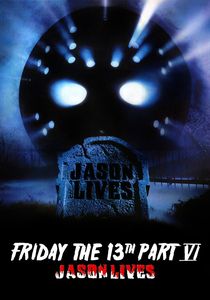
    (On TV, October 2019) There we are. Now we’re talking. Surprisingly enough, there was little in the first five movies in the Friday the 13th series to explicitly state that it took place in a universe with supernatural elements—Sure, Jason was impossibly invulnerable and the plotting contrived to absurd degree, but you could deny, ignore or explain away the supernatural events. Not so much here, as Jason is resurrected by a bolt of lightning, his body still moist-fresh after some time underground. Then we’re back to the usual business of murdering horny camp counselors. This new supernatural focus does bring a bit of energy back into the series, although not as much as improved screenwriting and directing. (It’s not good writing or direction, but at least it’s a step up.)  The ending has the decency to lean on the supernatural element in immobilizing the threat (until the next film) but not even pretending to get rid of it. There’s also an element of self-aware comedy to the film, starting with a title sequence that borrows from James Bond’s barrel gun opening but does not quite go into outright parody territory. (I also liked the bit where the camp counselors ask what could be worse than a psycho killer … to be answered by the arrival of a bus filled with kids.)  I am certainly not a fan of the series and I won’t try to pretend that Jason Lives is any good, but it’s certainly a step in the right direction—and an illustration that any series that goes on long enough ends up being a parody of itself.

  • Friday the 13th: A New Beginning aka Friday the 13th Part V (1985)

    Friday the 13th: A New Beginning aka Friday the 13th Part V (1985)

    (On TV, October 2019) Even by the low standards of slasher movies and the even-lower standards of its series, Friday the 13th: A New Beginning is a singularly dumb instalment. Jason is dead (yes, really), but what takes its place is spectacularly contrived. The film begins as the young protagonist of the previous film, now grown up but severely traumatized, is sent to a halfway house camp just happens to be close to Crystal Lake Forest Hill. One random axe murder later, we’re once again stuck with a hockey-mask-wearing psychopath murdering teenagers. Characterization isn’t a strong suit of this film as it keeps introducing minor characters just in time to murder them savagely and then repeat until a dark barn-set climax. There’s a lot of nudity, but it doesn’t help as much as you’d think, not when the film even struggles to create a plot around the predictable kill sequences. I did like the idea of a chainsaw-versus-machete combat, but that’s reaching deep in the film’s details to find something worth remembering. The Friday the 13th series was never high art, but A New Beginning plumbs new depths in its attempt to do something without quite going supernatural. But then there was the sequel…

  • The Purple Rose of Cairo (1985)

    The Purple Rose of Cairo (1985)

    (On Cable TV, October 2019) OK, this was a fun one—in a decade when Woody Allen movies started with the introspective Stardust Memories telling us about his “earlier, funnier ones” and moved on to what would become Allen’s contemporary blend of gentle comedy and drama (culminating in Manhattan Murder Mystery, which would best exemplify Allen’s tone for a while), The Purple Rose of Cairo stands out as a metafictional high-concept homage to 1930s film. The plot gets going in a Depression-era small-town, as a young woman with problems escapes to the movies … and has the star walking off the screen to meet her. They fall in love, but the best part of the film is how it keeps poking at its premise and developing a little bit farther than strictly necessary, having some fun along the way. (Real life doesn’t fade to black in intimate scenes, for instance.)  Some of the development does leave us wanting more, though—the brief mentions of other actors springing to life do land us in a territory that is never properly explored.   The recreation of a 1930s comedy film is convincing and a delight if you’re familiar with the era. The bittersweet ending is disappointing, though: a bit more light would have been helpful, although the protagonist finds herself in a better place if only for not being stuck in the same relationship. Still, compared to other Allen movies of the era (the bizarre Zelig excepted), The Purple Rose of Cairo does feel more high-concept, funnier, breezier.

  • Body Snatchers (1993)

    Body Snatchers (1993)

    (On Cable TV, October 2019) I have now seen four different film versions of Invasion of the Body Snatchers —1956, 1978, 1993, and 2007, and they each have the singular distinction of being worse than the previous one. I saw the now mostly forgotten 1993 version out of a sense of completion, but I can’t say I’m feeling fulfilled now that I’ve seen it. The problems start early with Body Snatchers, as a moody teenager’s voiceover opens the film with a soliloquy more at ease in an overdone coming-of-age drama than a full-blown horror movie—it’s a strong cue about the film being aimed explicitly at teenage audiences rather than tap into universal paranoia. Then the script makes a dumbfounding decision to set the story on a military base, completely undercutting the suburban (or urban) this-could-happen-anywhere anxiety that made the reputation of the earlier entries. The parallels between pod people and military rigidity isn’t as clever as the screenwriter thinks, and the result plays safely at a remove, defanging a lot of the innate terror that such a scenario should have. To be fair, there are a few things I do like about this version—director Abel Ferrara usually knows what he’s doing, and Meg Tilly is pure sexy evil here. But as for the individual components that I liked (the shrill shriek, the big-budget military hardware and explosions, the special effects depicting the pod people taking over) all seemed to have been taken from other better movies. A muddled ending that seems to rescue disaster from the jaws of victory is a further irritant. Within the context of its handicapped scope and repetitive nature, this Body Snatches does OK, but it falls far short out of the best versions of the story.

  • L’eclisse [The Eclipse] (1962)

    L’eclisse [The Eclipse] (1962)

    (On Cable TV, October 2019) That’s it—I’m done with Michelangelo Antonioni. I’ve seen four of his films and mildly liked only one of them, and that one is due to Blow-up having inspired both Blow-Out and Austin Powers. For his core alienation trilogy, L’eclisse merely reiterate (at great length) everything I felt about L’avventura or La notte—dull drama about unlikable characters and a director who’s clearly not interested in conventional narrative moviemaking. L’eclisse is overlong, uninterested in telling a story, in love with its own way of avoiding conventionality even at the expense of basic watchability. But I repeat myself. I could go on, but the point isn’t as much that I disliked the movie, but that it’s not a movie made for me. Coming from the early 1960s, it’s an experiment rebelling against the formalism of Italian cinema, a first foray in portraying a rejuvenated Rome after the lean post-war years, a series of experiments with cinematic form, and a refusal to play it safe. Considering nearly 60 years of subsequent experimentation in pushing the barriers of cinema, it’s a fair bet to say that other directors have pushed the envelope farther, and that if other directors haven’t, it’s because you lose a considerable portion of the audience along the way. If pressed, I do have a few nice things to say about L’eclisse: Alain Delon is cool despite showing up late in the film. The sequences at the Italian stock market are fascinating and Monica Vitti is always wonderful to watch. There’s clearly an artistic intent at work. But when you throw these elements together, I just can’t stand the result—too long, too dull, and so self-indulgent that I’m not even willing to play along. And that stands for Antonioni as a whole. It’s not because some 1960s critics were rapturous about the result that I must feel the same way.

  • Halloween: The Curse of Michael Myers (1995)

    Halloween: The Curse of Michael Myers (1995)

    (On TV, October 2019) It took no less than seven years for Moustapha Akkad, the producer of the Halloween series (at that point) to conclude the three-film arc launched with Halloween 4, but sixth entry Halloween: The Curse of Michael Myers is a let-down even by the low standards of slasher films in following the fifth movie’s dangling plot threads. This being said, let’s be careful about expressions such as “three-film-arc,” and “following up on plot threads”: the production history of the series clearly shows that they had no idea where to go and made it up at each new film up to the shooting stage, which explains the disjointed plot details and increased supernatural mysticism of Myers’s powers. Whatever interesting plot elements are almost accidental, and they tend to be overwhelmed by the execution as, inevitably, slasher movies appeals to those who want to see “the kills” more than anything else. The production history of this entry is almost legendary for its chaotic nature, so all we’re left to contemplate is what shows up on-screen (and even then, there’s a producer’s cut also floating around—not what I’m reviewing here). And what shows up is … weird. Paul Rudd gets an early starring role, but his sullen creepy character is far away from his usual screen persona. This was veteran actor Donald Pleasance’s last film role, but even it was butchered considering that he died between principal photography and the extensive reshoots. The result is a mess, not even enjoyable by slasher standards. And if you’re not a slasher fan, then it quickly becomes exasperating. There are about half a dozen things and ideas in here that a more competent writer or director (or producer, considering the entire mess) could have used to make a more interesting film, but that’s not the case. There is an interesting historical context here in that the following year, Scream would re-examine the slasher genre and relaunch it on a foundation of self-awareness and snark, so you can consider Halloween: The Curse of Michael Myers as the last dying gasp of the old-school slasher. As for me, this was the last reasonably popular Halloween film I hadn’t seen (or so say my notes, because these films are hard to tell apart without written documentation) and so I can walk away from the entire series with the conviction that off-brand Halloween III remains the craziest and best of them.

  • The People Under the Stairs (1991)

    The People Under the Stairs (1991)

    (On TV, October 2019) I have a feeling that I should be liking The People Under the Stairs a lot more than I do. After all, it does feature non-traditional protagonists, social issues such as accessible housing, and more unhinged antagonists than usual. The structure of the film is also a bit unusual, with the protagonists escaping the Bad Place on the third-act turn, only to return later. Seasoned writer-director Wes Craven blends the appearance of weird creatures with more prosaic concerns, such as a family in danger of being evicted, in order to skirt the edges of the horror genre. That’s all well and good, except that, well, I didn’t care much for it. The creatures feel needlessly grotesque, the protagonist a bit too young, the social commentary muted, the humour out-of-place. The Gulf War footage does bring some intriguing period atmosphere to the proceedings, but not enough to take the film out of the confines of its own set. In other words, I don’t quite get The People Under the Stairs and there are worthier movies to puzzle over.

  • The Final Conflict [Omen III: The Final Conflict] (1981)

    The Final Conflict [Omen III: The Final Conflict] (1981)

    (On TV, October 2019) There’s something curious about how many of mainstream Hollywood’s portrayal of the Christian faith are often found in the horror genre. Things don’t get any wilder in this regard as Omen III: After two movies in which the Antichrist was born, got rid of his opponents, grew up a bit, got rid of more opponents; here we have a grown-up opponent (a genius businessman bringing good to the word) finally able to exert some real power. Except for … the rebirth of Christ, coming to destroy him in his ascendancy. It’s all very prophetic mumbo-jumbo talking about “the Nazarene” from a Satanist perspective, but the tables are turned and the result does have some entertainment to it. An early role for Sam Neill gives him ample opportunity to chew on scenery and ham it up as far as he can. Meanwhile, the deaths are alternately grotesque or overdone: it’s not enough for an avenging priest to be hanged by a freak TV studio accident: he must be set on fire for good measure. And the way the editing transforms a pack of adorable beagles into a bloodthirsty pack is nothing short of admirable. Then there’s the plot, which has the Antichrist killing every male child born in the United Kingdom during a certain amount of time. (And an assistant privy to his most insane reflections, but who doesn’t have the sense to run far away when his own newborn son is targeted. Guess who’s the anti-Antichrist?)  But what’s perhaps most surprising about The Final Conflict is its finality: by the end, the evil is thoroughly defeated in a way that seems even further sequels impossible. There’s even angelic music and scriptures quotes to make you feel better about the whole thing. I still don’t think The Final Conflict is a good movie: it’s far too scattered, occasionally ridiculous, and underdeveloped (supposedly taking place in a dystopian future, although you’d never know it once past the first few minutes) to be anywhere near good. But I will grant that it does have some decent entertainment value. Especially compared to its far dourer predecessors.

  • Path to War (2002)

    Path to War (2002)

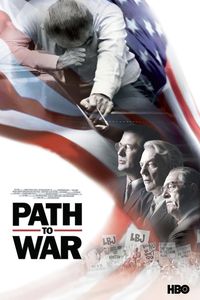
    (On Cable TV, October 2019) John Frankenheimer remains a major director even fifteen years after his death, and Path to War is noteworthy for being his last movie, a made-for-HBO production that nonetheless shows his consummate skills in putting together an interesting film. It’s easy to see why it wasn’t considered for the big screen: as a nearly three hours behind-the-scenes look at the way the United States gradually manipulated itself into launching the Vietnam War, it’s a cerebral topic that is best appreciated at home. Still, the flow of the film’s sequences and the care through which the actors are delivering their performance is clearly indicative of someone like Frankenheimer’s talents. The film itself is interesting in that it gives life to a geopolitical theory: the idea that Lyndon B. Johnston wanted to focus on his domestic agenda but found himself increasingly surrounded by people who all (regretfully) saw no way out of greater engagement, even those who had been forcefully opposed to the idea in the first place. There’s an interesting statement here about the inevitability of some processes once set in motion, and how powerless even the so-called most powerful people can be. Path to War may or may not reflect the entire truth about how the US got stuck in Vietnam, but it’s an unusual movie for even approaching the topic. Performance-wise, Michael Gambon, Donald Sutherland and Alec Baldwin all deliver subtle, strong and somewhat atypical performances acting as historical characters. It can certainly be amusing to spot the various historical characters populating the story—all the way to the appearance of Jack Valenti, who worked at the White House before becoming a Hollywood figurehead. All in all, this is prestige made-for-TV filmmaking, tacking serious topics in a competent fashion. There’s an interesting link to be made between Frankenheimer’s 1960s wild political thrillers and the reality-based story presented in Path to War. In a way, he got to revisit his own past filmography in presenting the real thing.

  • L’avventura (1960)

    L’avventura (1960)

    (On Cable TV, October 2019) I should not be surprised at my less-than-impressed reaction to writer-director Michelangelo Antonioni’s L’avventura. For one thing, I don’t have a lot of sympathy for Italian neorealism, slow cinema or plotless drama and L’avventura comes close to being all of these. While it may at first appear that the film will be about the disappearance of a young woman on a small Mediterranean island, it turns out that this is just a hook and that the mystery is never resolved—much of the film is about the subsequent affair between the disappeared woman’s friend and boyfriend, except without anything looking like complications following the disappearance. No, much of L’avventura is about slow pacing, trips through circa-1960s Italy, nice landscapes, and two lovers talking through their relationship. There is a public for that (the film is often mentioned in various best-of lists), but I’m not part of it. Rather than regale you with how my attention wandered and I kept wondering with increasing exasperation when the entire thing would end (nearly two and a half hours after it began), I’d rather leave with the affirmation that L’avventura isn’t my kind of cinema and leave it at that.

  • Halloween 5: The Revenge of Michael Myers (1989)

    Halloween 5: The Revenge of Michael Myers (1989)

    (On TV, October 2019) It doesn’t take two minutes in Halloween 5: The Revenge of Michael Myers to rewrite the ending of the previous film in the series, audaciously inserting material in between the frames of the previous film in order to absolve its young heroine, juice up Myers’s upcoming presence and introduce a strong supernatural element in the whole thing. Which is almost inevitable when you run out of ideas. Indeed, other than the slightly better direction, what follows is pretty much the usual for that kind of movie: an unstoppable killer, an innocent victim (once again too young for this to be good fun), a small town’s graduating class of teenagers being murdered throughout the film. It’s all quite dull. There is a flicker of interest at the very end of the film as a mysterious force ensures the possibility of a sequel, but otherwise this is very familiar material—even the various hints of the supernatural aren’t capitalized upon, leaving an unfinished, unsatisfying impression. Granted, I’m no fan of the series nor of the slasher subgenre in general, so my grain of salt is not particularly sympathetic to the film from the beginning. Still, Halloween 5: The Revenge of Michael Myers feels like one dull movie, barely worth watching unless, like me, you’re committed to filling out the blanks in the series.

  • Halloween 4: The Return of Michael Myers (1988)

    Halloween 4: The Return of Michael Myers (1988)

    (On TV, October 2019) In the grand scheme of the Halloween series, Halloween 4: The Return of Michael Myers is the one that trashed the idea of a series of unrelated Halloween-themed movies—as much as I like Halloween 3’s crazy approach to the theme, Halloween 4 is indeed the return of Michael Myers as the unstoppable, possibly supernatural serial killer with a fascination for the Stroud family. If you’re even remotely familiar with the concept of a slasher horror movie, you know what to expect: an evil killer, innocent victims, ineffectual police forces (through no fault of their own, as even gunshots at close range aren’t the kind of stuff that will stop this killer). The twist here is that the intended victim is a very young girl, introducing a not-so-cool, not-so-fun element in the template. There’s an extra twist at the very end, but it feels more distasteful and a mockery of any attempt at characterization—though I’ll note that both Halloween 4 and Friday the 13th 4 (four years apart) ended on similar notes, Halloween 4 being a bit more sadistic about it. There’s something almost interesting in the character of the doctor (Donald Pleasance) being driven mad by the idea of pure evil returning over and over again, but if you’re thinking meta-commentary about the nature of such movies, then think again: Halloween 4 really isn’t interested by such shenanigans. As the flat writing and direction suggest, this is a pure cash-in. If you’re a fan of slasher horror, this is a film for you. If you’re not, this is clearly not the film that will convince you otherwise.

  • Green Book (2018)

    Green Book (2018)

    (On Cable TV, October 2019) Considering our increasingly sophisticated understanding of (North)American racism, it’s getting obvious that the approach of previous eras isn’t quite enough today. At a time when the Oscars are being awarded between Black Panther, BlacKKKlansman and Green Book, well, it’s infuriating when the Academy ends up picking the absolute safest choice. Green Book, is, in many ways, a throwback to the comfortable anti-racism message of previous decades: White people should be nice to “The Other” so that they should feel better about themselves. In this simplistic message, the inner lives and culture, agency, and aspirations of “the Other” are irrelevant to showing the evolution of the white person. That’s not enough today: “The Other” deserves a full personality, deserves to be the heroes of their own story. In that context, Green Book isn’t all that impressive: as the story of a white protagonist driving around a black musician across the deep south and keeping him out of trouble, it’s clear that the film is more interested in making white audiences feel superior to the cartoonishly racist antagonists of the film. Not to take anything away from the performances of Viggo Mortensen (as the driver) and Mahershala Ali (as the musician, a character of such welcome complexity that the film short-changes him by shoehorning him in a simple story), nor a welcome supporting role for Linda Cardellini, but the result has its limits when comparing it to other best-of-the-year movies. I’d be lying if I didn’t confess to enjoy much of Green Book: there’s a straightforward propulsive quality to the screenwriting that makes it an easy movie to watch and enjoy. I do have the white privilege of liking the film’s reassuring message. But coming off the movie high of BlacKKKlansman, which confronts racists in its ugliest contemporary forms and refuses any easy comfort by making the point that the fight is still ongoing, well Green Book looks like thin soup. There’s a bit of Spotlight Rot at work here, in that a perfectly good genre piece wilts when examined by sustained attention from audiences outside its comfort zone. But at this moment, with the top echelon of the American government not even hiding its inherent racism, I have little patience by comforting lies when “The Others” are not being merely marginalized or harmed but often killed. Green Book may be a feel-good fable, but I want more.

  • Friday the 13th: The Final Chapter (1984)

    Friday the 13th: The Final Chapter (1984)

    (On Cable TV, October 2019) It’s been decades since I last saw the first Friday the 13th film trilogy and considering my distaste of slasher film, I probably could have gone on the rest of my life without seeing the other film in the series. But this is October and the cable channels are cranking up their horror movie schedule and I figure that this may be as good a time as any to record the rest of the series and make it an endurance contest. First up is the fourth entry The Final Chapter (which was a lie, considering that it was succeeded by no fewer than eight other movies). Made at a time when the slasher craze was fully defined and getting familiar, this Final Chapter is very much in-line with the previous instalments: Here, once again, we have teenagers (some locals and some out-of-towners looking for a cottage vacation) having sex and getting killed by the killer’s nigh-omnipotent craziness. It’s all surprisingly boring despite the deaths accumulating at a fast pace. There isn’t all that much nudity, the deaths are gory without being as disgusting as they would become in later instalments (well, by my jaded 2019’s blood-soaked standards, anyway) and only the presence of a younger boy helps distinguish the film from the usual template. Trying to review these movies is a challenge when there’s so little to say. I won’t bring myself to comment on the quality of the on-screen slashing, and there isn’t much to the rest of the film to comment once you’re bored with those interludes. (Some of the stunts are good, though—there’s a length slow motion falling-though-the-windows-and-then-to-the-ground shot that’s spectacular in its own right.)  The 1980s flavour is there but it’s not going to cause any nostalgia along the way. Whatever special marketing hook this film may have had as “a final chapter” has been thoroughly nullified by the endless follow-ups. As a Friday the 13th film, The Final Chapter is pretty much what this series is about—meaning that it ties in a piece with the first three films in the series (indeed picking up moments after the third) but that it certainly won’t make any new fans of the franchise by that point. You already know if you’re going to like it.