Reviews

  • Attack of the 50 Foot Woman (1958)

    Attack of the 50 Foot Woman (1958)

    (On Cable TV, January 2019) Some movies are legendary for their titles and not much else, and Attack of the 50 Foot Woman certainly earns a place in that pantheon. The concept embedded in its title has probably fuelled more kinky fetishes that anyone would dare acknowledge (also spawning the kids-friendly Monsters vs. Aliens’ Ginormica along the way) and the poster is simply a work of art. Go back to the original film, however, and you will find that there’s not a lot at the root of it all, and that what’s there is considerably darker than you’d think from the pop-culture riffs on the premise. First things first: The production values of Attack of the 50 Foot Woman are very low and very bad. The sets are threadbare and director Nathan H. Juran uses every trick in the book to (unsuccessfully) maximize their use. The premise remains as striking as lead Allison Hayes—but the rest, including the plot, not so much. While the premise would lead you to expect a film in which the titular 50-foot woman would be a major presence throughout, our heroine gets blown up to spectacular dimensions very late in the film, leading to a climax that feels very abrupt. Interestingly, the film is much darker than you’d expect from a 1950s sci-fi shlock landmark: Our heroine is a troubled woman, but her husband is far worse and she comes to the story as a desperate person with nothing to lose. Alas, the ending does her no favours, and leaves viewers unsatisfied in many ways. Attack of the 50 Foot Woman is not the movie that later imitations and homages may have led you to believe, but it is at once more complex (due to its sympathy for its heroine) and more depressing (considering the climax) than what you’d expect.

  • Ship of Fools (1965)

    Ship of Fools (1965)

    (On Cable TV, January 2019) There are many ways in which Ship of Fools reminded me of Grand Hotel—its 1930s setting, its ensemble cast with overlapping subplots, its black-and-white cinematography and its mixture of American and German characters. However, the comparisons only go so far and the crucial difference between the two movies is not that one is in a building and the other on an ocean liner, but that one was made in 1932 and the other one after World War II. As a result, expect a lot more Nazis in Ship of Fools than Grand Hotel, and the portentous veil that this distance casts over the entire film. As the film begins assembling its large cast of characters, it quickly becomes apparent that this isn’t just about people travelling from North America to Europe on a steam ship, but a message movie about the rise of fascism in Europe. (Contemporary viewers would have known that from seeing that it’s directed by Stanley Kramer, a renowned social issues filmmaker.) The foreboding feeling is accentuated by the characters opposing their views on the world, and the film sides squarely with the marginalized over more conventional heroes. (In addition to characters with terminal illnesses or mental conditions, there are Jewish characters, obviously, and the film’s most likable character, its narrator, is played by 3′10″ Michael Dunn in an Oscar-nominated performance.) The ensemble cast is impressive, what with Lee Marvin, Vivien Leigh (in her last film), José Ferrer and a terrific Simone Signoret. Ship of Fools is certainly preachy, but there’s a powerful sense of impending doom as the characters get closer to their German port of arrival. The last few moments are particularly hard-hitting, as the narrator delivers a bitterly ironic envoi.

  • Viva Las Vegas (1964)

    Viva Las Vegas (1964)

    (On Cable TV, January 2019) Come to Vegas for Elvis, stay for Ann-Margret. At least that’s my reaction to Viva Las Vegas: While the film remains Presley’s best-known film (he made 31 of them in 13 years, but few of them have endured), the real draw here is Ann-Margret as practically the equal to Presley. The plot reads like a melting pot of mid-1960s teenage obsessions, in between the racing, gambling, dancing and singing. The plot naturally leads to an amiable atmosphere and ten snappy musical numbers (including the one-shot of Elvis singing the classic title tune). The portrait of Las Vegas in the early 1960s is simply fascinating, especially considering how the city has changed since then. There’s also a pretty good car race at the climax of the film. Still, the one reason to watch Viva Las Vegas even today is seeing Presley measure up to Ann-Margret—she’s a dynamo of red-headed energy here, and it’s good to see a film in which both romantic leads are equally strong.

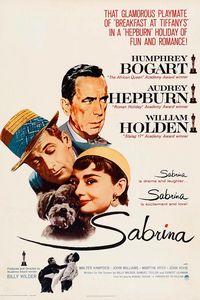
  • Sabrina (1954)

    Sabrina (1954)

    (In French, On Cable TV, January 2019) If you want to understand why so many people love Audrey Hepburn as an actress, as a style icon or even as a person, you can start with Breakfast at Tiffany’s … or you can start with Sabrina. I know which one I’d pick: Despite Breakfast at Tiffany’s little black dress, Sabrina has Hepburn in a far more suitable role, avoids many of the unpleasant edges of the other film, and showcases Hepburn at the very beginning of her long association with high fashion. It’s also, to put it bluntly, a better movie. Here we have Humphrey Bogart, certainly too old for Hepburn at thirty years her senior but playing a fascinating deviation on his usual persona as a sophisticated businessman thrown in a romantic role. Plot-wise, Sabrina is filled with tricky material—the acknowledged age difference, the class issues, the messy familial romantic entanglements, heck the opening scene’s suicide attempt—but it succeeds largely because of writer/director Billy Wilder’s typically light touch on difficult material. The intriguing glimpse at the life of New York’s upper-class set is window dressing for a romance that’s not as clear-cut as in many other movies of the period, and that’s the territory in which Wilder excelled. Still, for most, Sabrina will be enjoyable on a purely aesthetic level: This is the movie that first paired Audrey Hepburn with Paris (even if only in studio shots), and also the film that launched her lifelong association with Givenchy. Sabrina is far less sappy and mindless than you’d expect from a mid-1950s romance, and that’s what gives it enduring power—plus Bogart and Hepburn, of course.

  • The Golden Child (1986)

    The Golden Child (1986)

    (In French, On TV, January 2019) There were a lot of high-concept movies and a lot of fantasy films in the mid-1980s, and The Golden Child looks like a wacky collision between both, with the headline being the presence of then-red-hot Eddie Murphy in the lead role. The plot has something to do with a Los Angeles private detective (Murphy) being tasked with protecting a boy with mystical power from supernatural enemies, both in L.A. and in Tibet. Murphy being Murphy, his character is of the wisecracking variety, only becoming serious about his assignment when there’s no more room for jokes. The far-east mysticism is used to its fullest extent, and I suppose that one of The Golden Child’s biggest comic draws is the clash between black American outsider street smarts and otherworldly eastern mythology thrills. This being said, Murphy does look a bit lost in supernatural adventure, the irreverence of his character often being more irritating than endearing in the early stages of the film. Among supporting actors, we have an early role for Charles Dance (providing an “applause” GIF along the way), and Charlotte Lewis looks amazingly good (although she’s not much of an actress). Some of the special effects are more evocative than convincing. A few moments are amusing. Otherwise, The Golden Child is a product of its time, and it often feels like a cut-rate analogue to Big Trouble in Little China. It’s not that good, somewhat mis-aimed, and doesn’t always use the opportunities it has, and was probably hampered by having a megastar like Murphy in the lead role. Still, its strong genre roots and Murphy’s persona do make it somewhat more memorable than many other comparable films of the time. The Golden Child does have a quirky side as well: how many other movies make a good use of Pepsi product placement as a funny stop-motion dance interlude?

  • Stakeout (1987)

    Stakeout (1987)

    (In French, On Cable TV, January 2019) Here’s a hypothetical situation to test your skills at being a Hollywood producer. It’s not a hard one. Here you have a pair of actors starring in your movie as stakeout cops: Emilio Estevez (aged 25) and Richard Dreyfuss (aged 40). You also have the rather sexy Madeline Stowe (aged 29) playing a woman who’s being watched by our heroes. Naturally, there’s going to be a romance—that’s a given, not to be put in doubt. The question is this: Would you rather pair up Stowe with Estevez (four years her junior) or with Dreyfuss (eleven years her elder)? Take your time. Don’t cheat. There’s only one answer. But of course, this is Hollywood and at the time Dreyfuss was the biggest actor, so naturally we have a May-July romance going on. So it goes in an industry controlled by older men. Bad casting aside, Stakeout is merely a decent film. Veteran director John Badham’s attempt to combine comedy and action thrills is intermittently successful, although the film is more effective in its action moments that the often-juvenile comedy. The soundtrack is very eighties, but then so is much of the film as a buddy cop movie. There are a number of ethical issues raised by Stakeout’s romance (the word “stalking” is never mentioned, although it should be), but like most police movies of the time it’s far more interested in designating its heroes as beyond reproach than actually exploring those issues. Stakeout remains an entertaining film, but it does have a number of issues that may cause more discomfort than fun.

  • Sicario: Day of the Soldado (2017)

    Sicario: Day of the Soldado (2017)

    (On Cable TV, January 2019) There are times when I wish we’d be able to take movies, put them in a time capsule and see them a few years down the line once the real-world context calms down a little. Such is it with Sicario: Day of the Soldado, a solid thriller that has the misfortune of espousing a pessimistic view of the world at a time when real-world American politics were primed to make hay with thriller elements. To put it bluntly: the movie opens with immigrants blowing up an American store, blending al-Qaeda threats with cross-border immigration … and was released shortly before a midterm election where illegal immigration was bandied about as a cheap boogeyman. Excerpts of the film even showed up in misinformation “news” segments. Such a movie can’t win in such a politically charged moment. The basic storytelling device of justifying the worst lapses in morals by the presence of a terrifying enemy is a common one in thrillers—and properly handled, it can even be convincing. But there’s something about the blunt-edged way that Soldado makes its point that is not just graceless, but actively seems to be courting a certain viewership that may not make a difference between a screenwriter’s tool and real-world paranoia. It doesn’t help that Soldado never stops to consider the morality of its actions, as our “protagonists” react to the opening provocation by going to a foreign country in order to set up a false-flag operation, kidnapping a child in order to create a gang war. Soldado is up-to-the-moment in terms of technology (the film has a pleasant mechanical heft to its use of vehicles), but it’s also sadly very much of the time in terms of amorality. It’s this callous eagerness to embrace a lack of morality that’s disturbing to viewers: it seems to bring comfort to those who would like to achieve objectives by all means necessary, and cuts a bit too close to disaster these days. I’m actually bothered by the fact that I’m bothered by this, because in many ways Soldado is a solid but unremarkable thriller. While obviously a step down from the first Sicario (which was merciless but self-aware about it), Soldado has some fantastic action sequences, a great ominous soundtrack, a decent turn by Benicio del Toro and a plot that could have worked well had it included some pushback against its own actions. But it doesn’t. Stefano Sollima’s direction is competent without being stellar, and the same goes for the cinematography, action and other technical aspects of the film. It’s decent enough on its own right, but a disappointment compared to the first one, and a borderline-repellent work in today’s context. I would look forward to a re-appreciation in a decade, especially if the United States somehow regains some kind of effective morality by that time.

  • The Jewel of the Nile (1985)

    The Jewel of the Nile (1985)

    (On Cable TV, January 2019) Following up on Romancing the Stone barely a year later, The Jewel of the Nile once again teams up Michael Douglas and Kathleen Turner (and Danny DeVito) for a comedic adventure far away from home. Heading for the Middle East rather than South America, the characters soon find themselves embroiled in a revolution against a despot, and trying to work out their marital issues along the way. This straightforward adventure is powered by Douglas and Turner’s charm, as they bicker and reconcile over the course of the film. While generally tepid, the film does hit a high mark during an escape sequence featuring a land-bound F-16 jet. Perhaps unfortunately, the plot doesn’t do as much as it promises early on in exploring the fantasy/reality frontier that comes naturally by having a novelist in a lead role. In some ways, the film is about rerunning a romance with a bit more information about each other, belying the theory that you shouldn’t make a romantic sequel because everything has been said the first time. In that context, The Jewel of the Nile doesn’t stand by itself, and greatly benefits from having seen Romancing the Stone (a generally stronger film) not too long beforehand. It’s watchable enough, but not a great or even good movie.

  • Eastwood Directs: The Untold Story (2013)

    Eastwood Directs: The Untold Story (2013)

    (On Cable TV, January 2019) After a few examples of the genre, I’m getting to realize that authorized documentaries about famous directors are never going to give viewers a solid critical overview of the director’s work. Altman, de Palma, Spielberg and here Eastwood Directs… It costs too much and requires too much work to set up interviews with the directors and their colleagues to actually dare offer something other than a celebration of their work. The disconnect between what is shown on-screen and what there is to say about a director’s work (or his life!) will seldom be as notable as with Eastwood Directs: The Untold Story. It doesn’t take much of a look through the most elementary biography of Eastwood’s life to realize that he’s a fascinating man—a conservative with a past as an extreme womanizer (he recently discovered his eighth child that we know of) and allegations of spousal abuse, a peaceful man with a macho persona, a landmark actor who successfully transitioned to a director, a filmmaker so difficult that he has a Director’s Guild rule named after him, and a director reportedly uninterested in anything more than a few takes. This would be rich material for any objective biography, but it doesn’t take a long time to realize that Eastwood Directs is meant to be a hagiography of Eastwood’s work as a director as told by friends and colleagues. There’s not much of an “untold story” here as the film blends old and new interviews (judging from the film stock). It’s strikingly incomplete: OK, we can accept that it’s going to focus on Eastwood’s work as a director and not on the shambles of his personal life. Still, that doesn’t excuse the complete absence of any discussion about the DGA’s “Eastwood Rule” forbidding actors from firing directors and taking over the film. Any documentary purporting to be about Eastwood directing that doesn’t mention that rule is blatantly dishonest. While the film does have some material in terms of facts and anecdotes (including the actors’ perspective on Eastwood’s famous two-takes-is-all-I-need efficiency as refreshing and a mark of trust in them), this really isn’t an objective, complete or even fair assessment of his work. Writer/director Richard Schickel spends so much time talking about some movies that it quickly becomes nothing but a praise fest for them. Eastwood is great, Eastwood is fantastic, says every one of his friends without mentioning Eastwood’s legendary clashes with directors throughout his career. In other words, I am very, very disappointed by this film—it doesn’t take much to realize that Eastwood is hardly worthy of any lionization, but Eastwood Directs makes backflips in order to avoid saying anything of substance about him. That’s not a documentary—that’s a birthday present.

  • End of Days, Inc. (2015)

    End of Days, Inc. (2015)

    (On Cable TV, January 2019) You can find the quirkiest films on Canadian cable TV channels: Canadian Content requirements mean that there’s a government-mandated place for small made-in-Canada movies that otherwise wouldn’t stand a chance in another environment. Not all of those films are good, but some are intriguing and ultimately that’s where End of Days, Inc. lands. To be fair, the beginning of the film is better than its conclusion, are we’re introduced to a strange office in which the workers are tricked in working one last night and gradually realize that their impending closure is going to mean the end of the world … and not in a hyperbolic sense. The film works on a small budget with lesser-known actors, and it’s useful to have a tolerance for second (or even third)-rate filmmaking in order to watch the result. The office setting means that there are only a few sets for the entire film, and a cast not much bigger than two handfuls. Much of End of Days, Inc.’s big joke lies in opposing the routine boring nature of office work with the apocalyptic consequences of what they’re doing, but once you’ve gotten over that revelation, the film falls prey to one of the oldest pitfalls in the book: it doesn’t know where to go from there. The characters aren’t vivid enough to compensate for the aimless, easy plotting, and the actors aren’t strong enough to give life to their characters beyond the script. There’s a decent atmospheric feel to the set design, which goes back to decades-ago office furniture for charm. Jennifer Liao’s directing is competent without being inventive enough to wring the most style out of the script she’s been given—but I’d be curious to see what she does next. This being said, I don’t regret seeing End of Days, Inc.: It’s quirky enough to be different, even if it doesn’t quite hit its targets. I’ll willingly watch a few more of those CanCon schedule fillers—not that I have a choice, really.

  • Liste Noire [Black List] (1995)

    Liste Noire [Black List] (1995)

    (In French, On Cable TV, January 2019) When it comes to Liste Noire, I definitely have mixed feelings. On the one hand, it was one of Québec’s mid-1990s attempts to ape the conventions of American-style judicial thrillers. Rather than endlessly talking around the proverbial dinner table like far too many French-Canadian movies do, Liste Noire quickly gets to the heart of its noir premise: A prostitute engineers her own arrest, and then delivers a secret list of names to a Québec High Court judge, implicating other high-ranking judges. The ensuing portrait of the backroom dealing between judges is definitely cynical, showing them as even more corrupt than the average person. Québec big-screen legend Michel Côté is quite good in a thankless role, playing the new judge with the list who soon has to deal with death threats and attempts on his life. It’s all pretty jazzy material for a thriller, and now-renowned director Jean-Marc Vallée manages his big-screen debut with some intensity. The sharp (but dated) 1990s edge is now strikingly neon and noir, with a suitably jaundiced view and sympathies on the side of prostitutes rather than judges. But then there’s the ending. If you stopped watching the film three-quarter of the way through, you would probably have a nagging feeling about where it was all going … but no proof of the insanity in store in the film’s big twist. Alas, the nagging doubt is soon realized and the film self-destructs in a violent final burst of ludicrousness and bad plotting. Some movies are improved by twist endings while others are weakened by them, and Liste Noire definitely belongs to the second category. Ultimately, it makes the movie difficult to take seriously once all is wrapped up. Too bad, because there’s roughly four fifths of a great suspense thriller in here.

  • Secrets & Lies (1996)

    Secrets & Lies (1996)

    (On Cable TV, January 2019) Sometimes, it’s not a bad idea to let go of genre thrills and simply take in a story about ordinary people in dramatic circumstances. The Oscar-nominated Secrets & Lies is seldom a flashy film: it’s not about movie stars (even in the ensemble casting), but a solid working-class family drama about a child given up for adoption coming back in her mother’s life decades later. With a secret like that, you can expect some dramatic theatrics and the film certainly delivers that in its suspenseful third act. Still, much of the film’s best moments are found along the way, most notably during an intensely emotional seven-minute scene shot in a single take by director Mike Leigh. Timothy Spall and Marianne Jean-Baptiste are easy to like as the most well-adjusted characters in a dysfunctional family, but it’s Brenda Blethyn who gets the strongest role here, especially during the aforementioned one-shot scene. While a bit long at nearly two hours and a half (the ex-proprietor subplot seems notably less interesting), Secrets & Lies ends up far more interesting than expected, especially thanks to a third act in which the secrets and lies finally give way to the truth.

  • Pale Rider (1985)

    Pale Rider (1985)

    (On TV, January 2019) In some ways, Pale Rider can be seen as a typical stranger-cleans-town western, what with lead Clint Eastwood playing a mysterious stranger coming to a remote mountain town to get rid of the rapacious mining tycoon that has assaulted the citizenry. But there are enough hints (in the film’s title, or the end of the prologue, or the stranger’s lack of backstory, or his near-magical shooting ability) to suggest that this is a quasi-supernatural Eastwood western along the lines of High Plains Drifter. Whether you’ll enjoy the results will depend more on your appreciation for the realistic part of the film than its more supernatural or religious implications—at least it’s considerably less creepy than High Plains Drifter. Still, Eastwood has made a truckload of westerns featuring more or less the same character, and anyone can be (un) forgiven if they have trouble telling them apart. It’s competently executed, obviously relying on Eastwood’s iconic portrayal as a man of few words—although there are a few odd moments in which producer/director/star Eastwood gets to pat himself on the back by having nearly every female character (including the teenager) throw themselves at him. (He, of course, refuses—but it’s the thought that counts.) Pale Rider may have a few symbolic and religious aspirations, but much of it remains the same old western: generic but not bad. Eastwood fans, obviously, will get a lot more out of it.

  • Dr. Mabuse, der Spieler [Dr. Mabuse the Gambler] (1922)

    Dr. Mabuse, der Spieler [Dr. Mabuse the Gambler] (1922)

    (On Cable TV, January 2019) If you’re a visual kind of person, let me offer you a metaphor for movie history that looks a lot like a Science Fiction megapolis with layers and layers of levels built upon each other. Current movies are at the surface where the sun shines and people live, but everything is built upon a foundation and as you go deeper underground, racing back toward the bedrock that is the invention of cinema, you start discovering foundational layers that once were very important even if they may not be readily accessible these days. That’s largely how I feel about writer/director Fritz Lang’s Dr. Mabuse the Gambler, an unwieldy, overlong and slightly exasperating film that nonetheless puts together many prototypical elements of modern super-villain movies. Put simply, this is a film about a criminal mastermind who, thanks to his exceptional skills at disguises and psychology and a team of collaborators, can hypnotize or coerce other people in doing what he wants … and what he wants is usually money or chaos. You can clearly see the origins of modern supervillains here, especially as the film makes a conscious effort to set the story in Germany’s complex post-war industrial society—and as is often the case with 1920s–1930s German cinema, it’s hard to avoid the chill of knowing what’s coming next for the country. Visually, there’s also quite a bit of foundational work to be seen here. In Lang’s hands, the film shows a glimpse of what would become the German impressionistic style, through some primitive special effects and moody directing. Good performances, car chases and explosions round off a film that often does feel far more modern than its true age. But there’s a price for all of this, and that price is time. Coming from the silent movie era where storytelling techniques were still being developed, audiences weren’t all as cinematically literate and there was little expectation of efficiency, Dr. Mabuse the Gambler lasts a staggering 268 minutes—or roughly four hours and a half. It’s not just the objective length (modern miniseries regularly exceed that), as much as the feeling that it’s very, unbearably long. Thanks to title cards and lack of concision, everything literally takes at least twice as long as a similar film made today. My patience was sorely tested: I can’t swear that my attention was constant throughout the film. I can’t even swear that I did not press the skip-forward-30-seconds button (without loss of comprehension) a few times. And while I certainly recognize this first Mabuse film as an essential part of cinema history, I’m certainly not recommending it for casual viewing. Unless you have something like five hours to spare.

  • And now for Something Completely Different (1971)

    And now for Something Completely Different (1971)

    (On Cable TV, January 2019) My budding theory that I don’t actually like Monty Python all that much gets a shot in the arm with And now for Something Completely Different, a classic collection of Python sketches that, seen as a middle-aged man rather than a college student (which is when I first encountered Python), seems wildly uneven. One of the first things that struck me about the film is how violent some of the sketches can be, and how it serves to dissipate the comic atmosphere of the film. As the backstory goes, the film re-created sketches from the group’s TV show, aiming to package the humour for an American audience. Alas, the budget’s limits are often evident, and the very nature of a sketch movie means that it’s going to be uneven from beginning to end. There are some classic sketches here—the “nudge-nudge” one, “The Funniest Joke in the World”, “The Dead Parrot”, and so on, although not all of them have aged gracefully: “The Lumberjack Song”, for instance, feels cheaply transphobic now. I had perhaps more fun with lesser-known sketches: “Hell’s Grannies” and “Upper-Class Twit of the Year”, in particular, got a few grins out of me. Of course, laughter may not be the comedy group’s intention as much as absurdity and eeriness. Still, I’m holding on to my theory that sometime in the past twenty-five years, I’ve lost whatever made me think that Monty Python was funny.