Reviews

  • Waiting to Exhale (1995)

    Waiting to Exhale (1995)

    (On Cable TV, January 2019) While Waiting to Exhale isn’t that significant a movie in film history, it still plays so often on cable that it wore me down. I gave up and finally recorded it, although not out of exasperation. My intentions in watching it were not noble at all: Whitney Houston, Lela Rochon, Loretta Devine and Angela Basset headlining the film? I’ll watch that. An episodic story focusing on four women’s attempt to find love in spite of bad partners, Waiting to Exhale also features the directorial debut of Forest Whitaker, who imbues the film with odd stylistic choices that, perhaps unfortunately, precisely date the movie to the mid-1990s. Still, the movie itself is quite a bit of fun to watch. Our heroines don’t take cheating and romantic disappointment very well: in the film’s most memorable sequence, one sets fire to her cheating husband’s car, his clothes inside. While the episodic nature of Waiting to Exhale means that it has high and low points, the acting talent brought together here remains notable. Angela Basset, in particular, is at her best here with a powerhouse performance. The all-black casting is so successful in that by the time a white woman shows up (as a romantic rival, no less) late in the movie, the effect is definitely jarring. Among the male cast, Dennis Haysbert and Wesley Snipes have good roles, but viewers should be forewarned that this is not a movie in which men get the most admirable characters—this is female empowerment, and much of Waiting to Exhale’s success can be found in how completely and solidly it makes viewers (even white men such as myself) identify with the four black women protagonists.

  • Silver Streak (1976)

    Silver Streak (1976)

    (On TV, January 2019) There are some classical comedy pairings out there, and the Gene Wilder/Richard Pryor was one of them—while they made four movies together, the last one was reportedly a dud, and only the first two are acknowledged hits. Silver Streak is the first of their four movies, and it’s still a good watch today, even as it reflects another time. This blend of comedy and thrills features Wilder as a meek book editor travelling by train from Los Angeles to Chicago. Of course, stuff happens and before long he’s trying to piece together a murder mystery in between being thrown off the train and collaborating with a petty criminal to get back on it. Despite Pryor and Wilder’s comic chemistry (only they could make the blackface sequence work without being offensive) and the lighthearted nature of the film, Silver Streak arguably works better as a semi-Hitchockian thriller. The structure of the film itself is amusing: as we settle down for a comfortable train-bound mystery, our protagonist spends as much time off the train than on it, and Pryor joins the movie only midway through. Obviously shot in Canada (as per the train livery), it’s a comedy with some impressive physical action staging along the way, all the way to its destructive climax. Wilder’s quirky charm works well in grounding the film, allowing Pryor to get away with more outrageous dialogue. While Silver Streak is not quite polished (in a way so typical of mid-1970s production) and occasionally feels scattered between different genres, it pulls itself together in time for the finale and leaves viewers happy for having seen it.

  • 15 février 1839 [February 15, 1839] (2001)

    15 février 1839 [February 15, 1839] (2001)

    (In French, On TV, January 2019) As the legend goes, 15 février 1839 is the movie that the lowest-common-denominator comedy Elvis Gratton 2 paid for: Writer/director Pierre Falardeau wanted to make this historical drama but couldn’t scrape together the financing for the project considering its unrepentant separatist viewpoint, and made an audience-friendly film to gather the money to help finance the production of his more serious film. Despite my own objections to Falardeau’s political views, I have to admit that this slightly redeems Elvis Gratton 2. Oh, there is no doubt that 15 février 1839 is a hard-core separatist movie. It studies a politically charged moment in Canadian history, builds an argument about the illegitimacy of English-Canadian rule over Québec and makes martyrs out of its French-speaking characters killed by les anglais. It takes place in a prison over 24 hours, as participants in the failed 1937–1938 rebellion are awaiting execution by hanging. The conclusion being forgone, what remains are scenes examining characters as they face their own impending death. The political argument remains central—as the characters explain why British rule over Québec is illegitimate, they spout the same arguments that twentieth century indépendantistes would re-use to justify the separation movement. But the political argument isn’t the only thing about 15 février 1839, and the film’s finest moments are when we’re back to the characters saying goodbye to the world, talking to their spouses, discussing with their Anglophone jailers and so on. Luc Picard is very good in the leading role, with some assistance by Sylvie Drapeau and Falardeau collaborator Julien Poulin. No matter his ideological conviction, Falardeau directs well and manages some good moments along the way—the execution itself is shot with grace and dignity. I expected the worst from 15 février 1839 and actually got something tolerable, which is more than I would have expected.

  • Dead Ringers (1988)

    Dead Ringers (1988)

    (On Cable TV, January 2019) I’m not sure whether it’s a disappointment or a compliment to say “Wow, that wasn’t as unpleasant as I expected” at the end of writer/director David Cronenberg’s Dead Ringers. I suppose that it depends on what you think of Cronenberg’s movies and his reputation as a master of body horror. What seems like faint praise can be interpreted as disappointment if you hold the view that Cronenberg movies should be as extreme as possible, then go back to praise considering that Cronenberg’s reputation is such that he creates a sense of dread even before we start watching the movie, preparing our imaginations to all sorts of terrors yet to be experienced and perhaps more effective than if they had been shown on the screen. Of course, “not as unpleasant as I expected” is a relative term and jaded Cronenberg viewers will interpret it differently than more mainstream audiences—Dead Ringers remains a movie with sexual deception, torture-like gynecological tools (ick!), drug abuse, fatally codependent relationships, evisceration and a body count. “Not as unpleasant as I expected” may simply mean that we’ve been spared horrors such as a fifteen-minute one-shot of the film’s most sordid business. Everyone’s mileage will vary. Jeremy Irons stars as twins working as gynecologists and is suitably creepy in his dual roles, while Geneviève Bujold plays the unusual client that divides them. Dead Ringers’ sense of unease is displayed early on and never dispels, although it does prepare us for horrors more extreme than what we actually see. (For once, the female character escapes unscathed—and may even unwittingly deliver the killing blow.) It may not be as crazily imaginative as Cronenberg’s most unhinged movies such as Scanners and Videodrome, but it’s slicker, better controlled and probably a bit cleverer in the way it plays with unease rather than outright disgust. This being said, I suspect that Dead Ringers is more effective for viewers who think they know what to expect than relative newcomers to Cronenberg, and that male viewers will have more muted reactions than female ones.

  • Funny Face (1957)

    Funny Face (1957)

    (On Cable TV, January 2019) On paper, Funny Face looks like a perfect combination: A musical comedy with Fred Astaire, Audrey Hepburn and Paris. Thankfully, the film lives up to expectations: Fred Astaire dances as well as he can, and while Hepburn isn’t quite as much of a dancer as some of Astaire’s other screen partners, she did have dancing (and singing!) chops and couldn’t possibly be cuter as an intellectual bookseller—even Hollywood’s idea of an intellectual bookseller. Paris and Hepburn were a regular item (“Bonjour, Paris !”), but they look great together and the film doesn’t miss a chance to use a French stereotype when it can. (I had to laugh at the spat between two bohemian Parisians: “Salaud ! Dégueulasse ! *Slap* *Kiss*”) Unlike some musicals, Funny Face does have strong comic elements: The look at a fashion magazine—Astaire plays a fashion photographer—is amusing, and seeing both Astaire and Hepburn as black-clad undercover beatniks is hilarious especially as they skewer the philosophical excesses of Left-Bank thinkers. (Alas, Funny Face does have an anti-intellectual bent, but so it goes in musicals.) The romantic ending is more conventional and not as interesting, but as usual the fun is getting there. Less fortunately, you do have to get over the usual Astaire romantic issues in liking the film: His characters are often written as having revolting ideas about consent in the face of romantic persistence (“No” usually means “try again later with more charm” in his movies) and there’s a thirty-year difference between Astaire and Hepburn. That last item used to infuriate me, but then I recently realized that very few people could keep up with Astaire as a dancer—younger actresses at least had a chance to move as quickly and gracefully as he did. (It’s not much of an excuse, but it’s the one I cling to.) If you can manage to get past that, Funny Face is a perfectly charming and enjoyable musical, somewhere between a classic and a strong representative entry in the genre. (While technically a Paramount production, a number of key crewmembers such as director Stanley Donen were from MGM’s legendary Freed unit.) Plus, of course, it’s an essential piece of Hepburn’s filmography by showcasing her at her best.

  • Battle of the Bulge (1965)

    Battle of the Bulge (1965)

    (On Cable TV, January 2019) I wonder if there’s an arc to the amount of historical accuracy we expect from real-life events depending on the proximity to those events. Anything made in the ten years following the event must be reasonably exact given that most of the principals (and audiences) are still there to compare notes. (Although this close to the action, things can be slanted toward a specific ideological purpose, or limited by rights issues and/or classified information.) Then there’s a lengthy period in which accuracy is not deemed as important, as memories fade and the era becomes an increasingly loose storytelling playground. Then there’s the longer-term “reverence” period when following the historical record is deemed respectful, especially given the work of professional historians with some detachment. In this progression, Battle of the Bulge would squarely belong to the second, less accurate era. While it does tackle real-life events such as the Ardennes offensive and the logistical challenges of that stage of the war (as opposed to more fanciful WW2 adventures à la Where Eagles Dare or Kelly’s Heroes), the film does so by outrageously compressing events in an unrealistic time period and being shot in a place that looks nothing like the Ardennes. The Wikipedia entry about the film’s historical inaccuracies is a mile long, but you only need a cursory knowledge of the Ardennes counteroffensive (where the forest environment and the cold and sudden snow all played a role, hence the famous anecdotes about Allied forces using white bedsheets as impromptu camouflage) to be taken out of the film’s ambitious but flawed depiction of the events as being in a wide-open plain. This being said, historical accuracy isn’t the ultimate determinant of a film’s worth, and The Battle of the Bulge does fare better when considered as a reality-adjacent WW2 adventure. The Nazis are deliciously devious, the allied are fine folks and the battle (one of the few rare post-Normandy successes for the Axis side) does offer some opportunity for tension and tank engagements. Actors such as Henry Fonda and Robert Shaw add to the appeal, and director Ken Annakin keeps things moving. It’s not a classic war movie but it is a decent one, and should appeal to WW2 buffs even—perhaps especially—given the historical inaccuracies.

  • Tully (2018)

    Tully (2018)

    (On Cable TV, January 2019) As a parent who just got out of the first few tough years, there’s an innate relatability to Tully’s phantasmagorical premise that rings true—given the sleep deprivation during a baby’s first years, I’m not sure that any parent is actually totally sane during that period and this film runs with the premise. Charlize Theron adds another impressive notch to her multidimensional screen persona by playing an overworked, super-stressed mother of three, with Mackenzie Davis in a strong supporting role and Ron Livingston to tie the narrative threads together. As a portrait of parenthood, Tully is more ruthlessly honest than most other movies—there’s little idealization going on here, and we’re miles away from shiny mommy blogging. There’s a nice balance between domestic details and frustration and the more outlandish flights of fancy that the story requires. Reuniting with scribe Diablo Cody (herself a mother of three), director Jason Reitman doesn’t try to recapture Juno’s motormouth wit but wisely stays grounded given the third-act twists. Going closer to spoilers, I remain as dumbfounded as anyone as to the popularity of the “Fight Club in another setting” premise (taking over from “Die Hard in another setting”) as shared by Tully and near-contemporary Adrift—it’s a narrative strategy build on deceit and now-cheap revelations, and I’m not sure it’s a subgenre that will age well. Still, I found a lot to relate to in Tully’s sleep-deprived fantasies and can’t stay mad for long at the plot cheats that it needs in order to justify itself.

  • The Belko Experiment (2016)

    The Belko Experiment (2016)

    (On Cable TV, January 2019) Office work can be dispiriting enough that there is really no reason to add a battle royale on top of it, but that’s what writer/producer James Gunn and director Greg McLean go for in The Belko Experiment. The story depends on a highly suspicious number of contrivances (all the way to devices willingly implanted in people’s skulls) to pit eighty office workers against each other until a single one is left. The surprisingly strong subgenre of “everyone must die except one” movie is generally ugly and nihilistic (even you, The Hunger Games) and this newest entry is no exception. Having the same murder mechanics inside an office building could have been played for laughs but definitely isn’t, and the result is not particularly uplifting. Given the forgone conclusion (blood … pools of blood), the only thing that remains is the execution, and the best that The Belko Experiment can do is fight its way to an average set of thrills and gore. The ending does feature one effective scene and one mildly intriguing plot backflip, but it also raises expectations beyond what the film can fulfill—now that the really interesting questions have been raised, what’s next? But the film then cuts to the credit sequence, not really interested in its final idea as anything but a stinger. Viewers already know from the “Battle royale in an office” description whether they’re interested in seeing the film, but they should be forewarned that they will get nothing extra on top of that.

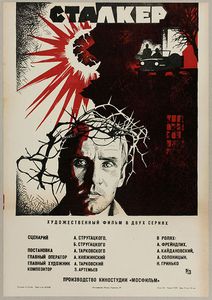
  • Stalker (1979)

    Stalker (1979)

    (On Cable TV, January 2019) Despite my best intentions, I remain unmoved by Andrei Tarkovsky’s filmography. Stalker is often mentioned in “best science fiction movies” lists, but I have to wonder how much of this reputation is due to contrarianism or historical desire to annoy the USSR. (Or, within the written SF community, the excellent standing of its source novel by the Strugatsky brothers.) It’s still true that Stalker is quite unlike most Science Fiction movies even today. At nearly two hours and 45 minutes, it’s a long sit made even longer by the glacial pace of the film—and most of it only features three characters walking around industrial ruins. (Considering this and the sorry state of the set decorations on Solyaris, I have to wonder how much of Tarkovsky’s SF filmography was based on the availability of disaffected Soviet factories.) Tarkvsky, of course, isn’t some kind of rapid-fire auteur—his entire oeuvre is slow paced and you know from the second film what you’re getting into. Still, I didn’t dislike Stalker as much as I wanted to: There are a few good ideas buried under the lengthy shots, and some very clever filmmaking ideas as well—the picture shifts from sepia to colour as the characters enter the mysterious alien “zone” in which the story takes place, and Tarkovsky’s knack for striking images is not to be dismissed easily. Still, it takes an effort of will to avoid fast-forwarding through the entire thing. Tarkovsky could be ten times as interesting if he was twice as concise.

  • America America (1963)

    America America (1963)

    (On Cable TV, January 2019) It’s always interesting when a filmmaker uses the tool of their craft to tell us a story about themselves or their family. Here, we have veteran writer/director Elia Kazan helming a production (adapted from his own book) telling all about how his uncle made it from Turkey to America, with numerous obstacles along the way. It’s both a foreign film and a deeply American one, illustrating the underdog immigrant mythology that anyone is welcome to the United States and that opportunities await those willing to work for it. Viewers should be warned that America America is long: nearly three hours, and almost all of them spent in the company of the central character, in a magnificent lead performance by Stathis Giallelis—who has nearly no other screen credits to him filmography. The black-and-white cinematography does seem like a missed opportunity to present the story in an even more expansive format, but it’s easy to remain impressed by this effort to put on film a piece of Kazan’s family history.

  • Red Sonja (1985)

    Red Sonja (1985)

    (In French, On Cable TV, January 2019) There was a fantasy film boom in the early-to-mid-1980s, and not all of them were created equal. While Arnold Schwarzenegger’s performance as Conan in the two eponymous movies left a mark, it’s not possible to say the same about his turn in spin-off Red Sonja, or the entire movie itself. A fairly standard heroic fantasy adventure, this is a film that still earns attention today based on two things: its place on Schwarzenegger’s filmography, obviously, but also Brigitte Nielsen as the titular red-headed warrior. But looking fine and acting well are not the same thing, and Schwarzenegger in a rare supporting role only highlights how badly he did when the spotlight was away. It doesn’t help that the script is terrible, with a dull plot, terrible dialogue and sexual politics more outdated than its prehistoric setting—rape is used as a plot device, lesbianism is incarnated by the evil witch and the title character doesn’t have much agency in a movie that’s supposed to revolve around her. The result is an all-around embarrassment devoid of most of the thin guilty pleasures of its other two related movie. And yet, I can’t help thinking that in the proper hands (specifically, a female creative team), Red Sonja would be a movie ripe for a remake.

  • A Christmas Horror Story (2015)

    A Christmas Horror Story (2015)

    (On Cable TV, January 2019) There’s a surprisingly strong subgenre of Christmas horror movies, and A Christmas Horror Story seems like it wants to be four of them at once. An anthology of four short stories loosely linked by none other than William Shatner as a radio DJ (and a few more throwaway links), it’s a Canadian tax-dollar-financed low-budget feature aimed at domestic cable channels in an effort to meet CanCon requirements. While most movies of that type are terrible, A Christmas Horror Story is a little bit better than most: the direction and production values aren’t bad, and the stories generally hold up. Still, not all segments are created equal, and the film’s standout sequence is a Santa-versus-zombie-elves story (and then on to Santa gunning for Krampus himself) with deliciously filthy dialogue and a surprisingly nasty stinger. A Christmas Horror Story is the kind of thing you watch as an antidote for Christmas cheer, and it’s almost exactly what it portrays itself to be (even though your cable channel may mistakenly tag it as comedy). The soundtrack features some pretty good spookified version of holiday tunes, and the end credit promises us that “no elves were harmed during the making of this film”. (Whew.) It’s bound to be watchable in the January-to-October timeframe.

  • Santa Jaws (2018)

    Santa Jaws (2018)

    (On Cable TV, January 2019) How can you resist not seeing a movie called Santa Jaws, even though the title also practically guarantees a bad movie? I couldn’t, even knowing what to expect from a Syfy movie. And, whaddaya know, it’s exactly what it says on the tin: A tongue-in-cheek shark movie set around Christmastime, with our comics-obsessed teenager seeing his cherished comics creation coming to life and eating most of his family. Obviously low-budget and featuring lesser talents (I rarely comment on acting skills but—whew—this film doesn’t have much of it), Santa Jaws is meant to be the kind of film you watch without expectations, happy if it even delivers a story or please that it delivered on ironic expectations. On this low metric, Santa Jaws is a half-success: While the script shows no evidence of having been anything but a first draft, it does move its plot pieces along, and fulfill the basic elements of a formula. Still, let’s not get crazy about the results: Santa Jaws is what you want and Santa Jaws is what you will get, with no frills on top. The crazy premise (because why not) is the story driver here, but the Christmastime setting really isn’t used to its fullest potential—the drab washed-out cinematography is about as far from lush Christmas colours as you’d imagine, and surprisingly little of the film actually exploits Christmas iconography even for laughs. But, as I’ve said, this is Santa Jaws and it’s from Syfy—even a failing grade runs above expectations.

  • Cobra (1986)

    Cobra (1986)

    (In French, On TV, January 2019) There are times when, watching 1980s movie, you really start to wonder if Hollywood was sane at all during that decade. For instance: Cobra, the generic action movie featuring Sylvester Stallone at the epitome of the cowboy cop, ready to shoot and maim and kill before even thinking of maybe asking questions. Cobra takes the cop movie clichés of the decade and cranks them up to eleven—the cool car, the big weapons, the moody cop, the evil villains. Its excessive violence is made even worse by the lack of self-awareness of any kind of humour. Reading about the film’s horrible production confirms suspicions that emerge during the film itself: Stallone himself is the problem, thinking of himself as bigger than the movie and relishing the over-the-top psychopathy of the so-called hero. Even the film’s choppy plotting and editing goes back to Stallone, as he ordered last-minute trims to the film in order to compete in theatres. There are side benefits to watching the movie, but not many: Brigitte Nielsen has an outstanding supporting role, and the film does ooze mid-1980s atmosphere. Otherwise, well, Cobra ranks high on the list of exhibits why we really should not indulge in 1980s nostalgia.

  • Elvis Gratton 3: Le retour d’Elvis Wong (2004)

    Elvis Gratton 3: Le retour d’Elvis Wong (2004)

    (In French, On TV, January 2019) By the time you’re creating a third instalment in a series, either you know enough to make it work, or the entire thing has degenerated in a painful copy-of-a-copy-of-a-copy. Elvis Gratton 3: Le retour d’Elvis Wong falls squarely in the second scenario, as it has become a simply grotesque collection of episodes featuring the Elvis Gratton character going through writer/director Pierre Falardeau’s usual pet peeves and comic crutches. This time around, Gratton becomes (with a bit of help from American clichés) a rock star, a cultural sensation and ultimately a media mogul. The pale imitation of the previous two movies’ gags is egregious, and the constant references to then-hip pop and political culture makes the film feel incredibly more dated than many older titles. (Especially in hammering on Chrétien-era Federal Liberals—give it a rest, Falardeau.) While I do share many of Faladreau’s concerns about media manipulation and control, I can’t stand the incredibly blunt and simplistic way he goes about it in this film. The added cabotinage from writer/actor Julien Poulain as Gratton is increasingly annoying and the result is not fun, not funny and not as subversive as it thinks. Elvis Gratton 3: Le retour d’Elvis Wong’s herky-jerky narrative rhythm doesn’t help, and neither does Falardeau’s surprisingly amateurish direction, considering that he was capable of far better. But the Gratton series has always been a cash cow for him, so maybe it wasn’t surprising to see the result of this third instalment.