Reviews

  • Superfly (2018)

    Superfly (2018)

    (On Cable TV, December 2018) I’m enough of a Scorsese fan to be at least sympathetic to the idea of a film featuring a criminal as a protagonist, but it always helps if there’s at least a nod toward decency and morality somewhere in the mix. Alas, that’s not so in this Superfly remake, which features a gangster going against worse gangsters … and getting away with it. Trying to find even a thematic point in this glitzy celebration of conspicuous consumption, hedonism, fast cars, cool guns and ménage-à-trois shower scene is tough—what we get is the lifestyle, the shoot’em-ups, the car chases, the double-crossing and the escape to a yacht. If you’re looking for the tradeoffs, well, at least one of the protagonist’s girlfriends gets killed and, um, that’s about it. (He seems perfectly happy with the remaining one.) At least Trevor Jackson is fine in the lead role—and who wouldn’t with Lex Scott Davis and Andrea Londo at his side? “Director X” (actually Julien Christian Lutz) distinguishes himself through a decent visual style, made all the way more remarkable in that the production of the film was ridiculously short—something like three or four months from start of production to the end of shooting, with theatrical release three months later. There’s some obvious visual symbolism in Superfly (the heroes drive, shoot and wear black; the villains drive, shoot and wear white) but again there’s not much underneath the surface, and not nearly enough of what would be needed to justify a gangster film glorifying the lifestyle.

  • Weekend at Bernie’s (1989)

    Weekend at Bernie’s (1989)

    (On Cable TV, December 2018) There’s dumb comedies, and then there’s Weekend at Bernie’s, a film that somehow thought it would be a fine premise to have a corpse carried around and made as if it was still alive. The amount of sheer suspension of disbelief required to buy into this inane concept would power the current American presidency for about ten minutes, but that’s how Hollywood rolls. Focusing on a pair of your men as protagonists allows the film to dip deep into the dumb-guy humour pool, with beaches and bikinis and necrophilia, with a bit of yuppie self-absorption to round things off. It’s remarkably dumb for a black comedy, and oddly insubstantial as well—once the script has gone through the obvious jokes, there’s not a lot left to do for director Ted Kotcheff. I suppose that the audacity has its charm … and that Weekend at Bernie’s must be seen at least once to be believed. (The sequel is even worse.)

  • Eraser (1996)

    Eraser (1996)

    (Second Viewing, In French, On TV, December 2018) I recall seeing Eraser in theatres, and not being all that happy about it. (The idea of a portable railgun firing “near the speed of light” with no recoil seemed hilarious to me, but laughing alone in the theatre isn’t one of my fondest memories. But then again I placed a lot more emphasis on scientific rigour back then.) In retrospect, though, Eraser had aged decently enough—it does feature Arnold Schwarzenegger near the prime of his career, after all, and the kind of big dumb action movies made in the mid-1990s have grown scarcer in recent years, accounting for a bit of nostalgia. I mean; in how many 2018 releases do we have a parachuting hero bringing down an airplane rushing toward him with nothing more than a handgun? Some rough-looking CGI (alligators and human skeletons!) add to the charm. At the time of the film’s release, much of the release chatter had to do with how the audio and CGI team had to work around the clock right before release to change all mentions of the villainous “Cirex” to “Cyrez” after computer chip company Cirix complained. In terms of star vehicle, Eraser is pretty much what Schwarzenegger could handle at the time—and having a featured role for Vanessa Williams is more interesting when you realize that the film never goes the obvious route of creating a romantic subplot between both of them. James Caan also has a good turn as a mentor-turned-villain. The political machinations justifying the plot are better than average for an action movie, and the coda seem closer to a political thriller than an action film. Eraser is still not a good movie (and it pales a bit compared to other late-1990s actioners), but it has aged into a decent-enough one.

  • Re-Animator (1985)

    Re-Animator (1985)

    (On TV, December 2018) There’s a self-acknowledged B-movie quality to Stuart Gordon’s Re-Animator that makes the movie about ten times as much fun than if it had tried to play things dramatically. Working from an H. P. Lovecraft premise, this is a film that has fun with the idea of hideous resurrection, clearly made in the same horror/comedy vein as Evil Dead 2. That doesn’t mean it’s an easy watch for those who aren’t used to the gore or the casual disregard from decency—Re-Animator is clearly destined to a specific hardened public. In between the gallons of blood, practical makeup effects and unbridled imagination, the hospital sequence that makes up most of the third act is wild enough. Jeffrey Combs has some fun as the lead actor playing the epitome of a mad scientist, and this carries through to the entire production. There are a lot of wannabe horror/humour hybrids, but few of them manage the magic combination of elements that Re-Animator stitches and cobbles together. This being said, it’s worth reiterating that this is not for everyone—it’s best watched by seasoned horror fans who have developed the macabre sense of humour that the film is going for.

  • Easter Parade (1948)

    Easter Parade (1948)

    (On Cable TV, December 2018) A good musical comedy is timeless, and Easter Parade is better than most. Here we have Fred Astaire as a Broadway singer pairing up with a young singing sensation played by Judy Garland in an effort to make his ex-partner (on-and-off-stage) jealous. That’s really an excuse to string along musical numbers, of course, and Easter Parade plays that game well. Astaire is in fine form, MGM’s Freed unit was near the top of its game and few expenses were spared along the way. I’d like it a lot better if Judy Garland and Ann Miller (who plays the ex-partner) switched roles, but I seem to be in the minority in my overall lack of enthusiasm for Garland. Still, Miller gets at least one good solo number (“Shaking the Blues Away”) and it’s fun to see her as the romantic antagonist. The film’s by-the-numbers plotting lets the musical numbers shine through: the highlights include the Astaire/Garland comedic “We’re a Couple of Swells”, but especially the Astaire number “Steppin’ Out with My Baby”, which mixed optical trickery to show Astaire’s dance moves in slow motion. The early-1910s Manhattan atmosphere is convincing, with all the stops pulled out for the title end number. Astaire, like in most of his movies, is too old for his co-star, but then again which woman, no matter her age, could keep up with his dance moves? Worth watching at any time of the year, Easter Parade is among the best of the MGM musicals, and remains a minor landmark in Astaire, Garland or Miller’s careers.

  • La Florida (1993)

    La Florida (1993)

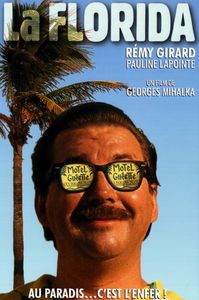
    (In French, On TV, December 2018) There are elements in La Florida that don’t require any explanations to its French-Canadian target audience but need quite a bit of unpacking for other audiences. For instance, the connection between Florida and Québec: While Florida occupies a specific place in American culture (equal part Disney, Kennedy Space Centre and two doses of “Florida Man”), it occupies a very different place in Québec’s imagination—it’s the hot sunny state where well-off retirees go spend their winters, deemphasizing the state’s significant problems and playing up its destination as, well, the middle-class Quebecker’s dream. The fun of La Florida is largely found in opposing these two conceptions of the state, as a family of coarse Quebeckers (headed by French-Canadian screen legend Remy Girard) purchases a hotel in Fort Lauderdale with dreams of making it big. Alas, they run afoul of another Quebecker with a stranglehold on the local hotel trade, as well as an American developer (hilariously played by Margot Kidder) with plans for the location. A young Marie-Josée Croze unusually provides the film’s sex appeal in a bikini. The film was a massive success back in 1993 (becoming the highest-grossing Canadian film of the year, regardless of language) and became a bit of a cultural reference in further reinforcing stereotypes about Florida. It’s still worth a look for the actors as a gentle (but predictable) comedy.

  • Les demoiselles de Rochefort [The Young Girls of Rochefort] (1967)

    Les demoiselles de Rochefort [The Young Girls of Rochefort] (1967)

    (In French, On TV, December 2018) Just as I was tempted to dismiss writer/director Jacques Demy on the basis of the unbearable Les parapluies de Cherbourg, here comes the much better Les demoiselles de Rochefort to redeem it all. This far improved follow-up fixes my two biggest annoyances with the previous film: Much of the dialogue is spoken rather than sung, and it does feature a happy ending (even though it’s by mere seconds—the film does toy with its audience toward the end, perhaps keenly aware that those having seen Les parapluies de Cherbourg almost expected an unhappy ending.) That alone could have been enough to make it a good movie, but then it goes the extra mile. Not only does it feature a young gorgeous Catherine Deneuve and her sister Françoise Dorléac, but here is no less than Gene Kelly (visibly older, but still capable) walking in for a few scenes and a dance number. Very, very colourful, Les demoiselles de Rochefort makes the best of its coastal-town setting, starting with an elevated bridge dance sequence, then spending much of its time in a public square with a fantastically glassed-in café set. There’s a little bit of atonal weirdness when it turns out that there’s an axe murderer (!) hanging around, but otherwise the film is far more successful than its predecessor. “Chanson des Jumelles” is a great, memorable number, but it’s really the cheerful colourful atmosphere of the film that wins audiences over. I happened upon the movie by chance, playing as it was in the middle of the night on an unlikely TV channel, and almost gave it a pass. Only Gene Kelly’s name drew me in, and I’m glad it did—Les demoiselles de Rochefort is now one of my favourite French films of the 1960s, which is saying something considering the strengths of the decade for French cinema.

  • The Toy (1982)

    The Toy (1982)

    (On TV, December 2018) There is a sharp racial edge to the premise of The Toy—the idea that a black man can be essentially bought by a rich white boy to act as his plaything. It completely fits within Richard Pryor’s comic persona, as well as the irreverent nature of early-1980s comedy. (I’m not sure the same movie could be made today.) Still, what matters in a movie is the execution, and that’s where The Toy loses a lot of its lustre—once given the basic elements, much of the script feels far too familiar to be interesting. Of course the boy needs a friend; of course, the protagonist won’t ultimately lose his integrity; of course, they’ll actually befriend each other.) Further compounding the problem is the often-juvenile nature of the screenplay—it’s fine to have a largely kid-driven film with an adult premise, but when the script’s most interesting elements are sidelined for kiddie goofiness, we’re left to wonder who’s the film real audience. I suspect that some of the film’s disappointment comes from adapting a French film to an American context (with a very different take on the issue of, well, slavery), and not necessarily knowing how to play those elements. At least we do get to have Pryor and Jackie Gleason go head-to-head in comic scenes. Still, The Toy feels like a disappointment, disjointed and not quite able to use everything at its disposal for a coherent result.

  • Harold and Maude (1971)

    Harold and Maude (1971)

    (In French, On TV, December 2018) As much as I respect and understand the forces that led to the New Hollywood of 1967–1977, I cannot and most likely will never be able to muster any kind of enthusiasm or affection for it. Films of that era and sensibilities remain almost uniformly grim, pointless and unpleasant. Case in point: Harold and Maude, which details the growing affection between a death-obsessed teenager and a much older woman. Affected with the typical disaffection of an early-1970s protagonist, Harold drives his parents crazy, can’t relate to the world and is intrigued by the idea of suicide. Meanwhile, Maude is an elderly free-spirit living life to the fullest but with the intention of checking out on her own terms at 80 years of age. It’s a strange, off-beat, morbid movie, but calling it a comedy feels like a stretch, especially when there’s very little joy to be found in its exasperating execution. Helmed by Hal Ashby (whom I’m increasingly recognizing as a director who does nothing for me), it’s clearly a reflection of the increased freedom that filmmakers enjoyed at the time. I can’t help, however, than to think that whatever Harold and Maude brought to the film world has been fully integrated in the corpus and doesn’t have much left to say if you don’t enjoy it on its own terms. The Cat Stevens music is as dated as the film itself, and if Harold and Maude is worth a look for a pure undiluted shot of New Hollywood, nobody is forcing anyone to enjoy it.

  • The Santa Clause 3: The Escape Clause (2006)

    The Santa Clause 3: The Escape Clause (2006)

    (On TV, December 2018) Every Santa Clause movie in the series gets markedly worse, and if The Santa Clause 3: The Escape Clause is not quite terrible, it’s certainly heading in that direction. “Was there anything else to do with the premise?” is the question that producers should have examined more closely before embarking on a third instalment, as what they resort to is a highly unpleasant back-to-the-beginning parallel reality and an active antagonist in the persona of Jack Frost. Martin Short isn’t to be blamed for playing Frost—he gives it everything he’s got, and his madcap performance does hold some interest. Unfortunately, the rest of the film is often painful to go through. As is often the case in film series, baby makes three—or at least becomes an important plot point of the third film. Much of the creative juice of the series has run dry, and running off fumes barely gets the instalment past the finishing line. Tim Allen is blander than bland in a role for which he was picked because he was bland, and that’s saying something. The Escape Clause is the kind of movie they throw alongside the previous ones to make for a series collection DVD 3-pack, but it’s not a given that everyone will get to it.

  • Ready Player One (2018)

    Ready Player One (2018)

    (On Cable TV, December 2018) I really enjoyed (with reservations) Ernest Cline’s Ready Player One, but then again I was supposed to: I’m very near the nerdy child-of-the-1980s demographic that the book celebrates and aims for. There is nothing wrong in writing a novel meant to stroke the nostalgic sense of a particular audience (after all, the boomers have been doing it for at least thirty years), but Ready Player One got a particularly severe case of spotlight rot as it became a publishing success and people farther away from its intended audience started reading (and rejecting) the book. With the adaptation of the novel to film, I was looking forward to the result almost as much as I was wondering how it would smooth some of the rough edges of the original. Expectations ran high for the result—after all, there was no better outcome for the film than to be actually directed by Steven Spielberg, given Spielberg’s stature in shaping the 1980s and the novel’s frequent nods in his direction. As a director, Spielberg could also be counted upon to deliver the wow factor of a big special-effects-driven production. Fortunately, Ready Player One lives up to the hype and the apprehension. Much of the novel’s cheerful homage to 1980s geek-culture remains intact, and most of the plot has been ably adapted on-screen despite the mountains of exposition that Cline (and readers) loved along the way. It’s still a story about a young man in a dystopian future trying to make something of himself through an epic Easter egg hunt in a virtual reality environment. In the details, however, many things have changed. Even though the movie’s licensing team made heroic efforts to obtain permission to use a flurry of pop-culture references, some changes were still necessary and arguably improve the experience. I far rather enjoyed going back to an astonishing digital re-creation of The Shining than Wargames, and I suspect that Spielberg did as well. Ready Player One does fix a few of the novel’s more vexing moments, although a few annoyances do remain. Still, the point of the film is the giddiness of playing hard with pop culture, and having fun along the way. The special effects are often astonishing, and the giddiness of a few scenes (such as the Manhattan Race) are well worth a look, showing Spielberg once again at his most entertaining best. (He even had time to begin and complete The Post in-between Ready Player One’s production and completion). It’s clear that Ready Player One does remain a very specific kind of film for a very specific kind of audience, but the film expands its reach beyond the novel, and the result is an enjoyable future thriller with terrific special effects and probably as many pop-culture references as we’re likely to ever see again under the current IP framework.

  • The Santa Clause 2 (2002)

    The Santa Clause 2 (2002)

    (On TV, December 2018) The only thing surprising about The Santa Clause 2 is that it actually took eight years for a sequel to be completed. While the script does show some ingenuity in milking the premise even further, the innovations stop at the end of the first act, and the rest is a mechanical exercise in completing the arcs outlined early on. This film adds romance, as the protagonist must find a Mrs. Claus before long. (I choose not to ask what happened to the previous Mrs. Claus.) Alas, the film also adds an antagonist of sort under the guise of a Robot-Claus who (as they usually do) turns evil and must be stopped from ruining Christmas, in keeping with the other two or three things that could also ruin Christmas. At least the romance is cute (featuring Elizabeth Mitchell) and the imagined fantasy world of the series is expanded to include other mythical creatures. (I wonder how much of it was an inspiration for a similar group of characters in Rise of the Guardians.) It does still work, although we’re a clear step down from the original film. Best seen as close to Christmas as possible, as the film doesn’t have much else than Christmas cheer to rely on.

  • A Christmas Carol (1938)

    A Christmas Carol (1938)

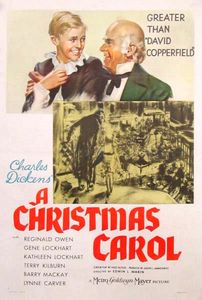
    (On Cable TV, December 2018) Christmas day is a good day to watch as many versions of A Christmas Carol as you can tolerate, and my second go-around is the 1938 version of the story. One might think that the film may not compare to more recent adaptations of the same Dickens story, but as it turns out A Christmas Carol has one major advantage up its sleeves in terms of timelessness: it was already old and historical by the time it was filmed, and so doesn’t suffer as much from decades gone by. This 1938 version has dated but fascinating optical effects, Reginald Owen as Ebenezer Scrooge, and a no-fuss no-muss approach to a straight-up adaptation with a few frills as possible. Compared to other versions of the story, this one clocks in at a very efficient 69 minutes. Hurriedly made by MGM in mere weeks as a family film, it’s considerably lighter on the potential darkness of the original tale. And that’s why we can enjoy multiple takes on the same material.

  • The Santa Clause (1994)

    The Santa Clause (1994)

    (On TV, December 2018) Amazingly enough, I managed to avoid watching The Santa Clause for nearly twenty-five years. But that ended today, on Christmas Day, as I took advantage of a recorded movie marathon for the entire trilogy. Part of why I waited so long was the conviction that I didn’t really need to see it: the premise was clear, the trailers had enough of the main jokes and with Tim Allen in the lead, I wasn’t really worth expecting more than the obvious. I still believe these things after watching the movie, but there’s really no substitute for actually watching the thing. As almost everybody knows, this is the movie where Tim Allen kills Santa and becomes cursed to become his replacement, complete with weight gain and management responsibilities over the entire North Pole toymaking complex. Beyond the premise of an ordinary man becoming Santa, the chief appeal of The Santa Clause is in trying to justify and expand on the Santa myths with semi-realistic explanations. Even when it just doesn’t make sense (you’d think that the first people to notice Santa Claus’ existence would be the parents themselves — “Hey, where did these gifts come from?”) it works hard at making sense, and you almost have to like the movie for making so much effort in justifying its fantasy. Tim Allen, despite my lack of affinity for the actor, does make a credible everyday man, and helps ground the film even further. I’m not that happy with the rather obvious divorced-parents subplot, but the rest of the film is undemanding and successful at it. Is it as bland as I thought it would be? Yes. Did I have a reasonably good time watching it? Also yes. I suspect that Christmas cheer got the better of me.

  • Scrooge aka A Christmas Carol (1951)

    Scrooge aka A Christmas Carol (1951)

    (On TV, December 2018) OK, Christmas Day: I’ve spent time with my family, unwrapped the gifts, ate too much, said my greetings—NOW HIT ME WITH THE MOVIES. Let’s get started with the 1951 version of A Christmas Carol. This one goes through the usual motions of the usual story, although with a few additions, most notably in detailing Scrooge’s business years and so the process that transformed him from an ordinary young man to an elderly misanthrope. Alastair Sim here plays Scrooge, and the performance is as good as it needs to be in the role. What may be surprising to modern audiences is that this version pulls few punches in being dark and horrifying—the ending redeems it all, but the way there can be dispiriting and grim. Scrooge does amount to a decent take on the material, but there’s no time to say more because I’ve got other Christmas movies to go through today before December 26 rolls around and they all become as stale as last night’s milk-and-cookies.