Reviews

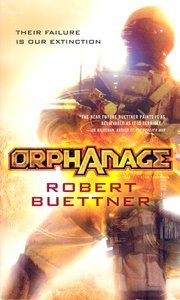
  • Orphanage, Robert Buettner

    Orphanage, Robert Buettner

    Orbit, 2008 reprint of 2004 original, 302 pages, C8.50 mmpb, ISBN 978-0-316-01912-5

    I read a lot of science-fiction, but the field is so large that a lot of worthwhile stuff still passes by unnoticed.  For some reason, I completely missed Robert Buettner’s Orphanage and its first sequel when they were first published by Warner Aspect in 2004 and 2005.  It took then-Warner-now-Orbit’s re-edition for the series (now up to five volumes) to register, and I do regret having missed it when it was first published.  It’s more of a familiar comfort SF read than a top-notch example of the form, but it’s not as if we can get too many of those, right?

    Orphanage is familiar from its premise on.  “Aliens attack!  Young troubled man enlists and grows up in a hurry.” has been a staple of military Science Fiction for decades, and every example of the form gets compared to Starship Troopers first, and The Forever War second.  The parallels get even harder to ignore as Buettner uses a chatty first-person narration and follows the usual structural arc from boot camp to first engagement with the enemy.  It’s not a case of imitation as much as it’s one of archetypical storytelling –there are only so many ways one can tell that story, after all, and it’s not as if we’re reading to see if the humans manage to win.  We already know how it ends; now we just want to see how it happens.

    Since the details usually make or break this kind of story, it’s fortunate that Buettner knows what he’s doing.  Our narrator/protagonist Jason Wander is not the most admirable young man as the book begins, but those flaws only gives him opportunities to get better.  Perhaps the best thing about Orphanage is that it proves how the good-old-grunt story can still be adapted to a contemporary setting without turning too ridiculous: Wander is a modern teenager, and the world around him is recognizably ours a few years in the future.  While Buettner isn’t particularly adventurous in his future technology (hand-waving it not-so-convincingly with “the army is always a step backward, you nerds.”), this does add to the conventional, familiar charm of the novel where nearly every plot incident finds a resonance or two in earlier military SF books.

    I suspect that this familiarity will work in one of two ways, depending on the reader: Those with vivid memories of Starship Troopers and The Forever War won’t find anything but an update here, while those who have yet to discover Heinlein and Haldeman will just enjoy the story.  Additionally, I suspect that the novel will find a loyal audience among men that are or have been involved in the military: Buettner’s direct prose and knowledgeable description of military life seems custom-made to reach infrequent readers who aren’t as susceptible to comment about originality or lack thereof.  The flip-side of this argument is that jaded readers who think they can’t enjoy military SF should be warned that there isn’t much more than a prototypical example of the form here.

    There have been far more interesting updates of Starship Troopers since the fifties.  In the early eighties, Card’s Ender’s Game played manipulative ethical games with this premise.  More recently, Scalzi’s Old Man’s War twisted at least part of the formula and did well in presenting a going-of-age war novel written from a non-insider’s perspective.  Orphanage is far too conventional to take any such storytelling risks, but what it does have over Starship Troopers are sequels: four of them, taking Wander through an entire multi-decade career.  SF learns and adapts to its operating conditions, and if Haldeman was able to fit an entire interstellar war in a single thin novel in the seventies, current market conditions suggest otherwise.

    I’m likely to give a chance to at least the first two sequels of the series in part because I’m hoping that the overwhelming familiarity of this first volume will go away (Wander can only attend boot camp once, one hopes) and be replaced by more original material.  That’s where the pacing and prose of Orphanage proves more promising than its plot or world-building: The plot can evolve, the imagined future can become more challenging, but the writing style and rhythm are tougher to upgrade.  Fortunately, if Buettner’s Orphanage may not be all that original, it does announce an engaging writer able to work with well-worn stories.  Now let’s see the ones he gets to invent by himself.

    [January 2010: As expected, sequel Orphan’s Destiny is a great deal less derivative than its prequel: In fact, most of the novel takes place in peacetime, while our narrator returns to Earth and gets to see the world react to its skirmish with alien attackers. But then they come back, and there is desperate damn-the-system combat. It’s both more original and yet not as interesting. Go figure.]

    [May 2010: My interest in the series has flatlined with Orphan’s Journey, a third volume that takes the action outside the Solar System. Alas, I can’t be bothered to care, and chances are that I won’t seek out the rest of the series.]
  • Quadrophenia (1979)

    Quadrophenia (1979)

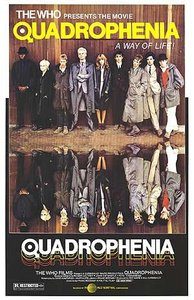
    (On DVD, December 2009) Five minutes after this film started, I really wasn’t looking forward to the rest of the picture: mid-sixties Britain may have given us The Beatles, but in many ways it felt like a terrible place to live, and the prospect of spending even 90 more minutes there alongside a rebellious teenager really wasn’t appealing.  But through its protagonist, Quadrophenia ends up testifying about a way of living: There are echoes of A Clockwork Orange in there, but also an entire era in which Britain redefined itself.  By the time the film sets up its conflict between mods and rockers, the hook is in: While the self-destructive protagonist isn’t much more sympathetic, there’s a real drive to find out what will happen to him next.  But the film’s greatest moment is easily its lengthy sequence detailing an urban riot between mods and rockers set in Brighton.  The antagonism between the two groups may feel silly, but as a depiction of urban unrest in a densely-packed setting, it has few equals: Loosely based on real events that I ended up researching with wide-eyed amazement (read up on “Mods and Rockers” on Wikipedia and keep following the links), Quadrophenia ends up providing a window into an era that is still, in some ways, embedded in the modern teenage experience.  For a few moments, the film brings together a lot of threads about moral panics about teenage experimentation, the origins of a pop-cultural movements and the place of music in that matrix.  But don’t be frightened off by social analysis: Quadrophenia is perfectly enjoyable as a teenage drama, a musical opera (the soundtrack is amazing), a fount of obscure trivia (including a small but striking role for Sting) and a generally well-made film: The direction still holds up well even today.  For a film I wasn’t sure to keep watching five minutes in, it ends up being a minor classic of its era.

  • Armored (2009)

    Armored (2009)

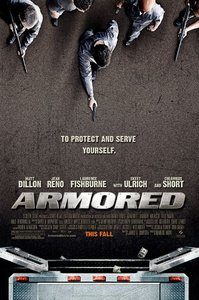
    (In theaters, December 2009) As far as B-grade action thrillers go, Armored has a number of things going for it.  Most notably, it adopts an unusual high concept (protagonist refuses to cooperate with his colleagues during a multimillion heist; finds himself trapped in an armoured truck while they scheme against him) and then spends an hour milking the premise for all it’s worth.  Much of it feels mechanical, but there’s no denying that the claustrophobic set-pieces are effective.  It feels just a bit fresher than many other thrillers out there, and the trio of familiar actors (Matt Dillon, Jean Reno, Laurence Fishburne) headlining this practically all-male film is a bit amazing considering that in almost all other aspects, it feels like a straight-to-DVD feature.  But the problem with Armored is that it simply doesn’t take things beyond the obvious.  The actors seems to be slumming in their roles, the character dynamics feel simplistic and contrived; the action sequences are not particularly spectacular and the plot is simple enough that alert viewers will figure out the next plot twist shortly before it occurs.  Add to that a number of credibility problems (traceable dollar bills, convenient bottom hatch, etc.) and it’s easy not to be impressed.  This is pure formula thriller filmmaking, and while it’s generally enjoyable (it will whittle away a lazy evening), it remains much less than what Armored could have been.  Moviegoers with long memories for French-Canadian thrillers will see the film with the added handicap of remembering 1987’s gutsier Pouvoir Intime as another take on a similar premise.

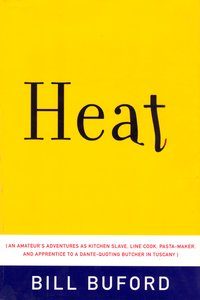
  • Heat, Bill Buford

    Heat, Bill Buford

    Doubleday Canada, 2006, 318 pages, C$32.95 hc, ISBN 0-385-66256-4

    Given the way food expertise is being adopted as a hobby by an increasing number of people, Bill Buford’s odyssey in Heat doesn’t seem even remotely strange: Is it possible for enthusiastic home cook in his mid-forties to make the leap into the fast-paced world of professional cooking?  Can an amateur learn the ropes and end up preparing food at a world-class three-star restaurant?

    Of course, Buford has advantages that most enthusiastic mid-career home cooks can’t hope for: a home base in New York, a friendship with celebrity chef Mario Batali and enough money saved away to afford apprenticing at Batali’s Babbo restaurant.  But even considering those advantages, his odyssey in going to the other side of the food world remains remarkable: What began as a profile of Batali for the New Yorker ended up a two-year odyssey in the world of cooking, pasta and butchery as Buford went from line cook to apprentice pasta-maker and butcher in Italy.

    So, how do you go from writing about a chef to butchering animals in Italy?  It’s a gradual process.  Buford starts out as an enthusiastic civilian chef –one prone to giving invitation to dinner parties, then keeping guests waiting as he races to get everything done.  At some point, outsized personality chef Mario Batali ends up as a guest and Buford eventually musters up the courage to ask for a spot in Babbo’s kitchen, as an apprentice.  Just to see if he could.

    Cooking is a tough young man’s game, and for forty-something Buford, his apprenticeship is brutal.  Not that he picked an easy assignment: Like most New York restaurants, Babbo is small, overheated and boiling from the pressure of the place’s reputation.  Buford ends up working with a colourful cast of sharp-tongued tough kitchen professionals, and they don’t take it kindly to see an intruder in their domain.  Buford starts at the lowest of the low, and though hard work eventually manages to get what he wants: some experience as a cook in a demanding professional environment –and some real scars to show the experience.) Heat never works better than during this first third, as we get to discover the inner working of a restaurant from the perspective of a well-informed civilian.  Buford never becomes a distinguished member of the crew, but he runs with them long enough to make it a memorable narrative.

    But the ever-curious Buford soon becomes obsessed with other culinary goals.  To really learn about pasta, he decides to go get another apprenticeship, this time in Italy.  Later, he gets fascinated with meat and gets another Italian apprenticeship, this time as a butcher’s assistant.  (One of the book’s highlight described how Buford, trying to show what he has learned, drags an entire dead pig in his New York brownstone for butchering and cooking.)  By the closing pages of the volume, he muses about French food and possibly sets up a sequel.

    This European journey is where Heat cools off a bit: While it’s wonderfully picturesque and rustic, it also appeals to different impulses than the description of working in a high-pressure professional environment: It’s about food history, European traditions and a return to basics –not exactly what the first section of the book delivers.   It’s still a pretty good read, mind you: Buford’s style is fun and accessible, while his discoveries pile up.  But it feels like a let-down after the exceptional New York-based section.

    Still, there’s a lot to like in the book even with a lacklustre second half.  The portraits of celebrity chefs Mario Batali and Marco Pierre White are striking, the depiction of being “hammered” while working in a kitchen are vivid, there’s a hilarious passage about catering to chefs’ whims and there’s enough culinary tidbits (about short ribs, about tortellini, about polenta) to make the entire thing worthwhile for food-trivia hounds.  The quasi-instinctive knowledge of food (say, when meat is done) that Buford eventually gets is the kind of practical expertise that can’t be faked.

    As a food book, it may not have the insider’s authenticity of, say, Bourdain’s Kitchen Confidential.  But in some ways, it’s likely to be closer to the reader’s experiences and idle musings, especially when they seriously get home cooking and start wondering if they, too, could turn it into something better.  Marry that impulse to find out with a near-infinite appetite for knowledge, and you end up with Buford’s self-developing narrative.  By the time Heat ends, Buford knows enough about food to stump experts; and readers know enough to be grateful for the journey.

    [May 2026: Buford’s further adventures in professional cuisine can be found in 2020’s Dirt, a memoir of five years spent in Lyon learning all about French cuisine from the local masters. Alas, Dirt is far more like the last half of Heat than its first — relatable concerns about whether an older man can hack it as a pro are replaced by effusive description of life in France, a reverential explanation of French cuisine’s particularities and enough name dropping to make it surprising that the book doesn’t have an index. One of the book’s subplot is about Buford playing amateur historian in trying to understand how French cuisine was created — and what was the specific process through which Italian cuisine became French. Written many years after the fact, Dirt nonetheless has dialogue, vivid in-the-moment descriptions and an epilogue where deaths pile up. It’s certainly readable and occasionally entertaining, but not exceptionally so: You have to be fascinated by French cuisine to enjoy this book, and the slightest hint of impatience from the reader will be greeted by endless details, long description of food preparation techniques and a quasi-folkloric description of French culture. (Considering how much of the book is in French, it’s a good thing I’m bilingual. Most of the French in the book is pretty good, but I still caught one or two mistakes.) Careful readers will catch a few weird chronological knots and sleight-of-hand omissions that hint at this narrative being a bit streamlined for purpose. Dirt is, in other words, okay but not great: it passes the time, but does not rank as a must-read, even for those who enjoyed the first book.

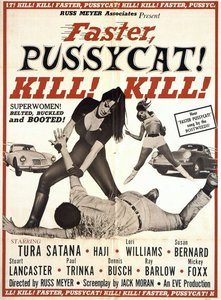
  • Faster, Pussycat! Kill! Kill! (1965)

    Faster, Pussycat! Kill! Kill! (1965)

    (On DVD, December 2009) There are a few movies out there that I really should have seen earlier, and Russ Meyer’s Faster, Pussycat! Kill! Kill was one of the most obvious ones.  A deliberate and unapologetic blend of speed, sex and violence, this exploitation film remains gripping even almost 45 years after its release, even as its most respectable contemporaries have fallen into obscurity.  This probably says a lot about how our base impulses are universal ones while the rest is just masquerade, but never mind philosophical considerations when pure movie-making fun can explain so much:  From the very first lines (“Ladies and gentlemen, welcome to violence, the word and the act.”), there’s a mesmerizing quality to the film, one that transcends busty beauties and schlocky acts of violence.  Even in revolving around a trio of truly independent women, Faster, Pussycat! Kill! Kill! Still feels somewhat edgier than more modern fare.  The plot itself isn’t particularly important when compared to seeing actresses such as Tura Satana and Haji (who, strangely enough, was born in Québec) on-screen, biting into bigger-than-life dialogue –some of which recognizable from the strangest places.  There’s a reason why this film endures as a cult classic: it’s almost compulsively interesting even today.  At the very least, it lives up to its amazing title.

  • Ninja Assassin (2009)

    Ninja Assassin (2009)

    (In theatres, December 2009) I can imagine the arguments that got this movie green-lit: “Every kid loves pirates, cowboys and ninjas!  Disney owns pirates and westerns never make any money, so let’s go for ninjas!”  That, along with an unshakeable desire to recycle decades of ninja-movie clichés may be what brought Ninja Assassin to the big screens, and the result feels as familiar and redundant as the film’s title.  Devoted to reviving the mystique of the ninja (even imbuing them with slightly-supernatural abilities), this film has plenty of dull dialogue and very few surprises in showcasing all the permutations that fans could ask for: Ninja-vs-criminals, ninja-vs-SWAT-team and the ever-popular ninja-vs-ninja.  And yet, two things make the film stand out: First, the unnecessary amount of gore sprayed everywhere: People aren’t just cut or sliced in this film as much as they’re decapitated, dismembered and cleaved in halves.  Second, though, is the general competence in which the film achieves its own objectives:  As far as a B-grade action films about ninjas are concerned, Ninja Assassin is pretty much what it wants to be.  Add to that Naomie Harris (whom I’d watch in just about everything), overblown CGI effects, the obligatory climax set on a burning set, a fine performance by Korean pop-singer Rain (in a Hollywood environment not known for lead roles for Asian actors) and director James McTeigue’s film is quite a bit better than the low expectations set by the boring trailer.  I didn’t like Ninja Assassin all that much, but it works in some clunky fashion, and I wasn’t bored for long.  For a film that indulges into two of my least-favourite action scene clichés (namely; dimly-lit sets and frantic over-cutting), that’s about as much praise as I can give.

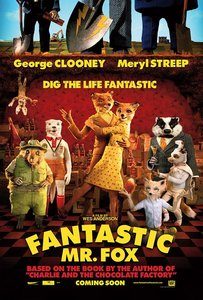
  • Fantastic Mr. Fox (2009)

    Fantastic Mr. Fox (2009)

    (In theatres, December 2009) I have trouble dealing with We Anderson’s oddball sensibilities, and wasn’t feeling all that confident that I would like Fantastic Mr. Fox, especially given the unappealing design aesthetics of the stop-motion mode used in the film.  And, for a few moments at the beginning of the film, it doesn’t look good: The humour seems based more on incongruity and discomfort than anything else, and the film looks just as ugly as in the trailer.  But not much more than fifteen minutes in the film, something happens and the film gradually grows more and more interesting.  The stop-motion aspect recedes (when it comes back, it’s to wonder at the way it’s being used to show us something), the characters fill up, the humour broadens and the real story begins.  What follows contains a lot of innovation, comedic riffs that feel both fresh and familiar, a small-scale epic battle of wits and a fantastic voice performance by George Clooney.  It ends up, fairly easily, being my favourite Anderson films yet, with a dash of hope that he will learn something from the experience.  But even if he decides to go back to more annoying projects, Fantastic Mr. Fox will remain a small wonder: Witty, hip, deadpan and a bit subversive (there’s a sustained gag about the word “cuss” replacing another word that took me far too long to notice.)  If there’s an issue with the film, it’s an impression that it’s being a bit too self-indulgent for its own good, that it could have been just a touch more accessible.  But that may just be my residual wariness about Anderson’s films.  One thing’s for sure: This is one animated film that will be most appreciated by adults than their kids.

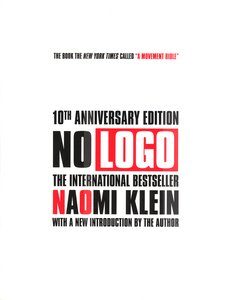
  • No Logo, Naomi Klein

    No Logo, Naomi Klein

    Vintage, 2009 reedition of 2000 original, 490 pages, C$24.95 tp, ISBN 978-0-307-39909-0

    This is No Logo’s tenth anniversary, and I’m about ten years too late in reading it.  Not that it has missed me; Since 2000, Klein’s first book has become a reference in leftish literature.  It’s a coherent map to issues that came to the forefront during the nineties: The selling of public space (“no space”), the consolidation of corporate power (“no choice”), the drive to ever-cheaper overseas operations (“no jobs”) and the interactions between them.  For the turn-of-the-century activist generation, No Logo clearly states the issues and testifies on their behalf.

    I took my time getting to this book even though a copy of the first edition has been sitting on my shelves for years in part because I thought I knew what it was about.  Feh: I was reading Adbusters in high school and spent a lot of time worrying about those same issues, especially when applied to digital media.  But it took a read of Klein’s follow-up book The Shock Doctrine to make me realize that I had to read No Logo, and that I still had quite a bit to learn from it.

    Klein herself is, like most western-world activists, a curious mixture of willing outrage and involuntary complicity.  Most chapters in No Logo begin with memories of her years as a teenage mall rat, segueing into what she now knows about those issues.  It is a place-setting device, a way to remind her readers that she’s not holier than everyone else, and a way to quickly go from common personal experiences to the abstraction of her topics.  Criticizing consumerism is almost always like expressing doubts about the dangers of oxygen and water: although you can raise fair points about their dangers and how they can be limited (Fire brigades! Flotation devices!) the sad reality is that they’re not going away.

    Nonetheless, there’s still a difference between having to live and having one’s mind conquered by orchestrated campaigns.  No Logo gives a few hints on how to move from the later to the former.  By showing how and why mega-corporations encroach on public property, Klein also teaches how to recognize emerging threats, and why they’re so problematic.  The tour of the sweatshop havens (oops, “export processing zones”) in which a good chunk of products are manufactured in miserable conditions may not be new… but it does detail how, exactly, the products we choose to buy are manufactured, and why things have ended this way.

    Knowing anecdotes and disconnected facts is one thing (congratulations if you realize you’re literally surrounded, probably even clad, in products manufactured under conditions you would consider evil) but it’s another to be able to connect them in a semi-coherent fashion.  No Logo ties the anecdotes together and suggests a framework in which to see the issues.  It suggests ways to recognize our complicity with the brands, an essential step if we are to disengage with their more abhorrent practices.  In short, it lives up to its billing as “a bible of the anti-corporate movement.”

    But ten years after publication, it’s worth pondering whether things are better or worse.  Branding certainly hasn’t fallen by the wayside.  It’s even more devious than ever, what with anti-brands and stealth branding vying for the activist dollar (a process better studied in The Rebel Sell, which I’ll be commenting shortly).  Sweatshops are still around, and they’re making beloved iPods.  Corporate power still runs rampant in a media narrative consumed with anti-terror rhetoric tuned to turn us into frightened automatons assuaging our paranoia by soothing shopping sprees.  Even Klein notes in a new foreword that Barack Obama has been the best-branded presidential candidate ever, and that many of his voters were seduced by the branding more than the substance. (Which isn’t knocking down Obama, because even the best candidate deserves the best branding he can get, but may explain why so many people are disappointed that a moderate running on a populist platform ended up behaving, once elected, as… a moderate)  At best, one can say that the citizen-versus-corporation battle outlined in No Logo remains ongoing: the memetic arms’ race between informed citizen and profit-hungry organization has grown more sophisticated but neither side is ceding ground.  Much.

    I won’t claim that No Logo turned me in a better activist overnight: Despite silly personal boycotts and a strong personal aversion to marketing, I’m too far embedded in consumer culture to see a way out.  Still, reading No Logo is a useful reminder.  It was an experience to walk in Toronto’s ad-plastered Union Station halfway through the book.  And it brought me some comfort when I ended up paying an eye-watering amount of money for a winter coat designed and manufactured in Montréal rather than in some exploitative third-world sweatshop.  Neither of those realizations amount to much, but in questioning consumerism, success can only be measured in small victories.

  • The Twilight Saga: New Moon (2009)

    The Twilight Saga: New Moon (2009)

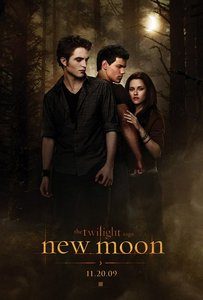
    (In theatres, December 2009) Given the runaway success of the Twilight series, it’s useless to review this second entry in the “saga”: Fans of Stephenie Meyer’s books don’t care, anti-fans don’t care in a different fashion, and practically no one will pick up this film at the video store going “I wonder what this is about?”  The dumb indulgences have been turned into holy writ, the film is slave to the book and the result is aimed squarely at a particular demographic segment, those who actually know what “Team Edward” and “Team Jacob” means and actually have an opinion about it.  (Me, I’m “Team Victoria” all the way.)  Still, there are still a few things to say about this film.  Plot-wise, I was pleased to see that the universality of the first film’s essence (you know, “as a teen girl, you will be seduced by a dangerous creature that has the power to change you forever”) doesn’t completely goes away in New Moon: Poor featureless Bella gets stuck moping around and teasing a much-better boy who nonetheless turns out to be a manipulating control-freak by the last reel of the film.  Surely that rings a few bells among the target audience.  But what’s significantly improved this time around is the budget and the direction: Chris Weitz lets a bit more color flow into the film, and seems marginally more comfortable with the demands imposed by the special effects.  The film feels fresher and better by the change of approach –although I miss some of the first film’s musical choices.  While the film is still aimed at a specific fannish audience, still annoying in many ways (who just wants to hit Edward over the head with a shovel?), still in love with its own quirks and angst, it’s a passable movie-watching experience, far less painful than you’d expect, even though much of the humour may work at the film’s detriment (“So, Bella, your friend would rather hang out shirtless in the forest with four of his ripped buddies?  There’s nothing gay with that at all.”)  But, as I’ve said before, Twilight is not made for you, fellow cynical hipster cinephile: let the kids have their fun and don’t begrudge them a bit of honest passion.

  • The Road (2009)

    The Road (2009)

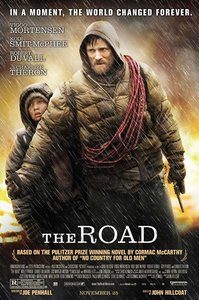
    (In theatres, December 2009) There’s been a lot of post-apocalyptic films lately, and hopefully The Road will signal that we can go back to something else, because it’s hard to imagine a realistic take on the end of the world that could be greyer, sadder and more relentlessly desperate than this one.  There’s no glamour, fun or adventure in this film set about a decade after an unseen, unspecified but all-encompassing catastrophe: The rare survivors are grimy and constantly forced to fight cannibals on their way.  As an adaptation of Cormac McCarthy’s Pulitzer-winning novel of the same name, it’s pretty faithful: Charlize Theron has a far bigger role in the film’s trailer than in the entire book, but the rest is pretty dead-on.  This means that rather than reading 241 bleak pages trying to find new ways to describe “gray doom”, you get to see 112 very long minutes of the same.  While The Road is a success in that it does manage to hit most of its objectives, it will take a special kind of viewer to appreciate it.  The rest are likely to spend their time looking at their watches and wondering when it will finally end (and if the characters can’t die a bit sooner for it to happen.)  I suppose that film scholars will have a lot to say about the film’s nuanced take on fatherhood, man’s inhumanity to man, the nature of hope and the way decaying character is seldom self-perceived, but first you have to endure the post-apocalyptic gloom.  Viggo Mortensen fans will be pleased; so will those looking for buildings unexplainably still burning ten years after everything goes gray.  As for the rest, well, 2012 is also available.  Now that is a catastrophic choice.

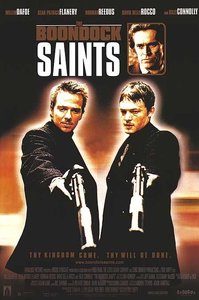
  • The Boondock Saints II: All Saints Day (2009)

    The Boondock Saints II: All Saints Day (2009)

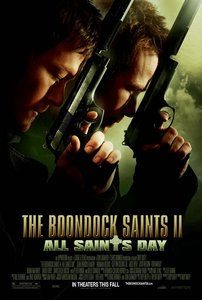
    (In theatres, December 2009) This sequel would normally have come as a surprise given the first film’s nonexistent theatrical release, but the intervening years have seen The Boondock Saints become a bit of a cult classic, and this sequel is all about bringing back the fans to the video store: Once again, two McManus brothers are in Boston laying waste to the city’s criminal elements, and we’re supposed to cheer for them as the film provides a steady succession of shootouts.  It’s supposed to be cool and funny, and writer/director Troy Duffy actually delivers on this promise: All Saints Day is often dedicated to pure fan-service, and those who haven’t seen the first film may feel left out of the fun.  Beyond the winks, though, there’s a decently entertaining crime comedy, noticeably funnier  than the  and perhaps even more striking now that Tarantinoesque crime comedies don’t show up as often at the local Cineplex.  This time, Julie Benz steps into Willem Dafoe’s shoes as the standout character: a drawling FBI agent so smart she “makes smart people feel like retards” but whose feistiness (and high heels) brings much to the film.  Her character’s dramatic arc is nearly identical to Defoe’s in the prequel, reaching an apex during a crime scene re-creation, and then dwindling down in the film’s closing moments until a little bit of a twist.  The other strong scene of All Saints Day belongs to David Della Rocco, who returns to the series just in time for an inspiring speech.  Otherwise, the writing can be a bit hit-and-miss, but the overall result is faithful to the original in providing a mixture of righteous vigilante violence.  (Too bad we also have to ignore the racist stereotypes, mild homophobia, low-budget corner-cutting or occasionally dull back-story.)  Fans will be satisfied and non-fans are advised to look to the first film as an indication of whether this one will make them happy.

  • Planet 51 (2009)

    Planet 51 (2009)

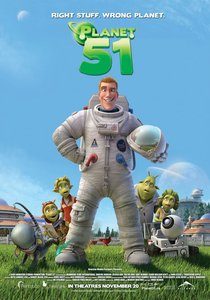
    (In theatres, December 2009) Most of its characters may be green and sport head tentacles, but there’s not much more to Planet 51 than a vintage “teen learns self-confidence” comedy for young adults.  Much of this old-fashioned approach is deliberate: The title winks less at Area 51 than at 1951 itself, and so our alien civilization takes place in this charmingly retro environment than hasn’t evolved much beyond nasal TV newsmen, poodle skirts and drive-in monster movies.  (One notes that the film originates from an overseas studio.)  It’s good for a few laughs -the best ones tackling alien-invasion clichés-, but the lack of Planet 51’s ambitions eventually feels hollow, and whatever good sentiment we have for the film aren’t rewarded by anything more substantial.  It’s for the kids, mind you, although the fifties nostalgia may end up flying over their heads.  But even on kids terms, the films’ art design may end up annoying rather than charming: familiar objects have been “alienified” by ludicrous design touches that stick out, and credibility matters aren’t helped by rock showers and pets urinating acid –although this leads to a couple of terrific gags, including a pretty cute one at the very end of the film.  Otherwise, well, most characters behave like they’re idiots, and the script’s jokes about hippies feel just as forced as they were in our own early sixties.  Of course, watching Planet 51 for cultural enlightenment is a waste of time: this is the kind of film designed so that parents can park their kids in front of the TV while they go do other things.

  • The Boondock Saints (1999)

    The Boondock Saints (1999)

    (On DVD, December 2009) After years of hearing about The Boondock Saints’s cult popularity on DVD (it never received a proper theatrical run, which explains why I missed it in the first place), I took the release of a sequel as a good reason to finally watch the film and see what the fuss was about.  It turns out that the cult appeal of the film’s success is partly based on the material itself: the story of two catholic Boston brothers taking on the city’s organized crime, The Boondock Saints often feels like an extended apologia for vigilante justice and gunfight sequences.  But writer/director Troy Duffy is a bit more self-aware than most: The ending (in which the villain is murdered) is reprehensible in the way most American action films are, but it assumes this blood-thirstiness.  What’s a bit more disturbing is the way the film actually feels fun and cool: The pacing is right, the action beats are interesting, and the dialogue has good moments.  Despite some puzzling moments (which you can either blame on a first script or a very low budget), the non-linear structure of the script works well and showcases its lead actors in subtle and not-so-subtle ways.  The standout performance here belongs to Willem Dafoe, who plays an ultra-competent FBI agent with gusto.  (The sequences in which his mind meshes with the crime he’s investigating are as good as this film gets.)  There’s also quite a bit of intriguing directing, with judicious use of hand-held and slow-motion cinematography.  Otherwise, well, The Boondock Saints is a mixture of crime, comedy and violence and action that finds resonance in the works of John Woo and Quentin Tarantino, certainly not as fully mastered as them, but definitely aiming at the same targets.  I’m a bit sorry I only saw it ten years after it came out.  The DVD contains a sympathetic commentary by writer/director Duffy and another one by Billy Connolly.

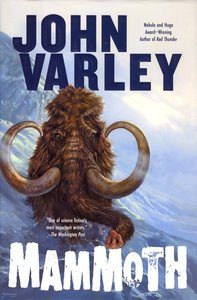
  • Mammoth, John Varley

    Mammoth, John Varley

    Ace, 2005, 364 pages, C$35.00 hc, ISBN 0-441-01281-7

    It’s no exaggeration to say that Mammoth is John Varley’s least remarkable book yet.  It’s not part of a series, has made few waves upon release, seems partly destined to kids and features little science-fictional content.  In tone, it’s a lark that eventually takes itself seriously.  In theme, it pushes no envelopes and even treads upon Varley’s previous work.  In short, it’s forgettable and optional: the very definition of a minor work.

    But that’s not a catastrophic assessment when dealing with a writer like Varley.  Mammoth does have a few qualities of its own.  Anyone looking to compare Varley at his least impressive to any other writer could learn much by studying Mammoth: Even in minor works, Varley manages to out-write a number of his contemporaries, feature one big spectacular sequence, throw in a few neat ideas and find a haunting finale.  The pieces don’t necessarily all fit together in a satisfying fashion, but that’s a comment on a different level: Line per line, Varley remains one of Science Fiction’s most preposterously readable author.

    The best demonstration of that talent is to see how difficult it is to stop reading the novel even when it’s either following obvious paths, refusing to give satisfaction, headed in the wrong direction or tackling soppy sentiments. Varley’s narration somehow makes it all look promising, even when we’re sure of the contrary.  There’s always a neat little hook of storytelling to keep up going forward, a slight twist of perspective or a mini-mystery to keep readers going forward.

    So it is that Mammoth begins as a straight-ahead time-travel story.  Somewhere in the Great Canadian North, a really-rich businessman’s archaeological team has discovered not only a superbly preserved mammoth, but also the remnants of what looks like a piece of advanced technology in the hands of a human wearing a wristwatch.  Looking for answers, the really-rich businessman hires a really-smart scientist to figure out that is probably, after all, a time machine coming from a lost time-traveler.  We get, in-between chapters, snippets of a kiddy documentary about mammoths.

    There are complications.  The time machine looks like a bunch of marbles in a suitcase and no one can understand how (or if) it works.  Animal activists mount an attack against the really-rich guy’s compound and disrupt the marbles.  The really-smart guy figures out the way to travel back in time when the author nudges him so.  The really-smart guy’s return to contemporary Los Angeles, after a few days in the prehistoric wilderness, comes with a bonus mammoth herd.  A spectacular mammoth rampage ensues, followed by extreme police brutality, mammoth mop-up, and a plot that goes increasingly off the rails when it resumes years later.  By the time our protagonists are kidnapping a showbiz-star mammoth and running away to Canada, well, Mammoth fully earns that “least remarkable Varley book” title.

    The time-travel plot ends up in a loop, the strange time machine becomes a formless plot device that Varley isn’t interested in explaining, the super-rich guy becomes a villain (then a more tragic figure) and Canada becomes a haven for mammoth-rights activists.  For those who are tired of conveniently rich characters in science-fiction, deliberately unsatisfying plot devices or dumb animal activism may not find the book entirely to their liking.  (There’s a particularly vexing suspension-of-disbelief problem when we’re asked to believe that mammoth would become the next big thing in showbiz.)  The writing is good, but it all amounts to a plot that alternates between weak and silly.  There are several fine moments in the novel (the return of the mammoth herd in downtown Los Angeles is a spectacular sequence, and it’s announced by a cute re-arrangement of chapter numbers), but they add up to a disappointing shaggy-mammoth story, with a sad extended epilogue that seems curiously out-of-place in the middle of an otherwise light-hearted (even ridiculous) story.  To see a fine premise scatter off in all directions like this is a disappointment, especially considering that it’s coming from a writer who has done far better in the past.

    But even Varley fans have accepted that he can have off decades, and that the fizzy wonderful Varley of the seventies (or, to a lesser extent, the nineties) is not the one writing nowadays.  Mammoth is fine in the ways Varley can be fine even when he’s writing trifles, but it’s also maddening in reminding us that he can do far, far better.  Call it, as I first said, a minor addition to his bibliography: worth tracking down only once you’ve exhausted his top-line work.

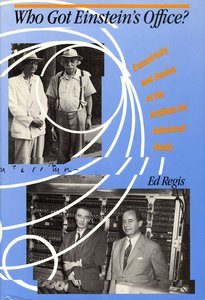
  • Who Got Einstein’s Office?, Ed Regis

    Who Got Einstein’s Office?, Ed Regis

    Addison Wesley, 1987, 316 pages, $17.95 hc, ISBN 0-201-12065-8 nov28

    I’m never too fond of reading older, unrevised pop-science books.  Science evolves, revises its own theories and even a decade can mark significant shifts in thinking.  Reading older science books can actually be harmful: readers can end up putting the wrong information in their head from well-meaning but outdated work.

    Ed Regis’ Who Got Einstein’s Office? may be pushing almost a quarter of a century by now, but it’s unusually free of obsolescence issues.  A work of science history rather than science fact, it tackles the legacy of Princeton’s Institute for Advanced Study, a think-tank set up to provide a place of study for theoretical scientists.  The first decades of the Institute’s history read like a who’s who of American science superstars: Einstein spent his last two decade there, where he rubbed shoulders with people such as Kurt Gödel.  Over the years, names such as Freeman Dyson, J. Robert Oppenheimer, John von Neumann and Stephen Wolfram all come to spend time at the Institute.  Who Got Einstein’s Office? is not just the story of the institution, but a look at the personalities that it attracted, the research it fostered and the place of such institutes in science.

    The best reason to read the book, even today, remains the portrait of the scientists who worked there.  The book’s title question ends up being a pretext to spend an early chapter looking at Einstein’s history with the institute, and peek a bit beyond the stereotypical image of the one who remains the most famous scientist of all time.  Subsequent chapters study the eccentricities of people such as Kurt Gödel (who ended up starving himself to death out of sheer paranoia), the flamboyance of John von Neumann (“Good Time Johnny”) and the declining years of a politically-persecuted Oppenheimer.

    In-between, we get a great portrait of pure scientists at work and play.  The institute being set up to cater to elderly scientists so that they can spend their time thinking without worrying about research money or even getting lunch, it offers an environment where science dominates over more mundane concerns.  Esoteric practical jokes aren’t rare, and eccentricity abounds as Regis offers a look at the various habits of the Institute’s members circa 1986.  It’s a fascinating book, especially when it focuses more on the way science is conducted than the actual content of the science.  I picked up the book in good part because of Regis’ latter work, and wasn’t disappointed to find out that his gift for clear accessible writing is obvious even in his early work.

    Needless to say, some aspects of Who Got Einstein’s Office? haven’t aged well.  The illustration in the book are recognizably Macintosh-generated low-resolution graphics, while the lengthy passages on chaos theory, fractal graphics, cellular automata, Conway’s Game of Life and then-current computer technology instantly date the book.  Stephen Wolfram has moved from the Institute to quite a number of astonishing things, which leads one to wonder what has happened to the Institute since then.  After all, one of Regis’ conclusions is that the Institute not only had a harder time attracting big names, it didn’t seem to produce as much good science as it should: it worked better as a decent pre-retirement home for elderly scientists than a boiling think-tank for cutting-edge science.

    But none of this reflects badly on the book itself, which is filled with anecdotes, quotes, science and surprises.  Science Fiction fans (once they get over the profiles of Dyson and von Neumann) may be thrilled to see a quick quote from a mathematician named “Rudolf Rucker” [P.47] –the same Rudy Rucker known for his outlandish SF.  Other good stories involve Einstein distracting Gödel long enough for him to pass his American citizenship exam, the grander-than life personality of von Neumann and the various Faculty munities during the Institute’s history.

    It all combines in a book that could use a minor revision for details, but can still be read with pleasure and interest today.  Students of twentieth-century science will find a lot to like here, and even those who can’t remember any scientist’s name except for Einstein will learn a lot about some of the finest minds of the twentieth century.