Reviews

  • Return to Sodom and Gomorrah, Charles Pellegrino

    Avon, 1994 (1995 reprint), 386 pages, C$16.00 tpb, ISBN 0-380-72633-5

    A few years ago, I remember seeing a TV special that purported to explain the mysteries of the Bible through scientific investigation. Problem was, this show was obvious produced by fundamentalist authorities. The explanations were so ludicrously far-fetched that my basic feeling was that it was far simpler to blame the miracles on tall stories than to actually try to give them a rational, scientific explanation.

    Now here comes Charles Pellegrino, with a book that’s ostensibly about “solving the Bible’s ancient mysteries through archaeological discovery.” Normally, I wouldn’t have even picked up the book, but then you’ve got to realize that Charles Pellegrino is no ordinary writer: His three Science-Fiction novels (Marching to Valhalla, The Killing Star and Dust) were deeply impressive work from a writer who obviously brimmed with innovative concepts, and could present them in an intriguing fashion.

    Pellegrino is obviously someone with far-ranging interests. His professional credits cover a wide range of accomplishments, from anti-matter rocket designs to paleontological thought experiments that led to Michael Crichton’s Jurassic Park. On top of accomplished scientific and literary careers, he’s also an archaeologist, and Return to Sodom and Gomorrah is nothing less but a book-length essay about middle-eastern archaeology.

    The Bible elements remains, but Pellegrino (as a confirmed agnostic) works in a radically different fashion from that TV Special of my youth; he uses the Bible as a way of demonstrating what he’s seen in the field, not the other way around. And most often, the archaeological record is even more fantastic than the Bible itself.

    Take Sodom, for instance. Archaeologists have discovered a city that roughly corresponded to the biblical city of Sodom. But that city presented them with a puzzle: It seemed to have been abandoned in a hurry, and left untouched for several years afterward, even though other fertile places nearby had been re-colonized very quickly. Even more mysterious; the remains of the city appeared to have burned quite thoroughly, this despite the fact that there were no flammable materials in the city, dried mud being the construction material of choice. Charred animal bones everywhere, even though it takes a formidable amount of energy to char bones.

    Pellegrino and his friends in the field came up with a rather spectacular explanation: Underneath most of the middle east, as we know, lies multiple deposits of flammable hydrocarbons. What if, spurred by continental plaque movement, one large deposit made its way to the surface, like a natural tar pit? What if it first came out as natural gas -the lightest part of a petrol deposit-, and encountered an open cooking flame?

    Instant firestorm, fuelled by natural geological pressure and instantly lethal. Completely destroying habitable land. Typical Hollywood blockbuster premise, right there. Only a theory, of course, but doesn’t it sound good?

    Return to Sodom and Gomorrah is filled with discoveries of the sort. From evidence of a mitochondrial Eve to the common volcanic origins of both Palestinians and Israelis, passing by an explanation of the Dead Sea Scroll controversy and a huge amount of lucidly told ancient history, Pellegrino truly delivers the goods with this book. And he leaves plenty to the imagination too, as be regularly tosses off tantalizing hints of personal exploits (randomly mixing fire-fights, nuclear accidents and personal vendettas) with mind-blowing bigger issues. (Are we destined to create our evolutionary successors? Are we repeating the environmental mistakes that previously destroyed other civilizations?) Pellegrino is fluent not only in past history or prehistoric lingo, but also in the jargon of astrophysics and the vernacular of SF, and the result is simply unique.

    This is a book that will stimulate your thought processes, push you to buy everything else that Pellegrino wrote, and reconsider the Bible with a keener eye. Trying to make it justice is almost impossible; like most great scientific vulgarizations, you have to read it to truly feel it. Great reading for persons actively looking for their next big idea rush.

  • Dead Men Don’t Wear Plaid (1982)

    Dead Men Don’t Wear Plaid (1982)

    (On TV, January 2000) I can testify that Dead Men Don’t Wear Plaid works pretty well as a comedy without catching any of its references to the noir genre it’s so obviously parodying. This fabulous cinematic experiment intercuts actual scenes from classic 1930-1950 films into its own B/W footage, and so includes Steve Martin and the gorgeous Rachel Ward interacting with the great Humphrey Bogart, Ingrid Bergman, Vincent Price, Cary Grant, Greta Garbo… and a few others. It presumably blows the mind of the fans of these type of films, but as a total neophyte to this period, I though the film was pretty darn successful without knowing the references. You’ve got to love the recurring tie gag.

    (On DVD, November 2021) How interesting it is to revisit Dead Men Don’t Wear Plaid after watching a few hundred noir films – the basic comedy of the film is still the same, but now I can recognize the actors, and sometimes even the clips used by Carl Reiner and Steve Martin in putting together their homage. The distinction of the film is not only having Martin play a private investigator in 1940s Los Angeles, but especially having him interact (through clips from older movies) with Classic Hollywood actors. While the film features a heroic re-creation effort in set design, cinematography and costuming (sometimes from people who had worked on the original films, such as Edith Head!), the difference between the original and new footage is quite obvious on DVD: Since Dead Men Don’t Wear Plaid was shot in 1980s widescreen and the original footage is in 4:3 “Academy ratio,” the older footage is zoomed into widescreen format and the grain difference is perceptible. Still, that doesn’t do much to lessen the fun of Martin arguing over the phone with Barbara Stanwyck, telling Humphrey Bogart what tie to wear, sharing a train cabin with Cary Grant or getting hit on by Joan Crawford. While the film’s first two acts can often feel disconnected as the protagonist goes investigating and lands in separate films, the last act is more cohesive given how it borrows much of the sequences from The Bribe. While the comedy has its ups and downs, it’s all good fun – and having the beautiful Rachel Ward as the original-footage femme fatale doesn’t hurt either. Martin sports dark hair and is a good sport about the silliness asked of him – Dead Men Don’t Wear Plaid is clearly part of his early-1980s heyday as a film comedian, and still a funny film today… although it’s a different kind of funny for film noir fans.

  • The Beautician and the Beast (1997)

    The Beautician and the Beast (1997)

    (On TV, January 2000) This film has a rather big problem. It’s basically a rethread of The King And I with a satiric bite, with Fran Drescher as a sarcastic American “teacher” suddenly dropped in an East-European country ruled by a kind-of-dictator. Some of the funny bits work; Drescher does deliver a few fun zingers and the film does exhibit moments of cleverness whenever it tries to make fun of the basic premise. Unfortunately, the film takes itself much too seriously most of the time, and ends on a purely-straight romantic note, which doesn’t jibe with the sarcasm that had been, up to that moment, the best part of the film. Might be best watched as a dubbed translation, as no one can have a more annoying voice than Drescher…

  • Babe (1995)

    Babe (1995)

    (On TV, January 2000) A charming fairy tale about a farm, its animals and the human farmers. Though quite fun and always interesting to look at, it does lacks some “oomph”. The computer-animated animals are cute, but there are signs that the film doesn’t fully exploit its potential. Still, good fun.

    (Second-through-fiftieth viewings, Toddler-watching, On DVD, June 2014) Sometimes, it takes a different perspective to appreciate a film at its true value, and so it is that toddler-watching Babe (that is; over and over again) with a curious two-and-a-half year old only underscores what a magnificent achievement this film is. We usually skip over the dark opening and the sheep death scene, but most of Babe is fit to be watched by very young kids, even if as nothing more than a pleasant montage of scenes with adorable animals. (Tell no one, but the scene in which Babe convinces a sheep to take her medicine proved to be of pedagogical value.) It’s upon the fifth or fifteenth viewing that you begin to realize how perfectly executed Babe is: As a representation of a bucolic family farm, it’s got charm beyond measure. James Cromwell is nothing short of an icon as a laconic farmer, and the near-silent climax is a thing of beauty. Babe him/herself is a hero worth cheering for, and the sheep are almost impossible cute (and I say that as someone who has worked with sheep.) George Miller’s hand in this film is mostly that of a producer/screenwriter (Chris Noonan directed the film), but you can recognize the success of his approach in the rewatchability of the film. Babe is sweet but just as much fun for adults than it is for young kids. Let go of any cynicism and enjoy.

  • The Lord of the Rings, J.R.R. Tolkien

    Harper Collins, 1954, 1153 pages, C$95.00 hc, ISBN 0-261-10230-3

    It seems strange for a voracious reader such as myself not to have read The Lords of the Rings, one of literary history’s most influential work, in or outside the science-fiction/fantasy genre. Hey, everyone has their blind spots; at least I took the time to correct this one, plunging in Tolkien’s 1000+ pages saga in the waning hours of December 31, 1999.

    It took nearly three weeks, but I finally finished The Lord of the Rings. The earth didn’t tremble, the world was not magically transformed to a better place, I was not struck down by a bolt of pure epiphany. Of course, given the amount of hype that preceded the book, I shouldn’t have been overly surprised by a certain letdown. No book can survive this amount of build-up.

    But even then, I found The Lord of the Rings a laborious read. The very qualities of the work that made its reputation -the breathtaking world-building, the literary writing, the inclusion of songs and made-up languages, the epic nature of the narration- are the very things that drove me to frustration. Things that could have been told in two pages suddenly took a whole chapter; a rather simple trip from point A to point B became lengthy proceedings punctuated by crises that often didn’t amount to much lasting excitement or dramatic point. I found it strange that Tolkien spent so much time away from Frodo when he is undoubtedly the center of interest in the story.

    I skipped the songs, skimmed the most boring passages, read only a few dozen pages per day and generally was bored stiff by most of the book. And yet, I find myself with a generally positive opinion of the book. Certainly, fear of peer pressure certainly accounts for part of this sentiment (being stoned to death by rabid Tolkien fans is a fate that I wish upon no one, lest of all myself) but not all of it. I might have been decidedly unimpressed by the lack of zippiness of The Lord of the Rings, but there’s no disputing that this is a very good, very impressive work.

    Nowhere more impressive, of course, in the sheer depth of the world created by Tolkien, which was subsequently mined for endless hidden ripoffs which at least usually improved on the turgidness of the original. Still, imitation is the sincerest form of flattery, and few authors have been as flattered as Tolkien in seeing a whole publishing genre spring up from their not-so-humble creation.

    In the end, however, mere mortals like me can scarcely complain about a work that’s too literary, too complex or too richly-detailed. It’s a measure of how darn good The Lord of the Rings is that even if I didn’t especially like it, I have no choice but to recommend it.

    BRIEFLY: The Hobbit, Tolkien’s prologue to The Lord of the Rings, is undoubtedly written for children, but adults will find here a rougher yet perhaps more interesting story than the full-fledged sequel. The story remains focused on a single hobbit, Bilbo Baggins, and thus doesn’t have the dyptic structure of the trilogy. The considerably amount of dry British humor also helps.

    BRIEFLY: Bored of the Rings, the Harvard Lampoon’s parody of Tolkien’s trilogy, is far shorter (160 loosely typeset pages) and much more strictly enjoyable than its source material. Well, that’s if your brand of humor include snickering at gags like “Boggies are an unattractive but annoying people whose numbers have decreased rather precipitously since the bottom fell out of the fairy-tale market.” [P.XV] Still, the book essentially parodies the first book of the trilogy, plus the conclusion—which either speaks about the non-essential nature of the rest of the Lord of the Rings, or the authors’ laziness. A hoot for fans.

  • The Winds of War and War and Remembrance, Herman Wouk

    Little Brown, 1972-1978, ???? pages, C$??.?? mmpb, ISBN Various

    The Winds of War: Little Brown 1972, 885 pages
    War and Remembrance: Little Brown, 1978, 1042 pages

    As historians look back on the twentieth century, one single event will loom large over the period: World War Two. Born from the sum of world history up to that point and influencing latter human affairs forever, WW2 has, in a few years, reshaped geography, history, science and countless lives.

    Actually, it’s misnomer to call WW2 “one single event” given that it was a conflict made of several elements not always linked together. As it took place over six years, it also contains far too much material to be simply resumed.

    So you can imagine the built-in difficulties for Herman Wouk as he attempts to dramatize WW2 in The Winds of War and War and Remembrance. The sheer size of the result (nearly 2400 pages all told) is an indication of the magnitude of the task.

    Succinctly put, these two books follow the various adventures of the Henry family and their acquaintances, from 1939 to Pearl Harbour (The Winds of War) and them from Pearl Harbour to Hiroshima. (War and Remembrance) Initially, there’s Victor “Pug” Henry (waiting for a command assignment, but shuffled in a diplomatic role), his wife Rhoda (who might or might not be entirely faithful to her husband) and the three Henry children: Warren (promising naval aviator), Byron (devil-may-care wanderer) and Madeline (soon enough responsible for a radio show).

    Love affairs, friendship, casual acquaintances and such soon expand this narrow cadre, with the result that we truly get a diverse sampling of the war from various point of view. One character always manages to be at the right place at the right time for most of the war’s events. Though the plot mechanics often threaten to overwhelm the narrative drive, Wouk must be commended for his solution to the size problem of WW2.

    Unfortunately, there’s no solution to the size problems of the two books themselves. While a certain amount of padding is probably inevitable in 2,400 pages, Wouk more than overdoes it in this duology, inserting whole scenes of no narrative nor documentary impact and chapters than can be skipped without ill-effect. The Jastrows’ story, in particular, is more than obvious (and manipulative) in its ultimate denouement, and attempts to drag it out only annoy rather than inform.

    On the other hand, maybe because of these fluffy passages, Wouk does manage to bring back dramatic tension to World War II. For contemporary readers, it’s a story of the past, a fixed sequences of events that lead to our reality. It’s all-too-easy to forget that the issue of the war was unknowable at the time. The Winds of War excels at showing the possible early outcomes of the war’s beginning; Germany invading England, the Allied powers suing for peace after Poland, etc… This sense of absolute incertitude is the strongest virtue of the first volume.

    Wouk should also be praised for the passages presented as translated excerpts of (the fictional) General Armin von Roon’s military analyses of WW2 as interpreted from a German point of view. These passages are clearly written, and present an alternate perspective of the events, often more complete and enlightening that what the story’s protagonists see.

    There are a few interesting storyteller’s tricks sprinkled throughout the second volume, such as the remarkable roster call of American airmen sacrificed during the battle of Midway, or a straight admission that a fictional character never existed, but was inspired by hundred of others who did exist. Most of these asides work.

    Herman Wouk’s duology makes you not only understand the events of the Second World War, but also instill a certain emotion into them, whether it’s incertitude, suspense, devastation or loss. Both books deserve to be read, if only for fulfilling the second’s book title: War and Remembrance.

  • Trainspotting (1996)

    Trainspotting (1996)

    (On VHS, December 1999) Choose this film. Choose visual dynamism. Choose densely textured construction. Choose a cult classic. Choose thick annoying English accents. Choose good acting by Ewan McGregor. Choose a darn funny film with unfortunate scatological vignettes. Choose yet another good English crime dramedy. Choose one of the most harrowing description of heroin addiction ever put to film. Choose life. You know you want to do that.

  • Swingers (1996)

    Swingers (1996)

    (On VHS, December 1999) I can’t say I enjoyed this film as much as I should have. The initial misogyny of the film is hard to overcome (even though we’re supposed to see through it) and the protagonist comes off as a whining wuss for most of the story. There are some good scenes (as well as a few really good songs on the soundtrack) and the film eventually pulls itself together for a good finale, but it takes a long while to get there. The tribute shot to Goodfellas (long take of the protagonists entering the bar through the kitchen, etc…) is showy, but fun. Might best be seen in a group.

  • The Sweet Hereafter (1997)

    The Sweet Hereafter (1997)

    (On VHS, December 1999) This film surprisingly sustains the viewer’s interest, even despite the limits of its small-town melodrama subgenre. Well-acted, decently written and nicely directed, it’s obviously not a subtle film: Every character has a huge problem, and the film is peppered with weepy moments. There are a few scenes that don’t seem to belong in the film. Still, it works well and effectively develops its structure. Not bad.

  • Sling Blade (1996)

    Sling Blade (1996)

    (On VHS, December 1999) One of the disadvantages of viewing a film on video is that contrarily to a movie seen in theatres, it has to compete with doing the dishes, cleaning up, reading a good book, etc… For most of its duration, Sling Blade fought with all the other household distractions for a share of my mindspace, and usually lost. Only in the final few minutes does the film become interesting. One could blame my usual lack of appreciation for film about mentally-challenged protagonists, or the view that the film is pretty obvious early on, then drags for a full 140 minutes… Whatever the reason, even though it possesses undeniable qualities, Sling Blade just can’t compete with household distractions. That can’t be that good, mhhhm?

  • The Shawshank Redemption (1994)

    The Shawshank Redemption (1994)

    (On VHS, December 1999) This film was dangerously over-hyped to me, regularly turning up in “Best-of” list and being endlessly praised by both critics and trusted friends. I already knew that the basic story was solid; I had been very impressed by Stephen King’s original story. As it turns out, the film honoured both King’s story and its own near-classical reputation. You can tell it in many different fashions, but The Shawshank Redemption is a grrreat film, an instant classic (immediately earning a spot on my Top-100 list), a ****/**** film and a must-see. Great stuff, rent it, buy it, etc… You shouldn’t need much more than that to rush to your video store.

  • Scream 2 (1997)

    Scream 2 (1997)

    (On VHS, December 1999) Pretty much what you’d expect if you’ve seen the original Scream. Out-of-nowhere plot twists, pop-culture references and wildly implausible action. The Whaaaat?-factor is fairly high. Rather more funny -but not that much- than horrific, though two sequences (the open-air cell-phone scene and the crashed car) stand out as being above-average. Many twists can be foreseen. Not as clever as it thinks it is. Moments of silliness, increasingly so toward the ending. Ends up as being more or less of the same quality than the first one.

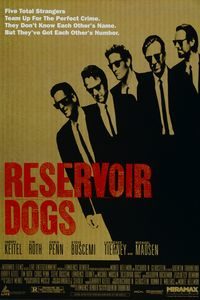
  • Reservoir Dogs (1992)

    Reservoir Dogs (1992)

    (On VHS, December 1999) In retrospect, a rather promising debut by a guy named Quentin Tarantino. It’s also surprisingly theatrical, for such an obviously cinematographic film. Steadily -though blackly- amusing throughout, with great performances by Harvey Keitel and Steve Buscemi. A solid rental.

    (On DVD, February 2009) This talky crime thriller has aged pretty well, all thing considered. The dialogue gets better, the lack of action isn’t as surprising, and the cut-ear scene seems positively restrained given the excesses that Tarantino and his imitators have committed ever since. The 15-year-anniversary DVD edition is filled with interesting material, from interviews with/about the fascinating personalities involved in the project, a look at the impact of the film on the indie circuit and other assorted tidbits.

  • The People vs. Larry Flynt (1996)

    The People vs. Larry Flynt (1996)

    (On VHS, December 1999) Is it possible to make an engaging film about a despicable character? Judging from this film, the answer would have to be yes. Despite being reprehensible, Larry Flynt is hailed by the film as being kind of an unusual hero, a living conduct for popular freedom of speech. Who would have though that a pornographer’s biography would make these points? Edward Norton turns in another great performance. (Has he ever been in a bad role?) We don’t get much insight in Flynt’s mind -maybe it’s better this way- but we do get outrageous courtroom antics. It’s worth it.

  • Mononoke-hime [Princess Mononoke] (1997)

    Mononoke-hime [Princess Mononoke] (1997)

    (In theaters, December 1999) All things considered, a pretty good fantasy film marred both marred and bolstered with the typical qualities of anime. On one hand the visual inventiveness marks the film with stronger quirky individual scenes than the usual film. On the other, the often-jerky animation and other anime “tics” make it so that the film flows less smoothly than the standard Disney. The universe of Princess Mononoke is also presented as is, without any attempt at rationalization or structure. Don’t expect any kind of predictable logic; wacky solutions and features still pop up late in the film. Still, it’s an enjoyable fantasy for more mature viewers, and makes one wish for better material of this type.