Month: April 2020

  • Dèmoni 2… l’incubo ritorna [Demons 2] (1986)

    Dèmoni 2… l’incubo ritorna [Demons 2] (1986)

    (In French, On Cable TV, April 2020) If you haven’t seen the first Dèmoni, don’t worry too much if Dèmoni 2… l’incubo ritorna plays in front of you—the links between the two films are built on atmosphere and plot more than characters or events leading to the sequel. Once again, we are in an enclosed space, as something transforms people into bloodthirsty demons (i.e.: zombies). Except that, rather than being in an old movie theatre, we’re in a big modern high-rise apartment, and instead of a film creating the zombies, it’s a TV broadcast. Also written by Dario Argento and directed by Lamberto Bava, the rest of Demons 2 plays along similar lines: people trying (usually unsuccessfully) to defend themselves, gore effects, shiny-eyed demons, and the like. There is some playfulness in the way some expectations from the first film are overturned, so if you’ve got a mind to talk yourself into a double-bill, that will make it even better. Otherwise, this sequel, which was rushed into production to make it to theatres almost exactly a year after the original, doesn’t benefit from any substantial improvements in budget, scripting or execution: it’s pretty much the same thing with more demons and more people to kill. Great 1980s elements, though. Its too-scattered approach is good for showcasing gory effects and bloody kills, but not so much for plotting or character development. Still, while not quite as fun or focused or enjoyable as the first time around, Dèmoni 2… l’incubo ritorna is clearly in the same vein, and more enjoyable than other giallo or cannibal Italian horror films of the early 1980s.

  • The Sky’s the Limit (1943)

    The Sky’s the Limit (1943)

    (On Cable TV, April 2020) You won’t find The Sky’s the Limit ranked very high on any list of Fred Astaire’s films, but fans may find it interesting to see him playing something slightly different than usual. The most distinctive aspect of it is that the film in unabashed wartime propaganda, and that Astaire plays a military pilot! Not a very dutiful one, mind you—he escapes his own morale-boosting tour to go have fun in New York City, meets a girl and the film gets back on the tracks of Astaire’s usual romantic comedies. While the songs and dances are sparser than usual, Astaire’s character is written, as usual, as a persistent stalker when it comes to pursuing girls. To make up for fewer musical numbers, the romance is more front-and-centre than usual, even if the match between Astaire and Joan Leslie (both of them playing characters with their first names) doesn’t quite gel. The film gets better during the pair’s first ta-dancing duet, but eventually the romance hits its usual third-act wall. This temporary break-up leads to the best sequence in the film—and one of the highlights in any serious Astaire anthology: the “One for My Baby (And One More for the Road)” number, in which Astaire’s drunk character lashes out at his frustrations at a hotel bar by tap-dancing and kicking glasses and bottles at the mirrored bar wall. It’s a shocking, violent, and completely off-persona sequence for Astaire at the time, even though it portends Astaire’s wide-ranging post-musical acting career. The film could have ended on that note, but there are still a few minutes for a wholly unsatisfying happy ending that feels trite considering the rest of the film. The Sky’s the Limit is, to be sure, an interesting film for Astaire fans asked to accept him as something else in a film that doesn’t particularly use his talents very well in service of wartime propaganda. But it’s not a particularly good film. For fans only, and even then—steel yourself the moment you see Astaire acting drunk.

  • Big Business (1988)

    Big Business (1988)

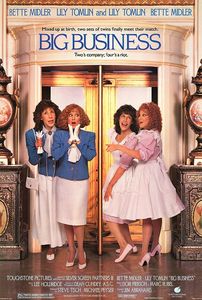
    (In French, On Cable TV, April 2020) As high-concept comic premises go, “mismatched twins” is pretty good so how about “two pairs of mismatched twins”? How about having one very upper-class set, and one very working class? How about them not only reuniting, but doing so in the context of big business shenanigans? Wheee! Add to that concept such gifted lead performers as Bette Midler and Lily Tomlin and the only two possible questions are “How much money will this make?” and “How can this fail?” Alas, the answers to that second question are what we’re here to discuss. It’s not that Big Business is a bad movie—it’s got enough chuckles along the way, two powerhouse performances for four, a savvy blend of archetypical plot devices, and some nice late-1980s sheen. It’s just that for all of its potential, Big Business feels… oddly lacking. The constant near-misses turn into steady annoyances, the idiot plot keeps dragging long after even the most idiotic idiots have understood it, and the story doesn’t quite get to the next level with its third act. Delaying the twinset’s reunion so late in the film doesn’t just mean more frustration throughout—it means that there’s less time to see all of them react to one another and join forces. The archetypical ingredients should have led to something bigger and better than this. I mean, sure, do watch Big Business for the fun of seeing Midler and Tomlin in dual roles… but you’ll wonder why it’s not better than it is.

  • The Art of Self-Defense (2019)

    The Art of Self-Defense (2019)

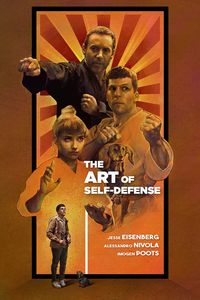
    (On Cable TV, April 2020) There’s a deliberately awkward meeting between Fight Club and the anxious generation in writer-director Riley Stearns’s The Art of Self-Defense. Jesse Eisenberg temporarily steps away from his alpha-nerd persona to take on a nebbish accountant who ends up joining a dojo for self-defence. The protagonist’s suffering through the first half of the film is gradually transformed into a more disturbing aggressivity throughout the film’s second half. While billed as a comedy, The Art of Self-Defense is more excruciating than funny—it’s strikingly unpleasant to watch even with the dark humour, off-kilter tone and ironically upbeat conclusion. It does get better toward the end, as the comedy clicks and the inevitable conclusion plays out—but it’s still not a walk through the park. Eisenberg eventually proves himself the single best choice for the role, but we may ask—to what purpose? The examination of aggressive, toxic masculinity is not really enhanced by any subtle point, or countered through humour: it’s just there, blatant and unenlightening. Fans of cringe comedy may get more out of it, but The Art of Self-Defense will either bore or repel most viewers.

  • Beethoven (1992)

    Beethoven (1992)

    (In French, On TV, April 2020) At least the logline of this film writes itself: “Family adopts a very big dog, mayhem ensues.” Written by John Hughes under pseudonym, Beethoven is so clearly and directly aimed at family audiences that its single-minded determination to crack that market is almost admirable. A multiplicity of subplots further widen the appeal, ensuring that at least someone will get something out of at least one plot strand. (Fittingly enough, I most identified with the harried father—a suitably comic performance from Charles Grodin.) Given this, it seems almost churlish to point out that the film ekes a mediocre result. The same forces packaging the film for maximum audience sympathy also prevent it from going anywhere interesting. There is one exception, and it’s a bad one—one scene is surprisingly bloody for a family film, and that’s not even getting into the wisdom of putting animal experimentation in a family film in the first place. On a happier note, this film is amazing for a few young up-and-coming actors getting supporting roles, whether it’s David Duchovny as an arrogant venture capitalist, or both Stanley Tucci and Oliver Platt as hoodlums. None of this makes Beethoven that much better, but at least it’s something to watch while the youngsters are happily cheering the dog along.

  • Dèmoni [Demons] (1985)

    Dèmoni [Demons] (1985)

    (In French, On Cable TV, April 2020) I’m game for any movie talking about movies, even if it’s a schlocky Italian horror movie about unsuspecting patrons being stuck in a movie theatre as they’re changed into demons. Yep, that’s Dèmoni all right—co-scripted by Dario Argento in full supernatural demon fan mode and directed by his protégé Lamberto Bava. The story isn’t complicated: It’s about a bunch of people invited to watch a movie about demons, then dying, one by one, to real demons. Their troubles don’t end once they’re outside the theatre, but that’s a classic horror slingshot coda. Before we get there, however, this hardcore horror film has plenty of black-comedy fun to offer: it doesn’t quite attain its fullest potential, but it’s gory and wild and crazy and nonsensical and subservient to the rule-of-cool and somewhat still unlike most horror movies out there, so that’s a plus. The cultural references are all very mid-1980s too. The lineage between Dèmoni and Argento’s more traditional giallo is obvious, but the result remains a capable mid-1980s horror film, and one of the few Italian horror movies of the decade that I can stomach without too many qualms.

  • Dark Horse (1992)

    Dark Horse (1992)

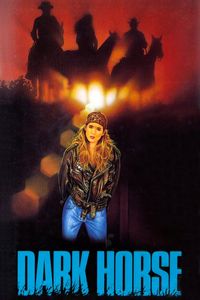
    (On TV, April 2020) I’m not that big of an audience for horse-centric family dramas, but I will watch anything with 1990s vintage Mimi Rogers, and she’s pretty good in Dark Horse as a horse ranch owner who takes in a resentful teenage protégé. The teen rebel is played by Ari Meyers, who’s cute enough in a conventional role. Produced by 1950s-60s movie star Tab Hunter, the film is blunt, simplistic and deliberately feel-good, but it works well enough at its intended purpose. Otherwise, this reviewer struggles to find anything more to say about Dark Horse. Equestrians will enjoy, maybe?

  • The Jazz Singer (1927)

    The Jazz Singer (1927)

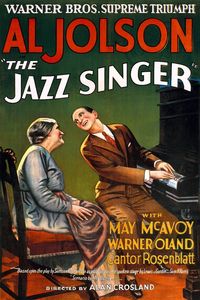
    (On Cable TV, April 2020) So… just so that we’re clear—the first sort-of-not-silent film is one that stars a white guy who made an entire career out of blackface? That’s the legacy we’re talking about? Birth of a Nation as the first film shown at the White House, and the first talkie as a showcase for black cultural appropriation? All right then. No, The Jazz Singer is not the first full talking film—it was designed as a silent film, then rushed through then-experimental sound production segments in order to wow audiences, but it’s not the first full sound film, as it’s largely silent-ish with only a few songs and talking sequences (“Wait a minute, wait a minute, you ain’t heard nothin’ yet!”) making up maybe a quarter of the film. Much of the dull narrative is narrated through title cards, and focuses on a protagonist torn between his strict Jewish father and a career in showbiz. While there’s nothing wrong with that premise, it’s just that… well… the film’s headliner is Al Jolson, who became famous for doing blackface. A lot of undeniable, unsubtle blackface. What softens the blow, slightly, is that blackface in this narrative stands for something a bit more than racist jokes and appropriation; it’s the protagonist (Jewish and so different from the mainstream, if that helps) distancing himself from himself, and paradoxically affirming whiteness by exaggerating blackness. In other words: It’s not quite so simple by the standards of 1927, although you can take a shortcut to problematic in 2020. Of course, such cultural analyses are wasted in talking about the film that launched the talkies—it wasn’t so much the technology as the public’s enthusiastic approval of the technology that sealed the fate of silent films. Within a mere three years, the vast majority of Hollywood switched to sound films and never looked back. (Incidentally, it made Warner Brothers go from near-bankruptcy to a major studio.) It probably would have happened without Al Jolson and The Jazz Singer, but the more you dig into the film and what it meant to the Warner Brothers, the more you understand why it was a near-perfect launching pad for talkies. Still: it’s now of historical interest only.

  • An American Werewolf in Paris (1997)

    An American Werewolf in Paris (1997)

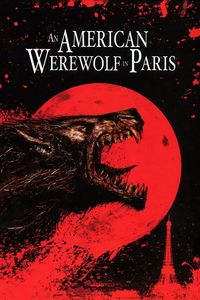
    (In French, On Cable TV, April 2020) There’s a reason why An American Werewolf in London is still ranked as one of the finest horror-comedy films of all time and why no one ever talks about An American Werewolf in Paris, and it’s not mere Anglophilia. Part of the reason is because of sheer talent—the first film is from John Landis, while this one seems to come straight out of the studio’s sequel-extrusion department. The first is bold and crazy in its choices, whereas the second apes the first without too much conviction. The first has the guts of a memorable ending, whereas this one settles for an off-the-wall climax. The first has some incredible practical effects, whereas the second is stuck at the infancy of the CGI age. At least the second has a young and very cute Julie Delpy in an unusual horror-comedy role… but it’s not enough. An American Werewolf in Paris very clearly apes the first film, especially with its visions, but without quite recapturing what made it special. Seen from 2020, the film feels increasingly dated in its choices, musical or otherwise. It’s not, to be specific about it, that terrible of a film—you can watch it easily enough—but it’s a noticeable step down from the original and a mediocre film (at best) in its own right.

  • Quella villa accanto al cimitero [The House by the Cemetery] (1981)

    Quella villa accanto al cimitero [The House by the Cemetery] (1981)

    (In French, On Cable TV, April 2020) While I’m absolutely not a fan of early-1980s Italian horror cinema, I could, if I needed to, watch The House by the Cemetery a second time. It’s still very much an Italian exploitation film, but it’s better than many—starting with how it starts by blending slasher, zombie and Gothic haunted house tropes alongside other just plain weird stuff. The mayhem begins when a family moves into a new house somewhere in New England, and it ends when most of the cast is dead. Frankly, I don’t like it that much—but I like it better than other films of its ilk (and about on par with director Lucio Fulci’s earlier City of the Living Dead and The Beyond) and that should be enough—at least it’s supernatural and not strictly slasher or cannibal-focused. Crazy enough to be fun, restrained enough to pass off its episodes as something like a plot, The House by the Cemetery is Fulci at his most tolerable. No praise intended.

  • Zombi 2 [Zombie] (1979)

    Zombi 2 [Zombie] (1979)

    (In French, On Cable TV, April 2020) While Zombi 2 earns a certain place in horror film history due to a convoluted naming origin (originally intended by director Lucio Fulci to be a sequel to a Romero film, then produced as a standalone) and by being among the first wave of grindhouse zombie movies, it doesn’t have much to offer to casual viewers nowadays—yes, of course, there’s the ultra-gory violence of this and the Italian zombie film subgenre it helped inspire, but that’s more of interest to the gore-hound contingent. The rest… not so much. The story takes us to the Caribbean for a face-off with classic voodoo zombies, but Shark versus zombie? Eh, whatever. That it inspired Zombie Holocaust is not something to be proud of. While I’ll acknowledge that Zombi 2 is not as awful as many of the later films in its corner of the movie universe and that the practical effects are not bad for 1979, that’s very faint and reluctant praise.

  • Run! Bitch Run! (2009)

    Run! Bitch Run! (2009)

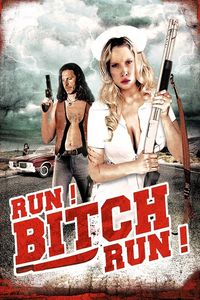
    (In French, On Cable TV, April 2020) With a title like Run! Bitch Run!, you can expect the worst and not be surprised. Think of the worst film you ever saw and then dig deeper. Much deeper. Past the made-for-TV uninspired pap. Past the dull but watchable straight-to-streaming generic products. Past the cheap horror-festival film with at least one idea. When you get into the neighbourhood of softcore pornography and revenge horror, slow down because that’s where you’re going to find this film. The only thing that potentially saves this film is how much writer-director Joseph Guzman intended this to be a homage to grindhouse exploitation film. (The trailer is almost fun in a “wow, I can’t believe they’re this blunt” kind of way.) On the other hand, what may drag the film back to the trashcan is how much viewers can like or even tolerate such exploitation material. I was not convinced: Run! Bitch Run! is, true to title, exploitative to the point where it’s difficult to become or remain invested in what happens to the heroine. Ultra-cheap production values translate into garbage-grade visual, lousy sound, excruciating acting and even more terrible direction. It’s somewhat helped by a (slight) restraint in terms of gore, but by that point it’s far too late to be thankful. Not even the nudity can save this one, and that’s how far from the light Run! Bitch Run! ends up. When it comes to grindhouse exploitation, I’d rather be the hands of someone who knows what they’re doing, and has the means necessary to do it well.

  • Red: Werewolf Hunter (2010)

    Red: Werewolf Hunter (2010)

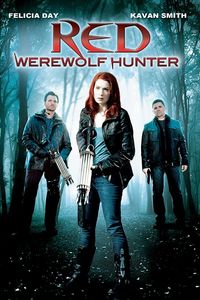
    (On Cable TV, April 2020) No good idea can be interesting if the execution is lacking, and I offer as evidence of this Red: Werewolf Hunter, a low-budget made-for-TV film in which Little Red Riding Hood is recast as (obviously) a werewolf hunter. It even stars Felicia Day, if you want at least one reason to see the film. Which may end up being the only reason, considering the ineptness of the rest. The plot ends up being a dull romance set in what looks like an abandoned town set. Director Sheldon Wilson is a veteran of cheap low-budget movies and Red: Werewolf Hunter fits right in the middle of his unimpressive filmography: muddy cinematography, uncomfortable actors, unimaginative camera setups and a script that never went beyond a first draft are the main problems here. Red: Werewolf Hunter ends up being generic to a degree that sabotages nearly everything that was clever or original about is high-concept. But Day does look really nice.

  • Le corbeau [The Raven] (1943)

    Le corbeau [The Raven] (1943)

    (Criterion Streaming, April 2020) There’s an admirable simplicity at the heart of Le corbeau—in this proto-noir thriller, inhabitants of a small French village start receiving letters that spill the town’s secrets—adultery, abortion, terminal diagnoses, and so on. This leads to an atmosphere of paranoia, distrust and revenge—who is that “raven” who signs the letters? It’s not a bad thriller at all—the paranoia is substantial, the hero has some depth, there are plenty of twists and turns, and the ending hits fast. There’s also a fascinating real-world story to be told about Le Corbeau. Produced by a Franco-German company in a France that was then under Nazi occupation, it wasn’t warmly received by the French, and as soon as the war was over, writer-director Henri-Georges Clouzot was “banned for life” from making movies in France, as the public was convinced the film was an attack on the French. A critical re-evaluation soon followed—Clouzot was eventually unbanned (he ended up delivering two of the best French thrillers of the 1950s) and the film was once again re-evaluated as a subtle attack on the Nazis. While that historical context is interesting, it doesn’t take away from the power of Le corbeau: As a mystery, a thriller and an unforgiving look as small-town power dynamics, it remains a reference.

  • The Hunger (1983)

    The Hunger (1983)

    (On Cable TV, April 2020) In director Tony Scott’s hands, The Hunger goes from potboiler vampire horror (adapted from a novel by—ugh—Whitley Streiber) to something far more stylish. Of course, having a trio of lead actors like Catherine Deneuve, David Bowie and Susan Sarandon helps a lot in elevating the material, but style is not to be underestimated when working with such thin material. The atmosphere holds everything together, even if there are notable storytelling flaws like the very last scene. Squarely drawing upon the vampiric symbolism of sex and death held together, The Hunger goes from high to low, portraying a high-class vampire couple that nonetheless is enslaved to violent and oft-sexual desires—once they draw in a third person into their arrangements, things quickly fly apart. Thanks to Scott, The Hunger has aged very, very well—the then-shocking bisexual content now seems in-tune with the times, and the stylistic insistence of the cinematography ensures that it will keep a place as a neo-gothic minor classic for a long time. Far more often than you think, maximalist execution of minimalist material is the best way to go.