Month: April 2020

  • Deep in My Heart (1954)

    Deep in My Heart (1954)

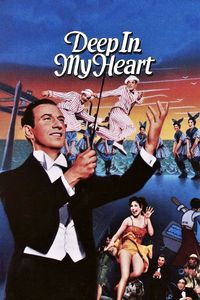
    (On Cable TV, April 2020) Sigmund Romberg is largely forgotten these days, but once upon showbiz history, he was considered famous enough as a Broadway composer of successful operettas to warrant a full-length MGM musical about his life. Deep in My Heart, in assembling a jukebox of his most famous hits loosely arranged in-between fanciful sketches about the composer’s life, wasn’t even an outlier but the latest in a subgenre that tackled other composers’ work. (I have a specific fondness for Till the Clouds Roll By, but more for Lena Horne than Jerome Kern.) The advantage of a revue-style structure is that beyond the main biographical cast (featuring no less than José Ferrer, Merle Oberon, Walter Pidgeon and Paul Henreid), you can bring in very special guest stars in specific musical numbers. This is where Deep in My Heart may be most interesting, because the mid-1950s MGM roster was stacked with great bit performers. Here we get Gene Kelly in a fun vaudeville dancing duet with his brother Fred (Fred’s only screen credit despite an accomplished dancing career). We get Cyd Charisse (dubbed, but spectacular), Ann Miller looking terrific as the “It” girl, Ferrer dancing romantically with his then-new wife Rosemary Clooney, and a few other distinctive numbers as shows-within-the-show. Ferrer’s performance is occasionally terrific: at one point, he gets a breathless showcase with a one-man-show presentation of an upcoming show; at others, he speaks magnificent French dialogue. Alas, those individual performer highlights are really what Deep in my Heart is about—the film itself is fairly unremarkable and classical in matters of execution. Director Stanley Donen’s heart was obviously in the musical numbers more than the rest of the film, and who can fault him? Working with stars to deliver their standalone numbers ensures that the film is still worth a look today for fans of mid-century musicals.
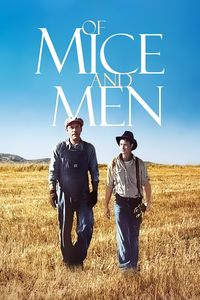
  • Of Mice and Men (1992)

    Of Mice and Men (1992)

    (In French, On TV, April 2020) Generations of American high school students know all about John Steinbeck’s Of Mice and Men, with its heavy mixture of depression-era vagrants, uncontrolled force, tough choices and titular mouse. As such, there’s a ready-made public for an adaptation, whether it’s to revisit a classic about which a substantial proportion of all Americans had to write an essay about, or post-1992 classrooms that might as well watch the film rather than read the novella. There had already been one movie version of the story in 1939, so this one had an opportunity to upgrade the craft of the film adaptation while remaining faithful to the text. Under director Gary Sinise (who also plays the quick-witted one of the duo), this take on Of Mice and Men succeeds at keeping much of the Steinbeck text while updating the classic film: the visuals carry some sort of gentle nostalgia for a less-complex time, the images are what we would expect of a period film, and both Sinise and John Malkovich (who plays the strong-but-slow one) are good in their roles. The controversial casting here is Malkovich, who’s far from being the image of the bulky and physically imposing character… but makes up for it in innocent menace. In many ways, Sinise’s Of Mice and Men is the ideal case for literary adaptation: It doesn’t deviate much from the original text, sumptuously executes the story, delivers on cinematic aspects—and in doing so, manages to reach even those who aren’t primed to like the story through the curricular circumstances of how they encountered it.

  • The Pursuit of D. B. Cooper (1981)

    The Pursuit of D. B. Cooper (1981)

    (On TV, April 2020) Taking as premise one of the most famous unsolved airborne hijacking crimes in history, The Pursuit of D. B. Cooper goes all-Hollywood on its “and then…” aftermath. Treat Williams stars as a likable Cooper, but it’s Robert Duvall who looks as if he’s having the most fun playing a dogged insurance investigator. Based on a novel, this adaptation is almost entirely fictional—even the basic facts of the hijacking are not true to reality, let alone the rest. Much of The Pursuit of D. B. Cooper, as promised, is a long chase sequence set in the northwestern United States, with a bit of large-scale plane-versus-car action-comedy stunts as the climax. While the film has a cheerful outlaw comedy atmosphere (very much in vogue as of the early 1980s), a lot of it is merely amusing than truly funny. A look at the film’s incredibly troubled production history suggests how the film arrived in its current mediocre state (Credited director Roger Spottiswood arrived after three previous directors had worked on the film, and reshot much of it as a comedy rather than drama). I still liked The Pursuit of D. B. Cooper, but more as a throwback to the early 1980s than to anything specifically good about the result.

  • Serial Mom (1994)

    Serial Mom (1994)

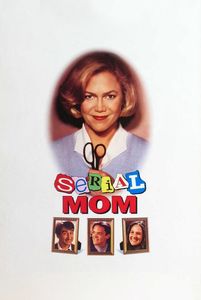
    (On TV, April 2020) As one would expect from a Jon Waters film, Serial Mom is crammed with Baltimore scenery, dark humour and a savage dissection of suburban America’s neuroses. Kathleen Turner stars, perhaps too effectively, as an ordinary family mom who’s secretly a serial killer over trivial breaches of etiquette or politeness (especially toward her children). It doesn’t take a long time for Waters to use his slasher-like comic premise for satirical purposes, whether he’s describing a terrifyingly mundane kind of evil, or the media furor that surrounds high-profile murder trials. There’s quite a bit of camp in the result, to good effect. Waters clearly had the necessary means to execute his vision, and the result is one of his slickest, most professional-looking films. The concept is fun and the execution is up to the task—Serial Mom gets top notes: no questions asked, no disrespect meant.

  • La grande vadrouille (1966)

    La grande vadrouille (1966)

    (On TV, April 2020) I’ve waited thirty years to see the end of La grande vadrouille. True story—As a boy, Radio Canada ran a weekly marathon of Louis de Funès movies for a few months, and if my memory is correct, La grande vadrouille hit around Christmastime. This meant that I could keep watching as long as I wanted to…, which ended up not being enough to get to the end of this fairly long film. I distinctly remember the “hopping on chairs” sequence, and then nothing, as I was tired enough to go to sleep. Well, here goes one full viewing of this big-budget epic comedy. Two leading French comics of the time, Bourvil and Louis de Funès (not one of parents’ favourite comic actors back then — “too annoying,” they said, which is perfectly understandable in hindsight), co-star as WW2 French civilians who find themselves helping an RAF aviator get back to safe territory. (Terry-Thomas also stars as one of the British aviators.) La grande vadrouille was designed as a blockbuster and succeeded as such: For thirty years, the film remained the French box office’s most successful film. The difference in characters and comic style between the two leads is interesting (the film does get to play on a number of comic registers, which varies the comedy), and it seldom stops moving until the end. In order to make the WW2 material approachable, the film is entirely bloodless—even the Germans are only slightly threatening and nothing more. Fortunately, director Gérard Oury knows how to handle the comic talents involved—this was his second film with this lead duo, and there’s a feeling that everyone involved knows what they’re doing. Of special note are the car stunts, all handled (of course) by Rémy Julienne’s team. Slick, dynamic, immensely detailed and crowd-pleasing to the utmost, La grande vadrouille definitely was worth my three-decade wait to see the end.

  • Wonder Woman: Bloodlines (2019)

    Wonder Woman: Bloodlines (2019)

    (On TV, April 2020) While I’ve got quite a bit of respect for the DC Animated Movie Universe (DCAMU), there’s always a risk that it will be redundant to the more popular live-action films, even when it does things better than the box-office behemoths. While Wonder Woman: Bloodlines is not a bad origin story for the character and would have been a significant Wonder Woman film had it been made ten years earlier, it does feel a bit redundant after the 2017 Patty Jenkins live-action film. [December 2021: …and even more redundant after the 2020 sequel steals even more of the subplots.] Laboriously going over Wonder Woman’s origin story once again (if brought to the twenty-first century), it compounds the origin story problem by overstuffing the narrative with six villains, all jockeying for time, attention and importance. While the Steve Rogers romance is fine, quite a bit of the dialogue is slap-dash material that could have used a rewrite or two. It’s also substantially glummer than expected, which may be dramatically respectable but doesn’t do much for the entertainment factor. But most of all is the feeling that Wonder Woman: Bloodlines is too late and too redundant to be interesting to anyone but the most dedicated (or least-informed) Wonder Woman fan.

  • The Death of Superman (2018)

    The Death of Superman (2018)

    (On TV, April 2020) The first “death of Superman,” back in the 1980s comics, was an event. Naturally, it proved to be such a crowd-pleaser that it’s now almost a mandatory episode for any new reinterpretation of the character. 2018’s The Death of Superman is the DC Animated Movie Universe’s take on the material—more closely faithful to the original comic, but still able to update the story to the context of the series so far. It’s not a bad Superman story, and is even slightly more realistic than I expected. The title is both a spoiler and not, as it happens fairly late in the film, and is resolved before the credits roll. As a result, it doesn’t have much emotional weight—we know he will be back. The narrative does give a large place to Clark Kent, which is a good idea considering what we know and expect will happen to his alter ego. But in the end, The Death of Superman ends up being nothing more an honourable entry in the DCAMU, which is often more consistently successful than its live-action equivalent.

  • Of Human Hearts (1938)

    Of Human Hearts (1938)

    (On Cable TV, April 2020) How much you like Of Human Hearts will depend, I suppose, on your tolerance for nostalgic melodramatic Americana spanning decades of conflict between father and son from the 1850s to the American Civil War. Also, if you can tolerate a film whose climax is President Lincoln chastising the protagonist for not writing more often to his mother. (It’s not a dream sequence.) The drama feels unremarkable, the production values aren’t particularly impressive, and the characters are contrived. Just about the only bright spot is James Stewart’s role in the second part of the film, but he, too, is saddled with a mediocre script. Clearly optional for most, Of Human Hearts was once a crowd-pleaser, but now it just feels like it’s barely worth a shrug.

  • Blind Date (1987)

    Blind Date (1987)

    (In French, On TV, April 2020) Nearly everyone has a bad date story, but probably not something as hilariously awful as the one in Blind Date. Veteran comedy director Blake Edwards gets to play with Bruce Willis back when he was a good comedian, and a young Kim Basinger who simply looks terrific—and funny too. The film is about a blind date between two likable people—except that she gets out of control whenever she’s drunk, and he gets to pay the price for all sorts of bad decisions, losing almost everything along the way. Now, I wouldn’t want to get too enthusiastic about what’s an uneven comedy—there are clearly highlights and lowlights here. But anyone with an appreciation for broad comic acting, 1980s fashion and absurd physical comedy will get at least a few chuckles out of Blind Date.

  • The Scorpion King 3: Battle for Redemption (2012)

    The Scorpion King 3: Battle for Redemption (2012)

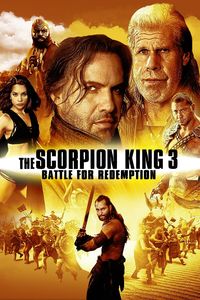
    (In French, On TV, April 2020) Don’t look at me like that—In choosing to watch The Scorpion King 3, I’m here to see how maximum-value director Roel Reiné can do in a fantasy adventure, not out of any specific affection for the Scorpion King series. Dwayne Johnson isn’t in this one, but Dave Bautista, Temuera Morrison, Billy Zane and Ron Perlman all are! Still, this isn’t a particularly good film—being straight-to-video label Universal 1440’s first production, and a third in an increasingly meaningless series, how could it be otherwise? The plot is soporific, the budget is clearly limited and the actors are clearly challenged by even substandard material. This being said… it’s not all bad. Reiné’s near-superhuman powers at stretching his budgets eventually make the film decent enough to watch, even when it’s not being particularly ambitious. The foreign shooting locations in Thailand add some interest, and there’s a good representation by Asian action heroines. For a straight-to-video third instalment in a series, The Scorpion King 3 could have been much worse.

  • I Think We’re Alone Now (2018)

    I Think We’re Alone Now (2018)

    (On Cable TV, April 2020) I’m juuust enough of a misanthrope to have some affinity with I Think We’re Alone Now’s protagonist—a small-town librarian who finds himself the sole survivor of a global apocalyptic plague. The film is a slow-paced meditative affair, especially at first—it takes nearly a quarter of an hour before the first line of dialogue is spoken, as the camera follows the protagonist (played by Peter Dinklage) living in a library and methodically burying the dead people in his town. This cozy state of affairs ends when a young woman arrives in town, bringing along complications that keep developing until a third act that (somewhat disappointingly) goes much wider than the opening of the film would suggest. Helmed with some skill by Reed Morano, this is a small, evocative film that riffs off a popular 1960s Science Fiction trope—the only survivor of a catastrophe and how they cope with it. I found it far more compelling at first with its clear sense of spatial-temporal unity—although I can understand the factors leading to a more expansive third act. On the other hand, I’m not sure that this specific third act is the best philosophical choice on which to end the film—it seems to me that the film loses its way somewhere along the line and crawls its way to a mediocre conclusion. Still, the first half-hour is pretty good, and it’s always good to see Dinklage getting great roles.

  • A Boy and His Dog (1975)

    A Boy and His Dog (1975)

    (Criterion Streaming, April 2020) For prose Science Fiction readers such as myself, A Boy and His Dog is almost legendary—it remains the only major film adapted from one of infamous Harlan Ellison’s SF stories, and a particularly striking example of the kind of dystopian Science Fiction that was so popular in the 1970s before Star Wars came out and dragged the genre back to crowd-pleasing entertainment. Compared to those other downbeat 1970s dystopian films, however, the bleak weirdness of A Boy and His Dog is more interesting than most. It’s not only about a young man (a young Don Johnson) scrounging for survival in what looks like a devastated desertic world, but also about his telepathic dog-and-best-friend. After a lot of throat-clearing describing life in the post-nuclear wasteland, the film finally finds its groove underground—in a vast subterranean city where a warped vision of small-town pastoral America has taken root. Our protagonist is warmly greeted by the population, and it takes a while for him to realize what’s going on. The dog is witty. The ending is merciless. But this is an Ellison story—you know what you’re going to get and writer-director L. Q. Jones doesn’t pull his punches. Arguably more disturbing now than back in the 1970s (essay question: is today’s society more like the underground “Topeka” than upon the film’s release?—discuss), A Boy and His Dog is certainly not comforting entertainment—unarguably provocative and misogynistic, it’s thankfully a reflection of an earlier era and I’m probably not going to watch it a second time.

  • Nora inu [Stray Dog] (1949)

    Nora inu [Stray Dog] (1949)

    (On Cable TV, April 2020) Writer-director Akira Kurosawa turns in another interesting postwar Japanese thriller with Stray Dog—a story that may seem low-stakes at first, but eventually becomes a satisfying exploration of a policeman with a conscience. Taking place during a summer heat wave that you can almost feel through the screen, it follows a policeman after he gets his gun stolen during a tram ride. When the gun is used in a series of petty crimes, the guilt-ridden policeman fights to keep his humanism while chasing the suspect. There are strong dramatic anchors here beyond the police procedural surface. The portrait of postwar Japan is gripping, and you can see this proto-buddy movie as a template for other efforts. The script works its way to a great showdown, through good sequences such as the first foot chase and some material that is borderline comedy. A solid second-tier Kurosawa, perhaps even a bit better than that if you’re a fan of his movies set in then-contemporary times.

  • 2 Days in New York (2012)

    2 Days in New York (2012)

    (On TV, April 2020) By the time I realized that 2 Days in New York was the sequel to another film called 2 Days in Paris, it was too late to stop, and I was increasingly sure that I wasn’t in any hurry to watch another film in this series. A comedy of familial humiliation, it stars Julie Delpy and Chris Rock as a Franco-American couple living in New York whose lives are upended when her French family decides to visit. The visitors are skilled in creating trouble and cannot be trusted alone in society, whether because of excessive lust, property crimes or casual racism. The tensions keep rising within the couple, and Delpy the writer-director-star seems determined to create a film of maximum discomfort. Alas, there’s a hard limit to how much of this we’re willing to tolerate, and 2 Days in New York hits it pretty early on. To Delpy’s credit, the actors are fine, the story ends well and this is the film to watch if ever you want to see her fight with Vincent Gallo about her soul. (Fortunately, Rock does especially well as “the American boyfriend.”) One character is so strikingly unpleasant that even the movie is giddy about having him deported from the United States midway through. Still, this doesn’t do much to improve the result: 2 Days in New York is still a grating, deliberately off-putting experience. I didn’t exactly hate it, but I’m not planning on watching it ever again.

  • Abominable (2019)

    Abominable (2019)

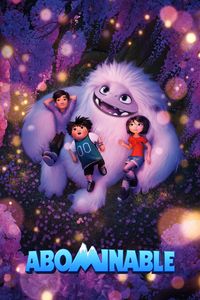
    (On Cable TV, April 2020) There’s been a surprising number of movies about yetis, sasquatches and other hominids lately, and Abominable does struggle a bit to distinguish itself. (If you’ve lost track, as I did, keep in mind that Smallfoot [2018] is the Warner Brothers Animation one, The Missing Link [2019] is the Laika stop-motion one, and Abominable [2019] is the Dreamworks one.) What does help set Abominable apart is that it’s perhaps the least funny of the bunch, and the one that’s clearly, definitely, undoubtedly set in China, from the setting to the use of the “nine-dash line” that got the film banned or cut in several neighbouring countries. (Albeit branded as if from “Dreamworks,” the film was majority-financed by Chinese interests—and that adds to the whole “Hollywood coopted by China” trend of the 2010s.) The story has to do with a young woman discovering a yeti living on the roof of her building, and the adventures they have while trying to get the yeti back home as the yeti’s previous captors pursue them. Yeti aside, Abominable clearly dips into supernatural (or at least magical) plot devices from time to time. While definitely a family film, it’s nonetheless a bit more insistent on the drama thanks to a lost-family motif, some action scenes with dangerous stakes and clear antagonists—closer to an adventure than an outright comedy. I did like the antagonist a lot—although a bespectacled curly-haired redhead is pushing a lot of buttons for me. Beautifully animated and competently directed, Abominable is also ordinary—it does most things right, but doesn’t colour too much outside the box defined by other animated family films, with a special slavishness to (what else?) the Dreamworks structure and model. It’s likable enough (that yeti is very cute), but wholly unsurprising at the same time. If you want a yeti comedy, look at Smallfoot; if you want unpredictability, watch The Missing Link.