Month: June 2020

  • The Good Liar (2019)

    The Good Liar (2019)

    (On Cable TV, June 2020) Some movies are best appreciated without narrative, but for the longest time it feels as if The Good Liar won’t be one of them. As it clearly establishes itself as a suspense film in which an elderly conman sets his sights on a wealthy widow, we can anticipate the coming twists and turns: cons are only as good as their terrible targets and, since she’s not, then there will be a counter-con. It’s in the movie genre lexicon. We’re just along for the ride until she springs the trap. Until that point, we’re left to enjoy Ian McKellen and Helen Mirren as they go through the plot, make their way through the set-pieces designed to show off their duplicity (or ruthlessness) and just appreciate the atmosphere provided by director Bill Condon, once against working hard at providing slick entertainment for older audiences. It’s all good fun according to the unspoken rules of the genre, and despite a weird detour through Berlin, by the 80-minute mark we’re ready for the last revelations to be put in place. They are. The twists happen. The charming widow isn’t what she presented herself as—but we knew that all along. But then the film keeps going, adding more and more layers of personal revenge to the story until we’re left shaking our heads at how unnecessary those last twists were, how they come out of nowhere, and how they take away from the film’s well-worn charm. It doesn’t change much to the overall telling of the tale, but it does push the film firmly from “fun” to “not-fun” territory, which is a significant miscalculation for a con film. I still enjoyed most of The Good Liar, but I could have done without much of the last 15 minutes, so at-odds they seem to be with the remainder of it. Still—McKellen and Mirren playing off each other certainly isn’t to be dismissed lightly.

  • La chute de l’empire américain [The Fall of the American Empire] (2018)

    La chute de l’empire américain [The Fall of the American Empire] (2018)

    (On Cable TV, June 2020) French-Canadian writer-director Denys Arcand certainly courts scrutiny by calling his thriller La chute de l’empire américain, considering that one of his landmark works (all the way to the Oscars) was called Le déclin de l’empire américain. Especially considering that it’s in no way a narrative sequel—while some Arcand veterans return in supporting roles, they don’t play the same characters and even the genre of the film is different—from social drama, we go to a small-scale thriller. But the bait-and-switch of the title aside, La chute de l’empire américain is a capable suspense film from a director who knows what he’s doing. It starts with a familiar thriller trope: what if an everyman came into possession of a large quantity of money generated through illegal means? This being said, Arcand being Arcand means that there’s no such thing as a simple thriller: his film is filled with philosophical, moral and social elements that go beyond the clichés. Solid character work and actors ensure that there’s a progressive attachment to the film, even as it goes from low crime to high finance (and, one would argue, higher crimes). Alexandre Landry turns in an appropriately nervous and awkward lead performance, while old-school pros like Remy Girard and Pierre Curzi round off the cast. Perhaps most surprising of all is how La chute de l’empire américain, after flirting with crime thriller, eventually makes its way to humanistic comedy, gradually dispensing with shades of gray to get to a luminous conclusion. Arcand plays with the genre idea that most people who lust after money eventually pay for it—by showing how some, with money, can choose generosity over greed. It’s a fun, entertaining, unusual watch: I would have liked a different, less flashy title, but the film itself is solid.

  • Like Father Like Son (1987)

    Like Father Like Son (1987)

    (In French, On Cable TV, June 2020) The popularity of body-switching comedies during the 1980s is mystifying but not unexplainable, as any comedian who’s worth their SAG card would jump at the opportunity to goof off as someone else. Dudley Moore certainly hams it up playing a teenager switched in an adult body in Like Father Like Son—but Kirk Cameron is far from being as interesting playing the adult in a teenager’s body. The film noticeably becomes duller toward the middle, as scenes drag on without much wit, and loose ends are left dangling all over the place. Like Father Like Son is seemingly assembled from standard plot pieces, all the way to the usual plot resolution and moralistic restrictions (no, there won’t be any switched-body hanky-panky—this is PG-13 after all!) It’s all a bit too middle-of-the-road to be fully interesting.

  • The Kill Team (2019)

    The Kill Team (2019)

    (On Cable TV, June 2020) Young men in wars have the potential to perform horrifying actions, and it’s not because they are on “our” side that they’re necessarily virtuous. The Kill Team goes back to a true story of the Afghanistan War, circa 2009, to have a credible look at ethics and violence in wartime. It’s a war movie that mulls on the freedom given to very young soldiers to kill and be rewarded for it. Nat Wolff stars as a young soldier who grows a conscience when a senior officer (Alexander Skarsgård, in the film’s standout performance) starts framing civilians with deadly results. The Kill Team is absolutely not a feel-good war-is-an-adventure kind of film—it’s a look at bad options when teammates single out someone with moral scruples, when authority itself is corrupt and culture doesn’t lend itself to ethical choices. As such, it’s a respectable film that isn’t particularly good—and its very glum subject matter makes it less than entertaining by design.

  • Cherry 2000 (1987)

    Cherry 2000 (1987)

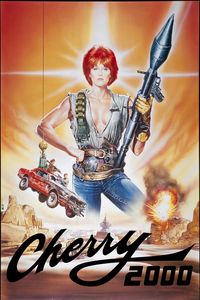
    (Second Viewing, on Cable TV, June 2020) Heyyy… I remember watching Cherry 2000 off basic TV as a teenager, and in retrospect it’s kind of amazing that a movie about a man going on a post-apocalyptic quest to repair his sex bot was playing on network TV. But, of course, this was French Canadian TV, and it’s not as if PG-13 Cherry 2000 is all that explicit in the first place. Decades later, it has settled into a quirky Science Fiction adventure, with Melanie Griffith in a strong role as a tough action heroine who inevitably becomes the love interest of the protagonist (a bland David Andrews) once he gives up on the whole refurbished-sex-bot thing. Despite ambitious worldbuilding, Cherry 2000 is clearly limited by its budget and mid-1980s special effects technology, as well as a script that wants to be subversive and satirical but is held back by its own lack of self-confidence. It’s a bit too scattered to be effective—according to the film’s production history, it was completed in 1985 but held back from release until 1988, having clearly flummoxed its marketing team. But, in retrospect, it does have a bit of oddball charm. While Cherry 2000 isn’t any kind of classic (cult or otherwise), it is kind of amusing, and still carries the genre-bending spirit of the 1980s with it.

  • Tian jiang xiong shi [Dragon Blade] (2015)

    Tian jiang xiong shi [Dragon Blade] (2015)

    (In French, on TV, June 2020) In early retrospect, the 2010s were a weird decade of cinematographic American/Chinese intermingling. Much of it can be explained by China’s conscious efforts to make inroads in Hollywood through financing deals and co-productions. By the end of the decade, Chinese films were better than ever (having learned much from Hollywood), while American audiences were left with endless logos at the beginning of many films, bizarre casting choices and Hollywood’s refusal to take any sort of principled position against China. Still, artifacts of this period will remain with us, and you can take Dragon Blade as one of the most obvious ones. Clearly an attempt to combine the strengths of eastern and western filmmaking, it proposes Roman soldiers making their way to the end of the Silk Road and allying themselves with Chinese forces against another group of Roman soldiers. Somehow, Adrien Brody is presented an action hero, facing down a team-up of John Cusack and Jackie Chan as an elderly pacifist warrior. It’s all executed in grandiose fashion by writer-director Daniel Lee, with big spectacular fight sequences, fancy CGI and sweeping camera shots. (You can tell that this isn’t The Great Wall because there are no supernatural enemies.) Alas, the result is mixed. Brody chews scenery while Cusack looks perplexed, and Chan’s martial sequences are low-key compared to his earlier films—not to mention atonal in the middle of a big CGI battle film. Dragon Blade isn’t particularly good, although it does warrant some attention for its blend of things that don’t necessarily go together, even if they’re proven not to go together. I’m not sure if this decade of China/Hollywood collaboration will last [October 2024: Four years into the 2020s, it looks as if China is leaving Hollywood alone, having extracted all it could], but we’ll always have Dragon Blade as a memento of that time.

  • Entebbe aka 7 Days in Entebbe (2018)

    Entebbe aka 7 Days in Entebbe (2018)

    (On Cable TV, June 2020) The 1976 Entebbe Raid is a real-life dramatic event well worth a film adaptation, but at the end of 7 Days in Entebbe I’m left nonplussed at the approach chosen in dramatizing the true story. From the get-go, the choice to humanize the hijackers (through film leads Daniel Brühl and Rosamund Pike) is puzzling—since you can’t really accidentally hijack a plane and such hijackings depend on the willingness to commit mass murder, their demise at the end of the film is nothing to shed tears over. The film ends in even more dubious thematic territory by tying the hijacking to Middle East conflicts and adopting a cheap rhetoric of both-side anti-violence—and makes the whole thing even more dumbfounding through an action sequence intercut with an interpretative dance performance. Saying that the climax is nothing like you’ve ever seen before is not a compliment in this case. Still, director José Padilha aims high (even as he misses his target) and can depend on Brühl and Pike as remarkable performers. The execution is slick and the real events are credibly portrayed, even if the film is remarkably annoying when it keeps repeating its obvious points over and over again. It doesn’t build to anything except a confused, frustrating and barely adequate thriller inspired by true events. I’m reminded of Truffault’s “no war movie is anti-war,” quote—there’s a contradiction in 7 Days in Entebbe in wanting to draw us in through the promise of violent retribution and then immediately decrying said retribution. Sure, you can make the statement—but you’re mocking your own efforts at portraying it, and exasperating everyone who was lured in.

  • Cutthroat Island (1995)

    Cutthroat Island (1995)

    (In French, On TV, June 2020) Infamous for being such a box-office bomb that it killed Carolco Pictures, Cutthroat Island is, like many celebrated flops, not quite as bad as its historical reputation would suggest. Now that its notoriously troubled production and budget overruns are things of legend, twenty-first century audiences are free to assess the film on its own merits as a pirate-themed swashbuckler. I will not try to pretend that Cutthroat Island is a misunderstood work of genius—it’s sufficiently flawed that you can see where the disappointed reviews came from. While the film does have its strong points (some of the sets, stunts and action sequences are really good), much of it plays far blander than it should for a film of its type. Geena Davis may look spectacular, but she’s ill suited to the role; the same goes for Matthew Modine, who’s clearly not as memorable as he should be in playing the male lead. The seams of the film’s troubled production are glaringly obvious in the inconsistent writing, cinematography, set design and pacing issues: an added layer of polish is simply missing from the final result despite what feels like a large budget. Other moments (like the baffling presence of a monkey) show that director Renny Harlin was unable to keep the production under control. While the result is watchable, Cutthroat Island merely has everything one expects from a pirate movie, but nothing more. But swashbuckling adventure is a subgenre that thrives on excess, and comparisons with the Pirates of the Caribbean series show how much better the film could have been had it featured sharper characters, more appropriate actors, stronger set-pieces and a savvier use of familiar tropes.

  • Cross Wars (2017)

    Cross Wars (2017)

    (On TV, June 2020) Having seen and disliked both the first and the third films in the Cross series, watching the second entry Cross Wars was an exercise in consistency—it’s all amateur nonsense. There’s not much acting, only posturing. The dull cinematography leeches interest out of sequences that should have been interesting to watch, such as the junkyard firefight. It’s all built on a core of comic book clichés and assumptions, none of which translate particularly well to anything beyond fanboy fanfic. Numerous hallmarks of low-budget filmmaking keep sabotaging Cross Wars, perhaps most noticeably fast intercutting without continuity flow. (It’s one of those films where you suspect that actors in a single scene weren’t even in the same room when it was shot.) The ensemble cast severely works against the film—we don’t know these people, and yet the film arrogantly presumes that we care about them. Meanwhile, the story hops left and right in what I’m assuming is an attempt to give everyone an equally interesting part. The crass humour further highlights the rank incompetence of writer-director Patrick Durham. The only thing that’s impressive about Cross Wars (or the series itself) is how terrible it is—you can’t just accidentally make a movie this bad; you have to go out of your way to make it as terrible as it is. It’s not even so-bad-it’s-good: it’s just sad.

  • Du rififi chez les hommes [Rififi] (1955)

    Du rififi chez les hommes [Rififi] (1955)

    (On TV, June 2020) Jules Dassin is a pivotal figure in how the American noir style literally migrated to France and eventually led (through Truffaut and others) to La nouvelle vague, which would later feed back into New Hollywood. The irony here being an unintended consequence of Hollywood putting Dassin on the black list and exiling him to France, where he’d continue his career. From a historical perspective, Du rififi chez les hommes is a crucial film in the evolution of the heist subgenre. It’s very reminiscent of The Asphalt Jungle, with a narrative structure revolving around a showcase heist sequence without dialogue or music. Even today, it makes for compelling viewing—especially in the details of the planning: the sequence in which they figure out how to disable an alarm is nothing short of ingenious, and there are plenty of details along the way to showcase the filmmakers’ cleverness. Still, Du rififi chez les hommes hails from the film noir tradition more than the heist one, as the plan falls apart after the crime and everything becomes a high drama of criminal tragedy. The ending sequence is gripping, as the protagonist races against the clock for one last heroic act. This merciless approach may feel scattered when measured against modern heist movies (most of whom are clearly made in a comic tone), but that’s what you get from early examples of the fusion between noir and heist. Du rififi chez les hommes clearly inspired many—from The Killing to Ocean’s Eleven and more.

  • Once Upon a Time in Venice (2017)

    Once Upon a Time in Venice (2017)

    (In French, On TV, June 2020) It pains me to be critical of Once Upon a Time in Venice—I still believe that Bruce Willis has at least one more great performance left in him, and he seems like a reasonable match for a crime comedy set against the eccentric characters of Venice, Los Angeles, during which our protagonist gets embroiled in escalating criminal enterprises as he seeks to get his dog back. There’s some promise here, in-between the sunny scenery (even when the film sticks to the lower-class of the neighbourhood) and the casting of both John Goodman and Jason Momoa. But there’s something about Once Upon a Time in Venice that feels off, a series of small mistakes and awkwardness that accumulate and keep making it worse. Willis looks significantly older than usual here, but he still can’t be bothered to do more than sleepwalk through his role like too many of his twenty-first century performances. Then there is the tone of the film, which reaches too self-consciously for wacky elements that fall flat because we’ve seen them far too many times in similar films (and maybe novels as well—if I was in a better mood, I would compare Once Upon a Time in Venice to Hiaasen or Westlake comic novels where dognapping is a common plot element, but this film doesn’t deserve to be mentioned in the same breath as those novels). The very small stakes don’t help either, and the result just feels like a combination of lazy and dull that doesn’t even manage a convincing sense of place. Even with low expectations, the film doesn’t quite satisfy—and we’re left waiting for Willis’ return to form.

  • Inseminoid (1981)

    Inseminoid (1981)

    (In French, On Cable TV, June 2020) While it would be easy to dismiss Inseminoid as a cheap and nauseating Alien rip-off (which is true), it’s more interesting to open the hood and see why the film leads to such sentiments of revulsion. I’m hardly breaking new ground in pointing out that the quality of execution directly influences what we can accept in matters of plot and themes. Alien gets away with terrible matters such as forcible alien impregnation by being exceptionally well crafted; by taking its topic seriously; by not associating gestation with gender; and by having its protagonist fight back and achieve victory. Inseminoid, on the other hand, does it all wrong. It’s cheaply made; it barely respects its material (the distasteful splash of exploitation is never far away); it strongly associates the rape and pregnancy of a character with her gender, and it delivers a nihilistic conclusion. When bad movies tackle primal topics, they expose themselves to far harsher assessments than if they had played with less transgressive material. Inseminoid’s execution is bad enough that it compounds the film’s thematic failings—there is a sense that it doesn’t deserve to play with such topics and that it’s far too juvenile to even attempt transgression. Now, the film does have its fans—the film’s Wikipedia page features far too many gender-based critiques of the film’s theme to be casually dismissed, but the results on-screen are more painful than interesting unless you take a cerebral approach to analyzing its failure.

  • Pumpkinhead (1988)

    Pumpkinhead (1988)

    (In French, On Cable TV, June 2020) Considering my less-than-favourable opinions about 1980s slasher films, it’s not really an accident if I have mixed feelings about Pumpkinhead. A dark variant on the dead child vengeance trope of Pet Sematary, it features Lance Henriksen as a grieving father summoning a supernatural demon to hunt down those who have severely wounded his son. Much killing then ensues in slasher-like fashion, but Pumpkinhead avoids the bottom of the barrel in a few ways. Under the direction of makeup and special-effects legend Stan Winston, it’s a film that looks great and has some decent special effects for its time. It’s also significantly more nuanced about the unintended impact of vengeance than many movies of its decade, and literalizes that metaphor in an unmistakable way. On the other hand, it does fall into the “all you need is kills” narrative philosophy of slashers—the film’s plot takes a very long break during the second act, as the vengeful monster kills through a group of teenagers in evermore spectacular fashion. While plot does come back for a late-movie finish (making a point that vengeance is corrosive to the vengeful), there’s a solid stretch of the film that’s dedicated to special effects, makeup, blood and grand guignol violence. Still, you have to grade it on a curve: Compared to most other slashers of the decade, Pumpkinhead has a strong welcome supernatural element. Compared to many other cheap B-grade horror movies, it has much better special effects. It’s not a lot, but it’s enough to put Pumpkinhead solidly into the middle tier of 1980s horror (a rather good decade, mind you)—not unforgettable, but not completely repulsive either. It somehow spawned an entire franchise.

  • Hopscotch (1980)

    Hopscotch (1980)

    (On Cable TV, June 2020) Sure, you’ve seen spy comedies—but how about a retired spy comedy? In the surprisingly satisfying Hopscotch, Walter Matthau plays a CIA spy with a head full of secrets and fingers itching to dance on a typewriter—he retires out of spite and then, to get even with a bad boss, threatens to spill everything he knows in his autobiography. Knowingly baiting the CIA in a globetrotting cat-and-mouse game, he sends clues and “falls” for traps, except that he’s skilled enough to be the cat and spring counter-traps on whatever the CIA tries. Hopscotch is not necessarily rip-roaringly funny, but it is amusing, clever, compelling and somewhat more pleasant than most espionage thrillers of the era. Matthau has a role that suits him well, and he never misses an opportunity for the kind of rumpled-face sly-dog humour that best characterized his screen persona. My biggest problem with Hopscotch is Glenda Jackson’s helmet-like hairstyle, but her character is likable and well-written—like much of the script in general. (Adapted from a novel by novelist Brian Garfield himself, the film is more literate than most of the subgenre.) Hopscotch is a treat for Matthau fans, a welcome antidote for glum 1970s spy thriller fans, and a happy little victory for all cinephiles.

  • Wonderland (2003)

    Wonderland (2003)

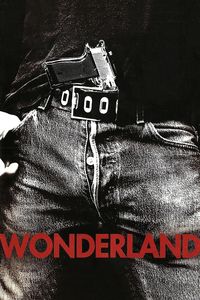
    (On Cable TV, June 2020) The hook in Wonderland’s premise is learning more about pornographic film legend John Holmes—but as it turns out, the film’s narrative takes place after his acting retirement, and becomes a slice of California low-life noir, with plenty of guns, drugs and debauchery. Stylishly presented by writer-director James Cox, it explores the perspectives of several characters as a patchwork of interpretations of the same quadruple murder. Part of the need for this stylishness comes from a lack of certitude regarding the facts of these still-unsolved murders and the drab dirty environment in which this all takes place. The cast is certainly impressive, and even more so considering that everyone is so thoroughly de-glammed by the grimy settings that they may be unrecognizable. Still, we get Val Kilmer in one of his last solid dramatic roles, Eric Borgesian chewing scenery as a mogul, Lisa Kudrow, Janeane Garofalo, Tim Blake Nelson and as proof that the film came out in 2003, Paris Hilton showing up on a yacht for a few seconds. Still, by the end of Wonderland, the entire thing does feel a bit pointless—junkies make poor choices and get killed in the end. One wonders if the story would have ever been told if it wasn’t for Holmes’ presence.