Month: June 2020

  • IXE-13 (1972)

    IXE-13 (1972)

    (On Cable TV, June 2020) Classic French-Canadian film IXE-13 is more a performance piece than a movie or even a comedy. Handled by then-incandescent comedy troupe Les Cyniques, it takes inspiration from an earnest French-Canadian pulp serial (anticipating the OSS-117 revival decades later) and transforms it into an absurd musical parody that revels into its threadbare production values. With Les Cyniques on-board, IXE-13 takes aim at just about every target in sight, from Chinese peril to communists to English-Canadian superiority to the strange relationship between Québec and France, and doesn’t skimp on the indépendantiste viewpoint (which now feels like an inferiority complex, but that’s how it goes.) Not all of the comedy has aged well—even intentionally going for a hideously racist depiction of its Chinese characters doesn’t excuse it. On the other hand, it’s a thrill to see now-respected actors goofing it up in a piece of juvenilia, including a rather fetching Louise Forrestier and Carole Laure playing pin-up girl. The cheerfully absurd IXE-13 is so deeply set within French-Canadian culture of the early 1970s that it just be incomprehensible to anyone who wasn’t there speaking joual. For Francophile cinephiles, it’s not so much a “must see” as a “have you seen it?”

  • Dancing Lady (1933)

    Dancing Lady (1933)

    (On Cable TV, June 2020) While Dancing Lady is technically the first of Fred Astaire’s movie musicals, his fans should keep in mind that it took him a few movies’ worth of scene-stealing appearances before getting his first lead role, and so this film sees him relegated to a climactic showcase number, as himself, dancing with Joan Crawford. Not that he’s the only one making early appearances here that now overshadow the leads of the film—An early iteration of The Three Stooges also shows up, plus later star Nelson Eddy, making this film’s supporting cast far more remarkable than nominal leads Franchot Tone and Clark Gable. (I would add “…and Crawford” except that she looks absolutely spectacular here—although not a dancer of Astaire’s calibre.) As an early Pre-Code musical of the early sound era, Dancing Lady is still quite rough around the edges: even the narrative doesn’t go too far away from its Broadway inspiration by featuring a making of a musical as its narrative foundation. It feels a bit short at 92 minutes, but that’s probably because we’re expecting more Astaire. While Dancing Lady is perfectly watchable, it’s probably more of interest to Astaire fans and cinephiles tracking the evolution of the early musicals… although the Pre-Code attitude does make it more interesting than most.

    (Second Viewing, On Cable TV, October 2021) It’s very amusing to see Fred Astaire billed in a very secondary role in Dancing Lady—five years later, he would have headlined such a title and made it much better by sole virtue of integrating dancing with comedy acting. But this was his screen debut, and so Clark Gable gets the leading (non-dancing) role as a Broadway impresario trying to put on a show despite romantic complications with his leading lady (Joan Crawford) and her rich boyfriend. Much of the plot is obvious and paper-thin, rotely going over tropes of Broadway musicals without much flair nor energy. It’s seriously dull in much of its opening two-thirds—only opening up when the show gets going in the last act. Astaire fans will note that he’s playing himself (a Broadway dancer) in the film, all the way to being credited in the film’s glimpse of the playbill. The other noteworthy cameo is having the Three Stooges in a walk-on comic role. Crawford is rather impressive when going toe-to-toe with Astaire in the film’s best moments, while Gable doesn’t deviate much from his persona as the romantic non-singing non-dancing lead, letting Astaire take the leading role whenever the film switches over to the Berkeleyesque dancing sequences. It’s a good thing that Dancing Lady gets a late surge of energy, dancing and singing, because what comes before is mildly pleasant at best, and repetitive of better films at worst.

  • Fubar (2002)

    Fubar (2002)

    (On TV, June 2020) Don’t watch Fubar for the visuals (which were shot on an early-2000s digital camera and consequently look terrible) nor for the story (an episodic, semi-improvised narrative following two Albertan friends). Watch it for the progressively endearing look at a pair of heavy metal fans without anything more on their minds than mindless loafing. The mockumentary follows them for a few months, as one of them undergoes cancer treatment and reflect on the meaning of existence. It’s quite a look at western-Canada lower-class, and not as judgmental as other filmmakers would have been. Despite a threadbare budget and a scattered narrative that often dips into dark comedy, the characters gradually become more likable along the way. Fubar is certainly not a great film, but it works well at what it attempts to do, and creates memorable characters long the way.

  • Stone Cold (2005)

    Stone Cold (2005)

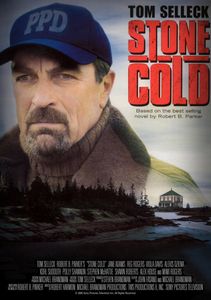
    (In French, On TV, June 2020) As a fan of Robert B. Parker’s crime thriller novels, it was inevitable that I’d eventually make my way to the movie adaptations of his work sooner or later, and Stone Cold has the distinction of featuring a protagonist other than Parker’s Spenser. (Technically, this is the first of nine films in the series but it’s adapted from the fourth novel—don’t worry too much about it.) Paced more slowly than many other police thrillers, it’s focused on Jesse Stone, a grizzled police chief in a small Massachusetts town where nothing usually happens, and who suddenly had to contend with serial killing and the rape of a teenager. For a made-for-TV movie, this one has a rather good pedigree, what with Tom Selleck credibly playing Stone, supported by such well-cast notables as a pre-stardom Viola Davis (as a police officer), Jane Adams (not much of a stretch playing a psycho killer) and Mimi Rogers (with a handful of great scenes as a lawyer who goes after what she wants). Stone Cold is not much of a crime mystery—we already know early on who did it, so it’s best approached as a character study in following a disillusioned, possibly depressive man at the end of his rope. The atmosphere of a small seaside town is amiably portrayed, and the film becomes a somewhat comfortable experience, more remarkable for the ride than the destination.

  • The Uninvited (1944)

    The Uninvited (1944)

    (On Cable TV, June 2020) TCM tells us that The Uninvited is one of the first serious ghost stories in movies, as opposed to previous treatments that were either comic or misdirection from very rational causes. It still works quite well—although I’ve always been a sucker for haunted house movies. It introduces characters and dramatic arc in an effectively low-key fashion, as a brother and sister’s joy at purchasing a vast seaside house progressively leads to concern and then to horror at the presence of the supernatural—a potentially deadly ghostly presence. Under director Lewis Allen’s hand, this is all handled through amiable filmmaking competence—not outright horrifying like later supernatural films would become, but certainly dramatic enough to be compelling. There’s some age-inappropriate romance along the way, but hey—drama. If nothing else, The Uninvited is similar to many domestic thrillers of roughly the same mid-1940s period (Gaslight, Suspicion, etc.) There are some pleasant echoes of Hitchcock in here, as well as similarities with the more subtle supernatural thrills of Val Lewton’s films of that time. As befit a supernatural story, there are a few extraneous but still effective special effects late in the film. The script concludes on a comic-relief punchline, but most clearly shows its skill in setting up and then following a few likable characters. The Uninvited has held up pretty well over the years, and its most dated elements are now part of its charm.

  • Tolkien (2019)

    Tolkien (2019)

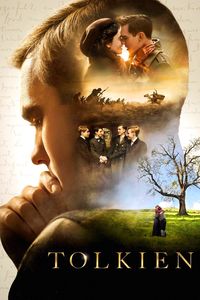
    (On Cable TV, June 2020) J.R.R. Tolkien’s reputation as a major twentieth-century fantasy writer has been secure since the mid-1970s, but it really took the success of The Lord of the Rings’ film adaptation to transform him into a semi-mythical figure, a process that biopic Tolkien works hard to complete. The narrative spends time in English schools, in a pleasantly intellectual courtship and, obviously, in the trenches of World War I, as he undergoes a traumatic experience that would shape the rest of his life. Tolkien intercuts between two timelines, going from the trenches to flashbacks to English academia and spending time with Tolkien and his ill-fated friends. The film’s mythological goals attain a climax of sorts during harrowing battle sequences in which Sauron-like supernatural flair is added to heighten the horrors of war. Tolkien bets its success on transforming the writer into a grander-than-life figure through his wartime experiences, and generally succeeds despite many moments being melodramatically overdone. As is usual for these kinds of origin story films, multiple call-forwards are designed to make the audience feel smart, while at the same time serving simplistic one-to-one equivalents between the life of the author and the most distinctive elements of their fiction. Tolkien is clearly not anything more than a hagiographic, sensationalistic, surface-deep attempt to mythologize someone made grander-than-life by the movies, but it’s going to find an audience.

  • Project: Metalbeast (1995)

    Project: Metalbeast (1995)

    (In French, On Cable TV, June 2020) While it sounds like the most generic possible premise for a low-budget horror-SF film, “the military end up creating a bulletproof werewolf as part of a super-soldier experiment” actually turns out to be… well, a dull but not catastrophic film. Writer-director Alessandro De Gaetano hardly delivers anything spectacular, but Project: Metalbeast at least manages the basics. Bulletproof werewolf aside, the story is familiar: military research, super-soldier, unauthorized experiments and a monster rampaging through a contained environment—yes, despite weird script structure issues, you’ve seen the rest of this story already. While Project: Metalbeast avoids embarrassment, it still mechanically goes through the familiar motions of an inane plot that really only exists in genre films. The result is just good enough not to be laughable, but hardly exciting enough to keep anyone interested.

  • Graduation Day (1981)

    Graduation Day (1981)

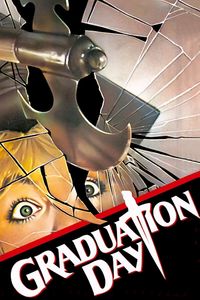
    (In French, On Cable TV, June 2020) First-generation slasher films had a thing about special days (Friday the 13th, Christmas, Saint Valentine, April Fool’s Day, etc.), which makes sense considering how hard they had to distinguish themselves despite their limited story elements, repetitive structure and fierce competition. Unaccountably, Graduation Day landed on… a graduation day as a motif. Much of the plot alongside the murder scenes has to do with a young woman visiting the campus where her sister died, and a string of brutal deaths accumulating during that time. But who cares? It’s a slasher, and not a very good one at that—you get bad acting, low-budget filmmaking, unconvincing effects (which is a plus in slasher terms) and a dull death sequence every ten minutes until the film is over. Try as you might (and most fans won’t), there really isn’t much more to Graduation Day than this. If you like early-1980s slashers, this is for you—otherwise, stay clear.

  • Mystery Train (1989)

    Mystery Train (1989)

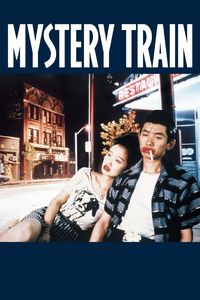
    (On Cable TV, June 2020) Not everyone likes writer-director Jim Jarmusch’s filmography, starting with myself. But compared to what else I’ve seen from him, Mystery Train is somewhere in the middle, perhaps even itching up toward the upper tier—a mixture of experimentalism in keeping with his early oeuvre. Its narrative is built on three stories about around a Memphis hotel and strangers who are in the city for a specific purpose. The first story is about a Japanese couple constantly arguing while visiting Elvis’s legacy. Another is about an Italian widow spending a one-night layover while waiting for her husband’s body to be brought home. Then, finally, a third aimless narrative is about three small-time criminals. It barely comes together at the end, but this is really a film of atmosphere and small moments and isolation and what it feels to be somewhere that’s not home. The playful chronology and repeating motifs may charm viewers. Casting includes such notable as Screamin’ Jay Hawkins and Steve Buscemi. Jarmusch fans ought to like this, but that’s not guaranteed for those who fall outside his appeal.

  • Corporate Animals (2019)

    Corporate Animals (2019)

    (On Cable TV, June 2020) Black comedy is exceptionally difficult to do well, and perhaps the best compliment one can pay to the rather average Corporate Animals is that it manages to make a dark comedy seem fun. It all begins as participants to a corporate team-building exercise get stuck in a cave and the hours become days, requiring the survivors to find new sources of food… including the dead guide at their feet. But there’s more, of course, as the female CEO (Demi Moore, getting better and better in mature antagonist roles) has financial failings, sexual indiscretions and overall nastiness lined up against her. The script is clearly from someone who has spent a lot of time on the Internet, as the humour seems to be tapping into pop-cultural material more often than expected and will probably date faster than one would expect. Fortunately, Corporate Animals doesn’t overstay its welcome. The laughs are dark and often guilty, but still effective. They may be one or two characters who aren’t strictly necessary and could have been trimmed. Still, while it’s not exactly remarkable or hilarious, this is a very watchable film—especially if you’re not expecting much.

  • Canadian Strain (2019)

    Canadian Strain (2019)

    (On Cable TV, June 2020) I don’t have any interest in weed (legal or otherwise), but I’m certainly interested in Jess Salgueiro, and her lead performance here as an unusually conscientious drug dealer put out of business by the legalization of recreational cannabis in 2018 is one of the reasons why Canadian Strain works so well. A sharp script also crams a lot of fun on a solid framework. Colin Mochrie turns up as a father who doubles as a cautionary tale, with remarkable comic performances from Naomi Snieckus, Nelu Handa and Marcia Bennett in a film with many good female roles. The film is fiercely Canadian even when it cynically tries not to be (by ironically presenting footage from old instructional videos about the RCMP or the public service, for instance), espousing the value of legality when it’s the acknowledged alternative, and dealing with government bureaucracy as the final victory (rather than blowing it up, as could be the case down south). It’s also a film that is definitely of its times, wringing laughs out of social changes and, in doing so, allowing its audience to accept those social changes as well. But more importantly, Canadian Strain is a funny, no-longer-than necessary film, worth a look—especially given how I suspect it will play for years on Canadian Cable TV. And I now definitely look forward to Salgueiro’s next movie.

  • The Group (1966)

    The Group (1966)

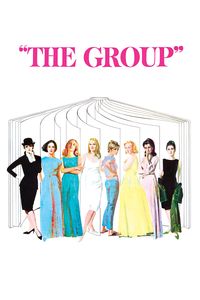
    (On Cable TV, June 2020) In adapting Mary McCarthy’s bestselling novel to the screen, The Group runs into a few problems, most of them having to accommodate an ensemble cast of eight women, plus the men who usually make trouble in their lives. Even at 150 minutes, it’s a bit of a challenge—especially since the story spans years from 1933 to 1940 and multiple heartbreaks as the eight women don’t quite achieve their idealistic goals after graduation. It’s not exactly the most riveting of premises, but seeing Sidney Lumet’s name as director drew me in, and the rest of the film gradually grew on me. The film is clearly a 1960s feminist drama—the well-educated, intelligent protagonists have dreams of intellectual lives that are gradually ground down by the demands of marriage, children and household. You could pretty much tell the same story about just any graduate class since then. It does feel melodramatic and overdone by today’s standards, but you can feel how daring The Group could have been to a mid-1960s audience. As you’d guess from the premise, men don’t come across particularly well here—and bring much of the drama. With such a large cast, some of the names are familiar: Candice Bergen, Hal Holbrook and Larry Hangman, most notably. Director Lumet manages the action effectively with the succinct script he’s given—among other things, there’s an interesting visual device of typewritten alumni letter updates typed on screen as context. With such a sprawling melodrama, there was bound to be something interesting for everyone—in my case, having a look at a drunken playwright and a literary agency. Nowadays, The Group would be best adapted as a TV series—in trying to retain the novel’s details, the film does rush through a lot and delivers mere bites of drama. Still, it does have an impact.

  • Dirty Dancing: Havana Nights (2004)

    Dirty Dancing: Havana Nights (2004)

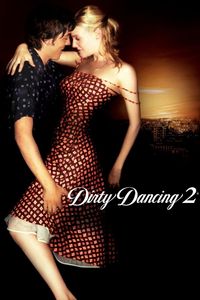
    (On Cable TV, June 2020) Ignore the “Dirty Dancing” title: Havana Nights is a follow-up/prequel/sequel (with a Swayze cameo) in name only—the film’s production history began with a spec script about the Cuban revolution that was transformed and turned into a teen dance movie where dancing erases all other difficulties. Setting a teen romantic dance musical in Batista’s Cuba is not an unpromising idea, but that’s presupposing that it’s executed with some faithfulness to the era. Alas, a low budget and contemporary music limit the period feel of the historical recreation even if the atmosphere tries to blend nostalgic with modern. But in focusing on a romantic plot and merely keeping the revolution in the background, Havana Nights ends up feeling very limited—something that the abrupt ending doesn’t quite satisfy. John Slattery pops up in a small role that suits him well; otherwise, the film belongs to leads Diego Luna and Romola Garai. But no matter how likable they are, Havana Nights is still a pale rethread of many characteristics of the original Dirty Dancing, even with the welcome Latin atmosphere. Even if you take it as a standalone film, it’s still disappointing.

  • Bad News Bears (2005)

    Bad News Bears (2005)

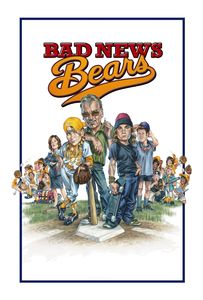
    (In French, on TV, June 2020) I’ll admit it—curiosity was my main reason to see the Bad News Bears remake. The original is so deeply stepped into the culture of 1976, from the bicentennial to the fashions to the attitudes and lack of self-censorship, that any attempt at an update would seem doomed from the start. Perhaps the nicest thing I can say about it is that it’s at least competent—Director Richard Linklater knows what he’s doing, and he’s able to give a nice lived-in Austin feeling to the film. Also helpful is Billy Bob Thornton’s grizzled performance as the washed-up, disreputable middle-aged man who takes on the job of trying to coach the worst little league team: even if the remake sands off a lot of edges of the original, much of the character remains intact. Still, this remains familiar formula stuff (even if a more nuanced ending doesn’t take away much)—Linklater for the kids. But when it works, there’s no shame in letting it work.

  • The Hitcher (2007)

    The Hitcher (2007)

    (In French, On Cable TV, June 2020) The scourge that was Platinum Dunes remaking 1980s horror movies continues unabated with a new version of The Hitcher. While this new take keeps the near-supernatural psychopathic hitchhiker terrorizing a young couple, it amps up the gore (from an already gory original), gender flips the protagonist (which isn’t as interesting as it sounds) and throws in pop songs that are nearly forgotten thirteen years later. Some things, admittedly, are an upgrade—the budget is bigger, director Dave Meyers’ work is slick, the structure has been retooled to allow more action sequences, it moves the Big Splashy Moment closer to the end of the film where it has more impact, and having Sean Bean as the antagonist is almost always a good idea. Still, this version of The Hitcher is pretty much the same movie—a competent update if you’re favourably inclined, even if the move away from the grindhouse roughness of the original isn’t necessarily an upgrade.