Month: June 2020

  • Ad Astra (2019)

    Ad Astra (2019)

    (On Cable TV, June 2020) On paper, Ad Astra doesn’t look like my kind of movie—moody ruminations in space? Eh. But I was willing to cut it some slack, and the opening moments of the film do set an intriguing tone—this is going to be moody ruminations all the way to the end of the solar system, but if you’re going to do yet another riff on Heart of Darkness, you might as well commit to it and hop on board for the ride. In retrospect, I should have listened to my instinct when I started twitching at the “International Space Antenna” that doesn’t even make a credible upgrade to the idea of a ribbon space elevator, or workers dumb enough not to follow basic OSHA tethering procedures when working in space. Or the wonky gravity that portended an entire movie’s worth of bad gravity. But there are a few things that work, and for far too long I kept clinging to those elements. The visuals are terrific, and the frame-by-frame credibility of the setting is astonishing—they really went for plausible-looking gear here, and even if we could quibble for roughly sixty years about how late-twenty-first century space gear will not look like twentieth-century NASA (especially not that even SpaceX suits don’t look like that), this film plays heavily on visual callbacks to familiar material—all the way to a 2001 HAL room nod later on. I brushed off the small chorus of inner voices pointing out one scientific mistake after another—This is Hollywood, after all. But I did start to have my doubts about the Moon rover pirates. Supposedly raiding US Armed Forces convoys in trips across vast swaths of the lunar surface that seem measured in minutes rather than hours. I brushed this off as filmmakers bending to studio pressure to have cool action visual stuff to liven up an otherwise atmospheric film. But even by that stage, uneasiness had set in. While I do like quite a bit of Ad Astra’s surface sheen (and Liv Tyler, and Ruth Negga, and even Brad Pitt has his moments) and while I was willing to play along with the glum Heart of Darkness structure, I was starting to have my doubts about the whole squishy middle layer of the film between intention and visual execution. But then…then the film thinks that the laws of physics allow for rescue stop on a ballistic trip from the Moon to Mars. Which leads to space baboons. That explodes when depressurized. Jesus Heinlein Christ, why does this movie have to be this stupid??!? This isn’t 1983’s Outland. This is 2020 and STEM career paths are considered important enough to warrant national programs. I’m not that smart and I don’t have an astrophysics degree, but there is something absolutely hopeless when a film that claims to be hard-SF becomes an unceasing carnival of scientific mistakes that I can easily point out. The lack of tracks on the Moon. The gravity mistakes. The chronological errors. The goddamn stupidity of the rocket hijacking sequence in which a character manages to climb a ladder aboard a rocket being launched into orbit. This is not a hard-SF film, even by Hollywood standards. This is an emo daddy-issue drama hideously cosplaying as hard-SF while not really liking any of the characteristics that make the genre. It gets worse at the end, what with a visibly rock-filled Neptune ring and—oh why bother I don’t care anymore. Even the main dramatic thread is cut off unceremoniously—while revolving daddy issues by killing off Daddy is unorthodox, it’s also trite enough to feel as if we’re given a big comic slide whistle at the end of the trip. Fortunately, I had given up on the movie at that point. If there’s an Ad Astra anti-fan club, I’m in.

  • Comment faire l’amour avec un nègre sans se fatiguer [How to Make Love to a Negro Without Getting Tired] (1989)

    Comment faire l’amour avec un nègre sans se fatiguer [How to Make Love to a Negro Without Getting Tired] (1989)

    (On Cable TV, June 2020) In the mid-1970s, a Haitian journalist named Dany Laferrière left dictatorial Haiti to establish himself in Montréal, later writing a provocatively titled first novel that he eventually adapted for the big screen. Laferrière has since become a French-language literary superstar (he’s even a permanent member of the prestigious Académie Francaise, essentially cementing his place in the current pantheon of living writers), but his first novel, especially as brought to the screen, is an endearing mixture of outsiders looking at Montréal, a lusty romantic comedy with light fantastic elements, reflections on being a young writer and an excuse to parade a series of great-looking women on-screen as the object of the characters’ lust—it’s summer in Montréal, the women are lovely and there’s our protagonist looking to hook up and complete his novel (not necessarily in that order). There’s quite a bit of pop-philosophic dialogue on gender and racial issues, a pleasant summertime feel and not much plot along the way. For watchers of the French-Canadian cinema scene, there are many actors with early roles here, a cameo by Laferrière himself and a rather comfortable portrait of Montréal in the summertime. It’s not absent of racism toward our protagonists (with Julien Poulain and a young Roy Dupuis as two of the three racist antagonists), but it’s clear where the sympathies of the film lie. Provocative by design (holy moly, that poster!), the film has kept a bit of an edge thirty years later—while the racial daring has abated a bit (French Canadian society is markedly more racially integrated now, although there’s still a long way to go), the gender content is liable to have a few people grinding their teeth today—the women characters here are avowed caricatures down to their names (Miz Literature, Miz Suicide) and only our two main characters have some sort of significant characterization. Still, it’s the kind of film that it wants to be: I found it funny, insightful and perhaps most of all comfortable most of the time as it talks about women, writing and summertime life in the city. Not for everyone, certainly, but still a worthwhile look for many.

  • Louis 19, le roi des ondes [Louis 19, King of the Airwaves] (1994)

    Louis 19, le roi des ondes [Louis 19, King of the Airwaves] (1994)

    (On Cable TV, June 2020) The worst thing that can happen to a satirical comedy is to be surpassed by reality, and while Louis 19 is clearly not the same class of film as Network, they do share the distinction of being markedly less funny or outlandish as when they first aired. Back in 1994, the idea that a perfect everyman would be followed 24/7 by a TV crew as they lived their lives was high-concept stuff—twenty-five years later, it smacks of the worst of reality TV or social media influencers. (If the premise sounds doubly familiar to you, it’s because Louis 19 remains one of the rare French-Canadian movies remade by Hollywood as 1999’s Edtv.) At times, you just want to hug the film’s screenwriter and say, “Oh boy, you haven’t seen anything yet.” It doesn’t help that the film is executed as a straightforward low-brow comedy, straight from formula filmmaking as it wrings out the usual complications out of its premise. Martin Drainville is a suitably good nebbish protagonist, while the rest of the film’s cast is (as if often the case with French-Canadian films) a who’s who of Montréal actors at the time: Macha Grenon has another walk-in role as a sex symbol; Benoît Brière has a remarkable supporting role as a cameraman; Dominique Michelle holds a plum comic role, and so on all the way to the cameos (Literary demigod Michel Tremblay as a TV show presenter!) Fortunately, even with the schematic three-act structure and unsurprising plot turns and post-reality TV staleness, Louis 19 is easy enough to watch, with a few smiles along the way. It still works, and we can still understand how it was the biggest-grossing Canadian film of 1994 in both official languages.

  • Point Blank (1967)

    Point Blank (1967)

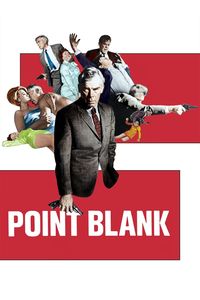
    (On Cable TV, June 2020) Anyone studying how 1967 was the year movies changed from Classical to New Hollywood can add Point Blank to their viewing list, because it’s a film that could not have existed a few years earlier, and yet belongs far more to the cinema of the 1970s. A near-perfect starring vehicle for gray-haired Lee Marvin, it’s a solid piece of neo-noir tempered with European avant-garde style. A dark, moody, violent thriller in which a left-for-dead criminal wants his stolen share of money, Point Blank has a nice sense of late-1960s Los Angeles. Director John Boorman benefits immensely from Marvin’s impassible performance and glum face—it’s hard to imagine anyone else being as good in the same role. The modernity of the film still resonates—determined to place scenes unlike traditional cinema, the plot jumps in time and doesn’t always make easy sense. But that’s not necessarily an issue, considering how much fun it is to watch the protagonist fight gangsters in one scene after another. When a film is as stylish as this version of Point Blank, plot understanding takes a backseat to the moment-to-moment thrills.

  • Great Balls of Fire! (1989)

    Great Balls of Fire! (1989)

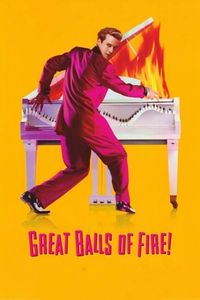
    (On TV, June 2020) There are two surprises in Great Balls of Fire!, the biopic of 1950s rock-and-roll sensation Jerry Lee Lewis (not the actor)—first, it’s a biopic that manages to airbrush a semi-fun portrait of a troubled artist, and two—wow, Jerry Lee Lewis is still alive? But never mind that second surprise (Lewis had his first burst of fame at an early age, explaining his endurance), when the first one is more interesting. If this film exists, it’s partially to explore the dichotomy between great art and problematic artists—or maybe even just a flamboyant performer and a reprehensible personal life. Jerry Lee Lewis’ biggest hits still play quite well, and writer-director Jim McBride is never happier than when it gets to feature Lewis as a stage beast, playing the piano in wild ways and even setting fire to it at one point. Dennis Quaid turns in an electrifying performance as the hyper-showman pianist, credibly portraying an interesting character whose southern poverty roots led to rock and roll, with piano rather than guitar. Meanwhile it’s a bit weird to see Winona Ryder as a thirteen-year-old, and that leads us to the other thing about Lewis—an incredibly tumultuous personal life whose specifics are barely hinted at in the film. What Great Balls of Fire! is ready to tell us is that Lewis married his 13-year-old cousin—his third marriage at the age of 22. The film tracks how the revelation of that relationship killed his career back in the 1950s, but what the film doesn’t even touch is the rest of Lewis’ life—his seven marriages, how two of his wives died while still married to him, his six children (two of them dead before the age of 20), and so many other accusations, arrests and incidents that a full biography of the man would require a miniseries. Instead, though, this film asks us to be happy with hit songs played flamboyantly, a Hollywood romance with his 13-year-old cousin, and presenting Lewis’ life in a way that still makes him a likable figure. The more you will read about Lewis because of this film, the less you will like him—and the film is already conflicted about him in the first place. The title song is still great, though.

  • Down a Dark Hall (2018)

    Down a Dark Hall (2018)

    (On Cable TV, June 2020) It’s probably a good thing for Down a Dark Hall that I can say that I’ve had my fill of mysterious-boarding-school-for-rebellious-young-women stories after shrugging off Paradise Hills a few weeks ago. This way, we don’t have to confront this film’s shortcomings—we can just blame it on conceptual overdose and move on.  (…) OK, no, I can’t leave it like that. It’s not that Down a Dark Hall is actively bad—director Rodrigo Cortés is a professional, and he has all of the budget and technical support required to make the film a visually competent production. It’s in the story that fails to impress—a low-octane blend of mystery ending on something a bit dumb and predictable. It’s all darker and spookier than actively horrifying, but it does strike me that the audience for this film is probably teenage girls looking for thrills more than scares, and that’s fine. For everyone else, though, this is more of the same even when it’s trying to be different. There’s also a world of difference in how the film’s target audience is liable to perceive the heroine (ooh, she’s a rebel) compared to everyone else (eh, she’s not really likable). While it’s fun to see Uma Thurman play matriarch, the lead actress is bland and the rest of the film struggles to fill in the gaps left in its gothic atmosphere. At least Down a Dark Hall can be (barely) recommended for anyone willing to dip into the kiddy end of the horror pool.

  • Rock Star (2001)

    Rock Star (2001)

    (In French, On Cable TV, June 2020) If you want to talk about wish fulfillment, the idea of becoming a rock star overnight is probably way up there for a lot of people, and Rock Star fully plays into that by telling us about a young musician who gets picked to headline an arena-filling band. (It’s based on a true story.) Mark Wahlberg, via his rap performing background, does have some credibility in the lead role, although his acting style isn’t always the best suited to the kind of character he plays here… and the vocal are dubbed. Jennifer Aniston is probably even worse: her girl-next-door looks are boring as usual despite the nature of the role demanding more. The plot is intensely familiar, but we’re really watching the film for the weird exuberant moments in-between the plot points where the rock god fantasy plays out in sex, drugs and rock and roll covers. That’s when Rock Star fares better, although its middle-American sensibilities (even with more bare breasts than I would have expected from its background actors) are so clearly milquetoast that there aren’t any really shocking moments here. For a film about metal, it’s usually far closer to rock stereotypes—but I say this knowing that I probably would have enjoyed the film more if I knew more about metal.

  • Reality Bites (1994)

    Reality Bites (1994)

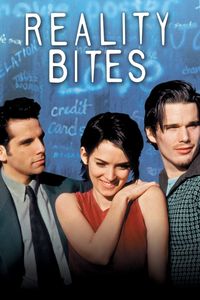
    (On TV, June 2020) It may seem strange for me to say that Reality Bites feels dated or that I found the characters insufferable considering that the film is supposed to capture the zeitgeist of my near-generation. But here’s the thing: I’m about five years younger than the characters here, and those five years, back in the mid-1990s, were significant enough. Then there is the fact that I wasn’t much into the whole Gen X slacker lifestyle, and that should explain the rest. (Once more for those in the back: Despite facile memes, you are not your generation.) (Although, hey, if we’re going to get into generational gabbing, let us point out that the reality-TV personal video recordings of 1994 are suspiciously a whole lot like post-2000s influencing—just sayin’.) Still, Reality Bites is certainly not completely unwatchable—in the hands of director Ben Stiller, there are many early appearances from known actors here, and bits of nice Houston scenery. The melodrama gets ridiculously overblown, but I suppose that no twentysomething romance would be complete without it. John Mahoney is surprisingly memorable in a handful of scenes, but the spotlight goes to a generation of actors who would all go on to bigger and better things: Let us mention Winona Ryder, Ethan Hawke, Janeane Garofalo, Steve Zahn, and others, sometimes in one-scene cameos. I suppose Reality Bites is all right after all—but since the character with which I most identify is the designated yuppie villain, well, um.

  • Life Stinks (1991)

    Life Stinks (1991)

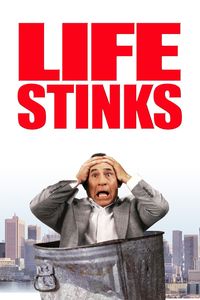
    (On TV, June 2020) In Mel Brooks’ filmography, Life Stinks is clearly the odd one out—it’s still a comedy, but in a more restrained tone than his other film parodies, and it’s substantially more socially conscious as well. Taking well-worn tropes for another spin, it features Brooks as a billionaire who bets that he can live as a homeless man for 30 days. Except that there are corporate shenanigans afoot to deprive him of his fortune, and life on Skid Row isn’t quite as easy as what he expected. While a welcome break from expectations, this film (Brook’s second-least-popular, after The Twelve Chairs) doesn’t quite succeed at its own objectives. Roughly two-thirds of the film is conventionally made with big great guideposts to tell us where it’s going. That part stops once the protagonist gets his psychotic break—but what follows is markedly worse, as the film abandons even the fantasy grip it held on reality and goes for overblown set-pieces that actively grow irritating. While it’s fun to see Jeffrey Tambor play the villain, and have the lovely Lesley Ann Warren as the love interest, Life Stinks loses its way somewhere, and doesn’t break new ground in being socially conscious of homelessness. (There’s a tension between the tragedy of being stuck in the street and Brook’s intention to deliver a comedy about it that never gets fully resolved.) Brooks himself does have a few good moments as actor, but the rest of the film is definitely more miss than hit. While the effort to do something new is laudable, Life Stinks doesn’t quite land.

  • Sid and Nancy (1986)

    Sid and Nancy (1986)

    (On TV, June 2020) One of the greatest “wait, that was Gary Oldman?” hits in the actor’s filmography, Sid and Nancy is also a raw, uncut dive into 1970s punk culture through the lens of the deeply problematic relationship between The Sex Pistol’s Sid Vicious and Nancy Spungen, which would end with their deaths. Under writer-director Alex Cox, it turns into a sad but not depressing tale of love, music and drugs—a cautionary tale, but one that can’t help but stare longingly at romantic self-destruction. Often energetic, somewhat well served by a “true story” that spanned mere months rather than years or decades, Sid and Nancy is the kind of film that feels like a cult favourite. It’s all grimy and falsely glamorous even in its slightly contemptuous observation of two severely damaged people getting together against squalid backdrops. (The film’s most consciously romantic moment makes beauty out of falling garbage!) Oldman is terrific as Vicious, but Chloe Webb also makes it work as Spungen. The ending is inevitably divisive—it’s designed for those who already know the entire story, but also leaves a lot of material out—be ready to have the relevant Wikipedia articles ready to read by the time you finish watching Sid and Nancy.

  • Hit the Deck (1955)

    Hit the Deck (1955)

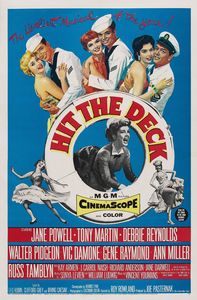
    (On Cable TV, June 2020) By itself, there isn’t much that’s strictly wrong about Hit the Deck. It’s about sailors on leave in San Francisco, and their romantic adventures along the way. Three couples means three subplots, several love interest characters involved in show business and with their families involved (some of them including high-ranking naval officers), you can argue that the story is a bit denser than your average musical. But if you’ve seen the crop of the movie musicals, chances are that you’ve already seen a handful of films partially or entirely focused on similar navy themes, from On the Town to Always Fair Weather to Shore Leave and so on. By the time the film ends on a battleship-on-a-stage singing and tap-dancing climax, thoughts of Yankee Doodle Dandy and the climax of Born to Dance are almost inevitable. I still enjoyed the result, but more because of Ann Miller than anything else: She has a substantial role as a woman tired of her six-year engagement to a military officer, and a handful of enjoyable musical numbers in which she gets to sing and tap-dance. There aren’t that many memorable songs, but it’s still a solid film. It’s worth noting the historical context here: 1955 was the beginning of the end for the MGM musical—Arthur Freed was retiring, audiences were getting over MGM’s fantastic 15-year streak that peaked with the late-Freed movies (Singing’ in the Rain, The Band Wagon) and while Hit the Deck may be a wholly average example of the form, it does carry the burden of the form as well—While quite watchable and enjoyable, it’s just nothing special for anyone but Miller fans.

    (Second viewing, August 2020) It’s a measure of how average Hit the Deck can be that I had to take another look at it two months later just to make sure I wasn’t misremembering it. But no—it’s still fairly generic, and buoyed only by Ann Miller’s numbers. She does get one good role here as one of the female leads, which is all the better considering that she would retire from the big screen shortly after.

  • Cactus Flower (1969)

    Cactus Flower (1969)

    (On Cable TV, June 2020) The one thing that holds together the somewhat bland romantic comedy Cactus Flower is a fascinating trio of actors from very different eras of cinema—Ingrid Bergman, Walter Matthau, and Goldie Hawn in her first big-screen lead role. It’s quite a cast, and the film around them never quite reaches the potential of that trio. The story is a bit of a jumble, but largely about a dentist (Matthau) who keeps pretending he has a wife to avoid commitment in his affairs, except when he falls for a record-store clerk (Hawn) and has to find a pretend wife (Bergman) in a hurry to keep control over the affair. While the cast is amazing, the casting is more disputable—Matthau as a playboy is something I’ll shrug over, while Bergman may not be the most obvious pick as a screwball lead. Hawn does very well, though (she won an Oscar for it), fully capturing the hip 1969 Manhattan vibe that the film is aiming for—the extended sequence in a music store will delight who considers movies to be a fanciful time-travelling device. While often blander than expected, Cactus Flower does get a few smiles along the way, plus a jazzy take on the song “I’m a Believer.” It ends exactly how we expect it to, but the fun is in getting there. Plus, if you’re looking for a linchpin in your “Seven Degrees of Kevin Bacon” game, it’s a film that effortlessly takes you from the 1990s to the 1940s thanks to Hawn and Bergman.

  • The Champ (1979)

    The Champ (1979)

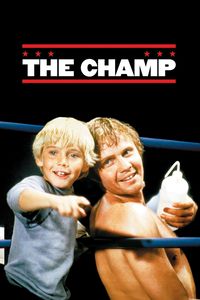
    (In French, On Cable TV, June 2020) An all-time weepie heavyweight, The Champ is director Franco Zeffirelli’s melodramatic remake of the already overdramatic 1930s Oscar-winning classic, except fine-tuned to make everyone cry by the end of the film. (No, seriously—The Champ has even been used in clinical settings to prove that it’s “the saddest movie in the world”) if you’ve seen the original, you will find that Zeffirelli has added very little other than sound and colour cinematography—he’s seemingly content to run through the same motions with even more melodrama. Jon Voight stars at his puffiest as the titular champ, while Faye Dunaway preens as his ex-wife, although it’s young Ricky Schroder who becomes the centre of attention as the boy who clearly doesn’t understand the tragedy unfolding around (and about) him. The Champ isn’t particularly good if looked at dispassionately—it’s deliberately engineered to pull at heartstrings and is absolutely shameless about the way it goes about it. The question then becomes—are you able to look at it dispassionately? Because it will use every trick in the book to prevent it.

  • Howard Lovecraft & The Undersea Kingdom (2017)

    Howard Lovecraft & The Undersea Kingdom (2017)

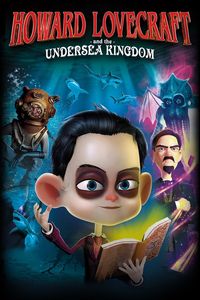
    (On Cable TV, June 2020) We must complete the gestures we begin, and that explains why I ended up watching the second-in-a-trilogy Howard Lovecraft & The Undersea Kingdom even after seeing the first and third one. No, I’m not claiming that the third film suddenly makes more sense now that I’ve seen the second—they’re largely independent stories, even if they do build upon each other to some extent. The continuing kid’s adventures of a young H. P. Lovecraft and his pet sidekick Cthulhu (named “Spot”) both head underwater for more of the same. It’s as low-budget as these animated films go—the rough 1990s-grade animation barely gets the point across, although the voice actors have familiar names. Undersea Kingdom is probably the weakest film of the trilogy, as it does not have the “I can’t believe I’m watching this” freshness factor of the first film nor the more interesting plot and conclusion of the third one. I wonder once again, in between the gothic eye makeup, Lovecraftian jargon and uninvolving results, who this is made for—at best, I’m guessing somewhere between ironic appreciation by aging readers who want to pass the magic of Lovecraft (that old racist purple-prose hack) to their kids… or, most likely, financial backers working on marketing potential and dirt-cheap production costs. Either way, there isn’t much here beyond the novelty factor, and viewers would be better served by the first or third volume. If at all.

  • Brewster McCloud (1970)

    Brewster McCloud (1970)

    (On Cable TV, June 2020) Writer-director Robert Altman’s sense of humour is an unusual one, as shown by the odd Brewster McCloud. It’s a bizarre mixture of Houston setting, ornithologic information, oddball characters and uncomfortable gags that get more quizzical chuckles than outright laughs. Most amusing bits are a few refinements away from outright humour: there’s clearly something here that’s meant to be funny, but it doesn’t click naturally—although viewers are free to revel in the weird counterculture nature of it all. The atmosphere of 1970s Houston is well rendered, though, with a focus on the Astrodome as the scene of many of the film’s big moments. In other ways, Brewster McCloud is random stuff thrown together for unclear purposes: As a taste, let’s mention the professor (played by René Auberjonois) whose lecture on bird characteristics keeps underscoring the character action, even as he gradually transforms into a bird throughout the film. Said references inevitably lead to an Icarus-like climax. Other bits and pieces include some weird take on the Bullitt-grade supercop archetype, an amusing car chase, and an angel intervening in the proceedings whenever she can—plus Shelly Winters looking much cuter than expected in her screen debut, despite unfortunate eye makeup choices. Add to that Altman’s motifs of gritty filmmaking and naturalistic dialogues and Brewster McCloud certifiably becomes a weird movie—but not necessarily a successful on. Although that final video credit sequence… has to be seen to be believed. Which stands for much of the film, really—you’ve never seen anything quite like this before or after.