Month: June 2020

  • Bakjwi [Thirst] (2009)

    Bakjwi [Thirst] (2009)

    (On Cable TV, June 2020) Iconoclast writer-director Park Chan-wook takes on Catholic vampire tropes in South Korean riff Thirst and the result is both familiar and weird. The familiar part comes from the decision to focus the film on the vampiric mythos, as a Catholic priest volunteering for an experimental medical treatment dies and revives as a full-blown vampire. The weird stuff gets going when Park decides to have some fun with the elements at his disposal, going for an affair between vampiric protagonist and an abused wife, and whatever happens next. There’s a strong erotic component to the film, with a lengthy sex scene being central to the plot. While the script is peppered with familiar vampire plot points and subplots, Park’s approach is typically iconoclastic, with a careful use of colour palettes, competent directing and just-provocative-enough imagery. While Thirst does more interesting as it goes on, it’s still often very familiar. But if you’re in the mood for a recognizable vampire film that perverts (but not avoids) many familiar tropes of the genre, then this could be the film that you’re looking for.
  • Lucy in the Sky (2019)

    Lucy in the Sky (2019)

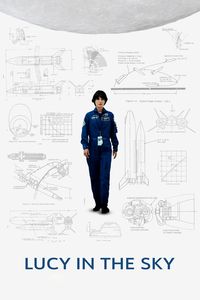
    (On Cable TV, June 2020) J. G. Ballard must be smiling in his grave—he was among the first, through his 1960s Science Fiction stories, to dismantle the mythical aura of the astronaut as an infallible demigod, and now Lucy in the Sky shows how reality has caught up to his fiction. Adapted very loosely from the true story of Lisa Nowak, this is a film telling us about a romantic triangle between three astronauts, although writer-director Noah Hawley considerably softens the details of the real-life story and unsuccessfully attempts to make its unbalanced protagonist likable. It’s all handled through some sort of mushy magical realism (or vague psychological drama), with visions of space intruding on the protagonist’s inner life as she struggles with recapturing the experience of spaceflight and begins a self-destructive affair with another astronaut. Hawley’s very impressionistic filmmaking even plays with aspect ratios to show the difference between Lucy’s fantasy life and her domestic one. Nathalie Portman is not bad as a southern A-type personality, while Jon Hamm and Zazie Beets are both striking as the other ends of that romantic triangle—plus two small but showy roles for Tig Notaro and Nick Offerman. Alas, the acting is one of the few highlights in a film that doesn’t even get close to fulfilling the potential of its inspiration. Lucy in the Sky deviates from reality by offering something that feels pointlessly small-scale, without some of the most interesting aspects of the original event. (No diapers here!) Worse is the attempt to create unearned sympathy for its protagonist. (Accordingly, the film was a near-legendary box-office bomb, not even earning a million dollars on a 24 million dollars budget.) Legend has it that Lucy in the Sky started as a black comedy for another director and lead actress, and we can only mourn that version of the film—it hardly could have been worse than what it ended up becoming. But at least Ballard’s saying, “I told you so!”

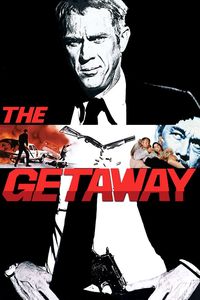
  • The Getaway (1972)

    The Getaway (1972)

    (On Cable TV, June 2020) Ali MacGraw, as an actress, and The Getaway, as a film, both have something in common: they’re not particularly good, but they’re certainly striking and it’s not hard to see why they both created a fuss. The story of two lovers on the run, The Getaway is best known as one of director Sam Peckinpah’s biggest commercial hits, a union of this eccentric filmmaker with Steve MacQueen and Ali MacGraw (who began an affair on set and would eventually marry). It’s a big Texas crime story, as the two leads run for the border after a robbery gone wrong, and under Peckinpah’s attention the film inevitably turns very, very violent. Far too violent, even if standards have changed since then. Still, it’s better than most such films (and there were many of those in the 1970s)—while episodic, it’s filled with recurring characters and ongoing tension between the two lead characters. On a filmmaking level, it’s got some decent Texas cinematography, and it edited so snappily that it still works rather well today. MacQueen remains a limited actor, but he’s well in his range here as a charismatic tough guy. Meanwhile, Ali MacGraw has seldom been better—as mentioned: she’s not good, but she is definitely striking.

  • Gulliver’s Travels (2010)

    Gulliver’s Travels (2010)

    (In French, On TV, June 2020) It’s a tale as old as time—no, not Swift’s book of adventures, but the concept of repurposing cultural touchstones as a showcase for an actor’s specific brand of comic mugging. So it is that in this take on Gulliver’s Travels, the first half of an eighteenth-century novel becomes an excuse for Black’s rock-and-roll-and-crude-jokes, with something like an hour of the film dedicated to various size jokes regarding Lilliput, and Black playing the ingrate false hero. Forgettable despite being crammed with wall-to-wall special effects, Gulliver’s Travels is a comedy solely by virtue of not being tragic, not due to having any effective humour. The biggest joke here may be that Emily Blunt had to pass on becoming the MCU’s Black Window because she was contractually forced to be in this immediately forgettable film.

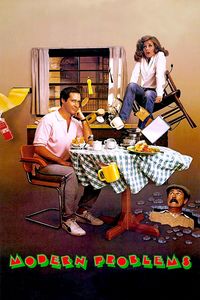
  • Modern Problems (1981)

    Modern Problems (1981)

    (In French, On Cable TV, June 2020) There are movie stars of the past whose appeal seems inexplicable now, and 1980s era Chevy Chase is a prime example of those. For every Vacation film in which he was funny, there seem to have been three more movies seemingly built around his inexplicably smarmy comic persona made of equal parts lecherousness and arrogance. Modern Problems doesn’t help itself by stringing along a disjointed plot made of supernatural power and icky romantic comedy in which a man tries to stop his ex-wife from dating other people. There’s a racist explanation at the end when the superpower ends up being a case of possession—at which point you can be forgiven for checking out of the film altogether. I suppose that there’s something funny about someone being given superpowers and using them for hilariously petty purposes, but I’m not even sure that this lazy script has even thought of seeing things from that angle. In the end, Modern Problem is not all that interesting nor funny and given the overbearing place taken by Chase in the film, it’s impossible not to place at least some of the blame on him.

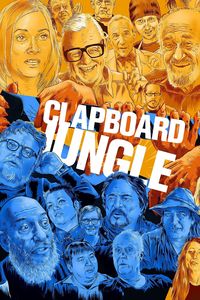
  • Clapboard Jungle (2020)

    Clapboard Jungle (2020)

    (On Cable TV, June 2020) Life is tough for filmmakers below the Hollywood celebrity line, and Canadian documentary Clapboard Jungle takes us into the frustrating multi-year journey of trying to get a film made for fickle audiences under the plethora of financing models available now that the traditional theatrical model is broken, along with cinema’s dwindling place as prestige entertainment. Writer director Justin McConnell makes for an eventually sympathetic figure as he tries to figure out why some filmmakers succeed and some don’t. Interviews with other filmmakers (Guillermo Del Toro, Uwe Boll, George Romero, Paul Schrader and many others) add quite a bit of interest to the proceedings. It works both as inspiration and as a reality check for anyone thinking they can just take an iPhone and make their own movie. Clapboard Jungle eventually touches upon the hard truth that many feel drawn to the prestige of film, but underestimate just how few places are available at the end. As a blend of feature-film footage and grainy digital diaries, this documentary acts more as a diary with clipped quotes than a cohesive document. But it’s still interesting and revelatory about the difficulties of (specifically Canadian) low-budget filmmaking.

  • Unlawful Entry (1992)

    Unlawful Entry (1992)

    (In French, On Cable TV, June 2020) Ray Liotta has made a career out of playing the crazy heavy, and there’s a fair case to be made that Unlawful Entry, in its caricatural ham-fisted exploitation, may feature the most Lay Liottaesque of all of Ray Liotta’s roles. He here plays opposite a young and charming couple (a young Kurt Russell and a lovely Madeline Stowe), coming into their lives as a policeman responding to a robbery call. But as seasoned Liotta fans can predict, he turns out to be dangerously obsessed with his new female friend, and violent enough to take out most obstacles in his path—including the husband. Murders and frame-ups follow, leading all the way to the usual violence-filled climax. It’s really not meant to be subtle. Watching it right as the United States is being consumed with anti-police-brutality demonstrations is a useful demonstration that rogue cops are clearly a cultural fixture. Otherwise, Unlawful Entry does have a pleasant early-1990s sheen of an L.A.-based thriller. Its decidedly Hollywoodish depiction of its antagonist as an over-the-top villain can go both ways—it’s either juvenile, or exactly the kind of over-the-top nonsense that this exploitation thriller needs.

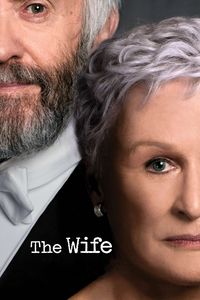
  • The Wife (2017)

    The Wife (2017)

    (On Cable TV, June 2020) It’s about time that I admit that for all of my so-called progressive sympathies, there’s always going to be a core of reactionary (I’d argue contrarian) impulse somewhere in my system. At its worst, The Wife toys directly with that core, although I’m not sure how much of my reaction is about the movie, and how much of it is due to the acclaim it got as a Grand Statement. But let us summarize: a 90-minute-long extension of the old “behind any great man there’s a great woman” saw, The Wife stars Glenn Close as the long-suffering wife of a celebrated American writer who learns that he’s just won the Nobel prize for literature. The trip to Stockholm proves more dramatic than expected once the façade is stripped away: It turns out that he’s a serial philanderer and that she’s been writing most of the books. I am, going back to my contrarian core, getting a bit tired of the wave of works going out of their way to bash achievements from white men by revealing (egad) how the achievements were, really all about some oppressed minority doing all the work. At this point, it feels like clichés and lazy storytelling, and so the most interesting bits of The Wife don’t simply show her doing the work, but hint at a complex relationship in which husband and wife both have something that only the other can fulfill despite there being only one name on the cover. An exploration of that would have been a bit more nuanced and interesting than the rather trite ending that follows. Still, despite my contrarian knee-jerk reaction, I did like the film a lot—Close is quite good in the lead role (she did get an Oscar nomination out of it) and Jonathan Pryce does play the crusty old veteran writer with some panache. What’s more, Christian Slater has a plump supporting role. I am a sucker for movies about writers, and this one does have some fun with that conceit, even though most sequences about women’s writers do feel on the nose. I would have liked The Wife more if it had just gone off its high horse and started poking and the complexities of its own premise. But that would have led to a far less message-driven movie, right?

  • Rumor Has It… (2005)

    Rumor Has It… (2005)

    (In French, On TV, June 2020) If you’re willing to concede that Rumor Has It has more to do with the way people behave in Hollywood films than in real life, then it’s not quite as terrible is it looks in the first place. Ill-conceived from the start as a “sequel” of sorts to The Graduate, it sets itself up for failure early on, as it clearly doesn’t have what it takes to fulfill its ambitions, nor the guts to actually do anything truly transgressive. Instead, director Rob Reiner (working from a script by Ted Griffin, the first director of the film, fired early in the production) plays everything like a frothy meaningless romantic comedy. It’s a dumb comedy with puppet-like characters in many ways—the premise simply isn’t believable, and the characters seldom behave like real people. This is not necessarily a bad thing in the world of romantic comedies—but it is here, as the characters go for wild speculations rather than anything like realistic conclusions. (i.e.: if someone is born barely nine months after their parent’s wedding, do you speculate about honeymoon whoopee or leap to the conclusion that the mom had an affair?) If Rumor has It has a quality, it’s probably a cast with several familiar names—But it has its limits. Kevin Costner was still in the phase where he could convincingly play older romantic leads, but Jennifer Anniston is unusually bland in the lead role. Supporting characters include Richard Jenkins, Mark Ruffalo, Christopher MacDonald, Mena Suvari and a rather good late-career turn from Shirley MacLaine—who does give Costner a scene worth a look. Alas, the rest of Rumor Has It is a disappointment. It’s not as funny as it thinks it is and it’s afraid to be eccentric while playing with eccentric elements: By the time it ends, the lead couple is so exasperating that the climactic reunion feels like a bad idea.

  • Through Black Spruce (2018)

    Through Black Spruce (2018)

    (On Cable TV, June 2020) There’s something deliberately unsatisfying in Through Black Spruce that makes it hard to like, no matter how much any reviewer would like to support First Nations filmmaking. I suspect that much of this has something to do with adapting a novel to the big screen—the storytelling flaws of the source seem built into the unfocused result. Part of the plot is about a young Cree woman investigating the disappearance of her twin sister in Toronto; the other part is a tale of harassment and revenge on a reserve. Alas, the Toronto segments never lead anywhere (why raise a mystery if it’s not going to be resolved?) and the reserve subplots are both hazily motivated and arbitrarily developed. The raw look at the relationship between the reserve and the big city is promising but leads nowhere—ultimately, the admirable effort and provocative details don’t amount to a compelling story. While handsomely directed by Don McKellar, one of the crown princes of Canadian cinema, and benefiting from a compelling lead performance by Tanaya Beatty (plus Graham Greene in a supporting role), Through Black Spruce seems determined to make itself hard to appreciate, by insisting on a markedly less interesting subplot and scrupulously avoiding any kind of resolution.

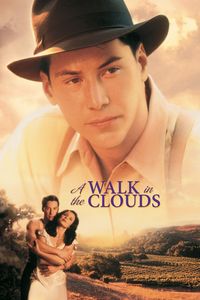
  • A Walk in the Clouds (1995)

    A Walk in the Clouds (1995)

    (In French, On Cable TV, June 2020) Charming, dull, ordinary, overwrought—all of these things are true about A Walk in the Clouds, a post-WW2 historical romance that travels to the vineyards of California’s Napa Valley for a bit of a romance featuring a lovely Aitana Sánchez-Gijón and… Keanu Reeves?!? Yeah. Director Alfonso Arau manages to make the slight and melodramatic script look better by shooting a film with luminous cinematography to cleanly evoke an idealized portrait of the time, a conclusion that also applies to the actresses and their rather wonderful wardrobe. (Debra Messing is no slouch in a short but thankless role.) Reeves is earnest but too limited for the role—although, like many not-so-good actors, he sounds much better in the French dub. Despite a preposterous ending, A Walk in the Clouds is easy viewing, a bit dull at times but still comfortable material considering that there’s never any doubt as to how it’s all going to be resolved.

  • Anna’s Storm aka Hell’s Rain (2007)

    Anna’s Storm aka Hell’s Rain (2007)

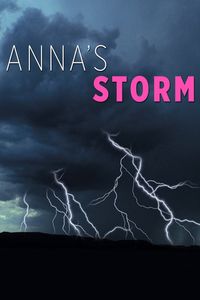
    (On Cable TV, June 2020) No, just no. Maybe you will someday spot this film in a listing somewhere and think, “a mayor saving her small town from a deadly rain of meteors? That sounds interesting!” but no. It is not. Keep in mind that Anna’s Storm is a low-budget straight-to-video 2000s movie with the effects, acting, directing and cinematography appropriate for its class. In other words: it’s terrible, it always looks terrible and every time someone says or does something, you’ll be reminded that it’s terrible. Special effects may sometimes suggest that any movie can now recreate the 1970s disaster film genre, but that’s an illusion—you need a lot more to succeed, including basic filmmaking competence. Director Kristoffer Tabori is doing his thing here—another in a long list of undistinguished and terrible TV films. The premise makes absolutely no sense, with several insistent waves of meteors repeatedly hammering the same town over several minutes/hours—in complete disregard for physics. But the rest of Anna’s Storm isn’t any better. It all becomes tiresome in the way most of these films become. Just no.

  • Boksuneun naui geot [Sympathy for Mr. Vengeance] (2002)

    Boksuneun naui geot [Sympathy for Mr. Vengeance] (2002)

    (On Cable TV, June 2020) The good news about Sympathy for Mr. Vengeance is that it’s the first in writer-director Park Chan-wook’s Vengeance trilogy (which also features the much-better Oldboy and Lady Vengeance), and it’s an intricately plotted, carefully detailed, unusually well-directed film. The bad news is that never mind its objective qualities—I disliked it intensely, even bordering on loathing. Your mileage may vary because mine is based almost entirely on the film killing off a young girl as a mid-film plot point. I just can’t deal with that kind of cruelty right now. Not that things really get better after that, because Sympathy for Mr. Vengeance steadily becomes a ludicrous high-drama filled with gruesome and grotesque violence far beyond what the story needed. It’s certainly interesting in some ways, as the director works obliquely and never quite approaches matters in conventional ways to show what’s going on. But that doesn’t excuse the dirtiness left by the film—by the time nearly everyone dies at the end, the only judgment is that they all deserved it.

  • Sex Kittens go to College (1960)

    Sex Kittens go to College (1960)

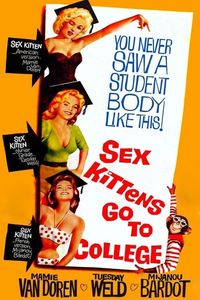
    (On Cable TV, June 2020) Don’t get your hopes up, filmgoers: Not only is Sex Kittens go to College’s title better than the film itself, it’s also better than anything you could expect from an early-1960s sex comedy. It’s a dumb film about a smart girl, meaning that Hollywood’s flawed conception of intellectualism is also in full deficient display. There’s evidence of cheap lazy filmmaking everywhere: the production values are so low that the film feels like a TV show; a robot and a computer are used as magical devices; insistent sound effects and music highlight just how little is left to subtlety; and a grimacing monkey is obviously the cherry on top of that disappointing sundae. The only highlight here is Mamie von Doren, who plays the brainy blonde-with-a-stripper-past than anchors the film—she’s not that good (she feels like the Monroe duplicate that she was known for), but she’s better than most of the other actors, and has a vivaciousness missing from the rest of the cast. While the title of Sex Kittens go to College and the promise of a cute innocent early-1960s sex comedy may entice you, keep your expectations as low as you can manage them—there’s a lot less to this film that can be suggested.

  • Motel Hell (1980)

    Motel Hell (1980)

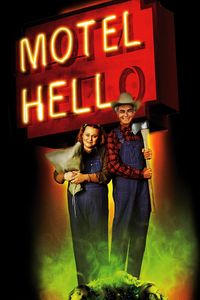
    (In French, On Cable TV, June 2020) Bleh. The problem with comedies about terrible things is that they’re still about terrible things, and so even if Motel Hell pretends to be a comedy about psychopathic hillbilly cannibals, it’s still a film about psychopathic hillbilly cannibals. It is more gross than funny and it’s not particularly funny in the first place. The only thing worth liking here is seeing and hearing Wolfman Jack in a supporting role. Otherwise, the low production values and dubious sense of humour about horrifying matters severely limit the appeal of Motel Hell. Never mind checking out—it’s better not to check in in the first place.