Month: January 2021

  • Phantasmagoria (2005)

    (On Cable TV, January 2021) Most long-running horror series have a documentary or two to explain their creative origins, laborious making-of and fannish appeal. The Phantasm series was only four films long when Phantasmagoria was released (a fifth film has since joined the series), but you could argue that it needed an accompanying documentary more than most. Deliberately shrouded in mystery, changes of direction, budget-related compromises and visual kicks taking over a haphazard sense of storytelling, the Phantasm series leaves more than most to the viewer’s interpretation. An authorized documentary may not solve much, but at least it gives viewers the chance to hear the filmmakers (the most important being the series’ writer-director Don Coscarelli himself) a chance to explain some of their intentions. Phantasm, to be fair, remains a series with more potential than satisfaction: For all of the exhilarating weirdness of its blend between horror, Science Fiction, coolness and not enough humour, the Phantasm series doesn’t quite know where it’s heading, nor how to maximize the possibilities of its ideas. Usually executed with too-low budgets, the series has energy but no discipline and the result always under-delivers. With Phantasmagoria, at least we get to hear the reality behind the results: Seat-of-the-pants independent filmmaking, studio interference during the second film, no coherent overall plan and various ideas popping up during production are only some of the shifting winds affecting the movies. At least the films sound fun to make most of the time (the second film once again being an exception), as the actors and crew share memories of their good-and-rough times during shooting, explain some of the series’ most amusing or mystifying moments, and help resolve the puzzle of plot pieces being pushed from one film to another, with the fourth making extensive use of the extensive footage shot for the first film but then left on the cutting room floor. Absurdly enough, the way Phantasmagoria goes instalment by instalment helps act as a primer/explainer for the series as a whole, with a coherent vision straightening some of the creative intent behind it all. It’s quite an enjoyable documentary for fans of the series, and it may actually help ambivalent viewers such as myself become more sympathetic to what Coscarelli and his merry band of underpaid cast and crew were trying to accomplish.
  • Around the World (1943)

    Around the World (1943)

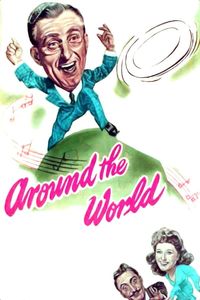
    (On Cable TV, January 2021) American WW2 wartime musicals were a strange subgenre. Almost entirely produced between 1942 and 1945, they often starred that time’s equivalent of pop stars (i.e.: Band leaders, amazingly enough to modern audiences), comedians and studio stars in a narrative that did nothing more than arrange a series of musical and comedy performances in a loose story. Such films were meant to be shown overseas to troops, and to raise patriotic fervour, war bond purchases and morale on the homefront. Around the World isn’t the best of those, but it clearly shows the formula and the intent: Featuring then-famous band leader Kay Kyser and his musical entourage (the “Kollege of Musical Knowledge”), its slight narrative has the band touring the world to entertain the troops and getting embroiled in various adventures with stowaway teens and treasure-hunting Nazis along the way. There are plenty of big-band musical numbers and somewhat old-hat comic routines along the way, but if you’re having too much fun in wartime, just wait until the atonal conclusion in which one of our happy-bouncy protagonists learns that her father’s been killed in action and vows to do her part in fighting the Axis. (Never mind that we can see that revelation coming about thirty seconds before she does.)  If that sounds like a big blend of propaganda made to order, you’re right and the film doesn’t even try to hide it. For modern viewers, the propaganda takes a back seat to the period charm and the big band numbers. As intended, the film feels like an evening outing in the city to hear a big band playing a few hits and some comic interludes in between. Kyser is not a terrific actor (his presence in Swing Fever, his sole acting credit playing a character other than “himself,” is slight), but he does have a pleasant, sympathetic presence, especially given how he’s fully in his element here playing a band leader trying to manage the various issues affecting his band. Marcy McGuire is very cute as a teenager stowing away to follow the band around the world, while the band plays itself in a fictionalized take on their real-world troop entertainment. Around the World doesn’t amount to much in terms of a movie, but it’s an interesting film approximating what it must have felt like to either attend one of Kyser’s evenings, or watch a musical comedy in wartime.

  • Tarzan the Ape Man (1932)

    Tarzan the Ape Man (1932)

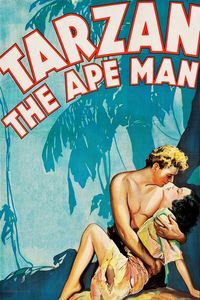
    (On Cable TV, January 2021) The tale of Tarzan is so well known that it has escaped its origins: Everyone knows the basics, but few will point at the 1912 Edgar Rice Burroughs adventure novel as the one source from which they know how it goes. Regularly reinterpreted according to each generation’s own liking, people are free to point at various interpretations as “their” Tarzan. 1981 Bo Derek, 1984 Christopher Lambert, 1999 Animated Disney film, 2016 Alexander Skarsgaard—all good choices, and that’s not including the endless pop-culture references and parodies. But in movie history, “the” big Tarzan is former Olympian swimmer Johnny Weissmüller who ended up playing the character in twelve films from 1932 to 1948, a series that most famously introduced the famous “Tarzan Yell” instantly recognized but hardly ever successfully imitated. As such, Tarzan the Ape Man is pretty much the Tarzan film you’d expect from early-1930 Hollywood: Technically rough (with plenty of soundstages in between the stock footage), incredibly racist toward African people, sometimes ridiculous, occasionally impressive and a good showcase for Weissmüller. Even though it presents the story stripped down to its barest and most obvious components, it can be tough to watch today—the dismissal of the native population in favour of the white explorers in “deep dark Africa” is insulting to everyone; and the fight between Tarzan and a lion (or rather an obvious stunt double with a lion, intercut with Weissmüller with an equally obvious puppet) is either hilarious or endearing. It’s probably worth a look despite its problems, if only as an illustration of the racism and technical limitations of even top-billed action movies at the time. On the other hand, there are newer and better incarnations of the Tarzan legend out there for anyone coming in fresh to the character.

  • Phantasm IV: Oblivion (1998)

    Phantasm IV: Oblivion (1998)

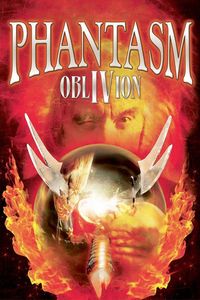
    (In French, On Cable TV, January 2021) Before a fifth Phantasm film popped up in 2016, it looked as if the series ended its haphazard twenty-year run with the disappointing Phantasm IV: Oblivion, a film that kept most of the icons of the series but seemed intent on not maximizing any of its strengths. The first and most fatal misstep of the film was to break apart the team that had served it so well: for almost all of the movie, both unlikely comic hero Reggie and series protagonist Mike are on separate journeys of markedly different tones. The road movie template feels emptier when the protagonists are apart, and the overall glum tone (especially compared to its droll preceding instalment) doesn’t help matters in any way. What is special about this fourth film, however, is the extensive use of footage cut from the first film as emotional flashbacks—the use of authentic footage shot twenty years earlier goes give Oblivion a deep history and fans a treat. Bits and pieces of series writer-director Don Coscarelli do shine through: among other things, the film travels through time to a benevolent 1860s Angus Scrimm in an effort to expand the series’ mythology. Still, that’s not quite sufficient to elevate it from the various issues caused by its very low budget and chaotic approach to filmmaking—the film feels like the prelude-to-something-else that never was, and stood for fifteen years as a most unsatisfying finale to a series that rarely provided closure. Even after watching the divisive fifth entry, Oblivion remains my least favourite of the series—an overly dull, split, joyless entry.

  • They Drive by Night (1940)

    They Drive by Night (1940)

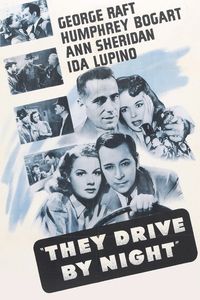
    (On Cable TV, January 2021) If you’re lured to They Dive by Night by Humphrey Bogart’s name, be warned that this is a film from his ascending stardom era—not the Bogart of pop-culture legend, but the rough-hewn character actor he was before his trench-coat fame. The story definitely has him as a supporting player to a lead duo played by George Raft and Ida Lupino as, respectively, a truck driver trying to make ends meet, and the scheming seductive wife of a trucking company owner. This being on the edge of a film noir, she kills her husband and promotes Raft’s character in a bid to get closer to him, but he’s already smitten with a far more wholesome girl. Bogart plays Raft’s brother/trucking partner, while Ann Sheridan plays the good girl. The thriller elements are solid enough (although the ending clearly belongs to a more reasonable, less spectacular age), but the look at circa-1940 trucking can be fascinating—my favourite sequence in the film details how the brothers take a load of produce across the state and negotiate themselves a nice windfall. Bogart remains interesting in one of his last supporting roles, while the normally compelling Lupino is even more captivating as a lust-crazy murderess. While a minor film by most standards, They Drive by Night remains a solid early noir with a few compelling performances.

  • The Gene Krupa Story (1959)

    The Gene Krupa Story (1959)

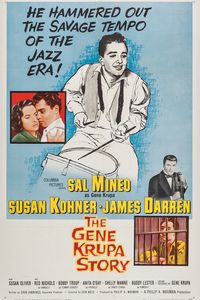
    (On Cable TV, January 2021) It’s often fascinating to realize how we come to know some things. In explaining why I deliberately set out to watch The Gene Krupa Story, for instance, I would have to explain how I was introduced to the American drummer through the music of electronica band Apollo 440 and some swing-house tracks, then add how Krupa often popped up in classic Hollywood movies such as Ball of Fire, The Glenn Miller Story and The Benny Goodman Story. Even today, nearly everyone has heard Krupa at one time or another—his drum work on Benny Goodman’s “Sing, Sing, Sing” is regularly sampled as shorthand for “old-time swing music” in contexts as various as The Simpsons or Woody Allen movies. Alas, always be wary of discovering more about half-familiar names: As documented here in a biographical film already sympathetic to its subject, the real Gene Krupa was a brilliant drummer that came bundled with a difficult human being. Drug abuse, unstable relationships, adultery and ostentatious lifestyle come with his success, and while this is all predictable to modern audiences raised on generations of musical biographies, The Gene Krupa Story did it in 1959. The film is perhaps most noteworthy for Sal Mineo’s energetic performance as Krupa—while Krupa himself provides the film’s music, it takes some talent to mimic his live-wire act, and despite other flaws, the film can at least claim to have a solid lead performance. Where the film doesn’t do as well is in flattening its historical component—coming from 1959 (and unfortunately shot in black-and-white). The Gene Krupa Story doesn’t portray much of a difference between the decades of its narrative: Everything feels like the 1950s, even when it heads to the heydays of 1930s Manhattan jazz. A wasted opportunity—but the drum work makes the film worth a look even when other aspects of the production falter. Listen to the film even if you don’t watch it—but have a glance at Mineo’s high-energy act from time to time.

  • I Don’t Want to Be Born aka The Devil Within Her (1975)

    I Don’t Want to Be Born aka The Devil Within Her (1975)

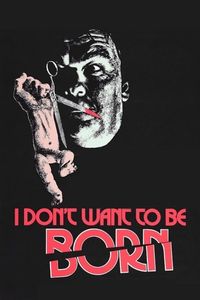
    (On Cable TV, January 2021) Evil-kids horror movies were a dime a dozen in the 1970s—spurred by 1968’s Rosemary’s Baby and bolstered by 1976’s The Omen, the genre had many imitators that haven’t stood the test of time as well as those. One of them is The Devil Within Her, a British production that can’t quite commit itself to comic insanity, despite featuring an evil baby that somehow manages to kill an impressive string of characters in increasingly ridiculous ways. While I could, at the limit, accept that someone pushing a pram could somehow fall and hit their head fatally, it gets tougher to be indulgent when the baby wields a knife. Ridiculous? Yes, but no one bothered to tell director Peter Sasdy as he gets Joan Collins playing the mother of an evil baby out for a rampage. Ostensibly funny but not executed as such, I Don’t Want to Be Born aka The Monster aka It Lives Within Her aka Sharon’s Baby aka The Devil Within Her (whew!) doesn’t manage to commit to the comedy of its premise. Its straight-faced approach also manages to make it more offensive—I really would have done without the anti-dwarfism prejudice that it features, with shot stature being associated with ugliness being associated with, well, satanic evil. Coupled with its typically ugly 1970s cinematography, it makes the film half-dumb, half-funny and almost entirely boring once it wraps up. The death scenes are understandably more ludicrous than disquieting, and that’s pretty much in keeping with the rest of the film—but even if you’re looking for some so-bad-it’s-good fun, you’re not likely to be satisfied with the rest of the film, no matter which title it comes under.

  • Maps to the Stars (2014)

    Maps to the Stars (2014)

    (On Cable TV, January 2021) As someone who will systematically watch any movie about movies, it stands to reason that I would eventually make my way to Maps to the Stars, a Hollywood melodrama that, at least at first, appears to be about the dark underbelly of Hollywood. Director David Cronenberg, in the middle of his realistic period, turns his attention to the twisted tale of a burn victim, a screwed-up child actor, a driver, an actress chasing her dead mother, and an abusive help-help guru… plus the ghosts. So many ghosts: roughly a third of the cast is undead, popping up at various times to discuss matters with the living protagonists. It’s weird all right, but in a restrained way that owes more to incoherent melodrama than to fantastic cinema. While Cronenberg can here benefit from a striking cast (including what is, in retrospect, one of the first movies to show that Robert Pattinson would have a better career than being pigeonholed as a teen heartthrob) and a rich subject matter to treat with his usual cynicism, Maps to the Stars ends up being a substantial disappointment. Despite a wild story that eventually ends up in depraved incestuous abusive territory, my own biggest letdown was realizing how little of the story actually had anything to do with Hollywood or the movie industry: with very little retooling, the story could end up being about tech billionaires, oil magnates or Manhattan financiers without losing much of its third act. It’s about the problems of the rich and screwed up, and Hollywood is more an enabler than the main topic of discussion. Even in leaving that aside, Maps to the Stars does suffers from a lack of tonal unity and narrative coherence: the story flutters from one thing to another in a way that has more to do with TV series plotting than a sustained film. Despite the increasing sex and violence, it doesn’t build to a big satisfying narrative finale—although those who had “sex scene between Pattinson and Julianne Moore” on their movie-watching bingo card should be happy. Mia Wasikowska is curiously underutilized despite a potentially rich role, and the use of fantastic plot devices really doesn’t end up meaning much. I still like some of it—it’s rare for a film to commit so fully to tragic melodrama—, but this is really far from being the best movie possible with those elements. In other words—quirky, intriguing but neither successful nor satisfying. I’ve seen worse this week, but there’s a frustrating amount of unrealized potential in Maps to the Stars.

  • Phantasm III: Lord of the Dead (1994)

    Phantasm III: Lord of the Dead (1994)

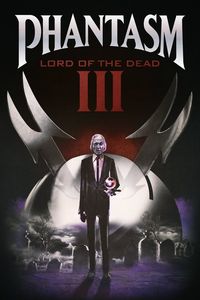
    (On Cable TV, January 2021) Don’t tell anyone—especially not rabid Phantasm series fans—but I’m particularly fond of Phantasm III: Lord of the Dead. Much of this has to do with it being the series’ most overly comedic instalment. Horror comedy is a tough genre to pull off (bad ones end up feeling like repulsive examples of pure sociopathy) but when it’s executed well, you can end up with classics à la Evil Dead II, which probably influenced Phantasm III in some ways. To be clear, it’s not an end-to-end laugh fest: The focus here remains on the overweight, ponytailed, balding Reggie (once again, unlikely star Reggie Bannister) helping his younger friend Mike (Michael Baldwin, back in the lead after being recast in the second film) fight against the creepy spooky alien monster The Tall Man (Angus Scrimm, great as usual) and assorted metal spheres. Part of the film’s slide into comedy probably has to do with how familiar and self-aware it was at that point. The Hemicuda muscle car, quadruple-barrelled shotgun, metal spheres and Tall Man are iconic by this instalment, a looseness translating into a film that represents the series’ cruising altitude, making appropriate use of its limited budget and seat-of-the-pants filmmaking. Director Don Coscarelli remains better in set-pieces than overall narrative coherency, but he gets to feature the best female leads of the series here—I would have enjoyed more screen time for Sarah Scott Davis, but Gloria Lynne Henry’s character Rocky is a clear highlight of the series, so much so that she was brought back for a cameo in the fifth film’s mid-credit scene. Those bits and pieces (including a rather successful mausoleum fight in a series that has many of them) are reasons why I consider Phantasm III to be perhaps the most comfortable entry of the series: not the best, not the one with the better story, not the one with the most satisfying special effects, nor the most coherent—but perhaps the most all-around enjoyable one, firmly aware of its strengths and weaknesses in trying to make fans happy.

  • Westfront 1918: Vier von der Infanterie (1930)

    Westfront 1918: Vier von der Infanterie (1930)

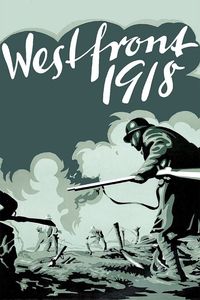
    (On Cable TV, January 2021) I’ve said it before and will say it again, but even if it’s wholly unfair to criticize a film by comparing it to another one, cinema is an ongoing conversation and when two voices say more or less the same thing as more or less the same time, it’s entirely natural to identify which one does it best. In this case, director G. W. Pabst’s Westfront 1918 had the back luck of coming out at the same time as All Quiet on the Western Front, with both of them taking a skeptical look at World War I as experienced by German soldiers. The point of similarities as such that anyone having seen both would be hard-pressed not to make comparisons. As good and humanistic as Westfront 1918 can be; however, it does pale when measured against its Oscar-winning American counterpart. Whatever is similar between the film will feel familiar, and the other film feels as if it has a few more highlights (the boot sequence, the poignant ending) than the German one. I still think that both are worthwhile and welcome contributions to the war movie corpus on the eve of a thirty-year cycle that would not accommodate many antiwar films. But if I have to re-watch one of those again, it’s not going to be Westfront 1918.

  • Mad Dog and Glory (1993)

    Mad Dog and Glory (1993)

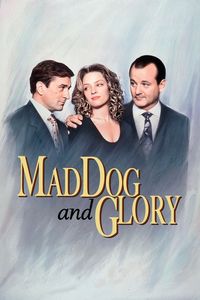
    (In French, On Cable TV, January 2021) The frontier between offbeat casting and miscasting can be a matter of opinion, and while I see that many reviews of Mad Dog and Glory praise its daring use of Bill Murray as a mobster and Robert de Niro as a meek crime scene photographer, I’m more inclined to call it a waste of talent. Not that the film doesn’t have other problems: As a story of how a policeman is gifted female companionship by a crime boss eager to express his gratitude after an unlikely rescue, the film already plays with an unwieldy combination of tricky elements. Character drama, offbeat comedy and rescue thriller—Mad Dog and Glory is all of that and more and yet less. The result is especially underwhelming considering the casting. A young Uma Thurman is remarkable as the woman used as currency between two men, with David Caruso showing up as de Niro’s partner. Otherwise, though, the film feels clunky, not quite dedicated to a specific tone and not interesting enough to make us care. Given this, the casting of de Niro and Murray, weirdly enough, acts in Mad Dog and Glory’s favour, even as it doesn’t serve it as best as it could—it’s one of the few reasons to remember the film today.

  • Niagara (1953)

    Niagara (1953)

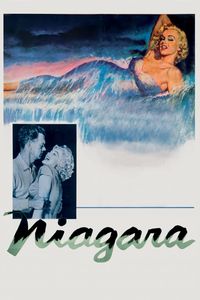
    (On Cable TV, January 2021) Among cinephiles, Marilyn Monroe is far better known as a gifted comedienne—seeing her in the middle of a glum film noir such as Niagara is a bit of a stretch, but not an unwelcome one. Playing a villainous character saddled with an antagonistic relationship with an abusive husband, Monroe remains the draw here even though she’s a supporting character in a film headlined by Joseph Cotton and Jean Peters. Our protagonists are average Americans heading to Niagara Falls for a delayed honeymoon (earning a wink and a nod from a Canadian Customs official), but see their dream holiday go off the rails when they’re introduced to a volatile couple whose antics draw them in. Monroe plays a wife with a lover on the side and dark plans to get rid of her husband. It’s a laugh to see her phone and ask for bus tickets to Ottawa—but the film itself is as noirish as it gets despite the colour cinematography of the falls. She plans on having her lover get rid of her husband, but things don’t go as planned, and our bland likable lead couple soon gets caught in the escalating madness. As a thriller, Niagara is fine enough, but I suspect that one of the aspects of the film that grows with time is an expansive look at early 1950s Niagara Falls from both sides of the border. There are far many more on-location scenes than you’d expect. The downplayed Canadian aspect of the setting was apparently a topic of contention behind the scenes, but I’ll be glad for what we do get. In any case, the intersection of 1950s tourism, noir tropes and Monroe in a very atypical role makes Niagara worth a look if any of those elements prove to be of interest. Who knows what Monroe’s latter-day career would have ben if she hadn’t died so soon? Maybe Niagara holds part of the answer.

  • Influence (2020)

    Influence (2020)

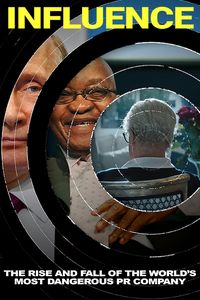
    (On TV, January 2021) I strongly suspect that once we take a sober second look at the 2016–2020 decade of disastrous events and dubious decisions, we’re going to find a lot of underreported stories beyond the flaming incompetence of the Trump administration, the compounded stupidity of Brexit or the nightmare of the COVID-19 pandemic. We’re going to end up rediscovering events and people who didn’t get any media oxygen during that time, and we’re not going to like the crimes and horrors that went undetected. While Influence is a broad decade-spanning documentary tracking the multiple tangents left behind noted public opinion manipulator Tim Bell, the part of the film that interested me the most was the description of the 2016–2017 Bell Pottinger scandal that led to the end of that company, fuelled by dirty tricks played in South Africa. It’s a huge story, and I was aghast to realize that I had either never known or about it or hadn’t seen it fit to be interesting—but there was plenty going on in 2016–2017 and I strongly suspect that any reporting of it in North America was measured in micro-fractions of the coverage given to more pressing events. Much of Influence is a clear, detailed and depressing exploration of the role that Public Relations firms play in shaping public opinion in underhanded ways, with plenty of cozy ties between those companies and political clients. Writers-directors Diana Neille and Richard Poplak mention but don’t dwell overmuch of better-known stories in that area—Brexit and the Trump victory being the two obvious ones, amply described elsewhere. The narrative through-line between all the events that the film tries to touch upon is not always clear, especially when some pieces look more interesting than others. The South African scandal segment, for instance, has the added advantage of being narrated by engaging subject matter experts—Phumzile van Damme easily outclasses most of the film’s other talking heads in terms of sheer charisma, for instance. Still, the film pokes at underappreciated parts of today’s political landscape, and while the film is focused on its British subject, there are plenty of applicable lessons for other western countries. Oh boy, I wonder what crucial stories we’ll uncover in the next few years?

  • Phantasm II (1988)

    Phantasm II (1988)

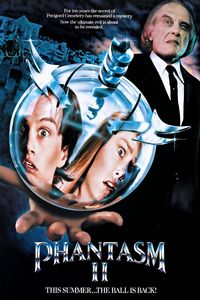
    (In French, On Cable TV, January 2021) In the grand fannish mythology surrounding the Phantasm series, Phantasm II is the misguided big-budget one. Writer-director Don Coscarelli convinced a studio to finance a follow-up to the 1979 original film, but the money came with restrictions: the studio insisted on recasting the lead character, and placed demands on the narrative that made the sequel a somewhat more coherent affair. Shifting from a small-town horror story to a road movie narrative, Phantasm II also codified much of what would become iconic in subsequent instalments. The Hemicuda was already present in the original, but it becomes a fetishistic object here. A very cool quadruple-barrelled shotgun is introduced, as are new golden spheres. More significantly, the focus of the film shifts a bit toward having unlikely heroic figure Reggie Bannister plays the lead, introducing some comedic elements that weren’t necessarily in the first instalment. The ending perhaps counts as one of the most interesting in the series, with a white-walled climactic location providing a rare victory for the heroes (one immediately nullified by a coda setting up further sequels). Despite the strengthened narrative (which endears me to this instalment), there is still plenty of weirdness and lack of adherence to a coherent set of rules—the Phantasm series, true to its title, is about being onboard for a ride that may not be under anyone’s control. In this regard, I see this maligned sequel as stronger in some aspects, weaker in others but still consistent with the series’ more-ambitious-than-successful nature.

  • Annie Oakley (1935)

    Annie Oakley (1935)

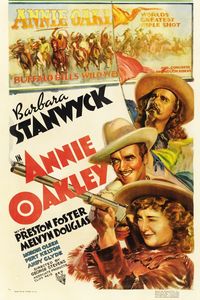
    (On Cable TV, January 2021) It took me a longer time than I care to admit for me to warm up to Barbara Stanwyck—not because she’s anything less than a terrific actress, but because she was never quite interested in creating a distinctive screen persona. Unlike other actors in the Hollywood star system, her many great roles span a number of genres and personality types. This makes it difficult to rely on a Stanwyck screen persona like many of her contemporaries. For someone who delivered striking performances in farcical comedy, thrilling noir, pre-Code provocation and straight dramas, seeing her take up the biography of Western sharpshooter Annie Oakley is just yet another puzzle piece in a wonderfully diverse filmography. Despite many liberties taken with the character (the least of them being upgrading Oakley’s looks to Hollywood standards), Stanwyck remains the centrepiece of the film. There’s a playful quality to the way the film reinterprets Oakley’s life to fit with remembered history, and that basic narrative thrust propels the film forward. Those who don’t care much about westerns will have to rely on star power and the film’s gradual escape from the Wild West into more urban society, as Oakley becomes an entertainment star. Those who chronicle native presence in western films will note a far more sympathetic role than expected for Chief Thunderbird as Sitting Bull—at a time where Native Americans seldom had any role in westerns beyond being violent antagonists. This grab bag of interesting elements does help make Annie Oakley worth a look—but if you’ve trained yourself to pay attention to Barbara Stanwyck’s chameleonic screen persona, it approaches being a must see.