Month: January 2021

  • Dolls (1987)

    Dolls (1987)

    (On Cable TV, January 2021) While Dolls is a better-than-average horror film, it can also be useful as a yardstick with which to explain why some horror movies of the 1980s led to long-lasting franchises, and why others didn’t. (Not that there’s any innate nobility to sequels—I’d rather leave most movies alone—but that’s a topic for another time.)  The obvious comparison piece here is 1988’s Child’s Play, a near-contemporary horror film with a very similar possessed doll horror device that led to an eight-film series with an iconic monster. The key difference here is “iconic”: While Dolls is, in most respects, a better film—better story, more interesting characters, grounded morals, toned-down violence, and better mechanical scares—it’s not iconic. It’s a bit messy, and its “lead monster” (Mr. Punch) is not distinctive enough. It’s a better movie with less personality, and that partially explains why a sequel to Child’s Play could be framed around Chucky, while a sequel to Dolls never happened. Still, this comparison aside, let us cover Dolls with some praise: While it misses being a classic by a few notches, it does get most of the way there: the production design of the vast gothic house where the action takes place is well done, the scare sequences are handled decently by director Stuart Gordon, and the script does have a nicely twisted morality that’s missing from many nihilistic horror films (including Child’s Play!)  I was pleasantly surprised by the result, although I’m not sure Dolls makes its way on my list of 1980s horror must-sees. No matter; it’s a nice surprise if you haven’t seen it already—the poster reminds me of the scares I’d get from browsing video store horror sections as a kid.
  • Mom and Dad Save the World (1992)

    Mom and Dad Save the World (1992)

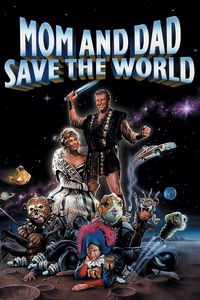
    (In French, On Cable TV, January 2021) It’s possible to be kind to Mom and Dad Save the World on purely theoretical grounds, but only to a point. If, like me, you like the idea of comedy being created out of the collision between the sublime and the ridiculous, there’s plenty to like about the premise of the film. Here, an utterly typical middle-aged couple is swept up in interplanetary intrigue when the authoritarian leader of an alien race is smitten by the very average looks of the wife (Teri Garr, embracing an unglamorous mousy side of her we didn’t suspect existed) and kidnaps her as she’s off to a weekend outing with her husband. Once transported to another planet, it’s up to her husband (Jeffrey Jones, also going for full-out Barbecue Dad characterization) to escape the clutches of the evil stereotype, join the resistance forces, rescue his wife and save the world. Intended to be ridiculous from the get-go (including its Flash Gordonesque production design), Mom and Dad Save the World does make a lot of mileage out of taking a grandiose science-fiction plot and smashing it to bits with dumb comedy. The primary weapon here would be Jon Lovitz, who brings everything down a few levels with a hammy, typically obnoxious performance as the housewife-loving alien dictator. Lovitz is a tricky actor to unleash even on his best days—his persona often leaps into irritability, and this film is no exception. As a result, while Mom and Dad Save the World may be clever on paper, it’s more of a chore to get through than most people would expect, accounting for its lack of box-office success and a reviled critical consensus. It could have been better in different hands and with a subdued or absent Lovitz… but that’s not the film we have here. There’s some mild interest in having a family film featuring parents are heroes (even despite the premise being based on alien lust for earth women), but the potential is largely unrealized beyond the log-line. There’s a long list of films to watch before making your way to Mom and Dad Save the World.

  • The Miracle Worker (1962)

    The Miracle Worker (1962)

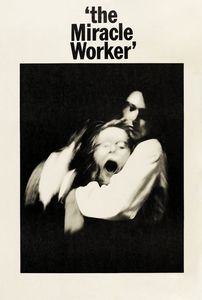
    (On Cable TV, January 2021) I wasn’t expecting all that much from The Miracle Worker: to the extent that it’s remembered by movie history, it’s for being about deaf/blind Hellen Keller and how she was gradually taught to communicate by a very patient teacher. It’s an acting showcase, especially given how both Patty Duke (as Keller) and Anne Bancroft (as her teacher) both won Academy Awards for their performance. My expectations for the film, however, stemmed entirely from the formula typically used for other lesser disability-overcomes-adversity films: a mixture of good-natured determination, kind teachers, soft-focused sentimentalism and sweeping orchestra scores at strategic moments. I couldn’t have been more wrong. From the first few moments in which Heller’s mom goes into histrionics, The Miracle Worker takes a very different track. Its approach culminates into an unusually intense and memorable scene: A literal nine-minute physical brawl between the teacher and the student in which good table manners are more inflicted than taught. I am not kidding hen I say that this scene, with the two actresses slapping, punching, kicking and falling around a dinner table, has more to do with a Jackie Chan martial arts sequence than anything else in 1960s Hollywood cinema. Physically intense and seemingly interminable to the point of full-out comedy, the sequence is easily the film’s highlight, but it underscores an approach to the material that is consciously not beholden to the sentimentality that often animates such stories. The film also wisely holds off from being too triumphant in its conclusion, stopping at the point where things are looking up but not following through with bigger rewards. In other words: quite a surprise, and Oscars completionists will get far more out of The Miracle Worker than what they could expect from a film with two acting awards.

  • Locked Down (2021)

    Locked Down (2021)

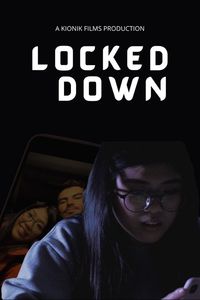
    (On Cable TV, January 2021) …and there it is. Stop the clock! Nine months, almost to the day, after the official March 13, 2020, start to the COVID-19 pandemic lockdown, here is the first movie about it, featuring known filmmakers such as screenwriter Steven Knight and director Doug Liman, likable big-name stars such as Anne Hathaway and Chiwetel Ejiofor, accompanied by big name supporting players such as Stephen Merchant, Mindy Kaling, Mark Gatiss, Ben Stiller, and Ben Kingsley. As befit the topic and historical/production circumstances, some of the actors in Locked Down are only seen via screens: the main plot starts with an examination of life in lockdown, followed by a crazy heist taking place deep inside London’s Harrods store. You can see that there are two movies duelling for attention here: A romantic comedy about a disintegrating couple stuck together in the worst of circumstances, and a caper film taking advantage of extraordinary circumstances for comedy and suspense. One of those movies is clearly better than the other. At first, Locked Down charms: playing on an unexpected set of universally recognizable experiences, it features two highly sympathetic actors going through tough video conferences, bemoaning their inability to go anywhere, and going a bit crazy due to cabin fever. Hathaway with her hair down is simply gorgeous in business top and pajama bottoms (despite a role first meant to be off-putting), while Ejiofor is blessed with the kind of florid dialogue that escapes reality to embrace movie magic. Locked Down could have been better had it focused on their disintegrating marriage and the tangent-filled nature of their dialogue… because most of my lingering problems with the film have to do with the somewhat more plot-heavy second half of the film, as the pair comes up with a plan to steal a precious diamond from the vaults of Harrods. The shift into caper film isn’t so smooth, largely (I suspect) because of the film’s breakneck production schedule: there simply wasn’t enough time or (literal) space to smooth out the film’s intentionally low production values and dubious plot mechanics. The film is quick and slapdash in how it moves its plot pieces around even when it complicates life for itself. (There’s an entire subplot that could have been sidestepped by the protagonist going around saying, “My parents had a weird sense of humour.”)  The result is a last third that gets increasingly ludicrous, and while Harrods makes for a wonderfully original backdrop for a caper sequence, the sequence itself has none of the taut ingenuity that similar films (including, ahem, Hathaway’s own Ocean’s Seven) could feature. Oh, I still liked the result well enough, and the circumstances of Locked Down’s production are nothing short of historic. We’ll be pointing at this film for years as having one of the wildest making-of, from idea to broadcast in seven months—to the point of its premiere pre-empting already-scheduled programming on Canadian Cable channel Crave at a few days’ notice. But the result, while quite likable at times, does come with a few vexing scenes and plot points that won’t make future viewers any more sympathetic to the film. But then again—these are craaazy times, says Locked Down, and it’s perfectly understandable if its characters are not behaving rationally.

  • Bloody New Year (1987)

    Bloody New Year (1987)

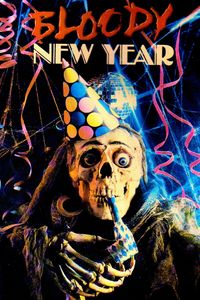
    (In French, On Cable TV, January 2021) The early 1980s were filled with slasher films focusing on specific “days” of the year, so it’s a bit of a surprise to see the British still at it five years after the end of the subgenre with Bloody New Year. To be fair, you can’t really fit this film in slasher horror: there’s more ambition on display here with a plot that has to do with a 1950s hotel preparing for a New Year’s bash, a secret government research project, and 1980s students falling into a supernatural time warp that erases the boundaries not only between decades, but also between basic logic and plausibility. Once you clear away the premise, Bloody New Year is another one of those “weird stuff happens” kind of horror films without any internal coherency as to what is happening or why: Stuff Happens, people die and that’s really what you need for a horror film, right? At least the scares are supernatural: we’re not stuck with the dull psycho with a knife. Unfortunately, the arbitrary nature of the set-pieces undermines their efficiency: when anything and everything can happen, we’re simply along with the ride rather than actively invested in how the protagonists will understand, fight back and try to escape the situation in which they are. When the screenwriter is so obviously biased against them in favour of his Weird Stuff Happening, it does almost extinguish the reason why we should be watching. What doesn’t help the handful of mildly interesting set-pieces are the film’s very-ultra low production values. Director Norman J. Warren can’t afford to properly portray its best sequences, and ambition will only carry you so far when execution simply can’t meet the demands of the film. If I’ll grant that Bloody New Year ends up being slightly more interesting than the holiday-themed slasher I was expecting, it did not exceed those expectations by much.

  • The Crimson Pirate (1952)

    The Crimson Pirate (1952)

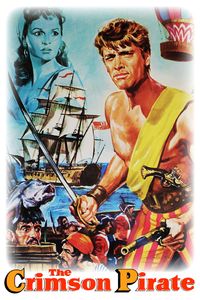
    (On Cable TV, January 2021) In theory, I’m a good sport for most of the elements that make up The Crimson Pirate: I’m OK with pirate films, partial to tongue-in-cheek adventures, a big fan of swashbucklers, appreciative of Burt Lancaster, and someone who likes 1950s Technicolor Hollywood films quite a bit. Alas, The Crimson Pirate falls flat: It may have been a mood thing, or the circumstances of my viewing, or any other small thing—but I was more bored by the film than entertained by it. I find some explanation in reports that the film was abruptly changed (as in: within a 48-hour rewrite period) from straight-up swashbuckler to something more humorous. I was far more annoyed at the film’s obvious studio sets than for other films. In other words, I’m more willing than usual to blame me than the film for my disappointment—I’ll keep this first review short and try to catch the film again in a few months to see if my reaction is any better.

  • Remember My Name (1978)

    Remember My Name (1978)

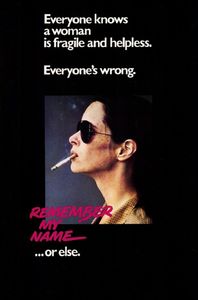
    (On Cable TV, January 2021) I have a weird mix of fascination and frustration at those films that straddle the line between straight-up drama and genre thriller. In theory, the line should not exist: Even those who love genres can argue that the slightest drop of genre elements in a film makes it belong to that genre (hence my fascination) but the problem is that some filmmakers will deliberately court genre elements before retreating to a somewhat down-to-Earth conclusion that practically renounces the genre elements that made the film interesting in the first place. (Hence my frustration.)  You can see that dynamic at play in Remember My Name, a gritty could-only-come-from-the-1970s film in which a man’s life is upset when his ex-wife, freshly released from prison, starts threatening everything he holds dear in a psychotic attempt to get back together. His new girlfriend is harassed, he is stalked, and the film clearly suggests that things are going to get much, much worse. Interestingly enough, much of the film is seen from the perspective of the psychotic ex-wife—a haunting portrayal from Geraldine Chaplin, who acts as if her character barely understood the basics of human relationship after spending so much time locked away. Our protagonist doesn’t play well with others, which doesn’t help the suspicion with which she’s regarded around town. There’s a clear disconnect between Chaplin’s frail physique and her toughness in action—maybe there are echoes of that in Linda Hamilton’s performance in the two first Terminator movies. Meanwhile, Anthony Perkin is not bad as the meek man at the centre of her attention, with a young Jeff Goldblum amusingly showing up as a petty store manager who hires her and Alfre Woddard as a resentful co-worker. Much of the genre elements come from the second third of the film, in which a steady campaign of harassment, vandalism, bad behaviour and outright stalkerish actions set the stage for a conclusion that should play according to violent genre conventions. But then… it doesn’t. Writer/director Alan Rudolph (under the tutelage of producer Robert Altman, which makes perfect sense) is not interested in genre elements, and so the conclusion simply walks away after making its point. Revenge is not always about going for maximum damage; sometimes, revenge is just settling scores. Whether I like the result is something else: “1970s New Hollywood Altmanesque drama” is almost a personal code phrase for “you’re not going to have any fun,” and Remember My Name at least exceeded my expectations by refusing to play by formula rules. I am begrudgingly appreciative of that… but it won’t go so far as to earn the film a recommendation or even a second viewing.

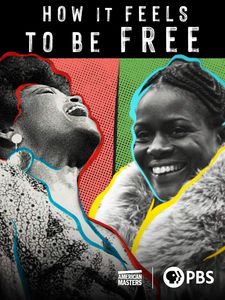
  • How it Feels to be Free (2021)

    How it Feels to be Free (2021)

    (On TV, January 2021) One of the unexpected benefits of a deep dive in Hollywood history is knowing what people are talking about when they bring up half-forgotten, underappreciated or ill-served artists of the past. When How it Feels to be Free set out to shine a spotlight on six black female entertainers of previous generations, I was on semi-solid ground: I don’t need to be told about Lena Horne, Nina Simone and Pam Grier’s greatness, and I was at least able to nod in recognition at the praise for Abbey Lincoln, Diahann Carroll and Cicely Tyson. Six homages in two hours is a lot, but director Yoruba Richen manages to be both specific and sweeping, talking directly about each one of its six entertainers and still using them as a group to make larger points about discrimination, representation and inspiration. Historical footage is blended with contemporary interviews with a decent roster of stars (Halle Berry, Lena Waithe, Samuel L. Jackson, Lena Waithe, co-producer Alicia Keys, etc.) and heirs. Part of the reason to watch the film is getting a reminder about why these women were so fantastic, part of it is digging deeper into some biographies and discovering equally great people (including getting a crash course in Lincoln’s activism, Carroll’s groundbreaking work in TV and Tyson’s own brand of race-aware role selection). The film works itself up to a powerful argument in favour of diversity on the production side of the entertainment world, pointing out that some stories will never be told accurately if they don’t come from those different perspectives. I enjoyed the result quite a bit, and not just in the scope of the film itself: In between watching How it Feels to be Free and writing this review, Cicely Tyson died and the loss hit me harder than merely being told that she was the star of Sounder. It was important to capture why she was remarkable that before it was too late.

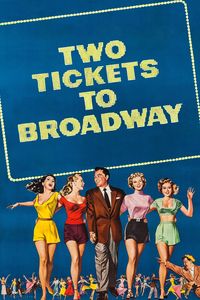
  • Two Tickets to Broadway (1951)

    Two Tickets to Broadway (1951)

    (On Cable TV, January 2021) I probably need to slow down my intake of 1950s musical comedies, because they’re all starting to blur together and I’m having a harder time holding on to the spark of joy that attracted me to the genre. It doesn’t help that Two Tickets to Broadway plays in the exact same playground than many other musicals from the previous two decades—that of a backstage musical about young women heading out to Broadway to seek fame, fortune and romance. The tropes are very well worn, and the film has a harder time than it should in distinguishing itself. Which isn’t saying that I did not enjoy it—1950s movie musicals have graceful failure mode, and the worst thing you can say about the worst of them is something along the lines of “well, that wasn’t as much fun as I was expecting.” So it is that Two Tickets to Broadway feels familiar: a bit lazy, not terribly memorable nor particularly well executed. But there are highlights: My own favourite Ann Miller shows up in a fetching green dress in time for a great little tap-dancing number (although the film’s production history tells us that she was injured on set). Tony Martin and Janet Leigh bring some charm as headliners (they later married and stayed married for a decade), the film has good-natured fun in starring Bob “brother of the more famous Bing” Crosby and the script shows signs of having been written in the 1950s by featuring television rather than theatre as the heroines’ ultimate goal. Two Tickets to Broadway certainly isn’t a top tier 1950s musical, but keep in mind the ferocious competition—it’s not a dishonour to settle for mere entertainment.

  • La tour Montparnasse infernale [Don’t Die Too Hard!] (2001)

    La tour Montparnasse infernale [Don’t Die Too Hard!] (2001)

    (On Cable TV, January 2021) My expectations for La tour Montparnasse infernale were correct but still underwhelmed: I was expecting a French comic take on The Towering Inferno and that’s more or less what I got… except that the laughs weren’t as plentiful as I hoped for. I suppose that much of the disconnect comes from the very specific type of comedy from lead duo Éric Judor and Ramzy Bedia, a well-oiled team that clearly plays to their strengths here, even though the result may prove to be too dumb for some and alien for others. Familiarity with French culture is a must—in my case, I knew just enough to realize how much I missed in order to make sense of the result. It’s an aggressively, proudly dumb kind of comedy that takes from its betters (especially Die Hard, which remains funnier than this parody) but doesn’t manage to improve on it: The plot has stupid window washers foiling a high-rise hostage situation/robbery, but the script never flies too high. The reliance on French pop-culture references makes the result incomprehensible at times (a Wikipedia trawl clarifies some of them, but too late for most viewers), while the slapdash production values don’t really make the film pop in its limp action sequences. La tour Montparnasse infernale was a box-office success back in 2001, but it’s hard for contemporary non-French audiences to properly appreciate what the fuss was about: we simply lack most of the cultural references to even make sense of it and the film doesn’t have many additional cinematic qualities to make it worth anything on its own absent the prior knowledge required to enjoy what’s on the screen.

  • The Science Fiction Makers (2020)

    (On Cable TV, January 2021) As a Science Fiction critic on a decade-long hiatus, I haven’t given up my chops when it comes to commenting on histories of the genre. As a result, my expectations ran low for The Science Fiction Makers, a documentary examining the life, works and influences of three less-than-famous writers who contributed to the marginal Christian Science Fiction subgenre: Victor Rousseau Emanuel, C. S. Lewis and Madeleine L’Engle. The film is a follow-up to writer-director Andrew Wall’s previous The Fantasy Makers (which I really have to see now), which studied C. S. Lewis, J. R. R. Tolkien and George MacDonald as the first part of the “Faith in Imagination” trilogy. To lay my cards on the table right away, I had two major objections to the very premise of The Science Fiction Makers: First, a knowledge of the field of written SF that usually has me bemoaning superficial takes on the genre, and secondly a suspicion toward “Christian SF” that owes more to the American Evangelical Right having co-opted the label. (i.e.: Think Left Behind and then stop thinking.)  But The Science Fiction Makers easily met, then defeated my preconceptions: By focusing on writers from previous generations, it’s a documentary that avoids the charged political nature of more contemporary examples, and can see its writers’ careers in their totality. It’s also, to put it simply, a film that knows its stuff and digs deep into its topic matter. I’m reasonably familiar with Lewis and L’Engle, less so with Rousseau, but I was impressed by the way The Science Fiction Makers fit into my understanding of the genre, expanding into what I did not know. It’s also a documentary that resists grandiose claims that so often come with niche topics: Wall here correctly defines his areas of interest, carefully explains how it fits within a bigger scope and then thoroughly explores it. The film illustrates scenes from the life of its three subjects through dramatic re-enactment, but the meat is found in the analysis that accompanies the visuals. The interviews are interesting, and they propose the subgenre as being of spiritual interest more than a political persuasion—again sidestepping some of the most common objections that seasoned SF fans (by and large a non-religious—albeit often spiritual—bunch) may have about the topic of the film. In other words, I’m favourably impressed by The Science Fiction Makers, and I don’t make the claim lightly: I have seen a good chunk of the SF documentaries about Science Fiction writers, have shelves of SF criticism books and have written hundreds of thousands of words on the topic. This documentary is deeper and more thorough than many written pieces, and it even made me feel warm and sympathetic toward Madeleine L’Engle’s work, too often dismissed by readers outside her intended public. I have no problems recommending The Science Fiction Makers to hardcore SF fans and critics—it should especially be of interest to the tough IAFA/ICFA crowd. I’m really looking forward to the third instalment of Wall’s “Faith in Imagination” trilogy.

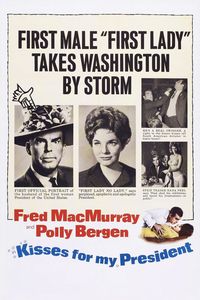
  • Kisses for My President (1964)

    Kisses for My President (1964)

    (On Cable TV, January 2021) While much of Kisses for My President can now be tolerated as an amiable but full-throated example of fragile masculinity, I have seldom seen a period film self-destruct itself for modern audiences so spectacularly in its last thirty seconds. Let me explain: As the film begins, we’re meant to sympathize with the male lead, the husband of the first elected woman president of the United States. Played by the normally likable Fred MacMurray, this first ever “First Gentleman” sees his identity threatened in several ways: Ushered in the normally feminine offices and duties of the role, he bemoans having to divest himself from his previous company due to defence contract conflicts of interest. Adding to his misery, his wife (a really good Polly Bergen) is occupied by matters of the state, while an ex-flame now safely divorced expresses an interest in him that goes far past the professional. When a South American dictator shows up in town, it’s up to him to try to mend international relations, while figuring out the role he’s expected to play in this then-comedic gender inversion. MacMurray is easily the rock on which the film is built for modern audiences: seldom less than incredibly sympathetic, he lets his charisma roll over the severely outdated (and frankly insulting) assumptions of the script—his befuddled expression rescues the film from several inexcusable logic holes and twenty-first-century objections to the moronic ways the characters behave. Kisses for My President was never meant to be anything but a comic film—but even by these standards, you would expect its characters and institutions to behave as if they had half a brain. MacMurray is arguably funnier now as a paleoanthropic remnant of a previous generation’s male stereotype having to fit with the times. Except that the film’s final indignity is allowing him to get away with it all—in the final moments of the film, his wife discovers that she’s pregnant, leading her to—wait for it—resign as president of the United States for the joys of motherhood (and putting her family back together), leading the couple to walk out of the White House as he crows, “It took you forty million female voters to get you in here and one man to get you out.”  Cue anyone’s astonished expression as the credits roll. While much of the film is grating but still funny, the ending kills off any remaining good intentions. Now generally forgotten by history (although it did win an Oscar for Costume design), Kisses for My President is perhaps best buried and unearthed only by cinematic political junkies and Fred MacMurray fans—it is by far the most Problematic of the Problematic movies I’ve seen recently, and considering that I watch Golden-Age Hollywood movies by the double truckload, that’s saying something.

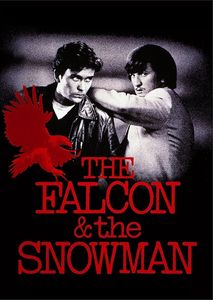
  • The Falcon and the Snowman (1985)

    The Falcon and the Snowman (1985)

    (On Cable TV, January 2021) You can always watch The Falcon and the Snowman for being one of Sean Penn’s early performances, but I found something more interesting in director John Schlesinger’s depiction of a specific time and place—the mid-1970s Southern California defence tech industry, and how the political disillusionment of the time could drive otherwise normal young Americans to propose information to the Soviets thanks to some ill-defined ideal of détente. Or at least that’s what one of the two characters believes, because the dramatic linchpin of the movie is the duelling relationship between the two leads—an idealist competent (played by Timothy Hutton), and a far less reliable friend (Penn) who acts as the go-between with the Soviets. Taking up in spycraft and the complex relationship between source and case officer, except with the inverted perspective from what we usually see, The Falcon and the Snowman remains a mildly effective thriller in which we do root for the spies to be caught red-handed (and one of them more than the other). Perhaps delighting in inversion from spy movie clichés, it’s specifically about spies who end up vastly outclassed by the demands of the lifestyle, and soon seek to get out of it once it doesn’t live up to their romantic notions of it. It does all amount to an effective period piece, down-to-earth and somewhat merciless in puncturing the clichés of the genre while still being effective in its procedural details. No wonder it’s based on a true story.

  • Black Robe (1991)

    Black Robe (1991)

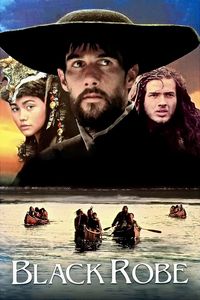
    (On Cable TV, January 2021) On paper, Black Robe sounds like the literalization of my high school years’ driest history lessons—a throwback to 1634 Nouvelle France, as a newly arrived Jesuit missionary goes beyond the rudimentary settlements to establish a mission deep in native territory. The tale is violent, raw and ultimately futile. But I’m far more receptive to interpretations of history now than I was as a teenager, and Black Robe now looks quite intriguing through its splendid re-creation of Canada’s early days. The nature cinematography is terrific: the film starts in bright colourful fall, with the maple trees turning red everywhere the camera can see. Then it’s a steady slide into winter, just to remind us of the modern comforts we take for granted. While Black Robe is not above historical inaccuracies, it’s comparatively authentic and more sympathetic to the native viewpoint than many other films set in similar (or even later) periods. The recreation of period settlements can be astonishing at times, and the time-capsule aspect of the film alone is worth the effort of going through the downbeat narrative. Director Bruce Beresford, working from a script by Brian Moore adapting his own novel, executes the material with skill. I now realize with some amusement that Black Robe came out in the middle of my high-school years, meaning that there’s an alternate universe out there in which I may have seen this film as part of high school history classes. I probably would not have been as good a public back then than I am now.

  • Les États-Unis d’Albert (2005)

    Les États-Unis d’Albert (2005)

    (On TV, January 2021) The log-line entry for Les États-Unis d’Albert talks about how a young man in 1920s Montréal leaves to seek fortune in Hollywood—the kind of plot premise that has me interested as a classic Hollywood fan, even more so considering that it’s for a French-Canadian film. What would it have to say? How would it portray the time considering the small budgets of most local films? As it turns out, writer-director André Forcier reaches his objectives by choosing whimsy over realism and never following its protagonist to his destination. Éric Bruneau stars as a young Montréal man who, upon meeting Mary Pickford’s aunt, an elderly drama teacher, vows to learn acting from her, gets a letter of recommendation and leaves by train across the continent. It’s a strangely cute film that gets weird very quickly, as the protagonist kisses his elderly mentor to death (it’s cuter in the film than as described, especially given how often her ghost comes back to provide advice) and meets quirky characters on his way to his destination, eventually landing in the southwestern desert for much of the film’s last half. The film is not ridiculous with its film references (the Pickford/Montréal connection is halfway plausible if you’re aware of Pickford’s Toronto-area origins), but it’s really an excuse for a whimsical character-driven comedy film with quirky supporting characters helping our dashing protagonist through various adventures. By the time there’s a desert, a boat on a telephone pole, a wife afraid of heights, a serial murderer, a philandering gold pro and MGM representatives sharing the same sandy setting, it’s clear that we’re just having fun with a comic style almost impossible to properly describe. As such, it works reasonably well: the budget is stretched beyond recognition, but the fun of the result speaks for itself even if it escapes easy categorization. Bruneau is likable in a handsome but generic way, while Andréa Ferréol has fun as a grande tragédienne beyond the grave, and so does Émilie Dequenne in a short role that could easily have sustained her own film. Veteran French-Canadian actors such as Marc Labrèche and Roy Dupuis pop up elsewhere in the film, adding to the charm of it. Les États-Unis d’Albert is absolutely not something to see to study the relationship between French-Canada and Hollywood, but it’s good fun on its own, very specific terms.