Month: January 2021

  • Hellraiser: Deader (2005)

    Hellraiser: Deader (2005)

    (In French, On Cable TV, January 2021) There are now ten films in the Hellraiser canon and Hellraiser: Deader is the seventh of them. As luck had it, French-Canadian horror channel Frissons TV had itself a merry little Hellraiser marathon from the first to the seventh instalment, and now that I’ve caught up with my DVR recordings, I have no intention of seeking out the later ones. To be entirely fair, Deader is not a completely terrible film. It has a few scattered ideas, some visual sense within the limits of its low budget and Kari Wuhrer in the lead as a journalist investigating a mysterious sect videotaped reviving someone from the dead. Originally written as an original script only to be retooled into a direct-to-video Hellraiser sequel, Deader shares far too many characteristics with the other members of the fifth-to-seventh instalments of the series. It has a halfway-promising premise half-heartedly retrofitted into the Hellraiser mythos (making the Cenobites irrelevant, and whatever “rules” the first instalments offered completely discarded), with some down-and-dirty low-budget visual style and lead characters that could have led to something better if anyone had been paying attention. Deader is branded as a “Stan Winston production,” but aside from a mildly effective scene in which the protagonist has to contend with a knife piercing her through the chest (somehow a survivable injury!), there’s not much here to do justice to the special effects legend. Like its previous two brethren, Deader does not scrape the bottom of the barrel in terms of horror movies, but it’s still not that good and could have been better if not branded with the Hellraiser title—although, frankly, the entire series (now that I’m stopping at seven instalments) has specialized in wasting its opportunities. In retrospect, even the first film makes promises that it, let alone its sequels, never came close to fulfilling: there is something in its BDSM union of sex and violence that could have been profoundly unnerving but seems almost consciously toned down, either by the filmmakers’ incompetence, insufficient means, lack of audacity or a simple poor misconception of the potential they were handed. We’re left with half-formed ideas, bad special effects, no continuity of vision and what’s perhaps the biggest belly flop of the 1980s horror franchises. I was pleasantly surprised to see that the series still didn’t completely autodestruct by the fifth instalment, but I was going with very low expectations from the get-go.

  • Chao ji bao biao [Super Bodyguard aka Iron Protector] (2016)

    Chao ji bao biao [Super Bodyguard aka Iron Protector] (2016)

    (On TV, January 2021) Movie subgenres come and go, but there are a few that I really miss, and one of them is the classic over-the-top Hong Kong martial arts movies of 1985–1995 (ish), in which the plot was only a clothesline on which to string a series of terrific action sequences, not always taking themselves seriously. I’ll be the first to admit that Super Bodyguard isn’t anywhere near the best of those movies, but it scratches, even momentarily, the itch I had to see another one of them. One of the reasons why it’s not a classic begins with the strange mixture of Very Serious Material interleaved with far more comical content. At times, such as in a particularly demented chase sequence, it’s not too clear whether the film offers a comic take on the genre, or one that simply does not care about continuity or plausibility. Some sequences are very funny (intentionally so); others, deadly serious. The protagonist (played by writer-director Yue Song, quite good) is the heir of a mystical order who accepts a bodyguard assignment to protect a young woman, escapes death in supernatural fashion numerous times through the film and every time he does, we sense the film’s credibility evaporate by half. Still, there’s a grandeur to the martial arts fights that I hadn’t seen in quite some time—a refusal to adhere to reality, and to go back to the over-the-top nature that made a generation of Honk Kong martial arts action movies legendary. It could have been better, but I’m holding Super Bodyguard as a promising calling card for Yue Song, who’s got the potential to create something terrific if he can capitalize on his strengths and patch over some of his weaknesses. Super Bodyguard certain feels like a throwback to the movies I liked in the genre, and even if it’s derivative, it’s more than I can say about many other martial arts films I’ve seen in recent years.

  • Hellraiser: Hellseeker (2002)

    Hellraiser: Hellseeker (2002)

    (In French, On Cable TV, January 2021) Six entries deep into the Hellraiser series, we are now past the point of direct-to-DVD and into copies of copies of copies, and possibly scripts retooled to fit in the Hellraiser universe even if it doesn’t make sense for their stories. Hellseeker is, at its core, a somewhat unambitious horror film dealing with visions and an existentially challenged viewpoint character. If it had tried to develop its own original mythology, it probably would have done better: The script does show a willingness to play with the nature of reality that goes beyond most horror narratives, and there are a few good moments in here. (It’s also notably more eager to embrace nudity and sexual themes at the borderline of erotic horror, which is not often done and even more rarely done well.)  But it’s when the film cozies up to the Hellraiser mythology that it becomes less and less effective. There’s no reason to bring back Ashley Laurence as the heroine of the first films, given how her character seems to have changed beyond any recognition. Pinhead is more pompous than even as he speechifies, and despite good foundational elements, the film feels cheap and unconvincing when it tries to put them together. Hellseeker ends up feeling like a substandard Jacob’s Ladder led by creators who don’t quite understand how to use those elements effectively: it’s as nihilistic as a bad noir film without much in terms of thrills along the way. But it’s its mercenary association with the Hellseeker series that kills it off—we may have respected an original film treading the same grounds, but tying itself to a series only makes it feel even less competent.

  • Shang jin lie ren [Bounty Hunters] (2016)

    Shang jin lie ren [Bounty Hunters] (2016)

    (On TV, January 2021) It’s easy to dismiss Hollywood big-budget action comedies as easy movies to make, catering to the common denominator and letting action sequences make up the plot. But it’s not all that easy to do them well, as countless filmmakers eventually discover when they’re entrusted with besting Hollywood at their own game. Case in point: Chinese copycat Bounty Hunters, which ticks off all the right boxes on paper: A fast, fun action comedy featuring five attractive leads, nearly a dozen action sequences, some big-budget mayhem, plenty of digital special effects, bright cinematography and a breezy pace. At 105 minutes, it shouldn’t overstay its welcome while still having time to develop a moderately interesting intrigue. In terms of tone, the film does whatever it can to avoid the violent excesses of its American counterparts: the five bounty hunters only carry non-lethal weaponry, and while the villain makes plenty of credible threats, there’s never any fear that anything bad will happen to our leads. Lee Min-ho and Tiffany Tang make a good lead couple, although they have far less on-screen personality than their comic foils, played by Wallace Chung and Karena Ng, with Louis Fan rounding up the protagonists. At times, Bounty Hunters works really well when it gets to the mechanics of an action sequence. But the rest of the time, it’s a clunky film: the pacing is completely off, either slow enough to smother the film’s energy, or so fast that crucial bits leading from one scene to another are missing. The too-cute moments feel awkward, and the film as a whole does not have the smooth forward rhythm that action comedies must have in order to remain watchable. The jokes are hit-and-miss (even accounting for the cultural differences) and the contrivances are such that some action sequences become completely meaningless before they even conclude. It makes for a disappointing experience: Despite Bounty Hunter’s adequate production values and directorial ambitions from Terra Shin, the film trips over its own editing and suffers from a lack of polish that would have tied all of its good elements together. After all, it’s not as easy as one would think to ape what Hollywood does best.

  • Hellraiser: Inferno (2000)

    Hellraiser: Inferno (2000)

    (In French, On Cable TV, January 2021) With Hellraiser: Inferno, the Hellraiser series takes a dive to the direct-to-video realm and (lower budget oblige) has to settle for something like a “Tales from Hellraiser” episode rather than provide a satisfying expansion to the series itself. Still, by direct-to-video standards, Inferno doesn’t do too badly: As a tale of a corrupt detective gradually realizing the depth of his depravity thanks to Pinhead, the Puzzle Box and a complete set of hallucinations, it makes a better-than-average use of available mythos elements. The plotting ambitions of the film are kept firmly in check, and you can argue that Inferno would feel far more interesting had it been kept separate from the Hellraiser title and mythos. Horror fans will note that this was Scott Derrickson’s feature-length directorial debut—which would lead to much better things later on. Otherwise, there isn’t much to add—a good chunk of Inferno feels like a slightly better direct-to-DVD horror film of the time, not unwatchable but not especially memorable either. It’s a step down from the theatrical Hellraiser films, but not a complete debacle.

  • Bad Boys for Life (2020)

    Bad Boys for Life (2020)

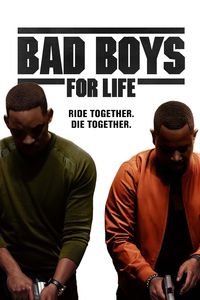
    (Amazon Streaming, January 2021) Complaining about bloody violence and police brutality in Bad Boys for Life is complaining about what has ensured the existence of the film in the first place. It’s also going a bit too quickly on how this belated third instalment (seventeen years after the second film!) consciously corrects or at least questions the sadistic abuse that was so troublesome in the second film. Taken away from the clutches of director Michael Bay (who nonetheless has an amusing cameo as a wedding MC), this late-career film keeps poking at how men at the edge of fifty can be action heroes, and how the newer, smarter approach to policing keeps producing equally good results as the cowboy tactics of the protagonists. Or at least one of those protagonists, because if Will Smith remains the firebrand shoot-first cop of earlier films in the series, Martin Lawrence seems surprisingly reasonable as a cop in retirement who doesn’t want to get back to the chases and shootouts. But action cinema has requirements that mild-mannered protagonists can’t meet, and so it doesn’t take much for the series to go back to all-guns-blazing racing through the streets of Miami with increasingly baroque vehicles doing increasingly impossible stunts. Bay may not be conducting the Bayhem this time around, but directors Adil & Bilall prove adept at orchestrating action sequences in a good old-fashioned bombastic fashion, modern CGI compensating what live-action shooting can’t deliver. From a pure thrill-ride perspective, Bad Boys for Life is about as good as that kind of filmmaking gets, and the violence limits itself to blood rather than the sadistic humour of dismemberment that was prevalent in the previous film—a sure improvement at a time when far too many “comedies” and action movies go for horror-grade gore. Still, it’s the script that shows the most improvement: Underneath its coarse action-hero trappings, this is a film that keeps circling issues of age, legacy and retirement. Thematically, the Will Smith character deals with issues that are surprisingly similar to his arc of Gemini Man, albeit with a far happier finale. (We also, finally, get to deduce a halfway plausible explanation for his far-too-expensive lifestyle—spoils from narcotraficante undercover work early retirement!)  Bad Boys for Life will never be mistaken for a deep film—but it’s better than most action movies, features great interplay between the two leads and features some nice character work by supporting actors (with particular notice for the captivating Paola Núñez) creating an interesting “next generation” crew. Miami is once again at the colourful forefront of the action, and while the film can’t help but go to Mexico for its more sombre moments (echoing a problematic tendency for American action films exporting their heroes for overseas justice), it’s remarkably more open-minded than its predecessor, even at the expense of some obvious jokes. My admiration for the purely kinetic mastery of Bay’s work on the previous Bad Boys movies was always more-than-tempered by his gruesome disregard for human decency, but Bad Boys for Life goes a long way into correcting this structural deficiency. It’s far from perfect, but it’s not a bad watch.

  • The Plainsman (1936)

    The Plainsman (1936)

    (On TV, January 2021) While I can appreciate individual westerns, I am not a genre western fan and a quick look at The Plainsman demonstrates why. Now best known as an amalgamation of historical mistakes and simplifications (so much so that there’s even an academic article cleverly arguing for its less-than-terrible authenticity) by notoriously loose director Cecil B. DeMille, The Plainsman plays like a who’s who of historical western figures even if they never significantly interacted or if the chronology doesn’t make sense (such as having Lincoln in the opening scene of a post-Civil War film). The film does score points for featuring big 1930s stars such as Gary Cooper and Jean Arthur, but the impact of the result is underwhelming. Part of it is having Western as a spectacle of American expansionism, which gets less effective one centimetre past the American frontier. It probably doesn’t help that The Plainsman is as plain as Westerns got at the time—let’s remember that the big revolution in western-as-a-deeper-genre came years later with Stagecoach. Until then, The Plainsman is still a western about the western, since it cares so little about the facts to make any impact as historical fiction. Both Cooper and Arthur were bland stars at their best, and this film doesn’t do much to make them look any better. (Although Arthur with a bullwhip is definitely something special.)  I strongly suspect that I’d like The Plainsman if I had more interest in western history, or even in westerns as genre. As such, it simply looks average—although the glut of much better westerns to come in later decades may work against even the best of what the 1930s had to offer.

  • Brown Sugar (2002)

    Brown Sugar (2002)

    (On TV, January 2021) I’m fond of saying that an interesting setting can make even a formula romantic comedy seem far more interesting, and this is exactly what happens in Brown Sugar… at least when it remembers what its setting actually is. Set in Manhattan at the turn of the century, Brown Sugar begins with a succession of cameos from hip-hop stars telling us about the moment they fell in love with the genre. A flurry of genre references firmly establishes the film as being about hip-hop, seen through our lead character’s own love for music. The very likable Sanaa Lathan plays a music magazine editor who ends up falling for her long-time best friend (the equally likable Taye Diggs) at the very moment when he’s getting married and she’s getting into a serious relationship. Blending music with romance, Brown Sugar is at its best when writer-director Rick Famuyiwa focuses on the music—which is admittedly less and less so as the film progresses. Lathan and Diggs are great leads for a romantic comedy, but hip-hop fans may be more impressed by supporting turns from Mos Def and Queen Latifah alongside the dozen artists seen in the opening segment. In terms of story, Brown Sugar doesn’t offer much that’s new, although its willingness to portray its central romantic relationship as adultery (albeit on a partner intent on cheating) does remain unusual. It’s not a bad time, though, even if the deviations from reality get more and more noticeable as it goes on—find me a radio station that operates the way “Hot 97” does and I’ll be very surprised. Still, like the characters themselves say, the music is the most important thing—even more than romance, in Brown Sugar’s case.

  • Bunny Lake Is Missing (1965)

    Bunny Lake Is Missing (1965)

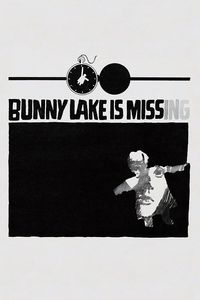
    (On Cable TV, January 2021) You could count on director Otto Preminger for upsetting sensibilities in film after film, and while Bunny Lake is Missing doesn’t have some of the more overt provocation found in his other films, it’s still an unnerving watch. Adapting The Lady Vanishes to feature a four-year-old, it has us questioning the sanity of a young woman claiming that her four-year-old daughter has been abducted despite there being no proof of the child’s existence. Lying or deluded? Have no fear: an inspector (played by Alec Guinness) is on the case, even though he proves an accessory to the protagonist finding out the truth on her own. Shot in detailed black-and-white cinematography and set in London, the film does give a passably unpleasant impression of unhelpful bystanders and dingy locations, everyone aligned against the protagonist. (Although shades of the Swingin’ Sixties occasionally make an appearance, such as unusual rock music from The Zombies as played on background television.) Carol Lynley is fine as the protagonist, but Keir Dullea and Noël Coward and Guinness arguably make more of an impression in easier roles. While the film does feel repetitive at the time, there’s some good tension in the proceedings, and a finale that veers into outright bizarre childhood games. Still, Preminger being Preminger, Bunny Lake is Missing is distinctive enough.

  • Hellraiser: Bloodline (1996)

    Hellraiser: Bloodline (1996)

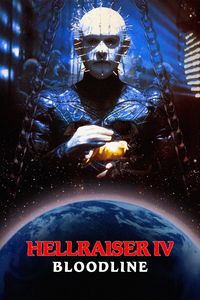
    (In French, On Cable TV, January 2021) It’s easy to measure Hellraiser: Bloodline’s ambitions against the means at its disposal and condemn the result. But compared to other films in the series, its ambitions become one of the best things about it, even if the low-budget (and considerable behind-the-camera drama leading to “An Adam Smithee film”) doesn’t allow it to fulfill those ambitions. For one thing, this is probably the most mythology-heavy instalment in the series, as it explains how the Lament Configuration (i.e.: The series’ iconic Puzzle Box) came to be in 1769 Paris, follows the current-day setting of the series as left off in previous film, all the while being narrated by a descendant of the characters in a 2127 space station. It’s a bold expansion of scope, but the film doesn’t do much in terms of cross-linking the eras: it’s mostly a historical prologue and futuristic framing device/third act for the current-day story. There’s a mildly interesting contrast between old-school seduction of the innocent versus modern-day BDSM-tinted depictions of hell, and the film concludes with a definitive happy ending of sorts, the threat having been exterminated from existence. No wonder, then, if Bloodline was the last of the series’ theatrical releases, the last to feature creator Clive Barker’s credited input and the last to get mildly positive (if often mixed) reviews from fans of the series—the following six instalments would be sent straight to video and become steadily less interesting along the way. Now, Bloodline doesn’t get a free pass on the sole strength of its more ambitious storytelling: the film is often surprisingly dull, with genre formula popping up even in the most unexpected places. (Hellraiser was faaar from being the only horror series to go to space.) Even with more imaginative ambitions, Bloodline also manages to be less unnerving than much of the previous films, which feels like a wasted opportunity. Still, if forced to choose, I find that there’s more to chew on in Bloodline than any of the other films in the series. Underdelivering on promising material, after all, has been a fixture of the series since the earliest film—At least Bloodline starts with more ideas than the other instalments.

  • La guerre du feu [Quest for Fire] (1981)

    La guerre du feu [Quest for Fire] (1981)

    (On TV, January 2021) Director Jean-Jacques Annaud’s filmography is filled with unusual projects, but you could argue that he still hasn’t topped La guerre du feu in terms of high concept. Set in prehistoric times 80,000 years ago, it’s a film with exclusively grunted dialogue not meant to be readily understood. The protagonists are trying to find a source of fire after theirs is extinguished—but the quest proves to be an excuse to explore a very different world. This is the earliest-set film I can remember seeing: Alpha and The Clan of the Cave Bear are comparatively modern films by being set 20,000 years ago, while 10,000 BC self-identifies as the youngest of the bunch. The characters don’t have the social graces we take for granted, so the film can veer into rough sex sequences as quickly as violent scenes. While Ron Perlman is recognizable (in a bit of genius casting), fans of Rae Dawn Chong will have a harder time recognizing her—or having any fun at her somewhat difficult character journey. But then again everyone is grimy, dirty, violent and uncultured here: even as a not-entirely-fact-based depiction of early humans, La guerre du feu is a reminder that education and knowledge, more than biology, is what separates us from early humans. I just wish that the film would be more interesting than its premise—at 100 minutes with no understandable dialogue, the film can often feel exasperating and the blunt portrayal of violence can be tiresome as well. I often refer to films as primitive forms of time travel, but La guerre du feu is in one period of (pre)history that you don’t necessarily want to visit for very long. It’s an achievement all right (and a proud Canadian co-production as well), but I would have a hard time considering it fun.

  • The Glass Bottom Boat (1966)

    The Glass Bottom Boat (1966)

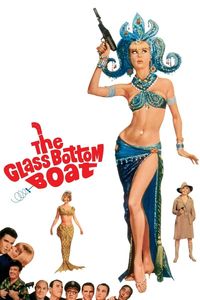
    (On Cable TV, January 2021) It’s not always a bad thing for a film to be dated. You can very precisely identify The Glass Bottom Boat as a mid-1960s film in at least three ways. Obviously, there’s the technological element, as it’s a comedy set around the world of space exploration, specifically revolving around the iconography of the Gemini capsules that preceded the Apollo program. You could also pinpoint it thanks to the presence of Doris Day as a gaffe-prone PR person who attracts the eye of a CEO played by square-jawed Rod Taylor—Day is clearly in her later-stage persona here, too old to play ingenue like she did in the 1950s but still of a stature that would justify a star vehicle like this, along with Taylor, who was at the height of his popularity as a leading man. (As it turns out, The Glass Bottom Boat was Day’s last big box-office hit.)  Finally, there’s the naughty-nice tone of the romantic comedy, a bit freer than the Hays Code standard but not quite as vulgar as what we’d see later on in New Hollywood movies. Mix in the Cold War comedy of a military/industrial establishment and director Frank Tashlin’s cartoonish style and you’ve got something that could only have been created in the mid-sixties. It has definitely aged: the soundtrack highlights every joke twice, Day plays a character that would be embarrassing to later generations, and the blunt broad humour goes better with a big dose of period atmosphere. But it’s not that bad if you’re willing to play along. Day was a gifted comedienne no matter the circumstances, and the goofier moments (including a portrayal of an automated kitchen—complete with an antagonistic cleaning robot) are straight out of space-age silliness. Comedy notables such as Robert Vaughn, Dom DeLuise, and Dick Martin appear in various small roles, adding to the period feel. (You will probably hear Vaughn’s split-second appearance more than you’ll see it.)  It turns out that a dated film gets a few additional viewing bonuses along the way—it’s not what we’d expect to see today, but it’s a welcome throwback to an entirely different time. So it is with The Glass Bottom Boat, which has aged into a unique curio that sometimes tells us more about the 1960s than the respectable films of the time, or any attempt to re-create that period.

  • The Smiling Lieutenant (1931)

    The Smiling Lieutenant (1931)

    (On Cable TV, January 2021) There are a surprising number of reasons why The Smiling Lieutenant remains worth a look ninety years later. It is, perhaps most notably, an early Oscar nominee—at a time when frothy romantic comedies could actually win (and sometimes even win!) a Best Picture Academy Award. (Amazingly, it disappeared from circulation for a few decades until a copy was rediscovered in the 1990s.)  But it’s also an example of what writer-director Ernest Lubitsch could do in the Pre-Code era, tacking adult themes and racy narratives that would become impossible to sneak past the censors even a few years later. Finally, it’s an early film featuring no less than a dashing and impossibly charming Maurice Chevalier, Claudette Colbert’s adorably round cheeks (with the great comic timing that came with them), and the lesser-known Miriam Hopkins, whose star has faded somewhat in the intervening decades despite being a box-office sensation in the 1930s. The premise has to do with a young officer smiling and winking at his beloved—but the gesture is also being received by a lovelorn princess who, through various circumstances, gets her hooks deep into the lieutenant. What becomes a romantic triangle eventually reaches a still-surprising conclusion, but not before a quick wedding and unlikely makeover by a romantic rival. As with most Lubitsch films, there is a distinctive quality to The Smiling Lieutenant that makes it worth a look even if the results aren’t quite up to the premise—of all comparable films, I still much prefer One Hour with You. Still, it’s funny, sophisticated and substantially more daring than what would follow under the Hays Code. I’m not that happy with the final few minutes of the film and history tells us that the production of the film didn’t match the fun experience on-screen (Chevalier had to contend with the death of his mother during production), but the result is still worth a look with a Pre-Code kick that still amazes.

  • The Honey Pot (1967)

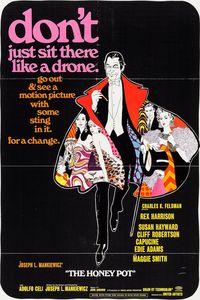
    The Honey Pot (1967)

    (On Cable TV, January 2021) I’m rarely disappointed by a Joseph L. Mankiewicz film, and The Honey Pot is no exception. It’s clearly a latter-day work by a filmmaker who understands the business inside and out, so deftly does it play with conventions and delivers something that escapes pure formula. It constantly (but smoothly) shifts tone and rhythm in ways that would seem doomed in theory, but works out well on-screen. It starts with a lengthy sequence during which an out-of-work actor is hired by a rich man for a special kind of acting job. Then things change as three past flames arrive, and murder interrupts everyone’s plans. Mankiewicz changes protagonist, plays with voice-overs (all the way to giving a voice to a dead character), messes with story structure and can’t help but include some really good quotable material in the middle of it all. If you think that you’ve got a handle on the story, you’ll keep changing your mind. Rex Harrison turns in a good performance as an aged playboy calling back his most significant past flames, while Cliff Robertson isn’t bad as the one we’re supposed to cheer for (well, maybe)—there’s a Jason Bateman-like quality to his performance that would almost justify a remake. If The Honey Pot has a flaw, it’s that it’s very obviously a film that relies on being different—the behaviour of the characters is clearly manipulated by the demands of the script, the overly cute references to other material or the artificial conventions of romantic comedies. The last few minutes of the film rely on a wrinkle of inheritance law that clearly belongs to legal fiction. But, somehow, it works. Even the damp dark depressing setting of overcast Venice (done 1970s-style in what looks like an un-restored print, which is even drearier than reality) can’t quite sap the narrative inventiveness of the result. I strongly suspect that The Honey Pot won’t sit well with viewers simply looking for something simple to watch. But it’s a bit of a gift to jaded audiences looking for someone intent on colouring outside the lines.

  • Extraction (2020)

    Extraction (2020)

    (Netflix Streaming, January 2021) I definitely have mixed feelings about the recent spate of action movies heading out to less fortunate countries in order for their white male leads to have explosive adventures. While you can make a case that such movies expose viewers to more diverse landscapes, while you can argue that such settings can accommodate more extreme action sequences, while you can make a serious argument that a filmmaking dollar goes further in such environments—it doesn’t negate the problematic aspects of white protagonists gunning down dozens of foreigners, nor the negative portrayal of portraying such disadvantaged countries as hotbeds of villainy justifying carnage. Extraction doesn’t get a free pass here, as an Australian mercenary (a capable Chris Hemsworth) is recruited to go to Dhaka, Bangladesh, to rescue the child of a drug lord kidnapped by a rival. Very quickly, we come to understand the dark and merciless nature of the world portrayed here, with extreme violence (rather than money) being the currency by which the plot advances. Double-crosses are stupefyingly common, and it’s hard to find any moral advantage in the half-dozen leads fighting it out. Dhaka becomes a playground for big action sequences, and it’s in portraying action that Extraction shines most brightly. Scripted by Joe Russo and directed by stuntman Sam Hargrave (who also pops up in a secondary role), Extraction is best experienced as an anthology of good-to-great action sequences loosely strung together. The final set piece, set on a bridge, is expansive and convincing in a way that probably would have been impossible to shoot in an American city. Hargrave, who also choreographed that scene from Atomic Blonde, is up to his best tricks here with a directing style that immerses viewers in the unfolding mayhem, stitching multiple beats together in seemingly continuous scenes. I suppose that many who watched the film (a top streamer for Netflix with a surprising number of votes on IMDB) did so for Hemsworth, who easily commands the films—that’s okay, I was watching for the always-fascinating Golshifteh Farahani, especially as her role becomes more action-centric in the film’s third act. Had it been less successful in its execution, or featured lesser actors, Extraction could have easily become one of these bleak generic action thrillers that seem to come out by the dozens every year. But Extraction is what happens when the execution outstrips the premise—the result is easily better on screen than on paper.