Month: April 2021

  • A Fine Madness (1966)

    A Fine Madness (1966)

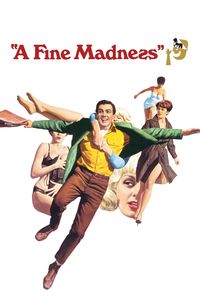
    (On Cable TV, April 2021) There have been weird movies throughout all of Hollywood’s history, but the 1960s brand of weird movies was in a class of its own. So it is that, in A Gentle Madness, we find Sean Connery playing a seriously problematic British poet expatriated to New York — someone who likes to punch people in the face at the slightest provocation, and sleep with any willing woman in his vicinity. Any less charming actor than Connery would make the protagonist look a psychopath — and even with Connery, this is really not a protagonist we can cheer for. Not that those opposing him are any better, what with doctors plotting to perform a surgical procedure that looks a lot like percussive lobotomy despite their assurances that it’s something much better. If you’re going down the checklist of “impulsive violence… indiscriminate sex… lobotomy” and wonder how the execution will make it better, the answer is simple: it doesn’t. It’s a film that leaves viewers aghast, dredging up Connery’s troubled associations with domestic violence and leaving everyone thankful that this project would never be greenlit these days. Connery and some fine location shooting keep things barely tolerable, but never compelling. By the time the film ends with the protagonist hitting a pregnant woman on the street (it’s meant to be accidental and funny and she doesn’t look pregnant at all, but eh), that’s quite enough with it all.

  • Gypsy (1962)

    Gypsy (1962)

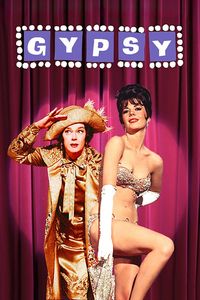
    (On Cable TV, April 2021) It took me far too long to realize that Gypsy was based on a true story, but no matter — even if you don’t know anything about burlesque dancer Gypsy Rose Lee and her impossibly micromanaging mother, the film still works quite well as its own thing. Few movies do the passing-of-the-torch thing as well as this one, either narratively, structurally or in a historical context. While Gyspy’s first moments are almost entirely dedicated to the formidable presence of “the ultimate stage mother” played by Rosalind Russell, almost forgetting the children and especially the eldest one, the film gradually shifts focus as it goes on, giving more and more place to the eldest daughter, as Natalie Wood takes centre stage and needs to put her mother in the background for her own good. Taking a step back, the film itself can be seen as a generational passing of the torch between Russell and Wood — both of them not dissimilar as actresses. (Legend has it that the two did not get along very well on set.) Wood looks really good here even if, to remain a family film, Gypsy considerably sugarcoats burlesque to the point of innocuousness. There’s plenty of good dialogue, strong character evolution and enough colourful background details to make it interesting. The first hour is a bit long — and much of it can be justified by seeing the film as a transition between two characters that could have been rushed had the first hour been snappier. Adapted from a Broadway musical that was itself adapted from Gypsy Rose Lee’s autobiography, Gypsy remains a fascinating character portrait more than a true musical… and it’s still effective even in a far more permissible twenty-first century.

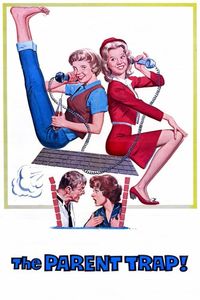
  • The Parent Trap (1961)

    The Parent Trap (1961)

    (Disney Streaming, April 2021) I’m coming to the original The Parent Trap a few years after watching the 1998 remake featuring Lindsey Lohan. I still think that the premise is among the dumbest, most ludicrous ever suggested on film: Oh sure, what divorcing parents of twins wouldn’t each grab one and raise them on opposite coasts in complete ignorance of each other? But if you go with it, the film does work well. The young Hayley Mills is clearly the star of the film, what with her dual roles as a California tomboy and a Boston debutante. The special effects to put them both on screen at once are crude but effective, and they get the point across. While Brian Keith is serviceable as the dad, Maureen O’Hara does get a few great sequences as the mom, especially when she (softly) declares war on her ex-husband’s fiancée and they go at it with veiled insults and catty remarks. The film actually gets more than its fair share of laughs through some good screenwriting, grounding the idiotic premise into something almost believable and executing it with skill. Even the supporting characters get good moments. The atmosphere of the early 1960s is more charming than you’d think… especially considering that much of the film takes place in settings—summer camp, posh Boston house, California mountain ranch—where the passage of time isn’t as obvious. I was, frankly, a bit surprised at how well The Parent Trap still plays today. Sure, it’s a film of its time, but it still hits its marks.

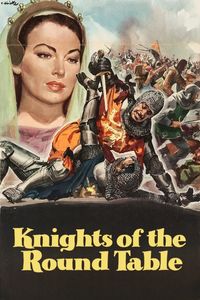
  • Knights of the Round Table (1953)

    Knights of the Round Table (1953)

    (On Cable TV, April 2021) I’m not going to be so bold as to say that Knights of the Round Table is a boring movie, but I will say that it is exactly what I could picture if someone said, “1950s colour take on the King Arthur mythos.”  The tone, style and colours are all very specific to that time and the feeling is that you’ve already seen the film even if this is your first viewing. The pseudo-arch dialogue is about as self-important as the need for this British production to mythologize the Arthurian story, and the atmosphere of unreality is reinforced by a series of sets obviously built in-studio with wild colours and unconvincing props. It’s definitely a result of then-trendy design choices affecting the entire production — amusingly, I almost never criticize certain genres (musicals come to mind) for exactly the same characteristics, but historical fantasy is one area where the difference between now and then is especially striking and never to the 1950s’ advantage. If this review is thin on the substance of the film rather than how it’s presented, that’s not an accident — as I said, you’d probably familiar enough with the Arthurian mythos to imagine it very well poured in the 1950s mould, and that’s exactly what you get: Director Richard Thorpe understood that part of the assignment. More patient viewers may have fun comparing the results to other films with the same characters over the decades. As for myself, the result is too generic, with so few advantages over more modern takes that I’m likely to forget most of the film within days.

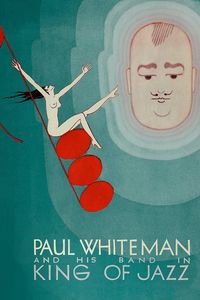
  • King of Jazz (1930)

    King of Jazz (1930)

    (On Cable TV, April 2021) Don’t bother looking for a story in King of Jazz — as with many musicals of the early sound era, it’s a straight-up adaptation of a Broadway revue show, with segments loosely connected together so that audiences across America could go to the movies and have as good a time as their fellow Manhattanites. It was, in retrospect, a classic case of imitating success: at a time where the cinematographic grammar hadn’t yet adapted to the possibilities of meshing sound with images, this was the surest, least-risky, most profitable way to go. As a result, you have to assess King of Jazz on the merits of its number sketches and novelties. Chief among them is that the film was shot and preserved in two-tone colour, which adds a surprising amount of interest when compared to other movies of the early 1930s. But there are a few other pieces of interest as well: It’s a film that features the first-ever Technicolor animated segment (a curiously morbid/racist sketch), as well as Bing Crosby’s first screen appearance. The titular “King of Jazz” is Paul Whiteman, an interesting figure in the history of the genre who’s remarkably well-captured here. There are more special effects than you’d expect from a 1930 musical film, and the intentional variety of the musical numbers (remember: bringing Broadway to entire families in small-city America) means that the film doesn’t play to a single musical aesthetic — but despite the title, don’t expect much of what we now expect from “jazz” considering the way it has evolved over the decades. I found much of King of Jazz interesting for the raw window it opens on circa-1930 popular entertainment, without the added filter of a plot to get in the way. It has quite a documentary value and a few pleasant surprises even ninety years later.

  • The Labyrinth Index [The Laundry Files 9], Charles Stross

    Tor, 2018, 350 pages, $35.00 hc, ISBN 978-0356511085

    After the status-quo-shattering intensity of previous volume The Delirium Brief, Charles Stross takes the pacing of the Laundry Files series one notch down in The Labyrinth Index. But that’s still going at a brisk jogging pace, because this time around the series’ ensemble cast goes for a big target — rescuing the President of the United States from Fortress America.

    Taking a transatlantic breather is not a bad idea, considering the sweeping changes at home. If you recall the climax of the previous volume, the agents of the British occult agency responsible for protecting the world from trans-dimensional horrors suffered a significant setback when Her Majesty’s government became corrupted by the very horrors it needed to be protected from — the Agency officially dissolved, and a complete takeover of the country by a genocidal alien intelligence only prevented by making a deal with a slightly lesser evil.

    This being said, “a lesser evil” can still be an absolute nightmare when the book opens with an execution sanctioned by the government — a clear sign that things are getting unimaginably worse for the characters (as they usually do in any given Stross series). The new Prime Minister is a front for an extra-dimensional horror who’s willing to keep humans around as long as they amuse him (giving him an edge over those who simply want a worldwide consumption of souls), and as the plot gets going, our protagonists are given an insane mission with no opportunity to refuse. Not when the Prime Minister is redecorating London with an arch adorned with human skulls.

    It turns out that the news from the States is roughly as bad in the Laundry Universe as they were here from 2016 to 2020: The government has also been taken over by evil horrors from another dimension, with the added complication of the American government having incredible means at its disposal. The comparisons only go so far, though: In Stross’ reality, a somewhat sympathetic and competent president has been erased from the collective knowledge of the American population through occult means in the hope of usurping his lawful authority. (It’s about as weird as it sounds, but it does build on The Nightmare Stack’s ruminations on the power of even a symbolic figure in The Laundry’s universe.)  The New Management of the United Kingdom is sending a team of operatives to either rescue, capture or kill the President. Against them: nothing less than the entire intelligence, security and police establishment of America.

    Our narrator/protagonist this time around is Mhari, an ex-girlfriend of Bob Howard later turned into a vampire then given important positions inside The Laundry. But there’s quite an ensemble cast of characters with their own third-person narratives —The Labyrinth Index sets itself up as a three-ring circus of overlapping operatives in setting up its caper. It all comes together as well as a heist film, albeit with more supernatural chaos as things spin out of control.

    In the grand scheme of the series, this feels like an energetic breather episode. The suspense of a thriller operating deep behind enemy lines is captivating, but the focus here is on explaining the state of the series at this point in time rather than advancing things too quickly. There’s a lot to take in: The New Management of the United Kingdom and the state of an American government captured by the creatures it needed to keep out.

    Stross also puts a few pieces on the board to set up later episodes: There’s a hilariously formal PowerPoint presentation outline for a high-tech end-of-humanity plan to be implemented by the American military-industrial complex, but also hints of an even bigger game afoot with even more powerful players. If my narrative intuition is correct, this could be a glimmer of hope for the series’ eventual conclusion, keeping with its ongoing theme of applying a small amount of leverage to gain an advantage or prevent larger losses. It goes without saying that our cast of characters is not blind to the New Management’s brand of evil, but even contemplating rebellion against such powerful forces is going to be a multi-book project. (Not to mention the very scary American plan to hasten the end of the world…)

    But that’s for later. In the immediate scope of The Labyrinth Index, what we have is a good page-turner that brings together a number of characters and plot strands from previous volumes in order to advance the overarching narrative. Mhari is a good narrator, and there’s something interesting in seeing Stross both send his cast farther and farther away from stock humanity (even the team’s lone unmodified human is turned into something more along the way — something that feels like a loss) while working hard at ensuring that recognizable human traits manifest themselves in his superhuman characters — perhaps most notably by giving them stable and deepening romantic relationships.

    Not quite as good as The Delirium Brief (which was a bit of a high-water mark for the series) but better than many of the previous volumes, The Labyrinth Index does have Stross working in a familiar techno-espionage format, delivering good character work on a much broader canvas. It may be the last mainline Laundry novel for a while — in discussing future plans, Stross is deliberately skipping farther ahead in the Laundry universe chronology with his next trilogy of books, trying a slightly-different genre with new characters until he can come back to Bob Howard and friends to close out that specific arc. As a result, we may be a few years away from a direct sequel to The Labyrinth Index, leaving all of those delicious plot threads dangling for a few years. How that will work is anyone’s guess at this point, but Stross has proved time and time again that he knows what he’s doing. I may hold off on reading the upcoming trilogy until all three books are published: From my experience reading the last few volumes of The Laundry series, I may end up reading the entire trilogy in three days.
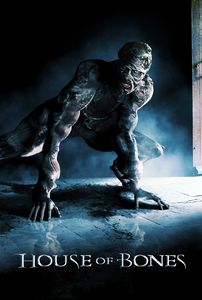
  • House of Bones (2010)

    House of Bones (2010)

    (In French, On Cable TV, April 2021) I don’t like how some horror movies somehow end up with faint praise for being bad-but-not-terrible, considering how low the bar can be once you get into low-budget efforts. House of Bones is one of those bad-but-not-terrible things you can catch later at night on cable or on the fifth page of streaming choices. It has a mildly entertaining premise by 2010 standards, as members of a supernatural reality-TV show are attacked by a haunted house. The story is nothing special, but the film gets a few extra jolts of interest from starring forgotten-but-not-unknown Charisma Carpenter and featuring rather more gory effects than you’d expect from a film made for SyFy. What it doesn’t have is the kind of atmosphere than haunted house movie depends on — it’s a series of cheap scares, clearly led by the logic of a bad-but-not-terrible horror movie script rather than any kind of recognizable attempt at creating something more. Anyone stuck watching this rather than anything better may want to focus on the frights and the gore rather than try to make sense of the story, which is lazy enough to keep gaping plot holes without even trying to patch them up. This is filmmaking-for-a-buck at its dullest, and yet not completely terrible. There are times where you want to watch a film but not really watch it all that closely, and that’s probably the best-case scenario for House of Bones.

  • I’ll Cry Tomorrow (1955)

    I’ll Cry Tomorrow (1955)

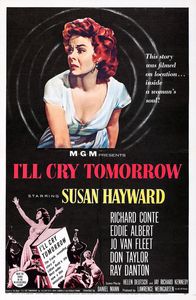
    (On Cable TV, April 2021) As far as musical biopics go, I’ll Cry Tomorrow is a blend of showbiz drama and addiction memoir, with our protagonist (Singer Lillian Roth, played by Susan Hayward, in a script based on Roth’s own memoirs) first suffering as a child prodigy controlled by her mom, then suffering as her fiancé dies, then suffering as a married woman whose sole shared interest with her husband is alcoholism, then suffering again as she tries to kick all of the bad habits in her life. In other words, this is not a pleasant film — for each mildly entertaining musical number, there’s one ugly scene after another. Unusually enough for the 1950s, alcoholism is portrayed from the inside as a destructive but appealing force, and the film ends up being one of the first depictions of Alcoholics Anonymous. I’ll Cry Tomorrow plays according very familiar lines for modern viewers, but the vintage aspect of it can be interesting. Of course, the film’s best asset has to be Hayward, holding nothing back in a tough depiction of someone familiar to audiences at the time. It’s not necessarily a bad watch even at its most conventional.

  • Interiors (1978)

    Interiors (1978)

    (On Cable TV, April 2021) It’s a good thing that Interiors is well known as one of Woody Allen’s most deliberately serious films — an attempt to go over austere Bergmanesque family drama territory in a way that consciously seeks to oppose itself from Allen’s ”earlier, funnier films.”  Even so, I was sorely tempted to giggle through much of the film — Allen’s painstaking approach at re-creating the sparse rhythm, tortured relationships and Scandinavian aesthetics of his model can approach parody at times. I don’t usually respond well to such torpid movies anyway, so you’ll understand if it doesn’t work this time around. (On the other hand, I actually welcomed the final death of the film, considering how annoying I found the character — and how it was telegraphed well before.)  Anyone will be on firmer grounds in considering the film as an actor’s showcase — with special affection for the trio of sisters (Diane Keaton, Mary Beth Hurt and Kristin Griffith) who are the true protagonists of the story. People act badly all around them, whether it’s unreliable partners, a crush who becomes a would-be rapist, or a father choosing to leave their mother after decades of marriage (while not directly telling her that). Maureen Stapleton shines as one of the few expressive characters in the entire film. While Interiors got good reviews at the time and still figures among Allen’s better-rated work, it’s clearly not as special today as it was back then — the filmmaker’s output has grown to be incredibly diverse and not necessarily comic, explaining why Interiors feels far more ordinary (yet more obviously a pastiche) than it did. Modern viewers who, like me, have a strong preference for Allen in comic mode may watch Interiors without the reverence by which it’s seen by many critics.

  • Misbehaviour (2020)

    Misbehaviour (2020)

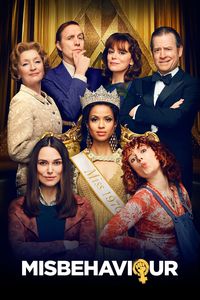
    (On Cable TV, April 2021) The grrl-empowerment drama is a well-established genre by now, and Misbehaviour seems to be following in the steps of half a dozen examples of the form, perhaps most closely the recent Battle of the Sexes. You can check off the elements: a historical recreation a few decades past highlighting unbelievable sexism, plucky heroines banding together to fight the patriarchy, potshots at the institutions’ refusal to move forward, one hissable patriarch as an antagonist, queer characters, lighthearted tone, all savvily wrapped in well-executed crowd-pleasing style. It’s now common because it’s fun, mind you: you can’t be against the message of the film, and the underdog narrative always plays well even if it feels increasingly calculated. Misbehaviour does a little bit than most entries in the subgenre by being slightly more ambivalent about its message than a rote regurgitation of feminist talking points. Largely taking place in 1970 London, it tells us about the protests that targeted the Miss World contest held at the time, featuring a few activists going against none other than emcee legend Bob Hope, who comes to personify the worst aspects of the patriarchal agenda—hero of a generation, villain of the next. Our protagonists, anchored by Kiera Knightley (even though Jessie Buckley has a more striking role), aren’t the only ones with progressive credentials, however, as a very interesting subplot featuring Gugu Mbatha-Raw ends up establishing. Progressivity and diversity are multidimensional movements that have the good luck of all sharing white men as antagonists, and part of what makes Misbehaviour more interesting is in opposing different views about the Miss World contest, and what happens when the contest ends up scoring a victory for diversity even within the confines of the structure that our (white) protagonists are contesting. That kind of complementary complexity is something that reflects real-world tensions within the progressive communities, and something I’d like to see a bit more rather than simplistic underdog fairy-tales. As a result, Misbehaviour does get better as it goes on, and then becomes much better once it hits its final moments. The style is meant to be easily accessible, and the viewing experience reflects that: it’s an easy film to watch and to like even when it plays close to the obvious formula. Despite the film’s hit-job, I still like Bob Hope — but then again, I can pass as a patriarch if I need to.

  • I Remember Mama (1948)

    I Remember Mama (1948)

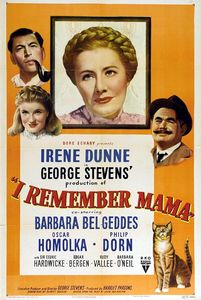
    (On Cable TV, April 2021) A bunch of likable episodes chronicling a period of time in the life of a Norwegian immigrant family in early 20th-century San Francisco, I Remember Mama adopts a familiar framing device — the writer protagonist reminiscing about growing up—in order to serve its short stories and affectionate reminiscences. Clearly meant for comfort viewing, the film is most successful when it relies on its actors: Barbara Bel Geddes as the narrator, an aged Irene Dunne as the titular Mama and especially Oscar Homolka as the grander-than-life uncle who ends up being the focus of many scenes. The black-and-white cinematography portrays scenes of 1900s San Francisco as best as it could in a pre-CGI era — still, the sense of place is evocative. You have to have a tolerance for episodic narratives, but like films such as Meet Me in St. Louis, it all adds up into a portrait of a close-knit family, meant to create a nostalgic view of the narrator’s childhood. The material does have a universal quality, and its impact is still perceptible even today.

  • I Never Sang for My Father (1970)

    I Never Sang for My Father (1970)

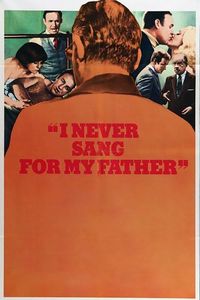
    (On Cable TV, April 2021) There’s an unescapable clash of generations at the heart of I Never Sang for My Father that can only come from a 1970 production, as the first baby-boomers were hitting 25 and New Hollywood was changing the business forever. An intriguing pairing with The Graduate, it’s a film about a young, well-educated protagonist having to deal with his conservative father and housewife mother — echoes of the 1950s that clearly don’t understand him. Gene Hackman plays the protagonist, visibly too old for the role (age 40, playing 25…) but still echoing the generational divide so apparent circa 1970. It’s all vividly illustrated by a simple but well-developed drama in which the character is torn between what he wants to do (that is: move across the country to be with his girlfriend) and what one would expect him to do (stay with his widowed father even in declining health). The two men clash, argue, clearly don’t understand each other and the ending is not exactly comforting. But as far as dramas go, I Never Sang for My Father does have more punch than usual. The younger Hackman is good but Melvyn Douglas is arguably better as the abrasive father who’s not interested in getting closer to his son — both of them earned their Academy-Award nominations here. No character here is virtuous or admirable (never mind the close-minded, abusive father—the protagonist juggles two girlfriends and the film doesn’t seem all that bothered by it) and the conclusion is similarly bittersweet. I Never Sang for My Father is not a big or uplifting film, but it works well enough and draws viewers in small doses before they’re hooked for the rest.

  • Tales from the Darkside: The Movie (1990)

    Tales from the Darkside: The Movie (1990)

    (In French, On Cable TV, April 2021) It’s amusing how horror is the only genre to reliably sustain the anthology format. There’s a good reason for this — horror often works best in small doses, and having shorter stories one after the other can let filmmakers play with one idea at an ideal length, then move on to another. As far as anthology movies go, Tales from the Darkside is in the solid average, although some casting choices may bring it up one notch in some viewers’ esteem. The framing device has to do with a suburban cannibal preparing her meal while the main dish, a paperboy, stalls his cooking by narrating three stories from within his cage —not bad as a setup, but the conclusion seems a bit too convenient without the panache that such a tidy ending would warrant. The first story, “Lot 249,” is probably the most impressive from a casting standpoint, what with the much younger Steve Buscemi, Julianne Moore and Christian Slater all backstabbing each other horribly for academic purposes — alas, the narrative is a bit bland once you get over how great Moore looks. “Cat from Hell,” the second story, is far more interesting with its narrative hook, as a hitman is hired by a rich infirm to kill… a cat. A murderous cat, seeking revenge from pharmaceutical animal experimentation. It’s George Romero adapting a Stephen King short story, so it’s no accident if this is the most distinctive story in the film, even as it can’t quite avoid some silliness. Finally, “Lover’s Vow” goes for erotic gore with a story of death and promises between an artist and a mysterious woman. Rae Dawn Chong looks amazing here and the story does feel more violent than the others, making it a definitive climax to the film even if it’s a bit on the longer side. Tales from the Darkside can’t quite escape the uneven nature of horror anthologies, but it’s more interesting and varied than many others, and generally well-executed throughout. The surprising casting does add quite a bit to the final result — especially for those who went on to have long careers during which they visibly aged and developed their own screen persona.

  • The Heart Is a Lonely Hunter (1968)

    The Heart Is a Lonely Hunter (1968)

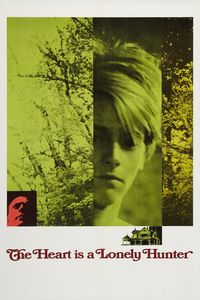
    (On Cable TV, April 2021) Hollywood has always been in love with social-issue films, but until the mid-1960s there was only a very narrow range of social issues worth discussing under the Production Code. Things improved in a hurry from the mid-1960s onward, as the code was replaced by ratings, and the range of permissible, even desirable topics expanded at the same time as moviegoers expected more from American studios. But in films like The Heart Is a Lonely Hunter, you can almost feel the repressed pile-up of social issues crowding each other for recognition — disabilities (physical, sensorial and cognitive), fatal diseases, racism, sexism, alcoholism, classicism, discrimination, sexual awakening, suicide and small-town violence all show up in the strange brew of this melodramatic adaptation of a best-selling 1940 novel. If it sounds like a lot, it is a bit much at times — especially as the film tries to keep up with a busy novel in barely more than two hours. If it’s any comfort, the cast is reliably more interesting than the narrative: Alan Arkin as a deaf-mute protagonist, Sondra Locke’s screen debut, and appearances by Cicely Tyson and Stacy Keach. Still, the film does feel like what we’d call Oscar-bait these days — a comparison that’s made easier by the film’s two Academy Awards nominations (for Arkin and Locke) among other recorded honours. It doesn’t exactly make The Heart Is a Lonely Hunter compelling viewing, though — unless you like that kind of overdone drama at a time when Hollywood was expanding its palette of permissible topics without necessarily getting more subtle about how to tackle them.

  • The Hanging Tree (1959)

    The Hanging Tree (1959)

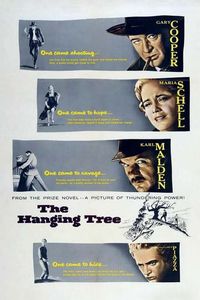
    (On Cable TV, April 2021) Since westerns often degenerate into a morass of overused tropes, I was surprised to stay interested in The Hanging Tree at least throughout its establishing act. Here, we follow not a gunman, but a doctor trying to establish himself in a small town dealing with a gold rush. But the doctor is not necessarily an admirable protagonist, as he saves a criminal from death then uses his leverage to press him into servitude. Things get more interesting when a woman, the survivor of a stagecoach attack, is moved in his new offices, and they start making romantic plans for each other. The problem is that this isn’t necessarily a nice western — the lead character is a hyper-controlling deceiver (it’s a good thing that he’s played by the steadfast Gary Cooper), and the townspeople aren’t all upstanding citizens. (Plus, there’s a faith healer who is not welcoming of real doctors.)  It all conflagrates at some point, and it’s almost a surprise if it all ends on a somewhat positive note (although one wonders how long it can last — at the very least, someone’s going to move away). The colour cinematography takes good advantage of the landscape, and the feeling of a gold mine boomtown is portrayed convincingly. I wouldn’t classify The Hanging Tree as a great western, but it does have that elusive compelling quality that many better pictures lack — it may be imperfect, abrasive and meandering, but it holds our attention well enough.