Month: October 2021

  • Hell Bound (1957)

    Hell Bound (1957)

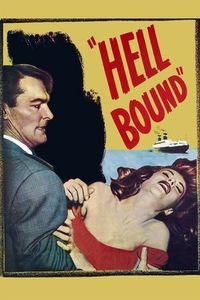
    (On Cable TV, October 2021) Once you get past the classics of film noir, there’s an astonishing number of smaller-scale, less refined but still highly enjoyable entries in the genre. Late-period Hell Bound is one of them: a lean, sometimes mean thriller that manages to score a few minor high points while delivering an entertaining crime story against the backdrop of Los Angeles. Cheekily beginning with an idealized visual presentation of a proposed crime for its backers (with a rather wonderful transition between the fantasy and the presenter), the film focuses on a plot to steal surplus WW2 drugs from a ship for sale in the underworld. John Russell stars as a two-fisted criminal with no time for cutesy romance, while centrefold model June Blair plays the femme fatale. (I also liked Margo Woode a lot, but more for the glasses than anything else.)  Unusually enough for the genre, Hell Bound features a visually impressive finish taking place on Los Angeles’s Terminal Island, where (at the time) hundreds of trolleys had been stacked for scrap. The abrupt ending is one you may not necessarily guess either. This doesn’t make Hell Bound a terrific film—the obtuseness of the dialogue alone is often baffling—but it does make it a decent noir, and one that (by being so close to the streets) gives an interesting look at circa-1957 Los Angeles.

  • Mondo cannibale [Cannibal World] (2004)

    Mondo cannibale [Cannibal World] (2004)

    (In French, On Cable TV, October 2021) As much as I truly loathe to find anything nice to say about the infamous (and reprehensible) horror film Cannibal Holocaust, the universe has a perverse sense of humour, and today’s offering (via a scheduling mistake at the not-always-competent French-Canadian horror Cable TV channel) is Mondo cannibale, a 2004 film from shlockmaster Bruno Mattei determined to ape 1981’s Cannibal Holocaust but with even less wit. The plot is the same, as journalists head into the upper Amazonian to film cannibal tribes, and realize that they can’t just watch without being in mortal danger. The troubling “aren’t viewers the real monsters?” subplot of the original is here hammered so often that it becomes stale and then almost comic. As for the stomach-churning gore, well, there’s plenty of it—although it doesn’t seem to be filming the killing of real animals, so that’s at least one way in which the film is infinitely preferable to the original. Still, this is a terrible, useless film. Aping the cannibal movies of the early 1980s is in no way an achievement worth celebrating—skipping Mondo cannibale entirely is a wiser course of action. And don’t mistake this assessment for any kind of endorsement for the original.

  • Watermark (2013)

    Watermark (2013)

    (On Cable TV, October 2021) Follow-up to the somewhat similar Manufactured Landscapes, Watermark reteams filmmaker Jennifer Baichwal with photographer Edward Burtynsky for a widescreen look at the impact of man on nature. This time, the focus is on water—how it’s used, how it’s controlled, and how it’s threatened by human activities. As with the first film, we’re taken to incredible landscapes, most notably the Chinese Xiluodu Dam and the eerie flooding of its reservoir. The strengths of the filmmakers’ first film remain intact—a dispassionate but provocative eye for striking images, a non-preachy but convincing environmentalist message, a willingness to dig under the surface of the world to reveal its underpinning—but two notable flaws have been addressed: The images are now shot in high definition (ensuring their longevity with modern home viewing equipment) and the subject matter is not as overexposed today, also ensuring its continued interest. It’s also somewhat closer to visual documentaries à la Koyaanisqatsi than the unwieldy half-lecture/half-visuals format of the first film—there’s still some narration, but it’s less intrusive and unafraid to quiet down in order to let the images speak for themselves. The result takes us in real places that were new to me—places where humans interact with bodies of water, or try to control it through striking man-made architecture. It’s quite amazing in places—I’m not sure I would have imagined the manufactured inland waterfronts of Discovery Bay, California had Watermark not shown it from above, for instance. It does amount to a quietly impressive documentary, as much feast for the eyes as it’s fodder for thinking about our place in the world. An improvement over Manufactured Landscapes in nearly every way, Watermark sets high expectations for their third film Anthropocene.

  • To Wong Foo Thanks for Everything, Julie Newmar (1995)

    To Wong Foo Thanks for Everything, Julie Newmar (1995)

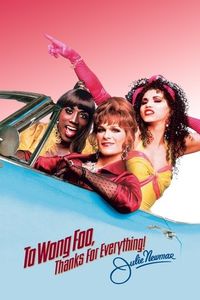
    (On Cable TV, October 2021) There’s a perfectly fair argument to be made that To Wong Foo Thanks for Everything, Julie Newmar is too conventional a film—fluffy, predictable, shallow and willfully unwilling to confront deeper issues about its characters. On the other hand—this was a major Hollywood studio production about drag queens from the middle of the somewhat less accepting 1990s: How could it not be such a film? A safe way to talk about outsiders is to make them irresistibly likable, and that’s the bet successfully waged here. Patrick Swayze, Wesley Snipes and John Leguizamo star as three drag queens whose cross-country road trip lands them in a small Midwestern town, where they’ll confront local bigots, crooked police and various semi-romantic entanglements. It goes without saying that our three protagonists are without personal flaws, and are free to use both masculine and feminine virtues to overcome their obstacles. It all works really well, at least on a somewhat fairy-tale level. But notice how To Wong Foo quickly skims over the question of the protagonists’ sexuality (and when it does, makes such broad sassy considerations with such outdated terminology that they immediately become suspect) and takes the very convenient route of avoiding the transformation process—save from a scene at the very beginning of the film, our leads remain in drag all the time, night and day. There’s a sanitization process that helps with the film’s fantasy of easy acceptance, but we’re nowhere near realism. Reading about the film from the perspective of queer cinema commentators is highly enlightening. But on the surface level that it seeks out, To Wong Foo is more successful than not—let’s not underestimate the performances of Swayze and Leguizamo (for whom this is still one of his best movies)—plus a still-remarkable performance by black masculinity icon Wesley Snipes. Non-queen actors are also not too bad, with Blythe Danner and Stockard Channing getting some attention in largely functional roles. It all looks clean and stereotypically mid-American, with director Beeban Kidron keeping things moving at the intended level. No, To Wong Foo is not a heart-wrenching drama nor cutting social commentary—but it is likable and fun to watch and, in normalizing the outsiders, makes them less of outsiders. Not a bad result then or now.

  • Amityville 3-D (1983)

    Amityville 3-D (1983)

    (On Cable TV, October 2021) You could make a point that watching a 3D movie on a 2D screen is a good way to expose the ridiculousness of the result, but that fails to consider that, no matter the number of dimensions, Amityville 3-D is an exceptionally dumb movie. Clearly belonging to the “throw in as much spooky stuff even if it doesn’t make sense any more” school of bad horror films, this third instalment often feels like a hyperactive kid rushing through a variety of events at breakneck pace. It can’t focus on anything, and it kills off characters the moment it suspects we’re in danger of no longer paying attention. Legal rights issues meant that this sequel was untethered to any of the original characters except the house, further helping the result to go everywhere and anywhere. One of the few highlights of the mess is seeing a young Meg Ryan in a disposable role. It ends with the destruction of the house, thanks to a basement well conveniently filled with demons. In other words: all familiar stuff, plus the craziness of the anything-goes nature of the plotting and some touch of further excess thanks to the now hilarious 3D effects. It’s not good, but it’s just a touch more entertaining than expected.

  • Shall We Play? (2020)

    Shall We Play? (2020)

    (On Cable TV, October 2021) There’s an unwieldy messiness to Shall We Play that makes it both quirky and annoying. In barely 85 minutes, the film can’t quite decide whether it’s about an occult smartphone app, a family curse, demonic possession, or maybe even something else. We get teenage boys taking unconscious nudes of the protagonist (something that should land them straight to jail, except that the film doesn’t want to interrupt the protagonist’s carnival of humiliation), a character who’s already dead, psychiatric institutionalization, a girl taking revenge on her tormentors, friends turning on each other and, well, a lot of other things. It never coheres—in fact, some of the material is merely window dressing for an incoherent premise that doesn’t quite know where to go beyond the most obvious. Bullied teenagers turning to the occult is nothing new, and for a while Shall We Play is just messy enough to keep us from seeing the real shape of the plot. Once we do, alas, there isn’t much more to say or do. I did like Matreya Scarrwener’s vulnerable performance—she makes the character likable and that goes a long way in keeping our interest. Still, that’s not quite enough: all of Shall We Play is put together oddly, and not in an intentional way: the execution is as undisciplined, the story is hazy and the end of it all leads to a big shrug rather than any kind of satisfaction. I didn’t quite hate the result, but then again, it’s a Canadian film—I like to go soft on those.

  • Come Play (2020)

    Come Play (2020)

    (On Cable TV, October 2021) Had I stopped watching Come Play half an hour into it, my review would have been substantially more negative. I’m not claiming that it magically becomes a good movie at the end of its slow burn, but it gradually establishes itself as an average film, which is more than I would have thought after the dull introduction. The plot feels like a half-regurgitated mix of “all screens are bad and you should feel bad for watching them,” crossed with a bit of The Babadook and special-needs children’s horror. Our young lead is a non-verbal young boy who relies on his mobile devices to do his talking for him—but then he comes across “Larry,” a demonic entity who’s only too happy to cross over into the real world through screens. Mom and Dad both try to understand what’s going on—fortunately, there’s a book explaining it all; unfortunately, they don’t get around to reading it until at least an hour. The last half-hour of Come Play is somewhat more energetic than the rest, with bony hands poking out of any available screen even after they’ve been thrown on the front lawn. There’s a certain confidence to the way writer-director Jacob Chase assembles his material, although I wish he would have begun with a snappier beginning. Still, I like the film more after finishing it—it avoids the nihilistic shlockfest of many lesser horror films, and it does build to a watchable conclusion after spending far too much time dawdling and repeating itself. A good ending can rescue a film, and that’s a good reason to keep watching Come Play if you’ve already watched the first 30 minutes. It does get better. But that doesn’t necessarily mean it’s worth beginning.

  • Endangered Species (2021)

    Endangered Species (2021)

    (On Cable TV, October 2021) The one essential element to any survival-in-nature story is the desire to see the protagonists survive. Considering this, it’s really not a good sign when, ten minutes into Endangered Species, you want all five main characters to be eaten by lions as quickly as possible. Starting out on a truly bad footing, the film quickly sketches a family of five entitled, arrogant, overextended Americans landing in Kenya and immediately complain about everything. When things don’t turn out their way (what with a money-obsessed dad trying to cut vacation costs due to a layoff he’s trying to conceal), they simply ignore one warning after another on their way to the wilderness. When a rhino overturns their car (their fault for getting too close and in between mama rhino and her cub), the most merciful thing would have been for all of them to die right there. Instead, the bickering continues, more dumb mistakes are made and the entire thing just keeps going for longer than we’d like at a length of 101 minutes. There’s more merriment when the least obnoxious character gets pounced upon by a leopard, but don’t cheer too soon: he’s back a few scenes later. The elements hurriedly mentioned in the film’s first few minutes all come back in play, and that most notably includes poachers in the film’s last third. Blithely ignoring its own tone-deafness, Endangered Species works itself up to a heartfelt denunciation of poaching that frankly falls flat given the exasperating nature of its characters deserving to be poached. There are a few signs that the film isn’t completely unaware of its characters’ unlikability (most notably in criticizing the oilman dad as an even bigger predator than the poachers), but those merely serve to make the film even more unlikable and cynical. Even the ironic title just seems self-pompous. It’s not completely dull to watch—the Kenyan scenery is colourful and there’s some unintentional amusement at the overuse of CGI animals—but the result is so incredibly flawed that it’s a wonder no one ever looked at the script and said, “You’re kidding, right?” before it was too late and the film was already shooting. Despite writer-director MJ Bassett’s experience in wildlife photography, this isn’t one of his finest works—and in a filmography that includes the underwhelming Solomon Kane and Silent Hill: Revelation, that’s not saying much.

  • Free Guy (2021)

    Free Guy (2021)

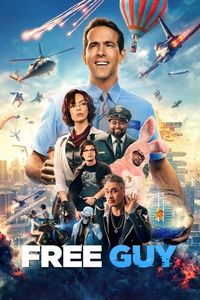
    (Disney Streaming, October 2021) Hollywood hasn’t always known what to do with videogames. (Perhaps one day, we’ll gain perspective on the relationship between the two rivals for their audience’s time, and talk about it in the same way we look at Hollywood’s early efforts to talk about television without dismissing it.)  But that’s changing, as videogaming is firmly into the mainstream, and more filmmakers have experience playing games. Free Guy is interesting in many ways, not the least of them being how it acknowledges the toxicity of online gaming, while still delivering a fundamentally optimistic and upbeat film. A comedy taking a very fanciful look at an online gaming universe that spawns a self-aware non-playing character, Free Guy makes a lot of mileage out of having Ryan Reynolds as its headliner. His irrepressible charisma, combined with his well-established smiling personas, makes him an ideal actor for the role of a character coming to life and changing the virtual world around him. (Taika Waititi also has a featured role as an overbearing tech magnate.)  Crammed with more jokes, references and cameos than I could grasp, Free Guy is a buoyant science-fiction comedy that feels very much of the moment—the merger of Disney with Fox having happened as the film was in production, it’s barely a surprise if the film throws in a few references to the Avengers and Star Wars under the common umbrella of the Mouse. It’s simply a fun film, and that does set it apart (slightly) from a lot of the doom-and-gloom of the moment. I had a surprisingly good time watching it (despite being annoyed at some of the plotting along the way) and Free Guy should appeal even to those without an encyclopedic knowledge of videogames.

  • Black Sunday (1977)

    Black Sunday (1977)

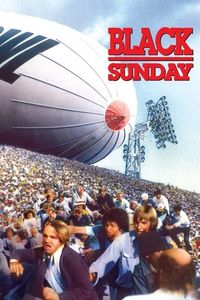
    (On Cable TV, October 2021) I don’t normally like the grittiness of 1970s filmmaking, but sometimes it’s just the right thing for the film, and so Black Sunday is a pretty good example of form following function. A type of thriller that has been gradually abandoned by Hollywood, it adapts the Thomas Harris novel (yes, that Thomas Harris) into an efficient thriller. Thick in mid-1970s politics, it features Palestinian terrorist groups allying themselves with a troubled Vietnam veteran to hatch a dastardly plot to kill as many people as possible at the Super Bowl. Unusually enough, the production features a copious amount of footage shot at the 1976 Super Bowl itself, with main characters looking at the crowds from the sidelines of the game, inspecting the stadium for signs of danger, or even running behind the end field to react to a sudden discovery. This helps a lot in ensuring the credibility of the thrills—as do the lavish aerial sequences. At a time when action filmmaking usually had to satisfy themselves with approximations, Black Sunday almost gets it right throughout—the exception being the crash of the Goodyear blimp into the stadium (not a spoiler, given that it’s the image used for the cover of the book and the movie poster), which suddenly degenerates into a blurry frantic mix of close-up shots and panicking crowds. (The production history of the film makes for interesting reading.) As much as I like Black Sunday when it works, I do wish it was shorter—there’s a lot of pointless throat-clearing in its first hour, and the action climax is easily a few minutes too long for its own good. Robert Shaw and Bruce Dern are fine as (respectively) the Mossad agent and the American terrorist battling it out, but Marthe Keller is not my picture of the beautiful operative that the film keeps identifying as the near-magical influence on the American renegade. Director John Frankenheimer was, at that point in his career, a veteran of big-ticket thrillers and that experience shows in the film at its best. It clearly fits within the disaster film trend of the 1970s, and still works remarkably well today. I’m not saying that Black Sunday should be remade with modern pacing and CGI spectacle… but I’ve seen worse ideas.

  • French Exit (2020)

    French Exit (2020)

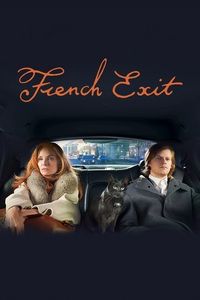
    (On Cable TV, October 2021) As I’ve mentioned in previous reviews, character-based films are best when they’re studies of entertainingly flawed characters, and it doesn’t take long in French Exit to understand that Michelle Pfeiffer plays a woman with a substantial number of issues. The defining event in her history seems to have been not calling the authorities for a few days (and a skiing vacation) after discovering her husband’s corpse, but that’s far from the only noteworthy quirk in her character. As the film begins, she decides to react to her lack of money by moving to Paris with her son (not really asking for his opinion beforehand) and burn through the rest of her funds with the intention of killing herself once the bill comes due. The film gets quite weird as it goes on, with steadily bigger dips into fantasy as the dead protagonist’s husband starts talking through the black cat she’s lugging around. The weirdness literally accumulates in the Parisian apartment where she makes her last stand, in the form of various characters that join the fun. It’s clear that Pfeiffer is the best thing about French Exit, closely followed by a handful of individual scenes that show her lack of grace in the face of her planned exit. Unfortunately, there’s not much more to the film—the overarching story is dull and empty, the conclusion only makes sense in the absence of any new material, and the weirdness of the film segments fails to build up to something that would wrap it all up in a more meaningful whole. We’re left to see Pfeiffer chew scenery (or set it on fire), which is not a bad time per se, but feels aimless in the absence of a plot strong enough to sustain her character. As much as we can claim that character studies don’t have to have a plot, it’s always better when they do.

  • The Virtuoso (2021)

    The Virtuoso (2021)

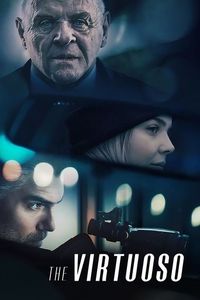
    (On Cable TV, October 2021) In many ways, The Virtuoso is your average small-town assassin film—you know the one: our super-assassin is given one last assignment, and that happens to take place in a very small town where everyone knows everyone, except the lead character. It’s obviously a trap of some sorts, but the film plays along some very familiar tropes—what kind of assassin accepts a brief with such a vague description of his target and an encouragement to investigate? This is the kind of genre fare that fans will like and others won’t. But what saves The Virtuoso from terminal boredom is the addition of a dispassionate voiceover from the main character describing the inner thinking process of a master assassin, the details that go in his planning and the decisions he makes along the way. As a way to bridge the gap between a character-driven narrative and the screen (it’s not adapted from a novel), it’s more interesting than had it not featured the narration. But there’s a limit to what an intriguing narration can do to save a bland, dumb story. Even worse: the film doesn’t even have the decency to end on a positive note, making the entire film feel even more pointless. Anson Mount plays the lead (this is a film in which very few characters are credited as having names), so if the film lured you with the mention of Anthony Hopkins, be forewarned that Hopkins’s involvement in the film is limited to a few barked assignments, a sad Vietnam story and a few more enigmatic pronouncements. There are a few ways in which The Virtuoso could have developed into something slightly more interesting than a low-end genre thriller, but writer-director Nick Stagliano seems content with the least amount of effort. Overhauling the trite plot would have required a lot more work than reworking the narration.