Month: October 2021

  • A River Runs Through It (1992)

    A River Runs Through It (1992)

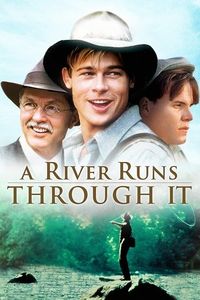
    (On Cable TV, October 2021) Closer to a tonal poem than a sustained drama, A River Runs Through It is meant as a piece of cinema fit to let you relax, unwind, meditate on life and appreciate fly-fishing. Narrated and directed by Robert Redford, it’s a multi-decade drama following a young man as he grows up in a small Montana town, goes to college, returns for a while and contemplates his option. Fly-fishing, as taught by his father and perfected by his brother, stands halfway between a sport and a creed. It’s all affectionate, nostalgic, and not particularly plot-driven except in the accumulating weight of years. Adapted from a hit book by Norman Maclean, A River Runs Through It’s contemplative nature was a tough screenwriting assignment for Richard Friedenberg and an even more delicate directing task: fortunately, Redford is up to it, and having terrific cinematography does help a lot. Acting-wise, this is the film that brought Brad Pitt to nationwide attention (bolstering his place as Redford’s natural heir) and got Joseph Gordon-Levitt an “introducing” credit. It’s not really my kind of cinema, but it’s hard to be overly critical about a film that manages to reach its own objective in its own patient time.
  • The Gracefield Incident (2017)

    The Gracefield Incident (2017)

    (In French, On TV, October 2021) My decision to watch The Gracefield Incident was as impulsive as it was intended to be ironic: You see, there’s a small town a hundred kilometres north of where I live that is named Gracefield. Since it’s not known for anything but its cottages, seeing a no-name low-budget science-fiction film titled the same was enough to amuse me. Frankly, I expected some New England-set cheapo alien horror that would refer to a Gracefield that clearly wasn’t the local Gracefield. I stopped smiling thirty seconds after the film began, the moment I noticed that the characters were obviously driving through Montréal. My lack of amusement turned to astonishment a few minutes later, once it became obvious that the characters were headed to a cottage in the local Gracefield. That aside, this very-small-budget film, written-directed-produced-edited-headlined by Matthew Ratthe, has more trouble distinguishing itself. The special effects are better than you’d expect, and the ending is surprisingly better than the usual horror nihilism that comes out of similar films. I’m going to go soft on the rest—this is clearly the kind of small-scale film whose very existence itself is a half-miracle. Anything else is a bonus. So, I’m not happy to report that The Gracefield Incident is a found-footage film with many of the usual issues and exasperation of the subgenre: impossible camera logic, dubious motivations, slap-dash dramatic scenes, exasperating shakycam, deliberately obscured action… all the same annoyances that movie reviewers have spent the last twenty-some years cataloguing. To that we can add a significant amount of blandness in the execution: uninteresting characters, an alien menace that seems to be getting its kicks out of juvenile pranks, and some serious pacing issues in the middle of a film where the characters are getting yanked out of frame regularly. But there’s a reason why such flaws are common in low-budget pictures, and they have to do with shooting a feature film in a short time with no significant budget. As such, I’m perhaps more sympathetic to an almost-local production: they’ve made a movie, that’s cool. I do wish the cleverness would have translated to the rougher spots of the script, but that’s asking for more. I’ll note that I saw the film in French, meaning that I didn’t experience the bad ADR noted in many reviews of the original English dub—but the French dub inexplicably translates the material in mid-Atlantic French, whereas this cried out for pure thick Québécois dialogue. Ah well—The Gracefield Incident is certainly not a great film, but it’s better than many, many of its found-footage alien-abduction equivalents. Plus, hey: who would have ever thought that Gracefield, of all places, would have its own titled science-fiction movie?

  • Those Who Wish Me Dead (2021)

    Those Who Wish Me Dead (2021)

    (On Cable TV, October 2021) I miss those large-scale thrillers we used to see more often back in the 1990s and 2000s—nominally criminal stories but ones that usually ended up as a pretext for large-scale spectacle. Something like a forest fire does nicely! Having seen Firestorm two weeks ago (and Only the Brave last year), I was primed to properly appreciate Those Who Wish Me Dead, a classic child-on-the-run-from-assassins thriller that ends up in the middle of a forest and, eventually, a forest fire. Angelina Jolie headlines the cast as a disgraced smokejumper who ends up on a fire lookout tower duty (those who played the Firewatch videogame will feel a big pang of recognition the moment the character enters the tower), ideally placed to respond when the kid of an accountant, having discovered terrible things, escapes his father’s assassins and seeks help. Written and directed by Taylor Sheridan, whose reputation as a mature thriller filmmaker is no longer in doubt after penning Sicario and Hell or High Water, as well as writing/directing Wind River, the film is a steadily engrossing suspense that’s not afraid to go big in its final set-pieces. CGI technology has evolved quite a bit since Firestorm, and the final sequence set in a burning forest is a great capper to a film that finds a good middle way between character-based thrills and action spectacle. Aidan Gillen is deliciously evil (and in-persona) as one of the relentless assassins, but it’s Medina Senghore who makes an impression as a pregnant woman who ends up mercilessly taking down her targets. Those Who Wish Me Dead is very well handled, and a welcome throwback to a kind of narrative-driven film that delivers the expected thrills.

  • The Last of the Secret Agents? (1966)

    The Last of the Secret Agents? (1966)

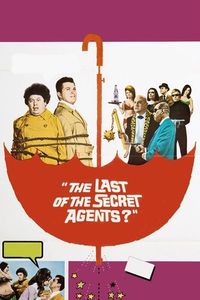
    (On Cable TV, October 2021) The extraordinary success of the James Bond series at the beginning of the 1960s led to a long, long series of films attempting to replicate or spoof the secret-agent genre throughout the rest of the decade. The Last of the Secret Agents is one of those, and a would-be star vehicle for then-popular comedy duo Allen & Rossi. But here’s the problem: In designing a star vehicle, it’s best if the stars are worth vehiculating, and while straight-man Steve Rossi is agreeable (especially as a signer), the more ridiculous Marty Allen is borderline intolerable. That definitely puts a drag on a film whose best moments do not involve one of its two headliners. Director Norman Abbott gets things off on the right foot, so to speak, with a long one-shot following the transfer of confidential information that leaves a literal trail of bodies, setting the blackly comic tone of the film. Clearly belonging to the school of comedy that states that quantity of gags has a quality of its own, The Last of the Secret Agents throws all sorts of stuff on-screen, parodying and satirizing everything in sight. Some of it works, so there’s at least some value to the entire thing. But other material, often involving Allen, simply falls flat. Nancy Sinatra brings some welcome sex-appeal to the proceedings, with one musical number leading to a lingerie shot. (Sinatra was, at the time of shooting the film, less than a year away from the superstardom of “These Boots Are Made for Walkin’”) There’s some additional interest in the atmosphere of the time as portrayed by the film—we often focus on the last years of the 1960s as the defining moment of the decade, but much of the decade in film was a bright optimistic pop-infused concoction that still works well today. The Last of the Secret Agents is not that good of a film, but it does get a few laughs.

  • The Cat in the Hat (2003)

    The Cat in the Hat (2003)

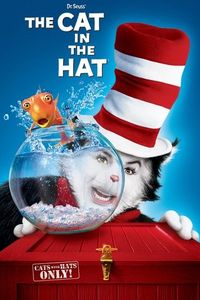
    (On Cable TV, October 2021) Star power is a double-edged sword, as The Cat in the Hat certainly shows. On the plus side, you’ve got Mike Myers in fine form showboating through a script very loosely inspired by the classic Dr. Seuss book, almost literally chewing through scenery and making asides to the camera (and the adults watching) in an energetic, nay, anarchic fashion. On the minus side, this unbridled performance is utterly unlike the spirit of the Seuss book and it doesn’t take much for the irritation to set in. Add to that the grotesque catlike makeup given to Myers and you’ve got something that requires some indulgence to tolerate. Considering that I’m not all that attached to Seuss’ work (his material isn’t as popular in my native French), deviations from the original story don’t really bother me—in fact, considering the made-up word salad often found in Seuss’ work, I’d rather not focus too much on being faithful. But Myers can be exasperating in manic mode, and there isn’t a single wall left standing when he’s done breaking the sets down. The wink-wink-nudge-nudge jokes he addresses to the adults are a baffling departure of what the book stands for—maybe funny in a desacralization fashion, but certainly not family-appropriate. The Cat in the Hat is at least as colourful as it’s hyperactive: everything is shot in bright colours and fantastic designs that don’t have much to do with realism. It’s a good thing that the result is only 82 minutes, because any longer would have been too much. There are some wonderful stories of Mike Myers being a very unpleasant person working on the film, and those anecdotes do fit really well with the theory that he had an oversized influence on the result, improvising material rather than sticking to the vision. Ah well—the Seuss estate made some hasty changes to its movie adaptation rights following The Cat in the Hat, and seeing the results since then (three much-better animated versions of classic Seuss tales), we can see that the debacle actually served a purpose.

  • Topper (1937)

    Topper (1937)

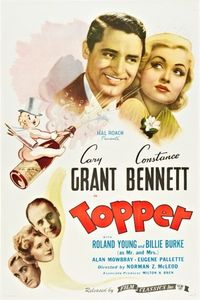
    (On Cable TV, October 2021) The 1930s were surprisingly heavy in movies about spiritism, mediums, clairvoyants and such. Supernatural comedy Topper is squarely in that tradition, as it features a henpecked husband affranchising himself with some help from a couple of deceased free spirits. It was a box-office smash, got good reviews and launched a series that ended up with three films, but this first instalment is, to contemporary viewers, slightly maddening. For one thing, it keeps a young Cary Grant in a very supporting role as a bon vivant husband suddenly dead. Don’t cry for him—his character is just as lively in the afterlife, and Grant himself would use Topper as a springboard to an astonishing steak of terrific performances in better-remembered screwball comedies. Close behind him in likability is Constance Bennett, playing a carefree ghost only too happy to be as flirtatious as she wants. Finally, there’s Roland Young, playing the actual protagonist of the film: Cosmo Topper, a banker of high status but terrible home life, with a wife only too happy to tell him what to do in minute detail. (If you’re not happy with this review’s late introduction of the protagonist, just keep telling yourself that I’m merely aping the film, which spends a good ten full fun minutes with Grant and Bennett before sighing and going through the motions of introducing its real and less-fun protagonist.)  While amusing, Topper pales in comparison of other comedies of the same period: it’s amiable and cute, but it doesn’t quite reach for the full possibilities of having two ghosts running around making life crazier or better for a live protagonist. It does not help that Topper is lazy in setting up the rules of its ghosts, who can appear or not, but always manipulate physical objects. It all leads to an acceptable ending, with a (hidden, for this was the Hays Code era) glimpse at fancy lingerie as proof that our protagonist and his wife were back on the mend and mutually satisfying physical intimacy. As for our ghosts, well, they apparently disappear having completed their good action, which does seem awfully indulgent. As I said: Topper works, but just barely. I find it significant that the second sequel would let go of its original premise to take a far more overtly comedic turn in the midst of a murder investigation, becoming far closer to the occult detective narrative. Then, as now, when a formula is broken, filmmakers will change it to follow what everyone else is doing!

  • A.P.E.X. (1994)

    A.P.E.X. (1994)

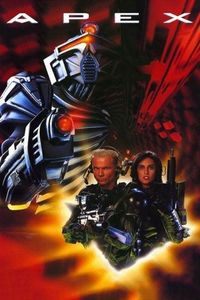
    (In French, On TV, October 2021) I’m not fond of low-budget films that go around stealing better ideas to mix up them and in fact, thirty minutes into A.P.E.X.,—as the film was stuck in a Terminator-inspired sequence with soldiers trying to gun down a killer robot,—I was this close to shutting down it down altogether. But instead of doing that, I resorted to my usual coping mechanism (i.e.: doing something else) and by the time I was paying attention again, writer-director Phillip J. Roth was doing slightly better. No, A.P.E.X. is not that smart of a film—the attempt at time-travel paradoxes is childish, and it doesn’t take a long time to come up with questions that the film can’t answer. But at least it gets out of the killer-robot thing, and even throws in a few acceptable ideas toward the end. (Hilariously enough, you can’t say that the end rips off Twelve Monkeys because Twelve Monkeys came out the following year.)  It still doesn’t make A.P.E.X. anything more than a cheap and low-budget film inspired by much-better material, but it does make it better when compared to similar films. Not a big victory, but I’ll take what I can get.

  • Ava (2020)

    Ava (2020)

    (Netflix Streaming, October 2021) I don’t really mind Hollywood making movies about super-competent assassins—I just mind Hollywood making the exact same movie about super-competent assassins a dozen times every year. Namely the movie in which the super-competent assassin is targeted for elimination by their own superiors, and must fight his bigger-better-faster rival to escape. It’s all as familiar as it’s tedious, and the latest Ava is no exception—even featuring a female assassin is nowhere near an innovation these days. But perhaps Ava has to do without another Hollywood subgenre—the female star vehicle meant to showcase its star’s action-movie credentials, along the lines of Atomic Blonde (Charlize Theron, successful) or Peppermint (Jennifer Garner, not successful). Jessica Chastain is an impressive actress, and she generally does well here in an action-driven role. But she’s easily better than the rest of the film (along with Colin Ferrell and John Malkovich), which simply goes through the motions of the usual assassin formula. There’s a little bit of style, but it doesn’t lift the film above the morass. I always like seeing Boston on-screen or Joan Chen in even a small role, but again it’s not much when compared to the boredom of the main plot. In the end, Ava settles for being a somewhat mediocre action film—not badly put together, certainly strengthened by Chastain, but largely undistinguishable from so many other films of the same ilk.

  • Holidate (2020)

    Holidate (2020)

    (Netflix Streaming, October 2021) If, like me, you’re wondering where all of the mid-budgeted studio romantic comedies have gone, take heart: the streaming revolution is among us, and with it the return of such movies dumped overboard by superhero-chasing studios. Holidate, from Netflix, is not just a romantic comedy according to the rules of the genre, but a self-aware one that keeps poking and prodding at the conventions before giving in to them. The premise is simple: a single attractive young woman and a single attractive young man agree to date each other for the holidays, saving them the trouble of finding someone to accompany them to themed parties and family events. We all know where it’s going and so do the characters, who openly comment on silly movie conventions even as they each share a ridiculous amount of chemistry. There are plenty of subplots, quirky supporting characters and set-pieces to go around (ensuring that the film concludes with every character happily paired), as well as enough laughs to bolster the comedy part of this romantic comedy. Alas, Holidate is perhaps a bit too modern, because it can’t help itself from excessive profanity (not that bothersome) and excessive violence (bothersome—can we have just one romantic comedy without amputation these days?) in the pursuit of finger puns. (One notes that the script was written by a woman.)  The ending could have been slightly stronger (although the choral “JACKSON!” is a nice touch) and less drawn-out, but it does the job. Neither Emma Roberts nor Luke Bracey are anywhere near my list of favourite actors, but they do well here—even if Kristin Chenoweth reliably steals nearly every scene she’s in. Chicago is used as a somewhat generic backdrop, but director John Whitesell keeps things moving with some energy, especially in scenes set in big parties. I wasn’t expecting much from Holidate, but the result is more aggressively comedic than I expected, and just romantic enough to be effective.

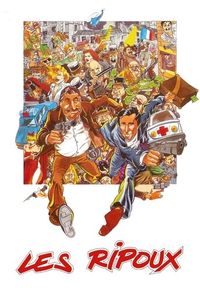
  • Les ripoux (1984)

    Les ripoux (1984)

    (On TV, October 2021) There’s something perverse and reprehensible in the idea of making a good-natured film like Les Ripoux in which we’re asked to side with corrupt policemen—and not the kind of “I kill suspects for justice” corrupt American policemen, but the kind of penny-ante bribes-and-shakedown from neighbourhood hoods and shopkeepers, all speciously justified by a theory that everything’s illegal anyway. It’s even worse in that much of the film is about corrupting the righteous, as a young idealistic policeman with a bright future is gradually weakened by his mentor in crime, then goes on to outdo his teacher. But a few things ensure that we still have a good time. For one thing, the film stars two of the most effortlessly watchable actors of French cinema—Philippe Noiret as the elder statesman of graft, and Thierry Lhermite as the ever-eager scholar. Some swift and efficient characterization works wonders in aligning us with them, even as their behaviour is completely reprehensible. The tone is resolutely aligned with dark comedy, and the bigger villains of the film are drug dealers who had it coming anyway. Sure, there’s a long essay to write about how movies such as Les Ripoux normalize bad policing, corrode confidence in law enforcement, gum the efficient working of the free market and certainly end up making victims along the way. You’d expect such a storyline to be more appropriate for a poorer country where corruption is rampant… but it’s more shocking and funnier when set in Paris. A solid script, pungently telling details and an ultra-cynical look at police work still make this film a distinctive pick even in the hallmarks of dark crime comedy. Les Ripoux works almost against all odds.

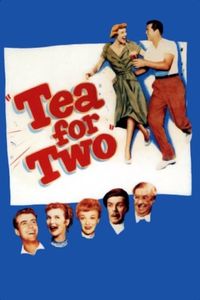
  • Tea for Two (1950)

    Tea for Two (1950)

    (On Cable TV, October 2021) Let’s face it: most classic musicals have a touch of the absurd in them—it comes with a genre in which people burst into song, dance and a full-blown orchestral accompaniment. But some kinds of absurdities are easier to take than most, and it’s often the smallest stuff that does you in: When the heroine of Tea for Two accepts a condition to answer “no” to every question and then proceeds to clearly self-sabotage every opportunity she gets, that’s somehow even harder to accept that the song-and-dance. Even as a comic premise, it’s not all that funny: there’s far more amusing stuff going around the edges of the main plot. For instance, the picture noticeably grows brighter the moment S. Z. Sakall walks on-screen, with bonhomie and exasperation. As the lead, Doris Day (in her first leading role and first dancing role) is okay—maybe slightly bland, but still able to carry the film. The songs are sometimes fun but not specifically memorable, while the dancing numbers are fine—the highlight is a bit of staircase tap-dancing from Gordon MacRae. Tea for Two is in the honest average of 1950s musicals: not exceptional, not terrible, perhaps slightly more forgettable than it should but still an acceptably good time.

  • Equals (2015)

    Equals (2015)

    (On TV, October 2021) As someone who has read a lot of Science Fiction at an impressionable age, there are a few basic plots that I can’t stand any more, or at least not without significant tweaks. “Living in a society that eradicates emotion” is one of them—I can’t believe in it, I think it’s a naïve concept and unless filmmakers bring something new to the table (such as the gunplay in Equilibrium), it’s useless to go take on literary classics such as Nineteen Eighty-Four or We. So when Equals comes barging in, convinced of the worth of its lame story about star-crossed lovers in a society that (somehow? For some reason?) has outlawed emotion, I am not necessarily on board. When it goes through the motions of a trite plot without much variation on the ur-plot of such stories, I am increasingly not on board. When it casts two of the least expressive, least subtle actors in the business, I am very definitely not on board. When it smothers everything with an excess of dull visuals, muted colours and humourlessness, I am so far away from the board as to not even knowing a board exists. Casting as expressionless an actress as Kirsten Stewart in the role of a young woman living in an emotionless society is either a misfire or perversely ironic— and coupling her with Nicholas Hoult is even worse. While Equals may work as baby’s first dystopian romance, it’s weak, tasteless brew compared to even the most average examples of the form.

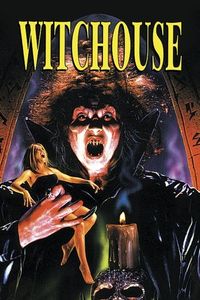
  • Witchouse (1999)

    Witchouse (1999)

    (In French, On TV, October 2021) Hey, real talk right now, OK? We’re among friends here, and it’s not as if the whole Internet’s watching. I will always have a look at witch-themed horror films because I believe, as many filmmakers do, that witches are sexy. The dark gothic thing works well with me, and once you throw in the idea that witches know things that mortals don’t, and that historically they were the women with enough sense to move away from the village to have their own house in the forest and that’s a potent mix. Lighthearted horror film Witchouse does several things wrong (including a misspelled title), but one thing it does get right is Ashley McKinney Taylor as a twentysomething witch inviting “friends” over to her haunted manor for a weekend of fun and games. It is, predictably, a trap meant to conjure the spirit of her long-dead ancestor, but—shh—the point of the movie is having the characters have sex and die, or figure out the threat they’re facing. In addition to the whole witch angle, I’m also a sucker for haunted-house stories and Witchouse’s thin budget does manage halfway credible gothic sets. Monica Snow is very cute with glasses and curly hair, but her survival isn’t much in doubt as the story moves through very familiar plot points. Witchouse is not a good movie by most objective standards—coming from low-end Full Moon studios and directed by B-movie-making machine David DeCoteau (as “Jack Reed”) and produced by the legendary Charles Band, this is meant as very light horror—not quite comedy, but not overly sombre either. There’s a good heaping of nudity and comparatively light violence, a formulaic story and just enough production values to enjoy the result. It’s not refined cinema, but expect a review of Witchouse 2 as soon as I can get it…

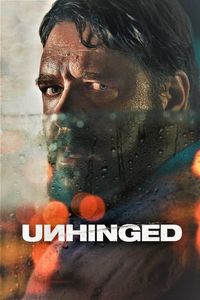
  • Unhinged (2020)

    Unhinged (2020)

    (Netflix Streaming, October 2021) There’s something detestably pernicious in Unhinged’s opening credit sequence that sets the tone and adverse reaction from the audience—a numbing collage of carefully chosen statistics and opinions meant to rile us up into a paranoid vision of the world: We’re stressed, we’re angry, we’re under threat and that normalizes utter psychopathy. I do not think that’s a responsible message, especially as Unhinged completely falls apart if you don’t have a perfect psychopath at the heart of its narrative. It does begin, after all, with the antagonist (a rotund Russell Crowe as loathsome as he’s mesmerizing) setting fire to a house in order to kill his estranged wife and her boyfriend. We’re fed some claptrap about him losing his job due to a workplace accident and subsequent opioid addiction, but little of that is important beyond having a villain able to perform a preposterous series of violent actions meant to terrify our protagonist. The spark is a road rage incident, but the purpose is a rollercoaster series of thrills from beginning to end. Few other recent films have featured so much vehicular smashing and destruction (down to a T-bone collision that doesn’t just send a car flying, but utterly smashes through its steel frame—thanks CGI!) nor any villain so disconnected from reality (his or ours) as to casually kill someone inside a crowded diner and walk away. Even in the universe of thrillers, Unhinged is less believable than most, and that severely limits its ability to be effective. By the time a trail of carnage follows the action (along with unexplained shortcuts having to do with magically finding our protagonist, or unlocking her cell phone), we’ve grown almost entirely unconcerned that something like that could even happen to us. There’s too much gory unnecessary violence (including from the protagonist) and bad attitude to make this fun, and I think that’s an issue by itself: you want thrillers to be scary but rewatchable, like a roller-coaster ride, not tip over in horror and have viewers say, “yuck!”  But Unhinged’s opening moment sets the tone: this will be ugly, and this won’t have any relationship with reality.

  • Run (2020)

    Run (2020)

    (Netflix Streaming, October 2021) I’ve been watching many underwhelming or mediocre thrillers lately, and just as I was thinking that I was becoming overly jaded, here comes Run to remind me of what works in a thriller. It does begin with a striking image, that of a newborn being revived by doctors. It doesn’t get any less troubling in the next few moments, as the showy direction portends much worse to come, but then we skip to years later, in an isolated rural house, where a bright young disabled homeschooled teenager is waiting for her college admission letters and wondering how she’ll fare once out of her comfortable environment. Alas, this is when various incidents and odd bits of information have her questioning what her mother is doing to prevent her from ever leaving. The twist in store for us is not that original (and poses vexing questions about some of what we see early in the film), but the way of getting there is a thrill ride. It starts with a likable protagonist: Kiera Allen is a revelation as the protagonist, whose bright and likable nature gets stronger in each scene. There’s obviously a mystery running thought Run, as our protagonist, once kept carefully ignorant in her domestic bubble, starts discovering more and more unsettling revelations about the pills she gets and the circumstances of her early life. There’s a bravura sequence in which she escapes to get an answer from a pharmacy that cleverly shows the balance of suspense, pacing and occasional dark humour that the film manages to create. Writer-director Aneesh Chaganty finds a good balance between showy and straightforward direction and has fun playing with his own script (co-written by Sev Ohanian, who co-wrote another recent hit with Searching). Sarah Paulson is suitably kind and menacing in the role of the mother. It all ends with a very nice final sequence, further cementing the film’s success as a thriller. A modest but confident thriller, Run is a nice surprise even for jaded viewers.