Month: October 2021

  • 47 Meters Down: Uncaged (2019)

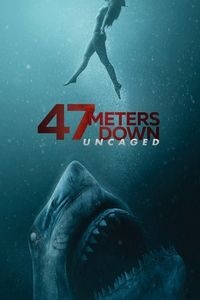
    (In French, On TV, October 2021) I wasn’t a big fan of the first 47 Meters Down—Despite the rather nice suspense of characters being attacked by sharks while caged underwater, I am growing averse to the “imaginary character” trope and I suppose that the best thing about it is that I kept expecting its sequel 47 Meters Down: Uncaged to feature a fictional character. (In vain, as it turns out.)  No, this sequel would rather focus on more sharks and more claustrophobia, as it sends four teenagers in an underground Mayan temple to fight sharks that don’t need eyes to see their prey. It’s about as straightforward as shark movies come, with a steady diet of victims for the sharks, and thrills that don’t stop until everyone is out of the water. Sophie Nélisse and Corinne Foxx headline the film as the plucky half-sisters fighting it out (if you’re guessing the other characters are expendable, well, you’ve seen enough shark films), although it’s nice to see Nia Long looking gorgeous in a very small role. The Mexican scenery is nice when above the surface, but since much of the film takes place underwater, you can expect more shades of blue than lush greenery. The climax does keep something in reserve even after exiting the underground temple, so don’t go reaching for the remote at the sight of sunlight. While I won’t argue too much with those who maintain that the first film is better, 47 Meters Down: Uncaged at least dispenses with hallucinated characters, and that makes it preferable in my book.

  • Motherly (2021)

    Motherly (2021)

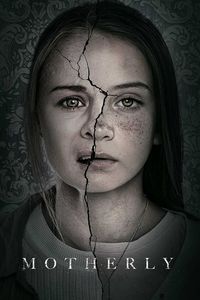
    (On Cable TV, October 2021) Hey, I’m all for horror films, or low-budget filmmakers getting their shot at making their films, or twists and turns. But there’s a point when there’s too much horror, too little budget, and too many twists and turns. By the time Motherly ends with its sadistic revelations, I was ready for a plane, asteroid or UFO to crash on the barn where the action takes place so that everyone in the cast could die. Before we get there, however, we have a lot of narrative and mysteries to get through—a woman keeping her daughter isolated at home, her trying to seduce an older man, a couple breaking into the house to attack mother and daughter while claiming that they’re responsible for the death of their own daughter… and that’s not getting into the criss-crossing affairs that characters may or may not have had or be having. It’s all built over a central deception that eventually becomes clear in the film’s last few moments, but not before nearly the entire cast gets killed in increasing gruesome ways. Despite the vivaciousness of the script and a rather effective execution from writer-director Craig David Wallace, Motherly eventually becomes more exasperating than satisfying. Fans of twist endings may feel otherwise, but there are so many lulls during the film’s 90 minutes that it exhausts rather than invigorates.

  • The Conjuring: The Devil Made Me Do It (2021)

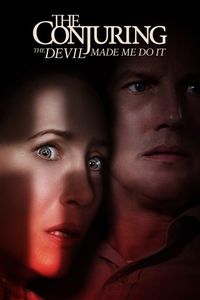
    The Conjuring: The Devil Made Me Do It (2021)

    (On Cable TV, October 2021) I went into The Conjuring: The Devil Made Me Do It with very low expectations. After a brilliant first film, the series produced so many uninspired sequels and spinoffs that I’d lost track of them all (after checking, there are three Conjuring films, three Anabelle spinoffs and two other semi-related entries so far), and couldn’t really bring myself to care about a new instalment. The first few moments of the film don’t really help, as it once again drapes itself in the silly clothes of having been “inspired by real events.” The Conjuring series is at its best when it abandons any claim to realism and goes all-out on the movie horror stuff, and that’s what eventually happens… in the third act. Until then, the laborious set-up has the series lead Ed and Lorraine Warren (played by the very likable Vera Farmiga and Patrick Wilson) turning up as supernatural investigators trying to prove demonic possession in a court of law. That silliness contaminates much of the film’s first half, but things get better as the shape of the plot gets clearer. Not merely facing supernatural possession, the Warrens eventually find themselves faced with a physical antagonist running around, casting spells and curses, and eventually driving the spouses against each other. The climax is as spectacular and non-realistic as any horror film laden with special effects and slow-motion shots, as the Warrens join forces once again and take on their physical opponent. From a humdrum beginning, The Conjuring: The Devil Made Me Do It ends up climbing its way to adequacy—a step up from the rather dull second entry, and a clear improvement over most (all? I don’t care to remember) of the films in the “Conjuring Cinematic Universe.” It’s not much, but it’s enough to make me more partial to a fourth film, especially now that we’re getting into the 1980s and getting farther and farther away from being overly reverential to the real-life material from the Warrens’ lives.

  • The Righteous (2021)

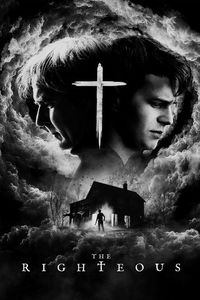
    The Righteous (2021)

    (On Cable TV, October 2021) It’s amusing that what could be seen as a worrisome warning sign ends up being one of The Righteous’s main assets. I’m talking about the decision to shoot a sparse low-budget rural horror film in black-and-white, of course—often an announcement of pretentious intensions artistiques, it actually works really well after a while: writer-director-star Mark O’Brien knows what he’s doing, and the combination between the black-and-white cinematography and the dreamlike imagery is not accidental. The film does take a very long while to get going, though, as an older man burdened with grief sees his tranquil rural existence disturbed by the arrival of a wounded young man who starts questioning him and making things happen in a very disturbing fashion. It takes too long to set up the mystery—even at 97 minutes, The Righteous is too slow for its own good. But there are a few great moments along the way, as the nature of what’s going on becomes obvious and the film somehow ends up in apocalyptic territory in time for a grand-visual finale. Henry Czerny is quite good as the protagonist, his presence helping viewers forget that it’s a low-budget film with a handful of characters and a very constrained shooting location. Still—the images are quite nice at times, the black-and-white cinematography doesn’t simply look like an absence of colours, and the dramatic duel between the two main characters earns our attention. The Righteous is still somewhat of a niche film when it gets into spiritual discussions in a world that doesn’t quite make sense (and thinking too hard about that does nullify a bit of the dramatic weight of it all), but it’s not badly executed.

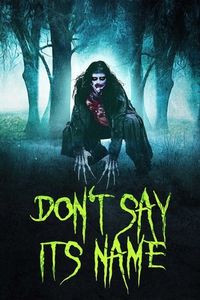
  • Don’t Say Its Name (2021)

    (On Cable TV, October 2021) First Nation cinema is super-hot in Canada at the moment, and national cable channels are scrambling over themselves to showcase it. As a low-budget horror film, Don’t Say Its Name plays things cleverly with an invisible monster attacking its characters, leaving blood traces but not much more as the local police try to figure out what’s happening. Shot and set on a reserve, with an underlying rationale that touches upon mineral exploitation, it features a mostly-First Nations cast with two female protagonists, checking off all the possible diversity boxes along the way. It’s not exactly a great movie, but even an average horror film can be fun to watch when it’s efficiently handled, set in a somewhat different setting and stamped with the CanCon seal of approval. Writer-director Rueben Martell keeps things going at a steady pace despite a few sputters along the way and a coda that I found deeply unsatisfying. It would be easy to primarily see this film as a First Nation horror novelty alongside Blood Quantum and Rhymes for Young Ghouls—that’s pretty much the tack this review has taken so far, and I see nothing wrong to put Don’t Say Its Name on my list of recommendations for people wanting more inclusive Canadian cinema. But it’s a decent-enough horror film in its own right, with a good unseen monster and some capable action beats for its heroines. All the better for it—this is going to play for years on Canadian cable TV channels.

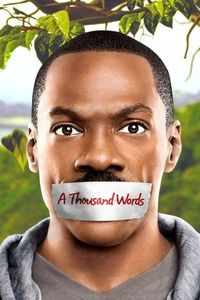
  • A Thousand Words (2012)

    (In French, On TV, October 2021) Having a high concept is nice, but you still have to make sure that it can sustain a film for its full duration and not trip upon itself along the way. The big joke in A Thousand Words is having celebrated motormouth Eddie Murphy being stuck in a character fated to die after saying a thousand words. Some of the material is indeed amusing (even in French dub, nullifying some of Murphy’s specific cadence), although getting Murphy to grimace and gesticulate wordlessly throughout much of the film’s second half feels like a waste of comic potential. But that’s nothing to the troubles that the script gets into once it has to provide a justification, emotional weight and consistent rules backing up the conceit. Either you learn to go along with the jokes driving the logic of the film, or grit your teeth at the way nothing really makes sense in the rules the film sets up and then ignores for itself. It gets even worse when the script desperately wants to ground the comedy in heavy mortal drama, with somewhat over-familiar character motivations acting as lame last-minute emotional manipulation that never quite works. It’s not a great movie—released four years after production, it was unanimously panned and rarely comes up anywhere any more—but it’s probably not as bad as you can imagine. Not high praise, but considering the high concept it started with, A Thousand Words should have been quite a bit better.

  • Deceived (1991)

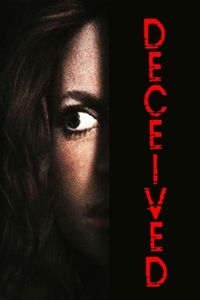
    (In French, On Cable TV, October 2021) Sometimes, casting is not about putting familiar actors in familiar roles, but having them play against type and bring something new to a formula. Seeing Goldie Hawn in an unusually dramatic role in Deceived is more interesting than many other casting decisions, for instance. It certainly helps bring some interest into a twisty suspense that nonetheless feels very familiar: a wife discovering that her loving husband is someone else, living a double and even triple life unbeknownst to her inattentive self. There is, despite the familiar elements, a solid core of mystery at the heart of the film that does get it going once past the lovey-dovey depiction of a perfect couple perfectly in perfect love. We know that these things don’t last long in thrillers, and before long the husband is dead (?), his identity is questioned, his new family revealed aaand he pops up again as a born-again psychopath. That’s the way such films go, and seeing Hawn dealing with this in a rare non-comic role is part of the fun. Still, Deceived manages to be both familiar and nonsensical—the over-the-top ending burning up much of the accumulated goodwill gathered so far. Not a terrible viewing experience, but ultimately a disappointing one—but the ride in getting there is not without its own fun.

  • The Curse of Frankenstein (1957)

    The Curse of Frankenstein (1957)

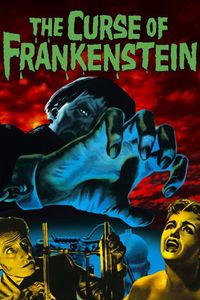
    (On Cable TV, October 2021) I’m a latecomer to the Hammer renaissance of the classic Universal Monsters, but I’m slowly getting there. For those who are following me in this path: Universal had an amazing series of successes in the early 1930s, creating at least five of the classic movie monsters (Dracula, Frankenstein, Wolfman, The Mummy and The Invisible Man, with an honourable mention to the Creature of the Black Lagoon) that still dominate Halloween iconography even today. That success largely waned throughout the 1940s, with parodies and insipid sequels being mere echoes of the originals. But by the late 1950s, British studio Hammer had similar success re-creating four of those monsters (Dracula, Frankenstein, Wolfman and The Mummy) in glorious Technicolor and with some of the best possible actors in those roles—specifically Christopher Lee and Peter Cushing—for a lengthy series of films that not only re-created the originals for a new generation, but went far in their own direction. All of this began in 1957 with The Curse of Frankenstein, which spun the classic monster closer to its literary origins, focusing on Doctor Frankenstein more than its creature. The result still feels fresh today — less well-known than the first two Universal monster movies, but interesting in its own way. Cushing is quite good as the mad Doctor Frankenstein (with Lee as the monster), and the production values have a nice period sheen to them. After nibbling at some of the Hammer horror films over the past year, I’m stuck wishing that there was a Blu-ray box-set as nice as the Universal one so that I could dive into the extended series serially and see how it developed over time. (Yes, I know about the Mills Creek collection—but it doesn’t have everything.)

  • Footsteps in the Dark (1941)

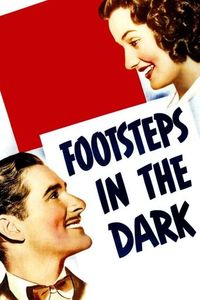
    (On Cable TV, October 2021) For a 96-minute comic murder mystery starring Errol Flynn as an accountant moonlighting as a mystery novelist and then an amateur sleuth, Footsteps in the Dark can be curiously laborious. The initial revelation of the protagonist’s hidden identities, which should have been a slam-dunk of comedy, falls rather flat… and that’s only a harbinger of the gracelessness to come. What has the potential to become a crackerjack comic movie ends up being clunky and inexplicably inert. It could have been a sort of Thin Man origin story, as the wife of the protagonist suspects the worst and discovers a mere amateur detective rather than a wayward husband. But the mixture is wrong—wife and husband take too long to trust each other and never manage to work as a team long enough to be interesting. Flynn looks amused (this was a rare contemporary piece after so many swashbucklers) but this amusement doesn’t translate into viewing fun due to the misguided script. Oh, there are a few good moments along the way… but they feel too rare and spaced apart rather than reinforce the full premise of the film. In a way, I was due for a film like Footsteps in the Dark—as I move past the classics and solid hits of Classic Hollywood that have aged well in the modern era, I’m going to encounter more and more disappointments… much like the audiences of the time.

  • A Nightmare on Elm Street 4: The Dream Master (1988)

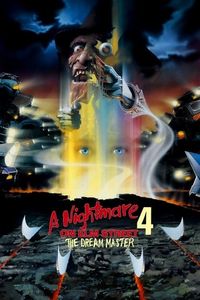
    (On Blu-Ray, October 2021) Annoying in concept and somewhat better in execution, A Nightmare on Elm Street 4: The Dream Master benefits from having Renny Harlin in the director’s chair. In what ended up being his breakthrough American film, Harlin here shows some flair in setting up the scares, with better-than-expected cinematography, effective special effects (for the late 1980s, of course) and decent pacing. The surreal imagery that distinguishes the series is once again a reason to watch it over more ordinary slasher films of the period, and so are the actresses. (Lisa Wilcox does surprisingly well as the heroine, but I was just sad when Toy Newkirk’s character left the film.) Where I’m not so happy with The Dream Master is in its overall plot, which brings back characters from previous films only to kill them, with this endless parade of kills only reinforcing the arbitrary nature of the series’ plotting. To that we can add the kiddification of Freddy Krueger in an annoying quip-spouting sort-of-protagonist, neutralizing the dread that the character was supposed to cause. But four instalments in—what were we expecting? It’s a minor miracle already that the direction is decent and the visual style still raises the level of the series’ nightmarish imagery. (That insect transformation sequence… yuck.)  The Dream Master is still worth watching if you’re this deep into the series and know what quirks to expect, but I suspect it won’t make many new fans.

  • Boo! A Madea Halloween (2016)

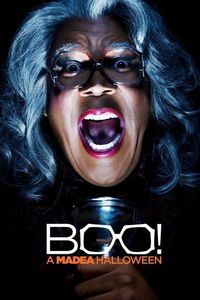
    (On Cable TV, October 2021) No one can make a case that Boo: A Madea Halloween is a particularly good movie. Even in writer-director-producer Tyler Perry’s filmography, it’s a bit clunky, far-fetched, obvious and trite. But I nonetheless found it fascinating—it manages to have a Halloween comedy for an adult audience without supernatural or overly violent elements in the end. It plays to a small-c-conservative crowd, but skirts the edges of having a comedy set-piece set in a church, and reinforces family values in its conclusion after going through a tough-love phase. Perry himself plays three roles, two of them the thesis/antithesis of what familial love means for the teenage protagonist of the film. Dismissing Perry’s films is easy, but they end up being fascinating in their own way. If Boo: A Madea Halloween feels slapdash and basic at times, it’s explained by an astonishing 6-day shooting schedule—that’s not a lot of time to finesse details, let along build some visual interest along the way or whittle down the film to its core. As Madea, Perry is not bad—and there are plenty of comedic curveballs to distract from some obvious messaging about fatherly love and protection. (It’s refreshing, in a way, to see the college-age party animals react rationally when they discover that the heroines are underage—the girls suddenly become as if radioactive to the fratboys, and that’s a clear sign that the film is not going to go there.)  It’s unfortunate that Perry’s writing can be lazy, or that the tone of the film goes everywhere without control. Of course, at this point in my exploration of Perry’s filmography, I’m essentially a convinced fan—not necessarily a member of his core audience, but someone who’s quite willing to play along.

  • Far from Home (2014)

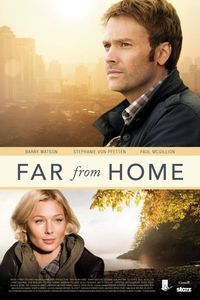
    (On Cable TV, October 2021) The premise of Far from Home ought to feel familiar: “Prodigal child returns to their hometown where they discover the meaning of their lives, and romance along the way” is the ur-plot of Lifetime/Hallmark made-for-TV movies, and the only halfway interesting thing about this film is how it goes for a male protagonist. (The formula is usually told from a female perspective.)  Our protagonist is a bitter failed writer—there’s not much tying him to the city except his initial obstinacy and overall attitude. Back on familiar grounds, he discovers that he has inherited his uncle’s town newspaper, and that the local lawyer showing him around is curiously interested in him. His resistance to the village’s insistence on claiming him as a native son predictably fades away in time for the climax, with a little bit of an evil-developer subplot and lightning-fast romance to spice it up. This is comforting filmmaking—there aren’t that many difficult conflicts, everything is neatly wrapped up in the end, and the British Columbia mountain scenery is used to good effect. As with other made-for-TV romantic comedies, this genre offering aims to deliver exactly what is expected of it. The protagonist is perhaps a bit too dour for his own good at first, but we all know where it’s headed. There is (as is often the case with made-for-TV movies) a thorough and rather funny romanticization of what fiction writers do, but Far from Home does have its charm and isn’t a waste of time, despite slow pacing and obvious plotting: director Michael M. Scott hit his targets and leave a good impression.

  • Sacrifice (2019)

    Sacrifice (2019)

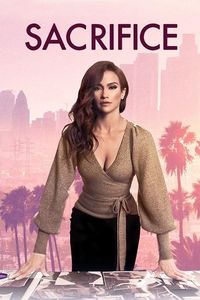
    (On TV, October 2021) Star power, sex-appeal, likability… call it what you want, but such a thing can matter a lot in compensating for an otherwise disappointing film. I would watch Paula Patton in just about anything, and so she’s one of the few things keeping me from calling BET+ Original film Sacrifice a complete miss. Here she plays a high-powered entertainment lawyer who, rather than do dull stuff like negotiating contracts and taking care of intellectual rights tangles, uses shady methods to investigate crimes and fight the local District Attorney on behalf of her rather loathsome clients. There’s a uniquely BET sensibility to the premise, blending flashy entertainment bling (all of her clients are music people—nothing so mundane as a writer or non-hyphenate actor) and the narrative assets of someone who can fight crime. Or condone it, as the film’s fuzzy morality suggests. If that sounds like an ideal premise for a Ray Donovan-like TV series, then you’ll understand my growing dismay as the film heads for a non-conclusive ending as if it was a TV pilot, because it is, and to a degree rarely seen in publicly aired pilots. Interesting characters are introduced, plot lines are set in motion, the dramatic redemption arc is barely sketched (let alone begun), an innocent killed, an overarching mystery set up… and then the film ends at a funeral, with opposite personalities hissing at each other while outlining the moral stakes of the series. Designed to hook viewers into a series that, as of one year after the announcement, was theoretically approved but never put in production due to the pandemic, Sacrifice is probably avoided until the follow-up series materializes [November 2021: Which it did!], or unless your crush on Patton is strong enough. Uninspired direction and some clunky dialogue don’t help. The unfinished narrative business also gives a very odd morality to the standalone result: The protagonist is set up as having many long-term issues (murdered dad, promiscuousness, shady morals) that are designed to be untangled and resolved over a long period of time, but just make her feel like an unlikable villain—even when she sororially tangles with a bullheaded DA that, from an objective perspective, should be the person we should cheer for. Liking Patton (and the extravagant outfits she gets in every scene) helps a lot, but she’s a beautiful actress who needs to be firmly directed to break out of her emotionless delivery, and I don’t think that writer-director Chris Stokes was able to do that: whether it’s a quirk of character or the actress herself, her flat blank-face line reading is not nearly effective enough. I did like many of the supporting characters, though—Erica Ash frequently rolls over Patton as the hard-charging DA, Veronika Boseman is captivating in a supporting role and there’s a good geekish character that feels like an ensemble dark horse. You can see where a series would go with those elements, but that presupposes that a series would be there to provide character development and dramatic resolution. Right now, though—none of that is available. Some pilots are developed without resolution… but they’re never shown publicly without the rest of the series, and that’s probably what should have happened with Sacrifice.
  • Sorry, Wrong Number (1948)

    Sorry, Wrong Number (1948)

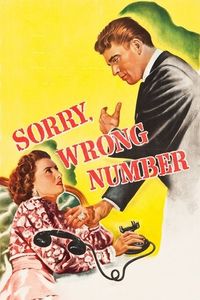
    (On Cable TV, October 2021) It took me too long to warm up to Barbara Stanwyck as an actress (as opposed to a collection of great performances) but now that I have, nearly every film in which she’s involved is worth at least a first look and sometimes a second. In Sorry, Wrong Number, she has the advantage of being paired up with Burt Lancaster in one of his first roles, playing against this leading-man good looks. Both are well-known actors born only six years apart, but they are not often associated with the same period in film history (her: 1930-40s; him: 1950s-60s), so it’s interesting to see that pairing on-screen, toward the end of Stanwyck’s glory days and the very beginning of Lancaster’s rise. Sorry, Wrong Number’s other two assets are a devilishly effective premise (an invalid woman hearing her own murder plotted on a phone) and an utterly merciless ending that still manages to shock decades later. In-between those highlights, however, the film can occasionally drag—In an effort to expand the original theatrical story into feature-film length, this adaptation includes flashbacks explaining everything about the characters and where they’re coming from. Some of it is effective, some feels like padding even at a total length of 89 minutes. Stanwyck is effective as always (she was nominated for an Oscar for the performance), while Lancaster feels almost subdued in a shifty role. There’s a good reason why Sorry, Wrong Number remains a film noir landmark—the fatality of its last third weighs heavily in a movie that does not reach for a preposterous happy ending. Not bad—but you may want to watch something cheerier afterwards.

  • The Importance of Being Earnest (1952)

    The Importance of Being Earnest (1952)

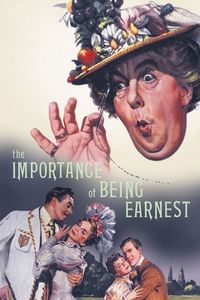
    (On Cable TV, October 2021) Anything signed Oscar Wilde (even in adaptation) is worth a listen for the quality of its dialogue and The Importance of Being Earnest does not disappoint there, with clever wordplay, florid answers, witty repartee and other comic devices not necessarily aimed at the lower possible common denominator. While I do like the 2002 version better in general terms, this earlier take has the writing quality required to stay interesting, and generally does justice to the source material. So closely does it present the theatrical piece to film that it feels impossible to praise or criticize the film on its own basis—we always return to the original text to talk about the way it satirizes Victorian themes that prove timeless. Writer-director Anthony Asquith gets the pieces moving, and the actors do well with their material, although Edith Evans clearly takes the role one notch higher through sheer delivery. In the end, The Importance of Being Earnest works well enough—I would still recommend the later version, but this first take is still very watchable as a farce with a distinctly mid-century British execution over its 1890s material.