Month: October 2021

  • Gridiron Gang (2006)

    Gridiron Gang (2006)

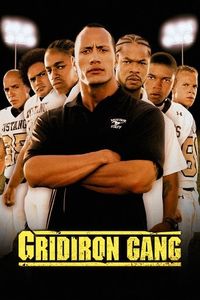
    (On TV, October 2021) As far as typical American movies go, it’s hard to manage the three strikes that is Gridiron Gang, which combines the last echoes of slavery, the current shame of the prison-industrial complex and the bread-and-circus fascination for football. The plot, adapted from a true story, is not hard to grasp, as a compassionate carceral worker (Dwayne Johnson, looking significantly younger) creates a football program for incarcerated (nearly all-black) youth. His hope is that, by training for sport, his young charges will create a stronger identity with their sports team than with the street gangs. Of course, it works (at least from the text at the end of the film) but was that ever in doubt? The meaning of the film isn’t in the ending but in the very familiar material that leads to it, as our protagonist’s empathy leads the troublesome youth to act better and become better. Conventional to the point where it’s not really necessary to see the film to grasp what it’s about, Gridiron Gang is not badly made, but its appeal falls sharply the moment it tries to reach audiences that aren’t as indoctrinated in the American system of crime and punishment, or the finer points of football. Fortunately, that’s where the familiarity kicks in: no matter whether you can differentiate a quarterback from a goalpost, Gridiron Gang’s dramatic arc is solid enough that the football sequences merely become interludes between more substantial material. Johnson, at least, used this film to demonstrate his likability as an actor, which would help in stepping up to his current superstardom. Otherwise, there isn’t much more to say: the execution is competent enough that “disaffected youth play football for self-improvement” is all you need to know to deduce if you’re going to enjoy this or not.
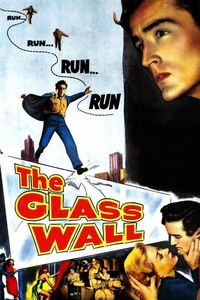

  • The Glass Wall (1953)

    The Glass Wall (1953)

    (On Cable TV, October 2021) While shown on TCM as part of their film noir showcase, I’m more likely to think of The Glass Wall as an immigration drama with a thriller edge. It begins as a Hungarian refugee is denied entry in New York City—despite being eligible for entry for having helped an American soldier during WW2. His deportation being imminent, he takes a chance and sneaks into the city to find the soldier he helped, hoping he may be able to help him establish his legitimate reason for claiming asylum. It does not go smoothly—a trip to Times Square to find his clarinet-playing friend in jazz clubs is complicated by run-ins with various people and an internal injury. Gloria Grahame plays the woman he befriends along the way. There’s some definite tension in trying to find his friend before the police find him, and the escalating level of despair he manifests. As the film goes on, it also becomes far more earnest about the plight of refugees—all the way to walking inside the then-new United Nations building (the titular Glass Wall) to address an empty room. It’s a bit much, but at the same time it clearly states the objectives of the film. The Glass Wall wraps up as a tight 80-minute thriller with a better-than-average social conscience, with some interesting 1950s NYC scenery along the way.

  • Supercondriaque (2014)

    Supercondriaque (2014)

    (On TV, October 2021) Writer-director Danny Boon has been establishing himself as one of France’s leading film comedy powerhouses since the 2008 breakout hit Bienvenue chez les Ch’tis. Supercondriaque is one of the six films he has led as a filmmaker since then—all broad, big-budgeted (by French standards) comedies aiming at a large public and featuring Boon in leading roles. They’re not that different from the mainstream of Hollywood comedies—clear high-concept premise, formula-tested development, big finale, safe themes and fun for all. In Supercondriaque, we have Boon as an exceptionally hypochondriac man pushed by his exasperated doctor to take back control of his life and get over his imaginary ailments. The big push, after a rather lengthy forty-some minutes of throat-clearing, comes when his uncanny resemblance to a foreign freedom fighter leads to outrageous mistaken-identity romantic and political adventures designed to push his limits. You can guess that it ends on a very funny sequence in which he laughs at unimaginable filth—it’s rather funny to see him bond with a rat. The pacing is generally breezy once it gets going, although Boon and co-star Kad Merad can’t quite avoid some mugging for the camera. Two-time Boon collaborator Alice Pol (she also shows up in the subsequent Raid Dingue) is cute in a less overly comic role, with some good supporting work from a variety of other actors. Supercondriaque is not refined filmmaking, but it’s handled with competence and energy. The gags in the film’s last half get desperate at times (there’s an entire stream of jokes about Victor Hugo’s characters that gets to be a bit much) but that’s in keeping with the increasing frantic nature of the film. For Anglophone audiences looking in tackling recent French comedy, this is not a bad choice—the essential Frenchness of the result isn’t too pronounced and Boon’s lunacy translates well.

  • Future World (2018)

    Future World (2018)

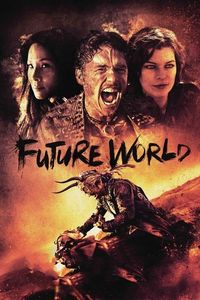
    (In French, On TV, October 2021) I’m not sure that there’s another recognizable actor out there that has directed as many films as James Franco… to so little impact. I’m counting 18 movies (many of them shorts, documentaries or small-budget indies) in his filmography and the only one that earned some attention was the (admittedly good) The Disaster Artist. Franco, of course, has this weird reputation as an intellectual semi-pretentious artist in between sexual misconduct allegations, with some higher-education controversy blending with the allegations. But little intellectual pretension is on display in his Future World, a film that, at best, can be called a modern take on 1980s post-apocalyptic film. Modernity is relative, of course—the production can rely on far better cameras and more equitable diversity in casting and characterization than thirty years ago, but the stupefying mediocrity of the writing remains the same. I’m not sure what Franco did behind the lens—he has co-directing and producing credits, but Bruce Thierry Chung co-directs and co-wrote the film. Perhaps Franco’s biggest contribution was to help put together a recognizable cast. Aside from himself in a small role, we also get walk-on parts for Snoop Dogg, Cliff “Method Man” Smith, Lucy Liu (underused!) and Milla Jovovich (who seems to be the only one having fun in a dour film). As a post-apocalyptic film, Future World deals with the usual dumb clichés of the genre without questioning them, in a wasteland where motorcycles nearly outnumber humans. The cameras are far more mobile than in previous generations, but that’s roughly where the noteworthiness of the execution stops. The rest is just blander than you can imagine, with very little in terms of entertainment or interest. If that’s Franco in entertainment mode, it’s probably best that he remains in the arthouse world for a while longer.

  • Black Widow (2021)

    Black Widow (2021)

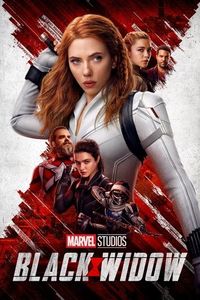
    (Disney Streaming, October 2021) Considering that Black Widow led to an unusually high-profile profit-sharing lawsuit between star Scarlett Johansson and studio Disney, it can be amusing to refer to it as a contractual obligation on all sides. On Johansson’s side, it was seen as correcting an embarrassing oversight—finally, a standalone film for the sole first-wave female Avenger, even if it meant going back in time prior to the character’s death. It also fits within the Marvel desire to diversify its offerings beyond the all-white, all-male focus of its early films. So that’s how we end with a flashback story in which we follow the Black Widow character in between two previous films, tracking her efforts to reunite with characters from her past and take down another villain along the way. Stemming from the character’s past as a deep-cover agent in the United States, the first two thirds of the film present themselves as a spy adventure with occasional intrusion from the superhero world, only to flip squarely in the superhero “battle in a floating enemy base” mould by the end. But in fulfilling a contractual obligation to Johansson, her character, and fans, Black Widow ends up being a contractual obligation for viewers as well. Tangentially fitting within the overall continuity of the MCU (although the film is a successful feature-length audition for Florence Pugh to take up the character’s mantle going forward—in other words, a character’s introduction… and a hint toward Captain America being present in the 1980s), it feels like a sideshow in more ways than one. The links to the MCU are slight, the story is lower-profile, and the stakes are trivial until they get kicked up to world-changing status in time for the switch to superhero mode. There are several head-scratchers stemming from lazy storytelling and retroactively trying to fit something in the continuity. So, basically—Black Widow is a lower-tier Marvel film, perhaps the dullest since, oh, Thor: The Dark World. (I had similar concerns about Captain Marvel and Doctor Strange, but both of those had some great narrative hooks to go along with the familiar formula.)  It’s technically the first of the Phase Four MCU films, but the setting in between other Phase Three films makes it feel like it belongs to the earlier phase. Considering that the Marvel creative team is putting pieces on the checkerboard for years of post-Thanos storylines, it’s not a bad time to fulfill those contractual obligations, introduce new characters, do a bit of housecleaning, rebalance the diversity ratios and have a breather episode. At this stage, even an underwhelming Marvel film is sufficiently comfortable to deliver on basic points of popular entertainment: evocative character work, competent actors, slick production values and kinetic action sequences. It all feels very familiar, but comforting at the same time: another contractual obligation to deliver what the audience expected. I expect the film to end up being a small sideshow to the MCU—the kind of instalment that, in a few years, will be flow-charted as one of the optional entries in the canon, for completists and fans of the character only. Until then, well, there’s already Shang-Chi and the Legend of the Ten Rings in theatres and Eternals a few weeks away from release, so there’s always something else in the pipeline.

  • Dr. Jekyll and Mr. Hyde (2003)

    Dr. Jekyll and Mr. Hyde (2003)

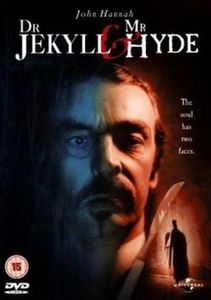
    (In French, On Cable TV, October 2021) As I grow older, I’m less and less bothered by series of film adaptations of literary classics—in fact, it’s rather wonderful to see how each era tackles the same source material, through its own biases, styles and self-censorship. In measuring the 2003 version of Dr. Jekyll and Mr. Hyde against earlier version from the 1930s-40s, I’m surprised to realize that this one makes the striking choice to not overplay the physical difference between both alter egos—John Hannah plays Hyde with a minimal amount of makeup compared to Jekyll, giving a welcome spin on the idea of the duality of both characters. It’s bloodier, far more aware of the homoerotic aspect of its material (to the point of Hyde killing a woman held by Jekyll and embracing him as she slumps to the floor—yes, this turns weird at times) and more straightforward in the realism that earlier filmmakers could not show. The period recreation is generally convincing, albeit limited by the budget of a TV movie. It almost goes without saying that those most used to seeing Hannah in comedic roles may have a harder time adapting to the film—as will Robert Louis Stevenson’s readers, who will tick off the film’s numerous deviations from the source material. But this Dr. Jekyll and Mr. Hyde still stands distinctly as an unusually daring approach to the material, pushing the psychological dimension of the tale and taking it in a different (if imperfect) place. It doesn’t feel much like a repetition of earlier versions of the material, not even Mary Reilly. Oh, and here’s something I did not know before doing research for this capsule review—Stevenson’s Dr. Jekyll and Mr. Hyde wasn’t a reaction to Jack the Ripper—it predates the first murders by two years, and a theatrical adaptation of the novel was shut down due to concerns over the killings!

  • Perfectly Single (2019)

    Perfectly Single (2019)

    (On TV, October 2021) I really wanted to like Perfectly Single more than I did. I’m an unusually supporting (even enthusiastic) viewer for BET-broadcast romantic comedies, and I’m rooting for all of them to succeed. But it doesn’t take all that much time for this film to show signs of frustrating clumsiness, and those only became worse as the film went on. It’s not as if the film doesn’t have its assets—the core idea of a career woman wrestling with impending middle-age and her lack of committed romantic relationship is familiar but strong, and the cast of the film is quite attractive. Shooting in Los Angeles means some vibrant scenery, and the dialogue is frequently as ambitious as it’s loquacious. In fact, it’s difficult to believe a film can miss with those assets—especially in the romantic comedy genre, which is exceptionally tolerant of imperfections as long as the basic formula is followed. But Perfectly Single repeatedly grates in many different ways. Even excusing the film for being made on a low budget does not excuse the slap-dash script, indifferent direction or some baffling creative choices. Where to start? Probably with the script, its constant irritations and its clear signs of having been put together at the last minute. Many of its flaws could have been excused had the tone been constantly closer to broad comedy—but the constant back-and-forth between bawdy farce and heartfelt romance is jarring and awkward. Florid dialogue feels forced, aberrant behaviour goes unchecked (such as an adultery subplot involving an insanely controlling wife, barely shrugged about), crude material is out-of-place and troubling assumptions are accepted without discussion. Even the fundamental building blocks of the script are dubious, put together without any discipline. Characters go in and out of focus without a strong structure, while time skips and significant events (such as a breakup) are glossed over, and some scenes directly contradict earlier scenes. (Two examples: In one scene, characters watch another undress, only to cut back to her still being clothed; in another pair of scenes, the adulterous wife tells her husband she’s going out on her own and to watch their kid, followed by another scene in which she establishes her affair alibi with a friend and says she’s off to pick up the kid at her mom’s. What?)  Even the viewpoint of the film feels dubious—initially female-centric, but marred by what’s clearly a male screenwriter, and then fuzzed up by screen time being divided in a badly introduced ensemble cast. The film’s conclusion, which is almost scientifically impossible to screw up in a romantic comedy, simply peters out with a weak and fuzzy climax, a meaningless gesture (like she’d forget picking up that dropped earring) and behaviour that escapes human normalcy. And all of this is without mentioning some strange editing choices and confusing sound mixing. Oh, and let’s not even mention the puerile tone of a script that seems to be examining turning 40 from the perspective of a 25-year-old—for such a smart character, our protagonist has some serious unexamined issues that simply don’t ring true. Writer/director Van Elder has really, clearly, amazingly screwed up here in so many ways that we’re left to wonder how the result made it to the finish line without anyone—producers, actors, editors, friends, neighbours, caterers—even trying to fix some of those issues. I did get some viewing enjoyment out of Perfectly Single, but it was a sense of wonderment at seeing how many strong assets were being wasted, how many ways the film could find to be irritating, and what changes could have improved it all.

  • The Family That Preys (2008)

    The Family That Preys (2008)

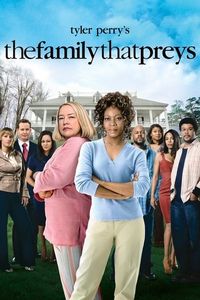
    (On Cable TV, October 2021) Anyone wondering about Tyler Perry’s early-film-career strengths and weaknesses (not that there’s been much of a change since then) can always have a look at The Family that Preys, a middle-of-the-road effort that does feature the usual highs and lows of his film work. On the good side, we have a heartfelt look at black characters, with an emphasis on female characters. There are effective sequences supporting a strong sense of humanist morality, religion and family. There’s often (but not always) a clear-cut distinction between good people and bad ones, with the virtuous getting their rewards at the end. He manages to attract very interesting acting talent, and his flair for populist entertainment is far better than most other filmmakers, especially in playing to his specific audience. His penchant for melodramatic plotting (in the neutral sense of the expression) makes for easy, sometimes even engaging viewing—it’s easy to sit down and be swept in the story, even as blatantly plotted as it can be. On the other hand, his excesses are also here—a lack of a clear theme that leads to an unwieldy, sprawling structure that barely sits down to work out its own ideas. The writing is not very elegant (that “memory card” bit is, wow) and the points it makes are not subtle at all. Even the film’s striking moments (such as a man slapping his adulterous wife, portrayed as justified, or a homeless person being revealed as very important) seem very calculated. The caricatural nature of the antagonists is often too broad to be credible (the adulterous son even booking the same hotel room as his adulterous father!) and you know within moments who you’re dealing with—a woman putting down her man’s dreams is obviously up to no good, right? And yet, The Family that Preys rather works if you’re willing to be forgiving. The cast certainly helps—Kathy Bates effortlessly dominates the film as a matriarch, and her rapport with a splendid Alfre Woddard is one of the film’s highlights even if their subplot seems contrived and out-of-place. Sanaa Lathan is wonderfully detestable as the female villain, while pre-stardom Taraji P. Henson plays her good sister, Robin Givens has a striking smaller role and Perry himself has a small role as a construction worker. The ending is a lot of righteous fun to watch, as people get what they deserve from an old-school moralistic standpoint. Blunt but crowd-pleasing, Perry’s films are far more interesting than their critical reputation (largely forged by movie critics outside his intended audience) would suggest. I’m having a surprising amount of fun going through his filmography, even when the films are less than wonderful.

  • Marjorie Morningstar (1958)

    Marjorie Morningstar (1958)

    (On Cable TV, October 2021) Merely calling Majorie Morningstar not one of Gene Kelly’s finest efforts is probably looking at the film from the wrong angle. As a Kelly musical, it’s definitely underwhelming—the song-and-dance numbers are few and short; he’s badly matched with a heroine (Natalie Wood) twenty years younger than he is; he’s asked to play a character of Jewish ethnicity (a stretch for Irish/German stock); and (thankfully?) he doesn’t get the girl. But that’s an awfully reductive way of looking at the film, which is an adaptation of Herman Wouk’s massive coming-of-age novel, dealing with issues of tradition and modernity clashing as our protagonist grows up and tries to find herself a suitable husband. Majorie Morningstar is noteworthy (says Wikipedia) for being unusually forthright at the time about showing Jewish traditions and rituals and explicitly having Jewish character. But that does mean that the film is, at heart, a messy romantic drama more focused on the protagonist finding herself than presenting a romance—quite a change from the usual musical comedy formula that Kelly evokes by his presence. It does make for interesting viewing—the look at NYC’s 1950s Jewish community is often interesting, and even includes a side-trip to the Catskills resorts. Wood looks great in one of her first post-adolescent roles, and some of Kelly’s dramatic material can be surprising for fans of the actor. (He also looks pretty good with stubble.)  But at more than two hours and an intentionally subtle conclusion, Majorie Morningstar does feel like a let-down of a film: something that approaches, even courts being a Technicolor musical comedy for marketing purposes, but really should have been executed in a lower-key, more dramatic form featuring lesser-known actors.

  • Warrior of the Lost World (1984)

    Warrior of the Lost World (1984)

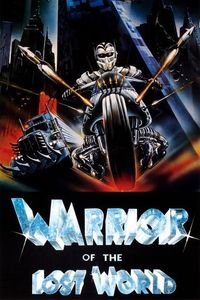
    (In French, On Cable TV, October 2021) As someone who has read metric tons of written Science Fiction, I’m probably more sensitive to bad Science Fiction than most people, and tripe like Warrior of the Lost World makes me seethe on a number of levels. It’s not just dumb science fiction filled with stolen clichés and cheap shortcuts—it’s painfully unimaginative and content to rely on material that would be too juvenile for teenage audiences. Much of the story is an obvious rip-off from the Mad Max series, with some generic authoritarian government nonsense (complete with red-white-black imagery not at all derived from Nazi Germany) on top of it. Our protagonist (Robert Ginty) looks like Chuck Norris, rides the country with his “smart” motorcycle (a thrice-talking machine so detestable that we can only cheer when it’s brutally-but-not-enough destroyed toward the end of the film) and gets rid of the oppressive regime. A few semi-known names fill up the cast, from Donald Pleasence as the top bald villain to Fred Williamson as a traitorous sidekick and Persis Khambatta (with a fuller head of hair than in Star Trek: The Motion Picture) as the mandatory love interest—plus I will never be unhappy to see Geretta Geretta pop up even in small roles. An extruded product of the 1980s Italian film industry (which had an unfortunate specialty of churning out cheap knockoffs of popular film), Warrior of the Lost World is post-apocalyptic science fiction at its laziest. There’s some money in the car chases and semi-familiar names in the cast, but that’s really not enough to masquerade the creative bankruptcy of everything else. Semi-notorious in the bad-movie genre (it was a Mystery Science Theater 3000 pick), it’s barely useful as a means of recalibrating expectations vis-à-vis dumb-but-expensive Hollywood films, but that’s not much of a barometer.

  • Gojira tai Megaro [Godzilla vs. Megalon] (1973)

    Gojira tai Megaro [Godzilla vs. Megalon] (1973)

    (On TV, October 2021) Oops—I may be overdoing my Godzilla series marathon. The recent cable release of King Kong vs. Godzilla has led Canadian cable TV channels to show as many Godzilla movies as they had rights for, and that meant that I’ve been seeing one of them every week for the past few weeks. Considering the formulaic nature of the series, I’m feeling burnt out now—and seeing them in scattered chronological order is not helping, as the technical and narrative polish of the film keeps changing. Godzilla vs. Megalon is a late-ish Showa era entry, meaning that the stylistic elements of the series were well established (with Godzilla now firmly a hero), but the series was also trying to find ways to stretch the formula as wide as it could. This means that, in addition to the monsters and aliens introduced in previous instalments, we also get an undersea, underground civilization attacking humanity for its damaging nuclear tests, and Godzilla racing to the rescue in his googly-eyed glory. This is the one with the humanoid robot fighting Godzilla if you’re looking for a shortcut. Godzilla vs. Megalon works in the same ways the Godzilla series knew how to work by that time—but taking a kids-friendly approach, making Big G the hero and having the convoluted plotting leading to a big kaiju-fighting finale. I don’t think I’m the target audience any more for this kind of material, but it’s still effective in bits and pieces. I’ll be the first one to admit that the series will probably make far more sense if ever I sit down to watch the entire thing chronologically. In the meantime, though, I’m seeing what falls on the DVR schedule… but I think I’ll take a break for the next while.

  • Invitation to Hell (1984)

    Invitation to Hell (1984)

    (In French, On Cable TV, October 2021) I gave a shot to Invitation to Hell because it’s a Wes Craven film. There’s an important caveat, though: this is a mid-1980s TV movie directed by Craven, not a theatrical release, and that can be seen in the lousy budget, familiar plotting strands and slap-dash conclusion. Still, the film hasn’t aged all that badly, especially when measured against most horror films of the period. Still, the story is odd: it’s about an engineer moving to a new area in order to join a high-tech firm, and becoming concerned that he’s being pressured to join a mysterious country club run by a disquieting woman. (Since she magically kills a man in the first scene, we’re concerned as well.)  Things kick up in high gear once his wife and kids join the club without him, and he’s attacked by them. Relying on the super-technology at his disposal at work, he suits up in a super-space outfit and uses his lasers to break into the club, get into its inner sanctum and discover that (wait for it) it’s a portal TO HELL, where his real family and kids are detained. But that’s all right—he’ll bust them out with THE POWER OF LOVE. So, yeah: TV movie. As a Poltergeist-ish (or rather: Stepford-Wives-ish) suburban horror film, Invitation to Hell is actually not too bad despite the heavy suspension of disbelief that it requires. Despite the limitations of the TV movie format, Craven does manage to give life to the result, and the production values (illustrating a familiar kind of Southern California 1980s suburbia) are good enough to carry us to the third act. The film becomes more laughable once the HELL AND LOVE things come up and the special effects technology can’t meet the requirements of the script, but that’s a familiar part of 1980s films. This is clearly not in the same league as, say, Craven’s Nightmare on Elm Street (also released in theatres that year) but it’s slightly better than I expected and not completely awful to watch. Expectations matter!

  • 365 Dni [365 Days] (2020)

    365 Dni [365 Days] (2020)

    (Netflix Streaming, October 2021) As I’ve mentioned before, a good chunk of my movie viewing is not by choice—in an effort to diversify my film horizons, I rely on a variety of semi-automated lists. I often barely glance at the log-line before diving cold into those picks. As a result, I see… everything and anything. After a perfunctory prologue that could have fit in any gangster film, the real nature of 365 Days emerges five minutes into the film, with a graphic fellatio for the male protagonist intercut with the female lead pleasuring herself with a vibrating instrument. That should be a signal that we’re not in the usual genres here, and before long the frank European nature of the film becomes even more perverse, as our male lead (a mafia boss) abducts a woman glimpsed a few years earlier and announces his intention to lock her up for a year in the hope that she’ll fall in love and willingly give herself up to him. Numerous soft-core sex scenes follow (with plenty of thrusting and nudity, albeit avoiding erect phalluses by millimetre-precise positioning of the camera) in between a narrative designed to present erotic fantasies. Clearly patterned after the Fifty Shades of Gray series in many ways, 365 Days is at once reprehensible and hilariously blunt in its intentions. Almost entirely reliant on the astonishing good looks of Anna-Maria Sieklucka and Michele Morrone, the film is designed to offer equal-opportunity fantasy fuel for all audiences—a lusty, rich, bad-boy male protagonist, a shy-but-wild-spirited and naked female lead, and enough opportunities for semi-consensual erotic episodes to push the envelope. It doesn’t hold much back and that’s part of the charm—as much as “the boat scene” is fit to inspire laughter, it’s also quite a bit beyond anything Hollywood has done in ages. There’s a bit of a weird turn in the film’s last third (with a heroine inexplicably downgrading her looks), but the cliffhanger ending fools no one and clearly announces that there’s more to follow. But the fun of 365 Days really began once I took a look at the reviews, where very high viewership numbers (for Netflix, but also in IMDB voting totals) had to be measured against abysmal critical ratings and half a dozen Razzie nominations, including “worst movie of the year.” Now, I have plenty of objections to the Razzies (which in no way even touch the bottom of the barrel of moviemaking), but the harsh critical reaction to a sexually charged film had me thinking about how contemporary movie reviewers are probably not very well equipped to handle the kind of film that is 365 Days. Let’s agree that, in reality, sexual relationships must be (as the expression goes) safe, sane and consensual. Fantasies, on the other hand, are another matter—and I’m not sure that the current zeitgeist is ready to accept that you can have wild fantasies without necessarily promoting their real-life equivalent. Yes, it’s absolutely reprehensible that 365 Days would make a romantic hero out of a murderous crime boss who takes what (and who) he wants. But that’s the nature of the fantasy—yet I can understand that no one wants to be seen condoning that aberrant behaviour. This places mainstream movie reviewers in a tough spot: if you want to talk about the social implications of the film, you can’t end up meeting it at the level it was made for. Meanwhile, if reviewers talk about its effectiveness as fantasy (and 365 Days does plays with big guns of sexual temptation), who knows what people will think of the reviewers? It’s a no-win situation. So here’s my prediction: 365 Days has been such a viewership success for Netflix that the sequels (based on the books) have already been announced. Those sequels will be widely seen and critically reviled. In a few decades, perhaps once society accepts the difference between reality and fantasy, we’ll get a reappraisal that may get what the films were going for. In the meantime, I can guarantee you that there’s nothing else in the Netflix catalogue that gets close to 365 Days, and that in many ways it’s far bolder than the Fifty Shades of Gray series. I’ll let you figure out the rest in the privacy of your own mind.

  • Hold On! (1966)

    Hold On! (1966)

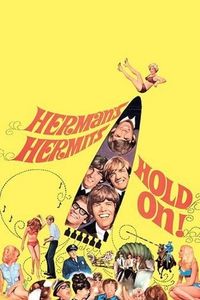
    (On Cable TV, October 2021) Too weird not to exist, and yet weird enough to defy description, Hold On! is a super-topical musical comedy from the space-age 1960s that attempts to combine the then-furor for the British musical group Herman’s Hermits (now largely forgotten, but then a nation-wise obsession rivalling the Beatles) with the craze for the space program. That fusion is accomplished by the device of having NASA be asked to rename a space capsule Herman’s Hermit, allowing the band to play themselves as a touring group while the nation grapples with the request and its mania for the band. It’s such a weird and 1960s-specific film that it escapes much critical commentary: the film exists for the group to play their songs (some of them agreeable, but few of them memorable) against a structured comedy backdrop, with a ludicrous climax that sees them take a hypersonic jet to begin their concert in California, witness the launch of “their” capsule in Florida, and return to California in time to wrap up the concert. The 1960s were weird, man—we often recognize the post-1967 years as the hippies-and-Vietnam filled sixties of legend, but the earlier part of the decade was just as interesting and even more appealing, what with its increasing liberalism and bubbly space-age optimism. Hold On! is an illustrative example of that era and I can’t quite get enough of it.

  • Solarbabies (1986)

    Solarbabies (1986)

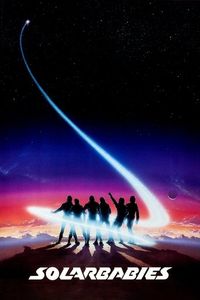
    (On Cable TV, October 2021) I could claim to be overdosing on cheap post-apocalyptic films at the moment, but the truth is that it usually takes only one of them to have my fill anyway—long the domain of bargain-basement filmmaking, the post-apocalyptic genre is usually carte blanche given to unimaginative filmmakers to do whatever they want without regard for wit, coherence or realism. In director Alan Johnson’s Solarbabies, we have the usual movie cliché of post-apocalyptic stories combined with teen-movie clichés to end up with a result too stupid for adults and too repellent for younger audiences. I’m not sure what I least liked about Solarbabies (the robot sidekick? The teen-speak? The world-building incoherencies?) but I certainly know that I hated all of it. All right, that’s it—I’m done thinking about this film.