Month: November 2021

  • Bachelor Party (1984)

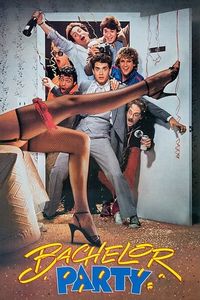
    (In French, On Cable TV, November 2021) Considering Tom Hanks’ persona as America’s everyman, universally loved and respected and so on, it’s occasionally good to go back to the first phase of his film career and take a look at the kind of stuff he was starring in as a younger man. Oh, there’s plenty of broad sentimental material here — Splash, Big, The Man with One Red Shoe, Turner & Hooch, etc. —but then there’s some more interesting material in there and I’m not sure there’s anything more surprising than seeing Hanks leading a raunchy sex comedy in Bachelor Party. Not that raunchy of a sex comedy, mind you: Despite the promise of a wild sex-and-drugs-fuelled bachelor party and the ominous presence of a donkey (don’t worry), the film flirts with naughtiness more than commits to it, all the while building up a committed relationship between our baby-faced Hanks protagonist and his fiancée (Tawny Kittaen, in fine form) on the eve of their wedding. There are clichés and dumb jokes that wouldn’t pass muster today (including as hysterical a case of transphobia that could be put on film in a 1980s comedy, which is a lot) and they do harm to the film. But the rest of it is strong enough, in a somewhat conventional way that tips its hat to the classic 1980s comedy slobs-versus-snobs archetype. Still, the most interesting aspect of Bachelor Party to a twenty-first century audience may be the spectacle of Tom Hanks partying it up wildly in between strippers, donkeys, drunken Asian gentlemen and a trashed hotel suite. I’m not sure we’ll ever see something like that again in his filmography…

  • Mr. Hobbs Takes a Vacation (1962)

    Mr. Hobbs Takes a Vacation (1962)

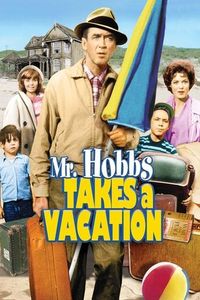
    (On TV, November 2021) As much as I wanted to like Mr. Hobbs Takes a Vacation, there’s so much wasted potential in the milquetoast result that it starts to grate. Of course, that may be an overreaction — the film was obviously built by director Henry Koster to be an innocuous broad-public comedy, and isn’t meant to sustain more elaborate expectations. Still, as a family goes to a beach house for an extended vacation, the film skirts the edge of something more interesting but never gets there. James Stewart remains the film’s best asset as a harried father driven nuts by the entire family vacation (the framing device has him narrate a very funny exasperated letter, his drawl making everything even better — a shame that the finale of the film never quite goes back to it.), and having Maureen O’Hara play the mother is not a bad choice at all. Occasional set-pieces involving a persnickety steam heater, or a steam-filled bathroom, hint at a better film. (And the two references to a father purchasing a Playboy magazine for his son are… surprising.)  But for most of its duration, Mr. Hobbs Takes a Vacation ends up being a curiously tame affair, content to let Stewart run exasperated at everything going wrong during his vacations. It works fine in the way many subsequent family vacations films do — a bit of humiliation comedy, a dash of comic contretemps, and a heaping of traditional values at the trip brings the family back together as one unit. Familiar stuff, perhaps tamer than expected by modern audiences, considering how the envelope has been pushed since then. I can’t, in good conscience, call this a bad movie, but it’s certainly disappointing — although one notes that it led to the somewhat better Take Her, She’s Mine the following year with the same director/star combo.

  • Dead Silence (1997)

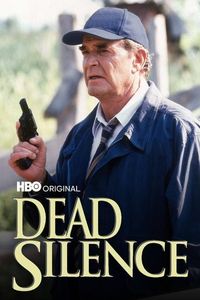
    (On TV, November 2021) As far as low-budget made-for-TV thrillers go, there’s something halfway interesting in Dead Silence. After all, this is about psychopathic criminals taking a busload of deaf children hostage in a farm, as the police surround the area and negotiations begin. The disability angle adds interest to what would otherwise be a rather run-of-the-mill thriller. Casting adds some more as well, with veteran James Garner playing the lead hostage negotiator and Marlee Matlin as a schoolteacher. The low-budget imperatives of the film create a nicely restrained setting around the farm. The last element of note is a wild third-act swerve that creates more questions than it answers, but makes for a sudden late burst of energy in a film that needed it. The result is still not all that good, but it is not quite as bland as it could have been — the proof being that Dead Silence is still playing on TV twenty-five years later, even if on a Canadian channel focused on accessibility issues.

  • Jack and the Beanstalk (1952)

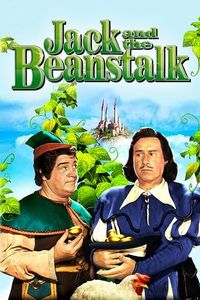
    (On Cable TV, November 2021) I’m not a big fan of Abbott and Costello in the first place, so I find myself curiously unmoved by even what others call their best films. (Star vehicles are wasted if the stars leave you indifferent.)  Jack and the Beanstalk has a good reputation as one of their more ambitious late-career movies, away from the “Abbott and Costello meet…” boilerplate and it’s easy to see the higher polish compared to many earlier efforts. There’s a clear ambition to go beyond the gags of their first films and deliver an experience supplemented by a sustained story, special effects and even musical numbers. It’s shot in colour, which was still a financial risk in the early 1950s (although one notes that the film was produced outside studio financing). There’s even a cinematographic device used to enhance the framing device, as opening and closing segments of the film are presented in sepia monochrome. But little of this amounts to a lasting impact — Jack and the Beanstalk runs through the motions of the fairytale while adding very little of interest. Costello takes the leading role, not leaving much for Abbott to do (which may be part of the issue, as I usually prefer Abbott). The simplistic singing and dancing reinforce the kid-friendly intention behind the film, which may be fine for some but left me wanting more in terms of imagination or comedy. Ah well — as with most comedy vehicles, this is for the fans.

  • Three the Hard Way (1974)

    Three the Hard Way (1974)

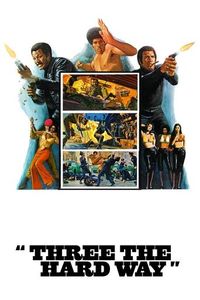
    (On Cable TV, November 2021) When people praise the fun of blaxploitation, they often talk about Shaft, but I think they really mean films like Three the Hard Way. I suppose there’s some irony in that Shaft, from Gordon Parks père, is a studied, rather serious cool, while Three the Hard Way, from Gordon Parks fils, truly plays into the exploitation elements. Macho male leads, sexy actresses (go ahead and try to pick between Sheila Frazier and Marie O’Henry), Kung fu fighting (making explicit the connection between two strains of exploitation films), more action sequences than was the norm in the mid-1970s, some delicious urban style and an elaborately ludicrous premise. We’re way beyond the usual inner-city crime thrills here: This is a film about defeating a white supremacist plot to kill non-white Americans through a genetically engineered virus. Fortunately, Three the Hard Way goes about it in such an over-the-top way that it’s much easier to cheer for the systematic slaughter of dozens of white racists than to be too upset about the idea. Led by Jim Brown and supported by Fred Williamson and Jim Kelly, the cast is not just about preventing genocide, but looking terrific while doing it. Martial arts moves are supplemented by an arsenal so large that it takes a plane to carry it all. The action scenes, explosions and fights are numerous, although Parks’ low-budget, early-days-of-the-action-genre direction has more old-school charm than real immersion: it’s all too easy to spot where cuts are meant to masquerade bad staging… and even easier to spot where the staging doesn’t work even with careful cutting. (There’s a jeep explosion filmed from two angles that’s supposed to be two separate explosions, for instance…)  But this is not a film made for technical prowess: it’s a slam-bang exploitation film done with generous means for the subgenre and an accordingly larger scope. The three leads are quite likable, leading to considerable sympathy for them as they mow down scores of unrepentant white supremacists. But it’s really the period feel of mid-1970s black Los Angeles that makes the film work: the style, fashion, and attitudes are something that has been parodied often (Undercover Brother owes a deep debt to Three the Hard Way) and integrated into an entire aesthetics, but it’s great good fun to get back to the source of it all. The copious amount of sex and violence means that it’s not a film for all audiences, but blaxploitation fans will recognize the pure undiluted thing here.

  • Blade Violent—I violenti [Women’s Prison Massacre] (1983)

    (In French, On Cable TV, November 2021) Even by the exploitative standards set by “women in prison” movies of the 1970s–1980s, Women’s Prison Massacre seeks the bottom of the barrel and stays there. Naked women, brutish men, grimy setting, lesbian sex and generous gore — those are the ingredients and notorious exploitation director Bruno Mattei (who worked both in porn and horror, giving you an idea of the pedigree brought here) doesn’t hold back. The good news is that the breathtaking Laura Gemser stars as a character named Emanuelle (alluding to her work in the Black Emanuelle series, even though most films in that series were nowhere near as violent as this one); the bad news is that her character gets subjected to terrible things, undercutting almost all of the enjoyable aspects of her presence. Pushing the women-in-prison genre in gory horror is not an endearing move: whatever enjoyment you can get from the nudity is nullified — and then some — by the brutish violence and horrific blood-letting. It doesn’t make Women’s Prison Massacre worth remembering, except as a warning not to watch again.

  • We Broke Up (2021)

    We Broke Up (2021)

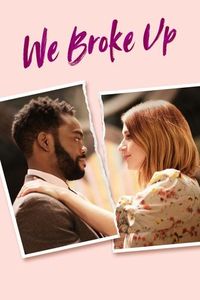
    (On Cable TV, November 2021) With a title like We Broke Up, don’t expect a modern comedy of remarriage — while this awkward romance flirts with the possibility of reconciliation, it will do wonders for your expectations to go into the film with the dead certainty that the title consists of the last words of dialogue spoken. It doesn’t make the film less melancholic, but at least you won’t have false hopes. Much of the plot has to do with a long-time couple, still unmarried, who decides to break up days before the marriage of her younger sister… but still go to the wedding to keep up appearances and avoid dealing with unpleasantness. Still, the truth has a strange habit of being unescapable, and much of the film’s comic moments have to do with them going to elaborate lengths to avoid or sidestep the question. Far more of a depressive dramedy than an outright comedy, We Broke Up may be a tough sell for many viewers — it’s one of those films in which the couple breaks up out of boredom more than anything else, and no one is really gaining anything from that decision. Frustration may be the dominant emotion, especially as the lead couple is rather likable, either on their own or together. I’d like to go all generational and point at the film’s emotional detachment as being a symptom of all that’s wrong with today’s etc., etc., etc. but there have been movies like that for a very long time (not even going back all that far back, have a look at 1997’s Breaking Up, with Salma Hayek and Russel Crowe, or 2006’s The Break-Up with Jennifer Anniston and Vince Vaughn), and they’re often low-budget marginal affairs because there isn’t much that’s uplifting or even all that perceptive in what they have to say — breakups happen, maybe they’re justified but everyone’s sad anyway, roll credits. We Broke Up does have a few interesting moments here and there, including a pair of supporting performances from the marrying couple that often outshines the leads. It’s a downer of a film, but writer-director Jeff Rosenberg is after something specific here and seems to have achieved his objective. Now, whether he can get others to listen is another story.

  • The Courier (2020)

    The Courier (2020)

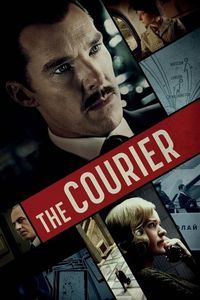
    (Amazon Streaming, November 2021) On the sliding scale of realism-to-James Bond, spy thriller The Courier deliberately goes for the more realistic approach, oftentimes ever more so than even John Le Carré. (It’s a common misconception that Le Carré is realistic, but he’s not: he’s more restrained in his approach, but his stories are just as wild from a conceptual and plotting standpoint.)  It follows the adventures of a British businessman in the early 1960s who is asked by western intelligence services to make contact with a Soviet double agent and report back. His cover is, naturally, doing business in the USSR and facilitating Soviet business in the West. It’s all well and good until things go badly, and it’s the mark of this fact-based tale’s realism that there’s no real heroic climax here — he gets, at best, to be released from prison after a lengthy stay, while his Soviet friend is not so lucky. It does make for a sobering experience, and Benedict Cumberbatch is able to lead the film in its low-key approach to a true story. Handsomely executed by director Dominic Cooke but not overly concerned with pacing, The Courier does make for an absorbing, more mature spy story than usual. (It’s even more restrained and intentionally dull than Bridge of Spies.)  It will do best with adult audiences looking for something less ludicrous than the norm.

  • Fantasy Island (2020)

    (Amazon Streaming, November 2021) Considering the list-driven approach I have used to make my way through the popular films of the past few years, I don’t always pay a lot of attention to reviews. But the harshness of the commentary toward Fantasy Island was striking enough to make an impression — what could possibly make the film so reviled? I didn’t get it, nor did I get it during the film’s opening moments. My childhood memories of the original show’s reruns were faded (Tattoo’s “Da plane!” and Ricardo Montalban’s immaculate white tuxedos are just about what remains), but the overall idea of an island making its visitors’ wishes come true seems like something difficult to screw up. Fantasy Island’s first few minutes did seem to set things up nicely — a few visitors, quickly (if bluntly) sketched, a mysterious owner played by reliable scene-stealer Michael Peña, a rather cute assistant, great lush tropical scenery: how could this go wrong? Well, I had no idea the film would soon take a nosedive, and then keep going lower. Warning signs start to show when it quickly becomes clear that the film only has horror on its mind, as the various fantasies of the guests all converge. This is obviously not a TV show, so the palette of emotional goals that could vary from one episode to another is here compressed to fit the commercial imperatives of a movie aimed at younger audiences and that means horror. But it’s the way it gets there that’s strange: Even fantasies that don’t need to go to horror eventually get there in jarring ways. There’s also the inconsistent accumulation of supernatural events that comes to ruin the story. Not necessarily by sole dint of being supernatural (that could be smoothed over, and the original show had some of it as well) but the ways the film’s justifications don’t necessarily make sense when they’re all put together, with so many tropes (Time travel! Mysterious liquid! Demonic deals!) competing for attention, it all degenerates into a big ball of incoherent nonsense. There are twists that bore, different stories clashing with others in ways that leave us cold, and the sense that a lot of effort (especially from Peña, who’s still good even in a dumb role) is expended trying to make us believe in something misshapen in the first place. The ultimate problem is in trying to tie everything up into one single explanation, which seems ludicrously specific, contrary to the potential of the premise and unbelievable in the first place. (“No way, we’re all from Chicago?”)  I’m not completely disappointed at the result (Any film with Maggie Q or Michael Peña is worth a look, and I’m adding Parisa Fitz-Henley to my watch list) but I now very much understand the critical lashing that the film got — enjoy those opening moments, viewers, because it’s all downhill from there.

  • JFK Revisited: Through the Looking Glass (2021)

    (On Cable TV, November 2021) I’m not sure about you, but my tolerance and sympathy toward conspiracy theories have fallen sharply over the past few years, now that they’ve become one of the most dangerous strands of political discourse in American politics. It used to be that conspiracy theories were the domain of a few crackpots, but they could be enjoyed as an escapist way of imagining a fictional retelling of the world in which everything made sense. Now that the crackpot hordes are more numerous and actively inflicting damage to the civil institutions, well, the fun has gone out of it. So, I’m approaching Oliver Stone’s JFK Revisited in a far less indulgent way than I did for his original film. Theories about JFK’s assassination are not the Rosetta stones of the modern crackpot movement like they used to be, but they’re a central text and rehashing them at this point seems like a cross between a half-hearted reunion tour and a bunch of old crazy people shouting incoherently at their surrounding. While this documentary may lure viewers in by promising them a look at evidence unearthed in the past thirty years, much of the film is the same old breathless ranting. Conducted at a breakneck pace between Stone’s narration, “expert” talking heads, archival clippings and ominous effects, JFK Revisited quickly becomes a caffeine-addled rant jumping between not-so-damning pieces of !!!EVIDENCE!!!, paranoid thinking, overactive pattern recognition and indiscriminate doubt. You can probably get a more entertaining and cohesive experience talking to a dishevelled nutcase at the local watering hole. It’s tiresome and not exactly effective at making its own thesis. One thing that seems completely evacuated of the entire discussion, for instance, is how humans do not always act rationally or impeccably in situations of crisis. There are many things that could be explained away by “the president got shot, people were under stress, innocent mistakes were made” that are here presented as nefarious proofs of… something by… people. Because, at the end of JFK revisited, you can believe anything about everything: No coherent thesis is offered, no compelling new piece of evidence, nothing to convince anyone: It’s specious groupthink aimed at those already convinced that there was something going on, and who will seize on anything to prove to themselves that they are right. And that brings me right back to my first point — I don’t have any sympathy for that kind of confabulation any more. Not when the price to pay for conspiracist thinking is a corrupt administration, a failing democracy, irrefutable excess deaths in the middle of a mitigable pandemic and an overall corrosion of civil discourse. I’m done with conspiracy theorists, and I’m not so incredibly disappointed that Stone would fuel those crackpots for personal gain. (I’ll note once again that the only conspiracy theory about the JFK assassination I halfway entertain is the one, outlined in Bonar Menninger’s Mortal Error, in which the president was killed by a shot accidentally fired by a panicking secret agent riding in the motorcade — but that’s because it appeals to my darkest sense of humour, and explains so much by simple dint of people being so incredibly embarrassed.)
  • Hillbilly Elegy (2020)

    (Netflix Streaming, November 2021) On the one hand, Hillbilly Elegy does have the merit of looking at some of the most marginalized people in America — the white lower-class of semirural Midwestern America, usually the butt of jokes and derision by the cultural establishment. Of course, the story doesn’t quite commit to the nobility of such people — the viewpoint character of the film (adapted from an autobiography) is that of a young man who managed to get out of there and become a more socially respected East coast prestige-firm lawyer. (Whether that’s better than, say, a lawyer working in a small Midwestern town to help his fellow citizen is not a debate that the film is interested in having.)  The film switches between him dealing with the latest family crisis in the middle of job interviews, and flashbacks to his younger years dealing with members of his family. Amazingly, I’ve made it this far in the review without mentioning the film’s two showiest assets: Amy Adams as a volatile heroin-addicted mother, and Glenn Close as an elderly crusty no-nonsense grandmother who ends up being the closest thing to what this film has to a hero. Both are willing to shed their glamour for the role, but there’s a freak-show element to their turn — more impression than inhabitation in keeping with the film’s gawking attitude. Director Ron Howard does a workmanlike job here, typically adapting his style to the demands of the script, but not necessarily doing anything to change the base story’s most troubling elements, and consciously giving in to the requirements of showcasing Adams and Close as much as possible. Hillbilly Elegy would have been a very, very different film had it been made at a lower budget with a cast of unknowns rather than shouting from its prestige perch how brave and bold it is in stooping down to that level and giving bad haircuts to its stars. The result uncomfortably brings to mind some of the weirdest misfires of Classic Hollywood, in which you’d see major stars get under makeup to play some impoverished “other,” but all the time hogging the spotlight to themselves. At least there’s Freida Pinto: wasted in nothing more than a supportive girlfriend role, but still likable no matter the role or the film. In the end, Hillbilly Elegy remains a weird movie, superficially inspiring and intense, and yet paternalizing and overly familiar at once. [November 2024: And now Hillbilly Elegy is the villain origin story for the vice-president of the United States? What just happened here?]

  • Honest Thief (2020)

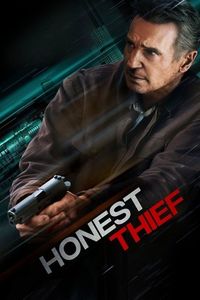
    (Netflix Streaming, November 2021) As far as the biannual Liamsploitation thrillers are concerned, Honest Thief finds itself in the average middle: Not terrible, but not particularly distinctive either. Every time I see Liam Neeson and focus more on his terrific voice is a sign that maybe the rest of the film isn’t quite pulling its weight. Our story takes us to Boston, where a master thief (Neeson), having stolen millions of dollars from New England banks, has fallen in love and is now contemplating not simply retiring, but atoning by confessing everything to the police. Having somehow not spent the money (a virtuous thief!) becomes an important point in his negotiations with a curiously apathetic FBI, especially when the policemen sent to investigate his confession end up being crooked cops more interested in the money than justice. There are plenty of problems with the premise here, starting with a supposedly master criminal not even bothering to provide the kind of details that would set his confession apart from those of mere pretenders, and short-circuit the film’s entire story. But no — before long, we’re chasing cars and shooting guns throughout the greater Boston area, not knowing who to trust. It’s all quite conventional and mildly entertaining if you’re in the mood for a straight-ahead action movie. Where Honest Thief falls short, however, is that in an increasingly crowded filmography of Neeson thrillers, it doesn’t quite have the spark of the wilder or better entries. It’s a by-the-numbers exercise, with Neeson’s presence carrying much of the film on his shoulders. It could have been worse, though, and Neeson only has so many films in which he gets to punch people in the face. Might as well enjoy what we’ve got.

  • Pieces of a Woman (2020)

    Pieces of a Woman (2020)

    (Netflix Streaming, November 2021) Aaand this year’s entry in the “heartbreaking downer drama that lets actors act and earn Oscar nominations” is the very Manchester-by-the-Sea-ish Pieces of a Woman, which wows viewers with a single uninterrupted take of pregnancy, delivery and newborn mortality and then spends an hour wallowing in the ensuing grief. But is grief the right word, given that the lead character seems to keep her head while others lose theirs? Shot in sparse Montréal winter tones (passing itself off as Boston), Pieces of a Woman is a kind of low-key drama meant to solicit awards and critical attention, while leaving larger audiences to decide if that’s the kind of film that they really want to see. Nearly every actor does their best in navigating this nuanced drama, from Shia Labeouf’s take on a blue-collar bridge worker who can’t deal with losing his child, to Vanessa Kirby’s gradual acceptance of the situation, to Ellen Burstyn’s near-villainous take on a controlling mother. Kirby is particularly interesting here, as she switches from attention-getting performances in crowd-pleasing action blockbusters (Mission Impossible 6, Hobbs and Shaw) to the kinds of dramatic roles that lead to more than a flash-in-the-pan career. For cinephiles, the big draw here is the sustained drama of the childbirth scene that runs over 24 minutes of a single uninterrupted, very emotionally challenging take: a showy bravura showcase, but nonetheless an effective one. The rest of the film is far more conventional and even familiar: films about living in the shadow of a profound loss tend to run against the same lines, and while the lead character’s ability to move past at a faster pace than people around her is interesting, it’s still very much of the same tone as similar films. Pieces of a Woman is obviously the furthest away from an uplifting film as it’s possible to be (although the ending is thankfully not as bleak as it could have been), and not the kind of film that can be seen by anyone at any time.

  • Meander (2020)

    Meander (2020)

    (On Cable TV, November 2021) It’s a cheap shot to say that Meander’s biggest problem is that it… meanders. But it’s not untrue. Trailers of this film quickly position it as “Cube in a Tube” (not my original expression) and that’s indeed what’s most interesting about the result: a woman stuck in a small passageway, where every step feels like a new videogame puzzle to figure out: blades, flames, and acid. As far as minimalistic filmmaking goes, those segments are not bad at all — claustrophobic, visually distinct, carrying suspense and mystery. The problem, of course, is everything surrounding those segments, from an opening segment that doesn’t add much to a half-hearted alien ending that both explains too much and not enough. Like many high-concept films that are driven primarily by audio-visual set-pieces rather than plot, you can feel Meander meander as it attempts to justify its own existence from a storytelling perspective. That’s maybe not as much of a problem when it’s done perfunctorily (as in Cube, indeed), but when significant time is given to justifications that end up weakening the film, it feels like a self-imposed foul. Writer-director Mathieu Turi doesn’t feel as if he has a point to make, so don’t be surprised if your attention starts to wander the more the film tries to explain itself. If you do focus on the set-pieces, however, Meander is more focused: the action moments are tightly shot, and the cinematography does wonders in a tight enclosed space. It flirts with intriguing parallels with videogaming conventions but ultimately stops exploring that idea just when it was becoming interesting. Other hints about purgatory, redemption and aliens are left around in almost a perfunctory manner, going to some lazy explanations being pieced together. (Or maybe the haze is intentional because the most obvious answers are disappointing in their familiarity.)  All in all, though — Meander is a disappointment that suffers from its lack of focus. Or, to beat a dead joke into the ground, because it meanders.

  • Die in a Gunfight (2021)

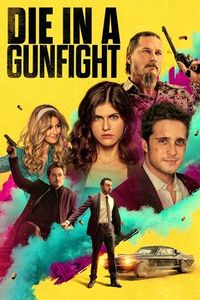
    (On Cable TV, November 2021) Hey, random reader, can I be honest for a moment here? There’s a reason why I’m reviewing movies rather than making them, and (other than the whole “being able to finance millions of dollars” thing, quitting my job and taking years off my life to complete production, not having any experience in moviemaking and having no contact with the industry) it’s probably because, even with generous means and skilled specialists at my disposal, I would probably end up making something disappointing like Die in a Gunfight. Something based on a solid core (in this case, a modern-day retelling of Romeo and Juliet set against a metropolitan background), with plenty of showy visual flair and a sarcastic attitude, but which falls apart when everything is put together. Director Collin Schiffli starts on a promising note, with a whirlwind blend of quick cuts, animation, historical flashbacks, and biting narration. But Die in a Gunfight falls into a trap that’s common to those hipper-than-thou crime spectaculars: it’s so obsessed with bon mots, camera moves, atmosphere and attitude that it forgets about having some storytelling basics, such as likable characters or a story that sort of makes sense outside genre conventions. The longer Die in a Gunfight goes on (all the way to a shootout that takes half the remaining cast to the morgue), the more it feels hollow, and even slightly sociopathic. The energy of the execution has nowhere to go, and the hollowness of its fundamentals doesn’t endear itself to viewers. I still like a good chunk of it — Alexandra Daddario is interesting to watch no matter what, and some bits and pieces of the film are stylish enough to be interesting. But it could have been much better, and the film’s long and troubled production history has plenty of branching-off points with more interesting casts and directors. Trying to assemble all of its components into a satisfying whole is harder than it should be, perhaps a testimony to how hard it is to wrangle a complex beast like a film into something that’s more than the sum of its parts. Frankly, reviews are easier to manage.