Month: November 2021

  • Hubie Halloween (2020)

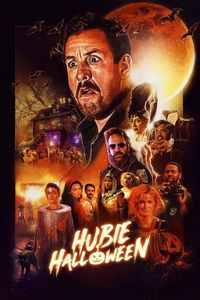
    (Netflix Streaming, November 2021) As I’ve mentioned before, a good chunk of my movie viewing is based on lists. I do not question the lists, but I can groan audibly when certain names show up in the plot summary or opening credits, and Adam Sandler is certainly one of the most groan-inducing names out there. Hubie Halloween is one of those typical Sandler movies featuring him in a whiny-voiced man-child character, goofing off with friends and family. (This is not hyperbole — there are a lot of actors here who have worked with Sandler before, and many cameo roles are played by family members.) The setting here is Halloween in Salem, MA, with Sandler being this overgrown boy-scout taking the event so seriously as to be a local fixture — and not in the good way. When prisoners from a local asylum escape and start leaving a trail of bodies, well, it’s up to him to save the day. Despite the PG-13 horror material, it all amounts to a standard Happy Madison production — very broad, low-level humour, with occasional moments to enliven things up. There’s something for everyone — despite my lack of enthusiasm for the kind of film that this is, I could still appreciate Maya Rudolph in a small role, or the way the climax goes out to play with some horror-movie conventions. Still, it’s not much, especially when the best thing to say about Hubie Halloween is that it’s not as terrible as other similar films made by Sandler for Netflix. Those who like his movies will like this one — others may find out that it works best as filler.

  • Son of the Mask (2005)

    Son of the Mask (2005)

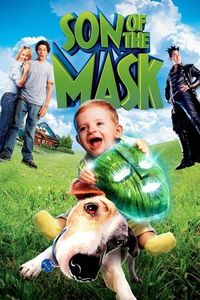
    (In French, On Cable TV, November 2021) There’s a difference between being energetic and being frantic, and while the first one makes for good movies (see: The Mask), the second makes for exhausting experiences—see: Son of the Mask. Coming from filmmakers who understood only the barest, most superficial elements of the first film’s success, this sequel includes more of everything until it all feels like a delirious nightmare in very bright colours. Jim Carrey being conspicuously absent from it all, the story picks up by focusing on a young couple, for which a night under the influence of The Mask leads to conception and a unique baby. (Never mind the tastelessness of that cuckoo premise — even though it’s clearly a film for kids.) A lot of money has been spent on Son of the Mask’s CGI effects, and it shows in the relentless use of not-so-polished visuals throughout the film, ignoring that often less is more. The dialogue is more histrionic than witty, and the climax builds to a special-effects showcase that almost entirely evacuates whatever interest we had for the character. It’s often compelling in that “what will they think of next?” fashion, but there’s a disconnect between waiting for the next big CGI effect and getting involved in the story, and it’s that lack of interest that ends up sinking Son of the Mask despite the frenetic movement and sound expended in a vain effort to make audiences care.

  • Finding Love in Big Sky, Montana (2021)

    (On Cable TV, November 2021) I’m three films deep into American Cinema International’s “Finding Love in [city]” series, and its hook is now as obvious as it seems: these are films with footage shot in the cities where they’re supposed to take place (or close enough). That should not be all that revolutionary, but in the world of low-budget made-for-Hallmark/Lifetime romantic comedies, anything that isn’t shot in Canada or on soundstages is now semi-unusual. Better yet — taking full advantage of its location, Finding Love in Big Sky, Montana (which differs slightly in pedigree from its other “Finding Love in…” stablemates, being adapted from a novel) does feature some nice location shooting for its class. The plot is nothing you haven’t seen before, as a prodigal son returns to his childhood small town, befriends an old flame and saves the ranch from greedy developers. The only bend from formula is in how the story is told from the perspective of the small-town flame but that’s not much of a deviation when everything else feels the same. Clearly playing up the comfort of a familiar recipe, the film stomps through the expected plot beats and delivers exactly what’s expected. Still, the location shooting does set it apart from many undistinguishable films of the same ilk, and Big Sky, MT does make for more spectacular scenery than is the norm for similar romantic comedies. Otherwise, the plot is slightly ridiculous, but executed according to the most perfected formula. It wraps up to an innocuous film, pleasant enough but hardly striking even when set against the mountain background. Hey, I’ll even watch the next movies in the series.

  • The SpongeBob Movie: Sponge Out of Water (2015)

    The SpongeBob Movie: Sponge Out of Water (2015)

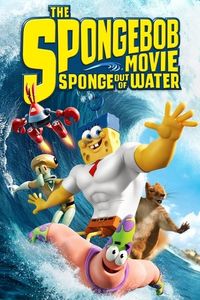
    (In French, On TV, November 2021) As someone who doesn’t really follow the SpongeBob SquarePants TV show, I didn’t go out of my way to see The SpongeBob Movie: Sponge Out of Water during its first run-around in theatres or when it first went around cable TV channels. But my near-complete box-office viewing rate for the 2010s was getting dinged from its absence in my records, and the French dub was right there playing on TV. I’ve seen movies with far less justification. And it turns out… it’s actually pretty good. It’s funny despite many mystifying TV show references, and surprisingly daring in form and content. From the beginning, featuring one live-action pirate and some CGI birds, it’s obvious that this is not going to be your usual animated film. Once SpongeBob and his friends go on their quest, the proceedings get weirder and weirder until we get to the live-action finale featuring computer-animated versions of the Bikini Bottom characters. Handled with some fast pacing and constant invention along the way (including a pretty good scene featuring their universe’s version of the Watchers), Sponge Out of Water is a very entertaining film even for those new to the SpongeBob mythos.

  • American Traitor: The Trial of Axis Sally (2021)

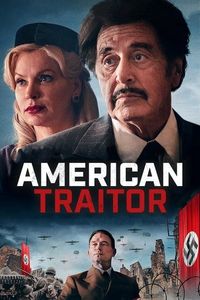
    (On Cable TV, November 2021) Rehabilitating reviled historical figures is a favourite game of filmmakers, but not all of them are equally skilled at making their point. Watching American Traitor, it’s easy to get a sense that the writers and the director may have not picked the most deserving subject for redemption. Telling us about “Axis Sally,” an American woman making propaganda broadcasts from Berlin aimed at American soldiers and citizens, the film goes back and forth between her trial in post-war America (where we’re told that she’s American most hated woman) and her activities before and during the war. Al Pacino plays a reluctant lawyer asked to defend someone he loathes, but don’t expect too much out of that subplot, except a last-minute change of mind and a patented Pacino speech about American values that almost makes you forget that this is someone being tried for treason against the United States. The film goes overboard in trying to make “Axis Sally” a victim of patriarchy, most notably in inventing a sexual assault scene featuring no less than Goering (and her reaching for a gun in the middle of it). But it doesn’t work — American Traitor can’t quite make the case for her, and has to contend with the historical record of her convicted for treason. Meadow Williams, playing the lead character, is surprisingly flat in a role that should be far more animated — a few Internet sources have pointed out that the actress is independently wealthy after inheriting from her tycoon husband, and also co-produced the film. You can connect the dots. No matter the behind-the-scenes explanation, American Traitor is a dud: Dead-end topic, dull acting, and misguided execution.

  • The Last Vermeer aka Lyrebird (2019)

    The Last Vermeer aka Lyrebird (2019)

    (On Cable TV, November 2021) I wasn’t quite looking forward to The Last VermeerAnother WW2 film about fine arts? Weren’t we done after The Monuments Men or Woman in Gold? As it turns out, no we were not — this film, adapted from a true story, focuses on an allied officer who, in the immediate aftermath of the war, finds himself plunged into the murky world of art forgery, Dutch Nazi collaborators and a charismatic painter whose activities during the war remain to be confirmed. Much of the movie revolves around a courtroom drama in the midst of popular unrest, as our skeptical investigator encounters the grander-than-life Han Van Meegeren and tries to understand how this painter turned forger could fool the Nazis out of large sums of money for a counterfeit work of art. As collaborators are lynched in the street, the painter explains how forging paintings good enough to pass examination can be done, and eventually enlists his help in the kind of last-minute courtroom shenanigans that are only possible in movies. There’s a pretty good story in The Last Vermeer, but you have to wait for the final half-hour to see it, after a first two thirds that squanders much of its dramatic potential and inexplicably makes Van Meegeren (played by a very compelling Guy Pearce) into a secondary character to the rather dull investigator. Rather than focus on its story, The Last Vermeer spends far too much time investigating subplots until the script snaps itself out of its torpor and returns to what should have been its constant focus. I did eventually like the film, but only after a lot of throat-clearing and some heroic acting by Pearce in order to remind us about the real interesting character here. It doesn’t take a lot of research to reveal that the real story being dramatized here was, in many ways, far more interesting than what The Last Vermeer manages to achieve for much of its duration.

  • Wicked, Wicked (1973)

    Wicked, Wicked (1973)

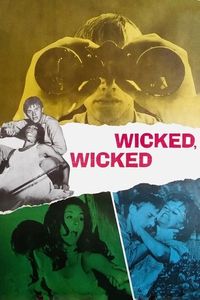
    (On Cable TV, November 2021) Considering the long and often-amazing history of split-screen cinematography, I’m not sure we can call the late 1960s to be the heyday of the techniques, but it certainly still seems to be the era during which filmmakers discovered (many of them at Montréal’s Expo 67!), got infatuated by, and overused the technique. I’m not sure anyone pushed it as far, or as long, as Wicked, Wicked, though: A feature-length psycho-killer thriller (what would soon be called a slasher) that’s almost entirely shot in split screen. (“Duo-Vision” as the film calls it.) It almost goes without saying that such a conceit leads to very unusual directorial choices — almost a new grammar of film invented for the purpose. For instance, one side of the screen will focus on a character walking in the lobby of a hotel, while another will gradually zoom on the ceiling, revealing detail… and then a camera looking at the new guest. Other moments use the two cameras for context, for alternate angles, for flashbacks, for mild irony and sarcastic counterpoint. At least the audio remains focused on one side of the screen or the other. In case you’re wondering, no, the entire film isn’t all split screen: Brief moments revert to single-image shooting, usually for impact. It’s certainly interesting and worth a watch if you’re interested in cinematic technique. The film even has a slight layer of self-aware comedy to supplement the familiar knife-wielding psycho stuff. This being said, it’s almost inevitable that Wicked, Wicked can’t quite sustain its conceit for even its brief 95-minute duration — it doesn’t help that the slasher shtick is more than painfully familiar now, and that, from a plot perspective, the film often runs through the same motions as countless other movies. Then there’s the filmmaking team’s lack of experience — writer-director Richard L. Bare was known more as a television director than a feature film one, and the sorry state of the film’s restoration (it’s still shown on TCM with intrusive video scan lines) hints at the film’s low budget and even lower reputation. It’s no exaggeration to say that much more could have been done with the premise, either through more cleverness or better means. Still, there’s a small and entertaining place in cinema history for Wicked, Wicked, perhaps as precursors to Timecode, Unfriended and other movies pushing the limits of what can be done within the confines of a single screen.

  • Hellphone (2007)

    (On Cable TV, November 2021) There’s an interesting blend of comedy and horror in Hellphone, and it’s even more unusual in that it’s a French film that often aims for Hollywood slickness. The fun begins when a Parisian high-schooler somehow gets his hands on a demonic cell phone (the phone is red and has horns — even in a pre-smartphone era, this is not a subtle film) that then sets out to creatively destroy his foes and friends. This is clearly a horror film (one character self-impales with the content of a kitchen knife cabinet; another one deep-fries himself,) but one that doesn’t quite go as far as it could on the gore, and does keep a certain sense of humour throughout. Perhaps the one thing that still impresses nearly fifteen years later is writer-director James Huth’s sure-footed fast-paced rhythm (comparisons with Edgar Wright are a bit too laudatory, but still in the same ballpark) Executed with a fair amount of skill and budget, Hellphone is a bit of a surprise if you just happen to fall on it. (Much of my pleasantly surprised reaction comes from a DVR mistake, though — I thought I was recording something from a French-Canadian horror channel that often features half-duds, whereas Hellphone was recorded from a French-European movie channel that does have aspiration of cinematic quality.)  This being said, the dark humour running through Hellphone can be a bit much to take even when the film shies away from gore: there’s no mistaking the terrible things happening between two cuts or just off the camera angle. Some of the material is rote, and technology has advanced quite a bit fifteen years later, even if much of the film’s core has not aged as much as one would think. Hellphone is a fun surprise — keep your expectations in check and you may be swept by the film’s breakneck forward pacing.

  • King of Cool (2021)

    (On Cable TV, November 2021) It took me a while to understand the true appeal of Dean Martin. Not because he wasn’t remarkable — his leading-man presence in well-known films such as the original Ocean’s Eleven is obvious even today, and few people won’t have heard at least one of his crooner songs. But the more you dig, especially in material that hasn’t been as well-preserved as his classic movies, the more you discover the true breadth of his achievements. That he was Jerry Lewis’ straight-man partner in their comedy duo days is something that isn’t as prominent now than seventy years ago (especially given the evanescence of cabaret comedy), but then you have plenty of lesser-known films to show the effectiveness of their act. There are plenty of films and songs to testify as to his careers as actor and singer, but his remarkably long-lived variety show is now best remembered for the celebrated “Tony Martin and Frank Sinatra Christmas Special.”  Oh, and he was a leading member of the celebrated Rat Pack, alongside Sinatra and Davis. In other words, Martin did a lot and had at least four separate careers that would have been enough for anyone else. Trying to put this in a single documentary is a lot, but the filmmakers behind King of Cool do about as well as anyone else could have been expected. (One could quibble as to whether Steve MacQueen is the King of Cool, but the film explains that this was a moniker bestowed upon Martin by none other than Elvis Presley.)  Taking a largely chronological approach to Martin’s life, the film chronicles his early days as the son of Italian immigrants (and whose mother tongue was not English), his early days as a boxer, his struggling debut as a cabaret act, the spark of his partnership with Jerry Lewis, the factors that led to their breakup (simply put: Lewis hogging too much of the spotlight), his reinvention as a boozy crooner in the footsteps of Joe. E. Lewis (albeit with practised casualness and apple juice in the glass), his family life across three wives and several children, and his later years, as they included a reconciliation with Lewis. It’s quite a bit and King of Cool does best when it focuses on the nuts and bolts of his career, testimonies from contemporaries and more recent celebrities (including some surprisingly poignant material from RZA) and testimony from family members. There’s a good line in there about how death gives back the dead person at their best rather than the sometimes-sad old person they have become. Where King of Cool overreaches is in trying to find the hidden key to a man who was far less of a boozy cool crooner than his persona became — in trying to find the “Rosebud,” they end up with a dish representing family, which is not bad but presented with perhaps a bit too much enthusiasm to be credible as the answer. Still, it’s a good thing that the documentary could capture the recollection of several people who knew him or people associated with him (including some effective moments with Lewis’ son). It goes without saying that this is not a documentary fit to question its subject: as a friends-and-family thing, it doesn’t poke too much as Lewis’ tumultuous marital history nor portrays him as anything but a victim of Lewis’ solo ambitions. But so it goes in that subgenre — the film becomes a pointer to more in-depth material rather than an in-depth analysis. Even then, there’s a lot to like in the result — Martin was indeed the King of Cool, and the contact high of even a quick overview of his career is still impressive.

    (Second viewing, July 2022) Hmmm. The good thing about King of Cool is that it made me interested enough in Dean Martin to read more about him. The not-so-good thing is that now that I’ve dug deeper into the topic (most notably through Karina Longworth’s magistral ten hours You Must Remember This podcast series on Martin and Sammy Davis Jr.’s careers), I’m far less impressed by the documentary’s deceptive conclusions. I should not be surprised. Movie biographical documentaries are highly selective at best, and often hagiographic by their nature. When you’re building something on footage of friends and family reminiscing on camera, there’s a built-in incentive to be nice about the subject of those fond memories. No one will accept sitting down to talk about their father if the documentary is going to be a warts-and-all piece. (It gets worse when the family produces the film.) All of this to say that asking for second opinions about Dean Martin blows up the “family man” narrative offered in King of Cool. Martin was in many ways an admirable figure — not all that interested in partying to excess with his Rat Pack fellows, consciously not drinking even as he played up a boozy crooner, a savvy investor who eventually provided generational wealth to his children after making some terrible financial decisions early in his career, and someone who — being King of Cool — always maintained a distance between his true self and his public persona. Alas, that same distance could mean that Martin was aloof and uninterested in deeper connections: Other biographical sources highlight the carefully metered time he’d spend with his kids, then retire to watch TV alone; the many romantic dalliances amounting to nothing; the rift with Jerry Lewis being partially a reflection of his reluctance to communicate; the inglorious final years of Martin’s life in which he preferred television and alcohol to his family. Very little of this makes its way to King of Cool, with some omissions looking like deceptions — after their infamous on-air telethon reunion late in their lives, it took months if not years before Lewis and Martin regularly spoke again, for instance. And its concluding idea of the key to Martin’s character being a baked dish representing family seems even more like a stretch born out of desperation by filmmakers trying to provide an emotional climax. Make no mistake: Dean Martin was a fascinating figure defined by his cool. But going to the end of that idea means going to some darker places that this documentary is not interested in exploring. It’s selling us a romantic, glamorous image of a figure that’s far more interesting with his flaws than some sanitized family-man portrait. It’s an entertaining portrait, but it should be approached as a stepping-stone to a more thorough understanding of Dean Martin.
  • All Through the Night (1942)

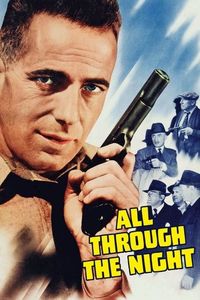
    (On DVD, November 2021) Now here’s a curio — a Humphrey Bogart comedy in which he plays a Manhattan gambler with mob connections who goes up against Nazi infiltrators plotting a strike against the United States. I got wind of All Through the Night during a TCM documentary on Bogart’s pre-stardom days, and it’s clearly a film from the period during which Warner Brothers knew he was a charismatic leading man, but before he became The Bogart of legend. As a result, his character is incredibly confident (his establishing moment is in ordering his favourite cheesecake and having restaurant staff panic when they don’t have it on hand) but the film doesn’t bow to him like latter ones would. The result is a strange but pleasant mixture of spying thrills, gangster suspense and lighthearted comedy. It’s not strictly comic, but some sequences come close to it: the gobbledygook sequence in which they try bluffing their way through a saboteur meeting is somewhat amusing, but the scene in which they end up realizing they’re in a Nazi stronghold is clearly not completely at ease with comedy. (A more comic director would have made the reveal stronger and built up the characters’ reaction.)  Not every aspect of All Through the Night works just as well, nor is as harmonious: the film’s production history confirms that some comic sequences were added after the start of shooting to take advantage of studio players and the film’s overall leaning toward comedy. Still, even imperfect results can be fun to watch, and Bogart is at ease as a Big-Man-on-Broadway, lending some credibility to a film otherwise not grounded in realism. A young and slim Peter Lorre shows up as a supporting antagonist (one taken out of the film too swiftly). The dialogue is better than average and the flavour of the time is interesting—the film was shot before Pearl Harbor, but released after the United States entered the war. Despite its shortcomings, I liked All Through the Night quite a bit: it’s fun and unassuming, and even its plotting shortcuts are part of the charm.

  • The Last Starfighter (1984)

    The Last Starfighter (1984)

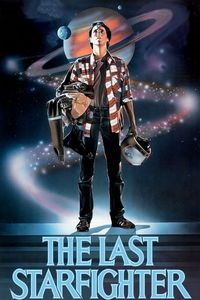
    (On DVD, November 2021) If you ask special-effects nerds, The Last Starfighter’s main claim to fame in cinema history is that it was one of the first feature films to use a significant amount of computer-generated imagery. The details will take you back to a cruder age, with the footage being painstakingly rendered on a Cray supercomputer—for results that now look like they come from a low-end computer game. But that’s almost part of the charm of this Star Wars-inspired attempt to blend then-burgeoning computer game culture with a rather blatant retelling of the Campbellian hero’s journey. (How blatant? Well, let’s just say that anyone who knows the arc will predict what’s about to happen.)  I’m convinced that there will either be a remake or a similar film sometime in the near-future, what with the story being about a gamer whose proficiency with an arcade game ends up being recruitment for an extraterrestrial league of starfighters. As wish-fulfillment fantasy for younger teens, this is way up there. Lance Guest is not bad in the lead role, but it’s Robert Preston (in his last role) who gets the smiles as an alien gentleman who ends up being as much of a flimflam artist as his character in The Music Man. While the special effects are clearly outdated, they do get the point across quite well, and act as a benchmark of sorts for how far we’ve come since then. Fortunately, even if The Last Starfighter is clearly aimed at a younger crowd, there’s just a bit more to enjoy to it than a glimpse at the history of CGI.

  • Dragonslayer (1981)

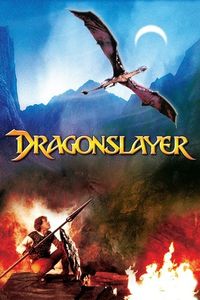
    (On DVD, November 2021) The state of fantasy film has advanced a lot since the mini-boom of the early 1980s — notably in special effects, but also in sheer pacing, accessibility and entertainment. A look at Dragonslayer, which should work far better than it does, it not without its lessons. The premise does have some interest to it — a familiar but not badly-intentioned story of a dragonslayer, with just enough refinements (including a king not happy at all that the dragon has been conquered) to keep it from being too stale. The film is notable for early practical special effects work by ILM, including a large-scale dragon and some surprisingly good stop-motion animation. There’s clearly a not-so-childish intention behind the film’s themes and execution, including a gritty execution and some jaundiced commentary on religious appropriation. Still, I had a truly difficult time getting swept along in writer-director Matthew Robbins’s creation — the pacing is deathly slow, the fog-shrouded landscapes overly trite, the screenwriting laborious and meandering. It does get better toward the end, especially as the special effects budget finally gets spent. Otherwise, Dragonslayer is a lot like other fantasy films of the period — perhaps ambitious, but stuck in this weirdly ponderous style and definitely held back by stiff special effects that couldn’t match the requirements of the story being told.

  • Cat Ballou (1965)

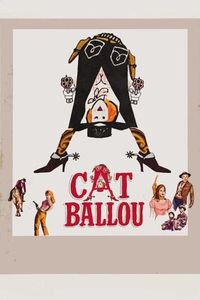
    (On TV, November 2021) While Cat Ballou isn’t quite as funny as it (maybe) wanted to be, there’s still a surprisingly funny western comedy at the heart of it call. Jane Fonda, looking rather terrific in long red hair, is the eponymous Catherine Ballou, a schoolteacher who turns to crime when her father is killed by a local tycoon. But the film’s most memorable Academy-Award-winning performance remains that of Lee Marvin in a dual role as a drunk sharpshooter and his no-good brother. Then there’s Nat King Cole and Stubby Kaye, very likable as the troubadours occasionally stepping into the film to comment on the action and set up the next few scenes. The sense of humour here is occasionally quite odd — not really playing along familiar registers, but seemingly happy to be odd just for the fun of it. There’s definitely a consistent problem of tone, as some sequences are shot very conventionally for a western, but set alongside other sequences that are just weird for weirdness’s sake. The framing device works well, though, and the ending doesn’t disappoint. What does set Cat Ballou apart from other westerns is significant and unforgettable, though — it’s impossible to mistake it for any other film of the genre (well, maybe bits and pieces of the much-later The Ballad of Buster Scruggs) and that’s quite an achievement in itself.

  • Another Thin Man (1939)

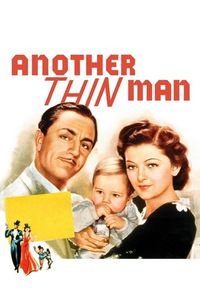
    (On DVD, November 2021) Nick and Norah Charles are at it again in Another Thin Man, tracking down devious murderers with wit and class. This time, they’re joined not only by Asta the Dog, but baby Nick Jr. — a junior detective who doesn’t track down the culprit, but he definitely has a role to play. As usual, William Powell and Myrna Loy are terrific as the sarcastic married lead couple, even as the threat they face gets more overly violent than in previous films. (As Nick remarks, “during this quiet little weekend in the country, my family’s been threatened, I’ve had a knife thrown at me, I’ve been shot at, and I’ve been suspected of murder. From now on, this is your case. You can handle it. I’m going back to New York!”… and that’s before Nick Jr. gets kidnapped.)  As usual, three films into the series, the criminal whodunnit mechanics aren’t nearly as interesting as Nick and Norah’s dialogue as they multiply bon mots, quips and sarcastic put-down the likes of which only the most loving couples can appreciate. It’s quite a bit of fun (the baby party scene is one of the highlights) and works its way to an ingenious (if impossible) bit of jury-rigged engineering to explain the method of the murder, although the motive and perpetrator remain a case of Nick running down the usual suspects in a single-room climax. Even three films in, Powell and Loy are compelling and Another Thin Man manages to be a treat even when the plot machinations get more intense.

  • Police Academy 4: Citizens on Patrol (1987)

    Police Academy 4: Citizens on Patrol (1987)

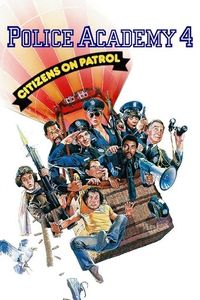
    (Second Viewing, On DVD, November 2021) I somehow remembered Police Academy 4 as one of the high points of the series — but then again, twelve-year old me thought the series was terrific, so I wasn’t the best movie reviewer at the time. Suffice to say that this fourth entry is, by now, comfortably stuck in the confines of its own style — the jokes are as obvious as the characters, and the ludicrous climax shows that the producers had money to burn in order to deliver a final spectacle even when it didn’t really fit the tone of the series. I remembered just enough of the gags to feel a general sense of familiarity with the jokes, and some recognition from the dialogue. Steve Guttenberg, in his last appearance in the series, remains the randy straight-man cornerstone while, at the other end of the spectrum, Bobcat Goldthwait turns in a remarkably weird performance as an ex-con turned policeman. Everyone else gets their one-joke character stretched thin — with even the other characters telling them to cut it out. There are a few surprises in the cast list — Sharon Stone as a bouncy journalist, David Spade in his film debut, and even Tony Hawk somewhere in there. The memorable title song is stupid but fun, which is roughly the same thing we can say about Police Academy 4 as a whole — although I can’t quite tell how much of this appreciation is a residual feeling of the twelve-year-old critic who’s still part of me.