Book Review

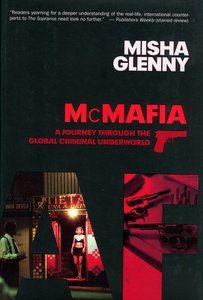
  • McMafia, Micha Glenny

    McMafia, Micha Glenny

    Anansi, 2008, 375 pages, C$29.95 hc, ISBN978-0-88784-204-7

    Even as a pimply know-nothing teenager reading well-above his intellectual capacities, I was never completely convinced by Francis Fukuyama’s End of History. For those who missed it at the time, it was a book-length 1992 essay arguing that since the Cold War had just ended in favour of Western democracies, history as we knew it was over: Democracy would prevail, and everyone else could just go home.

    History, since then, has persuasively argued against Fukuyama’s thesis. If nothing else, the end of the Cold War has been the dawn of a far more interesting history than the frozen decades of the USA/USSR stare-off. Misha Glenny’s McMafia has no explicit links to Fukuyama’s book, but it serves as a pretty damning overview of a world unshackled by the end of the Cold War. A world dominated by organized crime, both outside and within the borders of the first world.

    Glenny is no stranger to the subject: Having been a correspondent in the Balkans during the war-torn nineties, he starts his globe-trotting book in Eastern Europe, where he details the changes that took place in the vacuum left by the strong institutions of the Soviet Empire. Prostitution, smuggling, arms trade, protection rackets –the countries change as the book advances, but the criminal tunes remain the same. As Glenny circles the globe (touching the North America continent only long enough to talk about the drug trade), he delivers an alternate occult history of the past twenty years that makes a number of puzzle pieces fit together. Along the way, he discusses trends that seldom make mainstream news in the West: Nigerian scams (and how their perpetrators justify them), the emergence of a sizable Russian minority in Israel, the outsourcing of violent work from the Yakusa to the Chinese Triads, and scores of other gripping vignettes.

    Glenny is an experienced journalist, and some of the best moments of the book describe the various troubles he had in researching his material, along with the people he meets along the way. McMafia is a mixture of high-level statistics and personal anecdotes trying to illuminate a subject that, by its nature, would rather stay hidden. It generally succeeds at portraying an unstable world where developing countries are in a race to outwit their criminal elements. It doesn’t help that the corruption of original institutions is most reliably financed by money coming from developed countries: Sex tourism, drug consumption and cheap caviar are only some of the way “good western dollars” are going to wreak havoc on countries with weaker social institutions. We, obviously, are all guilty of something.

    Where McMafia is less successful is in finding a strong central thesis in its accumulation of criminal situations. For a book that pretty much literally circles the globe, it can feel scattered and flighty as it studies region after region. There doesn’t seem, thankfully, to be a super-organisation of organized crime (although market-sharing agreements come pretty damn close to such a thing), but the book occasionally feels more like a succession of TV programme transcripts than a coherent argument making its way to a specific thesis.

    The other vexing issue with the book is the occasional nagging suspicion that some sensationalism has been slipped in the mix. The portrait of the drug trade between BC and the USA occasionally seems a bit too grandiose (100,000 people involved in that industry? Really? Does that count the gas station attendants where the traffickers fill up?) and there’s a good laugh in the second set of photos when the venerable Bank Street head shop “Crosstown Traffic” is captioned as “The blooming industry in Ottawa, the capital”. Crosstown Traffic as evidence of anything but aged Glebe hippies and pretentious college students? Really? Did you cherry-pick your arguments elsewhere, Glenny?

    Still, the book is a great deal more convincing whenever it flies away from North America and describes in fairly intricate details the lives of Chinese organized criminals, anti-corruption officers in Nigeria, Eastern-European smugglers and all sort of other people taking full advantage of their form of globalization. What ultimately emerges from McMafia, paradoxically, is the portrait of an active, vivid globe where economic inequalities have opened windows of opportunity for the unscrupulous. I suppose that I’m more optimistic than other in seeing here a sign of emerging civilization, perhaps even a temporary phenomenon as more and more countries are working their way to Western-style modes of law enforcement. McMafia is the underground flips-side of those triumphant portraits of how the world is being dragged kicking and screaming into a twenty-first century that will belong to everyone, and not just the United States of America: Dangers ahead, but plenty of amazing things as well.

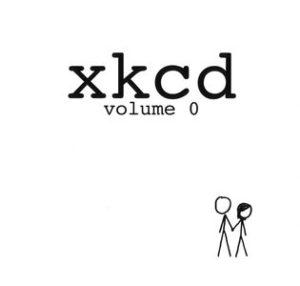
  • XKCD: vol 0, Randall Munroe

    XKCD: vol 0, Randall Munroe

    Breadpig, 2009, 111001 pages, US$18.00 tp, ISBN 978-0-615-31446-4

    Faithful readers are probably over-familiar by now with the fact that I’m a proud and unrepentant nerd. As such, there’s probably no better book to prove my hard-core nerd credentials as a glowing review of Randall Munroe’s XKCD: Vol 0.

    Over the past few years, the simple-but-sophisticated stick figures of the XKCD webcomics have become one of the emblems of Internet nerd culture. Making use of everything from philosophy to math theorems to videogames to computer science (with a heavy dose of sentimentality, as appropriate for “A webcomic of romance, sarcasm, math, and language.”), XKCD is now a touchstone for a large chunk of Internet users from reddit to single-user blogs. Even a quick search for “an XKCD for everything” will reveal a surprising number of results. In the past, I’ve been able to refer to specific XKCD comics to instructors, friends, SF fans, online correspondents and other assorted hoodlums knowing that the reference would be immediately understood.

    If you’ve never heard of XKCD, that may not be accidental: part of the peculiar pleasure of Munroe’s humor is the knowledge that very few people in the world can put together the elements of particular jokes. Twelve years after graduation, I’m still getting the most mileage out of my Computer Science degree from XKCD punchlines. As such, XKCD’s humor can be one of clubbish self-recognition more than actual amusement… so when I say that the book isn’t for everyone, don’t take it personally. It also serves to explain why, as of this writing, XKCD: vol 0 isn’t to be found at amazon.com: Mostly sold though the XKCD web site, it’s both a trophy of nerd devotion and a collection of 200 of the strip’s first 600 entries.

    Many of the fan favourites (and perennial references) are there: “userdel megan” and “Cory Doctorow – cape and goggle” share the same page, while “citation needed”, “boom de yada”, “someone is wrong on the internet” aren’t too far after. Of course, other memorable strips didn’t make the cut (Where’s the Xenocide one?!), raising hope for a Compleat XKCD at some point in the future.

    When they do get to that point, I hope that the design of the book is a bit better than the one here. While Munroe and his designer were able to solve such problems as the alt-caption gags (by putting them in the gutters between panels), the book occasionally frustrate by the lack of dates and titles, not to mention the lack of indications when strips are linked to others –the best example being between pages 11110 and 20000. Of course, other design touches just work beautifully. The book is crammed with small mathematical jokes (such as the skew binary page numbering scheme and the Fibonacci sequence replacing the edition number line on the copyright page), various forms of puzzles and additional comments and sketches in red ink.

    Reading all the strips in succession never fails to bring a smile to my face (even paging through the book again while I’m writing this review), but I’m not so sure that the book is completely impenetrable to non-nerds: For one thing, there’s a surprising amount of romantic and philosophical material that benefits, but doesn’t require esoteric technical knowledge. For another, everyone on the Internet is a nerd of some sort or another, and XKCD is really good at finding jokes in mundane web experiences. There’s a mixture of whimsy and absurdity in XKCD comics that should reach even readers left unaffected by obscure references to cryptography theory, 4chan memes and Linux installations.

    For those who do get all of those references, XKCD: vol 0 is exactly the book you need for Christmas. There’s at least half an hour of “Ooh, I can’t believe I remember that!” in stock alongside the more familiar gags and half-remembered punchlines. At a time where the Internet is being blamed for just about every social problem, it’s a comfort to realize that it also enables Randall Munroe to deliver a webcomic to such a highly-specialized readership… and others to make use of the jokes as they see fit.

  • I Hope They Serve Beer in Hell, Tucker Max

    I Hope They Serve Beer in Hell, Tucker Max

    Citadel Kensington, 2006, 277 pages, C$17.95 tp, ISBN 0-8065-2728-5

    Ah, Tucker Max. The champion of frat-boys all over America. The shock-jock of drink-and-tell Internet writing. The best-known thirty-something teenager. The perfect antithesis of, well, me.

    Boiled down to its components, the quintessential Tucker Max story goes like this: Alcohol goes in Tucker; fluids come out. I Hope they Serve Beer in Hell (now a movie!) is 256 pages of essays detailing variations on that theme. Tucker drinks a lot; later, he vomits, excretes or ejaculates. Sometimes, he has friends along with him. Rude put-downs against whoever isn’t with him are often involved. Repeat.

    Tucker Max became a niche celebrity, as many people now do, by writing a series of essays on his web site. He eventually grew into kind of a national phenomenon for a very specific demographic group. Indeed, for college-age frat-boys, Tucker Max is living the life: binge-drinking, bad behaviour, casual sex and earning a living by being celebrated for, well, binge-drinking, bad behaviour and casual sex.

    So it is that we read about wild parties, outrageous semi-public sex in Vegas, the effects of Absinthe, various wild sex episodes, uncontrollable incontinence, Tucker Max’s scales for drunkenness and female attractiveness (they’re predictably related), and various other antics. Most stories have a happy ending in the massage-parlour sense of happy endings. Many will feel sullied for laughing along.

    There’s a little bit more to it in that Tucker Max is a decent writer when it comes to writing about the party lifestyle. No matter whether the tales are invented or enhanced, the anecdotes are told crisply, with a good ear for dialogue and a mounting sense of outrageousness. He acknowledges his own humiliations (the funniest story in the book is all about potty humour at his own expense), writes compulsively readable prose and surrounds himself with vivid characters.

    But no one will comment or review I Hope They Serve Beer in Hell for the quality of its prose. Why do so when the book becomes a lightning rod for discussions of misogyny, college hedonism, man-children, limited intellects and carnal fixations? Anyone making the mistake of thinking that Max’s book accurately reflects the mainstream American college experience will come away from the book despairing for the future of the republic, if not the human race in general.

    My own experience being so unlike Tucker Max’s life (you have probably figured this out on your own, but otherwise here’s the shocking revelation: I’m a nerd), I ended up reading I Hope They Serve Beer in Hell as an anthropological text, spying upon the cruel and merciless life of the americani fratpueris and thanking my own social ineptness that I’ve never been tempted by Max’s specialities. As a humour book, it’s not a bad read. As indicative of social trends, though: gaaah.

    Unsympathetic as I can be about the frat-boy lifestyle, there’s not a lot I can admire in Tucker Max’s life… except for a somewhat disarming frankness about his own failings. He knows that he’s not a nice guy: the title of the book explains his posthumous expectations. It’s also noteworthy that in the vast majority of cases, the women he sleeps with have a good idea of what they can expect: Max’s stories are not about lying and false pretences, but the consequences of very deliberate lifestyle choices. (The question of whether Max is misogynist presumes that Max-the-literary-construct actually cares about women independently of his own primitive impulses –something still left open to discussion.) Many will mistake this subtle distinction and see Max’s example as a license to behave badly, ignoring the warnings that lies at the heart of nearly every Max story: the sunburns, the headaches, the legal consequences, the ways in which casual sex can backfire in ways people are rarely ready to deal with. The book ends on a hair-raising story that’s worth a PSA by itself.

    In some ways, my vicarious glimpse at the life of Tucker Max is quite enough for me: whereas others see glitz and hilarity, I see situations in which I never want to see myself. If nothing else, Tucker Max has lived this lifestyle so exuberantly that there is no need for anyone else to try to outdo him.

    (This is one of the few reviews where I think it’s necessary to point out that I bought my copy of I Hope They Serve Beer in Hell at a very-used-book sale. The laughable amount of money spent in purchasing this book went directly to the Ottawa Public Library’s acquisition fund. No Tucker Maxes were enriched in the making of this review.)

  • This Is Not a Game, Walter Jon Williams

    This Is Not a Game, Walter Jon Williams

    Orbit, 2009, 369 pages, C$27.99 hc, ISBN 978-0-316-00315-5

    The first thing I like about Walter Jon Williams’ This Is Not a Game is the title: Direct, dramatic and as blunt as it’s possible to be.  The cover of the US hardcover edition appropriately displays it in big bold letters taking up most of the available space.  It’s a clue as to the nature of the story in more ways than one, especially in flagging how contemporary the novel is meant to be: In Science Fiction history, “This is not a Game” has sometimes been a Hugo-winning third-act plot twist.  It’s also a title that alludes to the recent wave of stories reflecting on the ever-shifting nature of reality at a time where it’s increasingly augmented with other sources of information.  Charles Stross, with Halting State, made quite a splash by looking at the boundaries between life and play and This is Not a Game makes use of similar ideas, albeit with a very different focus.

    But outside the written SF community, the title is a fundamental credo for another interest group:  In the field of Alternate Reality Games (ARGs), “This is Not a Game” is a design aesthetic that differentiates this burgeoning type of entertainment from other types of play: Designers of ARGs seek to present an experience to the player that spans the narrow confines of traditional games.  ARGs ask players to scour the web, make phone calls, investigate in person, solve clues and piece together very different pieces of information.  Already almost ten years old, ARGs are a particularly vivid reminder of the blurring distinction between pursuits we’ve been conditioned to consider separate.

    Walter Jon Williams isn’t a stranger to either SF or ARGs: His decades-old SF track record is distinguished, and he has been involved in creating ARGs since 2005, when he collaborated on “Last Call Poker” for market leader 42 Entertainment.  In his newest novel, we get not only a gripping thriller set five minutes in the future, but a look behind the scenes of an ARG, as the puppetmasters writing the game have to deal with an alternate reality with no fourth wall.

    But there’s a bit more at stake than a look at games that bring together thousands of people in a global clue-hunt: As This Is Not a Game begins, our ARG-creating protagonist Dagmar Shaw sees her holidays in Indonesia become a catastrophe as the country is shut down and riots break around her hotel.  Engineering her rescue away from this mess ends up being a problem that not even a well-financed Israeli security contractor can solve: In the end, Dagnar finds greater value in tapping the game-playing community and crowd-sourcing her own safety to the diverse talents of perfect strangers scattered around the globe.

    And that’s just the first act, because once she’s back stateside, Dagmar’s life soon turns into a nightmare when friends are acquaintances are murdered.  It’s clear to her that this is not a game-related development, but the players of her ongoing ARG aren’t so sure.  When the police admit that the investigation may tax even their capabilities, Dagmar sees another opportunity to let the group mind of her plays chew on the evidence.  But as she eventually discovers, it’s hard to get away from the game once it takes over…

    Williams has often challenged genre boundaries, and this latest book marks a return to high-end thrillers just a step away from near-future SF.  This is Not a Game inhabits the same ultra-contemporary territory as William Gibson’s Spook Country, albeit with a far more visible plot.  Given this, it’s unfortunate but forgivable that it’s that plot that ends up being the novel’s weakest link: While the look at the inner workings of ARGs is fascinating and the thriller makes good use of the mirrored halls offered by games that voluntarily don’t take place in an identifiable sandbox, Williams isn’t as successful at creating a sustained sense of suspense: There aren’t enough characters to pose a serious mystery, and the last stretch of the novel is annoyingly linear in how Dagmar turns the tables on the guilty party.  A lot of loose ends remain, but the promise of a sequel (which you wouldn’t guess from the jacket copy) may end up making use of a bunch of those.  There are also a few technical bugs for nit-pickers.  (Regarding P.336:  HTML is not case-sensitive; XHTML is supposed to be.  Web servers very well have to be.)

    Not that it matters all that much: This is Not a Game is a more-than-honorary member of the SF genre partly because it’s a novel of demonstration.  It has a few great ideas and runs us through them.  The opening sequence in Indonesia can’t be equalled, but the rest of the novel remains an intriguing thought experiment, a thriller played with Science Fiction set-pieces that would have boggled minds even a decade ago.  There’s even some meta-commentary on the SF writers’ community and a few nods in store for SF fans with sharp eyes.  The prose is a pleasure to read, and the flavour of the novel is definitely of the times: This is Not a Game couldn’t have been written as such five years from now, and will probably date faster than most SF novels published in 2009.  In the meantime, though, it’s a welcome demonstration of Williams’ skills, a solid follow-up to his previous Implied Spaces and a novel that, given his background, only he could have written.

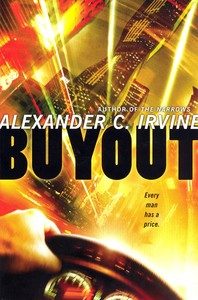
  • Buyout, Alexander C. Irvine

    Buyout, Alexander C. Irvine

    Del Rey, 2009, 319 pages, C$16.50 tp, ISBN 978-0-345-49433-7

    There’s no rule saying that Science Fiction has to be predictive, but there’s no arguing that it can be –or, rather, that it’s uniquely apt to suppose a plausible change and follow its consequences.  So it is that Alexander C. Irvine’s first original SF novel, Buyout, feels like good old-fashioned Science Fiction with no tricks up its sleeves.  Not only is it a gripping read, it takes a premise and runs with it with more style and intensity than you’d expect from old-school SF.

    The premise will only feel natural to actuaries: In a medium-term future (2040) where California’s private prison system is (still) bursting at the seams, a company makes a few calculations and ends up figuring that it would be more profitable to execute young prisoners condemned to life without parole and give a huge payout to beneficiaries of their choosing than to keep them around for decades.  The ethical implications of this cold equation are… interesting, and one of Buyout‘s pleasures is to see how the argument plays out.

    The novel takes place in an all-too-believable future where water wars, omnipresent Internet connections and movie avatars have become unremarkable.  Our two viewpoint characters are Martin Kindred, an insurance worker who gets promoted to become the public face of the buyout program, and Charlie Rhodes, a cynical private investigator who recognizes in the buyout program something that can give him steady employment in checking motivations.

    Much of Buyout is about dramatizing the implication of the novel’s central premise.  How do prisoners petition for buyouts?  Who benefits?  Is it right?  Is it possible for some of that buyout money to do some good?  Won’t people deliberately commit crimes that would lead to buyouts, thereby improving their family’s life?  What about the possibility that buyouts may end up executing innocent people?  In Irvine’s hands, all of this is examined fairly, although not always finely: the inclusion of an activist character calling himself Carl Marks give an opportunity to properly critique his premise as an ultimate instrument of degenerate capitalism, albeit in an all-too-obvious fashion.  Politically, Irvine obviously leans left, but he gives some intriguing arguments in favour of his own hawkish premise.

    But while Buyout is obviously a novel of ideas (remove the premise, and everything fall apart), it also manages to do much with its characters.  Martin is in the terminal stage of his marriage as the novel begins, and the tensions of his position as the buyout spokesman inevitably lead to divorce, with consequent impact on his life and his relationship with his daughters.  Meanwhile, Charlie begins to doubt his friend Martin’s motivations as a personal tragedy starts erasing notions of cold dispassionate professionalism.  Characterization of secondary characters is sketched with professional skill, and it better be: with a conclusion that pushes both viewpoint characters as far as they can go, subtle nuances become crucial.  (On the other hand, Martin’s soon-enough-ex-wife is presented primarily from Martin and Charlie’s perspective… which is to say: not sympathetically.  But that’s characterization of a different sort.)

    Buyout is also highly enjoyable for its overheated atmosphere, a sunny noir so typical of its Los Angeles location.  The nature of its plot brings together a variety of characters from the prisoner, activist, legal and policing communities, with fascinating interactions.  Close-enough comparisons can be made with the novels of Michael Connelly, especially given the world-weariness of the characters and the detailed procedural explanation of the buyouts.  Snippets from an underground podcaster give us a lot of third-party contextualization, especially when it comes to presenting Irvine’s imagined future and the reactions of the crowd to the ideas that directly affect Martin and Charlie.

    Satiric (but not too much), reflective (but not too much) and idea-driven (but not too much), Buyout is not just a good read: it’s also the kind of novel that exemplifies what Science Fiction can accomplish in general, and what it doesn’t achieve when it retreats in the far-futures of space operas that might as well be labelled fantasy.  “Old-fashioned” and “Mundane SF” are not criticisms when applied to this novel, not when Buyout plays the classic SF game so well.  Irvine’s output since his 2000 debut has been scattered across many genres, but this solid first original SF novel should do much to leave an impression.  In the meantime, it’s one of the good surprises of the year so far.

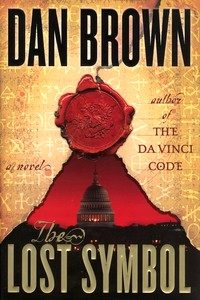
  • The Lost Symbol, Dan Brown

    The Lost Symbol, Dan Brown

    Doubleday, 2009, 509 pages, C$36.95 hc, ISBN 978-0-385-50422-5

    Six years after the release of The Da Vinci Code (surely you’ve heard of it?), Dan Brown has a brand-new novel in store: The Lost Symbol.  The good and bad news are, indeed, the same: It’s an almost identical reading experience.

    There are a few differences between Brown’s latest novel and its predecessors, but not that many.  Consider this: Robert Langdon runs around a world-class city with a beautiful scientist, piecing together historical clues to avert a terrible event while trying to outwit a spiritually-motivated antagonist with a penchant for self-mutilation.  Familiar?  Yes.  Good enough for a third go-around?  Well, why not?

    This time, “Symbologist” (aka; trivia-master) Robert Langdon is called to Washington, where he gets to talk masonry with a woman studying pseudo-sciences.  They race around and under official buildings, survive attempts on their lives and spend half a day citing encyclopedia snippets at each other.  Surprisingly enough, it’s fun: While The Lost Symbol is a bit too familiar to create the same enthralling feeling as its predecessor, its accumulation of cheap stock thriller situations, short cliffhanging chapters, plausible-sounding details and compelling imagery makes it hard to stop reading.  It’s not refined but it’s got the essence of genre fiction entertainment.  The writing is even a bit better than in the previous books… or at least not quite as awful.

    The Lost Symbol even shows that Brown can have a sense of humor about himself: Early on, he takes potshots at the controversy about his previous novel (“My book group read your book about the sacred feminine and the church! What a delicious scandal that one caused!” [P.8]), his image (“He was wearing the usual charcoal turtleneck.” [P.8]) and, later on, editors complaining about the lateness of his novel (“You owe me a manuscript. [P.176]).  While the suspense is usually too talky to be gripping, there are at least two memorable sequences in the book, one taking place in a completely dark hangar, and the other one pushing the whole “Character’s dead.  Dead-dead-dead.” shtick as far as it can go, and then a little bit further for good measure.  Cheap twists abound, although Brown does manage to do a few interesting things with parallel storytelling at times.

    Sadly, The Lost Symbol occasionally gets muddled on the shoals of yadda-yadda pseudoscience discredited back in the seventies but revived today as “noetic science” thanks to quantium jargon.  Brown may swear up and down that all the science in his book is true, but we know better.  (As a computer specialist, I’m usually disappointed whenever Brown discusses computers, and this novel has its share of IT nonsense as well.)  The pseudo-science, thankfully, doesn’t really affect the major plot lines of the book, but it’s a distracting-enough subplot that the novel could have dispensed with.

    Ironically, it almost takes mental muscles shaped by science-fiction to truly appreciate what Brown is attempting in the last tenth of the novel.  What he frequently does well (and what many imitators often forget) is to present a series of conceptual breakthroughs, big and small, that reveal the true shape of the world to protagonists and readers alike.  This is rarely as obvious as in the last fifty pages of The Lost Symbol: Once past the final action climax, the main plotline of the novel has been wrapped up with a few chapters still left to go.  It’s all over but for a few more revelations, which may be more conceptually important to Brown than the end of the thriller plot-line: The novel concludes on a pair of scenes meant to evoke a strong sense of wonder, and science-fiction readers will have been trained to respond well to such revelations.

    As for everyone else, well, the old saw hold true: “If you liked The Da Vinci Code, then…” yes, you’re going to like The Lost Symbol.  Conversely, those who hated Brown’s previous novels won’t be seduced by this one.  It is what it is, and if the same mixture of elements could have been quite a bit more interesting in better hands, it does manage to outdo many of the so-called “Da Vinci clones” in delivering the mixture of trivia, thrills, nonsense and fast pacing that we’ve come to expect from Brown.  It may be late in coming, but it does deliver.

    (Amateur puzzle-solvers will be happy to note that the US dust jacket sports at least four puzzles, and a few Easter Eggs.  I wasted an enjoyable thirty minutes solving two puzzles before rushing to read the solutions on-line.  As for the Easter Eggs, one of them will make you feel better about the recent loss of the traditional Doubleday “Anchor” logo.)

  • Infinite Jest, David Foster Wallace

    Infinite Jest, David Foster Wallace

    Little, Brown, 1996, 1078 pages, C$40.00 hc, ISBN 0-316-92004-5 sept12

    So, I finally made it through David Foster Wallace’s Infinite Jest.1

    1. Since this is a novel that defies the notion of a novel, I can’t really review it.  But have a few notes instead:

    • For those who aren’t aware of Infinite Jest, here are a few essential pointers: It’s a 1078-pages novel with 388 endnotes (some of them with their own endnotes) spread over nearly 100 pages.  It’s dense and full of show-off moments: Pages without paragraph breaks are not uncommon, and Wallace seems determined to approach even the most ordinary scene with an oblique, ever-changing angle.  The novel takes place in a world that features “an entertainment” so compelling that it sucks viewers into compulsive re-viewing.  Still, the real point of Infinite Jest is a series of sequences about tennis players, addicts and separatists.  No plot summary will ever do it justice: there’s simply too much stuff in this novel.  It’s both elusive and verbose and fits just about every criteria that identifies experimental fiction.
    • It took me forever to get to it, and almost-forever to actually read it.  I had actually purchased the book years ago, thanks to its reputation, but kept pushing it aside for shorter reads.  It took the Infinite Summer online reading project to get me to finally get cracking on the book, and even then that wasn’t as smooth as I had hoped for: I ended up reading the first half of the book in early July (ironically, on a road trip from Ottawa to Montréal to Boston and back, which is pretty amusing given where Infinite Jest takes place) and the second half in a frantic week in September, just in time for the end of the Infinite Summer reading schedule.
    • A good chunk of Infinite Jest’s reputation is built upon an accumulation of intricate details about esoteric subjects that makes one reluctant to challenge the author’s authority.  Fortunately, the novel does deal a lot with French-Canadian themes, from French-language quotes in the text to frequent mentions of Québécois separatists as antagonists of the tale.  To anyone familiar with either separatism or the French language, however, it quickly becomes obvious that Wallace’s understanding of either subject is superficial at best: references to Quebec history are ludicrous, and about half of the French-language expressions in the text are simply wrong in ways that would be obvious to francophone grade-schoolers.  This, ironically, made the author seem more human and the novel consequently more accessible.
    • I rarely relate to novels as a writer of fiction, since my fiction output is infrequent, awful and thankfully unpublished.  But Infinite Jest made me realize how far one could go in the intricacies of writing fiction.  Much fiction writing is about finding a way to express world-building, character interaction, inner feelings or plot development.  Wallace goes so far in the direction of trivial overload (ie; putting meat around the bones of his plot, even if plot isn’t a primary force in his novel) that he ends up reassuring everyone unwilling to follow.  That revelation dawned on me during a ten-page endnote that appears to be a filmography but is really a chronology of some events in Wallace’s future history.  At some point, readers are bound to hit a wall of self-questioning and ask themselves not only why they’re reading Infinite Jest, but why they’re reading fiction at all.  What’s the point?  Why spend so much time and mental energy reading things that, to put it simply, don’t and will never exist?a
    • I didn’t like Infinite Jest as much as I admired its audacity and loved specific moments of it.  There are some terrific passages in this book (the history lesson on pages 391-410 is a tour de force, equal to the Eschaton wargame sequence and about a dozen other “good bits” as the highlights of the book), and its conceptual audacity has enough to warm the hardened heart of any jaded reader.  This being said, most of the time Infinite Jest seems to suffer from an acute case of verbiage.  My patience runs thin when I’m bored…
    • My confession: I invoked a good chunk of Daniel Pennac’s “Rights of the Reader” (PDF) while reading Infinite Jest, if only because they seemed essential to making it to the end of the novel.  I skimmed so many passages that it’s an open question as to whether I actually read most of the novel.  I re-read parts when something interesting started while I was reading diagonally.  I went on-line and memorized contextual material about the novel.  I read the novel anywhere I could carry it (which was limited by the book’s bulk).  I even read some of the good bits aloud to whoever was around.  I dipped in and out, and even began this review a hundred and fifty pages before the end.  In short, I read Infinite Jest my way, and don’t let anyone else try to tell you that there’s a right or wrong way to do it.  If you decide to spend time reading this novel (while you could read four or five others for the same amount of effort), be sure to make it yours.b

    a. An answer to that question is to be found on page 200-211, a list of things learned in a halfway house that feels like a glimpse at the universal human condition.

    b. But consider the advice of those who tell you that you’ll need more than one bookmark.

  • Songs of the Doomed, Hunter S. Thompson

    Songs of the Doomed, Hunter S. Thompson

    Simon & Schuster, 1990 (2002 reprint), 355 pages, C$24.00 pb, ISBN 0-7432-4099-5

    As my sequential reading of Hunter S. Thompson’s work progresses onward, I have to read about the worst years like I read about the best: After the glory years of the early seventies, Thompson’s output during the eighties became a lot more fragmented: Generation of Swine (1989) collected a hundred of his San Francisco Examiner columns, while Songs of the Doomed riffles through Thompson’s archives to present snippets of material written between 1950 and 1990.  It’s billed as a retrospective, but it feels a lot like the publication of redundant material wrapped around a few worthwhile pieces that followed The Great Shark Hunt.

    Part of this impression is formed by my extensive readings about Thompson, much of it published after Songs of the Doomed.  While the publication of excerpts from The Rum Diary must have caused a sensation back in 1990, it’s more interesting today for comparative purposes given how the entire novel manuscript was revised and published in 1998.  Some of the letters included here are also available in one of the two books of letters published so far.  On the other hand, the snippets from Prince Jellyfish in Songs of the Doomed still remain today the only publicly-available chapters from Thompson’s first novel.

    From time to time, it seems as if Thompson is either recycling notes, or reprinting familiar material.  It doesn’t help that we’re rarely told when excerpts are reprints or take-offs on familiar material.  “The Edge” passage from Hell’s Angels is reprinted as “Midnight on the Coast Highway”, whereas what looks like another draft of the high-water mark in Fear and Loathing in Las Vegas is presented as, indeed, “High-Water Mark”.  Thompson scarcely introduces his pieces either: in-between text, we get italicized anecdotes that don’t offer much to those who have gone through the rest of his (auto-)biographical material.

    Still, there is some more interesting material at hand.  Thompson may have officially published very little outright fiction, but he kept having ideas for novels and stories, and some of those abortive segments are included here, including notes on The Silk Road (a crime thriller inspired by the influx of Cuban refugees in early-eighties Florida) and a promising beginning called “Fear and Loathing in Sacramento”, intriguing despite elements that approach self-parody.  The snippets of Sacramento were apparently published as part of Thompson’s final columns for the SF Examiner, and they go well with other pieces that seem just as determined to dip into pure fiction.

    But the real gem of the book is one of the few gonzo articles written too late to be included in The Great Shark Hunt: “Love on the Palm Beach Express: The Pulitzer Divorce Trial” is one of the last articles that Thompson would write as a journalist, and it’s a savage look at the lifestyle of the rich and scandalous in Palm Beach, Florida.  Thomspon scholars already know that this was the article that made Thompson realize that he was too famous to keep doing journalism work: his presence disrupted the trial he was supposed to cover, although it’s ironic that we get no trace of this very gonzoesque incident in the article itself.

    Even for those who start reading Songs of the Doomed with an open mind and the best of intentions, the sheer familiarity of the material makes it tough to disagree with the assessment that Thompson was a shadow of his former creative self by the eighties.  The last chunk of the book focuses on the writer’s early 1990 legal problems, but the impact of that section seems to operate on an entirely different level than Thompson intended: while he portrays himself as a downtrodden citizen persecuted by a police state for political reasons, many readers will see this section as the culmination of the rest of the book: after a life spent “in the passing lane” advocating drugs, insanity and violence, Thompson got caught.  Numerous Thompson biographers have noticed that the writer was never more comfortable than when he was the source of whatever craziness went around; his loud protests when he got arrested show how different things looked when he was at the receiving end of some good old-fashioned fear and loathing.  It’s enough to make one become a bit more sceptical of Thompson’s oft-quoted slogan “it never got weird enough for me.”

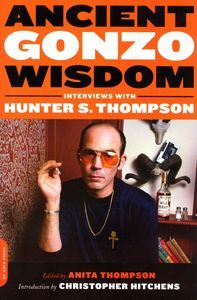
  • Ancient Gonzo Wisdom: Interviews with Hunter S. Thompson, Ed. Anita Thompson

    Ancient Gonzo Wisdom: Interviews with Hunter S. Thompson, Ed. Anita Thompson

    Da Capo Press, 2009, 411 pages, C$22.95 tp, ISBN 978-0-306-81651-2 sept4

    Depending on your level of cynicism, there are at least two ways of looking at Ancient Gonzo Wisdom, a lengthy compendium of interviews with Hunter S. Thompson.  You can see it as an homage to an American writer whose career spanned decades, an over-sized personality whose personal excesses were as legendary as his best-known works and an infamous wit who almost unfailingly provided interviewers with great material.  But you can also see it as yet another brick in the growing cottage industry that revolves around Thompson, an industry that began in earnest a decade before Thompson’s suicide in 2005.

    Since the mid-nineties, we’ve seen the publication of two volumes of his letters, re-editions of his rarer out-of-print books (in matching sets, even), a number of personal memoirs and a few more dispassionate biographies.  Given Thompson’s lifelong obsession with money, it would certainly please him to understand that he now accounts for a small sliver of the publishing industry’s revenue stream.  For fans and readers, though, it raises the question as to when we’ll reach saturation point.  As the wait drags on for The Mutineer, a third-and-last volume of his personal letters, the arrival of Ancient Gonzo Wisdom sidesteps the issue by offering fans exactly what it promises: a highly enjoyable collection of interviews.

    Spanning decades between 1967 and 2005, this book follows Thompson’s career as he goes from an obscure writer solely known for a book about the Hell’s Angels, to his growing fame as the first gonzo journalist, to the elder curmudgeon whose words passed into legend.  A media biography of sorts, Ancient Gonzo Wisdom is perhaps most interesting in the look it offers at those who talk to Thompson: their questions change as Thompson’s celebrity grows, and different venues focus on different aspects of the writer’s life.  By their inclusion here, a few landmark pieces are now easily available to Thompson scholars as well: The infamous 1974 Playboy interview by Craig Vetter is reprinted (albeit edited) and those who are curious about Thompson’s lectures to college students will be glad to see a few of them transcribed here.

    Some of the most interesting pieces go beyond the usual interview format to tackle specific venues or subjects.  Early on, a lengthy and detailed interview for a Boston radio station focuses almost exclusively on politics.  Twice, High Times discusses drugs with “elderly dope fiend” Thompson, first in 1977 and then again in 2003.  In-between, the Washington Journalism Review and the Paris Review discuss journalism.  Perhaps the strangest piece is self-avowed fan Phoebe Legere’s interview for Puritan adult magazine: the two seem to know each other intimately, and the interview soon takes on airs of a comedy skit in-between discussions of sexual techniques: “Phoebe screams, he brandishes the gun” [P.245]

    Not all interviews are coherent, though, and (even leaving aside the further editing specific to the book) there can be a dramatic difference from venue to venue in how well they edit Thompson’s words.  Some interviews are barely understandable, while others distill Thompson’s words into quasi-epigrams: One of the best editing decisions is to close the book with a posthumous May 2005 Playboy piece which boils down a week’s worth of discussions into solid “postcard wisdom”.

    More than half of the pieces presented in Ancient Gonzo Wisdom date from the last ten years of Thompson’s life, which can be explained by the wider availability of recent material but also end up presenting a view of Thompson biased toward the latter-day legend.  It’s both amusing and dispiriting to see that Thompson saw the Bush administration in a clear light well before most Americans did; on the other hand, some of the last interviews show Thompson sliding toward conspiracy theories from the JFK assassination to the “9/11 was an inside job” truthers.

    If nothing else, Ancient Gonzo Wisdom presents, in a nutshell, the evolution of Thompson as seen by popular media.  The introductions to the pieces (as writers frequently have trouble reaching Thompson) are often as interesting as the interviews themselves, and the sheer force of Thompson’s personality has no trouble shining through the page.  This may not be an essential Thompson book, but it’s a good read and a decent addition to the Thompson bibliography.  But seriously, when is The Mutineer coming out?

    [November 2009: There is another compilation of interviews out there: Conversations with Hunter S. Thompson, edited by Beef Torrey and Kevin Simonson for the very-serious University Press of Mississippi.  Much of the material will feel familiar to veteran Thompson readers, and even more so for readers of Ancient Gonzo Wisdom.  The emphasis here is usually placed on Thompson-the-writer or Thompson-the-Journalist, although latter pieces tend to focus on Thompson-the-Difficult-Interview-Subject: Typical post-1990 pieces tend to include a lengthy description of the interview process as prologue, sidebar and epilogue to Thompson’s words.  Unlike Ancient Gonzo Wisdom, the interviews here have not been edited and are printed as they first appeared –including the Vetter interview for Playboy, which appears in both collections.]

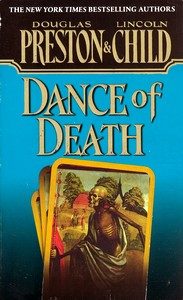
  • Dance of Death, Douglas Preston & Lincoln Child

    Dance of Death, Douglas Preston & Lincoln Child

    Warner Books, 2005 (2006 mass-market reprint), 560 pages, C$10.99 mmpb, ISBN 0-446-61709-1

    This one is for the fans.

    Readers completely new to the Preston/Child novels should enjoy this latest magisterial demonstration of why they reign as the most popular team in contemporary thrillers, but it’s really the fans who have read all nine of their previous collaborations that will enjoy Dance of Death to its fullest extent.  It bring together elements of nearly everything in their shared bibliography, exploits existing relationships, puts recurring characters through tough situations, upsets a few familiar truths and delivers extra payoffs for readers with long memories.

    It is, after all, the second volume in the “Diogenes Trilogy”.  But unlike its predecessor Brimstone, the duel between FBI Agent Aloysius Pendergast and his brother Diogenes is not a subplot: it takes center-stage, and Diogenes is a featured character as plan for a “perfect crime” unfolds in and around New York.  Aloysius, predictably, has survived the sombre conclusion of Brimstone, but people around him may not fare as well as Dance of Death begins and a number of his acquaintances are killed.  Could Diogenes’ plan have as an ultimate victim his own brother?  How could it not?

    Those acquaintances include practically everyone in the Preston/Child universe, and so Dance of Death feels like an extended reunion with walk-in roles for nearly everyone ever featured in their previous nine novels.  Some of those appearances aren’t much more than one-scene mentions; others have a far greater role to play in the story.  Fans of The Ice Limit, in particular, will get not only a cute meta-fictional wink (as characters see a copy of Ice Limit III: Return To Cape Horn), but a pair of spellbinding chapters in which thought-to-be-dead Eli Glinn goes head-to-head with agent Pendergast.  Readers will even decode a sequel of sorts to The Ice Limit from the various clues left in plain view by Preston/Child.

    Other links cleverly exploit various characters’ particular talents and skills: NYPD Laura Hayward is a dogged investigator looking into Pendergast’s role in the murders, while her boyfriend Vincent D’Agosta makes a perfect brawny companion to the cerebral FBI agent.  Even elements of the plotting seem to echo previous Preston/Child collaborations, as yet another big exhibit at the American Museum of Natural History goes spectacularly awry; it goes without saying that both curators Nora Kelly and Margo Green are involved in some way –one of them more dramatically than the other.

    In sheer thrills, it’s always amazing to see Preston/Child manage to re-use old classic elements and wrap them into something new.  Jaded thriller readers won’t help but smile at the accumulation of well-worn plot devices crammed in the novel: Sane people wrongfully committed; diamond thievery (twice!); characters framed for murder; love interest held hostage… there’s even a pair of thrilling car chases to keep things rolling along.

    But the real thrill of Dance of Death is in seeing a duel of masterminds.  Agent Pendergast has always been a ridiculously overpowered protagonist, and novels such as Still Life with Crows only proved how tricky it was to match him with a challenging opponent.  Now it looks as if The Diogenes Trilogy is designed to provide a fair adversary for Pendergast.

    The novel ends on a note that will send fans rushing to get the third volume: Dance of Death keeps going about thirty pages longer than it could, building up a sense of anticipation that another phase of the story is starting… and that it’s interrupting itself just when it’s getting good.

    As usual, it’s this combination of familiar characters, solid thrills, catchy prose and overall forward rhythm that continues to mesmerize Preston/Child readers.  Dance of Death does not transcend the contemporary thriller genre, but it fully exploits that storytelling mode and provides the entertainment that genre fiction should reliably provide.  The Diogenes trilogy concludes in The Book of the Dead, and only the strongest-willed readers won’t drop everything in order to see what happens next.

  • Desolation Road, Ian McDonald

    Desolation Road, Ian McDonald

    Pyr, 1988 (2009 reprint), 365 pages, US$15.98 pb, ISBN 978-1-59102-744-7 aug28

    Desolation Road may have popped up in US bookstores in the summer of 2009 as a trade paperback edition featuring artwork by SF look-du-jour artist Stephan Martiniere, but it’s not a new book.  This is really Ian McDonald’s first novel, published in 1988 and repackaged by Pyr books following the success of River of Gods and Brasyl.  McDonald, sadly enough, has had a rough career in the US: While his early novels were published in America by Bantam Spectra from the late-eighties to the mid-nineties (back when Bantam Spectra was, you know, good), he went into UK-only eclipse shortly afterward, until the success of 2004’s River of Gods brought him renewed transatlantic attention and a happy coincidence of interests with then-new publisher Pyr.

    My own experience with McDonald’s work mirrors his overall success in North America: While I had generally positive feelings toward Evolution’s Shore/Chaga (albeit tempered by my ignorance that it was the first book in a series), Terminal Cafe/Necroville practically convinced me for five years that McDonald was writing SF that was too literary for my tastes.  It took the rave reviews for River of Gods to convince me (and how!) that I had to pay attention to McDonald again.

    This being said, Desolation Road is nothing like McDonald’s latest books.  While River of Gods and Brasyl brought common SF themes to richly believable extrapolations of developing countries, Desolation Road takes on a half-phantasmagorical tone that owes more to Ray Bradbury’s Martian Chronicles than to the state of SF published in the mid-eighties.  It flows across genre boundaries –and not necessarily the ones you expect.  A three-decade-long tale of a city set deep in the Martian desert, Desolation Road often feels like a soap opera Western with wild SF tropes.  The prose doesn’t even attempt transparency: It’s an integral part of how the story is told.

    The principal character being the city of Desolation Road itself, it’s no surprise if the (many) dozens of human characters have mere supporting roles.  People pop in and out of the story, sometimes bringing along their own storytelling mode and often making Desolation Road feel like a particularly well put-together collection of short stories.  The ever-shifting style contributes to this impression, as the novel will occasionally touch upon comedy, fantasy, horror or techno-SF.

    The diversity of ways to tell the story often carries through to the tools used to advance the story.  McDonald is shameless in riffling through the entire roster of SF tropes to solve (or complicate) his characters’ problems.  Time travel, terrorism, robots, labour disputes, tangled lineages, snooker and corporate dystopian comedy all live one alongside others in this book, and it’s not nearly as confusing as it may sound.  In fact, this rich brew of elements is one of the best reasons why this novel feels just as fresh today as it did in 1988: It wasn’t trying to be part of the mainstream then, and contemporary readers have been trained to react well to genre-blending.  In fact, it wouldn’t take much to call Desolation Road an early example of SF-heavy New Weird given how it feels like a blend of well-known elements thrown in a genre-spanning framework.

    It’s not a perfect novel (some segments are less interesting; the cast of characters gets a bit too large to manage effectively; the prose can occasionally feel too precious), but as a resurrected 1988 novel, it’s vivid enough to make me re-evaluate my top-five novels of that year.  While this re-edition has a number of issues (the typographic design of the book occasionally feels odd and there are numerous copy-editing mistakes), it’s an enlightened choice given how today’s readers are more likely to enjoy it as a cross-genre romp.  It’s a sobering reminder that McDonald’s has always been at the forefront of SF (even two decades ago) and that even his early work warrants a look.  Of course, I can’t help to wonder if the past ten years have made me a reader better-prepared to appreciate his work… and so begin the hunt for the rest of McDonald’s back-list.

  • Waiter Rant, Steve Dublanica

    Waiter Rant, Steve Dublanica

    Harper Perennial, 2008 (2009 paperback re-edition), 302 pages, C$18.99 pb, ISBN 978-0-06-125669-1

    I might as well get something unpleasant out of the way: I hate tipping.  I really, really hate it in the same way my Cartesian mind hates the unwritten rules of social interaction.  Oh, I still do it, sticking to the socially-acceptable “15% plus a bit more” standard, but I’m one of those who would rather pay more on my bill for fully-salaried workers and dispense with the added complication.  I like cold, hard printed numbers.

    But after reading Steve Dublanica’s Waiter Rant, you can be sure that I won’t spend as much time raging against tips.  Part biography of a professional waiter, part anthropological exposé of the job, Waiter Rant tells you about life on the other side of the dining table.  Readers with an interest in fine web writing may recognize the title: After all, “Waiter Rant” was the name of a relatively popular pseudonymous blog.  Now the author, revealed during the hardcover publicity campaign to be Steve Dublanica, has stepped up to the demands of a major book contract.  Fans of the blog may be relieved to learn that the book is no mere reprint of blog notes, but that it arranges many of those incidents in a cohesive narrative.

    It starts about seven years ago, as Dublanica becomes a waiter after professional setbacks.  At the time, it’s a temporary job at a pretty dysfunctional restaurant.  But Dublanica soon ends up working somewhere else as a waiter/manager, and the years pile up… by the time the narrative truly starts in Chapter 4, our narrator has been waiting tables at “The Bistro” for six years, and the pressures are piling up.  Waiter Rant tells us about the last year that Dublanica spent at The Bistro.

    It goes without saying that Waiter Rant is an exposé of the waiter’s job.  The subtleties of the situations, the difficult clients that they encounter on a regular basis, the terrible things that happen even in high-end restaurants, the special holidays, busy shifts, tricks of the trade and ways to land on a waiter’s black-list: Waiter Rant has it all, and it’s told in crisp, hypnotically readable prose.  Dublanica has peered deep in the human condition, seen unspeakable things and he is gifted enough to tell us about it.  Bad patrons beware: Waiter Rant leaves you with no excuses and little justification. (There’s a handy 40-point checklist at the back to tell you how to behave. And so-called “foodies” can be the worst.)

    But what could have been just a book of anecdotes and trade secrets soon becomes something else, as Dublanica’s facade as a professional waiter cracks to reveal a man stuck in his set patterns, a developing writer afraid to take the next steps, a waiter taking refuge in the known certitudes of his once-temporary job.  The external pressures on his job, as tensions at the restaurant escalate to an untenable climax, merely confirm his inner struggle to do more with his life.  It’s during those moments that our smooth and cynical “Jedi Waiter” becomes a well-rounded character: It’s a tricky balance, especially at first, but it develops in a successful narrative structure that does a lot for the book.

    Dublanica’s strengths as a writer are obvious: He has a sharp eye for details, doesn’t embarrass itself with useless details, and often ends chapters on ironic notes.  He’s able to stand in the middle of his anecdotes, yet tell them from a detached perspective, using specific incidents to illustrate larger points of etiquette, sociology or economic theory.  Some of his techniques feel a bit too on-the-nose (such as a “dialogue” that passes off as a lecture on the merits of proper financial management), but they’re usually blips on an otherwise smooth narrative.

    I picked Waiter Rant on not much more than a whim and ended up with one of my favourite reads of the year so far.  I may not like tipping because it’s so wide open to interpretation, social customs and the whim of the moment, but after reading the book, it feels as if I’ve been given the keys to understanding what tipping is about… and why it matters.  Until all of American society comes to realize the advantages of fully-salaried waiters, my 15% “and change” is likely to weigh a bit heavier on the “change” side from now on.  After all, as Dublanica writes, don’t eat out if you can’t afford the tip.

    (One recommendation for savvy readers: pick up the paperback edition, which not only properly credits Dublanica on the cover, but includes an afterword discussing his success after the publication of the hardcover edition.  It makes for a truly satisfying epilogue.)

  • Hollywood Babylon, Kenneth Anger

    Hollywood Babylon, Kenneth Anger

    Delta, 1975, 300 pages, C$6.95 tp, ISBN 0-440-55325-3

    I have been curious about this book for years, ever since first seeing the name “Kenneth Anger” and wondering what kind of person went by that name.  As it turns out, this writer/director is probably more famous for this book of vintage celebrity gossip than for any of the films he has made.

    A detour by Wikipedia (the first of many) is useful to establish the context of the book: Raised in well-connected Hollywood circles, Kenneth grew up knowing where all the bodies were buried.  Uncharacteristically for a Hollywood child, he wrote it all down and ended up with a big trashcan of celebrity gossip.  Attempt to get it published in English failed (the first edition of the book, in 1965, was reportedly taken off the market after ten days) whereas a translation had no problems being published in France.  After lengthy delays, Hollywood Babylon was published in English in 1975, and legend has it that it revived interest in all things Hollywoodish.  In 2004, The Guardian attributed him nothing less than the responsibility of jump-starting celebrity tabloids: as they write, he “swung open the gates to a world of gossip in which our media now wallows”.  Impressive!

    But how does the book fare decades later?

    Well, it’s still a great ride through the celebrity scandals that rocked Hollywood between the twenties and the fifties.  Through saucy and hyperactive prose, Anger describes a “tribe” of hedonists, dominators, rapists and murderers.  Starlets rise and fall with monotonous predictability, what happens behind closed doors would scandalize even the most progressive among us and human folly is in never-ending display.  A typical page of Anger prose has UPPERCASE headlines, underlined dialogue for emphasis, a generous sprinkling of “scare quotes” and more names than you can look up in a phone directory.  To say that this remains lively reading is to understate the fun of wallowing in such go-for-broke rumors; while modern tabloids don’t shy away from such things, I wonder how much of it was a real shock to readers back in 1975.

    The other aspect of Hollywood Babylon that still works is the avalanche of pictures that complement the text.  It remains, in that regard, a time machine leading us back to an era of strange old hairstyles, gowns and make-up..  Nearly every page has an illustration of some sort; the full-page or even dual-page spreads are plentiful, but be warned that graphic black-and-white violence is more plentiful than the occasional nudity: Anger seems to think that you can’t have a book about tragic murders and suicides without showing the bodies.

    The real question, of course, remains what -if anything- of this is true. As I was reading Hollywood Babylon, my growing sense of familiarity with the content was answered by taking a look at my treasured Big Book of Scandals and finding out that Anger’s book had been used as a primary source.  Much of what Anger writes about can be corroborated with little effort:  In fact, chances are that you will page through it with a finger on your mouse to go and look up entries on Wikipedia.  There are plenty of fascinating stories in this book, and the truth (properly cited) can be amazing.  On the other hand, much of what the book says remains hearsay both in 1975 and in 2009: In most cases, Anger had the advantage of writing about the safely dead.

    This may not be a profound book, but it does lead one to semi-serious thoughts about the fleeing quality of fame and the meat-grinder that Hollywood can become.  It’s tough to read about then-celebrities whose names are now completely unknown without sparing a thought for those current celebrities whose lives will end up as nothing but a chapter in some future gossip book.  It’s not hard to jump from the black-and-white photos to the desperate lives of those who want to be part of the Hollywood tribe, and the cruel irony when stories that wouldn’t warrant more than three paragraphs in a busy metro newspaper end up splashed on tabloid headlines because then happen to involve rich, famous or at least familiar people.  Hollywood Babylon may have been published thirty years ago and discuss people eight decades removed, but it’s being read by exactly the same readers.

  • Generation of Swine, Hunter S. Thompson

    Generation of Swine, Hunter S. Thompson

    Simon & Schuster, 1988 (2003 reprint), 313 pages, C$21.00 tp, ISBN 978-0-7432-5044-3

    After years of relative silence between 1975 and 1985, Hunter S. Thompson was lured back to regular writing when the San Francisco Examiner offered him a regular column.  Generation of Swine certainly doesn’t try to highlight its lineage, but it’s a collection of 100 columns published between September 1985 and November 1988, in the waning years of the second Reagan administration.  The first few columns confusingly jump all over the chronology, and then settle down to a stricter order.  A lot of it, predictably enough, is centered around Irangate and the 1988 presidential elections: If you were looking for something like Fear and Loathing: On the Campaign Trail ’88, this is it.

    Thompson fans know, from the many biographies of the writer, that the Examiner columns stemmed from a mixture of greed and convenience, as a constantly-broke Thompson was looking for easy cash while he was back in San Francisco researching a new book at a strip club.  By the mid-eighties, Thompson’s glory days were at least a decade old: The columns in Generation of Swine clearly show a past-his-prime writer convinced that everything he writes is gold.  Despite what must have been heroic editing efforts (Thompson was a famously undisciplined writer even on his best days), the columns often read like disjointed rambling, flitting from one subject to another.

    Occasionally, Thompson shows signs of inspiration: In a few columns, he lets loose an alter-ego named Skinner and gives him a few great lines, but this dramatic device is seldom developed.  Reading his thoughts on Irangate, it’s easy to be struck by the impression that Thompson is seeing this as a replay of Watergate: his certitude that either Reagan or Bush will be destroyed by the events reflect the flavour of the time (especially when Gary Hart is unexpectedly taken out of the presidential race), but they seem a bit misplaced when read later on.

    The best passages are probably those which turn into self-contained short stories.  The book opens in a splendid fashion with “Saturday Night in the City” (about getting tattoos); later on, we get good pieces like “Last Dance in Dumb Town” (swindling in Colorado), “The Beast with Three Backs” (violence and sex in Montréal) and “The Gizzard of Darkness” (a trip to the fortune-teller turns sombre political punditry into something even darker).  Those pieces, un-tethered from reality, have the advantage of allowing Thompson to let loose with his usual world-weary fascination for violence: by the time he describes how Bill Murray and himself beat up punks in Montréal, we’re so deeply in his fantasies that we no longer care.

    The rest of the book, sadly, isn’t like that.  A collection of catch-phrases and repetitive obsessions, Generation of Swine best showcases how badly Thompson had come to believe in his own mystique.  The columns read not like tales of the eighties, but as how someone from the seventies would perceive the eighties.  From the outside, it’s hard to guess how much impact Thompson’s drugs and apathy problems had on the writing of the column (or how much of it was written by other hands), but the overall impression is one of recycling material, of well-worn rants about new names.

    Fortunately, there are the occasional gems in the collection, enough to make us realize how well Thompson would write when he could.  His use of invective may be repetitious, but it’s seldom dull.  Nonetheless, Generation of Swine still ranks pretty low in the Thompson bibliography: Most of the columns were written to fill newsprint and get a weekly pay-check.  That’s not necessarily a bad thing (after all, that’s how most of On the Campaign Trail ‘72 came to be), but it takes a writer of superior skill and interest to go beyond that and deliver something that is worth reading twenty years later.  Thompson wasn’t always able to reach that level by the late eighties.

  • Smoke Screen, Kyle Mills

    Smoke Screen, Kyle Mills

    Signet, 2003 (2004 paperback reprint), 387 pages, C$10.99 mmpb, ISBN 0-451-21278-9

    After five conventional thrillers, it’s a welcome change of pace to see Kyle Mills try something new with Smoke Screen.  After repeatedly tackling sweeping threats to the nation, he here dispenses with his established style to tackle an entirely different subject with a brand new storytelling mode and an unlikely hero.

    At first glance, there isn’t much to distinguish Trevor Barnett from countless other men in their early thirties.  Still stuck in a routine of dull low-level office work, weekend parties, attempts to find a girlfriend and prove to his parents that he’s worthy of their name, Barnett nonetheless has a few things going for him:  For one thing, his entire life revolves around cigarettes.  The family fortune was made on tobacco, and a twisted inheritance deal has him locked into tobacco-related jobs until retirement.  In the early days of the twenty-first century, however, that’s not the kind of thing that he cares to share with others.

    His break from routine comes when, in a drunken stupor, he summarizes a complex report to a blunt sentence and accidentally has that summary delivered to the board of directors.  That’s when the CEO of the company he works for develops a liking to our narrator and puts him in charge of ever-more-challenging files.  Before realizing it, Trevor becomes an unwilling spokesperson for the entire industry just as a complex power-play is put in action.  Trevor soon will have enemies he didn’t even imagine it was possible to have.

    One of Mills’ biggest strengths as a writer has always been his conceptual audacity.  Whereas other writers will feature drug-fighting heroes, Mills would rather imagine the massive intentional poisoning a chunk of the drug supply and the reaction of the authorities deal with the fallout.  In other novels, he imagines powerful cults not named Scientology, sends an FBI agent to become a master terrorist and supposes that Hoover’s secret files were still potent and around for the taking.  This kind of risk-taking is also at the heart of Smoke Screen, which takes on a feel halfway between Carl Hiaasen and Christopher Buckley’s Thank You for Smoking in delivering a low-thrill thriller that still manages to keep readers hooked from beginning to end.

    The tone alone is worth a mention.  Trevor, from the very first few pages, is portrayed as someone for whom the tobacco industry has no secrets.  He’s familiar with arguments for and against what he does, delivering color commentary at his TV as anti-tobacco advocates make their pitch.  He knows that anti-smoking groups are largely financed by tobacco money; he understands how the government doesn’t really want to stop cigarettes tax revenue; he’s able to tie smoking to good old-fashioned American rights.  More than anything, though, he’s tired of the whole debate and when he gets a public platform, honesty is his first policy.

    There’s really only one scene of traditional guns-and-perils suspense in the entire novel, and it comes as a bit of an intrusion.  Most of Smoke Screen’s fun is in following Trevor along as he tries to figure out whose pawn he is, and whether he can actually have an impact in the middle of his carefully scripted reactions.  There’s a bit of romance to spice things up, but there’s also quite a bit of unusual thinking about smoking and what the social response to it should be.  Mills is too smart to favour either stark pro/anti extremes, and his ultimate position is one that’s easy to respect.  One could quibble with some aspects of the plotting (market forces would not allow such a national shortage!), but there’s a speculative aspect to the novel that’s worth suspending disbelief over.

    But if Smoke Screen has a pleasant depth in term of ideas, it’s first and foremost a terrific read: Trevor is an engaging narrator, and his adventures are worth following even when they don’t involve mastermind terrorists or national conspiracies.  In fact, I have no trouble calling Smoke Screen Mill’s most enjoyable novel yet: an original thriller that delivers a bit more than the compelling reading experience that we expect from genre entertainment.  It’s rare enough to see writers stretch a bit outside their usual marketing boundaries: to see someone succeed at it is even better.