Book Review

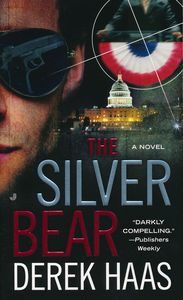
  • The Silver Bear, Derek Haas

    The Silver Bear, Derek Haas

    Berkley, 2010 reprint of 2008 original, 215 pages, C$9.99 pb, ISBN 978-0-515-14763-6

    Reviewing books is one of my favourite things in life, and the evidence for that is everywhere on this site, which has seen something like eight book reviews per month for years.  There are times, however, where even the fun hobbies can feel oppressive.  You’re not seeing any sign of the problem here because I’m back-dating my reviews like crazy, but I spent most of February 2011 reading one unreviewable book after another: Lengthy tomes that left me feeling nothing; non-translated French novels with no audience for an English-language review; humour books that I enjoyed but couldn’t comment at length.  As I found myself reading but not reviewing, my backlog grew and I entered March without having met my reviewing quota from January.  I lost patience with lengthy books that had no obvious reviewing hooks; was exasperated by pleasant but vapid comic books that couldn’t sustain 600 words of commentary; and started wondering why I was reaching so far in my stacks of books to read when I could just go grab something new and comment-worthy.  (The answer to that last question, incidentally, is “reading old stuff to make way for new stuff in the piles.”)  Suddenly, spending a week and a half to finish a single 1,600-page French novel in two volumes didn’t feel like such a good idea.

    At some point, in bleary existential anguish, I started remembering the wisdom of more grizzled reviewers.  Which White Dwarf reviewer had made a comment about his brain shrinking to the size of a white dwarf after reading so many routine Science Fiction books?  Who was it who said that after reviewing for pay for years, short books looked more and more attractive?  Was it the same reviewer who said that after a while, they stopped grabbing the fat books if they had deadlines to meet?

    In any case, I found part of my reviewing-mojo back in Derek Haas’s The Silver Bear.  Picked up a year ago partially because it had been misfiled in the SF section, partly for the novelty of seeing such a thin book published as a mass-market paperback, The Silver Bear is a short thriller with a lot of style.  It’s not that good, but it’s an entertaining read –and you can polish it off in two commutes even if you read slowly.

    While The Silver Bear is a first novel, Derek Haas isn’t a first-time author: His credits as a screenwriter include familiar action films such as 2 Fast 2 Furious, Wanted and the somewhat more respectable 3:10 to Yuma.  That his name is recognizable and marketable explains why such a short novel made it to bookstores: Given contemporary publishing economics, few publishers would take such chances in publishing a slim, expensive novel from an author with no track record.  In fact, the last time remember such a slim book in paperback, it was Steven Bochco’s Death by Hollywood.

    (Intermission note, since I’m padding this review: Reviewers shouldn’t make assumptions about publishing, fame and marketing.  A lot of stuff happens when Hollywood and New York publishers intersect, and only a minority of it actually make sense.  Agents can do wonders, as do promises of returns against favours.  Less cynically, there’s also the possibility that, you know, good novels get published no matter who wrote them.)

    But what The Silver Bear doesn’t have in length, it has in attitude.  A first-person narrative detailing the formative years of an assassin in-between his preparation for a high-profile hit, it’s a novel that chooses to be snappy and efficient.  The antihero’s no-nonsense narration is clipped and to the point, while the plot moves swiftly in-between the flashbacks and the details regarding the life of a professional assassin.  You can check off the tropes:  Organized crime; the use of a contact point; forbidden romance; affectless professionalism; rivalries between competing assassins… On some level, this is very familiar stuff: the kind of building blocks many movies (including Haas’ Wanted adaptation) have used in the past.  But the down-to-earth nature of the details is convincing (our assassin’s path through the Chicago underworld is gritty) and the very dark world Haas needs as a backdrop to his novel is credible enough.

    It almost makes up for the sketchy nature of the novel’s plot to be found in-between the flashbacks and the conventional nature of the narrative.  The been-there-done-that feeling of The Silver Bear weakens a final revelation that doesn’t seem all that consequential.  It’s always tempting, when considering novels written by screenwriters, to speculate as to whether the story would have been best-served on-screen, or if there’s a shelved screenplay somewhere with the same title.  Chances are that, at a different time, The Silver Bear wouldn’t have seemed as compelling as it does to me at the moment.  But I’ll take the small reading pleasures I get, and right now this novel is exactly the length I needed, with pretty much all the ingredients I needed for a punchy read.  Now let’s go on to weightier material.

  • Yippee Ki-Yay Moviegoer, Vern

    Yippee Ki-Yay Moviegoer, Vern

    Titan, 2010, 420 pages, C$18.95 tp, ISBN 978-1-84856-371-1

    Let’s put it as straight as Vern would: If you’re a reasonably smart moviegoer and you’re not reading outlawvern.com, then you’re missing out on one of the best movie reviewers writing today.  His self-assigned beat is, basically, “movies for guys”: action movies, horror movies, thrillers… but it’s always a treat to see him occasionally venture out of that demographic segment.  He combines a deep knowledge of film with serious analytical skills and an entertaining online persona.  He may still make intentional use of faux-dumb neologisms as “filmatism” and “web sights”, but there’s a lot of keen intelligence behind the plain-speaking outlaw façade. (Accordingly, his only recorded use of the word façade is in a review he has since half-disavowed.)  With Yippee Ki-Yay Moviegoer, you too can get a selection of his best online writing in one handy paper package.

    Ignoring the possibility that “Vern” is a pseudonym for someone with an established track record, this is Vern’s second professionally-published paper book: His first was Seagalogy, a surprisingly worthwhile book-length study of the film of Steven Seagal.  This time, most of Yippee Ki-Yay Moviegoer is material reprinted from Vern’s web site, bringing together more than ten years’ worth of content in one handy package that makes for perfect bathroom reading.

    Despite the obvious jokes about paying for content you can get online for free, there’s an obvious added value to collections of online content.  On an obvious level, Yippee Ki-Yay Moviegoer comes with a generous amount of organizing, contextualizing, footnotes amending the original text and a bit of copy-editing as well.  The book is divided in sections prefaced by original introductions, and the familiar typography is certainly easier to read than outlawvern’s default white-on-black-with-red-highlights site layout.  But there’s also a less-obvious value in selecting content for print publication, picking the best or most representative pieces in one single package.  The cognitive savings in not having to navigate a web site in order to read scattershot reams of content are usually underestimated by the why-pay crowd: Yippee Ki-Yay Moviegoer offers a controlled reading experience, coherent mini-theses and the opportunity to send a few honest bucks (um, cents) to the hard-working author.

    Divided in thirteen sections, Yippee Ki-Yay Moviegoer starts and ends firmly in action-movie territory, as the Die Hard-inspired title may imply.  When you start a book with a review of 300 and end it with a section dedicated to one Bruce Willis, it’s hard to argue that the book doesn’t deliver for action fans.  But there are plenty of big and small delights in-between.  Vern is able to write entertainingly about obscure films; few other reviewers can make readers hunt down long-forgotten movies as effectively as he does.  (I suspect that his commentaries are more entertaining that some of the movies he describes, but that goes without saying.)  Even in discussing films far from the “movies for guys” beat, Vern is reliably entertaining: His takes on films such as Crash (2005), Garfield and The Real Cancun show what happens when a reviewer brings his acknowledged biases to a different kind of film and writes for an appropriate audience.  From time to time, his reviews are springboard to larger concerns (such as the place of the American male in contemporary society, or the debate about the Hostel-inspired Torture Porn horror craze).  Some sections of the book are meant to form a sustained argument: After suffering through Transformers and being aghast at the “summer movies aren’t supposed to be good” argument, Vern revisits some of the best summer genre movies of the past and, in doing so, pretty much demonstrates that laziness from filmmakers and viewers is no excuse.

    The result is quite a bit more valuable than a reprint of online reviews: It’s a great time in company of an articulate, sympathetic and knowledgeable critic who wants, in his own fashion, to raise the level of discourse surrounding popular genre movies.  Even in discussing movies that are -at best- forgettable exploitation films, Vern can be counted upon to make one or two observations worth our time.  Trust me on this: You want to be reading outlawvern.com, and there’s no better introduction to Vern than Yippee Ki-Yay Moviegoer.

  • Shine, Edited by Jetse de Vries

    Shine, Edited by Jetse de Vries

    Solaris, 2010, 453 pages, £7.99 pb, ISBN 978-1-906735-66-1

    Sometimes, when I get bored reviewing books, I take on self-imposed challenges.  Many of them are self-defeating.  Some are just silly.  A few have gotten me in trouble.  But some are interesting style exercises, such as Can you review a themed anthology without saying anything meaningful about any of the individual stories?

    Most of the time, that’s simply not possible.  As much as anthologists would like us to appreciate all of their hard work in delivering themed anthologies with carefully-picked stories, there’s rarely more to see in the package than stories around a common, sometimes arbitrary theme.  “Oh, some Sherlock Holmes mysteries”.  “Oh, a book of cat-detective stories.”  Shine is different.  It’s “an anthology of near-future optimistic science-fiction”

    It says a lot about the current state of SF that we’re at a point where this kind of theme would be noteworthy.  Simplifying outrageously, SF as a literary genre tends to be manic-depressive, with phases of excitement alternating between cycles of depression.  The manic excitement of cyberpunk may have followed the dour catastrophes of the seventies, but the genre currently seems stuck in a gloomy phase, reeling from the aftershocks of the Bush administration and associated traumas.  In-between milestones such as The Windup Girl, The Road and one-note symphonies of gloooooomy “Year’s best SF” anthologies, the fact that an anthology of optimistic near-future SF would get people excited is itself noteworthy, and a welcome push-back against the prevailing atmosphere.

    We’re also lucky that this someone would happen to be Jetse de Vries, an oversized personality who managed to transform his vision in a coherent book.  Thanks to his introduction (in which he clearly outlines the goal of his anthology) and individual notes on each story detailing how he got in touch with the authors, de Vries transforms Shine from an anthology to a sustained think-piece, each story flowing into the next.  If Shine can be discussed without paying attention to the stories themselves, it’s because it feels like a substantial piece of work by itself

    It probably helps that the universes imagined in Shine’s sixteen stories end up sharing quite a number of common assumptions.  I don’t think that’s an accident: Today’s fears about the future are clearly defined, and so are our best hopes for salvation.  As a result, the fiction collected here is heavy on globalization, social equality, environmentalism as a way of life, tightly-connected communication networks and a long-term vision that goes beyond the next quarterly report.  I’m pleased, after years of having internalized the notion that “there’s no common future any more”, to discover that there can actually be a vision for a better tomorrow… and that it doesn’t look like classical Science Fiction as much as a trawl through interesting blogs.

    That’s as good a reason as any to discuss Shine’s list of contributors, and how it doesn’t look like the usual slate of suspects you can find in other SF anthologies.  Flipping through the list of authors, I notice only two established SF writers, may up-and-comers, a lot of non-Americans (this is significant), a few scientists, some bloggers (heck, even a regular commenter on blogs I read) and others whose biography escapes any easy categorization.  At a time where genre SF is contemplating its own insularity, this too is a welcome change.

    This diversity of voices goes hand-in-hand with de Vries’ up-to-the-moment use of social media tools to solicit stories and draw support for the anthology.  Since the project’s beginning, de Vries has been updating a web site and tweeting, getting in contact with newer authors in this fashion.  (I’m probably breaking my vow to not say anything substantial about individual stories by pointing out that one of them is written Twitter-style.)  The impression that de Vries’ enthusiastic use of modern communications suggests is a demonstration of his own thesis: there’s still a bit of wonder in seeing how an individual can assemble not just an anthology of this global reach, but a social community of like-minded people by using tools freely available to all.  (And lest you think that this was just a promotional effort, note that the Twitter feed is still active as of February 2011, nearly a year after the release of the book.)  In some ways, Shine is the first true major twenty-first century SF anthology, inconceivable and impossible even ten years earlier.

    The flip-side of such a strong editorial presence and crisp premise is that the project can overshadow the stories to a point where a review can dispense of discussing them entirely.  That’s not necessarily a bad thing for the project, or the anthologist himself, but the poor authors may have to read other reviews in order to get their kudos.  Fortunately, thanks to our bright current future, that too is just another web search away…

  • The $12 Million Stuffed Shark: The Curious Economics of Contemporary Art, Don Thompson

    The $12 Million Stuffed Shark: The Curious Economics of Contemporary Art, Don Thompson

    Anchor Canada, 2009 reprint of 2008 original, 268 pages, C$22.00 tp, ISBN 978-0-385-66678-7

    One of the reasons why I’m reading and reviewing mostly non-fiction books these days is that the real world seems to have, in its quasi-infinite diversity, a lot more to offer than the well-trodden pathways of fiction.

    For instance, it’s hard to imagine a fictional universe more irrational than the high-end contemporary art market.  What could possibly motivate otherwise intelligent and accomplished people to drop a few million dollars on objects of dubious artistic value?  Damien Hirsch’s titular artwork, after all, is £50,000’s worth of dead shark, preservation fluid, glass and steel.  Why would it be worth so much more to collectors, galleries, auction houses and dealers?  As contemporary art becomes baffling to the average viewer, why does it continue to fetch such high prices?

    The simplest answer is a variation on “It’s crazy!”  But that’s the kind of explanation made to annoy every professional economist, trained to believe in the rationality and efficiency of the marketplace.  In other words, it’s a perfect research opportunity for academic economist Don Thompson, who sets out to understand the business of contemporary art in less than three hundred pages.

    The $12 Million Stuffed Shark ends up being a far more revealing journey than anyone could expect.  If you want to start somewhere, go with the buyers and collectors.  One of the smartest passages of the book illustrates just how rich big-time art collectors actually are: Twelve million dollars, at their level of income, is something like a week’s salary –substantial, sure, but not crippling.  The buyers are from all around the world, and many of them are on a quest for social respectability.  How best to prove their upward mobility and refined artistic tastes than to display a work from a familiar name?  Some buy sight-unseen; others will borrow the work for a few weeks to see how it fits in their décor.  Other will buy for investment opportunities, but even Thompson (who has since joined the staff of The Art Economist magazine, a periodical aimed at art collectors/investors) cautions that overall, most art never sells for more than it was bought at.

    Most artists, after all, reach a plateau; most art ends up stored somewhere; museums have more art than they can display (leading to a credible argument for museums selling work); and most would-be investors never see a return on most of their investments.  This makes art a risky investment, but not a hopeless one, because some work from some artists do appreciate, and everyone is in a race to identify the next hot artists before they hit big-time prices.

    From that starting point, we get to explore art auctions, auction houses, the dance between dealers and their competitors, the increasing importance of art fairs and the artists that are getting most of the attention nowadays.  Get ready to distinguish your Saatchis from your Christies and maybe even appreciate some work from Jeff Koons and other contemporary artists.  One of the best chapters in the book explains the curious psychology of auctions in a wonderful wealth of subtle details that show how people react in constrained situations.

    Even fast readers shouldn’t be surprised if they remain glued to the book for a while.  Thompson covers his subject through anecdotes, interviews, historical information, plenty of money figures and a few illustrations along the way.  Avowedly inspired by Freakonomics, The $12 Million Stuffed Shark becomes a layman’s introduction to contemporary art from a non-artistic perspective.  Thompson doesn’t spend a lot of time on quality judgement, except to suggest that if there is considerable disagreement as to what is a good art piece, it’s easy to quantify what is an expensive art piece.  This should make most artists and connoisseurs wince, but it’s an essential assumption if the book is to explain the field as it is rather than how it should be.

    Ironically, Thompson’s book feels like dense reading in part because it doesn’t skimp on telling anecdotes, biographical profiles and preliminary conclusions on the state of the field.  I found it to be absorbing –I didn’t want to miss anything, so I ended up reading it very slowly to be sure to keep up with Thompson’s thorough exploration of the relationships between the various players involved in the field.  Perhaps more tellingly, I bought this book in the wake of the excellent “Pop Life” exhibition of contemporary art at the National Gallery of Canada, and now regret that I can’t go back to the gallery to see a few Warhols, Koonses, Hirsches and other darlings of the contemporary art market.  Thompson may have focused strictly on the economics of the market, but he may be able to stoke up a continued interest in the art.

  • The Discovery of the Titanic, Robert D. Ballard

    The Discovery of the Titanic, Robert D. Ballard

    Warner Books, 1998 reprint of 1987 original, 287 pages, $13.99 tp, ISBN 0-446-67174-6

    I know that Titanic-mania is so 1997-1998, but there’s no expiration date for good books.  I’ve had Robert Ballard’s The Discovery of the Titanic in my to-read stack for nearly forever and now seems as good a time to read it as ever.

    An account of the discovery of the Titanic shipwreck by the oceanographer in charge of the expedition, The Discovery of the Titanic sometimes feels like a throwback to the heroic era of exploration.  It’s not much of a stretch to point out that less than six months elapsed between Roald Amundsen’s December 1911 expedition to the South Pole (the Earth’s last great unexplored frontier) and the sinking of the Titanic in April 1912.  A frontier opened even as another one closed, as generations of curious observers wondered about the exact location of the wreck.

    It wasn’t as simple as looking somewhere near the approximate location of the Titanic’s last know position.  Given the depth at which the ship sank, no attempt could be made until technology improved.  Several expeditions simply couldn’t find the wreck.  Meanwhile, popular culture spun its own tales: As a kid, I remember being told fanciful tales of how the wreckage of the ship was still traveling underwater, moved by underwater currents to circle the world.  As amazing at it may sound, it wasn’t until nearly sixty years later, in 1985, that the wreckage was found once again –four kilometres down on the Atlantic ocean floor and broken up in two pieces six hundred meters apart.  Overnight, historical accounts of the ship’s sinking were revised, as common wisdom until then (As reflected in such things as Clive Cussler’s overblown thriller Raise the Titanic!) held that the ship had sunk in one piece.

    The discovery of the wreck, far from dampening interest in the story of the ocean liner, revived interest in the matter and eventually led to James Cameron’s blockbuster 1997 movie.  A minor boom in Titanic-related publishing occurred to coincide with the film’s success, and this re-edition of Ballard’s 1987 book, revised to take in account the latest discoveries, was part of the mania.

    Still, discounting fads, there’s little doubt that this is one of the essentials on every bookshelf dedicated to the Titanic.  While it doesn’t seem to be in print at the moment, it’s a first-hand account of the discovery of the wreck by the lead discoverer himself, has been favourably reviewed, frequently cited by latter works and is still fascinating to read even a quarter of a century later.  There are better accounts of the sinking itself, and more complete examinations of the wreck (some of them by Ballard himself), but when it comes to describing the moment of the discovery itself, this is the source.

    The book does feature a summarized account of the sinking; just enough to set the scene, provide context and prepare readers for the discovery.  Ballard also provides an overview of the previous failed efforts to find the wreck, not sparing one or two barbs at his predecessors.  Describing his own attempt to put together an expedition of his own, Ballard is notably coy about the now-known deal he made with the US Navy to get funding in exchange for exploring US nuclear submarines wrecks prior to his own search for the Titanic.

    The world had to wait until a French/American 1985 expedition, using what was then state-of-the-art technology, for the wreck of the Titanic to be found. Ballard’s account of the discovery, in the wee hours of the morning, remains the book’s best passage.  He’s also candid in describing the aftermath, the way the discovery escaped in the press before they had a communication strategy to go along the scientific agenda, and the difficulties dealing with the media circus that accompanied his return to shore.  Ballard’s factual description of the debris found in the field underneath which the Titanic sank is curiously effective in describing the human element of the tragedy.  The book comes with a full-color insert showing beautiful illustrations showing the state of the wreck in 1985.

    The Discovery of the Titanic also explain why, as discussed in the afterword of the 1995 edition, Ballard did not raise any artefact from the site –a decision that eventually let others take possession of the wreck under maritime salvage law.  As of this writing, the Titanic wreck is property of a for-profit company putting together traveling museum shows, the debris field has been picked clean of artefacts and numerous visits to the site have left the wreck in far worse shape.  We may want to enjoy the thought of having access to the wreckage site, because chances are that it will be gone, rusted beyond recognition, within a few more decades.  Isn’t it remarkable to realize that the Titanic may have a shorter life as a known site than a lost legend?

  • Seven Deadly Wonders, Matthew Reilly

    Seven Deadly Wonders, Matthew Reilly

    Pocket, 2007 paperback reprint of 2006 original, 547 pages, C$9.99 pb, ISBN 978-1-4165-0506-8

    Matthew Reilly writes thrillers like Michael Bay directs movies.

    I will let you figure out if this is a compliment.  There’s little grace and subtlety to Reilly’s writing style and it only takes a few pages into Seven Deadly Wonders to be reminded of his overuse of exclamation points, illustrative info-graphics, short paragraphs (sometimes even one-word paragraphs) and tough-guy machismo.  Every sentence has its own camera angle and his action scenes aren’t written as much as they’re loudly pounded with a thrash metal back-beat.

    It doesn’t make for fine writing, but it does amount to a unique reading experience akin to an unlimited-budget summer blockbuster.  Reilly’s never been one to think small, and Seven Deadly Wonders roars forward from the very beginning, occasionally pausing for explanatory interludes and flash-backs.  Moving away from his usual military techno-thriller plot formula to embrace a Da Vinci Code-esque blend of modern gadgets, supernatural mysticism and historical trivia, Reilly posits a vast Antique conspiracy to hide away a terrible artefact in vast trap-filled catacombs.  When three competing forces all start gunning each other to gain elements of the artefact, the fun begins.

    Breaking away from his series of novels featuring top US Special Forces operative Shane Scofeild, Reilly doesn’t go looking too far for his next protagonist: Jack West Jr. is a top Australian special forces operative with two degree in ancient history –which proves handy given the book’s emphasis on ancient mysteries.  Refining his usual formula of thrusting a team of special operatives against ever-increasing odds, Reilly has some fun in incorporating a ten-year-old girl in the proceedings (she ends up re-naming the rest of the team, tweaking tough-guy names like “Saladin” to something like “Pooh Bear”) and making the ensemble cast a more integral part of the story.

    The biggest change in attitude between both series, however, is the inclusion of a dose of supernatural content in the form of prophecies, ancient advanced technologies and mystical light-shows.  In an insightful afterword, Reilly refers to Seven Deadly Wonders as contemporary fantasy, which is really just another way of saying that he’ll push premises as far as they can go.  Compared to most of the other thrillers clearly showing a Dan Brown influence, Reilly prefers a far more muscular thriller component: The book doesn’t skimp on large-scale action scenes, explosions, advanced military equipment and global power-plays.  It offers a frenetic global hunt for relics of the Seven Wonders of the World and ends with a spectacular set-piece involving the great pyramid, a hovering 747 and blood sacrifice leading to no less than a thousand years of domination for the winning team.  Whew!

    As long as you consent to play by Reilly’s rules, this is pure escapist entertainment.  Reilly’s intention to always go bigger, faster and crazier sets him apart from other writers still preoccupied with plausibility, and results in some spectacular sequences –there’s a really good set-piece set in an overhanging garden that’s as crazy as it’s entertaining.  While some of Reilly’s tricks will strike high-brow readers as skirting illiteracy (read the book aloud to realize how insanely dramatic his prose style can be), there’s something fascinating in seeing him re-use blockbuster and video-game aesthetics in a prosaic context.  Seven Deadly Wonders is abundantly illustrated with diagrams designed to make sense of the action, making for a very peculiar reading experience bridging the gap between prose and videogame mechanics.

    Perhaps the most amazing thing about Seven Deadly Wonders is how it manages to one-up much of Reilly’s already-extreme bibliography.  The mysticism may be off-putting in a thriller context, but the atmosphere of everything-goes is coherent, and there’s a lot of cleverness in fitting modern action in ancient settings and layers of mythology.  Reilly makes most other thriller writers look like sedate bores.  There’s no need to look for social relevance or dramatic depth here: Seven Deadly Wonders is purely committed to its own aesthetics, and that’s a huge part of why it feels so interesting.  Like it or not, few other writers are as dedicated at pushing the state-of-the-art in that particular direction, and even those who complain about this book being geared to the ADD generation may find something of note here.

    [February 2011: A full-length review of follow-up Jack West adventure Six Sacred Stones would be redundant, as it has pretty much the same strengths and weaknesses as Seven Deadly Wonders: action-movie-inspired plotting and prose, numerous diagrams, constant movement and a blend of high tech gadgets in spectacular ancient settings.  It does feel a bit duller when read shortly after its predecessors and redundant as well: The first book ended on a definitive note, whereas this one sets up a cliff-hanger to be resolved in Five Greatest Warriors. I have no plans to stop reading, but I would like Reilly to write something else at some point.]

  • Barney’s Version, Mordecai Richler

    Barney’s Version, Mordecai Richler

    Knopf, 1997, 355 pages, C$25.00 hc, ISBN 0-679-40418-X

    Commonly-held wisdom is that movies ruin books, but that relationship usually proves true in only one direction, for readers of the original who then see the movie adaptation.  There is much less appreciation for the way the arrow runs in reverse: how movies can enhance books when viewers go on to read the original.

    Seeing 2010’s Barney’s Version movie adaptation is an ideal way to prepare for reading Mordecai Richler’s 1997 novel, his last work of book-length fiction.  Given how Barney’s Version is a lengthy autobiographical ramble by a man who has had three wives, the opening pages of the story makes no attempt at nicely introducing the reader to the gallery of characters what have come to populate Barney Panovsky’s life.  What are those references to Bogie?  Who is “the second Ms. Panofvsky”?  How many wives has Barney had anyway?

    The relationships aren’t one-to-one between novel and film: The events of the film version has been pushed fifteen years forward, ditch a Paris-set prologue for Rome, update details of Barney’s television-show production company, combine a few characters, streamline some scenes and abandon many of Barney’s crankier reflections on Montréal and Québec society as seen from the perspective of a Jewish English-Canadian.  Gone are the vicious attacks on separatism, dismissive thoughts on young activists and conscious rebellions against political correctness.

    But all of those are in the book, and more.  The point of reading Barney’s Version is to understand more fully the characters surrounding Barney, and peek a little deeper in his mind.  Among other treats, we get to know what happens to a few characters abruptly evacuated from the film as soon as their plot points are accomplished –I particularly appreciated learning how the now-obese “second Ms. Panofvsky” kept hounding Barney throughout his life, or what happened to Cedric after Paris.  Barney is such a character that reading him about circa-1995 annoyances is good enough for a few smiles –and I’m voluntarily not trying to link Barney to Richler himself.  As a nod to Richler’s best-know work, Duddy Kravitz is even mentioned a few times as another elderly businessman who has never lost his touch for the subtle con.

    Barney’s Version can feel like hard work at first, though: The blizzard of names, disconnected events, shorthand references and deliberate mistakes in the text is meant to reflect the way Barney is losing his mind to Alzheimer.  The first few pages don’t make for a friendly reading experience, though –and that’s with the help of the film in mapping the relationships between the characters.

    One of the question that often comes in recommending that readers spoil themselves rotten with the movie adaptation before tackling the source novel is whether the reader can still be surprised, satisfied or otherwise caught up in a story whose twists and turns are already known.  Ignoring adaptations that use a premise before going in their own direction, or those who change key elements of the resolution, Barney’s Version proves that a sufficiently skilled storyteller can keep up the surprises even when you know all the tricks up his sleeve.  The framing device of the book itself (untranslatable in film) is remarkably effective and even if the final revelation to the book is the same as the movie, nothing can quite prepare the reader for the last page: even the last few “damn, damn, damn” of the novel give the extra emotional layer to the truths left unrevealed to some characters.

    If you’ve seen the film and thought that maybe something was missing, do yourself a favour and get a little bit more of Barney Panofvsky’s cranky wisdom.  (It’s no exaggeration that the written Barney would have hated the film version of his life, restructured around a pat romantic drama.)  At the same time, you’ll understand why Mordecai Richler’s ghost still remains such a presence over the Canadian literary scene, even a decade after his death.

  • The Gate House, Nelson DeMille

    The Gate House, Nelson DeMille

    Grand Central, 2008, 677 pages, C$27.99 hc, ISBN 978-0-446-53342-3

    Even twenty years after publication, Nelson DeMille’s The Gold Coast remains an oddity in the author’s bibliography: It’s not a thriller as much as it’s a romantic drama, a social study and a mournful look at the end of an era.  Set among the Long Island upper-crust, it tells of a tragic love triangle between a narrator, his wife and a Mafia don having purchased a property in the very exclusive old-money “Gold Coast” community.  It doesn’t end well, and by the end of the novel our narrator left Long Island for an unspecified duration, taking a sailboat trip around the world while the old way of life on the Gold Coast continues to disappear.

    As The Gate House begins, ten years later, John Sutter is back on Long Island to take care of business: After sailing for years and establishing himself in London, Sutter is compelled to head to the scene of The Gold Coast when his old housekeeper is hospitalized for her last few days.  Trying to take care of the estate, he discovers that his ex-wife is back in the area as well, and he is soon contacted by the son of his deceased nemesis for “business”.  Before long, Sutter is once again navigating the dangerous shoals between love, in-laws, mafia lords, yachting clubs, Iranian expatriates and everything else that can fit on Long Island.

    Readers used to the typical DeMille protagonist will feel instantly comfortable with Sutter’s smart-alec narration.  Sutter, having married into money, had always been described in the previous book, as being in the Long Island aristocracy and yet not part of it.  After ten years away, his detachment is even more pronounced in the sequel.  His comments on everyone are acerbic and often very funny –no one deals with in-laws as acidly as a DeMille protagonist.  His narration gives some narrative energy to a very long book in which not much actually happens.

    If there’s one thing to keep in mind about The Gate House, it’s that it’s not driven by plot.  Leisurely-paced, it spends pages ruminating on the events of the previous novel (so much so that even readers who haven’t read it will be thoroughly spoiled within a few chapters), and then lets plot points accumulate every fifty pages or so.  Even Sutter’s easygoing and witty narration can’t mask the slow pacing or the thinness of the story.  Much of the point in describing the evolution of Long Island feels like a rethread as well –if The Cold Coast was about the end of eras as nouveaux riches were invading the hunting grounds of the old aristocracy while the mafia was losing its influence, then The Gate House is an epilogue in which the invasion is complete, estates having being replaced by McMansions, and the mob being unable to provide leaders as capable as the previous ones.  The Gate House is also significantly lower in thrills, not only compared to the rest of DeMille’s work, but also compared to The Gold Coast itself –while the original was already more focused on relationships than on action sequences, the sequel is even more sedate, physical danger being late in threatening Sutter and sharply resolved when it happens.

    For readers worried about DeMille’s career after a few duds in a row and an unhealthy obsession with 9/11 (the two being related), The Gate House offers a cautiously optimistic indication: DeMille is still obsessed with 9/11, as the events of the novel take place in 2002 and semi-faithfully recall the paranoia of the time.  Fortunately, The Gate House isn’t as  thoroughly insane as either Night Fall or Wild Fire… even if some character decisions seem dubious at best, or plot-driven at worst.  The Gate House is, at least, pleasant to read throughout, even entertaining to a degree that DeMille hadn’t been able to sustain since Up Country.  While the result won’t be enough to make any sceptic claim that DeMille is back, it’s better enough to make us believe that he’s taken a step away from the edge.

    Since “too long” has been a feature of DeMille’s novels for a while, and since DeMille has dabbled with romance in a few books (in Spencerville, for instance), it’s not as if fans will be caught unprepared by The Gate House’s mixture of slow pacing, courtship and sarcastic narration.  But compared with the rest of DeMille’s pre-2001 bibliography, The Gate House isn’t much of a success.  It’s an average entry in the author’s bibliography –entertaining, even amusing, but far from reaching any kind of high point in either thrills or drama.  It will make fans happy… but it’s unlikely to draw in newer readers, or restore faith that he’s regained his touch.

  • American Ground: Unbuilding the World Trade Center, William Langewiesche

    American Ground: Unbuilding the World Trade Center, William Langewiesche

    North Point, 2003 revised edition of 2002 original, 218 pages, C$21.50 pb, ISBN 0-86547-675-6

    The surprise about American Ground: Unbuilding the World Trade Center isn’t that it presents a factual, generally unsentimental and highly informative description of the way the ruins of the World Trade Center were removed from downtown New York in the months following 9/11.

    The surprise is that it was published in 2002.  Even the revised paperback edition is dated 2003, a time during which, to non-American observers, much of the United States went violently insane and invaded a small country on a spurious “weapons of mass destruction” rationale.  It took years for America to collectively calm down and generally acknowledge that delusion.  Given the time lag between fantasy and acknowledgement, one would expect a sober account of traumatic events to take years to put together.  Yet William Langewiesche was able to do so in mere months.

    To do this, he gained access to the site even as authorities were still busy putting together a response plan.  For weeks, Langewiesche was able to walk though the Ground Zero site, interview those who were involved in the effort and get answers from people in charge.  His narrative describes how a response was assembled in the hours following the tragedy, in-between a destroyed section of downtown, people wanting to go forward with rescue efforts, investigators looking for clues in the debris, an environment filled with unstable rubble, multiple levels of overlapping authority and all of that set in one of the densest urban areas on Earth –basically, the worst imaginable combination of complications.

    American Ground also describes the often-amazing story of what happened at the site long after the news channel stopped the round-the-clock coverage.  How the containment basin nearly crumbled and flooded the area; how four construction companies were hurriedly contacted to provide services; how the debris were finally taken out of the area by barge, processed off-site, inspected multiple times for human remains, and ultimately sold to foreign buyers.  Those who have always loved triumphant engineering stories will be amazed at the complexity of the effort and how people can rally behind a common cause in times of crises.

    Little is said about 9/11 itself in American Ground, the subject matter carefully restrained to the engineering challenge of clearing out the debris from the area.  It doesn’t really need to do anything more: readers will provide their emotional soundtrack.  And yet, by being as clear as possible, but refusing to engage in drama, Langewiesche is able to faithfully represent the emotional charge of working at what was, after all, both a grave and a crime scene.  It also allows him to present factual but unpleasant information on conflicts between various groups on people working on-site, some of which does not reflect very well on groups that had been, at the time, placed on a pedestal.  NYFD firefighters are described as acting far more reverently when a body from their service is found in the wreckage; 9/11 widows are portrayed as emotional and unhelpful in meetings.

    It’s not surprising for a circa-2011 reader to find out that the book raised a considerable amount of controversy in the two years after its release.  The paperback edition of the book is recommended over the original hardcover for an after-word that describes some of the controversies.  Extra fun can be found by looking at the book’s one-star reviews on amazon –the most ironic being a one-star review from “C. Pellegrino “timewalker””, aka Charles Pellegrino, whose professional reputation would be destroyed in 2010 in the fracas surrounding the recall of his book Last Train from Hiroshima.  Much of the criticism is based on emotional disbelief: How can you say bad things about people involved in such an event? Years later, we’re readier to acknowledge that even good people can act badly in some circumstances, that some people’s anecdotal behaviour does not change the magnitude of a collective achievement and that the way New York regained its footing after 9/11 was just as extraordinary as the event itself.  Langewiesche simply arrived to those conclusions long before his detractors.

    So it is that ten years after 9/11, we can see more clearly how much of an achievement American Ground was at the time.  It’s unusually honest, devoid of cheap jingoism, and mesmerizingly readable from beginning to end.  As much of the then-chatter about 9/11 now reads as ridiculously overdone, American Ground remains just as compelling today.  That it got published in 2002 is just as impressive as the content of the book itself.

  • Hot Stuff: A Brief History of Disco, John Manuel Andriote

    Hot Stuff: A Brief History of Disco, John Manuel Andriote

    Harper Collins, 2001, 195 pages,C$19.95 tp, ISBN 0-380-80907-9

    Given that I spent most of the month reading non-fiction about Very Important Subjects such as declassified national secrets, the tension between contemporary science and business, the immediate aftermath of 9/11 and the exploitation of third-world workers, it seemed perfectly acceptable to kick back for a while and relax with a book entirely dedicated to a frivolous subject.  Something like disco, for instance.

    Disco never gets any respect.  Rising and crashing over a period of a few short years at the end of the 1970s, disco music is today best remembered as a temporary embarrassment (by those who embraced it at the time) or harmless retro kitsch fit for self-consciously ironic role-playing (by those who didn’t).  Disco precisely sets any party back to 1978, seems inherently campy and still (thirty years later) has produced some of the best dance music on planet Earth.  If disco doesn’t get any respect, it’s partly because it has never wanted any: It’s out-and-out fun, hedonism, play and release wrapped in one hot package.

    John Manuel Andriote’s Hot Stuff: A Brief History of Disco isn’t meant to be a scholarly or encyclopaedic discussion of the subject: Experienced non-fiction readers will recognize the kind of workmanlike craft through which the book was assembled from interviews, personal recollections and a huge number of newspaper clippings.  But even if the book sometimes feels like a contractual obligation by a writer looking to pay the bills in-between weightier projects, it reaches its essential objective: Provide a brief, entertaining, cogent and even insightful history of disco through its origins, beginnings, full-blown craze, rapid decline and periodic revivals.

    Much of this is due to the book’s breezy and accessible style: Andriote’s no-nonsense approach covers disco’s rise and fall chronologically, broadly dividing the book’s six chapters and illustrating his examples with a variety of historical sources.  The frequent mentions of important songs makes the book’s reading experience curiously synesthesiac, as readers won’t help but replay excerpts in their head as they are mentioned in the text.  (The more technically adept will know to read the book with their disco-drenched iPod at their fingertips.)

    For those of us who were far too young during disco’s original run to remember anything but TV re-runs of Xanadu and a few suspicious vinyl records in our parents’ collection, Hot Stuff does well in telling us about disco-as-a-lifestyle.  For many Americans at the tail end of the baby-boom, disco was their coming-of-age ritual: The self-conscious dressing-up, the mindless dancing, the creation of the discotheque concept… disco’s distinct visual aesthetic ensured its abrupt popularity as much as its rapid downfall: it was something new, something unique and something that people wouldn’t fail to remember fondly despite the backlash.  It was, after all, a music made to have fun –and people did.

    But there’s a bit more to disco than booty-shaking beats, and Andriote (best known for Victory Deferred, a book about AIDS and the gay community) never neglects the link between disco and the gay community: How disco started out marginally and had to be made safe for mainstream consumption, how even clear links between disco and the gay community were denied by many “average fans” (with hilarious anecdotes of denial about the Village People) and how homophobia fed into the disco backlash.  The Seventies, we are reminded, were not a good decade in America, and disco happened in part due to a complex interaction between a downbeat decade and people looking for something else.  Left unspoken is whether the wild nights of disco eventually led to Reagan’s “morning in America”.

    Are there better books out there about Disco?  Probably.  Even a cursory look at the book’s Amazon reviews brings up Saturday Night Forever as a recommended alternative.  But as a book found in the bargain bin, Hot Stuff remains a great stepping-stone introduction to the subject, and a literary break equivalent to a fun disco tune in-between heavier pieces.  It’s not as if I can deny my own fascination for the music: Disco all happened during my first half-dozen years, but when I picked up the music bug during the early nineties, Time Magazine assured me that my dance music was “The Revenge of the Disco Babies”.  There are only a few more degrees of separation between that, the Big Beat of the late-nineties and the Drum-and-bass of now: Disco’s echo continues even today.

  • Dark Waters, Lee Vyborny & Don Davis

    Dark Waters, Lee Vyborny & Don Davis

    New American Library, 2004 paperback reprint of 2003 original, 243 pages, C$21.00 pb, ISBN 0-451-21161-8

    Like submarines, some military projects can stay submerged a long time, occasionally appearing on the radar come procurement time, but otherwise remaining away from public view, conducting operations that may not be revealed publicly for years or decades.

    So it is that Dark Waters takes us behind the scenes for a look at the NR-1, one of the most unique craft in the US Navy’s fleet.  Designed to operate at depths far below other submarines, only one NR-1 was ever built: the cost overruns, technical complexity and limited uses for the craft basically made the construction of a second one unthinkable.  (Interestingly enough, the craft was never formally commissioned by the Navy: By keeping it on a special status, it freed up a spot in the Navy’s counted inventory and allowed the craft to avoid official scrutiny).  What a unique submarine it is, through: Resistant to pressures that would crush other submarines, the NR-1 could go explore the seabed by sinking to the bottom and then driving on the ocean floor using the special tracks it had been built with, grabbing things with a claw for retrieval.  Even at times where weather would drive away ships and submarines relying on surface assistance, the NR-1 could continue to operate.

    Designing such a craft takes a special kind of madness, especially during the sixties, a time where computer-assisted design was still notional and material science wasn’t nearly as powerful as it is now.  The NR-1 came equipped with a mind-bogglingly primitive Sperry computer, had to be tested in dangerous conditions (nearly being hit by other US Navy crafts during testing in shallow domestic waters), often suffered from its own design compromises and demanded much of its sailors.

    It’s one of those sailors, Lee Vyborny, who tells us of his time aboard the NR-1’s inaugural missions in Dark Waters.  Working with journalist Don Davis, Vyborny tells the biography of a unique machine, halfway between national security asset and scientific instrument.  Given Vyborny’s career path in and out of the NR-1, most of the details in the book are about the submarine’s first few years when he was a crewmember: the rest is covered less precisely, via official reports, recently-declassified documents, personal recollections and interviews with other crewmembers.  But even chunks of the book excerpted from the official record are fascinating, in no small part due to the role that the extraordinary admiral Hyman Rickover played in the NR-1’s conception and construction.

    Some of the book’s best moments come when Vyborny describes some of the close calls encountered by the NR-1 crew during the early years of the project.  Whether it’s nearly being rammed by a friendly aircraft carrier, or encountering such a catastrophic equipment failure that the sub looked destined for a one-way trip to the bottom, Dark Waters gives us a sense of the dangers faced by men aboard semi-experimental crafts.  The other big thrill comes when Vyborny tells of actual military operations undertaken by the NR-1: There’s a gripping chapter about the recovery of a downed F-14 fighter jet and its precious munitions, while another chapters describes how the US Navy was able to sneak the NR-1 in the Mediterranean, past active Soviet listening posts, by smuggling it within another US warship.  Later in the book, we get to see how the NR-1 was used to re-write oceanography textbooks, scientists being amazed at the amount of new data they could see with their own eyes while aboard the submarine.

    It’s not entirely true to say that the NR-1 was a national secret (it featured in a number of press reports), but it’s correct to say that until recently, much of its true covert nature was left unspecified to observers.  Starting in 1995, the Navy started letting go of a few secrets about the NR-1, helped along by the growing popularity and scientific worth of its non-military missions.  This increased publicity continued well after Dark Waters‘ publication: We barely get a mention of the NR-1’s involvement in the recovery of the Challenger debris, whereas the topic is now well-covered on-line.  Still, Dark Waters is likely to remain the definitive book about the NR-1 (which was deactivated in 2007 and is currently awaiting scrapping): Don Davis’ prose ties up Vyborny’s recollections, making the book just as interesting to read as countless fictional submarine thrillers.  A number of novelists could use it as reference and inspiration, not only in historical terms, but also for details of daring experimental projects and the ways they can (almost) go wrong.  It’s also a fascinating look at a footnote in the complex history in the Cold War, and how fascinating stories are still lurking in the archives… just under the surface.

  • The Info Mesa, Ed Regis

    The Info Mesa, Ed Regis

    W.W.Norton, 2003, 268 pages, C$39.00 hc, ISBN 0-393-02123-8

    I have no perceptible interest in Santa Fe, New Mexico, but contemporary science interests me and I’ll read anything by Ed Regis… so that’s how I ended up with The Info Mesa, an exploration of “Science, Business, and New Age Alchemy on the Santa Fe Plateau”.  It’s a non-fiction account of how science is increasingly being funneled through computers, as shown through the biography of four men who founded high-tech companies in Santa Fe.  As with other Regis book, it couples engaging portraits of scientists at work with broader consideration of science as it is being practiced today.  Much like other Regis books, The Info Mesa is sometimes superficial and often more triumphant than latter events (or an impartial observer) would suggest.  But as far as science nonfiction goes, it’s another pleasant read and it even has a few things to teach its readers.

    The story of how Santa Fe became a hotbed of scientific research begins with the Manhattan project, which grew in the nearby city of Los Alamos.  With such a formidable gathering of scientists, it was only natural that some of them would remember the area fondly and propose it years later as a location for a research institute specializing in unusual problems.  Whenever there’s a research institute, there’s also high probability of start-ups, and that’s how Santa Fe (population: less than 200,000 in the entire metro area) ended up with a small specialized number of companies specializing in high-end computer research as applied to science.

    The broad scientific development that Regis tackles in The Info Mesa, beyond some wonderful descriptions of Santa Fe that would make the local Chamber of Commerce give him an honorary membership, is how science has gradually shifted its research in the digital realm.  This happened early in physics, as computer simulations of physical events were relatively easy to model in software: Nuclear explosions are non-trivial to simulate well in silico, but they’re considerably easier to clean up than the real thing.  Meanwhile, the computerization of fields such as biology and chemistry would have to wait for a few crucial developments: The wide availability of powerful computers, and the codification of a common descriptive language.  One of The Info Mesa’s most fascinating tangents is about how David Weininger refined a way to codify the presentation of chemical compounds.  SMILES (Simplified Molecular Input Line Entry Specification) neatly cuts through centuries of chemical confusion to present an unambiguous, human-readable and machine-usable way to present complex chemical compounds.  It’s nothing less than a small study in human ingenuity.

    It’s also a neat entry in the biographies of the four men that Regis follows in an attempt to illustrate the development of the Info Mesa.  Weininger is described as a rock-star scientist: He flies his own jet planes (one of them, a decommissioned Russian fighter jet, bought cash-in-hand on an airport tarmac from a weapons dealer), lives in a house that once belonged to SF/Fantasy writer Roger Zelazny and helped build a molecule statue in front of his company’s building.  Meanwhile, The Info Mesa also tracks the lives of Anthony Rippo, Stuart Kauffman and Anthony Nicholls, writing warm portraits of them as scientists and entrepreneurs as they transform knowledge into money.  (Regis is notably glib about the latter, and scrupulously avoids discussing the darker side of, say, bulk-patenting molecules.  But that’s another book in itself.)

    The net effect of efforts like those from the Santa Fe companies is that biology and chemistry research is now, in many ways, susceptible to primarily take place within computer simulation.  Drug research stems from new molecules, and digital simulations allow to generate reams of “dry” theoretical data (seeking which molecular structure would bond with a certain neuro-receptor, for instance) in far less time than it would to perform actual “wet” chemical experiments.  Properly applied, computers can speed up vital research by orders of magnitude, and the field is still young.  Apply those same computers to data mining large amount of existing data, and you may even find something new and invisible to earlier methods of analysis.  (In between the gosh-wows, I couldn’t help but notice how many of those innovations post-dated my own formal science education.)

    An expansion of Regis’ own Wired June 2000 article “Greeting from Info Mesa”, The Info Mesa is another readable account of how science, technology and humanity interact in new ways.  It’s occasionally scattered, obviously present the best side of everyone involved and probably overestimate their importance in the grand scheme of things, but there’s plenty of fascinating stuff here to make up for the rest.

  • Bitter Chocolate, Carol Off

    Bitter Chocolate, Carol Off

    Random House Canada, 2006, 326 pages, C$34.95 hc, ISBN 0-679-31319-2

    If you think my online bibliomania is obnoxious, imagine how I must be in everyday life.  Friends, family and colleagues have come to dread my frequent visits to the bookstore, as I cannot stop myself from showing off my latest discoveries: “Look at this book!  Isn’t that cool?”  Most of them humour me (what else can they do?), but showing off Carol Off’s Bitter Chocolate and explaining what it’s about (“The exploitation of third-world cocoa farmers!”) got me some unusual push-back: “No! I don’t want to hear about chocolate exploitation!  I like chocolate!  I want to keep enjoying chocolate!

    The good news, I suppose is that it’s hard to be a semi-cognizant first-worlder these days without having internalized the notion of inadvertent exploitation.  Practically every single product or service that relatively affluent member of the North-American middle class can enjoy depends on some degree of layered suffering.  The products we buy are shelved by minimum-wage employees without hope of a rewarding career; they’re brought to the store by overworked and underpaid transport workers; they’re made by child workers in oppressive factories; and don’t ask about the raw materials, because it gets even worse the deeper you dig in the production chain.

    As it turns out, this is also the case for chocolate, and it has been so for a very long time.  As Off’s introductory history of chocolate makes clear, cacao has almost always been a luxury product, from its Mayan origins to its European introduction to its most recent transformation into the stuff that creates country-breaking market cartels.  The history of chocolate production has always involved overworked farmers who can’t afford the end product of their labour, colonial exploiters overexploiting growing regions before moving somewhere else, and of complicit hordes of consumers.  Like many tropical crops favoured by first-worlders, exploitation seems written deep into chocolate’s history.

    Much of Bitter Chocolate revolves around Off’s first-hand reporting from Côte d’Ivoire, a cocoa-producing country that has suffered from its share of problems since its 1970s heyday.  She is able to link the country’s tumultuous history with the changing fortunes of its cocoa production, particularly how government attempts to guarantee a minimum income for farmers have led to reprisals by a coordinated group of buyers.  Since then, the one-sided market has led to predictable abuse: child labour bordering on indentured slavery, rampant corruption and warring political factions.  (Coincidentally, Côte d’Ivoire was heavily in the news as I was reading the book, reeling from the aftermath of a contested late-2010 elections.)  Off goes on the ground with pisteurs to interview local actors and report from the cacao frontlines.  She comes back with stories of disappeared journalists and government officials destroyed for their opposition to exploited labour.

    None of this is pleasant, but none of this is unexpected either: It’s the same logic of exploitation that occurs whenever rich countries want something from poor countries.  Bitter Chocolate has the merit of making the links in the chain just a bit more explicit.

    Nit-pickers will note a few errors, at least in the chocolate-jacketed hardcover edition: Off claims a etymological origin for cacahuatl that seems dubious to experts, and at one point makes the absurd claim that cacao “beans could grow anywhere within a twenty-kilometre belt north or south of the equator” [P.58], which is quite a bit different from the true figure of twenty degrees from the equator (or roughly 2210 kilometres).  I’m nit-picking, but that’s part of the obnoxious reviewing services I provide: If those were mistakes that I could catch after just a casual reading of Wikipedia’s cocoa bean page, what other errors are in the historical section of the book?

    Still, there’s no denying the quality of the first-hand accounts, or the accumulation of historical evidence pointing to chocolate’s very bitter history.  It’s enough to make anyone feel slightly better about New Year’s resolutions to avoid chocolate, or be considerably less glib about the chocolate that they consume without a thought.  I personally ended up feeling less furious about the ways mass producers of chocolate are finding ways to reduce the actual chocolate content in the candies they present as chocolate; it also led me to buy a bar of “Maya Gold” fair-trade certified chocolate.  It’s not because we accept our role as unwitting exploiters that we can’t feel guilty about it.

  • Rigged, Ben Mezrich

    Rigged, Ben Mezrich

    Morrow, 2007, 294 pages, C$29.95 hc, ISBN 978-0-06-125272-3

    What?  Another heavily-fictionalized account of an East-Coast young man making a lot of money?  It must be time for the latest Ben Mezrich book!

    Oh I kid, but I kid with the Stockholm-syndrome grin of someone who now owns all of Mezrich’s non-fiction bibliography.  I may have issues with his repetitive use of fictional narrative devices to dope otherwise perfectly interesting non-fiction accounts, but when truth-seeking confront entertainment, I usually break in favour of having a good time: Mezrich’s books are a lot of fun to read.

    Faithful readers will be happy to note that Mezrich expands his horizons a bit with this latest entry Rigged, which tells the sort-of-true story of a Brooklyn-born finance analyst who gets hired by the New-York based Mercantile Exchange, where he gets to put together a proposal to create the Dubai Mercantile Exchange.  The protagonist is named David Russo, but he’s loosely based on John D’Agostino, who gets to minimally fact-check the narrative in a signed afterword.

    This being Mezrich’s fourth non-fiction book, it’s interesting to note how carefully he now acknowledges the novel as having heavily fictionalized components.  Unlike previous works, which tried to elide the fictive manipulations, Rigged recognizes up-front that some things have been changed or added, from an amalgam of antagonists to a tightening of events to, most likely, a number of ominous threats made against the protagonist.  There’s also quite a bit of lowest-denominator exposition-setting: It’s a bit insulting to read about two finance professionals discussing the basic point of mercantile trade; while readers don’t necessarily know those details, it’s ridiculous to pass the exposition as on-the-job training between two guys who really should know better.  (On the other hand, oh, that’s how oil is traded.)

    But if it’s so fictionalized, is it better, then, to consider Rigged primarily as fiction?

    Not really, because if Rigged is dramatized as a novel, it doesn’t necessarily make good fiction.  The plot threads are coarse, the characters are dull, the threats are strictly low-grade (the blackmail scheme is particularly obvious) and the book doesn’t quite know what to do with its second viewpoint protagonist, a young Dubai trader from who proposes a project to our lead character.  As financial fiction, it would be weak beer, and not even Mezrich’s rapid pacing, anecdote-heavy plotting and pleasant prose could patch up the lack of substance and simplistic structure.  No, the book has to somehow convince us that it’s about something real if it has any chance of surviving in our minds.

    Too bad that there isn’t more to Rigged (a dull title, barely alluding to oil rigs and not at all to market manipulation) than a description of the trader life and a look at Dubai that feels repetitive to those who have already read other similar non-fiction accounts.  There’s plenty of yuppie macho posturing in the book and an allusion to the increasingly computerized nature of exchanges, but it seems like a throwback to a time where the trading floor reigned supreme.  (1983’s Trading Places is referenced more than once).  Modern finance is a game of automated high-frequency trading where even the physical location of computer servers can be crucial –it would be interesting to see Mezrich write about that, but in order to do so, I suppose that he’d have to find a way to feature a Boston-educated whiz kid making tons of money.

    It may be that Mezrich’s formula is wearing thin.  Rigged uses so many of the same narrative devices (the threat; the mentor; the money-fuelled excesses) that it feels familiar even when it tackles a different kind of money-rich environment.  The foundation of the Dubai Mercantile Exchange is an important moment in financial history, but it seems like an afterthought to the kind of material already covered in movies like Boiler Room or plenty of other non-fiction titles of the past few years.  Mezrich’s money-is-interesting formula dissolves in meaninglessness if you don’t subscribe to its core value.  Add to that the uneasy balance between fact and fiction (Do I want information, entertainment or a disappointing mixture of both in which the presence of one nullifies the other?) and Rigged, albeit readable, still ends up feeling like the slightest of Mezrich’s non-fiction.

    One notes, with some amusement, that his next book, The Accidental Billionaires, would leave the financial world behind to tackle the newest social media zeitgeist.  The one after that, Sex on the Moon, goes on to describe a moon-rock heist.  As you may expect, I have already bought them both.

  • Cryoburn, Lois McMaster Bujold

    Cryoburn, Lois McMaster Bujold

    Baen, 2010, 345 pages, C$28.99 hc, ISBN 978-1-4391-3394-1

    Was Lois McMaster Bujold’s Cryoburn one of the most eagerly expected Science Fiction novels of 2010?  As far as its publisher is concerned, the only clue you need is the triumphant cover that heralds “A New Miles Vorkosigan Novel!”  The enormously popular series had, after all, lain dormant for much of the past decade, ever since Bujold followed up 2002’s Diplomatic Immunity with six fantasy novels set in an entirely different universe.

    After such a lengthy real-world pause, Cryoburn fittingly picks up seven years after the events of Diplomatic Immunity: Miles has grown into a respected imperial auditor, a devoted husband and a father to several kids.  Not that the domestic aspects of his personality get much play here, as he spends most of the book on Kibou-daini, a planet noteworthy for the extent to which it has invested in cryogenic preservation techniques.  The catacombs under the city are filled with frozen people, and that’s where the novel confidently begins in media res, with Miles blindly stumbling about after a failed kidnapping attempt.

    Once the dust settles down after an initial volley of typically Vorkosiganian adventures, the shape of the plot becomes clearer: Miles is investigating various corporate shenanigans on behalf of the Emperor, and solving the one he’s been sent to settle doesn’t preclude taking on another more interesting conspiracy when it comes to his attention.  Miles is nothing but a hyperactive problem-solver, and dangling further corporate malfeasance in front of him is an excellent way to get an adventure.  He is fortunate to be accompanied by his faithful armsman Roic, who gets his share of the narrative viewpoint while suffering through Miles’ elaborate schemes; and Jin, a Kibou-daini kid with a missing mother and a refreshing perspective on familiar characters.

    Cryoburn is a minor Vorkosigan novel more or less in the mould of Diplomatic Immunity, with enough hard science to justify a background for Miles’ adventures but without series-changing developments until its sucker-punch conclusion.  Kibou-daini’s fascination for cryogenic preservation is a solid excuse to explore the stranger social consequences of that scientific innovation—the best one being the logical consequence of proxy voting rights transfer from the frozen many to their holding corporations.  We also get to see the thawing process in two tense sequences, with enough plausible technical details to make it feel satisfying to the harder-minded SF fans.

    This being said, most readers coming back to the Vorkosigan series with Cryoburn will read it for the characters, not the fictional science.  Miles is thankfully back in full form, plunged in the kind of complex power-play that allows him to be as devious as he likes.  Roic’s viewpoint is most useful in feeling the impact that Miles can have on people who know him best, whereas Jin’s viewpoint is played for the emotional impact of characters who aren’t necessarily indestructible by virtue of being series protagonists.

    Yet notions of invulnerability inevitably lead us to the abrupt epilogue of the book, in which an amiable but minor Vorkosigan adventure suddenly becomes something else.  It’s not an entirely unexpected development: Thematically, Cryoburn is about death… and Vorkosigan fans will be able to piece together the upcoming revelation solely on the basis of what a series protagonist of Miles’s age should experience.  But while the development is intriguing, it still makes Cryoburn feel unbalanced, far more so that previous adventures in the series.  This isn’t a major entry in the Vorkosigan series, but the ending suggests that the next novel will be.  Until the next Bujold novel shows up in bookstores, there’s no avoiding the wait and assorted speculations.

    Fannish expectations will vary enormously: Those who care deeply about the Vorkosigan series may find that Cryoburn feels like light throat-clearing before another major entry.  People without that much attachment to Miles and company will find it to be an entertaining adventure with intriguing elements and an accomplished writer’s deft touch with plotting and characterization.  It may have been one of the SF’s most eagerly-awaited novels of 2010, but it’s not likely to remain one of the year’s major works (although, knowing Bujold fans, a few award nominations are definitely possible.)  One thing’s for sure: I can’t imagine any fan of the series not wanting to read the next novel as soon as they’re done with Cryoburn.