Reviews

  • Lance et Compte (2010)

    Lance et Compte (2010)

    (In French, On TV, December 2018) For French-Canadians of the past two generations, Lance et Compte is a TV classic. It began in the late 1980s as one of the first French-Canadian TV shows to adopt a more cinematic style and subject matter, à l’américaine as it moved away from dinner-table conversations and into the fast-paced, high-stakes world of hockey that has become Québec’s secular religion. I still remember schoolyard conversations about the first season of the TV show, the dead-on parody “Snappe pis bourdonne” by comic group Rock et Belles Oreilles and the national media attention given to the show. I stopped following it a few seasons later, but the show has been revived a few times in the thirty years since then, with TV movies and miniseries always extending the lives of the characters without a single reboot. The movie Lance et Compte fits into this long-running continuity by taking place between two seasons of the latest revival, featuring some characters first introduced during the TV show’s first season in the late eighties. I did not know that when I first saw the film—I presumed that it was going to be a reboot. So imagine my surprise in discovering both familiar and unfamiliar characters, trying to piece together nearly twenty years of accumulated backstory through quick conversations and passing references to past events in the show. This being said, the film does tell a specific story: How a bus accident decimates a professional hockey team, and how the team manages to get past this traumatic incident. It actually works decently well once you straighten out the character relationships, with a few surprising twists and turns as the film tries to bring back some characters (Yvan Ponton, for one) and finds out that it can’t. Series stalwart Marc Messier, Carl Marotte, Marina Orsini and Michel Forget all have good roles to play (Marotte, in particular, stages a great comeback), and even some of the most dubious plotting ideas—such as rescuing a Québec-based shoe brand—eventually work their way back into the main plot. Then there’s the paean to hockey, which always works for French-Canadians—even those who, like me, have lapsed a bit in their attendance. Slickly directed by Frédéric D’Amours, Lance et Compte plays into a fantasy-based version of professional hockey where city and team loyalties are nearly as thick as family ties—don’t try to make any comparison with the mercenary world of real-life hockey where allegiances are thin and money makes decisions. Still, it’s comforting to imagine people still being there twenty-five years later. Much of the movie rests on that kind of reassurance.

  • Lady Chatterly’s Lover (1981)

    Lady Chatterly’s Lover (1981)

    (In French, On TV, December 2018) When D. H. Lawrence sat down to write Lady Chatterly’s Lover, I’m not sure that he envisioned it being turned into an exploitative soft-core erotic thriller. Or maybe he did—the novel is celebrated for having struck down all sorts of obscenity laws during the 1950s–1960s and the author clearly intended it to push back the limits of free speech. Still, that doesn’t excuse boring movie adaptations. On a commercial basis, this 1981 version of Lady Chatterly’s Lover exists on solid ground: It was a reunion between director Just Jaeckin and star Sylvia Kristel for the first time since the soft-core-classic Emmanuelle. Alas, the white-gauze cinematography, languorous close-ups of Kristel’s body and lengthy lovemaking sequences mean that the film is aimed at voyeurs more than audiences interested in narrative substance. The result is incredibly dull, although I suppose that it remains notable for featuring a generous amount of female-gaze eroticism and not solely male titillation. (The introduction of the titular lover, for instance, is through a very long sequence in which the heroine stares at him taking a shower outdoors.) I can imagine circumstances where Lady Chatterly’s Lover would be a fun movie to watch as a couple, but it’s a very different kind of movie-watching experience than this movie critic taking notes and measuring it against the overall, um, thrust of 1980s cinema.

  • The Candidate (1972)

    The Candidate (1972)

    (In French, On TV, December 2018) Over a sufficiently long timeline, one of the problems with the world is its tendency to evolve toward a parody of itself, becoming the thing that earlier generations tried to satirize. So it is that I finished watching The Candidate having found it a reasonably tame description of an American political campaign, only to read up on the film and find out that it had been conceived as a satirical comedy. Of course, satire is dead under the current American presidency, and so The Candidate does appear a bit staid today, dealing with a far gentler and more rational era in US politics. This, mind you, is not necessarily a problem—I’m a political junkie and I’m more receptive than most to a movie taking us through an entire senatorial campaign without resorting to huge melodramatic twists à la Primary Colors or The Ides of March. (Which is for the better, given that most post-Clinton US political thrillers seemed to have the same resolution in mind.) Robert Redford is quite good in the film, playing an idealistic candidate who progressively waters down his message in an effort to be elected. The film seems to regard this as a soul-destroying process, but I may be showing my progressivist centric technocrat inner nature when I say that this feels perfectly reasonable and perhaps even admirable. The film isn’t without its funny moments, although some minor plot threads (such as the candidate’s affair with a staffer) get lost in the mix, and I don’t quite think that the protagonist gets a good chance to show his late-campaign desire to win taking over his idealistic convictions. It’s also dated in terms of references and technology but come on: It’s a forty-six-year-old movie. As such, The Candidate has aged nicely enough. I’ll add it to my growing list of essential movies about American politics.

  • Finian’s Rainbow (1968)

    Finian’s Rainbow (1968)

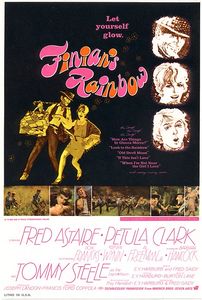
    (On Cable TV, December 2018) Being right doesn’t mean much when you’re late, and unfortunately that’s the first conclusion I get from watching Finian’s Rainbow, an old-fashioned musical that has the right moral values about racism but the rotten luck of making it to theatres one year after movies such as In the Heat of the Night and Guess who’s Coming to Dinner completely changed the Hollywood conversation about racial injustice in the United States. As New Hollywood was remaking the film industry in a far different image, Finian’s Rainbow was torn between new issues and old-fashioned style, featuring no less than Fred Astaire singing and dancing about racial injustice while dealing with a meddlesome leprechaun trying to get its gold back. Yeah… I’m not making this up. It’s a musical in the purest tradition of the form, but it would have been so much better had it been made ten years earlier. Astaire isn’t bad, but he looks truly old here—I mean: he never looked young even when he was, but here age has visibly caught up to him, and his great dance routines look almost dangerous. Petunia Clark is fine as his daughter, but much of the comedy and remarkable performances come from other players (including Tommy Steele as a hyper-caffeinated leprechaun) in this bizarre southern state/Irish-mythology mash-up. The film’s message against racial discrimination goes through an incredibly racist character being magically transformed into a black person (hello blackface) in time to travel with a small group of singers—the song is great (“The Begat”), but everything leading to it has issues of some sort. Plus, it’s directed by none other than Francis Ford Coppola. Finian’s Rainbow, as you can guess, is a strange blend—sometimes great, sometimes endearing, sometimes dumbfounding and sometimes uncomfortable. It’s certainly interesting, but I’m going to stop myself from calling it a must-watch.

    (Second Viewing, On Cable TV, March 2021) In retrospect, I’ve been too harsh on Finian’s Rainbow. Most of what struck me on a first viewing is still applicable to a second, but they don’t bother me nearly as much. Astaire looks old, but he does what he can and even the accumulating wrinkles can’t quite stop him from being an entertainer – and the film doesn’t focus nearly as much on him as it would have in earlier years. After all, he actually plays a father here. I’m also not quite as bothered by the film’s comic treatment of racism – it’s meant to be ridiculous, and the film does have its heart in the right place in mocking racists even when it’s recreating clichés along the way. I still don’t care all that much about the leprechaun and his gold, but some of the musical sequence staging (helmed by a young Francis Ford Coppola, once again worth highlighting) is vigorous and eye-catching. I still think Finian’s Rainbow has plenty of flaws, but they don’t annoy me as badly this second time around.

  • Jeremiah Johnson (1972)

    Jeremiah Johnson (1972)

    (On Cable TV, November 2018) The 1970s were an interesting time for the western genre. Its heydays were clearly over, and the New Hollywood atmosphere was pushing filmmakers toward a revisionist approach to the genre, especially when it came to its portrayal of Native Americans, or newfound environmental attitudes toward the wilderness. All of this can be found in Jeremiah Johnson, arguably less of a western and more of a survival film in which a white protagonist learns to live in nature and fight enemies both natural and human. (It does feel a lot like The Revenant at times.) Native Americans here are portrayed anywhere from helpful to bloodthirsty, but with understandable motives. The on-location footage (nearly the entire film was shot outside studios) is fantastic and does drive home the loneliness of the protagonist against the elements—not to mention the famously slow pacing of the film. Robert Redford stars in nearly every scene as the title character, but frankly the natural landscapes steal the show. The result may not be for everyone, but it’s certainly striking in its own way. Hilariously enough, Jeremiah Johnson remains more noteworthy today as the source of an animated GIF showing Redford (somehow mistakable as Zach Galifianakis) nodding in approval in the wilderness. I’m OK with that if it leads even one person to have a look at the original film.

  • Frenzy (1972)

    Frenzy (1972)

    (On DVD, November 2018) The early 1970s were a grim and depressing time for American cinema as filmmakers over-embraced the new freedoms of the post-Hays Code era and tried to reach younger audiences with what would have been unthinkable even a few years earlier. The Old Hollywood was gone and the New Hollywood featured grime, gore and nudity. Even old veteran Alfred Hitchcock got in the game in Frenzy, which remains the bloodiest and grimmest of his films. The story takes place in London, where a serial killer is stalking victims through a matchmaking service and framing our protagonist for the murders. As a premise, it’s standard Hitchcock fare. In execution, however, Frenzy plays harder and darker: There are two murders in the movie and while the first one is graphic and grisly and upsetting, the second one is far more muted and far more disturbing as the camera moves away from the crime and into a busy street with passersby unaware that something terrible is taking place right next to them. There is also nudity (rare in the Hitchcock oeuvre) and an overall grittiness that clearly marks this film as being from the 1970s. Frenzy is often described as Hitchcock’s last great movie and while I’ll be able to confirm this only once I see his last film (1976’s Family Plot), it does strike me as an above-average entry for him, and an intriguing glimpse at what kinds of movies he would have kept making had he had lived longer. But make no mistake: Frenzy is grim, and even its humour is more macabre than a relief.

  • Play It Again, Sam (1972)

    Play It Again, Sam (1972)

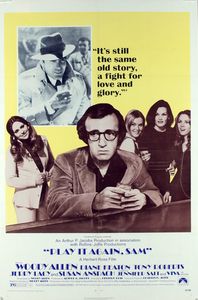
    (On DVD, November 2018) I’m not sure I even want to get romantic advice from Woody Allen, but if you can park that thought for 90 minutes and rationalize that the age difference between then-almost-fortysomething Allen and Diane Keaton was a mere ten years, then you may start to like what Play It Again, Sam has for you. Riffing from Casablanca so thoroughly that a viewing of the 1941 film is almost required before tackling this one, this romantic comedy takes us in the neuroses-fuelled inner life of one recently divorced San Francisco writer as he obsesses about his singlehood and Humphrey Bogart. While technically this isn’t a “Woody Allen movie” as he merely wrote and acted in it, but did not direct, Play It Again, Sam does count as one of Allen’s earlier, funnier movies, especially when “Bogart” pops up to provide advice to the protagonist, or when the protagonist’s equally-imaginary ex-wife starts interacting with him. It leads, quite predictably, to an airport tarmac climax, but it’s a good ending. In-between the premise and the conclusion, we have enough of Allen’s usual neurotic pattern to last us for a while, along with his interactions with Keaton. Play It Again, Sam may not be a deep or transcendent film, but it does work, and it will work best for those who do know and love Casablanca. (Who doesn’t?)

  • The Big Sick (2017)

    The Big Sick (2017)

    (Google Play Streaming, November 2018) As a genre, the romantic comedy will never die as long as it adapts to the times, keeps finding intriguing hooks and invests in its characters. The Big Sick is a surprisingly engaging example of the form, showing us contemporary romance, likable characters and an irresistible hook: What if a recently-formed couple faced the impending death of one of them? That may not be a funny premise in itself, but don’t worry: everybody gets better in the end. Kumail Nanjiani and Zoe Kazan are well cast as the lead couple—Nanjiani even playing his own role given that the story is loosely adapted from his own life. The cross-cultural courtship themes abruptly shift gear into more dramatic material once one of the romantic leads goes into a coma, although the appearance of their parents (great performances by a high-energy Holly Hunter—who gets the film’s best scene—and an unusually likable Ray Romano) add more complications to the proceedings. Since the film revolves around a stand-up comedian, expect a few one-liners and glimpses at the tough life of these performers. The good script is backed by strong execution that manages to find a balance between very tricky material. It manages to combine modern cynicism with earned sincerity, and wraps things up with a belated but no less effective bow. There’s been a lot of hype about The Big Sick as an independent film darling, and it admirably sustains it during viewing.

  • First Knight (1995)

    First Knight (1995)

    (In French, On TV, November 2018) I’m not sure I completely accept Richard Gere as dashing young knight Lancelot trying to win over the queen (Julia Ormond) from King Arthur (Sean Connery). But that’s First Knight for you. The film makes a big deal out of the 35-year age difference between Ormond and Connery, but not so much of the 16-year difference between Gere and Ormond. (But that’s been Hollywood’s idea of an acceptable age range ever since the first movie moguls hit their mid-thirties.) More significant is the film’s overall lack of energy or reason to care: It’s, by design, an unsatisfying premise—who dares have Richard Gere best Sean Connery!?—and the limp execution from Jerry Zucker (better known for comedies) doesn’t do much to help. Even the high points, such as a ridiculously convoluted obstacle course, don’t quite manage to make the film come alive. The treatment of the Arthurian myth is realistic, but for a hollywoodian ideal of realism that seems like an uncomfortable compromise. I probably would have liked the film if I actually cared more about reinterpreting the Arthurian myth … but I don’t. First Knight is also severely harmed by the mid-1990s wave of far better historical movies set around the British Isles, along the lines of Braveheart or (better yet) Rob Roy. The result is not terrible, but neither is it particularly good. Maybe worth a watch for fans of Connery, Ormond or Gere even if their casting is sometimes dubious.

  • Let’s Make Love (1960)

    Let’s Make Love (1960)

    (In French, On TV, November 2018) I’m on a quest to watch pretty much everything that George Cukor has directed, and for Let’s Make Love to feature Marilyn Monroe is just extra incentive. Coming at this film with expectations raised too high may be a problem, though: despite a few cameos and occasional flashes of wit, the result is decidedly average and not quite what we’d expect from the cast or the opening moments. The first few minutes of the film do set up a far funnier film than what we get, through narration explaining the family history of the lead character (played by Yves Montand), a Franco-American billionaire who ends up playing himself in a satirical play in order to get close to Monroe’s character. The difficulties in having a businessman attempting to become a stage sensation soon lead him to the film’s most inspired sequences, namely hiring Milton Berle for comedy tips, Gene Kelly for dancing lessons and Bing Crosby to learn how to sing. The three men play themselves, leading to a few cool moments if you’re already a fan of these entertainment legends. Otherwise, though, the film is surprisingly underwhelming. The traditional romantic comedy hijinks aren’t executed particularly well when Montand looks lost (thanks to language difficulties), Monroe is fine but doesn’t have much of a character besides looking pretty (this was at a point in her career when she was gathering a reputation for being unreliable), and the casting definitely seems off. High expectations make this film a disappointment, so do try to keep them under check: it’s not as good as you think it will be from reading the cast list, and the behind-the-scenes drama of making the film (what with an affair between the two leads even as they were married to other high-profile celebrities) is arguably more interesting than what shows up on-screen. [December 2018: My opinion of Let’s Make Love went up a small notch after catching an English-language broadcast of the film: The French version not only has some very awkward transitions between English-language songs and interstitial French dialogue, but has the gall to cut off some of the Berle/Kelly/Crosby material that is the highlight of the film. French dubs are usually much better than this.]

  • Salinui chueok [Memories of Murder] (2003)

    Salinui chueok [Memories of Murder] (2003)

    (Google Play Streaming, November 2018) If you’re watching a police procedural, there’s a presumption that the criminal will be caught at the end of the movie. Filmmakers can mess with that convention, as they can end a romantic movie with the leads not getting together, but those who do this usually want to make a point and deliberately expose themselves to grumblings from the audience. Memories of Murder is a South Korean crime thriller film intentionally designed to leave audiences unsettled—the 131 minutes-long film is a careful recreation of a 1980s police investigation, but even the investigative breakthroughs don’t lead to a satisfactory conclusion, with an ending that keeps the murders unresolved. It’s adapted from real events, so there’s some veracity here—but it doesn’t make it any less enraging as a movie. [October 2019: In a rare case of reality being more satisfactory than fiction, it turns out that forensic evidence decades after the murders has led to the identification, and later confession of the serial murderer who inspired the film.] Ending aside, writer/director Bong Joon-ho does manage to turn in a competent police procedural—the details are well chosen, there is some character development, various police methods are shown, the sense of time and place is convincing and the film does manage to attain its objectives, even if those objectives aren’t necessarily the satisfaction of the audience. Memories of Murder is one more piece of evidence regarding the vitality of South Korean cinema in the twenty-first century, and a memorable crime thriller in its own right.

  • Step Up (2006)

    Step Up (2006)

    (Video on-Demand, November 2018) There’s a deliberately mercenary intent to Step Up that makes the film more interesting to watch as a Hollywood product demonstration than for any of its intrinsic qualities. A spirited blend of very mid-2000s youth culture components, it mixes urban violence with dance numbers in an attempt to spit out a complete date movie for the boys and the girls. It would be almost completely forgotten today if it wasn’t for a few lucky breaks that led to its many sequels ensuring de facto influence. (To be fair, the sequels are often one step up from the original in terms of sheer enjoyment—I particularly liked Step Up 3D.) The film’s biggest luck was to choose a then-unknown Channing Tatum as the male lead, playing a hip-hop dancer from the wrong side of the tracks who (through handy contrivances) comes in contact with an upper-class girl studying ballet. They’re fated to be together, obviously, which lead to a ballet/hip-hop fusion that leaves the inevitable judges inevitably dazzled right in time for him to transfer to her better school, get the girl and dance their way to the end credits. It’s pure formula stuff, with a direction so ordinary (except for the rooftop dance cinematography, maybe) that you’ll be forgiven for mistaking this for Save the Last Dance or Honey or Fame (2009) or other similar movies from the era. But that’s kind of the point—the clichés write the plot and hopefully the teenage audiences won’t have seen any of the other movies because teenagers are an evergreen resource of movie history ignorance. (Well, not really—Hollywood usually severely underestimates teenage media savviness.) Step Up remains a bit of an oddball entry even in its own series because it’s a bit darker and not quite as pure a dance musical comedy as later instalments would become. But that’s Hollywood for you: figure out the kinks in the first film, remove those, add more of what the kids want to see and voilà a series.

  • Star Trek IV: The Voyage Home (1986)

    Star Trek IV: The Voyage Home (1986)

    (Second Viewing, On Blu-ray, November 2018) Somehow, I ended up re-watching Star Trek IV: The Voyage Home exactly 32 years to the day after its release in theatres, a coincidence that I only realized while reading about the movie afterwards. I anticipated a happy re-watch and was not disappointed: The Voyage Home is fondly remembered as one of the funniest episodes of the movie series and with good reason, what with the crew of the Enterprise ending up in mid-1980s San Francisco through time travel shenanigans. The humour comes from seeing familiar characters trying to deal with the “real world” and fighting against contemporary obstacles to achieve their goals. The science-fiction elements are decent (thanks to series MVP writer/director Nicholas Meyer), the character work is fine, Leonard Nimoy turns in a fine performance as the director, and The Voyage Home ably wraps up a three-film cycle for the series. In the grand scheme of the movie series, it does work as a change of pace—to the 1980s setting (now charmingly dated), to a lighter tone, to a break after the intensive drama of the second and third films. As we now know, the series would continue its uneven pattern (even instalments = good; odd instalments = worse) and land next in Star Trek V, but that’s fine: Another re-watch of Star Trek IV can make everything all right again.

  • Chinjeolhan geumjassi [Lady Vengeance] (2005)

    Chinjeolhan geumjassi [Lady Vengeance] (2005)

    (On DVD, November 2018) Park Chan-wook doesn’t mess around when it comes to vengeance stories, and Lady Vengeance is a masterful companion to the thematically-linked Old Boy. Telling us a highly melodramatic story about a young woman manipulated into accepting a prison sentence for a murder she did not commit, it’s a feature-length vengeance story with wild twists and turns, spectacular sequences and strong characters. It doesn’t pull punches when comes the time to show human depravity, and doesn’t try to paint even its heroine as being completely justified. Stylish but not duplicating other films from the same director, it’s an extreme character study as well, playing off our ideas of what good and evil looks like. Lady Vengeance may not be to everyone’s liking, but it’s a strong entry for thriller fans with the stomach to appreciate what it’s trying to do.

  • Professor Marston and the Wonder Women (2017)

    Professor Marston and the Wonder Women (2017)

    (On Cable TV, November 2018) I know that celebrity crushes are not a valid component of clever critical assessments, but I do have a big crush on brainy brunette Rebecca Hall, and seeing her pop up as a strong lustful muse in Professor Marston and the Wonder Women checked off an impressive number of boxes in my list of reasons why I had to watch it. As it turns out, it’s a film about one of my favourite bits of comic book history: the remarkably daring origin story of Wonder Woman, as coming from the feverish imagination of an academic with a number of then-unusual fetishes. Wonder no more why Wonder Woman loves detecting lies, strong rope, and a bit of bondage: this was right out of its creator’s own preferences. The bulk of the story takes place during the 1930s, a time not usually known for its free-thinking attitudes. In this context, William Moulton Marston, his legal wife Elizabeth and their polyamorous partner Olive Byrne are people out of time. Driven out of academia after inventing the lie detector but having rumours of their unconventional relationship get around, they make ends meet through various means, until Marston hits upon the idea of vulgarizing their ideas through the medium of comic books. Alas, the story doesn’t have a happy ending … but the way there is unusually interesting, with three strong performances from Luke Evans, Rebecca Hall and Bella Heathcote, as well as skilful screenwriting and direction by Angela Robinson that manages to navigate a tricky topic without falling in exploitation. Professor Marston and the Wonder Women is probably doomed to remain unseen and under-appreciated, but I’m glad that it exists—not only as a showcase for Hall (who apparently has good fun in the early parts of the film as a foul-mouthed headstrong woman a few decades ahead of her time), but as a decent illustration of an iconic heroine’s fascinating creation, and a great portrait of freethinkers stuck in a society unable to accept them.